Sunday, November 30, 2008

Final Days of the Bush Administration 7


Source: "Federal Workers Unions Want 'Burrowers' Lists," Carol D. Leonnig, The Washington Post, November 30, 2008.

Leaders of the American Federation of Government Employees and the Senior Executives Association want the government's Office of Personnel Management to release lists of Bush administration political appointees recently hired for career jobs and to show whether the positions were filled through competition.
(T)hey are concerned the agency is not carefully overseeing last-minute hires of political aides. They point to recent reports in The Washington Post and other evidence suggesting political aides are leaping over qualified candidates or avoiding competition as they "burrow" into the civil workforce.
Comment: We want a government with open and transparent processes. OPM should provide the requested information, and indeed should make it public. I note with pleasure that the Obama transition process is making very public the members of its teams. JAD

Final Days of the Bush Administration 6

A rule approved by the White House after the election
would ease constraints on oil shale development in the West.
(By Ed Andrieski -- Associated Press)


Source: "At the Last Minute, a Raft of Rules: Bush White House Approves Regulations on Environmental, Security Matters," R. Jeffrey Smith and Juliet Eilperin, The Washington Post, November 30, 2008.

In the past month the Bush administration has approved 61 new regulations on environmental, security, social and commercial matters that it estimates will have an economic impact exceeding $1.9 billion annually. Some examples:
A rule approved by the White House three days after the presidential election, for example, would ease constraints on environmentally damaging oil shale development throughout the West, despite objections from Colorado Gov. Bill Ritter (D) and a majority of the state's congressional delegation.....

A controversial new Health and Human Services rule approved in late October, for example, cuts an estimated $2 billion in state Medicaid reimbursements for outpatient services. State officials had complained that it would jeopardize dental care for children, certain lab tests and speech and occupational therapy......

A controversial Justice Department rule approved Nov. 19 orders accelerated judicial review for death sentences. Legal groups had argued that speeding up executions makes errors more likely.
Some draft regulations have recently been disapproved.
On Nov. 19, the OMB ordered the Energy Department to kill new regulations that would have forced the federal government to buy more-energy-efficient lights, appliances, and heating and cooling systems. Daniel J. Weiss, climate strategy director at the Center for American Progress Action Fund, called that retreat from a 2005 requirement "unbelievable."

The White House also ordered the Environmental Protection Agency to withdraw a new regulation mandating that truck manufacturers install equipment to monitor vehicle pollution. It blocked the Department of Veterans Affairs from issuing new promised "user-friendly" guidance on burial and survivors benefits.
Fortunately, the Bush administration could not yet finish its work on some regulations
including a regulation inhibiting the ability of Congress to halt logging, mining, and oil and gas extraction on public lands. Another rule would allow federal agencies to proceed with development projects without undergoing independent scientific review under the Endangered Species Act.
Regulations deemed to have an impact estimated at more than $100 million a year take legal effect after 60 days. Thus the Bush administration wanted to announce many new regulations more than 60 days before Obama takes office on January 20th.
Once the new rules take the form of law, Democrats can undo them only by three complicated means: through a new regulatory rulemaking that would probably take years; through congressional amendments to underlying laws; or through special, fast-track resolutions of disapproval approved by the House and Senate within a few months after the start of the new congressional session on Jan. 6.
Comment: Fortunately the Democratic Congress is already preparing to repeal some of these regulations, and one assumes that the Obama administration will reconsider some of the useful regulations that the Bush administration tried to kill. We think of the outgoing president as a "lame duck", and perhaps this duck is going to leave a very large mess as it limps out. JAD

The World Is More Complicated Than Most of Us Think

The attacks in Mumbai last week were terrible. We should, however, keep them in context. There are nearly 60 million deaths in the world per year. Indeed, the World Health Organization suggests that we should take into account the age at which people die and the degree of disability that they suffer, and we thinking about deaths we probably underestimate the threats to man. It is a mistake to spend too much time and effort reducing terrorism if that means we will spend less time and effort reducing other sources of death and disability, especially since there are so many interventions that would do more good that further efforts to eradicate terrorism.


We should also not leap to the assumption that the Pakistanis are responsible for the attack. You might read about:
Even were we to be sure that the terrorists came from, or received support from Pakistan, it would be important to figure out who in Pakistan bore responsibility to what degree.

The Bush administration's invasion of Iraq should serve as a warning about our ignorance of foreign lands and the dangers of acting on the basis of that ignorance.

Americans Eat Too Much Meat!


It should be obvious that our hamburger and hot dog culture, based on fast food, has lead to an overweight, unhealthy population with clogged arteries, high levels of stroke and heart disease not to mention diabetes. But think about it.

40 percent of our grain production goes into animal feed. We use 10 calories of energy from non-renewable fuels for each calorie we obtain from meat. With limited agricultural land we have a choice of producing food grains, feed grains or biofuel stock. We have chosen to subsidize the production of biofuels, making wheat, corn and rice more expensive. People in developing nations will no doubt starve because of that choice. We could have chose to produce biofuel instead of feed grains, and would then have improved our health while decreasing our dependence on foreign oil.

We support agro-industry that is needed to produce this fast food cheaply, but that is resulting in the depopulation of our rural areas and the excessive degradation of our environment, plus increased dependency of our food supply on foreign suppliers. (Remember that during World War II, 40 percent of fresh produce -- and most produce was fresh before the frozen food revolution and we ate a lot more produce -- was produced in home "victory gardens".) My family participates in a community supported agriculture program and discovered that it produces not only fresher food and supports local farmers, but also puts better food and a better variety on our table.

Why do we do this. As Michael Pollen points out, our food habits are an unintended result in part of the way our society works. Agro-industry is better organized to promote its profits than are consumers to promote their health, so the Congressional Agricultural Committees are dominated by legislators beholden to that industry. As the government promotes small business development in inner cities, the easiest small business to start is a franchise food outlet.

Indeed, our Senate and our presidential electoral college over-represent states with small populations and strong agro-industry and under-represents states with large urban populations. Thus the Republicans representing these red states support agro-industry friendly policies. The Bush administration exemplifies one that has been willing to support policies that contributed to the wealth of agro-industry at the expense of the environment.

Of course people are ultimately responsible for their own actions. There are people who buy and eat food that is good for them and which is produced in ways that are good for the environment and the economy, but most of us do not. As the American public spends too much and saves too little, we eat too much and think to little about the way our food is produced, and we are to blame for both. However, we have supported policies that make unhealthy food cheap and available and cheap, available fast food encourages bad food habits.

I don't have a solution. Good luck to the Obama administration in finding one.

Friday, November 28, 2008

Infrastructure for the 21st Century

The Obama campaign indicated that his administration would invest in the American infrastructure. It seems likely that those investments would be part of the stimulus for the economy needed to get us out of the recession, or to avoid a worse recession. All that is to the good.

Lets be sure that we take the opportunity to invest in the infrastructure we need for the 21st century. As we invest in energy infrastructure, lets invest in wind, solar and biogas energy as well as the energy sources of the 20th century, not forgetting to invest in energy saving infrastructure. And lets think seriously about Warren Buffet's idea of using natural gas for our trucking fleet, investing in the delivery infrastructure as well as the wells.

Thinking about transportation, should we rebuild the railroad infrastructure and use policy instruments to encourage rail use? Aren't trains much more energy efficient than trucks? And how about wiring our vehicles and roads to make them safer and more energy efficient.

Are we at a point were we should rethink our sewage system to save water? One would think that would be important in at least some areas of the country.

In terms of water, should we reconsider agricultural policies? Most of our water is used for irrigation, and the ground water resources are being depleted in some important regions. How about reducing meat consumption, achieving health benefits, while reducing the need for feed grains and the environmental impact from feeding lots.

I hope that the White House Office of Science and Technology intervenes to assure that we use technological foresight in planning the investments in the infrastructure.

Check out the EPA Sustainable Infrastructure for Water & Wastewater website.

Wednesday, November 26, 2008

The Middle East Regional Cooperation Program


My old friend and colleague, David O'Brien writes about the Middle East Regional Cooperation Program (MERC):
Many of the Arab-Israeli partnerships that began or matured under MERC grants have gone on to receive grants together under other funding mechanisms, just like other scientists around the world. Many apply to MERC again, and their proposals frequently cite these other grants they have received together in the interim. Furthermore, the cross-border relationships the grantees develop often lead to collaboration with additional scientists from the other side who were not even on their MERC grant. Some MERC partnerships have continued to collaborate without any outside funding, and several have expanded their collaboration beyond just the science into community outreach, etc.
Comment: This program was a Congressional Earmark some three decades ago which illustrates that sometimes the Congressional mandate for specific scientific activities works. I was involved from the start, and was actually responsible for the management of the grantmaking for a few years. Overall the program clearly demonstrated to a large number of people that Israelis and Arabs could work together productively and with good will. JAD

If Everyone With HIV Were Treated, It Would End the AIDS Epidemic

Source: "Universal voluntary HIV testing with immediate antiretroviral therapy as a strategy for elimination of HIV transmission: a mathematical model" Reuben M Granich, Charles F Gilks, Christopher Dye, Kevin M De Cock and Brian G Williams, The Lancet, 26 November 2008.

A thought experiment, in the form of a mathematical model, indicates that a strategy of universal testing for HIV infection and immediate treatment of all cases could
accelerate the transition from the present endemic phase, in which most adults living with HIV are not receiving ART, to an elimination phase, in which most are on ART, within 5 years. It could reduce HIV incidence and mortality to less than one case per 1000 people per year by 2016, or within 10 years of full implementation of the strategy, and reduce the prevalence of HIV to less than 1% within 50 years.
Unfortunately
Roughly 3 million people worldwide were receiving antiretroviral therapy (ART) at the end of 2007, but an estimated 6·7 million were still in need of treatment and a further 2·7 million became infected with HIV in 2007.
Comment: What a nice use of computer modeling for exploratory and didactic purposes! JAD

Max Cleland’s Thanksgiving Message

Final Days of the Bush Administration 5

Source of graph: "What Do We Know About The Undercount of Children?" by Kirsten K. West and J. Gregory Robinson, U. S. Census Bureau

According to today's Washington Post:
The Census Bureau plans to cut spending on advertising and community outreach for the 2010 census by at least a fourth compared with the 2000 census, provoking concern among congressional overseers that historically difficult-to-count groups such as minorities and illegal immigrants will not be accurately tallied.

Although the reduction was part of the fiscal 2009 budget proposed to Congress by the administration in February and was reflected in a stopgap budget resolution adopted by Congress last month, several members of Congress said they did not become aware of the change until two weeks ago, when their staffers asked Census Bureau employees to brief them on details of the marketing plan.
Comment: The Republicans have worked for years to decrease the completeness of the census. Their efforts always have the effect of undercounting the poor, and I assume that their efforts result in some small electoral value to their party.

The Bush administration may leave in January, but the budget for 2009 that they submitted last winter and passed recently is likely to cut the accuracy of the 2010 census.

Shame on the legislators who let this one slip past them. Greater shame on the Bush administration for slipping this past the Congress. Shame on us all for letting the ideals of democracy fall to political manipulation. Perhaps the Obama administration can slip the needed money into the financial stimulus bill that they will be passing early in the new Congress.
JAD

Final Days of the Bush Administration 4

Source of Graph: USEPA via Treehugger

According to The Washington Post, the Bush administration is seeking to encourage comments from those likely to oppose further regulation of emission of greenhouse gases. Last year the Supreme Court required the administration to issue such regulations under the Clean Air Act, which it interpreted to apply to climate change. The period for public comments closes on November 28th. Want to bet the Bush regulations will be too little, too late!

Poverty Down Under Clinton, Up Under Bush

Source: "Feeding the Nation's Hungry,"
The Washington Post, November 26, 2008.

Cancer Rates Going Down in the United States

Source: "Diagnoses Of Cancer Decline in The U.S." by Rob Stein, The Washington Post, November 26, 2008.

The WP article, based on an article in the Journal of the National Cancer Institute, indicates that the incidence of some forms of cancer is decreasing, attributing the decrease to the fewer people smoking. It mentions that the incidence of some other forms of cancer is increasing, perhaps due to increases in exposure to environmental carcinogens. However, some of the decrease in incidence is attributed to reduced use of diagnostic proceedures.

The mortality rates from cancers are decreasing faster than the incidence. The article does not explain the trend, but perhaps it is related to improvements in early case finding and treatment.

The article takes many more words to explain these simple observations.

The Cost of Ignoring AIDS Science in South Africa

A Johannesburg AIDS hospice in 2002.
Joao Silva; The New York Times

Source: "Study Cites Toll of AIDS Policy in South Africa," CELIA W. DUGGER, The New York Times, November 25, 2008.

"A new study by Harvard researchers estimates that the South African government would have prevented the premature deaths of 365,000 people earlier this decade if it had provided antiretroviral drugs to AIDS patients and widely administered drugs to help prevent pregnant women from infecting their babies.

"The Harvard study concluded that the policies grew out of President Thabo Mbeki’s denial of the well-established scientific consensus about the viral cause of AIDS and the essential role of antiretroviral drugs in treating it."

Comment: How much does failure to use knowledge for policy cost? One of the most obvious cases in recent decades of government leaders acting in ways counterindicated by scientific evidence was that of Mbeki's government HIV/AIDS policy in South Africa. This study suggests that failure cost hundreds of thousands of lives. Of course most of the lives lost were not those of the Mbeki government policy makers! JAD

Tuesday, November 25, 2008

Regional Scientific Initiatives in Africa

Source: "Africa Analysis: Federal or regional science policy?" Linda Nordling, SciDev.Net, 24 November 2008.

Tensions between the African Union (AU) science secretariat in Addis Ababa, Ethiopia, and the science office of the New Partnership for Africa's Development (NEPAD) in Pretoria, South Africa, apparently came to a head in Mombasa, Kenya, at the African Ministerial Conference on Science and Technology (AMCOST). It was decided that the AU would take the lead on policymaking while NEPAD would be responsible for implementation. Next month the AMCOST bureau meets in Abuja, Nigeria (3–5 December) and , a new science policy 'cluster' will gather on December second to create a 'calendar' of African science programmes for 2009.

Alternatives for Scientific Cooperation in the Middle East

My long-time colleague, Mike Greene, has an piece in the Policy Forum of Science magazine (Science 21 November 2008) suggesting the need for regional programs to promote scientific cooperation in the Middle East, especially among Israel, Palestine and Jordan. He notes the Association of Middle East and United States National Academies of Science that has been formed to further scientific cooperation and the MERC program supported by USAID, but calls for other similar multinational scientific initiatives.

Read:
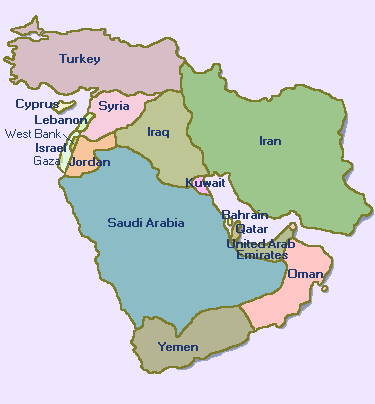
Comment. I second Mike's suggestion. I would note that there are lots of potential conflicts in the region, such as those that might be triggered by disputes between Lebanon and Syria, Turkey and Iraq (in regions occupied by Kurdish ethnic populations), or futher east Iraq and Iran. There are regional organizations for cooperation among Islamic and/or Arab nations that would help to ameliorate relations among these nations. One potential source of conflict is the management of resources that are shared among countries, ranging from surface and ground water, fish stocks and shipping lanes. So too, the infection of one country by human, animal or plant diseases or the infestation by pests from a neighboring country may lead to quite negative feelings. It seems to me that scientific cooperation on the measurement and modeling of these resources and threats may help to create a common understanding which might thereby reduce distrust among the parties. JAD

OECD Economic Outlook No 84 November 2008

"This Economic Outlook represents a substantial downward revision from just a few months ago: many of the downside risks previously identified have materialised. The financial turmoil that erupted in the United States around mid-2007 has broadened to include non-bank financial institutions and rapidly spread to the rest of the world. Following the collapse of Lehman Brothers in mid-September, a generalised loss of confidence between financial institutions triggered reactions akin to a "blackout" in global financial markets. Spreads in credit and bond markets surged to very high levels, paralysing credit and money markets.

"Prompt and massive policy action to restore confidence and provide liquidity appears to have successfully limited the period of panic, but the need for financial institutions to operate with less leverage and to repair their balance sheets remains. This process of adjustment will take time and impair the flow of credit, and is the key factor weighing on activity going forward."

Comment: Recession means belt-tightening in the OECD rich nations' club. For people living on a dollar and a quarter a day, it often means disaster and death. Those people represent one out of six of the world's population. Indeed, half the world's population lives in such extreme poverty that there is no slack to take up when their normal bad times get even worse. JAD

Trade Drop Could Set Developing Countries Back Years

The World Bank reports (November 24, 2008):
"A looming drop in world trade could 'set developing countries back for many years' and erase recent gains in development, a senior World Bank official warned ahead of a United Nations international conference in Qatar. Danny Leipziger, Vice President of the Poverty Reduction and Economic Management network at the World Bank, says the financial crisis has already affected trade and could undermine progress achieved in Africa and elsewhere in the last six years."

"IMF, World Bank Heads To Miss Key U.N. Forum"

Doha City: Where global economic policy is being made.

According to The Washington Post
The chiefs of the World Bank and the International Monetary Fund have declined to participate in a major U.N. conference next week on the financing of development assistance for poor countries, upsetting an effort to secure high-level attendance at a meeting aimed at goading the beleaguered financial giants into stepping up aid.......

Some top U.N. officials were visibly infuriated by what they viewed as a snub of Secretary General Ban Ki-moon. One official accused Zoellick of trying to ensure that the major decisions on the financial crisis would be made by the less unwieldy Group of 20 nations, which met in Washington on Nov. 15 to try to coordinate international response to the meltdown. "It's fair to say that the secretary general was very disappointed and doesn't understand completely" why they will not be attending, the official said.
Comment: I am conflicted on this one. Of course, there will be high level representatives from the Bank and the IMF at the meeting, empowered to speak for the organizations.

There is a reasonable argument to limit the discussions to a relatively small number of countries, choosing those according to the magnitude of their GDPs. It is impossible to get much done with diplomats from 200 countries participating in a meeting, and in fact the "heavy lifting" of stabilizing the global economy is going to be done by the countries with the bigest, most linked economies.

On the other hand, I suppose that the governments of the rich countries are trying to exclude countries with poor populations because they don't want visible demands for greater equity in the global distribution of wealth and income. Demands from some countries that other countries give then more money are not popular among the countries targeted by the demands. JAD

"Slouching Toward Fanaticism"


Theodore Dalrymple has an interesting review in the City Journal of Autism’s False Prophets: Bad Science, Risky Medicine, and the Search for a Cure, by Paul A. Offit.

"Paul Offit’s new book, as readable as a good detective novel, tells the story of how autism, a disorder of psychological development, came falsely to be blamed first on the MMR vaccine and then on thimerosal, a preservative found in several vaccines. It is a tale about bad science, worse journalism, unscrupulous political populism, and profiteering litigation lawyers."

Comment: It is too bad that the Republicans over the last several years have given a political spin to the term "junk science". There is a world of difference between condemning the results of good science to support political actions which the research results militate against, and condemning the results of bad science as such. We can also expect the popular media to refrain from pushing the results of bad science as worthy of peoples attention and as reasons to change peoples health or other behavior. JAD

Final Days of the Bush Administration 3

Photo: Nathan Bilow for The New York Times

Source: "In Waning Hours, Bush Administration Fortifies Oil Shale Industry," Jad Mouawad, Green Inc. (New York Times blog), November 18, 2008.

The article states:
Firing off another decision that is angering environmental groups, the Bush administration has issued new regulations to develop oil shale deposits straddling almost two million acres of public lands in Colorado, Utah and Wyoming.

The rules lay out the framework to develop these deposits over the next decade, including royalty rates, how to evaluate bids for leases, mitigation requirements and other procedural elements......

Oil shale is a controversial and environmentally damaging source of hydrocarbons since it requires vast amounts of energy and water to squeeze oil out of sedimentary rocks. The process emits far more carbon dioxide, which is responsible for global warming, than ordinary refining operations.
Perhaps even worse was the effort to lease lands near national parks for oil and gas exploitation:
It is not the first time this month that the Bush administration has sought to make the best of its last days in office. Earlier this month, the Bureau of Land Management expanded its oil and gas lease program in eastern Utah to include tens of thousands of acres on or near the boundaries of three national parks.

The decision angered environmental groups, who feared it would lead to industrial activity in some of the state’s renowned empty regions, like Desolation Canyon.

According to a report from Felicity Barringer in The Times earlier this month, officials with the National Park Service said that the decision to open lands close to Arches National Park and Dinosaur National Monument — and within sight of Canyonlands National Park — had been made without the kind of consultation that had previously been routine.
One piece of good news is:
In 1996, the Republican-controlled Congress passed the “Congressional Review Act,” which gives lawmakers a 60-day window to repeal new rules issued by executive agencies. The law was intended to prevent outgoing administrations from passing “midnight” rules in their waning hours.
Comment: Fortunately, the Congress will be able to review any regulations issued by Bush from now on, and of course if the Bush administration can rewrite regulations, the Obama administration will be able to rewrite them again and put things right.

The problem is that there is a ratchet effect, and there will be firms that take action under the Bush administration rules. They will no doubt lobby for the continued permission to implement their programs, and if that is not given will lose money as a result of the changes in government regulations.
JAD

Monday, November 24, 2008

"Who Are the Better Managers -- Political Appointees or Career Bureaucrats?"


Source: Shankar Vedantam, The Washington Post, Monday, November 24, 2008.

"The United States has a far larger number of political appointees in government than any other industrialized democracy."
There were 1,778 political appointees in 1960 and nearly double that number in 2004, not counting part-time, advisory and White House positions. The federal government grew dramatically in that period, too, but the number of political appointees grew nearly twice as fast, said Lewis, author of the book "The Politics of Presidential Appointments."
David E. Lewis, who is now at Vanderbilt University, compared the Bush administration's own evaluations of more than 600 government programs with the backgrounds of the 242 managers who ran those programs. Three-quarters of the managers administering the programs were political appointees while a quarter were career civil servants.
The political appointees were better educated, on average, than the civil staff. Many had stellar records in the private sector or on the campaign trail. Side by side, the political appointees just looked like a much smarter bunch than the careerists.

When it came to performance, however, the bureaucrats whipped the politicals: Programs administered by civil servants were significantly more likely to display better strategic planning, program design, financial oversight -- and results. These findings, remember, were based on the Bush administration's own evaluation system -- the Program Assessment Rating Tool, administered by the Office of Management and Budget.
Lewis "said his analysis controlled for a number of confounding factors, including the difficulty of administering different programs. He said civil servants outperformed political appointees even when the analysis was restricted to comparably difficult programs."

Comment: Of course, the analysis can not resolve the issue once and for all. Certainly there may be some excellent managers among the political appointees and some incompetents among the career government service people.

It is not surprising to me that people who have been selected by competitive evaluations and have long experience in administering their programs often do better in managing those programs than do political appointees, even if the latter do well on intelligence tests.

A balance is needed. The elected president has to implement the program on which he was elected via a huge bureaucracy. He needs a corps of people who understand that program and its administration, and importantly are committed to it, to impose it on the bureaucracy. Indeed, the more change that is mandated, the more difficult it is likely to be to get the bureaucracy to implement it. Whether the president needs 2,000 people or 3,000 people to impose his program I don't know.

On the other hand, it is easy for the political process to go astray. The White House can employ armies of ideologues to impose their ideology on a scientific agency that has evidence that contradicts that ideology. Alternatively, it can reward unqualified supporters with political appointments. It might seem especially likely to do so for the lower level positions in the bureaucracy. (Think about recruiting young ideologues from the Heritage Foundation jobs website to staff important positions in the Iraq Transition Authority.)
JAD

What does "bankruptcy" mean?

There seems to be some confusion and concern about the impacts of bankruptcy. Cornell University's School of Law provides an overview on its website:
Bankruptcy law provides for the development of a plan that allows a debtor, who is unable to pay his creditors, to resolve his debts through the division of his assets among his creditors. This supervised division also allows the interests of all creditors to be treated with some measure of equality. Certain bankruptcy proceedings allow a debtor to stay in business and use revenue generated to resolve his or her debts. An additional purpose of bankruptcy law is to allow certain debtors to free themselves (to be discharged) of the financial obligations they have accumulated, after their assets are distributed, even if their debts have not been paid in full.
I understand that different kinds of bankruptcy procedures may lead to different kinds of outcomes. Bankruptcy is being discussed in terms people defaulting on their home mortgages, the big three American automakers, and many commerclal firms caught by the current financial crisis. We, the poor voters must form opinions of the impacts of bankruptcy in these very different circumstances, and may be applying the same word to different processes.

How accurate is our knowledge


I have had a recent interesting experience of reading a new book by an old friend. The book is about his family in the pre-1970 period. It includes a lot of information he discovered about his parents in the intervening years and ends with his rumination on how he could so have misunderstood his family in his youth. I knew his family for many years, and the book has shown me that I too misunderstood its members and their interrelationships.

Of course, in the four decades since the events in the book took place both my friend and I have matured and have come to understand the world in new ways. The book helps me exemplify the differences in both our views. However, the misunderstanding was more fundamental and resulted from conscious dissimulation by his family members.

The importance of such misunderstandings of course depends on the need to know. My friend had much greater need to understand his own family than I did outside that family.

But reading the book has made me think about the tentative nature of knowledge and understanding, and perhaps added to my caution in estimating my own falibility.

The White House Office of Global Communications: What does it do?


The latest news/Global Message of the Day issued by the White House Office of Global Communications is dated March 2005.

The home page of the office has a link for "Eid Al-Adha, 2005"

The last "Fact of the Day", dated March 11. 2005, reads:
El Salvador's Cultural Heritage Protected

The United States and El Salvador exchanged diplomatic notes extending a Memorandum of Understanding (MOU) imposing U.S. import restrictions on Pre-Columbian archaeological objects originating in El Salvador. Archaeological sites dating from 1700 B.C. to 1550 A.D. throughout El Salvador have been severely damaged by looting. The MOU is in response from an El Salvadorian request for U.S. assistance in curbing pillaging and illicit trade in objects that represent its Pre-Columbian heritage. The newly amended MOU sets out new benchmarks for achieving improvements in the protection and preservation of El Salvador's cultural heritage and will expired in 2010.
Comment: Obviously nothing worthy of note has occurred in the past three years. JAD

Sunday, November 23, 2008

Innovation Versus Invention: A False Dicotomy?

The current edition of The Economist has an article with the following lead:
Confronted by Asia’s technological rise and the financial crisis, corporate America is losing its self-confidence. It should not.
The article cites those who worry that the United States is not training enough of the key people responsible for inventions, nor funding enough basic research in universities (and research labs) which will eventually lead to important new commercial products and technological innovations.

It also cites those who feel that the United States has a strong and robust system and process of innovation which is capable of accepting inventions and new technologies from anywhere they occur and successfully commercializing them. The article suggests that the concern for our innovation system may be misplaced.

I would suggest that we should worry about both our ability to invent and our ability to successfully innovate turning inventions into profitable products. Without the gatekeepers and the continuing stream of new fundamental knowledge the country's economy will not grow as fast as I would like, and the innovation system is not as well understood as it should be, but is surely more fragile than the article supposes.

The recession that we are starting will add to worrisome trends that already existed to threaten both our ability to invent and our ability to innovate technologically.

Why We Are In An Economic Crisis!

This graph of the reduction of the savings rate in the United States and the increase in household debt is from The Economist. I suspect it shows fairly clearly the root cause of the current U.S. financial crisis. I also think that the U.S. problem is triggering a global recession.

The blame obviously should be spread broadly. People should know enough to save and avoid debt, and the vast majority of American families have not been doing so.

Still, it seems obvious that public policies do influence peoples willingness to save and anxiety to avoid debt. Since the Reagan Revolution, with both Republican and Democratic Congresses and administrations, public policy has encouraged people to spend more and save less, and encouraged the private sector to cater to and further encourage those trends.

It is going to be painful to reverse course, but I think we must do so or our children will be condemned to live in a second class society.

Health and Economic Growth


The "Economic Focus" tutorial in this week's Economist is on the interrelationship between health and economic development. It seems intuitively obvious that the healthier you are the more likely you are to be able to learn and work well, and thus good health should promote economic progress. It also seems intuitive that economic development leads to better nutrition, better sanitation, better hygiene, better health services, and thus better health. The article cites research which challenges that idea:
Beginning in the 1940s, several medical involving penicillin, streptomycin and DDT made it easier to treat diseases—such as tuberculosis, malaria and yellow fever—that disproportionately affected people in developing countries. Because these ideas originated in the rich world and were spread by organisations such as the WHO, any improvements in health they led to would have been unconnected with prior improvements in the economic circumstances of poor countries.

This international revolution in public health did lead to substantial increases in life expectancy in poor countries by the 1950s. However, the researchers found that income per head actually declined when life expectancy went up and did not recover for up to an astonishing 60 years.

The reason was that increased life expectancy led to a higher population using a limited stock of things like land and capital, thus depressing income per person. Over time, reduced fertility, more investment and the entrepreneurial benefits of having more people could reverse some of this, but the data suggested that reductions in fertility in particular took a long time.
Of course, the Human Development Index is a partial response to the recognition that increases in per capita GDP do not fully capture the improvements we seek through social and economic development. I think most people would gladly trade a little income for a longer, healthier life. Think about the increasing expenditures on health service with increased income!

The article also notes:
Some health improvements may not lead to a longer life, but may nonetheless make people more productive. Hookworm infection, whose eradication from the American South Mr Bleakley has studied, is a case in point. Getting rid of hookworm disease made children quicker learners in school, and increased their incomes when they started working. However, it did not increase life expectancy since the infection was not fatal and so did not lead to a rise in population, which could have prevented individual benefits from carrying over to the economy as a whole. Policies that improve health without affecting the length of life may well be the ones that have a bigger economic pay-off, and a focus on life expectancy may miss this.

Some of Mr Bleakley’s other work points in this direction. Studying the impact of the eradication of malaria in Colombia, he noted that parts of the country were affected by a species of the malarial parasite called Plasmodium vivax, which led to very poor health but was rarely fatal. The more lethal version, P. falciparum, affected other areas. He found that eliminating P. vivax led to significant gains in human capital and income; eliminating P. falciparum did not.
I am now retired. I know from personal experience that my needs for income are less now (at an age to which few could have aspired a century ago) than they were when I was younger. I am not paying to educate my son, and I am no longer saving for retirement. So one issue that might be considered is the need for income at different ages.

Think too about the demographic transition. Poor health, leading to high mortality rates, means people have lots of children most of whom don't survive to be adults to lead a long, economically productive life. Dependency ratios are high as the workers seek to support there many children. Lots of the investment in those children is "lost" when they die early, and yet the investment in the education of the surviving child is necessarily low.

Health economists have long realized that the productivity gains differ from different health interventions. Companies have long invested in preventive health services for their employees, recognizing that they can improve corporate profits. So too the impact of economic development on health is complicated by the fact that different forms of institutionalization of health services yield different health returns for the same health costs.

Complexity should not deter us from seeking to be "healthy, wealthy and wise".

Articles cited by The Economist article:

Saturday, November 22, 2008

Why Does The U.S. Pay More for Health Services

Ewi Reinhardt, a very good health economist, has a couple of articles (Part I and Part II) on why health care costs are so high in the United States, compared to other countries. The graph below is from the first of the two articles, with my added red line. The regression line (in black) is used to estimate an "expected" per capita expenditure on health as a function of PPP per capita GDP. While it seems reasonably close to the observed for most countries, there is a large "excess spending" on health, as measured by the difference between the expected and the actual expenditures.

In the second article he attributes a significant part of the excess to the high cost of administration of our health services, created by our substitution of commercial health insurance for the public medical services offered in most countries.

Note however, that the administrative costs represent only part of the difference. The United States also has had an inflation of input costs for health services, uses more expensive technology in the delivery of many health services, and there is a cost of the "defensive" health services made inevitable by our tort system.

I think his conclusions must be right. One point that should be made is that although we spend more per capita on health services, we do not have better life expectancy or health status than other developed nations. One can infer from the articles that we could cut costs without cutting the quantity and quality of health services by better organization of our health and medical institutions.

I would make a quibble, however. The linear regression line is more likely to be accurate in predicting expenditures for countries that fall in the middle of the range, and less likely for outliers, and the United States is the obvious outlier. If the willingness to spend money on health services varies non-linearly with income, then some curve such as that shown in red might better predict "the expected per capita expenditure".

The Final Days of the Bush Administration 2

"Top Scientist Rails Against Hirings: Bush Appointees Land Career Jobs Without Technical Backgrounds"
Juliet Eilperin and Carol D. Leonnig, The Washington Post, November 22, 2008.

James McCarthy, President of the American Association for the Advancement of Science
yesterday sharply criticized recent cases of Bush administration political appointees gaining permanent federal jobs with responsibility for making or administering scientific policies, saying the result would be "to leave wreckage behind."

"It's ludicrous to have people who do not have a scientific background, who are not trained and skilled in the ways of science, make decisions that involve resources, that involve facilities in the scientific infrastructure."
The WP cites examples:
Todd Harding -- a 30-year-old political appointee at the Energy Department -- applied for and won a post this month at the National Oceanic and Atmospheric Administration. There, he told colleagues in a Nov. 12 e-mail, he will work on "space-based science using satellites for geostationary and meteorological data." Harding earned a bachelor's degree in government from Kentucky's Centre College, where he also chaired the Kentucky Federation of College Republicans.

Also this month, Erik Akers, the congressional relations chief for the Drug Enforcement Administration, gained a permanent post at the agency after being denied a lower-level career appointment late last year.

And in mid-July, Jeffrey T. Salmon, who has a doctorate in world politics and was a speechwriter for Vice President Cheney when he served as defense secretary, had been selected as deputy director for resource management in the Energy Department's Office of Science. In that position, he oversees decisions on its grants and budget......

McCarthy at the AAAS specifically questioned Salmon's and Harding's qualifications........

Akers's career path within the DEA over the past three years has yielded considerable financial benefits. For nine years before joining the DEA, he worked for Sen. Charles E. Grassley (R-Iowa) and as the director of the Senate Caucus on International Narcotics Control, where in 2005, his last year on the Hill, he made $39,000, legislative records show.

In his political "Schedule C" job at the DEA, Akers had a salary range of $115,00 to $149,000, depending on his step. His new senior executive position pays from $114,000 to $172,200.
Comment: I assume that there are sanctions in the laws establishing the civil service and the senior executive service that can be applied to those who contravene the legitimate processes to appoint unqualified people to career posts as rewards for political support. If so, I hope the Obama administration applies them forcefully to the people in the outgoing Bush administration who are facilitating the burrowing of unqualified people. If there are not such sanctions, I would suggest the Congress consider fines; a suitable basis would be three times the yearly remuneration (salary plus benefits) of the person that they helped burrow. A significant budget should be available for investigation and prosecution of offenders. JAD

Examples of Burrowing and its Tracks
Image Source: John S. Wilkins, "In the mud," Evolving Thoughts, January 12, 2007.

The Final Days of the Bush Administration

The Washington Post has an editorial today ("Bushed Regulations" which begins:
ACKNOWLEDGING "the historical tendency of administrations to increase regulatory activity in their final months," White House Chief of Staff Joshua B. Bolten issued a directive to federal agencies in May to release any final regulations before Nov. 1. The administration billed this as a bit of "good government." We would agree, were it not for new rules with broad implications that continue to churn their way to adoption long after Mr. Bolten's deadline.
Comment: Perhaps we need legislation that explicitly makes regulations issued in the final 90 days of one administration subject to suspension (and temporary restoration of previous regulations if they exist) for 90 days into the next administration.

In this case, the Bush administration is likely to be undermining environmental protections, imposing its political views on reproductive rights and civil rights and in other ways doing things that will be widely unpopular and detrimental to the interests of the American public. JAD

On the lighter side: Bush: The Final Days
See more funny videos at Funny or Die

Friday, November 21, 2008

United Nations Humanitarian Appeal 2009


The United Nations has launched its largest ever aid appeal, saying it will need US$ 7 billion to help 30 million people in 31 countries during 2009. The Humanitarian Appeal 2009 is the largest since the creation of the Consolidated Appeals Process in 1991. Sudan accounts for more than a quarter of all intended funds. The appeal comprises twelve consolidated appeals for the Central African Republic, Chad, Ivory Coast, Democratic Republic of Congo, Iraq and its region, Kenya, the Palestinian territories, Somalia, Sudan, Uganda, the West African region, and Zimbabwe.

The global burden of disease: 2004 update


The global burden of disease: 2004 update is a comprehensive assessment of the health of the world's population. It provides detailed global and regional estimates of premature mortality, disability and loss of health for 135 causes by age and sex, drawing on extensive WHO databases and on information provided by Member States.


10 facts on the global burden of disease

  • Around 10 million children under the age of five die each year
  • Cardiovascular diseases are the leading causes of death in the world
  • HIV/AIDS is the leading cause of adult death in Africa
  • Population ageing is contributing to the rise in cancer and heart disease
  • Lung cancer is the most common cause of death from cancer in the world
  • Complications of pregnancy account for almost 15 % of deaths in women of reproductive age
  • Mental disorders such as depression are among the 20 leading causes of disability worldwide
  • Hearing loss, vision problems and mental disorders are the most common causes of disability
  • Road traffic injuries are projected to rise from the ninth leading cause of death
  • Under-nutrition is the underlying cause of death for at least 30% of all children under age five

"Obama's transition team raises hopes for developing world sciencel"

Mexican-born Mario Molina is
in Obama's transition team.


David Dickson and Paula Leighton write in SciDev.Net (21 November 2008):
Prospects for enhanced US interest in promoting science in developing countries have been substantially raised by two appointments to the team set up by president-elect Barack Obama to oversee the design and staffing of his new administration.
Comment: This is an example of how the Obama administration has an initial advantage in repairing the damage done to American prestige and reputation abroad by the Bush administration. JAD

GLOBAL TRENDS 2025


Global Trends 2025: A Transformed World was prepared by the National Intelligence Council (NIC). Some of its preliminary assessments:
  • The whole international system—as constructed following WWII—will be revolutionized. Not only will new players—Brazil, Russia, India and China— have a seat at the international high table, they will bring new stakes and rules of the game.
  • The unprecedented transfer of wealth roughly from West to East now under way will continue for the foreseeable future.
  • Unprecedented economic growth, coupled with 1.5 billion more people, will put pressure on resources—particularly energy, food, and water—raising the specter of scarcities emerging as demand outstrips supply.
  • The potential for conflict will increase owing partly to political turbulence in parts of the greater Middle East.
Comment: We need to prepare a new generation to live and master a different world than the one in which I grew up. We also need to build a whole new set of global institutions capable of dealing with globalized markets, a global information and transportation infrastructure, global migration patterns, and global problems.

Patternicity: Why I See Patterns

Image source: Matthew Hutson in Psychology Today Blog
re: Skinners superstitious pigeons


Michael Shermer writes the great "Skeptic" column in Scientific American. In the December issue he discusses "Patternicity", "the tendency to find meaningful patterns in meaningless noise." Citing recent research he concludes
the evolutionary rationale is clear: natural selection will favor strategies that make many incorrect causal associations in order to establish those which are essential to survival and reproduction.
I would point out that there are many examples of evolution selecting strategies that are essential to reproduction and antithetical to survival; ask the black widow's mate or the salmon after spawning.

Too bad Shermer didn't have the December issue to read when he wrote his December column. Lizzie Buchen writes in "Patches for Faces":
For decades, scientists have debated the basis for our facility with faces: either human brains evolved specialized face-processing machinery, distinct from regions that deal with other objects, or they process all objects using an expansive, multipurpose network, merely developing an expertise for faces.
She cites research which indicates that the brain has evolved special areas and processes with the ability to recognize faces with a high degree of accuracy.

The point is that evolution has not produced a single facility to recognize patterns, but many. In the case of recognition of human faces, Homo sapiens evolution has been effective in evolving a system that avoids false correlations. Note however that humans are not able to distinguish gender in some species, even when the members of those species have no difficulty recognizing the other sex. So too, there are many sibling species that have defeated man's ability to distinguish one from the other (prior to DNA analysis) but which offer little problem to the members of those species. Different species have evolved different pattern recognition capabilities.

Still, of course, Shermer is right that the capacity to create and hold superstitious beliefs exists in Homo sapiens (and in other species), and certainly is a capacity that has resulted from evolutionary processes.

I would have liked Shermer to end his piece noting that superstitions may be "natural", they need not be dominant. Society too has evolved, and knowing our proneness to superstition we can take pains to avoid superstitious behavior on important issues and work to make evidence-based decisions.

Thursday, November 20, 2008

RecreationParks.Net: Yellowstone National Park

Yellowstone National Park is a World Heritage Site. The vast natural forest of Yellowstone National Park covers nearly 9,000 km2; 96% of the park lies in Wyoming, 3% in Montana and 1% in Idaho. Yellowstone contains half of all the world's known geothermal features, with more than 10,000 examples. It also has the world's largest concentration of geysers (more than 300 geyers, or two thirds of all those on the planet). Established in 1872, Yellowstone is equally known for its wildlife, such as grizzly bears, wolves, bison and wapitis.

RecreationParks.Net provides information on Yellowstone National Park. Josef Carlo B. Velina has requested that we make the website known to our readers. It is one of some 60,000 parks in the United States he has described on his website, using USGS data and other sources.

Murrow on the Broadcast Media


“These instruments can teach, they can illuminate, and yes, they can even inspire; but they can do so only to the extent that humans are determined to use them towards those ends. … Otherwise, they’re merely wires and lights in a box.” --Edward R. Murrow, October 15, 1958

Europeana

Europeana – the European digital library, museum and archive – is a 2-year project that began in July 2007. It will produce a prototype website giving users direct access to some 2 million digital objects, including film material, photos, paintings, sounds, maps, manuscripts, books, newspapers and archival papers. The prototype has been launched in November 2008. Europeana may be a benchmark for efforts to put cultural objects in digital form and make them available to the public.

Unfortunately, the website is not handling its massive demand on opening operation.

Check out the Europeana development website.

"The Lives of Ingolf Dahl"

I have been reading The Lives of Ingolf Dahl by Anthony Linick, Ingolf's stepson and my old friend. The book is especially interesting to me because I knew Ingolf and his wife Etta quite well when I was a boy and a young man. The book is a portrait of a very unusual family, but it is also a view into the the community of artist-immigrants to Southern California that included not only Ingolf but Arnold Schoenberg, Igor Stravinsky, and Tomas Mann.

Ingolf was very talented musically, and was known as a composer, pianist and keyboard artist, conductor, musical educator (at both the University of Southern California and Tanglewood), lecturer on music, author of articles on music, and educational and orchestral administrator. He worked with an amazing range of musicians, including Gracie Fields, Victor Borge, Tommy Dorsey, Benny Goodman, Igor Stravinsky, Arnold Schoenberg, and Richard Wagner. (He was also an enthusiastic outdoorsman, spending a lot of time hiking, skiing and mountain climbing, as well as a traveler.)

In terms of this blog, however, I want to consider the construction of a view of Ingolf's contributions to music. Anthony makes clear that Ingolf thought of himself primarily as a composer. His diaries, which are quoted extensively, are full of reports of the agonies that Ingolf went through in producing works of modern music that met his exacting standards of quality. Yet I must suppose that the other people thought of him differently. For many he must have be seen primarily as an educator, for others as a performer or conductor. He would record as a studio musician and fill in at concerts as soloist or conductor when the scheduled artists could not appear for some reason, which makes me think that a few people saw him as a musical "utility outfielder". He was an executive for a number of musical organizations. And, of course, he was a friend who helped many musicians to do their own work better, and must have been so regarded by people from Igor Stravinsky to his students such as Michael Tilson Thomas.

Anthony has done marvels in portraying the many facets of Ingolf's musical career, but I think must think of Ingolf first as his loving stepfather -- from Anthony's first memories about 1940 until Ingolf died in 1970. I hope that his book will serve as an important primary source for other writers of the history of American music and indeed of the artistic community in Southern California in the 20th century, and I am sure that those authors will have their own ideas about Ingolf's life and musical importance.

We know that tastes in music change over time. Stravinsky, whose saw early performances of his works met by riotous opprobrium is now recognized as a master with few equals in the realms of classical music. Wikipedia informs us with regard to Johann Sebastian Bach:
While Bach's fame as an organist was great during his lifetime, he was not particularly well-known as a composer. His adherence to Baroque forms and contrapuntal style was considered "old-fashioned" by his contemporaries, especially late in his career when the musical fashion tended towards Rococo and later Classical styles. A revival of interest and performances of his music began early in the 19th century, and he is now widely considered to be one of the greatest composers in the Western tradition.
On the other hand, some composers who were once very highly regarded are now seldom if ever performed.

The obvious conclusion is that there is a social process that takes place that determines the importance ascribed to composers, musicians and their works, and that results in decisions as to the compositions that conductors, soloists, orchestras and audiences choose to preform or to attend. That process must include individual study of the works and performances by experts, critical comment, the willingness of performers to master the works, and the willingness of audiences to attend (and pay for) their performance. The process must include elements of the education of the musical audience and its exposure to forms and works of music. It also seems to me that the social judgment at any moment of history is subject to revision by later generations.

Thomas Kuhn, in his Structure of Scientific Revolutions, made the point that there is a social process for the construction of science (albeit not in those words). At a given time there is a paradigm in which a community of scientists work, producing a body of scientific knowledge which is shared and taught. That paradigm includes the problems that are thought important to address, the evidence that is considered credible and important, the theory that interprest the evidence, etc. The process by which the scientific community and public construe the contributions of a scientist must be seen within this larger social construction process leading to paradigms. It also seems similar to the process by which the contributions of a musician are construed socially.

The big difference, of course, is that there is the gold standard of experimental verification in science. There is objectively verifiable evidence that a the predictions of a theory are validated or not, while it the aesthetic judgments of music seem much less objective and verifiable.

We do at least have the hope that ideas that are out of fashion at this time may be revived and recognized as important in the future. Ingolf, who wanted to be recognized as a great American composer may achieve that distinction by some future generation. And if not, we may still comfort ourselves with the understanding that the process of social construction is necessarily not "failsafe".

The Growth Commission has Created a Growth Blog

The Growth Commission, which has produced its major report, is continuing to provide interesting material on its website. It has now provided a blog with serious postings on international economics.

"Changes to Species Act Are Said to Be Near"


Article source: The Washington Post, November 20, 2008.

For the past 30 years the Fish and Wildlife Service has been responsible for scientific review of plans by any agency of the federal government that might affect endangered species. The Bush administration in August proposed changes in those regulations which would delegate many reviews to other agencies. It is now seeking to approve the new regulations before leaving office. Approval of its Office of Management and Budget is required.
Environmentalists have warned that the shift could undermine critical safeguards for vulnerable plants and animals.

Comment: This seems another example in which the Bush administration seeks to substitute other criteria for science in the management of environmental risks. Let us insist that either the OMB refuse to approve the chance, or that the Obama administration returns to the old regulation when it takes office until it can make an independent review of the need for change. JAD

Wednesday, November 19, 2008

Help Build the Democratic Senate Majority

I received an email message from Montgomery County for Obama with the following:
Democrat Jim Martin needs our help in the December 2 GA Senate Run-Off

Challenger Jim Martin is running against incumbent Republican Senator Saxby Chambliss. Neither candidate received 50 percent in the November 4 election, so Georgia law requires a run-off on December 2. As you probably recall, in 2002, Chambliss ran a smear campaign against Democratic Senator Max Cleland who was disabled during the Vietnam war.

We know you Obama supporters still have energy for this important Senate race that could bring President Obama more muscle to pass his legislative agenda.

DONATE: Montgomery County can help Jim Martin by donating to his campaign. Please give whatever you can afford; we saw how small contributions added up for Barack:
http://www.actblue.com/page/changetogeorgia?refcode=site

PHONEBANK: If you go to My.BarackObama.com, there is a Georgia Phone Campaign link - make calls from home.

TRAVEL: If any of you are still up for a trip out of state, Jim Martin can use you on the ground in Georgia. This link is to the volunteer form: http://www.martinforsenate.com/volunteer.html. The phone number for the Martin HQ is 404 347 9766.

For general information about Jim Martin, go to his website:
http://martinforsenate.com/home.html.

PLEASE make history again, help elect an excellent Democrat from Georgia to the U.S. Senate.

Tuesday, November 18, 2008

Bushies Fiddle FDA


Story Source: "F.D.A. Scientists Accuse Agency Officials of Misconduct," by GARDINER HARRIS, The New York Times, November 17, 2008.

Excerpts:
Top federal health officials engaged in “serious misconduct” by ignoring concerns of scientists at the Food and Drug Administration and approving for sale unsafe or ineffective medical devices, the scientists have written in a letter to Congress......

The House Committee on Energy and Commerce will investigate the accusations, first aired when eight agency scientists wrote a private letter in May to the F.D.A. commissioner, Andrew C. von Eschenbach.......

The letter to Congress, dated Oct. 14, is part of a growing chorus of dissent from what had long been a tight-lipped agency. In decades past, scientists rarely disagreed publicly with their agency’s decisions, and any concerns they had about important decisions were whispered among veterans.

But increasing scrutiny of the agency on Capitol Hill has coincided with a growing willingness by some scientists to voice their misgivings. The disputes tend to pit agency managers, who often lean toward approving drugs or devices when the data are equivocal, against agency scientists, who want more certain trial results before allowing the products to be sold.
Comment: I keep trying to say something new about the willingness of the Bush administration appointees to substitute their ideology, or the interests of their constituency before the opinions of their appointed scientific advisors, but I am running out of comments. How about "Shame!!". JAD

Two New Reports From the European Union

Bush Republicans Burrowing at Interior

The Washington Post today tells us:
Just weeks before leaving office, the Interior Department's top lawyer has shifted half a dozen key deputies -- including two former political appointees who have been involved in controversial environmental decisions -- into senior civil service posts.....

Most of the personnel shifts have been done on a case-by-case basis, but Interior Solicitor David L. Bernhardt moved to place six deputies in senior agency positions with one stroke, including two who have repeatedly attracted controversy. Robert D. Comer, who was Rocky Mountain regional solicitor, was named to the civil service post of associate solicitor for mineral resources. Matthew McKeown, who served as deputy associate solicitor for mineral resources, will take Comer's place in what is also a career post. Both had been converted from political appointees to civil service status.

In a report dated Oct. 13, 2004, Interior's inspector general singled out Comer in criticizing a grazing agreement that the Bureau of Land Management had struck with a Wyoming rancher, saying Comer used "pressure and intimidation" to produce the settlement and pushed it through "with total disregard for the concerns raised by career field personnel." McKeown -- who as Idaho's deputy attorney general had sued to overturn a Clinton administration rule barring road-building in certain national forests -- has been criticized by environmentalists for promoting the cause of private property owners over the public interest on issues such as grazing and logging.

One career Interior official, who spoke on the condition of anonymity so as not to jeopardize his position, said McKeown will "have a huge impact on a broad swath of the West" in his new position, advising the Bureau of Land Management and the Fish and Wildlife Service on "all the programs they implement." Comer, the official added, will help shape mining policy in his new assignment.....

But environmental advocates, and some rank-and-file Interior officials who spoke on the condition of anonymity for fear of hurting their careers, said the reassignments represent the Bush administration's effort to leave a lasting imprint on environmental policy.
Comment: Sometimes people appointed by the White House to policy positions are seasoned professionals with broad expertise in the fields in which they serve but sometimes they are ideologs who impose their pet ideas over the advice of scientists and other experts. There is a case for allowing the former to transfer to career status after service as political appointees, but not for the latter.

Pardon me if I suspect that the Bush administration appointees to the Department of the Interior, who have been so controversial, should not be allowed to burrow into the civil service in the waning day of the administration.
JAD

Monday, November 17, 2008

The minds of the members of the next generation

The Economist has a review of Grown Up Digital: How the Net Generation is Changing Your World by Don Tapscott. I quote:
In the past two years, Don Tapscott has overseen a $4.5m study of nearly 8,000 people in 12 countries born between 1978 and 1994. In “Grown Up Digital” he uses the results to paint a portrait of this generation that is entertaining, optimistic and convincing. The problem, he suspects, is not the net generation but befuddled baby-boomers, who once sang along with Bob Dylan that “something is happening here, but you don’t know what it is”, yet now find that they are clueless about the revolutionary changes taking place among the young.

“As the first global generation ever, the Net Geners are smarter, quicker and more tolerant of diversity than their predecessors,” Mr Tapscott argues. “These empowered young people are beginning to transform every institution of modern life.” They care strongly about justice, and are actively trying to improve society—witness their role in the recent Obama campaign, in which they organised themselves through the internet and mobile phones and campaigned on YouTube.
Comment: Intelligence is an odd concept. Benet invented the index to predict how well kids would do in school. The military developed a similar index to predict how well young men would do in military service.

Now days it seems clear that there are many different kinds of mental abilities. Mozart's brain dealt with music in an exceptional way, as Einstein's did with concepts of space and time, as Leonard da Vinci's with the depiction of scenes on canvas. It is hard to imagine that their minds were not very different one from the other.

Basically, intelligence is a measure of the ability of the mind to deal with certain kinds of situations. The situations that will face the members of the 11 to 30 year old generation in rich countries are quite different than the situations that faced their grandparents, or that face their poor contemporaries in the least developed nations. I am not sure that the measure of the ability to face one set of circumstances should be compared with the measure of the ability to face another, different set of circumstances.

Still, the kids today seem very with it, and the amplification of analytic and communications abilities that they have adopted through the use of ICT should make them very capable indeed. Their augmented mental abilities should compare to those of my generation as the machine augmented physical abilities of the beneficiaries of the industrial revolution did to their peasant ancestors. JAD

Be careful interpreting what you read

Source: "Health funding 'does not reflect real needs'", Katherine Nightingale, SciDev.Net, 14 November 2008.

I quote:
Global health funding at the World Health Organisation (WHO) is skewed towards infectious diseases and does not reflect the actual health needs of recipient countries, say researchers in The Lancet this month (1 November)......

They found consistent evidence that funding is skewed towards infectious diseases. In 2006–07, for example, infectious diseases, non-communicable diseases and injury received 87, 12 and one per cent of funds respectively. This skew was even more extreme in the extra-budgetary funds.
Comment: The title is misleading. The allocation of WHO resources to disease categories is governed by the member states of the organization through a complex and effective organization and process. It makes no more sense to complain that that allocation does not mirror the Disability Adjusted Life Years (DALYs) lost to different classes of disease than to complain that WHO does not do much to promote Democracy and fine art. The organization tries to do what it is told to do.

More fundamentally, the burden of disease is only one factor that should be used in determining the optimum allocation of health resources. We know that health deteriorates with old age, but it would not make much sense to accuse WHO to fail to devote adequate resources to keeping people from getting older. WHO allocation decisions should include also a consideration of the impact that the resources can have in reducing the burden of disease.

It should also be noted that there are decreasing returns to investments directed toward different diseases. The private sector, under the influence of profit maximization, allocates large amounts of resources to diseases, especially to the diseases afflicting people who can pay for health goods and services. WHO can do more to reduce the global burden of disease allocating its scarce resources to public health services in poor countries, since they are comparatively underfunded (especially as compared with services for chronic disease in rich countries).

Health planners also are concerned with the "transcendence" of the burdens of different diseases. While DALYs are useful indicators of the need for health interventions, they don't tell the whole story. If that were not true, we would not see the huge expenditures in many nations on cosmetic surgery for people who are perfectly presentable even prior to their interventions. Charitable donations for health are directed in significant part toward the diseases that seem to the donors as especially worthy of their support.

Of course, scientists should study the burden of disease, and it is quite proper for The Lancet to publish comparisons of the burden of disease with the resource allocations of WHO or of other organizations or sectors. That information should be very useful to decision makers and policy wonks. I am simply pointing out that it does not tell the whole story. JAD

Sunday, November 16, 2008

The combination of low wages and low savings is deadly


Source: "Towards a Redefinition of the Middle Class," Of Two Minds.com, Charles Hugh Smith
Source: "How a Low Wage Economy with Weak Labor Laws Brought Us the Mortgage Credit Crisis"

Comment: In case you had any doubt about the economic problems that are facing the United States. A significant cause of the problem has been the Reagan Revolution, and the changes in economic policy that it has left for both Republican and Democratic administrations. JAD
Source: "Digital Domain: What Has Driven Women Out of Computer Science?" RANDALL STROSS, The New York Times, November 15, 2008.
Copyright 2008 The New York Times Company

Comment: While the number of women has been increasing in science in general it seems to me that they are going into the biological sciences rather than the physical sciences. I recall early on in the introduction of computers, the field included many women, and the general explanation was that the demand was so great that the barriers to women were dropped.

Whatever the explanation, the unwillingness of women to study computer science is a loss to the nation! JAD

Two Factoids from Today's Washington Post

"Fighting AIDS at Home" by Robert C. Gallo
Sadly, in 2008, some places in the United States, chiefly poor urban areas, are home to the same rising HIV/AIDS statistics as those of some Third World countries.........The most recent statistics from the U.S. Centers for Disease Control and Prevention show that Maryland leads the 50 states per capita in the rise of HIV/AIDS. Baltimore is one of many cities in need of a PEPFAR-style program to reduce infection rates and increase longevity. Though this pandemic is most prevalent in cities along the Interstate 95 corridor, including Miami, the Baltimore metropolitan area and the Washington metro area, infection rates show that it has spread throughout the nation.

"5 Myths About an Election of Mythic Proportions" by Chris Cillizza
A wave of black voters and young people was the key to Obama's victory.

Afraid not. Heading into Election Day, cable news, newspapers and blogs were dominated by excited chatter about record levels of enthusiasm for Obama among two critical groups: African Americans and young voters (aged 18-29). It made sense: Black voters were energized to cast a historic vote for the first African American nominee of either major party; young people -- following a false start with former Vermont governor Howard Dean in 2004 -- had bought into Obama in a major way during the primary season, and they finally seemed on the cusp of realizing their much-promised potential as a powerhouse voting bloc.

Or not. Exit polling suggests that there was no statistically significant increase in voting among either group. Black voters made up 11 percent of the electorate in 2004 and 13 percent in 2008, while young voters comprised 17 percent of all voters in 2004 and 18 percent four years later.

The surge in young and African American voters is not entirely the stuff of myth, however. Although their percentages as a portion of the electorate didn't increase measurably, Obama did seven points better among black voters than Sen. John F. Kerry did in 2004 and scored a 13-point improvement over Kerry's total among young voters.
Comment: Actually I think Cillizza's interpretation of the Black vote is wrong. There was a significant increase in registrations in 2008 as compared with 2004. In spite of that increase, the Black vote increased from 11 to 13 percent of the total. That would represent at more than a 20 percent increase in the turnout of Black voters. I would be very surprised if that were not statistically significant. JAD

Regulate Executive Salaries


Comment: The graphs above indicate that executive salaries have exploded. I would suggest that they have been changed by Boards of Directors, under the pressure of the stock market, to promote profit seeking. As we should know, there is a trade-off between risk and average profits. It occurs to me that an unintended consequence of the profit seeking was an increase in risk accepted by the private sector. After a long period of growth, the risk seems to have gotten out of hand. Moreover, the social impact of many corporations simultaneously increasing their risk exposure has led to a serious global recession. So let us regulate executive compensation, making sure that it does not encourage excess risk to maximize profits. JAD

Barack Obama on Technology and Innovation

Barack Obama's remarks at Google in Mountain View, California in November 2007.
Source: The Economist

The world’s demand for primary energy will grow by 45% between 2006 and 2030, according to new forecasts from the International Energy Agency (IEA).

Comment: Oil prices may have gone down recently, and one can challenge the accuracy of projections, but the basic facts are clear. The long term health of the U.S. economy requires us to cut back on oil use, and to ameliorate climate change we should reduce greatly the use of fossil fuels. JAD

Saturday, November 15, 2008

New Evidence Supporting "Collapse"

Another Science article states:
A 1.2-meter-long chunk of stalagmite from a cave in northern China recorded the waning of Asian monsoon rains that helped bring down the Tang dynasty in 907 C.E., researchers report on page 940. A possible culprit, they conclude: a temporary weakening of the sun, which also seems to have contributed to the collapse of Maya civilization in Mesoamerica and the advance of glaciers in the Alps. "I think it's one of the coolest papers I've seen in a long time," says paleoclimatologist Gerald Haug of the Swiss Federal Institute of Technology in Zurich. This latest cave record also points to the potentially devastating effects that climate change--even change that's mild when averaged around the globe--can have on vulnerable local populations.

Although hardly the final word in such controversial fields, the cave record--which other researchers describe as "amazing," "fabulous," and "phenomenal"--provides the strongest evidence yet for a link among sun, climate, and culture.
Comment: This sounds like Jared Diamond's Collapse: How Societies Choose to Fail or Succeed. I think Diamond's position was that many societies evolved in such a way that the utilized more and more of the available resources, and that climate changes which reduced resource availability for a period longer than the society's stored resources could withstand then often triggered the fall of their civilizations. The warning is clear, and in fact we know that climate change will come, if not exactly what changes and when. JAD

Complexity Theory May Inform Socio Biology


Science magazine (7 November 2008) has a news article on the genetic factors that influence human behavior. It notes that the warrior MAOA variant of the gene for monoamine oxidase-A (MAO-A) has been implicated in male aggressiveness. The variant is found in 60% of Asians compared with 40% of Caucasians.
But the gene variant isn't all that matters. Caspi's Dunedin study has shown that the environment--in the form of traumatic life events--plays a critical role in how this gene is expressed. Caspi's group reported in 2002 that the warrior MAOA variant is associated with violent and antisocial behavior but only in people with a history of abuse as children. These men were 2.8 times as likely as nonabused males with this genotype to develop behavioral problems that are often the precursor to a life of crime and drug abuse. Children with a different variant were less likely to develop antisocial problems in response to maltreatment
The article raises the controversial question as to whether the aggressiveness that seems to be characteristic of Maori society can be traced to the frequency of the warrior variant in Maori people. (I wonder whether there are not other Asian societies, with equally high levels of the warrior gene in their peoples, which are notable for their pacifism?)

Comment: It occurs to me that complexity theory may be useful here. Would a society in which 40 percent of people carried the warrior variant function differently than a society in which 60 percent carried the variant? The variant is known to influence subsequent behavior if the individual experiences certain kinds of stress in his life. It could be that there would be a positive feedback in which people with the activated variant are more likely to create the conditions in which the variant would be activated. It might be that there would be a whole lot more male aggressiveness in a society with 60 percent of the population carrying and transmitting the warrior variant than in one with 40 percent, simply because the gene makes it more likely that the conditions will be created by each generation to result in aggressiveness being expressed by the next generation.

I am not arguing that genetic determinism exists, but simply that it may be that there may be a social process that combines a genetic predisposition and environmental triggers to make a significant change in societal behavior.

I recall that Orhan Pamuk, in his book Istanbul, remarks that the city of Istambul has a general mood of sadness, and that other cities too have been known for their own individual moods. It may be that the genetics of inhabitants lead to proclivities that influence behavior, that in turn influence in such ideosyncratic social moods. Who knows? JAD

Science Policy in the Time of Trial

Image Source: Tightwad Technica

When hard times come in your family, you cut back on spending, eliminating luxuries and substituting less expensive for more expensive consumer goods. You postpone capital expenditures but you find a way to pay for the maintenance of your home and your car.

Hard times are coming to American science. The recession is going to lead corporations to cut back on R&D expenditures. State governments are going to have to cut back on support of science, and federal government leaders will be looking for savings on expenditures and federal support for science will be a tempting target. Foundations will see their incomes from investment fall, and will cut back on grants. Families under pressure will donate less to charity, and the charities will in turn have less to invest in R&D. Indeed, I expect the research intensive universities will face reductions in support of all kinds, and they too will cut back on support for science.

From my days as a researcher, I remember that it takes time and effort to build a strong and efficient research team. If the country lets its research teams deteriorate and disband, at best it will take time and money to rebuild the lost capacity. Scientific capacity depreciates in many ways: facilities wear out or become outmoded, people lose their grip on the frontier of research, researchers leave teams to retire or to move to non-research occupations.

More globally, research paradigms change, and older researchers tend to stay with the old paradigm. New fields arise; in my lifetime these included computer science, biotechnology, and nanotechnology. Alternatively, some fields mature, with discoveries coming less frequently and with less importantly. There is a need to reallocate human and financial resources to maintain a balance that maximizes scientific productivity.

In our decentralized system, institutions at all levels will have to make their own adjustments to maintain their capacity in the face of the financial crisis. I would underline, however, that the federal government should be very careful in the ways it cuts science funding. "Eating the seed corn" is not a good way to assure future harvests.

Friday, November 14, 2008

"POLITICAL SCIENCE:: A Better Way to Choose?"

Source: Iain McLean, Science 31 October 2008: Vol. 322. no. 5902, pp. 680 - 681

This is a review of the book Mathematics and Democracy: Designing Better Voting and Fair-Division Procedures by Steven J. Brams.

"The world of social choice has been divided for 200 years between the Condorcet and Borda principles, named after their proponents........By the Condorcet principle, we should choose the candidate who beats all others in exhaustive pair-wise comparisons. The Borda principle chooses the candidate who on average scores highest. Both criteria sound reasonable, but they may yield different rankings and a Condorcet winner may not exist. (In that case, no matter which candidate is ranked highest, another would have won a simple majority vote against that candidate.)

"The Condorcet and Borda rules ask each voter to supply a full ranking (of preference or indifference) among all the candidates. So do proportional representation electoral systems. Approval voting asks for less. With it, each voter partitions the set of candidates into 'approved' and 'not approved' groups. The candidate(s) with the most approvals is (are) elected. Approval voting may be used to fill one or more seats........Approval voting does not throw away as much information as the U.S., Canadian, or British electoral systems, which merely ask voters to select one winner and elect the modal choice."

Comment: How does this book relate to the topic of this blog, "knowledge for development". I would suggest that there are some things we can not "know", and these include importantly, which public policy alternative is "best". The idea of maximizing utility is intellectually appealing, but I don't know of any examples where it has actually been implemented in practice. Democratic voting at least has the advantage that it may implement a social contract for the selection of alternatives. But, as the quoted paragraphs demonstrate, there are many ways to vote, and they can result in different choices. Often the choice of voting process, as in the U.S. system of presidential electors, is a compromise that no one likes and certainly is not designed to optimally represent the will of the people. JAD

"World Development Report 2009"

Seeing Development in 3D: Density, Distance, and Division

"
A billion slum dwellers in the developing world’s cities, a billion people in fragile lagging areas within countries, a billion at the bottom of the global hierarchy of nations—these overlapping populations pose today’s biggest development challenges. Seemingly disparate, they share a fundamental feature: at different spatial scales, they are the most visible manifestation of economic geography’s importance for development.

"Concern for these intersecting 3 billion sometimes comes with the prescription that economic growth must be made more spatially balanced. The growth of cities must be controlled. Rural-urban gaps in wealth must be reduced quickly. Lagging areas and provinces distant from domestic and world markets must be sustained through territorial development programs that bring jobs to the people living there. And growing gaps between the developed and developing world must be addressed through interventions to protect enterprises in developing countries until they are ready to compete.

"World Development Report 2009 has a different message: economic growth is seldom balanced. Efforts to spread it prematurely will jeopardize progress. Two centuries of economic development show that spatial disparities in income and production are inevitable. A generation of economic research confirms this: there is no good reason to expect economic growth to spread smoothly across space."

Comment: Indeed, it appears that rapid technological advance comes in geographically clustered enterprises. A key issue of development is how to encourage the development of innovative clusters, and how to balance cluster development with the spread of social and economic development to the rest of society. JAD

More on the Global Development Commons

http://www.globaldevelopmentcommons.net/ is the address of a new portal developed for USAID. It is an implementation of an initiative announced by Henrietta Holsman Fore, the Administrator of USAID. Currently it has little content. I noted that one of the few items on the portal seems to include an advertisement for a commercial firm. Too bad that USAID did not use the resources to support the Development Gateway, a good development portal run by a U.S. NGO.

Recap of Summit on America’s Energy Future

The National Academies Summit on America's Energy Future: Summary of a Meeting
Committee for The National Academies Summit on America's Energy Future, National Research Council, 2008

Description: "There is a growing sense of national urgency about the role of energy in long-term U.S. economic vitality, national security, and climate change. This urgency is the consequence of many factors, including the rising global demand for energy; the need for long-term security of energy supplies, especially oil; growing global concerns about carbon dioxide emissions; and many other factors affected to a great degree by government policies both here and abroad.

"On March 13, 2008, the National Academies brought together many of the most knowledgeable and influential people working on energy issues today to discuss how we can meet the need for energy without irreparably damaging Earth's environment or compromising U.S. economic and national security-a complex problem that will require technological and social changes that have few parallels in human history.

"The National Academies Summit on America's Energy Future: Summary of a Meeting chronicles that 2-day summit and serves as a current and far-reaching foundation for examining energy policy. The summit is part of the ongoing project "America's Energy Future: Technology Opportunities, Risks, and Tradeoffs," which will produce a series of reports providing authoritative estimates and analysis of the current and future supply of and demand for energy; new and existing technologies to meet those demands; their associated impacts; and their projected costs. The National Academies Summit on America's Energy Future: Summary of a Meeting is an essential base for anyone with an interest in strategic, tactical, and policy issues. Federal and state policy makers will find this book invaluable, as will industry leaders, investors, and others willing to convert concern into action to solve the energy problem."

Comment: The United States has to cut back on the use of fossil fuels to reduce climate change. It has to reduce use of oil for economic reasons, not to mention the fact that oil will eventually run out. One aspect of the effort will be to make the economy more energy efficient. We should try to cut the use of energy, and especially oil per dollar GDP faster than the long term average growth of GDP. Thus energy conservation and substitution of energy sources are both to be used, although there will be necessary programs for the expansion of supplies of some forms of energy, including both production and distribution.

Clearly we should focus on renewables, but it may also be important to focus on substitution of natural gas for oil. We should also be finding clean fossil fuel technologies.

I still think that a major effort to develop fusion energy is urgent, because it continues to be a difficult technological problem but looks like a necessary element of a long term solution, leading to a hydrogen economy. JAD

"Aren’t There Enough Trails?"

Image Source: Bison in winter at Old Faithful; Richard Lake, National Park Service

In response to a court ruling throwing out a plan allowing 540 snowmobiles a day into Yellowstone, the Department of the Interior now proposes a compromise: 318 machines a day. "The National Park Service’s own scientists — studying air pollution, noise pollution and the effect on the park’s animals — have consistently found that the best solution is low-emission, higher-capacity snow coaches. The new plan would allow 78 of those a day."

"This new plan is a bad and barely acceptable compromise. It is well past time for snowmobilers to confine themselves to the thousands of miles of trails on public lands outside Yellowstone."

The public has until Monday, November 17th to comment.

Some Intellectual Modesty Suggests a Less Assertive Foreign Policy

It seems to me we get in a lot of trouble by "rushing in where angels fear to tread", in part because of our arrogant assumption that we can easily understand foreign societies. Recent experience suggests we don't even understand our own that well.

According to Tipping Points from USInnovation.org
PRESIDENT-ELECT OBAMA : Barack Obama defeated John McCain by about just over 8.3 million votes out of 124.4 million voters on November 4. With most unofficial results in, the spread between the candidates appeared to be about 6.5% of the popular vote. Contrary to media reports, the number of voters stayed about the same when compared to 2004, and the so-called “youth” vote again did not turn out. The Web publication Politico, quoting noted authority Curtis Gans of American University, estimates that between 60.7 percent and 61.7 percent of the 208.3 million eligible voters cast ballots this year, compared with 60.6 percent of those eligible in 2004...

WHAT REALLY HAPPENED? According to Ed Morrissey, writing in Politico, “Obama got six million more votes than John Kerry and John McCain got slightly under five million less than George Bush. Given the efforts at new registrations, it looks like Democrats turned out well, while a significant chunk of Republicans stayed home. Democratic ‘get out the vote’ (GOTV) efforts worked better than in 2004, but it didn’t produce a landslide. Republican GOTV efforts had been in full swing, but in the end, the ticket simply didn’t produce the excitement needed to carry the GOP to victory.”
FiveThirtyEight.com got the outcome of the election right, but I found the quotation above quite surprising. Actually the Politico article citing Gans stated:
between 126.5 million and 128.5 million eligible voters cast ballots this year, versus 122.3 million four years ago. Gans said the gross number of ballots cast in 2008 was the highest ever, even though the percentage was not substantially different from 2004, because there were about 6.5 million more people registered to vote this time around.
So, I gather that the efforts to increase registrations worked, and that the fraction of registered voters who actually voted stayed about the same. The big difference between electing a Republican in 2004 and electing a Democrat in 2008 was that more Republicans came out to vote in 2004 and more Democrats came out to vote in 2008.

My basic point is that in this very heavily studied country even the most studious observers had difficulty in predicting the dynamics of the election. Thinking back over the last couple of months, it should be clear that everyone was surprised by the evolution of the sub-prime mortgage crisis into a global recession.

Wednesday I got in a discussion of Iran and Iraq. In retrospect it seems clear that many errors were made with respect to Iraq, perhaps the worst of which was in initially underestimating the number of mistakes that would be made in the last six years. In retrospect it seems clear what we should have done at many turning points, but of course we will never know how the rejected alternatives would have worked out if they had in fact been chosen.

We discussed the engineered overthrow of Mohammed Mossadegh in Iran in 1953 and the following history. It seemed to the group that many current U.S. foreign policy problems could be traced to the decision to let the CIA participate in that coup. It occurs to me that we really can't tell what would have happened in the intervening half century had the coup not occurred.

One thing that I have learned is that development is difficult. It is really hard to understand how social, economic, cultural and political forces interact to influence the course of events. It is therefore hard to figure out interventions that will work to make the situation better.

Looking at Iraq, Iran, and other parts of the world, there are few experts in government on these areas, and almost no information in the American public. The public confronts new crises with almost no understanding of the societies in which they are occurring. We only begin to understand the situation when the crisis is over, and come to simplistic decisions as to what should have been done. And of course, the counter-factual "could have beens" can never be disproven. As a result, we come to both incorrect views of the world and overconfident views of our own wisdom.

In retrospect, a fundamental problem in the American war in Iraq may have been overconfidence of the Bush administration in its own understanding of Iraq and consequent failure to find and attend to the (relatively few) real experts on the region that might have been available to it.

I suspect that a more fundamental problem is that the American public too thinks foreign policy is intellectually easier than it is in reality, and has accepted political leaders who share that misperception. If we can't accurately predict the process in our own elections, we should be very modest in assessing our ability to predict the outcome of an invasion of another country. We should demand such modesty in political leaders seeking our votes. If we fail to do so, we must not only live with the consequences, but so too must many in other countries.

Thursday, November 13, 2008

Small Silver Lining to Dark Clouds

Source: "The Financial Crisis: Implications for Developing Countries," The World Bank.

I quote:
The world economy has changed dramatically since September 2008. What began as a downturn in the US housing sector is now a global crisis, spreading to both rich and poor economies. Many believe that this may go down in history as the worst crisis since the Great Depression of the 1930s.

Developing countries—at first sheltered from the worst elements of the turmoil—are now much more vulnerable, with dwindling capital flows, huge withdrawals of capital leading to losses in equity markets, and skyrocketing interest rates.

GDP growth in developing countries—only recently expected to increase by 6.4 percent in 2009—is now likely to be only 4.5 percent, according to economists at the World Bank. And rich countries are now expected to contract by 0.1 percent next year.......

The World Bank Group’s response to this crisis includes increased lending for crisis-hit developing countries—likely to nearly triple from US$13.5 billion last year to more than US$35 billion this year—as well as accelerated grants and virtually interest-free long-term loans to the world’s 78 poorest countries, 39 of which are in Africa.

Besides extending help to cash-strapped governments, the Group is boosting support to the private sector through four initiatives by the International Finance Corporation (IFC), and providing much-needed liquidity in developing country banking markets through the Multilateral Investment Guarantee Agency (MIGA).

"Arrested Development: Making Foreign Aid a More Effective Tool"

In this article, Brian Atwood, Peter McPherson and Andrew Natsios -- who are all former Administrators of USAID -- note that while the U.S. foreign assistance budget has more than doubled to US$22 billion since 2000, the program is in need of reorganization. It is largely administered by diplomats and the military, rather than development experts. USAID staff has been reduced to the point that it only has six engineers and 16 agricultural experts. The Agency has closed 28 missions, reducing U.S. presence abroad and hampering our soft diplomacy. Moreover, the program is oriented to the earmarks of the U.S. Congress and initiatives of the administration than to the needs of the recipient countries.

The authors call for:
  • a revision of the legislative mandate for foreign assistance,
  • the creation of a strong independent agency with responsibility for implementing all development assistance programs and a voice on the National Security Council to influence a broad range of government policies that affect the social and economic development of poor nations,
  • increasing the USAID operational budget to allow staffing and facilities to administer the program.
The article in Foreign Affairs (November/December 2008) can be purchased online, or of course is available in the print edition.

Comment: The authors are quite correct that the legislation for foreign assistance relates back to the cold war, and needs to be updated. They are also correct in the assertion that foreign aid is an important element of our soft diplomacy and has to implemented by development experts while coordinated with diplomats and the military.

I would add to their point that the United States needs to participate more fully in multilateral programs such as those of the World Bank and the World Health Organization. Currently the Department of the Treasury is responsible for oversight of American interests in the International Financial Institutions and the Department of State for U.S. interests in U.N. Agencies, with the Department of State and Department of Defense responsible for bilateral assistance. Perhaps an interagency council for international development might help with the coordination of these various efforts. JAD

Wednesday, November 12, 2008

On the lighter side: Julian Beever, The Sidewalk Picasso

Pavement Art

How the "Pavement Picasso" Does It

"Linking international agricultural research knowledge with action for sustainable poverty alleviation: what works?"

Eldis, the portal for development information, highlights this report in its facet on "Poverty".
How can knowledge better contribute to poverty reduction? While the international community’s attempts to mobilise science and technology for sustainable development are not new, it is not clear that they have been as successful so far. This new report from the Center for International Development at Harvard University and the International Livestock Research Institute (ILRI) in Kenya, reviews experience in implementing five agricultural projects in Africa and Asia over a period of twelve years. It aims to identify institutional arrangements and procedures that are more likely to strengthen the links between research and development.

In making this link, the report considers the three major challenges as being finding ways to:
  • bring about a closer match between R&D agendas and decision-maker needs
  • combine knowledge from different scientific disciplines and sources
  • facilitate adaptive learning in the face of persistent uncertainties
The original report, which comes from the International Livestock Research Institute via the Harvard Center for International Development, perhaps reflects the view of a research organization. I might suggest that it is really important for the constituents to demand that knowledge be used by government decision makers and that government institutionalize means to encourage knowledge use by those in the private sector. Of course, it is difficult for donor agencies to reach out to the public directly -- governments tend to object.

"Monitoring Financial Flows for Health Research 2008"


Edited by Mary Anne Burke and Stephen A Matlin (eds.) 2008, 156 pages (English). ISBN 978-2-940401-10-9

The Global Forum for Health Research is the only organization that regularly tracks and reports on the world’s R&D investments for health. In this 2008 edition, it provides new estimates of the investments in R&D for health globally and by sectors of performance and sources of funds.

"Google Uses Searches to Track Flu’s Spread"


People apparently use Google to search for information on respiratory infections during epidemics. According to the New York Times, Google.org's philanthopic unit reports that it has been able to track the outbreaks of flu like disease a week to ten days before they have been reported by the U.S. Center for Disease Control.

Comment: It is obviously useful for health practitioners and public health agencies to have advanced warning of epidemics. In the case of flu, the intensity of epidemics varies greatly from year to year, and the rare flu pandemics not only infect lots of people but kill many more than in the "normal" epidemics. Advance warning of the magnitude of a flu epidemic may be very important.

I suspect that the Google approach could be expanded to include other sources of information, such as Technorati's tracking of blog subjects. I suspect it could also be used for other communicable diseases (and indeed health problems of other kinds). This may be an important hint for the development of other "inconspicuous" health indicators. JAD

Tapering Off From the Campaign

Here is an old JibJab video from the campaign to help you kick the habit.

Tuesday, November 11, 2008

"Cholera spreads among Congo refugees"

The Guardian reports that Cholera is spreading in the Congo. Over the last decade there have been more than five million deaths due to the fighting there, and this is another addition to the misery of the region. I don't have any solution, but I can't help noting the difference between our response to the dreadful conditions in the Congo versus those in Iraq. We have now spent a trillion dollars and sent a total of 1.7 million men to fight in Iraq.

Of course the issue is whether outsiders could make a positive difference in the Congo. With many factions, fighting for causes that few if any outsiders really understand, supported by a variety of foreign factions (many for venial reasons) it may not be possible to resolve the situation. Still, apparently the small United Nations force has made a difference, so the situation should not be seen as totally hopeless.

"Massive malaria vaccine trial to begin in Africa"


Source: DONNA BRYSON, Associated Press via Google, November 10, 2008.

Excerpts:
Researchers trying to create the world's first malaria vaccine are launching a massive medical trial as early as next month involving 16,000 children that could be the largest such trial ever conducted on children in Africa.

British-drugmaker GlaxoSmithKline PLC is teaming with the PATH Malaria Vaccine Initiative, which is an anti-malaria charity funded by the Bill & Melinda Gates Foundation, and clinics and research centers in Africa to develop a malaria vaccine.....

The Malaria Vaccine Initiative has so far spent $107 million on the project and has not yet calculated how much more it will spend. GlaxoSmithKline has spent $300 million so far, and estimates it will spend up to $100 million more.

Researchers working on the trial said in an interview in Johannesburg that much of the groundwork already has been laid in preliminary trials involving 4,000 children conducted since 2003.
Comment: I remember Lee Howard telling me a story about the genesis of the malaria vaccine research program. It seems that he was at a meeting of the World Health Organization four or five decades ago, and they were putting all the world's efforts into vertical campaigns to control malaria based on DDT spraying and on case detection and treatment with quinine related drugs.

Returning from the meeting, he and his companion discussed the fallback position if the strategy didn't work, and agreed that there was no adequate fallback. Since Lee at the time was the Director of the Office of Health of USAID, he was in a position to do something about the problem. He started funding malaria vaccine research.

At the time no one had much of an idea of how to make a malaria vaccine. Indeed it was not even possible at the time to produce Plasmodia in vitro in the laboratory, and the development of the needed techniques was one of the first successes of the program.

The development of a vaccine against an organism as complex as the Plasmodium has been much more difficult than the development of vaccines against many viral diseases. The new vaccine may not, and indeed probably will not produce complete protection against infection. Still even partial protection might be very useful.

I suspect that we need a variety of arms against malaria, including mosquito control, bed nets and household insecticide spraying, case finding and treatment, and vaccines.

It would be a great thing to get malaria in tropical countries, where it causes half a billion cases and a million or more deaths a year, down to the levels we see in the United States and Europe.
JAD

Monday, November 10, 2008

"Big Political Donors Just Looking for Favors? Apparently Not."

Source: Shankar Vedantam, The Washington Post, November 10, 2008.

"The Center for Responsive Politics recently estimated that it cost $5.8 billion to finance the 2008 general elections......Federal discretionary spending in 2008 was more than $1.125 trillion, and total spending was $2.995 trillion." So why don't companies spend more money on elections as a means to influence government policies, since those policies should greatly affect the corporate profits?

Comment: My guess it because there are more effective ways to spend those funds to influence legislation. Of course, it may be that they don't need to spend more to get all the influence that they need. JAD

"Kevin Esterling of the University of California at Riverside matched the size of political contributions to 203 members of Congress with how the lawmakers operated in the House. He found that money systematically flowed away from those who grandstanded before cameras and constituents, and toward "workhorses," the lawmakers who immersed themselves in the minutiae of policy........

In last week's elections, Esterling found that campaign contributions appeared to mediate a clear relationship between analytical ability and the odds of reelection: Both Republicans and Democrats with above-average analytical capability received significantly more in campaign contributions than their show-horse colleagues. In turn, lawmakers who were below average in analytical ability received 7 percent fewer votes on average than those who had above-average analytical skills. In the 2006 elections, reduced analytical ability lowered a lawmaker's vote share by nearly 10 percent. The same patterns held true in the 2004 elections as well.
Comment: I wonder whether there is a hidden variable. For example, do people who have been in Congress longer and longer on their committees have both a higher probability of being reelected and provide more analytic questions in hearings? I can imagine reasons why those in office for a long time might be (or appear) more competitive. They might also have more knowledgeable staffs and the opportunity to enter their questions first during hearings. JAD

The Bush administration almost slips one by everyone

Source: "A Quiet Windfall For U.S. Banks: With Attention on Bailout Debate, Treasury Made Change to Tax Policy," by Amit R. Paley, The Washington Post, November 10, 2008.

In late-September the Treasury Department issued a five-sentence notice changing the interpretation of a 22 year old law. The change WAS to Section 382 of the tax code which prevented companies from sheltering profits by writing off losses of companies that they had recently acquired. The change is now seen as encouraging the acquisition of companies with losses by companies with profits, having the effect of providing tax incentives for the acquisition of failing companies. The Washington Post article suggests that this may give banks a windfall of $140 million, and that other firms (such as those in the biotechnology industry) will also profit.

Apparently the change occurred with almost no public notice, in part due to the timing in which the media were full of the subprime mortgage meltdown and bailout. Apparently the new rulings are very controversial, with conservative tax lawyers holding they are legal and within the limits of regulatory flexibility given to the administration by the Congress, while others hold that they are not legal.

Comment: It sounds to me as if the new regulations will contribute to further concentration of American industry and reduction of competition. I wish I trusted the Bush administration more. Some of people are probably going to get still richer due to the action done silently in the final days of its lame duck status. JAD

Thursday, November 06, 2008

Should I make a donation to Jim Martin?

Max Cleland
He deserves respect!

The U.S. Senate race in Georgia between Republican Saxby Chambliss and Democrat Jim Martin appears headed to a December runoff. Martin seems to be a decent man and a decent candidate.

Wikipedia reminds us that in winning the 2002 election against war hero Max Cleland Chambliss
drew criticism for television ads that paired images of Cleland and Osama bin Laden and Saddam Hussein, and for questioning the commitment to homeland security of his opponent, a triple amputee and decorated Vietnam veteran. Cleland was one of the senators who was blocking the passage of the homeland security bill because of a provision that would have allowed labor unions to organize the Department of Homeland Security.

Republican Senator John McCain of Arizona said of one ad, "[I]t's worse than disgraceful, it's reprehensible;" Republican Senator Chuck Hagel of Nebraska said the ads were "beyond offensive to me."
To get rid of Chambliss, Jim Martin will need all the help he can get.

What are the real risks in the world?


We, the citizens of the United States, have spent roughly a trillion dollars on wars in Iraq and Afghanistan, apparently justified as protecting us against another attack like the one that killed some 3000 people on September 11, 2001. In those wars, thousands of Americans have been killed, tens of thousands of Americans have been wounded, and hundreds of thousands have sacrificed to serve in the military in the theaters of war. Of course, the impact on the inhabitants of Iraq and Afghanistan are worse by an order of magnitude.

Did Americans judge the comparative risks of war versus other means to protect against terrorism correctly? In general, we don't make very good risk assessments. There are many known biases, such as the tendency to overstate risks from events similar to those which make a strong impression, overstating risks of the new and unfamiliar, and overstating risks similar to recent events in the news.

The map above shows that for a large part of Africa, a child born in 2003 had roughtly one chance in six of dying before reaching the age of five. Think about that risk that millions of families run on a regular basis, and which is likely to increase in the coming few years due to the global economic crisis.

Some statistics from the World Health Organization
:
  • The latest estimate is that 536 000 women died in 2005 as a result of complications of pregnancy and childbirth.
  • The number of people living with HIV worldwide in 2007 was estimated at 33.2 million.
  • As populations age in middle- and low-income countries over the next 25 years, the proportion of deaths due to noncommunicable diseases will rise significantly. Globally, deaths from cancer will increase from 7.4 million in 2004 to 11.8 million in 2030, and deaths from cardiovascular diseases will rise from 17.1 million to 23.4 million in the same period. Deaths due to road traffic accidents will increase from 1.3 million in 2004 to 2.4 million in 2030, primarily owing to increased motor vehicle ownership and use associated with economic growth in low- and middle-income countries. By 2030, deaths due to cancer, cardiovascular diseases and traffic accidents will collectively account for 56% of the projected 67 million deaths due to all causes.
Thus in the seven years since the 9/11 terrorist attack, more than 450 million people have died worldwide. Put another way, for each victim killed in 9/11, some 15.000 people have died of other causes since 9/11. Did you understand that fact? Does it change your opinion of the gravity of the 9/11 attacks?

Put it another way. With a trillion dollars to spend over seven years, could we have done more good than by invading Iraq and Afghanistan?

What do these people have in common

Barack Obama, Democratic Politician
Colin Powell, Republican Politician
Condoleezza Rice, Bush administration cabinet officer
Oprah Winfrey and Bill Cosby, entertainers
Tiger Woods, athete

Thats right, they are the most respected members of their category!

The largest online rally in history.

Facebook, the social networking site, has an application called Causes that allows users to raise funds and create online rallies. It was used in a "get out the vote" effort for the U.S. election. 1,745,754 people participated, generating 4,919,071 status messages. This is thought to be the largest online rally ever conducted.

70 percent of the participants included support for Barack Obama in their messages, 21 percent support for John McCain, and seven percent did not specifically endorse a candidate.

We know that social networking involves a lot more young people than old, and probably more liberals than conservatives. The technology may make a difference. Five million messages, shared among the networks of one and three-quarter million people, is a lot of volume and may have helped turn out the vote.

That these messages supported Obama more than three times as often as they supported McCain may have helped Obama. Indeed, getting lots of reminders to a crowd that mostly supported him may also have helped get him the victory.

Wednesday, November 05, 2008

When did it become all right to broadcast misinformation to the country

Source of graph: FiveThirtyEight.com

We watched the election coverage last night, switching from channel to channel. The networks refused to project the state results until the state polls had closed. They refused to project the national result of the presidential election until they had state projections for Obama wins that totaled more than the 270 electoral votes needed to carry the electoral college. It was suggested (repeatedly) that this policy was in place to keep from biasing the elections. I don't know what the evidence is that the networks could change the outcomes of the election by calling it early. I strongly suspect that if they called the results of the election at 6:00 pm EST no one would watch, and I suspect that they would prefer to have a large audience to justify selling lots of advertizing.

Many of the networks were interviewing spokespersons for the Republicans and Democrats during the evening. The Republicans continued to express optimism that their candidate would win until the networks called the election for Obama. It was stated that they did so to keep the spirits high of their supporters in the Western states, in order to benefit as many of the Congressional and local candidates of their party in those states as possible.

The graph above, from Nate Silver's and Sean Quinn's great blog shows a clear indication of a win for Obama, and was available before election day. Silver and Quinn use a sophisticated process to project the outcome of the election, based on the results of large numbers of publicly available survey results. Its predictions proved quite accurate, as one expects that they should have. Of course, they could have been in error, but the results were worth basing your election bets upon.

The most accurate coverage for the networks would have been to announce early on that it was very likely for Obama to win, and win significantly. The most accurate way for an anchor to deal with a Republican claim that the election was still in play would have been to challenge them hard and demand evidence for their untenable assertions. Instead of presenting a clear statement of the most probable outcome at each time during the evening, the network news apparently allowed disinformation to be broadcast and dissimulate their own conclusions.

I don't think that the networks fooled many people. But when did it become OK for them to broadcast in this way and call it "news"?

Does it make a difference? I suppose it does, in that that kind of coverage would make it much harder to get the public concerned when, as might happen with election fraud, the reported results don't match the projected outcome. In any case, it is a slippery slope when the news agencies decide it is OK to broadcast something different than what they believe to be most probably true.

Tuesday, November 04, 2008

The Election

I am a precinct vice chair in the 4th Congressional District of Maryland. By 3:00pm roughly half the registered voters of the precinct had already voted, and people estimated that 70 to 80 percent may turn out by the end of the day. That is great! The attitudes seem to be very good. A number of people asked me for souvenirs because they thought this would be a historical landmark of an election. One lady told me she had come back from Georgia to vote because she thought she wanted to be part of the historic day.

Check out Nate Silver's great website on the election -- www.fivethirtyeight.com. The following graph from his simulation indicates that Obama is an odds on favorite, and is likely to obtain more than 300 electoral votes (270 suffice to take the election).

Three former USAID Administrators on foreign aid

Source: "Arrested Development: Making Foreign Aid a More Effective Tool," J. Brian Atwood, M. Peter McPherson and Andrew Natsios,Foreign Affairs, November/December 2008. (Only the first 500 words are available free online.)

J. BRIAN ATWOOD was Administrator of USAID from 1993 to 1999, under the Democratic Clinton administration. M. PETER MCPHERSON was Administrator of USAID from 1981 to 1986, under the Republican Reagan administration. ANDREW NATSIOS was Administrator of USAID from 2001 to 2005 under the Republican Bush administration.

I quote:
Washington's foreign aid programs have improved in many ways during the Bush presidency. Official development assistance has increased from $10 billion in 2000 to $22 billion in 2008, funding two dozen presidential initiatives, many of them innovative and groundbreaking. At the same time, however, the organizational structures and statutes governing these programs have become chaotic and incoherent thanks to 20 years of accumulated neglect by both Republicans and Democrats in the executive and legislative branches. The president has elevated development to a theoretically equal place with defense and diplomacy in what is considered the new paradigm of national power: "the three Ds." But this vision has not been realized because of organizational and programmatic chaos. The Defense Department's massive staff has assumed roles that should be performed by the State Department and the U.S. Agency for International Development (USAID), and the Pentagon's $600 billion budget has eclipsed those of the civilian agencies.
Comment: What a concise and accurate description of the current (dismal) status of the foreign assistance program of the United States. The next administration should make the reform of foreign assistance a high priority.

Remember that after World War II we had the most prestigious political leaders of the United States involved as leaders of the foreign aid program. Atwood, McPherson and Natsios were all acknowledged as serious and effective heads of USAID, but none of them approaches the national status of General George Marshall. Harold Stassen, director of President Dwight D. Eisenhower's Foreign Operations Administration from 1953 to 1955 was a former governor and legitimate presidential candidate in 1952. I would suggest that the next administration should appoint someone to reform U.S. foreign assistance of comparable competence and national stature. I think both will be necessary to get the job done, and such an appointment would signal the serious intent of the White House.
JAD

Monday, November 03, 2008

Foreign assistance reform : building US civilian development and diplomatic capacity in the 21st Century

The House of Representatives Committee on Foreign Affairs held a hearing last June titled Foreign assistance reform : building US civilian development and diplomatic capacity in the 21st Century. Two former Administrators of the U.S. Agency for International Development testified as witnesses before the Committee. I quote from the report of the hearing.

Summary of the Honorable J. Brian Atwood’s Testimony:
Mr. Atwood began his testimony by discussing the history of foreign aid, specifically under his tenure as USAID administrator under the Clinton Administration. He mentions the “peace dividend” that pervaded the post-Cold War environment of the early 1990’s, stating that the lack of AID funding it entailed meant closing 27 missions in a time of global conflict and strife.

Mr. Atwood references the “three D’s” of the National Security Strategy-defense, diplomacy, and development-and argues that two of the legs can not perform their roles if the third is not being adequately supported. From this he makes three primary recommendations.
  1. A more streamlined, agile State Department that focuses on its diplomatic mission.
  2. A rebuilding of USAID to enable it to take a strategic approach to development and coordinate the assistance efforts of other agencies.
  3. A development mission that is in sync with the diplomatic mission and reinforces the State Department’s role.
Mr. Atwood bluntly states that “development is overrated,” meaning that while it is essential for poverty reduction, it is not sufficient. A combination and coherence of development, finance, and trade policies is necessary for both immediate poverty reduction and the long-term growth that is in the ultimate interest of the US. He concludes by arguing that a new Cabinet-level position for Development is needed and that, as per Chairman Berman’s remarks, form should follow substance. He tempers this recommendation by stating that a Cabinet-level position is the President’s prerogative.

Summary of the Honorable M. Peter McPherson’s Testimony:
Mr. McPherson’s first recommendation to the Committee is to rebuild civilian and technical capabilities. He states that the historical strength and comparative advantage of USAID has been its number of people on the ground who understood the situation; now it has become primarily a contracting agency. His second recommendation is that the AID Administrator should be a statutory member of the National Security Council.

He argues that the AID Administrator should still report to the Secretary of State in order to ensure that the Secretary retains policy oversight. However, agencies and initiatives that deal with foreign assistance (such as PEPFAR and MCC) should report to the USAID administrator.

Though he commends the role of the Department of Defense in post-conflict and other unstable situations, he argues that their role should be limited to providing security rather than infrastructure, agriculture, and education services.
Comment: The next administration has the opportunity to exert "soft power" more strongly than has the Bush administration, thereby helping to restore American prestige abroad as well as to resolve many of the security, economic, development and diplomacy problems created in the last eight years.

Brian Atwood is right that the United States needs to coordinate development assistance, trade, and economic policies, and both are right that a stronger cadre of foreign aid workers will be required not only to implement a larger aid program but also to implement it better.

There have been proposals in the past to give foreign aid cabinet status and they have always failed. I think the independent agency, reporting to both the Secretary of State and the President is a good model. I would note however that Atwook and McPherson were very highly regarded as Administrators of USAID, and have differing opinions on that issue.
JAD

Two Opinions from SciDev.Net: Excerpts

(From L to R): Dr. John Marburger, Dr. Arden Bement, Dr. Nina Fedoroff, Dr. Jeff Miotke, and Mr. Michael O'Brien at the NSF Hearing on International Science and Technology Cooperation, April 2008.

"The world's poor deserve better US leadership" (Editorial by David Dickson, 31 October 2008.
The US election has implications for science and foreign aid policy, and so for the poorest people across the developing world.

When Colin Powell, former Republican secretary of state, endorsed Barack Obama, the Democrat candidate in this year's US presidential elections, he said his decision was partly because the United States will need "to fix up the reputation that we've left with the rest of the world".

Powell's views are widely held across the world, in developed and developing countries alike. Opinion polls show that recent actions, from aggressive engagement in Iraq to heavy-handed restrictions on foreign visitors, have undermined respect for the United States.

A key task facing the next president will be to regenerate this international respect. Ensuring the country's security will, of course, remain a high priority. But these two goals can be pursued more sensitively, and at less political cost, than they have recently been.
"US science office must promote global collaboration" (Rodney W. Nichols, 31 October 2008)
Rooting international strategies in sound science means reviewing the role played by the US White House Office of Science and Technology Policy (OSTP) in enabling science and technology (S&T) to inform foreign policy, and overhauling the government's Agency for International Development (USAID).......

The government's next big hurdle is reforming the entire ensemble of US foreign aid, which totals almost US$25 billion, to infuse S&T into all goals aimed at improving the lives of people in the developing world.

Reforms of USAID are especially urgent. The agency has a budget of about US$15 billion and is a prime example of the distortions that result when short-run political and bureaucratic actions trump rational priorities. Politically appealing, short-lived programmes are often prioritised over the major sustainable initiatives that underpin long-term development.
Comment: I know both David Dickson and Rodney Nichols, and both are distinguished observers of international science policy. Their views deserve your close attantion.

'A World of Science in the Developing World'

This is a book published on the Internet supporting in commemoration of the 25th anniversary of the Third World Academy of Sciences. Chapters are provided by a distinguished group of authors. Nature, 30 October 2008.
'The public and policy-makers are increasingly looking to the scientific community to address critical global problems. Finding solutions will require the collective insights and experience of scientists, policy-makers, industry and non-governmental groups. A World of Science in the Developing World reflects the expertise of members and associates of TWAS, the academy of sciences for the developing world, and coincides with its twenty-fifth anniversary.'
Read the related editorial in

Sunday, November 02, 2008

Needed: Foundations for Public Internet News Broadcasting

I think we need to institutionalize mechanisms to finance the development and maintenance of strong, independent, professional (virtual) newsrooms for Internet journalism. The mechanism should support the supplementary services needed to make the products of these newsrooms available to the public.

Democracy depends on an informed electorate, and thus on the ability of the public to obtain complete and accurate information on issues of public policy in a timely fashion. Indeed, an informed public is the best protection against government and corporate corruption and incompetence. We have depended on newspapers and news broadcasters to send in the investigative reporters to dig out the news.

Newspapers are cutting back on their newsrooms and reducing the numbers of journalists that they hire; increasingly their reporting is biased to reflect the politics of their readers. The television networks play the same limited range of news repeatedly; they too increasingly bias their reporting to fit the politics of segmented audiences.

The Internet provides an alternative medium for journalism, but there is not an adequate institutional model for financing the services of an adequately large and strong cadre of investigative journalists working in that medium.

The traditional media use mixed financing obtained by providing complex bundle of services. Part of the reason that they are cutting back on the newsroom is that the Internet is cutting into some of their most lucrative services thereby cutting revenues. These media combine fees for service (e.g. newspapers), advertising fees, government funding (e.g. NPR), audience donations (e.g. public television), and funding from special taxes (e.g. the British television tax financing BBC), and philanthropic grants (e.g. NSF grants for science reporting, foundation grants). Some stations have stores providing broadcast related merchandise for sale (with tax exempt revenue); others sell educational content. Think too about the licensing requirements imposed in the spectrum allocation process that requires stations to broadcast news, and the non-profit status that allows donors to claim tax deductions for donations to public radio and television.

The Internet makes publishing and distribution inexpensive, but a newsroom with an adequate staff of reporters and editors is expensive, as is developing an online audience. There are examples of online news services that are supported by advertising, subscription, and fee-for-story mechanisms. I suggest, however, that a more comprehensive mechanism for financing a major, independent, Internet news service would be a great idea.

Perhaps some of the models of public broadcasting might be considered. A mixed financing model might be used, combining advertising and user donations with other sources of funding. I don't see any feasible way of bundling Internet news with other remunerative services (as for example newspapers have bundled news with classified adds, comics, games and information on films and theater).

How about adding to the mix for Internet news services:
  • tax exempt status (tax exemptions for bequests and donations)
  • operational foundation status that would allow non-profit operation and facilitate reception of grants and bequests and tax free income generation
  • licensing requirements on Internet Service Providers that they contribute a portion of revenues to online news services
  • special purpose taxes, such as a tax on personal computers that would fund a foundation for Internet news broadcasting.
Governments have directly financed news media, as in the case of the BBC or the Voice of America, but I find it hard to trust governments in most countries to deliver independent news services or to finance such services adequately.

There is a strong ratchet effect in public decisions of the kind I am requesting. It is hard to see how the United Kingdom could reverse the decisions that led to the BBC, or how the United States could referse those that led to the primacy of commercial broadcasting. So the decision on Internet news service support also might be difficult if not impossible to undo. So lets make the right decision up front.

The 2008 Legatum Prosperity Index


The Legatum Prosperity Index provides information on economic competitiveness and livability for more than 100 nations. It is a product of the Legatum Institute, an independent research, policy, and advisory organisation within the Legatum group of companies.

We need a stronger institutional basis for international economics

From today's Washington Post:
Presidents and prime ministers from major countries around the world will gather in Washington in two weeks to begin heated negotiations over the shape of global financial regulation as they scramble to avoid a deep worldwide recession and restore confidence in markets.

Key European allies are pushing for broad new roles for international organizations, empowering them to monitor everything from the global derivatives trade to the way major banks are regulated across borders. But the Bush administration has signaled reluctance to go that far. In the past, it has resisted similar proposals as potentially co-opting the independence of the U.S. financial system or compromising free markets......

The summit does have a precedent, one reaching back more than six decades. At the 1944 Bretton Woods conference, world leaders gathered to design the current international financial architecture, laying the groundwork for the International Monetary Fund and the World Bank. The Nov. 15 summit has been popularly referred to as Bretton Woods II.

But this time is different. Two years of preparation went into the 1944 summit. And whereas the United States and Britain largely shaped the postwar financial system, financial regulation and coordination will now require the participation of a broader and more unwieldy group, including emerging economies, many of them loaded with foreign exchange reserves, foreign debts and influence over global financial markets.
Comment: I am no expert on international finance, but it seems clear that the institutions developed more than 60 years ago need to be strengthened. If the data in the following charts showing the growth of the global GDP and the even more rapid growth of world trade don't make that point, the current global economic crisis must do so. With some 200 sovereign nations in the world, there are lots of places for corporations and individuals to locate to avoid the within-country regulations that the world depends on these days.

The Bush administration ideology should not get in the way of doing the right thing. The United Nations and its Security Council are acceptable incursions on U.S. sovereignty, given the security problems that they help to defuse. So too, a properly negotiated strengthening of the intergovernmental economic institutions should justify any needed loss of sovereignty to help avoid risks from the global economic systems that can not be dealt with domestically.

On the other hand, I would hope that the summit does not try to do too much in too short a time. There is always a balance between prompt action and prudent action. I hope they get it right. JAD

Good News for Book Lovers

Google has announced a breakthrough in its efforts to make books available online. It comes in the form of a negotiated settlement of a class action suit. According to the Google press release:
If approved by the court, the agreement would provide:

  • More Access to Out-of-Print Books – Generating greater exposure for millions of in-copyright works, including hard-to-find out-of-print books, by enabling readers in the U.S. to search these works and preview them online;
  • Additional Ways to Purchase Copyrighted Books – Building off publishers’ and authors’ current efforts and further expanding the electronic market for copyrighted books in the U.S., by offering users the ability to purchase online access to many in-copyright books;
  • Institutional Subscriptions to Millions of Books Online – Offering a means for U.S. colleges, universities and other organizations to obtain subscriptions for online access to collections from some of the world’s most renowned libraries;
  • Free Access From U.S. Libraries – Providing free, full-text, online viewing of millions of out-of-print books at designated computers in U.S. public and university libraries; and
  • Compensation to Authors and Publishers and Control Over Access to Their Works – Distributing payments earned from online access provided by Google and, prospectively, from similar programs that may be established by other providers, through a newly created independent, not-for-profit Book Rights Registry that will also locate rightsholders, collect and maintain accurate rightsholder information, and provide a way for rightsholders to request inclusion in or exclusion from the project.
Under the agreement, Google will make payments totaling $125 million. The money will be used to establish the Book Rights Registry, to resolve existing claims by authors and publishers and to cover legal fees.

Hunger in the Horn of Africa

The Economist reports:
The UN’s World Food Programme (WFP) says the present drought is the worst there since 1984. The International Committee of the Red Cross, which is usually slow to press the panic button, says it may be the tragedy of the decade. At least 17.5m people, the agencies reckon, may face starvation. The WFP is trying to feed 14m of them. High food prices, together with civil strife, the assassination of aid workers by jihadists, and piracy against food convoys sailing from Kenya to Somalia have combined with drought and desert to create a catastrophe. Some 12m of the hungry are in Ethiopia, 3m in Somalia, 2m in Kenya and Uganda, the rest in Eritrea and Djibouti.
Comment: There seems to be no end of tragedy for Africa. This would seem likely to have repercussions with regards to the violence reaching all the way to Darfur and the Congo. JAD

Income Inequality

Source: "Income inequality," The Economist, October 30th 2008.

"Countries such as the United States and New Zealand saw large increases from an already unequal base."

Comment: The increasing income inequality is part of the reason that the middle class in the United States is going to vote for change. There seems to be some agreement that it is in part a result of the move toward a knowledge economy, and the increased importance of knowledge workers and the huge wealth generated by new ICT industries. I suspect it is also a result of the Reagan economic revolution which the Republicans have kept in force for a couple of decades. JAD

Remittances

A tidbit from this week's Economist:
As many as 190m migrant workers sent money home in 2007, according to the World Bank. Remittances that could be tracked reached $337 billion last year, of which $251 billion went to developing countries.
The income from remittances is far more than the total of foreign aid. I suspect that foreign workers will be among the first to be laid off as the global recession worsens. That is adding to the bad news for developing nations.

Saturday, November 01, 2008

An Inteseting Process for the Construction of Knowledge

Mud volcano Lusi has been erupting for two years,
leaving 30,000 people homeless.


Source: "Mud eruption 'caused by drilling'," by James Morgan, BBC News, November 1, 2008.

The American Association of Petroleum Geologists held a session recently to evaluate the evidence that a mud volcano eruption in Indonesia was triggered by drilling for oil. The Lusi mud volcano has been spewing out mud since 2006 and some 30,000 people have been displaced. Indonesian police are investigating the causes of the eruption in order to establish who should indemnify the refugees. The results of the deliberation of the geologists should inform that process.

At issue is whether the eruption was caused by the drilling 150 meters away from the eruption, by a magnitude 6.3 earthquake centered 280 km away two days earlier, or by a combination of both factors. The oil company released the measurements made in the days prior to the start of the eruption for analysis for the meeting.

Two professional geologists made presentations to an audience of some 80 other geologists attributing the eruption to the drilling and two made presentations attributing it to the earthquake. The session was moderated by a professor of geology who also is a professional football referee.

Following the presentations, the assembled geologists voted their conclusions. The majority supported the view that the drilling caused the eruption, with smaller numbers holding
  • that both factors helped cause the event or
  • that the data was inconclusive.
Only three voted that the earthquake alone had caused the eruption.

The article did not state how the results of the meeting would be used in the Indonesian legal process.

Comment: I found the case to be interesting because it involves a professional association seeking to construe the meaning of observations where that meaning has a public policy implication. The evidence was apparently such that not only could it not have been validly interpreted by lay people, but even professional geologists did not agree on its meaning. In the normal court case, the experts present evidence to a jury of lay people, but in this case it was presented to an audience of experts.

Obviously, volcanology is not an experimental science so the interpretation of the evidence in this case was epistemologically limited. (Of course, science is full of such ambiguity.) The interpretation of the data has already resulted in one peer reviewed journal article, and now that the data is out will no doubt be subjected to further review by professional geologists. Thus the scientific process of construing the data and determining the likely cause of the eruption is not finished.

I think this work by the association of petroleum geologists is a useful precedent for forensic science; perhaps experts should be employed not just as advocates but also as a panel of judges when the interpretation of scientific observations is both difficult and (financially) important. JAD

Some words of wisdom on science and policy

Science magazine has published David Baltimore's Presidential Address to the American Association for the Advancement of Science. Here are a few excerpts:
It is criminal that at a time when the opportunities in biomedical research outstrip those at any other moment in history, there has been a 13% real decrease in the buying power of the health research budget between 2004 and the 2009 proposal. The current president has presided over this decimation of one of the jewels of American science, a jewel that has spawned the biotechnology industry, the one industry in which America is the unquestioned leader......

I want to tell you about an industry I found in India that I had no idea about. I was recently the guest of an Indian company called TnQ, which is partly housed in a modern building in Chennai. Inside this and their other buildings were 1000 people, mainly Ph.D.'s, sitting in front of computers, editing and preparing for both Web and print publication many of the journals that are "published" in the developed world. In particular, they publish many Elsevier journals, notably those of the Cell Press subsidiary. They printed out for me an article of mine that they had dealt with. I had no idea they were involved, because it can be difficult to know where in cyberspace your e-mails originate. With huge data pipes open to India, and English as their national language, Indians can play some surprising roles in the knowledge industry.......

But how about the truly needy countries, the ones where development has yet to make much of a dent? Nongovernmental organizations (NGOs) have generally felt that the needs in these countries are so pressing and so basic that aid should concentrate on their immediate needs, not on high-tech science. But a number of thinkers disagree. At the 2007 AAAS annual meeting, Mohamed Hassan, executive director of the Academy of Sciences for the Developing World, spoke of the role that science, technology, and innovation can play in the development of Africa. I agree with him that the innovation enabled by strong science and technology can catalyze development and that investments there will pay off in the future. He also pointed out that countries that are now more developed and growing (like Brazil, China, India, Malaysia, South Africa, Turkey, and others) are investing in science and technology, creating a multi-polar world of science. These are countries with a strong base, positive growth rates, and increasingly replete government coffers. They can afford to build research facilities. But they all had traditions of research and education as well as institutions to build upon. Sometimes these date from their colonial period. The African countries have much less, and even when their colonial masters built universities, periods of ruinous dictatorship and wars left the institutions in a shambles. Many are now trying to rebuild.

There needs to be an emphasis on institution-strengthening in Africa. Africa needs research, but perhaps a greater need is more trained people. People trained in science and technology can contribute in many ways to economic development. And Baltimore's rules apply. Thus, the institutions that are built should combine teaching and research. It is important to start small, concentrating available resources and talent until such time as there are sufficient trained personnel for further expansion. International institutions within Africa would be best, but it may be too much to wish that African countries share resources to build the best possible universities. It will take significant and sustained foreign aid and assistance from universities of the developed world to build such institutions, but the payoff could be immense.

Building science and technology capability is a long-term effort. Only in the context of political stability will it work. The NGOs of the world have learned this lesson and are putting an increasing fraction of their aid into countries that are stable, reasonably honest, and intelligently led. This is also where the long-term bets should be made, with the understanding that present stability may not be a guarantee of future stability.

Africa is a patchwork of countries in very different circumstances. Some very small countries provide great opportunity, like Paul Kagame's Rwanda. When I visited there earlier this year, I was impressed by the commitment to science and technology as a generator of economic growth even in this very poor country, so recently caught up in its horrific spasm of genocide. They are now building institutions able to train nurses and other medical personnel so that they have the people to deal with AIDS and other medical needs. They are also increasing their university education to train doctors, engineers, and scientists. Although it may take some years for this country to achieve political maturity amidst lingering ethnic tensions, the honest and meritocratic government of President Kagame, supported by investments from abroad, is encouraging. Theirs is a leading-edge experiment, testing the role that science and technology can play in African development.

But huge challenges remain in Africa, where legacies of tribal conflict often undermine attempts to develop institutions. Congo is an example. It is one of the largest countries of Africa but perennially dealing with internal strife. South Africa is by far the leading country of Africa and has some impressive universities and even does world-class science. But there, the leadership has believed in myths about AIDS, not realities, sadly leaving the country to fight this scourge without high-level support. And the toll has been terrible......

I hope that when Jim McCarthy takes the reins as the next AAAS president, he will be able to bring a message of optimism. Optimism that our country is prepared to once again act morally, no matter what the provocation; optimism that we will face up to our responsibility to posterity to seriously deal with global warming; optimism that we will reinvigorate our investment in our future, rising to meet the gathering storm; optimism that the tide of religion-based anti-intellectualism that has gripped our nation is being turned.

Then we can reassert our belief in America once again. We can move from denial to pride. We can hold our heads up high as we travel the world, knowing that our fine democracy has once again produced leadership worthy of our great country. Is this too much to ask, I wonder.
Comment: Of course, David Baltimore as one of America's most distinguished scientists, with a record of excellence in the administration of scientific organizations as well as a Nobel Prize for his research, has little to fear from anyone. Still, this is a courageous speech and I am glad that he made it. JAD

"In Brief: Where They Stand on Science Policy"


Science magazine has published a one page summary on the candidates stands on issues which are important to the scientific community. Download the poster (PDF format).

Improving U.S. Science Policy

ScienceScope in Science magazine (Volume 322, Number 5901, Issue of 24 October 2008) reports:
Researchers will gather in Washington, D.C., in early December to bolster a White House-led effort across the government to improve how science agencies make policy decisions. The "Science of Science Policy" effort, begun in 2006 and funded mostly by the U.S. National Science Foundation, is subsidizing more than $15 million per year in work that analyzes research trends, gauges scientific progress, and develops modeling and forecasting techniques. The government's goal is to "make more informed, defensible policy decisions," says the U.S. Department of Energy's Bill Valdez.

"OECD Science, Technology and Industry Outlook 2008"


The new OECD report on science, technology and industry is out. While the full report is only for sale, the website provides a considerable body of information.
Until recently, the global context for innovation activities has been favourable. OECD investment in R&D climbed to USD 818 billion in 2006, up from USD 468 billion in 1996. Gross domestic expenditure on R&D (GERD) grew by 4.6% annually (in real terms) between 1996 and 2001, but growth slowed to less than 2.5% a year between 2001 and 2006. Future investment will depend in part on the longer-term impacts of financial market instability on business spending.

However, the global distribution of R&D is changing. China’s GERD reached USD 86.8 billion in 2006 after expanding at around 19% annually in real terms from 2001 to 2006. Investment in R&D in South Africa increased from USD 1.6 billion in 1997 to USD 3.7 billion in 2005. Russia’s climbed from USD 9 billion in 1996 to USD 20 billion in 2006, and India’s reached USD 23.7 billion in 2004. As a result, non-OECD economies account for a sharply growing share of the world’s R&D – 18.4% in 2005, up from 11.7% in 1996. The growing weight of these countries in the global economy accounts for part of this shift, but so does the growing intensity of investment in R&D relative to GDP, notably in China. In 2005, the global shares of total R&D expenditure in the three main OECD regions were around 35% for the United States, 24% for the EU27 and 14% for Japan. While Japan has maintained its global share since 2000, the United States fell by more than 3 percentage points owing to very slow growth in business expenditure on R&D (BERD), and the EU’s share fell by 2 percentage points (Figure 1).

The Geography of Scientific Reports

In an editorial in Science magazine calling for building scientific capacity in developing nations (and pointing out that doing so would be good for all mankind) Mohamed H. A. Hassan, the Executive Director of the Third World Academy of Sciences, writes:
The United States continues to dominate global science. In 2007, U.S. scientists published nearly 30% of the articles appearing in international peer-reviewed scientific journals, which is comparable to the percentage a quarter-century ago. But China, responsible for less than 1% of publications in 1983, has recently surpassed the United Kingdom and Japan to become the world's second leading nation in scientific publications. China now accounts for more than 8% of the world's total, whereas India and Brazil produce about 2.5 and 2%, respectively, of the world's scientific articles. All told, scientists in developing countries generate about 20% of the articles published in peer-reviewed international journals.

"NGOs Pare Down in Face of Financial Crisis"

Source: IRIN via Global Policy Forum

"Some of the biggest development and humanitarian NGOs are laying off staff or revising programmes for 2009 as their income streams flatten because of the global financial crisis. Fundraising experts of three of the world's top NGOs - Oxfam GB, Save the Children UK and World Vision USA - said programme growth will slow in 2009 as a result of the squeeze. 'The growth we had assumed when putting plans together a year ago is not materialising,' John Shaw, director of finance and information systems at Oxfam GB, told IRIN. 'The overall picture is essentially flat.' Oxfam had envisaged five to six percent growth over 2009-10, but has now revised this to zero. Some of the biggest reductions are coming from corporate donors in the financial sector, NGO staff told IRIN. 'The fall-off with corporate started six to nine months ago,' said Tanya Steele, supporter relations and fundraising director for Save the Children in London. 'The financial services and investment banking sector have been very generous in the past but we know it will be a tough financial year for them going into 2009. We'd expect [funding from them] to be flat or potentially decline going into 2009.' 'Growth from corporations won't be as much so we won't be scaling up our programmes as we'd want to do,' Robert Zachritz, World Vision's director of advocacy and government relations, told IRIN from Washington, DC. As a result, NGOs such as Save the Children will not be able to make substantial investments in existing or new programmes as they had hoped. The three agencies have an annual income of US$3.1 billion."