Wednesday, December 31, 2008

IT Crisis at the World Bank

The Government Accountability Project in November published a story describing problems of information security at the World Bank. It reported "that duties have been stripped from the institution’s Chief Information Officer." GAP also published on its website an internal memo of the World Bank dated November 25 making an interim appointment placing Van Pulley in charge of cybersecurity at the Bank, reporting to a trio of senior Bank officers, and mentioning that there had been a number of hacker attacks on the Bank's computers.

My wife and I, both having served as consultants at the World Bank in the past, have recently received letters informing us that the World Bank's records of our financial data had been breached. This adds personal confirmation of problems in security of the bank computers.

Fox News on December 22 reported that "a leading India-based information technology vendor named Satyam Computer Services was barred last February from all business at the bank for a period of eight years.......The World Bank debarment — the harshest sanction the world's largest anti-poverty agency has imposed on any company since 2004 — was meted out for "improper benefits to bank staff" and "lack of documentation on invoices," according to Robert Van Pulley, the top World Bank information security official."
From 2003 through 2008, as FOX News reported, the World Bank paid Satyam hundreds of millions of dollars to write and maintain all the software used by the bank throughout its global information network, including its back-office operations. That involved overseeing data that ranges from accounting and personnel records to trust funds administered for many of the world's richest nations.
Other stories in the Fox News series:
Comment: I am saddened by this ongoing story since the World Bank is an important institution and will be doubly important providing assistance to developing nations during the current global financial crisis.

Of course the World Bank is a major international financial institution with a portfolio of many tens of billions of dollars worth of loans in place, and as such must have strong cybersecurity. Indeed, it has access to confidential information from many nations, and has a responsibility to protect that information.

I wish the Bank staff good luck and quick success in dealing with the current problems and establishing a trustworthy and trusted information and communications technology system. JAD

The World is Complicated, but Working on the Averages May Kill You


Article source: "The Evidence Gap; Patient’s DNA May Be Signal to Tailor Medication," ANDREW POLLACK, The New York Times, December 29, 2008.

This article points to the potential advantages of personalized medicine, noting that "most drugs, whatever the disease, work for only about half the people who take them. Not only is much of the nation’s approximately $300 billion annual drug spending wasted, but countless patients are being exposed unnecessarily to side effects." Genetic testing, when it is cheap enough, may allow doctors to choose drugs that are more likely to be effective.

Currently, drugs are tested on large groups of people whose genetic makeup is unknown. If the drug works on a large portion of them without causing too many or too serious side effects, it is approved for general use. There are really no ways to follow up on the millions of users to determine the characteristics of those in whom the drugs work, those in which the drug doesm't work, and those that the drug actually harms.

This could all change. Of course such a change will require funding to improve the technology. It will also require government to regulate and maintain records. Indeed, the drug companies may not be too happy about a system that reduces the sale of their products to only those they will actually help, although other companies will probably love the new market for DNA testing devices.

A couple of examples from the article:

  • The colon cancer drugs Erbitux and Vectibix, for instance, do not work for the 40 percent of patients whose tumors have a particular genetic mutation. The Food and Drug Administration held a meeting this month to discuss whether patients should be tested to narrow use of the drugs, which cost $8,000 to $10,000 a month.
  • A cautionary case is Herceptin, a Genentech breast cancer drug that is considered the archetype of personalized medicine because it works only for women whose tumors have a particular genetic characteristic. But now, 10 years after Herceptin reached the market, scientists are finding that the various tests — some approved by the F.D.A., some not — can be inaccurate.
  • In 2003, more than 25 years after tamoxifen was introduced, researchers led by Dr. David A. Flockhart at Indiana University School of Medicine figured out that the body coverts tamoxifen into another substance called endoxifen. It is endoxifen that actually exerts the cancer-fighting effect. The conversion is done by an enzyme in the body called CYP2D6, or 2D6 for short. But variations in people’s 2D6 genes mean the enzymes have different levels of activity. Up to 7 percent of people, depending on their ethnic group, have an inactive enzyme, Dr. Flockhart said, while another 20 to 40 percent have an only modestly active enzyme.
  • Tamoxifen, now a generic drug, costs as little as $500 for the typical five-year treatment. But most patients in the United States are currently treated with a newer, much more expensive class of drugs, called aromatase inhibitors, that cost about $18,000 over five years. Those drugs — made by AstraZeneca, Novartis and Pfizer — performed better than tamoxifen in clinical trials before the role of 2D6 was generally understood.
  • Last year, for instance, European regulators said Amgen’s colon cancer drug Vectibix did not provide enough benefit to patients to be approved. So Amgen reanalyzed the data from its clinical trial. After the results showed Vectibix worked better in patients whose tumors did not have a mutation in a gene called KRAS, the drug was approved for those patients only.
  • The labels of about 200 drugs now contain some information relating genes to drug response, said Lawrence J. Lesko, the F.D.A.’s head of clinical pharmacology. But in many cases, he said, doctors are not told specifically enough what to do with the test results, such as how much to change the dose.
Comment: I want to point out the nature of our current knowledge on the efficacy of pharmaceuticals. In theory it might be possible to predict with great accuracy which drug would be effective for a specific patient with a specific disease. However, in practice doctors can not do that. They can only say that this drug will help such and such a percent of patients with your diagnosis. It now can cost as much as half a billion dollars to test a drug before it is released, but that test provides only this probabilistic result, often providing little information. Yet drug testing may be the best use of scientific evidence in product testin. Of course, pharmaceuticals are special in that they are potentially life saving and potentially life threatening. JAD

'Huge year for natural disasters'

The Sichuan quake was one of
several disasters to strike Asia in 2008


ource: BBC News, December 29, 2008.

"Although there were fewer 'loss-producing events' in 2008 than in the previous year, the impact of natural disasters was higher, said Munich Re in its annual assessment. More than 220,000 people died in events like cyclones, earthquakes and flooding, the most since 2004, the year of the Asian tsunami.

"Meanwhile, overall global losses totalled about $200bn (£137bn), with uninsured losses totalling $45bn, about 50% more than in 2007. This makes 2008 the third most expensive year on record, after 1995, when the Kobe earthquake struck Japan, and 2005, the year of Hurricane Katrina in the US."
The company suggested climate change was boosting the destructive power of disasters like hurricanes and flooding.

"U.S. Presses Israel on Cease-Fire"

Israeli warplanes have targeted
buildings across Gaza
Image source: BBC News


Article source: MARK LANDLER, The New York Times, December 30, 2008.

The article states in part:
The United States is pressing Israel to call a cease-fire in its assault on Hamas militants in Gaza, officials said Tuesday, while enlisting Arab countries to press Hamas to do the same.

The intensive diplomacy is being led by Secretary of State Condoleezza Rice, who made a flurry of phone calls over the last 24 hours to Israeli and Arab leaders. The goal, said a State Department spokesman, Gordon Duguid, is a “reliable cease-fire, one that is durable and sustainable.”
Comment: I wonder how much pressure we are actually applying. Is the Bush administration threatening to stop the more than $2 billion of foreign aid it provides Israel per year, and the added assistance from other government accounts that is not added into that total. Is it threatening to stop offering tax deductions to Americans contributing billions of dollars to Israeli organizations? Is it threatening to make such donations illegal as supporting terrorist actions? Is it threatening to withdraw the trade advantages it provides to Israeli businesses seeking to export to the United States? Is it threatening to withdraw support for Israel in international fora such as the United Nations Security Council? Is it threatening to lead an international coalition to apply sanctions to Israel if it does not move toward peace? What sanctions are available to this lame duck administration, even were is willing to apply pressure.

Does Mr. Landler suppose that the Israeli officials are not aware that there is a lame duck administration in Washington that is effectively toothless? JAD
The three winners of USAID's 2008 Development 2.0 Challenge were:
  • Child Malnutrition Surveillance and Famine Response uses mobile technology solutions to improve the speed and quality of nutrition surveillance data for children in Malawi. The effort is led by a team of six students at Columbia University’s School of International and Public Affairs (SIPA), who are working alongside UNICEF to develop an open source mobile phone platform for nutritional data.
  • Click Diagnostics enables health- care practitioner networks and micro-entrepreneurs to provide advanced medical consultation and to gather health data more efficiently because it connects them to our global health servers via mobile phones.
  • Ushahidi, which means “testimony” in Swahili, is an open source software that solves communication and visualization challenges during crises situations through mapping and crowdsourcing, allowing anyone to submit crisis information through text messaging using a mobile phone, email or web form.
Check out the list of the 15 finalists for the financial awards from USAID.

Mobile phone technology is another example of a technology that is science based, affordable by the very poor with the right business model, and as these projects demonstrate, capable of providing great benefits in terms of reduction of the worst aspects of poverty.

Musing on "World Heritage Sites"

I have been perusing two "coffee table" books I got for Christmas:
The World Heritage Sites of UNESCO The Treasures of Art and The World Heritage Sites of UNESCO: Nature Sanctuaries. both by Marco Cattaneo and Jasmina Trifoni. As the titles state, both books are devoted to sites granted World Heritage status by UNESCO. Both are beautiful, and would grace the coffee table in any living room.

The first thing to strike me is how much greater the natural sites are than the man made ones. The Grand Canyon or Yellowstone would dwarf any of the buildings and in my opinion are infinitely more beautiful than the man made sites.

I was struck that the man made sites were most often palaces built by the very powerful to awe and impress with their power or religious sites also built under the authority of the very powerful to awe and impress. All too often these are the visible remains of political or cultural systems that were repressive and repugnant to me.

I will admit that often these sites are also the products of geniuses who were entrusted with their design and construction. Perhaps my favorite is the Last Supper of da Vinci which was built in the dining hall of a monastery and was intended to provide an image to promote devotional reflection among the monks -- perhaps the least ostentatious intent.

Great art is produced by artists who have to eat and who need the materials with which to practice their craft, and therefore who need financial sponsorship. So if great art is being produced it is often done under the patronage of the politically powerful or the religiously powerful who can command the resources.

Still, how wonderful is the Mona Lisa produced for a private patron and kept by the artist or the work of van Gogh who produced for himself and was unable to sell his work during his lifetime.

The more democratic and egalitarian cultures in world history no doubt have produced art, but I suspect a lot of it is intangible or if tangible less substantial than the pyramids of Egypt or the cathedrals of Europe, and likely to have perished over time.

It is only in our own time that a reasonable fraction of the world's population (largely limited to rich countries) can afford to purchase works of art and provide a market in which artists can support themselves. How fortunate I have been to live at a time when Ansel Adams could produce original prints of his great photographs at a price I could afford.

Tuesday, December 30, 2008

What Happened In the Financial Industry

Image source: Bigmouthmedia

I must admit that I don't really understand what happened. It seems that the AIG disaster had something in common with the Enron disaster, and with others. There has been an influx of highly trained experts in quantitative analysis, supported by high performance computers, who invented new financial instruments. These made money at first by being more efficient, and by allowing firms to better manage risk. Their original ideas were potentially very helpful.

The key factor is that if you can find a variety of investments in which the risks are uncorrelated, it is unlikely that all of them will turn bad at the same time. Unfortunately, experience indicates that you can't really determine whether risks are uncorrelated over the short term.

People who did not have the full understanding of risk management took over from the early innovators (who did). They judged on the basis of several decades of experience that financial risks were uncorrelated. Turns out that in times of economic depression or really major recession, "all bad things come together". So the risks that they in their ignorance thought were small and manageable turned out to swamp their boats.

It sounds like there is a very human combination of ignorance and greed. Investors were more than willing to go with firms that made good profits for a decade by taking heavy risks without understanding those risks; they put confidence in managers who talked a good talk, but who themselves either did not understand the risks that they were having their investors assume, or who didn't care as long as they could take their wealth out of the system in time.

Centuries of experience have enabled many people with a grasp of history to look to government to regulate industry to prevent just such bubbles. Unfortunately in the post Reagan days, free market idealogues had more faith in the "hidden hand" of the market than in government regulators, and handicapped the regulators. We of course put them in office to do so, perhaps because the majority of the voters didn't believe in history and thought they could get theirs before the bust.

I suspect some of the early innovators are very angry, seeing their financial inventions perverted and used to create a global crisis.

Monday, December 29, 2008

"Under Bush, OSHA Mired in Inaction"

R. Jeffrey Smith, The Washington Post, December 29, 2008.

This report has been published late in the Bush administration but may serve as a call to action for the Obama administration. Apparently the Bush administration overruled science to protect business practices that created health risks to workers. It apparently did so by undermining the work that is required of the Occupational Safety and Health Administration.

Here are a few excerpts from the article:
"In my 24 years at the Agency, I have never experienced such indecision and delay," Infante wrote in an e-mail to the agency's director of standards in March 2002. Eventually, top OSHA officials decided, over what Infante described in an e-mail to his boss as opposition from "the entire OSHA staff working on beryllium issues," to publish the bulletin with a footnote challenging a key recommendation the firm opposed.

Current and former career officials at OSHA say that such sagas were a recurrent feature during the Bush administration, as political appointees ordered the withdrawal of dozens of workplace health regulations, slow-rolled others, and altered the reach of its warnings and rules in response to industry pressure.

The result is a legacy of unregulation common to several health-protection agencies under Bush: From 2001 to the end of 2007, OSHA officials issued 86 percent fewer rules or regulations termed economically significant by the Office of Management and Budget than their counterparts did during a similar period in President Bill Clinton's tenure, according to White House lists......

"The legacy of the Bush administration has been one of dismal inaction," said Robert Harrison, a professor at the University of California at San Francisco and chairman of the occupational health section of the American Public Health Association.......

More than two dozen current and former senior career officials further said in interviews that the agency's strategic choices were frequently made without input from its experienced hands. Political appointees "shut us out," a longtime senior career official said.........

The agency's first director under Bush, John L. Henshaw, startled career officials by telling them in an early meeting that employers were OSHA's real customers, not the nation's workers. "Everybody was pretty amazed," one of those present recalled. "Our purpose is to ensure employee safety and health."......

The agency's budget and its field staff declined during the Bush administration, even as its responsibilities -- and the total number of workers -- grew.
Comment: How important is it that a society protect the health and safety of its workers? I recall doing a study of health conditions in Bolivia where I was shocked to learn that the life expectancy of a teen-ager going to work in the tin mines was 12 years.

I have been reading Commonwealth of Thieves by Thomas Keneally, the story of the first settlement of Australia. One of the stories that it tells is of the second convoy carrying prisoners to the colony. The British government contracted with a firm in the slave trade to transport the convicts. It made the mistake of paying on the number of convicts embarked, and not on the number disembarked alive. The firm put the ships under captains who maximized profits in ways that allowed nearly 300 prisoners to die en route and requiring hospitalization of hundreds more on arrival. The end of the 18th century was a very bad time to be poor in England and the ruling class was unmoved by slavery, poverty or death sentences for kids who stole $100 worth of goods, yet even in that time the treatment of the prisoners was seen as unconscionable.

It is hard to overestimate the damage that people are willing to inflict upon others, especially unseen others, under the influence of avarice. The New York Times today has an editorial by Adam Cohen ("Four Decades After Milgram, We’re Still Willing to Inflict Pain") citing new research replicating the results of the famous study indicating people were willing to inflict pain, even potentially lethal shock, if instructed to do so by someone with the dubious authority of a white lab coat. The avaricious owners and managers can still find willing subordinates to impose risks on workers.

Unions can help workers to obtain protection from such risks, but only if the public will support them and demand action from the government!

The Obama administration should give high priority to unleashing the scientific capacity of the government to identify and measure risks and to propose steps for their cost-efficient reduction, and the administration should take vigorous action to protect workers and other citizens from risks wherever cost-effective means can be found for doing so.

Moreover, this is an area in which the United States can lead the community of nations towards more humane policies and practices. Encouraging other countries to protect their citizens is not only good for them, but in the modern world is good for us. JAD

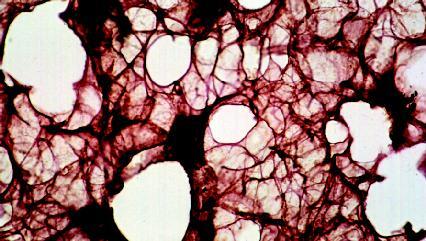
"An electron micrograph scan of coal dust (marked by dark patches) in lung tissue infected with black lung disease."
Source: "The Respiratory System," The Free Health Encyclopedia

Sunday, December 28, 2008

Comments on Science, Technology and Development

"Science, Technology, and American Diplomacy: Background and Issues for Congress," Deborah D. Stine, Congressional Research Service CRS Report RL34503, Updated June 20, 2008.

I just read the report identified above, and want to make some comments. It is a useful guide to recent studies of S&T in our foreign policy.

It is interesting that people don't think of the social sciences as science. If one did one would emphasize economics as the science most critical to U.S. international economic policy and political science as critical to U.S. international security policy -- the key elements of U.S. diplomacy.

The author, as do many others, ignores the scientific and technological functions of the State Department's Bureau of International Organizational Affairs, but that Bureau deals with the World Health Organization, the Food and Agriculture Organization, UNESCO and the UN Development Program -- all with important scientific and technological aspects.

The author also seems to recognize only marginally that every branch of government in involved in international activities with scientific and technological as well as diplomatic elements. The foreign policy agencies -- Department of Defense, Department of Homeland Security, the Intelligence agencies -- should be obvious to all. Examples from the "domestic agencies" include:
  • The Department of Health and Human Services for example has obvious concerns for the detection and control of communicable diseases abroad. It also has interests in the safety of pharmaceuticals imported into the United States (and exported from the United States), and perhaps surprisingly in the health of the millions of Americans abroad at any time, and of the millions of non-U.S.-citizens in the United States at any time.
  • The Department of Agriculture has a foreign agriculture service due to the importance of its international interests.
  • The Departments of Commerce and Labor have fundamental interests in the promotion of exports and in globalization of the productive sector.
  • The Department of Education is concerned with recognition of U.S. degrees abroad and foreign degrees in the United States, and should be concerned with the globalization of education with improved communications and transportation systems, as well as the domestic needs for skills and knowledge of immigrants.
I could go on to talk about NASA, NOAA, EPA and other agencies.

The United States was in my lifetime the home of most of the world's scientists, the source of most of the worlds economic product, and the most important locus of technological innovation. That dominance is no longer. The United States needs to import scientific knowledge and technology if it is to stay at the forefront in these fields, and cooperation need no longer be between unequals. Indeed, what once was seen as technical assistance can now be seen as collaboration for mutual assistance. Globalization requires more rapid technological innovation and also more rapid response to threats that arise anywhere in the world. Man's footprint is ever increasing, and therefore we need to cooperate more to preserve the environment, a cooperation best served by mutual understanding based on collaborative science.

I think these factors mean that we have to envision science and technology in a new way in our foreign policy.

Saturday, December 27, 2008

Internation Cooperation Funding Opportunities from the NSF

Source: "International Activities and the US National Science Foundation," Shireen Yousef and Jennifer Slimowitz Pearl, Bridges, vol. 20, December 2008.

This useful article in the Austrian Embassy's science magazine provides a number of useful leads, including the following:
The Partnerships for International Research and Education (PIRE) program supports collaborations between US and foreign researchers on frontier research that can incorporate research excellence, the development of a globally engaged US workforce, and strengthening of institutional capacity;

The long-standing Graduate Research Fellowship Program (GRFP) enables graduate students to choose to work in any appropriate international institution of higher education anywhere in the world offering advanced degrees in science, mathematics, or engineering. During the 2008-2009 year, 72 fellows were studying at graduate institutions outside the US, while 100 domestic students took advantage of the $1000 one-time international travel supplement;

Pan-American Advanced Studies Institutes (PASI) allow US researchers and students at the advanced graduate and postdoctoral level to interact with researchers from different countries in the Americas in a series of lectures, discussions, and research seminars;

The Developing Global Scientists and Engineers program provides funding for principal investigators to send groups of US undergraduate and graduate students to do research abroad through the International Research Experience for Students (IRES) component, and also funds doctoral dissertation research abroad through the Doctoral Dissertation Enhancement Projects (DDEP);

East Asia and Pacific Summer Institutes (EAPSI) are open to US graduate students to work or study in Australia, China, Japan, Korea, New Zealand, Singapore or Taiwan.

Friday, December 26, 2008

Boxing Day is a Great Time to Think About Giving to Those in Need

The New York Times yesterday had an article about the reduction of remittances to developing nations:
The financial crisis that is in full swing in the world’s developed countries is only beginning to reach the poorest, and labor migrants, with feet in both worlds, are among the first to feel it.

Flows of migrant money to developing countries, known as remittances, began to slow this fall, the first moderation after years of double-digit growth, according to the World Bank. The slowdown is expected to turn into a decline of 1 to 5 percent in 2009, when the full effect of the crisis hits.

Some are already feeling it. Mexico, for example, is likely to have a 4 percent decline in the flows of migrant money in 2008, according to World Bank estimates. The biggest declines next year are expected in the Middle East and North Africa, because of economic slowdowns in the Persian Gulf and Europe.

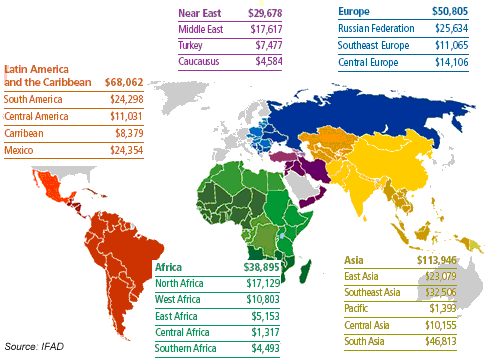
According to IFAD:
The driving force behind this phenomenon is an estimated 150 million migrants worldwide. They sent some US$300 billion to their families in developing countries during 2006, typically US$100, US$200 or US$300 at a time, through more than 1.5 billion separate financial transactions.
Comment: Boxing Day, December 26th, is the traditional day in England and other countries of the Commonwealth for the affluent to give gifts to those who are less affluent.

I suspect that there will be considerable pressure to reduce foreign aid to developing nations during the financial crisis. Remittances are a more important source of funding for many developing nations, and these too will be decreasing. Exports are also being reduced for developing nations as demand is being reduced by the crisis. Thus poverty -- hunger, inadequacy of health services, unemployment, underemployment, misery -- are likely to increase for the poor.

Perhaps Boxing Day would be a good time to rededicate ourselves to helping the poor. A note to your legislator might be in order.
JAD

Thursday, December 25, 2008

Thinking About Thinking

Image source: Only Moments

Here are some random thoughts about the way we think, or perhaps the way we should think.

Almost everyone, almost always, has be wrong about almost everything. Think about religion. The world religion with most believers has about one-fifth of the world's population as followers. That means that at least four fifths of the world has erroneous religious beliefs. Moreover while religious belief seems to be universal, all of the world religions are relatively new in the terms of the species, Home sapiens. So the portion of the species with incorrect beliefs would be higher than four-fifths. Moreover, the world religions are divided into theological factions.

Think about scientific beliefs. Our best modern science, tentative as might be its conclusions, might be used as a benchmark for the accuracy of beliefs. How many people today understand quantum mechanics? It has been estimated that there are between 100 billion and 1000 billion galaxies, each with 100 billion to 1000 billion stars; who among us can really grasp such a reality? How many of us understand the working of the brain or of the genome? Or, going to the social sciences, how many of us understand the social and economic processes of globalization? The answer to each of these questions is "very few if any". So the huge majority of the human race is living with erroneous understanding of the physical and social world.

There is no mind body duality. We think with our brains and thought is colored by the chemistry of the brain and emotion. I am old enough to deal with frequent failures of memory, being unable to access a name or event which I know to be encoded in my mind only to be retrieved with the right internal or external cue. Our perception is distorted, our estimates of probability biased, our reason intermittent, with tendencies toward groupthink and snap judgement.

I find it truly amazing that such an instrument of thought should have been produced by evolution, yet there is increasing evidence that evolution has produced comparable intellectual capacities in other species. Play with a cat and learn how limited is human response time as compared to that which evolution has produced in the feline nervous system. Or compare human visual acuity with that of the eagle.

There is no certain knowledge. There are only degrees of credibility. One of the great contributions of modern science has been the epistemological premise that all conclusions are subject to revision with new observations or new theories. Even Newtonian physics which was so descriptive of observed reality for centuries yielded to Einstein's relativity theory and the observations which tested the differences in Newtonian and Einsteinian predictions. Even our direct observations can be erroneous due to glitches in our perceptual neurology; instrumental observations are unfortunately often erroneous due to glitches in the equipment or set up. Deductions are fallible when the deductive logic fails or the premises prove fallacious.

The distinction between determinism and free will is often unproductive. There are factors which influence behavior, and one can predict with high probability that a person with certain characteristics will behave in a certain way. However, those who don't act in the expected ways demonstrate that there is a possibility of acting contrary to the forces of circumstance.

I have been reading A Commonwealth of Thieves: The Improbable Birth of Australia by Thomas Keneally, the story of the first settlement by Europeans of Australia. The book describes the draconian punishments that were meted out by English authorities at the end of the 18th century, apparently in the belief that the criminals chose to commit their crimes. From our perspective it seems clear that the people were driven to crime by the circumstances of poverty they experienced in England, and that many of them became the pillars of Australian society when moved to another social environment. The death penalties imposed on people convicted (with only the slightest evidence) of minor crimes strikes us a cruel and unusual. The perception that draconian punishment would deter crime proved hugely fallacious.

If we assume that conditions affect the probability of a person committing a crime, then the "blame" for the crime must be shared between circumstances and criminal. If the circumstances are such that illegal behavior are almost inevitable, the blame attributed to the actor should be minimal.

I wonder whether it is the links between emotion and reason that have evolved in our brains, whether the social behavior that evolved in our nature do not make us unreasonable in the attribution of blame to persons who act in ways we define as criminal but which are highly probable from their circumstances.

Indeed, I wonder whether a probabilistic analysis might help our courts. Would it be possible to develop models to explain the probability that someone with a defendant's characteristics would "be driven to" commit a crime, and a model to predict the effect of alternative treatments if convicted in keeping the defendant from "being driven to" commit future crimes.

Probabilistic models rule deterministic approaches. Not only is the world best understood as probabilistic at the level of sub-atomic particles, there are a multitude of phenomenon that are better understood as probabilistic than as deterministic.

Quantum theory shows the photon as something that behaves as a wave and as a particle. It is the quantum of the electromagnetic field. Light may be refracted by a lens, best modeled by a wave metaphor, but the photon can be detected in ways best modeled by a particle. That duality, once understood provides a metaphor that may be useful in many circumstances.

Perhaps we may see an automobile accident as an event comparable to the detection of a photon as a particle. A moving vehicle is a locus of the probability of that accident. Traffic therefore serves as a probability "wave" of accidents, that can be refracted by changes in the properties of the road network.

In many other situations, we don't know enough to predict with a high degree of accuracy, but we still can make probabilistic predictions. Perhaps surprisingly, the theory of probability and statistics are relatively recent inventions.

The ability of people to bet rationally on horse races or games of chance shows that the species has the ability to think probabilistically, and psychologists have shown that training can help people make better bets, but there are well known biases in probability estimates. Thus it is important to complement probabilistic intuition with calculation based on observed data and theory.

This is too big a subject to come to simple conclusions on the basis of a short essay. But it behooves us to recognize our animal nature and the utility of the edifice of logic and mathematics to help rationalize thought over intuition. Indeed, we are now in a position to use information and communications technology to amplify our ability to think probabilistically.

Season's Greetings!

Wednesday, December 24, 2008

Comment on an Interview with Gene Skolnikoff


There is an interview with Gene Skolnikoff, who has a long and distinguished career dealing with science and foreign policy, in Bridges, a science policy journal published by the German Embassy. It is worth reading.

When asked about " the most pressing foreign policy issues where international science cooperation can contribute to the solution" Dr. Skolnikoff answered that the "biggest scientific issue right now is about arms control and nuclear weapons."

It is interesting that the question was posed in terms of "the most pressing" issue and the response focused on "the biggest" issue. Actually I think there is a tendency in the White House to see the most pressing issue as the biggest one, in the sense that it looms largest on the staff's horizon. There is not much time for reflection there.

Dr. Skolnikoff says:
I would put the issue of arms control and non-proliferation higher on the agenda than global warming. Global warming is obviously a major and serious issue. It will be very hard for the world to deal with, but we will. And especially if it starts being serious, if we see the damage, it will be easier to deal with.
Remember, the White House is an agency with more than 1,000 people, enjoying the power of the presidency and the support of the United States government. I can do more than one thing at a time, and must multitask! So too must the Office of Science and Technology Policy.

The Office should allocate its resources (staff, support, prestige, influence) across the spectrum of concerns very carefully. It must consider the importance of each problem, the urgency of taking action, the likely impact that it can have on the problem, synergies among its possible efforts, and put them in the context of the interests of the President, the pressures from the Congress, and the political impact on the electorate.

Nuclear proliferation is deserving of high priority because of the gravity of a possible nuclear attack (not to mention nuclear war), the number of nuclear weapons that are out there and the doubt about their containment, the unequalled power of the American presidency to deal with nuclear proliferation, and the opportunity presented by the Obama presidency.

I recall the old story of the man told that it would take 100 years to establish a great grove of trees in a botanical garden, who said that it was therefore urgent to start right away. Climate Change is a long term problem, but the later we put off working on it, the worse it will be and the harder it will be to deal with. Again, the Obama presidency is an exceptional opportunity to make a start on climate change both domestically and internationally.

The international influence of the United States as well as our domestic welfare depends on the economic health of the American economy, which in turn depends on the rate of innovation, including and especially on the rate of commercialization of science-based inventions. There are many issues involving both international aspects and science and technology policy/understanding involved in keeping the innovation system operating as well as possible.

From my point of view, the world's biggest problem is poverty, and by that I mean not only lack of income but also the syndrome of hunger, ignorance, illness and powerlessness that accompanies financial poverty. Science based technological innovation is a central concern for the alleviation of poverty and the United States is the country best situated to lead to a reestablishment of science-based development assistance.

I wish the very best of luck to the new administration, and especially to its science team in dealing with these and other problems (military technology, agricultural productivity, social dysfunctions).

You Think Better About Things About Which You Feel Positively


Wray Herbert in his blog, We Are Only Human, cites research supporting the idea that people develop "expert thinking" modes about things that interest them. Actually the experiment suggested that if you can generate positive associations with objects, people are willing to spend more time sorting those objects into finer categories. He concludes that the research may help explain the power of hobbies.
But more than that they sound a warning to those choosing jobs and careers. Hard work and mastery may give us a measure of satisfaction, but pleasure also drives mastery and expertise. There may be good psychology beneath that old saw: Do what you love.
Comment: That seems like good advice. I would note, however, that people tend to like doing things that they are good at, so there can be a "virtuous cycle".

Indeed, giving a job a chance may result in getting good at it and getting positive reinforcement, thereby starting that virtuous cycle that leads to expertise and job satisfaction.

On the other hand, I had some dead end jobs in my youth, working hard in unpleasant surroundings, and they encouraged me to work hard to get a job I would like better. JAD

Monday, December 22, 2008

The ALLIANCE FOR A STRONGER FDA

The Bush administration has shorted the budget and staff of the Food and Drug Administration during its term in office. The Alliance for a Stronger FDA is trying to build public support to encourage the Obama administration to reverse the decline. Here is a quote from an Alliance publication:
In recent years, the public financial commitment, in the form of appropriations from Congress, has increased much more slowly than costs have risen. New challenges, such as protecting the public from avian flu and bioterrorism, have drawn additional funding from traditional activities. New public health initiatives have not received adequate financial support, including the Critical Path Initiative to modernize the drug development process. Other pressing needs are underfunded, such as helping consumers make sound dietary choices to prevent chronic diseases, and ensuring the safety of the vast array of products that FDA regulates. In addition, public confidence in the FDA needs to be maintained at the highest level. The FDA’s own Science Advisory Board has recently concluded the FDA lacks the ability to properly perform its job due to insufficient resources.
Comment: I would guess the first priorities are to improve guarantees that imported foods are wholesome to develop a system to monitor adverse consequences of uses of FDA approved drugs. JAD

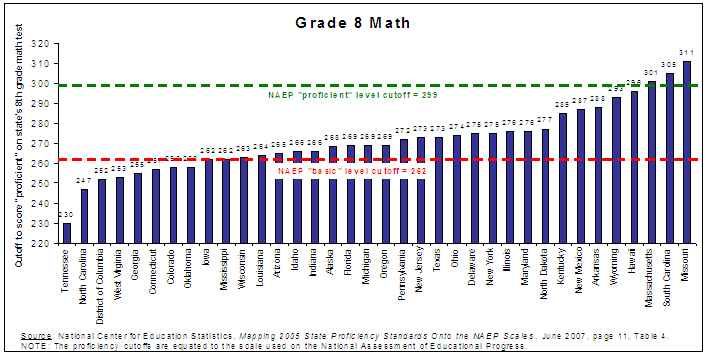
TIMSS Results Out

Source: "Math Gains Reported for U.S. Students," SAM DILLON, The New York Times, December 9, 2008.

American fourth- and eighth-grade students made gains in math in the 2007 surveys of the Trends in International Mathematics and Science Study (TIMSS), an international survey released on Tuesday. Science performance was flat. Several Asian countries continued to outperform the United States greatly in science and math.
Students in Massachusetts and Minnesota, which participated in a special study that attributed a score to the states as if they were individual countries, also demonstrated stellar achievement, outperforming classmates in all but a handful of countries.

In eighth-grade science, for instance, Massachusetts students, on average, scored higher than or equal to students in all countries but Singapore and Taiwan.

And in Minnesota, which has worked to improve its math curriculum, the proportion of fourth-grade students performing at the advanced level jumped from 9 percent in 1995 to 18 percent in 2007, a gain that was one of the world’s largest.
Comment: We have known for a long time that the students from the best schools in the United States are very good indeed, and that there are schools that turn out very few if any students compeitive at the university level.

Some states have more of the former class of schools, some have more of the latter. Shame on the states that are not educating their kids! If we allow that to continue, we will lose out economically and socially in the future.
JAD

Source of Graph: "One Scattered Nation: A Pathway to Common Standards,"
Marc Lampkin, The Huffington Post, July 17, 2008.

UNICEF Photo of the Year

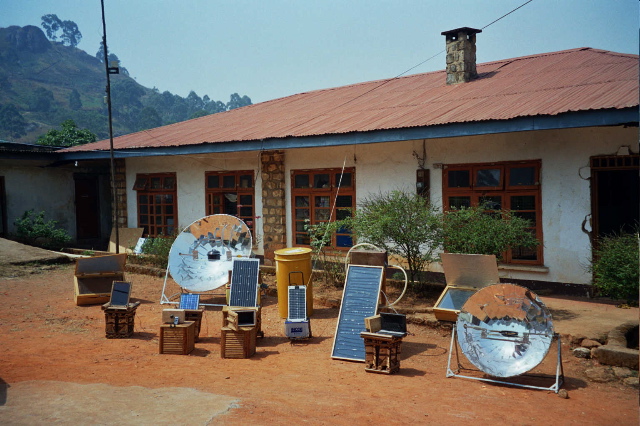
We Need a New Appropriate Technology Movement


The realization that better ways of doing things are a major source of economic progress has developed over many decades. Improving technology is an important means of improving productivity, and more productivity means economic growth. One might think that increasing the capital per worker, either through investing in the means of production or in human capital, is the more important way to improve productivity. However, both kinds of investments involve technological change. Moreover, the recognition that technological improvements yielding increased productivity are possible is a powerful motivation for increased savings and investment.

The original Appropriate Technology movement, triggered by E.F. Schumacher's Small is Beautiful, was based in part on the recognition that poor people in poor countries can not generate very much money for investment. Most people are poor, and if you don't improve their productivity the country and the people will remain poor. Therefore it is important to develop and disseminate technological improvements that can be used by and are affordable to the very poor. In the terms of the day, there was a need to focus on "capital saving" technologies.

Unemployment and underemployment are major problems for the poor in poor nations. If the amount of investment per worker can be held low, then the available capital could be stretched to put more workers to work. Thus, rather than labor savings technologies as were sought in rich countries with high labor costs, the original Appropriate Technology movement sought to increase the employment of labor.

It was also realized that poor people were even then destroying the environment, and technological change would therefore have to focus on promoting sustainable use of natural resources. Moreover, far too often, the poor people in developing nations were unable to maintain the new machines and devices that they obtained; the world is littered with broken machines. Often people could not obtain the financing needed to run the systems in which investments had been made. Therefore it is important to assure sustainability of technologies and technological systems serving the poor.

The original Appropriate Technology movement had a rural bias, in part because the majority of the poor people in poor countries lived in rural areas, and in part because the subsistence farm families were so poor. It also was recognized that increasing the productivity of rural labor would be necessary to contribute to overall economic development. So the Appropriate Technology movement focused heavily on agricultural technologies, cottage craft technologies, and other technologies that might be used in in rural areas.

Because of these perceptions, the original Appropriate Technology movement focused fairly strongly on machines that could be produced locally and used by the poor, such as fuel efficient cook stoves, farm machinery, construction technologies for rural housing, etc. The appropriate technology in health efforts, similarly, focused on things like oral rehydration and disposable needles that could be used in the home or by paraprofessional health workers. Indeed, the radio education efforts implemented at the same time might be seen as developing a system that could use low cost transistor radios and relatively uneducated local personnel (mothers) to provide affordable educational services, and thus closely related to appropriate technology. In all these cases it was clear that the techniques actually being used by the poor in developing countries were often very inefficient and that they could be radically improved by applying modern scientific and technical knowledge to the task.


Many participants in the original Appropriate Technology movement appeared to dismiss science based technological innovations, but of course that would be a mistake. Mobile telephones and new drugs and vaccines illustrate the importance that science based technologies can have when they are developed to meet the needs of the poor. Indeed, science based approaches can be extremely important in improving local workshop technologies in areas such as lime kilns, foundries, and brick making.

In more recent years it has been recognized that governments can best promote technological change by creating conditions where technological innovation is easy and beneficial to the innovators. The emphasis has been on the innovation system, including the availability of financial services for innovators. There has also been an emphasis on policies promoting innovation, such as those which encourage development of human resources capable of innovating technologically.

The development of institutions that facilitate technological innovation has also been recognized as important. In advanced developed nations, the intellectual focus has tended to be on institutions that promote invention and the commercialization of inventions. Note however that if one is trying to get better techniques in the hands of three or four billion poor people the emphasis is generally going to be on enhancing the diffusion of existing techniques, substituting them for less efficient techniques in use.

As one seeks better ways of doing things to improve productivity, social technologies should not be ignored. Economic and social progress can be made by better organization. Here too, however, there is a need for organizational innovations that suit the local circumstances, especially the culture of local peoples.

Terracing and gravity-fed irrigation in India via
The Barcelona Field Studies Center


I would note that the spread of franchising has been an important stimulus to innovation in the United States. Large numbers of people have been able to start their own small enterprises through acquisition of a franchise from McDonnalds or any of a large number of franchisers. In the days of the original Appropriate Technology movement there were examples of franchising (milk kiosks in India, prefabricated housing factories in Colombia) but they were tangential to the central concerns and almost accidental. In areas such as health and education, institution building would be expected to focus on health and educational service organizations rather than on individual practitioners.

The geography of development is now different, in that the world population is primarily urban. Thus a new appropriate technology movement would have to focus more on technological innovation in urban areas than did the original Appropriate Technology movement. It should also be noted that many small-scale manufacturing industries are built around clusters of enterprises and workshops, often achieving synergies within a town or city neighborhood by working in the same industry. Thus one finds villages that specialize in pottery or weaving, metal working, brick making, or some other artisanal manufacture. One also finds urban areas with many related shops providing similar products.

Woman with village phone via
The Grameen Foundation


I recommend a new appropriate technology movement that seeks to develop institutions and policies that lead to rapid innovation in the technologies used by the poor in poor nations. The emphasis would be on policies that encouraged rapid introduction of capital saving technologies enabling increased employment of the poor and sustainable use of natural resources. It would emphasize the dissemination of technologies rather than invention, and would build upon lessons learned in the original Appropriate Technology movement as well as those learned in microfinance and other development programs. However, like the original Appropriate Technology movement, it would also emphasize engineering technological improvements, emphasizing energy efficiency, affordability, labor productivity, sustainainability (both of the innovations per se and of natural resources and the environment), and tailored to local needs and cultures.

The new appropriate technology movement would differ from the science, technology and innovation programs in that it would target the technologies actually used by the poor in their work and in their lives, rather than attempting to build new science-based industries.

Often, development focuses on helping the rich in poor countries get richer. Often it focuses on external humanitarian assistance to deal quickly with hunger and disease without building the needed local capacities. The original Appropriate Technology movement focused on helping poor people to help themselves. It is time to renovate and renew that movement, building in the added knowledge we have obtained in the past decades.


Please Comment
We Need a Discussion on This Topic

Sunday, December 21, 2008

Queen Rania's Channel on YouTube

The Queen of Jordan has her own channel on YouTube
Dedicated to breaking down stereotypes about the Arab and Muslim worlds and to bridging the East-West divide, this is Queen Rania's official YouTube Channel.
According to Wikipedia:
The video sharing website decided to honor the Queen with the first ever YouTube Visionary Award at YouTube Live on November 22, 2008. The award was presented by San Francisco Mayor Gavin Newsom, who said the Queen was being honored because of her "use of technology to instigate social change".


This video of the award ceremony is well worth watching:

"The U.S. Commitment to Global Health: Recommendations for the New Administration"


This new report by a distinguished panel of experts calls for significantly intensifying U.S. governmental commitment to global health in the next four years by increasing funding and placing greater importance on health when setting overall U.S. foreign policy.
A key aspect of U.S. global health funding should be producing a balanced portfolio of aid. Over the past decade, the U.S. government's annual overseas development assistance for health has increased, reaching an all-time high of $7.5 billion in 2008. To date, between PEPFAR -- the President's Emergency Plan for AIDS Relief -- and contributions to the Global Fund to Fight AIDS, Tuberculosis, and Malaria, the U.S. government has spent over $18 billion combating AIDS. These health initiatives are lauded achievements that have brought life-saving drugs and HIV prevention strategies to millions. However, between 2004 and 2008, over 70 percent of U.S. global health funds were allocated to AIDS programs, while funds for chronic disease programs were virtually nonexistent, despite the fact that chronic, noncommunicable diseases now account for more than half of all deaths in low- and middle-income countries.


To ensure balanced and strategic U.S. global health efforts, the report recommends creation of a White House Interagency Committee on Global Health -- composed of heads of major federal departments and agencies involved in global health -- and designation of a senior White House official at the level of deputy assistant to the president to chair the Interagency Committee. The deputy assistant should serve as the primary White House adviser on setting U.S. global health policy and should work with the national security adviser, the director of management and budget, and the president's science adviser.


Saturday, December 20, 2008

The Obama Science Team

President elect Obama has added Harold Varmus and Eric Lander to his science team as co-chars of the President’s Council of Advisors on Science and Technology. A 1989 Nobel laureate in medicine, Dr Varmus is former director of NIH and president of Memorial Sloan-Kettering Cancer Center. Dr Lander is the Director of the Broad Institute of MIT and Harvard; the first author of the major report of the Human Genome Project -- identified as one of TIME's 100 most influential people of our time (2004).

Here is Barack Obama's talk announcing his science team:


“The truth is that promoting science isn’t just about providing resources—it’s about protecting free and open inquiry. It’s about ensuring that facts and evidence are never twisted or obscured by politics or ideology. It’s about listening to what our scientists have to say, even when it’s inconvenient—especially when it’s inconvenient. Because the highest purpose of science is the search for knowledge, truth and a greater understanding of the world around us. That will be my goal as President of the United States—and I could not have a better team to guide me in this work.”

One of the Causes of the Current Economic Crisis

Bush administration strikes to reduce availability of family planning services it doesn't like.

The Bush administration has promulgated a new regulation that gives health care workers, hospitals, and insurers more leeway to refuse to provide abortion or sterilization services for moral or religious reasons. Under the regulation these entities don't have to provide information about these services, nor to refer patients who want them to those who will provide them. It applies to organization or person receiving funds from the Department of Health and Human Services. The regulation also requires a lot of paperwork by health care providers receiving such funds to certify compliance.

The provisions of law cited as being implemented by the new regulation have been around for some time. They have been implemented in the past by HHS. The new regulation therefore seems to be issued in an attempt to further reduce access to abortion and sterilization services, and even information about such services.

As you might expect, there was an outpouring of objections to the draft regulation when it was put out for comment, and apparently most of these were ignored.

The regulation apparently will go into operation on January 18th, but because it has been issued so late the Congress may overturn it. Senator Clinton has apparently already introduced legislation to do so.

For your information:
The Supreme Court says women have the constitutional right to choose. I don't want them trying to make good choices without good information. I also don't see how a health service provider should have the right to provide a patient about a medical procedure that the informed patient might feel appropriate for herself. While I see that a hospital might appropriately put a physician who did not want to provide that information on a service other than OBGYN, it should be able to find someone to provide it when appropriate.

For those who oppose abortion, remember that there were many abortions performed when they were illegal. The result was a lot of unnecessary injury and even deaths of young women.

Lets hope that the Congress has the good sense to act quickly to overturn this regulation!

Where does the money go in a Ponzi scheme

We had been talking about the Madoff affair when a friend asked me where does the lost money go in a Ponzi scheme. Of course, the answer depends on the specifics of the scheme. And, of course, people who run Ponzi schemes almost always skim off some of the money flowing through the scheme to enrich themselves. It occurs to me that others might be interested in my answer.

Think about a scheme which does no investment. The organizer takes incoming funds and puts them in a big pile. He takes his cut off the top, and then takes funds out of the pile to pay "interest" to the investors. In that case, when the scheme is busted, the money that appears to have been lost has actually gone to the operator and the investors. If the remaining funds are distributed according to the "book value" of the investments -- all the money that the investor paid in -- the earliest investors may still have made money, but the last investor lost lots. Of course, all the investors have also foregone the interest that their investment would have made had they put it in something safe like government bonds.

Assume instead that the operator actually invests the money in the stock market. Say he makes five percent on the investment, but pays out 10 percent to the investors (to make his fund look good compared to other funds). What happens is that the actual value of the stock portfolio steadily falls below the total nominal value of the investors contribution to the fund. The end result is the same as the earlier case. The lost money winds up in the pockets of the organizer and the early investors.

But assume that the Ponzi scheme collects so much money, and invests it in such limited set of stocks that it inflates the value of the cost of those stocks above their true value. Assume further that the movement in the selected stock attracts other speculators and a bubble is created. Of course such bubbles eventually burst. Assume further that the burst bubble results in the crash of the Ponzi scheme, and it sells off its stocks at the final low price. In that case some of the money given to the Ponzi scheme by its investors goes to those who sold the stocks to the Ponzi scheme, and who took profits. Some of course still went to the scheme operator and some to the early investors.

In the Madoff case, there seems to have been one more factor. Other firms apparently collected funds from investors, took a fee off the top, and then gave the money to Madoff to manage with the funds of his direct investors. In this case, of course, some of the lost funds would have wound up in the pockets of the intermediaries.

I hope the explanation helps.

Watch Out for Republicans Offering Advice on Foreign Aid

Do you want to wait before helping this kid
until his government is efficient in using foreign assistance?
Image source: Filipe Moreira via flickr


There is an op-ed piece in the New York Times today ("U.S. Aid Should Be Earned") by several high ranking Republicans (LORNE CRANER, BILL FRIST, KENNETH HACKETT and ALAN PATRICOF) that recommends support for the Millennium Challenge Corporation to the incoming Obama administration. The Corporation was a Bush administration creation, and it has had a very slow start.

The idea behind the Corporation was that it would give large amounts of foreign assistance in a form that was available to the recipient government for its allocation but only after that government had demonstrated to the U.S. government that it was likely to utilize the funds well -- that is that the recipient government had appropriate policies and adequate administrative capacity. While the idea sounds good, few governments had qualified for its funding and disbursements of funds have been very slow.

Remember that the creation of this corporation was part of a fragmentation of the foreign assistance program. USAID was placed under closer State Department control (but there was increased emphasis on funding non-governmental organizations as vehicles for bilateral aid, and on partnerships with the private sector which of course resulted in shared control), the Department of Defense was given charge of the large expenditures for conflict related foreign aid, a different bureau of the State Department continued its functions representing the United States with respect to the development assistance efforts of the United Nations programs and decentralized agencies, and the Department of the Treasury remained responsible for representing the United States with respect to the World Bank and other international financial institutions. Many observers have suggested that the Obama administration reorganize the foreign assistance bureaucracy, strengthening the international development expertise and improving coordination among the various elements of the program.

In considering such proposals, it is important to understand the purposes of U.S. foreign assistance. In general we do not seek to increase the rate of economic growth of recipient countries per se, but rather to provide humanitarian assistance or to help stabilize areas for political reasons. (We don't want to tax the American middle class to subsidize the rich in poor countries as they get richer.)

Unfortunately it is not always possible to be sure that foreign aid intended to stabilize Iraq, Afghanistan, the Israeli-Arab region, or other sensitive areas is used efficiently.

In the case of humanitarian aid, people who are suffering from natural disasters, communicable diseases, or hunger or in post-conflict conditions don't always (or usually) live in well governed countries which can quickly demonstrate that aid will be used efficiently and without corruption to benefit the poor. While this situation has been largely responsible for efforts to use non-governmental organizations and public-private partnerships to deliver aid, the resulting development of civil society probably is having significant benefits in the development of better governance. Civil society is an important element to keep business and government focused on the needs of the people.

Moveover, one of the most important purposes of bilateral assistance is to move poorly governed countries toward conditions under which they can more adequately meet the needs of their own populations, and especially the needs of the poor. The investments in human resource development and strengthening key institutions seem likely to be needed to achieve adequate governance. Thus an organization with the charter of the Millennium Development Corporation is unlikely to be able to achieve the humanitarian purposes demanded of U.S. foreign assistance by the public and the Congress.

I don't know how successful the Millennium Challenge Corporation has been or could be. I think it makes sense to have an arm of U.S. foreign assistance that provides assistance in the form of "block grants" to governments of target countries with demonstrated ability to use such funding well. However, it is also important to have programs that provide assistance to achieve U.S. policy objectives in other forms for other countries, and especially important to have an overall coordination among the various foreign assistance programs. It is also important to have a cadre of managers of the foreign aid program who understand both development and humanitarian assistance, with strong diplomatic skills, and ability to coordinate foreign aid with other foreign and domestic policy instruments.

Friday, December 19, 2008

Cascading Economic Problems

Source: "Sustainable Developments: Blackouts and Cascading Failures;" January 2009; Scientific American Magazine; by Jeffrey D. Sachs.

Jeffrey Sachs uses the metaphor of power outages cascading through the grid to explain the current financial crisis. Borrowers defaulting on sub-prime mortgages cause banks to lose capital, which causes them to reduce new lending (with a multiplier effect since banks lend more than they hold in capital), which led to a failure in short term lending to banks, which led to banks selling mortgage backed securities, which led to a reduction in their value, which became cyclical. With the problems in banking, lending drying up, companies cut back in manufacturing and sales, laying off employees, which led to consumer fears and cutbacks, which had a cyclical effect on demand and business. In these processes, international financial markets participated, and eventually imports fell. Thus the contagion spread to other nations.

I have not read the suggestion, but I wonder whether the spike in oil prices was not involved. (Certainly the precipitous drop in those prices was a result.) But the energy crisis earlier this year resulted in increases in prices of everything that uses energy in its production or distribution, and thus hit the poor in the pocketbook. Did that trigger the mortgage defaults that triggered everything else? I am not suggesting that we would not have had the overall crisis eventually had the oil prices not shot up, but the timing seems suspicious.

John Podesta on Science Debate 2008


John Podesta is of course heading up the Obama Transition Team. No wonder the transition has done such a good job including scientists and experts on technology in itself and in the key appointments to the new administration.

Very Impressive Obama Science Appointments

In addition to Stephen Chu, named to be Secretary of the Department of Energy last week, the Obama administration has named John Holdren and Jane Lubchenco to key posts with science and technology responsibilities.

John Holdren is to be President Obama's Science Advisor. Currently he is Professor of Environmental Policy at the Kennedy School of Government at Harvard University, director of the Science, Technology, and Public Policy Program at the School's Belfer Center for Science and International Affairs, and director of the Woods Hole Research Center. He is a recent past president of the AAAS and was a member of President Clinton's Committee of Advisors on Science and Technology (PCAST) from 1994 to 2001.


Jane Lubchenco is to head up President Obama's National Oceanic and Atmospheric Admninistration (NOAA). She is an outstanding choice with a deep background in marine biology. Jane is also a past AAAS president, and past president of the International Council for Science and the Ecological Society of America. She founded the Aldo Leopold Leadership Program that teaches outstanding academic environmental scientists to be effective leaders and communicators of scientific information to the public, policy makers, the media and the private sector.

How do categories evolve

I saw the HBO show on Saddam Hussein, which is very good. The portrait is of a man who is profoundly immoral but one who appears much like other men most of the time, who effectively used the mass media to create a cult of personality in Iraq, and who could show human emotions under conditions such as the death of his sons.

The show got me to wondering about the people with antisocial, psychopathic, dissocial, or sociopathic personality disorders. I spent some time on the Internet looking up these disorders, which was interesting. It lead me however to think about the way in which scientists develop taxonomies. That last topic seemed appropriate for this blog.

There is no universally agreed taxonomy for these disorders, although it is agreed that a small portion of the population, mostly men, share an inability to empathize with others and a tendency to immoral behavior, and yet are sufficiently adept to dissemble their oddity and to "make friends and influence people".

It appears that such people show up in the literature for a very long time, but professional psychiatrists have been studying them for only a few decades. It is the psychiatric literature that has developed the taxonomies of these disorders, based on behavioral manifestations.

If you think about a simple category, such as "chairs", it is clear that there are lots of different things that qualify. Some are large, some are small, some are wood, some plastic, etc. It is not always clear whether the category applies to a specific object. Is a three legged stool a chair? I have seen a 20 foot tall object in a chair shape which is placed as a scupture; is it a chair?

Three Loopita chairs (designer Victor Aleman) put together.

For psychologists it is important that the diagnostic category be such that there is clarity as to whether a person is or is not a psychopath, yet people differ greatly in their behavior. There is little wonder that it has been difficult to infer a set of categories for people with these characteristics based on observations of hundreds of patients, prisoners, and interviewees.

More recently there has been an effort to utilize brain and cognitive research in an effort to identify neurological correlates of the condition. These have included studies of brain chemistry, brain imaging, and latency of stimulus responses. It is assumed that there may be both a genetic predisposition and bases in childhood experiences that result in such a personality. I would suggest that differences in general intelligence and socio-economic status might lead to differences in the way the personality traits are manifested.

Socio-biology has led to the idea that sociopathic behavior may be a strategy for reproductive success, leading to genetic predisposition for such behavior in a small percentage of the population.

It interested me to find that the clinical classification is limited to adults. If you think about it, children tend to be more selfish, less able to make moral judgments, and less aware of the feelings of others than are normal adults. Sociopathology thus seems to me to be a kind of unsuccessful maturation.

All science begins in taxonomy, and it looks to me as if we are approaching a satisfactory set of classes to distinguish people who think and feel in the ways I have been describing. There is already an ability to distinguish between those who wind up committing serious crimes and those who can fit in normal society. Perhaps surprisingly, there doesn't seem to be any effort to treat such people.

As an aside, thinking of Saddam, he lived through a time and in a place in which his behavior resulted in his obtaining dictatorial power over a reasonably large nation, having started as a would-be assassin. I suspect that Idi Amin found similar conducive circumstances to success in Uganda, and Hitler in Germany. It would seem wise to try to assure that social and economic circumstances don't favor the success of such people. The ones we know about rose to prominence in disordered societies with lots of internal conflict, poverty and confusion.

Did you Make the Connection

There are some 100,000 people who have had to evacuate their homes due to tidal flooding in the low lying islands of the Pacific this week. The tides have been exceptionally high.

The full moon last week was exceptionally bright.

The tides of course have been recognized since the time of Galileo as being caused by the gravitational attraction of the moon on the oceans. Gravitational force decreases as the square of the distance. The moon was bright because it was especially close to the earth, which in turn was why the tides were high. (Remember, orbits are not circular, and indeed are rather complicated when all the interactions of celestial bodies are taken into account.)

Of course, global warming will raise sea levels, and the tides are added to the sea level. So the abnormally high tides being experienced now are similar to the normal tides that the world will experience when more global warming has occurred and more ice has melted.

Wednesday, December 17, 2008

Mysteries of the Middle Ages


I just read Thomas Cahill's Mysteries of the Middle Ages: And the Beginning of the Modern World (Hinges of History). It is a very attractive book, and in easy, interesting, and informative read.

One way to understand the book is through its central metaphor, the pilgrimage. Cahill takes us on an intellectual journey which is fundamentally religious in which we meet and get to know a number of very interesting people, from Hildegarde of Bingen, to Saint Francis, to Giotto and Dante. They are, as he suggests, people who are very different than our daily associates, coming from very different places (in time). He sketches their contributions and the impacts they have had on the history of western civilization. But he tells human stories, such as the love stories of Abelard and Eloise, and Paolo and Francesca.

Cahill is also seeking to show how the Catholic religion during the Middle Ages has formed modern Western civilization, emphasizing its effects on the role of women in society, the emergence of modern science, and the emergence of representational art. He is quite explicit that it is not the hierarchical leaders of the church organization that interest him, but key individuals, most of whom are not formal church leaders but who are deeply influenced by the Catholicism of their time.

He describes the change in philosophy between Abelard and Thomas, attributing it largely to Thomas' access to the philosophy of Aristotle which had not been available to Abelard. He also talks about the switch from Byzantine iconography to the realist tradition in art introduced by Cimabue and Giotto. He doesn't explicitly suggest that in both cases the transformation is from "looking through reality toward the idea" to "appreciation of the reality and the ideal as consubstantial.

One might quibble that the story telling focusing on these few exceptional people may not be the best way to illuminate the relation between religion and social change. Perhaps not, but it makes for an interesting read.

I think the major criticism is in Cahill's assumptions about causality. Certainly the Catholic Church was there deeply affecting people in Western Europe during the whole of the Middle Ages. Changes in the church occurred as did changes in the larger society.

We know that A and B may be correlated by coincidence, by changes in A causing changes in B, by changes in B causing changes in A, or by changes in something else, say C causing changes in both A and B. Of course, there may be circular chains with any of the three pairs (A and B, A and C, and B and C) with changes in each causing changes in the other. Indeed there may be even more complicated patterns of causality, even among only three factors.

Cahill seems to be inferring that the church is driving changes in philosophy, gender roles, and art and leading to proto-scientific thinking. I would suggest that it is likely that social change, changes in the church, and changes in other factors are all driving changes in each other.

History is complicated. As I recall its history, there were angry confrontations for centuries among people with different views on theology, not to mention organization and governance. Moreover, in the Middle Ages most people were illiterate, poorly educated, and restricted to their very small local communities, depending on poorly educated priests and nuns for religious information and guidance. If the last 60 years of Catholic history are at all typical, the church can and does change rather quickly. I can see how the relatively small community of intellectuals writing in Latin during the period might be considered as a whole, but it seems much harder to consider the entire number of people who would call themselves Catholics could be seen as coherent.

Anyway, thanks to Mr. Cahill for an interesting read.

Monday, December 15, 2008

The Worst Technology Predictions

T3 The Gadget website has a posting identifying what its authors believe are the ten worst technology forecasts of all time.

Emailer inventor Sir Alan Sugar in an interview with the Daily Telegraph in 2005 said
"Next Christmas the iPod will be dead, finished, gone, kaput."
According to The Telegraph, in the three years since he made that prediction there have been 174 iPods sold.

My vote for the worst prediction of the lot was that of William Thompson, Lord Kelvin, President of the Royal Society, who said in 1883.
"X-rays will prove to be a hoax"
Kelvin, after whom the Kelvin scale of temperature was named, was one of the world's greatest scientists. The gap between his brilliance and fame and his predictive accuracy is truly enormous.

It may be a very good idea to keep these examples in mind when considering the accuracy of technological forecasts, even when they are made by real experts!

Steve Chu on U.S. Science Policy

The nominee for Secretary of Energy

"'Right to science' deserves more support"

Sufferers have a human right
to access life-saving science
Flickr/Julien Harneis


David Dickson wrote an editorial for SciDev.Net making the important point that more should be done to enable people to exercise their rights to access to scientific information and the beneficial products of its application.
We must clarify the 'human right' to science — and remind governments of their contractual obligation to uphold it.
I agree completely!

The right is acknowledged in the Universal Declaration of Human Rights:
Article 27.

(1) Everyone has the right freely to participate in the cultural life of the community, to enjoy the arts and to share in scientific advancement and its benefits.

(2) Everyone has the right to the protection of the moral and material interests resulting from any scientific, literary or artistic production of which he is the author.
Remember, the United States is not only a signatory to this Declaration, but encouraged its development and supported Eleanor Roosevelt as the chair of the committee that drafted the report.

It is also acknowledged in the United Nations in the International Covenant on Economic, Social and Cultural Rights:
Article 11
2. The States Parties to the present Covenant, recognizing the fundamental right of everyone to be free from hunger, shall take, individually and through international co-operation, the measures, including specific programmes, which are needed:

(a) To improve methods of production, conservation and distribution of food by making full use of technical and scientific knowledge, by disseminating knowledge of the principles of nutrition and by developing or reforming agrarian systems in such a way as to achieve the most efficient development and utilization of natural resources;
Article 15
1. The States Parties to the present Covenant recognize the right of everyone:

(a) To take part in cultural life;

(b) To enjoy the benefits of scientific progress and its applications;

(c) To benefit from the protection of the moral and material interests resulting from any scientific, literary or artistic production of which he is the author.

2. The steps to be taken by the States Parties to the present Covenant to achieve the full realization of this right shall include those necessary for the conservation, the development and the diffusion of science and culture.

3. The States Parties to the present Covenant undertake to respect the freedom indispensable for scientific research and creative activity.

4. The States Parties to the present Covenant recognize the benefits to be derived from the encouragement and development of international contacts and co-operation in the scientific and cultural fields.
The United States ratified this Covenant in 1977, and thereby obligated to abide by its provisions.

What Needs To Be Done?

The rights to science must be understood in the context of the overall set of rights. Half the world's population is extremely poor by American standards. That poverty is not merely lack of income and wealth, it also involves poor education, poor health services, poor access to knowledge and education, poor access to technology, poor access to food and inadequate housing. Unless poverty is ameliorated, there will be no real access to science and its beneficial applications.

Everyone, even those of us fortunate enough to live in affluent societies, obtain our access to science via institutions, including importantly educational institutions. However, market institutions provide us to products produced by corporate institutions applying scientific knowledge in their production. Assuring people the rights to knowledge involves implanting the needed policies and building the needed institutions. It also involves educating not only the consumers of science and its products, but also the vast workforce needed to develop, disseminate, and utilize scientific knowledge.

There are still government policies that deny people access to scientific knowledge, censoring information that government officials feel would be dangerous for the public to know or censoring information generally catching scientific information in the net as part of the total injunction. I find the deliberate obstruction of access to scientific knowledge even more unforgivable than failure to take the positive steps needed to promote such access.

Sunday, December 14, 2008

Pay off your credit cards ASAP


The Economist reports research by Neil Stewart that indicates that the "minimum payment" information that is by law included on credit card statements may result in lower payments and higher interest costs. Apparently just including the minimum payment line creates a mind set that results in people making smaller payments than they would were the bill presented without that entry. Because those smaller payments result in more debt staying on the books, they wind up paying more interest.

The law which requires the companies to define a minimum payment was apparently intended to help consumers. Its apparent failure demonstrates the importance of confirming things that appear reasonable with actual observations.

The fundamental lesson here is to be careful that you think things through. Clearly credit cards cost a lot to carry your debt, and if possible it is better to pay off the balance with each bill. If that means that you avoid unnecessary purchases, or save up in advance of a purchase, all to the good!

Developing ICT for Vehicular Safety


Source: "Vehicle-safety systems: Stopping in a hurry," The Economist, December 11th 2008.

The Economist also has an article describing systems being developed, primarily in Europe, to use ICT to monitor driving threats, issue warnings and even take control from the driver of a vehicle to avoid or minimize an accident.
These so-called “intelligent” vehicle-safety systems have the potential to make roads a lot safer, according to a new study by VTT Technical Research Centre, a big contract-research organisation based in Finland. It reckons the most promising is electronic stability-control, which can improve a car’s handling by detecting and helping to prevent a skid. The centre calculates that if this system alone were fitted to all the vehicles in Europe it would reduce the number of people killed on the roads there by almost 17%. Devices designed to prevent a driver straying from a motorway lane would reduce deaths by about 15%. Those warning drivers about speed limits and other hazards would cut fatalities by 13%. Some of these systems may be combined; the forward-facing camera that monitors road markings for the lane-departure system in the new BMW 7 Series, for instance, is also capable of recognising speed signs and displaying the limit on the dashboard.
As anti-lock brakes migrated from luxury cars to be common in the entire auto fleet, so these may eventually be common technologies.

I hope that as we bail out the U.S. automotive industry, and as we invest in repairing, rebuilding and improving our highway system, appropriate attention will be directed toward incorporating these novel technologies. Indeed, although the topic is not covered in the source article, appropriate ICT technologies incorporated in our transportation system could yield further advantages in fuel economy as well as safety.

Pretty Good News on the Health Front

Source: "Malaria and Alzheimer's disease: A jab of hope." The Economist, December 11th 2008.

There is pretty good news with regard to Alzheimer's disease. Ruth Itzhaki reports in the Journal of Pathology that DNA from Herpes simplex, the virus that causes cold sores, is found in the plaques that are associated with Alzheimer's. She believes that genetic vulnerability and Herpes simplex infection may explain 60% of cases. If her research can be replicated and her conclusions stand up, we may better understand the disease. Almost everyone is infected with Herpes simplex, which lies dormant during most of our lives. However, if Dr. Itzhaki is right, the new understanding may lead to better risk assessment, to treatments that will slow or stop the progresion of Alsheimer's (perhaps using antiviral drugs in high risk people), and even promote the development of a vaccine to prevent the triggering infection.

There is better news about malaria. Joe Cohen and his colleagues present the results of a study of a vaccine against malaria in this week’s New England Journal of Medicine. The investigators report that the vaccine with its adjuvant could be combined with regular courses of vaccine given to children without loss of efficacy of either, and that the injection reduced the chance of getting malaria by 60%. The scientists believe that they have an even better adjuvant than that used in the test, and are proposing a large scale Phase 3 trial to prove the intervention. Of course, the new test would not be needed if we were sure that the vaccine would be safe and effective as its proponents believe. If it is, the world would have a new instrument which could be combined with case finding and treatment, bed nets, household DDT spraying, and mosquito control, perhaps finally to knock back malaria. That would be very good news indeed!

Newsworthy is not necessarily important, tho we attribute importance to what we see on the news!

For several days the media were filled with the November terrorist attack in Mumbai. It received even more coverage than the Mumbai bombing two years ago that killed 180 people. However, the Economist reports:
In the first 11 months of this year, according to the Institute for Conflict Management, a Delhi think-tank, nearly 2,500 Indians died in conflict.
So why did we hear so much about this attack and so little about the the several chronic insurgencies going on in India?

The Economist also reports that
1,000 Indian children die of diarrhoeal sickness every day
which I calculate to be 365,000 kids per year from a preventable, treatable disease.
Last year 130,000 people died on India’s roads, 60% more than in China, which has four times as many cars.
So why do we hear so much about the relatively minor mortality (in a population of 1.1 billion) caused by a terrorist attack, and the far worse mortality due to disease and accidents, mortality that could be cut dramatically by engineering and health services?

My point is that the criteria used by the media to decide what news to cover is not the importance of a problem, but rather its "newsworthyness". Terrorism is newsworthy, and more so when it results in deaths of Americans or Europeans or when it hits affluent people in fancy neighborhoods. It becomes especially newsworthy if an event lasts long enough that the cameras can get there, and if it generates pictures with just the right amount of shock value -- fire rather than blood and gore.

On the other hand, the death toll from diarrhea and accidents have been with us for a long time, and if we are not tired of hearing about them the media are tired of covering them. They are not newsworthy.

That would not be important if we did not form our estimates of the priority of problems in large part by how well we remember examples of the problem arising. The people most likely to remember the death of a child from diarrhea probably don't have much power to affect policy, while the people watching the terrorist attack on television may well have influence.

I would rather see mass demonstrations of Indians demanding better access to the public for potable water, better disposal of waste, and better safer roads, as opposed to people militating for a hard line against Pakistan, where the November terrorists may have been trained.

It is hard to coordinate legal and public health protection of the public.

Especially when the public is inadequately educated and dominated by poor perceptions of relative risks.

I have been listening to a discussion of Paul Offit's book, The Cutter Incident: How America's First Polio Vaccine Led to the Growing Vaccine Crisis. The author and his discussants make a number of great points.
  • Public health is a great investment that we underfund. As a society we should spend more on preventive measures of public health, even were that to mean we spend less on curative medicine.
  • Vaccines have been a key means of prevention.
  • The tort system makes companies pay for the victims of adverse effects of immunization but not for the adverse impacts of failure to immunize. The result has been a refusal of companies to manufacture a number of vaccines that could have important benefits to the public (that is, vaccines that would prevent many worse problems than they cause.)
  • Juries and judges don't have the scientific expertise to make good judgments on causality of side effects of vaccines, and the adversarial process limits the information that is available to them.
  • A change in the law which provided public funding for the victims of adverse effects of vaccines, but which placed the decision in the hands of scientificallty trained referees has done a lot of good, but the exceptions to its coverage leaves areas in which companies still refuse to supply useful vaccines.
  • We need a good way to compensate the people who suffer from adverse effects of public health programs. We should see them as heroes, comparable to the soldiers who fall on grenades to save their buddies.
  • There is an argument that liability law is intended to encourage good manufacturing practice by penalizing companies that produce defective products or that fail to adequately warn consumers, but that they are not good means of compensating the persons suffering from adverse effects of public health programs.
  • Bad things happen. It makes little sense to compensate people who suffer adverse consequences of public health interventions when there would have been a lot more people suffering worse adverse consequences of failure to take those public health measures. Compare the situation in which 100 people suffer an adverse impact of a product where no one would have been affected had the product not been distributed, and the situation where 100 people are affected, but 1000 people would have been affected had there not been the product.
  • The interesting example was of a patient in an emergency room who had 90 percent chance of dying without a drug, but a 50 percent chance of dying with the drug. Why would you require compensation to the people the drug did not save. If you did require that compensation, but did not require compensation for those who died without the drug, no one would provide the therapy. Yet clearly it is better to save 40 percent of the patients than not to do so.
I need to better understand the concept of "strict liability", its development in the legal system, and its policy implications.

Saturday, December 13, 2008

NIH Budget Problems

In a Washington Post article about the challenges facing the next director of the National Institutes of Health, David Brown writes about the NIH Budget:
The NIH this fiscal year will spend just under $29.5 billion on basic and applied medical research. More than 80 percent of the funding takes the form of 50,000 grants to 325,000 scientists in the United States and a few overseas. About 10 percent supports research by 6,000 staff scientists, most working at the agency's campus and hospital in Bethesda.

In the past decade, the NIH's budget saw an unprecedented doubling, from $13 billion in 1998 to $27 billion in 2003. In the past five years, however, it has risen only slightly -- and, when adjusted for inflation, has declined.
Comment: Apparently the Bush administration decided that we could not have two wars and an increasing medical research budget, and chose to fail to increase and then cut the NIH budget. I suppose that more lives have been lost due to the invasion of Iraq (considering the lives of the Iraqis) than will be lost as a result of the shorting of medical research. But I am not sure! JAD

climate summit ends

After Poznan, eyes are
turning to Copenhagen


Source: "Mood mixed as climate summit ends," Richard Black, BBC News, December 13, 2008.
"The UN climate summit has ended with delegates taking very different views on how much it has achieved. Western delegates said progress here had been encouraging, but environment groups said rich countries had not shown enough ambition. Developing nations were angry that more money was not put forward to protect against climate impacts."
The meeting marked the halfway point of a two year long process. Progress was made on the Adaptation Fund, which which is to help poorer countries deal with climate change; terms of access to these funds were eased. The decision means that adaptation money can begin to flow at some point next year.

Comment: The leaders of the other countries of the world are looking to the Obama administration to implement Obama's campaign promise to reduce U.S. greenhouse gas emissions. They are also looking for the new administration to lead the negotiations to an effective new treaty to reduce climate change and its adverse effects.

Secretary of State Clinton is going to have a full plate. Not only will she be trying to figure out how to end two wars honorably without destabilizing the region, and how to deal with the Arab-Israeli conflict, but will be dealing with a once in a century economic crisis, with international terrorism, with developing a means of reducing the threat from tens of thousands of nuclear warheads that exist (some in conditions that seem dangerously unprotected), with the conditions in Latin America that are leading to massive illegal immigration and illicit trade in drugs, and with the legitimate aspiration and potential anti-American sentiments in other nations that will undoubtedly exist. Do you wonder why Obama is going for strength and ability rather than complete agreement with his policies in his appointments?
JAD

"WTO Says Dispute Among U.S., Emerging Nations Scuttled Deal"

Image Source: Trading Lives

Article source: Bradley S. Klapper, Associated Press via The Washington Post, December 13, 2008.

Excerpt:
The World Trade Organization on Friday said it will fail to secure a new global commerce pact before the end of the year because of a dispute between the United States and emerging economies over agricultural and industrial goods.
The talks were originally planned for this week, but were pushed back to the new year.

The article also notes:
The talks, which were kicked off in Qatar's capital Doha in 2001, have suffered a number of debilitating collapses. Some diplomats, politicians and industry groups had expressed concern that Lamy was forcing through a meeting that stood little chance of success. Negotiating drafts released last weekend showed the WTO's 153 members were divided over the same issues that sank the last major effort, a nine-day summit in July.

That collapse had led many to write off any short-term chances for a deal. But last month in Washington, prompted by the global financial crisis, 20 of the world's industrialized and emerging economies called for an agreement to open up trade in farm commodities and industrial goods by the end of the year.

In Geneva, the United States and emerging powers such as China and India continued to be at odds over an American demand for massive tariff cuts in the global chemicals sector. Those countries also could not agree on a safeguard for poorer countries who fear a sudden flood in farm imports or drop in commodity prices.
Comment: People in developing countries no longer trust the Bush administration's public statements, but focus instead on its actions. I wonder why? Perhaps this is fortunate, as the delay will give the Obama administration economic team the chance to step in to the negotiations. JAD

Who Gets U.S. Foreign Aid: How should we organize aid and cooperation?

Distribution of U.S. Foreign Assistance
Source of Graph: Many Eyes via MemeMapper

Parade
magazine has an article on the distribution of foreign aid.
The U.S. will give an estimated $26 billion in foreign aid in 2008—70% more than when President George W. Bush took office (the figure doesn’t include funds related to the wars in Iraq and Afghanistan). More than 150 countries get financial assistance from the U.S.
The ten leading recipients listed by Parade are: Israel ($2.4 billion), Egypt ($1.7 billion), Pakistan ($798 million), Jordan ($688 million), Kenya ($586 million), South Africa ($574 million), Mexico ($551 milllion), Colombia ($541 million), Nigeria ($491 million), Sudan ($479 million).

Think Progress (citing the Congressional Research Service) reports "that the U.S. appropriated $28.9 billion in assistance to Iraq from FY03 to FY06." In August of this year, the Center for American Progress reported that the United States had pledged $10.8 billion for development assistance to Afghanistan from 2002 to 2008, but had actually dispursed $5 billion.)

Comment: The rationale for the aid to Iraq and Afghanistan is obviously politico-military. The aid to Israel and Egypt is a payoff for the peace process. The aid to Pakistan and Jordan relates obviously to their importance to the wars in Afghanistan and Iraq, respectively. South Africa, Mexico and Colombia are relatively affluent countries, and Nigeria is an oil exporting country with a reputation for corruption and misuse of government funds.

Clearly the allocation of these funds is not based on humanitarian concerns, nor on the need to deal with global environmental problems. There is more concern for global health as a result of earmarks by the Congress and administration.

If you believe that the United States should be doing more to help the world's poor and should be helping poor countries to invest in environmentally sustainable development, then the current allocation of resources is not accomplishing your purposes.

That is the reason that people are calling for a reorganization of U.S. foreign assistance. It should be removed from the State Department where political and economic interests predominate, and from the Department of Defense where military interests predominate, and placed under an independent agency. That agency should have access to the President (probably through the Secretary of State), and should be able to coordinate the bilateral assistance program of the United States (which it would manage directly) with the programs of the International Financial Institutions (now under the Department of the Treasury) and the development programs of the U.N. family of organizations (now under the Department of State's Bureau of International Affairs).

My friend Frank feels, and I agree, that in addition to a broad foreign assistance program, the United States should have a broad international cooperation program. In an increasingly global economy, with increasingly important intergovernmental institutions, the United States has increasing concerns for cooperative efforts not only with poor nations and with the OECD nations, but with middle income and emerging industrial nations.

We need cooperation on the protection of the environment, on health, on education, on science and technology, on agriculture, on fisheries and forest management, and on the global economy. In fact all the agencies of the government have international cooperation programs. They are "stovepiped" however, into sector specific channels, although all fall under the authority of the Ambassador in terms of their footprint in a specific foreign nation. An organization that would coordinate and promote such international cooperation programs, working closely with State, USAID, and Treasury as well as with the White House could be of real service to the United States.

Dignitas Personae

Mons. Elio Sgreggia
the Vatican's top official on bioethical questions
©EMANUELA DE MEO/CPP
Catholicpressphoto.com


The Vatican has issued a new instruction on bioethics, Dignitas Personae.

The Q&As issued by the U.S. Conference of Catholic Bishops state that it is "an “instruction” from the Catholic Church’s highest doctrinal agency, the Vatican’s Congregation for the Doctrine of the Faith (CDF), applying timeless moral principles to some new issues and situations arising from biotechnology. It does not declare a new infallibly defined dogma, but is approved by Pope Benedict XVI and has his authority."

Here are links to key documents:
Thomas Peters has some added links regarding Dignitas Personae. This instruction is a follow-up document on bioethics from the CDF to Donum Vitae (1987) and Evangelium Vitae (1995).

Comment: I will not comment on the content of the instruction. There are already many such comments in the media. JAD

Ps: The Washington Post today has a front page article discussing Dignitas Personae. It notes:
The document could also play a role in current political debates. President-elect Barack Obama, for example, has promised to end restrictions on federal funding for embryonic stem cell research, just as the Bush administration is finalizing a broad new federal regulation designed to protect health-care workers who object to providing therapy or care they find morally objectionable. The document does not address either of those issues directly but provides guidance on both.
Comment: While it seems reasonable not to require health care workers to perform things which they find morally objectionable, that might keep someone from a religious group that does not believe in transfusions from giving a life saving transfusion, or keep someone from removing a brain-dead person from life support systems. This is clearly a Bush administration effort to pander to a narrow constituency, without proper concern for the potential repercussions. Still another legacy of the Bush administration that the Obama administration will havfe to overturn. JAD

The Most Important Foreign Policy Concern for Obama May Be the Domestic Economy

Russia and China are perhaps the two outstanding examples of societies in which the social compact is that authoritarian governments stay in power while the people feel that the government is providing rapid economic growth. The oil exporting countries may find considerable popular unrest if their authoritarian governments are tagged by the economic downturn resulting from the crash in oil prices. In many other countries, fragile governments may well be challenged by people who are suffering from their national versions of the global economic recession.

It seems to me that many leaders will try to project their domestic problems on the United States. They may do so because the global recession was triggered by the sub-prime mortgage boom and bust in this country. They may blame the government for failure to regulate the financial institutions that created the boom and bust. They may blame the American public for its greedy consumption and unwillingness to save. All three charges seem true to me.

The United States has long benefited from a positive reputation in many countries, as a country in which immigrants could succeed economically. American intervention on the winning sides in the two World Wars was also perceived as more altruistic than self interested, and the Marshall Plan and support for the reconstruction of Japan were seen in a very positive light, as was the Alliance for Progress of John Kennedy. In the early 1990's the free market economic system which the United States had advocated was seen as winning a global competition and the United States as advocating a system that was better everywhere. U.S. leadership of a global coalition to free Kuwait from its Iraqi invaders was also seen as a just action. The domestic civil rights movement was seen as trying to live up to the strong human rights message which we preached abroad.

The Bush administration has poisoned these positive attitudes, with the world feeling that it has embarked on an unjust war and occupation, that it has endorsed torture and abrogated human rights at home and abroad, and has sacrificed a global consensus on environmental actions for short-term corporate profits. If that downturn in our reputation is compounded by blame for a long-lasting global recession it will be difficult for the Obama administration to capitalize on Obama's personal popularity. indeed, one could find serious foreign policy problems popping up in many regions of the world as national leaders take anti-American actions to shore up their domestic support.

Friday, December 12, 2008

A worthy project to support in Kenya


Calestous Juma, Director of the Science, Technology and Innovation Program at the Harvard Kennedy School, is promoting a project to develop a model media lab at the John Osogo secondary school in Kenya (shown above). Juma himself is a graduate of the school. The organizers working with the World Computer Exchange plan a shipment of 200 donated used computers from WCE to connect seven high schools serving 4.000 students in Port Victoria (in Budalang'i Division of Kenya). Dr. Juma says:
"This is exciting because this building was originally built with the help of Peace Corps Volunteers. I was taught there by a Peace Corps Volunteer."
The media lab is intended to be a technology resource for the students in the nearby schools. John Ouko, principal of the John Osogo school. said,
"The main objective here is to build a strong technological network as the basis for community development in Budalang'i Division. The ultimate goal is to establish the Victoria Institute of Science, Technology and Innovation in the area, which will service technology-driven development in the entire Lake Victoria Basin bestriding Kenya Uganda and Tanzania. This Institute will link schools, institutions of higher learning, research institutes, industry, government and communities in a unique development-focused web powered by information technology, research and innovation. We are now putting in place the building blocks for transforming the region into an IT hub, starting with IT Labs at John Osogo Secondary School and a Community Information Center nearby."
If you can help or are just interested in more information go to the project webpage on the World Computer Exchange website.

"Report on Detainee Abuse Blames Top Bush Officials"

Image source: Cazhenshaw’s Weblog

Source: Joby Warrick and Karen DeYoung, The Washington Post, December 12, 2008.

Excerpt:
In the most comprehensive critique by Congress of the military's interrogation practices, the Senate Armed Services Committee issued a report yesterday that accuses Rumsfeld and his deputies of being the authors and chief promoters of harsh interrogation policies that disgraced the nation and undermined U.S. security. The report, released by Sens. Carl M. Levin (D-Mich.) and John McCain (R-Ariz.), contends that Pentagon officials later tried to create a false impression that the policies were unrelated to acts of detainee abuse committed by members of the military......

The administration's policies and the resulting controversies, the panel concluded, "damaged our ability to collect accurate intelligence that could save lives, strengthened the hand of our enemies, and compromised our moral authority."
Click here to see the website for the Committee Report.

Comment: This blog focuses on knowledge, and in that respect the conclusion that the administrations policies "damaged our ability to collect accurate intelligence" is most worthy of note. It seems clear that those policies have been responsible for many people joining insurgencies and terrorists to fight against the United States. Even if that were not true, they are morally wrong. Thanks to the Senate Committee for the investigation, and thanks especially to John McCain, the ranking Republican, for not covering up the mistakes of the Republican administration. JAD

"The Flow of Scientific Research"

Image source: "NOAA ATTRIBUTES RECENT INCREASE IN HURRICANE ACTIVITY TO NATURALLY OCCURRING MULTI-DECADAL CLIMATE VARIABILITY," NOAA Online magazine, November 29, 2005

Source: Joe Davidson, The Washington Post, December 12, 2008.

Excerpt:
The Commerce Department's inspector general said in a recent report that agency policies on the dissemination of scientific research "were in many cases unclear and contradictory, or overly burdensome and often ignored."

The report looked at charges that political appointees at the National Oceanic and Atmospheric Administration had blocked publication of facts linking increased hurricane intensity to global warming.......

The controversy grew from a 2005 article in NOAA's online magazine that said hurricane activity is cyclical. That upset some researchers who, according to the IG report, "believed it failed to reflect the full spectrum of the agency's research on hurricanes and the related effects of global warming."

To address that criticism, NOAA decided to issue a fact sheet in January 2006. It was completed in May but not released until that September and then only after press inquiries. Fourteen senators also complained.

One reason for the delay, according to the report, was "inaction by a senior policy advisor who provided limited assistance to NOAA in obtaining departmental clearance for the fact sheet despite being sent at least 6 drafts over a 4 month period."
Here are the Abstract of the Report, and the Report in full.

Comment: Still another example of the Bush administration's failure to make government science available to the public in a timely fashion. JAD

Commitment to development index


According to the Economist:
America ranks 17th out of 22 rich countries in its commitment to fostering prosperity in the developing world, according to the Center for Global Development, a think-tank in Washington, DC. The Netherlands, Sweden, Norway and Denmark take the top four spots thanks to the generosity of their foreign aid relative to the size of their economies. But aid is not all that matters. Countries such as Australia, New Zealand and Canada score well by dint of good trade and security policies. Environmental, technology and migration policies count too. America’s relatively low trade barriers, the generosity of its citizens’ private aid flows, and policies promoting pro-poor technologies save it from last place.
Comment: Note that lower ranked countries Greece and South Korea are much poorer than the United States and would be expected to be less able to help other nations to develop. Japan is suffering from a long period with a weak economy. The U.S. reached this dismal level only after the Bush administration actually increased foreign aid.

However, the Economist is right that trade may be more important to developing nations than foreign assistance.

The problem is the coming year, when the global recession will be expected to hit the United States, other donors and the developing nations simultaneously. The result will be hunger and disease in the poorest nations, and the need for development assistance greater than ever. JAD

Thursday, December 11, 2008

"The 10 Worst Predictions for 2008"


Foreign Policy magazine published a list of the ten worst predictions of 2008. The first of which is:
“If [Hillary Clinton] gets a race against John Edwards and Barack Obama, she’s going to be the nominee. Gore is the only threat to her, then. … Barack Obama is not going to beat Hillary Clinton in a single Democratic primary. I’ll predict that right now.”
—William Kristol, Fox News Sunday, Dec. 17, 2006
I often wonder whether the talking heads of television, and not just conservative bastion Fox News, are worth listening to. I guess it makes a difference if the talking head is a "one shot" such as a professor at a distinguished university brought on to discuss his area of expertise, or one of the people who are on every night or every week, discussing a broad range of subjects.

In any case, read the article for a good sample of remarks that proved really wrong over the year!

Wednesday, December 10, 2008

"Global Trade to Decline to Record Low Next Year, World Bank Says"

Source: Christopher Swann, Bloomberg News via The Washington Post, December 10, 2008.

"Global growth in 2009 will slow to the weakest rate since records became available in 1970, the World Bank said yesterday.

"'The freezing of credit markets, collapse of stock markets, large shifts in exchange rates and commodities prices and unprecedented policy actions have combined to create an extremely uncertain environment for market participants and forecasters alike,' the Bank said in releasing its annual Global Economic Prospects report in Washington.

"International trade will shrink in 2009 for the first time in more than 25 years as economic growth slows and commodity prices slide, the Bank said."


The article is based on the newly published Global Economic Prospects 2009.

Check out the World Bank news website for the announcement of the Report, with videos of introductory comments by Bank leaders.

"FCC Chairman Abused Power, House Probe Finds"

FCC Chairman Kevin J. Martin.
(By Joshua Roberts -- Bloomberg News)


According to this article in The Washington Post, Congressional Democrats have called the FCC "a dysfunctional agency led by a chairman who manipulated and withheld data and reports to advance his own policy positions."
The Democratic lawmakers made their accusations in a 110-page report released by the House Energy and Commerce Committee's oversight and investigations subcommittee after a year-long investigation into the management and regulatory practices of FCC Chairman Kevin J. Martin.
Comment: There have been reports about Mr. Martin's chairmanship, but this seems to be a serious critique of the performance of one of the more important appointees of the Bush administration, and still another black mark against that administration. JAD

More Bad News About U.S. Education

Source: "Scores on Science Test Causing Concern in U.S.," Maria Glod, The Washington Post, December 10, 2008.

"U.S. students are doing no better on an international science exam than they were in the mid-1990s, a performance plateau that leaves educators and policymakers worried about how schools are preparing students to compete in an increasingly global economy."

There is some good news:
U.S. students made notable strides in math. Since 1995, the average score among fourth-graders has jumped 11 points, to 529......

Eighth-graders also had a higher average score than in 1995 and bested counterparts in 37 countries. But they lagged behind peers in Taiwan, South Korea, Singapore, Hong Kong and Japan, among other places.
Comment: Of course it is not clear whether the tests in fact measure whether kids are learning what they will need to know, understand and be able to do to lead in the development and running of the knowledge society in the U.S. in the coming decades. JAD

News about U.S. doctorate degrees

A new NSF InfoBrief, "U.S. Doctoral Awards in Science and Engineering Continue Upward Trend in 2006," has been published. The NSF reports:
U.S. institutions awarded 29,854 science and engineering (S&E) doctorates in 2006, a record high. The 2006 rise in S&E doctoral awards, 6.7% over 2005, is the fourth consecutive increase. S&E fields reaching all-time high counts in 2006 were biological sciences, computer sciences, mathematics, chemistry, social sciences, and engineering.

A total of 15,742 doctorates in non-S&E fields were awarded in 2006, an increase over the 2005 count but a slight decline from the record number of 15,848 in 2004.

The NSF also reports:
In 2006, 15,947 doctorates were awarded to non-U.S. citizens, including 1,829 to individuals who were permanent residents and 14,118 who were in the United States on a temporary visa (table 3). Awards to non-U.S. citizens constituted 37.2% of awards to all doctorate recipients in 2006 who reported citizenship status and 45.2% of awards to those in S&E fields who reported citizenship status.

Non-U.S. citizens accounted for more than half of all doctorate recipients in each of the engineering fields and in computer sciences (64.8%), mathematics (57.2%), and physics (58.0%). The proportion of awards to non-U.S citizens was largest in engineering (67.7%), particularly in electrical engineering (77.3%), civil engineering (73.5%), and industrial/manufacturing engineering (72.4%). Citizens of China constituted 26.6% of all engineering doctorate recipients with known citizenship status; citizens of India and Korea represented 10.4% and 7.4%, respectively.
Comment: Providing doctoral education in science and technology to people in other countries seems to me to be useful both in terms of supporting a strong graduate education program in the United States and in building long-term relationships in science and technology. Of course, a significant portion of the graduates have extended post-doctoral stays in the United States, contributing to our national scientific and technological capacity.

On the other hand, it seems to me that more Americans should be going for doctorates in these fields. There were only 4,572 doctorates awarded in engineering fields, and almost 70% of them were awarded to non-U.S. citizens. While Ph.D. engineers are primarily involved in research and teaching, with the actual field engineering done by people with who do not have doctorates, this number still seems low. A knowledge economy needs a strong flow of engineering research, a strong capacity to train engineers, and increasing numbers of Ph.D. engineers leading in policy and technology development.
JAD

Tuesday, December 09, 2008

How do we think about culture

Ladislav Kovác, in his paper titled "Science, an essential part of culture" gives the following in a textbox:

UNESCO's CONCEPT OF CULTURE

UNESCO's concept of culture could be interpreted as a-closed axiomatic system:

  • Equal dignity should be attributed to all cultures and all religions without distinction.
  • The principle of cultural diversity should be promoted and firmly supported.
  • Cultural diversity is as necessary for humankind as biodiversity is for nature. Biological diversity and cultural diversity are mutually reinforcing and profoundly interdependent.
  • While each culture draws from its own roots, it will probably fail to blossom without contact with other cultures.
I don't know whether an official spokesperson for UNESCO would agree with this as a definition of the organization's concept of culture, but it does seem to represent the thinking of some people.

I wonder about several of these postulates:

Point I. Of course it would be self destructive for an intergovernmental organization such as UNESCO to differentiate among world religions in terms of respect, and UNESCO should avoid doing so. More importantly, I would say that no culture should be granted the right to override the human rights (as recognized in the Universal Declaration of Human Rights) of any of its members (or visitors); dignity only goes so far.

Point II. I don't know that cultural diversity is an intrinsic value. I would make all cultures more similar in the way that they protect the health of their members, in their respect for "universal" human rights, and in that they educate their children to certain international standards.

Point III. There is pretty good scientific evidence that biodiversity is necessary for the operation of a number of ecosystems. It seems fairly obvious that some relatively culturally-homogeneous countries (Japan, Sweden) are quite successful. Cultural diversity is a natural result of respect for individual human rights rather than an objective in itself.

Point IV. Actually I think this is probably true. People have progressed more in history as they have interacted more with other peoples,

I think my position may best be described as empowering people to control the rates and directions of changes of their own cultures. People everywhere I have traveled want better lives for themselves and their children; they want change. The problems arise when cultural outsiders tell people what to do, and especially when they coerce cultural change.

Two from The Economist Technology Quarterly

The Economist magazine has published its regular "Technology Quarterly". In addition to an article describing the difficulties of producing fuel efficient, low cost cook stoves that meet the differing cultural needs of poor people in developing countries, the issue has these two articles that caught my attention:

"Spinning a good tale"
The article describes efforts to utilize a quantum-mechanical effect called giant magnetoresistance (GMR -- the basis of modern hard-disk drives) in nanoscale devices called spin valves and to combine them with antibodies (which will bond to proteins, sugars and so on) or single-stranded DNA (which will bond to a complementary DNA strand) to make biosensors. It is hoped that using these techniques firms will eventually produce individual chips that can search for many biological targets at once. If successful, such chips could have applications in medicine, science, and environmental monitoring.
"Enlightenment man"
A profile of Sergey Brin, one of the founders of Google, focusing on his belief and efforts to promote global access to knowledge. It specifically noted the efforts of Google and a firm co-founded by Brin's wife, 23andMe, to ccmbine computing and genetic power to make genetic information widely available.

"The search for dangerous asteroids is about to begin in earnest:


Source: "Astronomy: Watching and waiting," The Economist, December 4th 2008.

The risk:
100 years ago. In 1908 an object about 50 metres (150 feet) across entered the atmosphere above Siberia. When it blew up it flattened some 2,000 square kilometres (800 square miles) of forest.

Experts in the field put the chances of a 1908-style event happening some time this century at about one in ten. That would be devastating if it occurred over a densely populated area—of which there are many more than there were a century ago.
The response:
On December 6th the University of Hawaii will activate a telescope designed specifically to look for dangerous asteroids. It is called PS1, a contraction of Panoramic Survey Telescope & Rapid Response System, and it is the first of four such instruments that will be used to catalogue as many as possible of the 100,000 or so near-Earth asteroids that measure between 140 metres and a kilometre across.
See also my earlier posting on the need to institutionalize a global system for managing this risk.

Scientific Cooperation as a Diplomatic Tool

Science magazine summarizes a recent interview with former U.S. Ambassador Thomas Pickering.
Recalling the lessons of his nearly 40-year diplomatic career as ambassador to Russia, Israel, and four other countries, Pickering said that shared interests in science and technology can help the United States build a productive relationship with its strongest competitors and foes while dampening the possibility of more volatile confrontations.

"If you look around the world, despite what is certainly a serious decline in U.S.... popularity, the science issue has not faded from the center of foreign interest in us," said Pickering, now chairman of the international consulting firm Hills and Co.
Comment: Check out the previous posting on science and human rights which, since human rights should be a central focus of our foreign policy, suggests another diplomatic thrust.

I was for decades involved in efforts to promote peace in the Middle East by promoting scientific cooperation among scientists representing different countries in the region. That too can be a part of U.S. public diplomacy.

There are lots more ways that science and diplomacy overlap, including the role of social science in illuminating risks and opportunities for foreign policy, the role of diplomacy in making global science possible, and the role of science in changing the minds of men in ways that build the defenses of peace and the growth of economies.
JAD

The right to scientific knowledge and its expression

A Bill of Rights is what the people are entitled to against every government, and what no just government should refuse, or rest on inference.
Thomas Jefferson

We are celebrating the 60th anniversary of the Universal Declaration of Human Rights. That Declaration was seen as a necessary complement to the Charter of the United Nations. A UNESCO study produced as part of the preparation for the drafting of the Declaration recognized the astounding fact that these rights were recognized by the cultures of the world, although the sources of these rights were seen to be quite different from one culture to another.

The Delegation of the United States led in the demand for such a Declaration, and Eleanor Roosevelt did great service to the world in chairing the committee that drafted the declaration. As a result of her work and that of the U.S. Delegation, the community of nations has formally agreed to these rights!

The Declaration, among the various rights it makes explicit includes the following statements that relate to the right to access to scientific knowledge:

  • Article 27 includes: "Everyone has the right freely to participate in the cultural life of the community, to enjoy the arts and to share in scientific advancement and its benefits."
  • Article 19 states: "Everyone has the right to freedom of opinion and expression; this right includes freedom to hold opinions without interference and to seek, receive and impart information and ideas through any media and regardless of frontiers."
  • Article 26 includes: "Everyone has the right to education.......Education shall be directed to the full development of the human personality and to the strengthening of respect for human rights and fundamental freedoms."
  • Article 18 includes: "Everyone has the right to freedom of thought, conscience and religion."
Unfortunately, we retain only those rights which we will fight for and which we hold against the incursion of others. Even in the United States, which is justifiably proud of its record for human rights, the Bush administration has sought to limit the rights of government scientists to fully inform the public of aspects of the scientific knowledge that they had obtained, when those aspects were seen as contrary to the political interests of the administration.

I know of no safe depository of the ultimate powers of the society but the people themselves; and if we think them not enlightened enough to exercise their control with a wholesome discretion, the remedy is not to take it from them but to inform their discretion.
Thomas Jefferson
In an editorial in Science (which is echoed in SciDev.Net), Leonard Rubenstein and Mona Younis write:
Perhaps the greatest challenge is for the scientific community to become a constituency for human rights. Many scientists eschew such involvement as too "political," and thus in conflict with scientific traditions of impartiality and independent inquiry. But these and other traditions, such as rigorous analysis and peer review, are both compatible with and essential to the realization of human rights. Indeed, their contributions to human rights are limitless so long as they are applied with scientific integrity and an awareness of the boundaries of science and policy.

On the occasion of the 60th anniversary of the Universal Declaration of Human Rights, it is therefore fitting for scientists to commit to joining the global effort to realize human rights, both at home and abroad. As history and recent events have shown, we cannot take human rights for granted--to do so invites transgressions. We urge the scientific community to add its expertise and voice to global efforts to ensure that all governments respect, protect, and fulfill that which is fundamental to human life--human rights.
Let us differentiate the responsibility of the scientist as citizen from that as scientist.
  • Professional scientists have enjoyed exceptional educations and in most societies science itself enjoys high prestige. As privileged citizens, teachers and intellectual leaders, I believe scientists should lead in the battle to obtain and keep human rights for all.
  • Scientific professionalism demands that scientists work to assure that their scientific knowledge is shared with others and to challenge unscientific and anti-scientific beliefs of others. I believe that responsibility includes seeking to affect government policy as well as working within the scientific community, I believe the scientific community also has the responsibility of using its abilities to investigate abridgments of human rights and to promote understanding of the societal processes related to human rights.

Source of Image: Racism No Way

A couple of interesting conferences

These two conferences dealing with science, technology and innovation policy have presentations available online:

Maputo, Mozambique, November 28-29, 2007
Atlanta, GA, USA, May 18-20, 2006

Monday, December 08, 2008

The East African Conflict Death Totals

Data Source: "MODERN CONFLICTS DATABASE: ALTERNATIVE ESTIMATES FOR DEATH TOLLS," University of Massachusetts, Amherst.

The following list of countries is incomplete, leaving out for example Uganda which had a large death toll during the Obote and Idi Amin regimes and the subsequent civil war, not to mention the long term insurgency of the Lords Resistance Army.

Burundi
Marshall (1993-2005): 100,000
White (1993-): 200,000
Uppsala (1994-2005): more than 7,125 battle-related deaths
COW (1993-): 200,000 state participant deaths Ploughshares (1988-2005): 300,000. Figure includes casualties from conflicts prior to beginning of civil war in 1993. This figure is also supported by the estimate in a BBC country profile on Burundi: http://news.bbc.co.uk/1/hi/world/africa/country_profiles/1068991.stm.
Peace Pledge (1988-): more than 250,000. Figure includes casualties from conflicts prior to beginning of civil war in 1993.
300,000 is taken as the best estimate.

Chad
Marshall (1965-1994): 75,000
White: Mentions a Centre for Defense Information (CDI) estimate of 50,000 to 100,000 over the period 1965 to 1997
Uppsala (1965-1990): 33,800
Ploughshares (1965—2005): more than 50,000
COW (1966-1988): 14,237
Marshall’s figure of 75,000 is taken as the best estimate.

Democratic Republic of Congo
Marshall (1996-2005): 1,500,000
White (1998-2003): 3,800,000
Uppsala (1996-2001): more than 7,850 battle-related deaths. Total death due to violence may be as high as 3.8 million (since 1998) according to a 2004 survey by the International Rescue Committee.
Ploughshares (1998-2004): 3,800,000
Peace Pledge (1998-2003): 2,500,000
3,800,000 is taken as the best estimate.

Ethiopia
Marshall (1974-1991): 750,000
White: mentions a 27 January 2000 Washington Post article which estimates as many as 1 million deaths under Mengistu government (1974-91).
Uppsala (1969-1991): more than 100,000
COW (1974-1991): 150,000
750,000 is taken as the best estimate.

Ethiopia-Eritrea
Marshall (1998-2000): 100,000
Uppsala (1998-2003): Maybe over 100,000. more than 30,000 dead in 1999.
Ploughshares (1998-2000): 70,000-120,000
Peace Pledge (1998-2002): more than 100,000
100,000 is taken as the best estimate.

Rwanda
Marshall (1994): 500,000
White (1994): 937,000
Uppsala (1994): 500,000-800,000 non-battle-related deaths
COW (1994): 500,000 state participant deaths Ploughshares (1994): 500,000-1,000,000
Peace Pledge (1994-1995): 1,000,000
850,000 is taken as the best estimate.

Somalia
Marshall (1988-2006): 100,000
White (1991-2005): 400,000
Uppsala (1982-2002): more than 64,000
COW (1982-1997): 95,018 state participant deaths Ploughshares (1988-2005): 400,000
Peace Pledge (1988-2005): 355,000
300,000 is taken as the best estimate.

Sudan (Darfur)
Marshall (2003-2005): 120,000
White (2002-2005): mentions UN report (2004) of 70,000 deaths and UN report (2005) of 180,000 deaths.
Uppsala (2002-2005): 5,500 battle-related deaths. Estimated 180,000 to 300,000 dead in the humanitarian crisis following the eruption of the civil conflict in Darfur.
Ploughshares (2002-2005): 5,000. Additional 70,000 died from malnutrition and disease.
Marshall’s figure of 120,000 is taken as the best estimate.

Sudan (North-South)
Marshall (1983-2002): 1,000,000
White (1983-2004): 1,900,000
Uppsala (1983-2004): more than 53,500 battle-related deaths
COW (1983-): 1,300,000 state participant deaths Ploughshares (1983-2004): 2,000,000
Peace Pledge (1984-2002): 2,000,000
2,000,000 is taken as the best estimate.
The total conflect related deaths in these countries was perhaps eight and one quarter million people. There seems to be no alternative to the conclusion that the United Nations system is not working to limit conflict in the region.

A high priority for the Obama administration should be leading the world in the development of an institution that would limit the killing in this region of Africa! Susan Rice, who has been named as the administration's Ambassador to the United Nations would seem well chosen to lead this effort. One hopes that Barack Obama, with immediate relatives living in Kenya may give this the priority it deserves for humanitarian reasons.

Science Policy Has to Deal with Culture Through Education


Source of cartoon: Environment and Animals

A couple of news stories caught my attention today. I think there is a relationship between them, and they may serve to illustrate a point:

We need to educate the public if we want to do the best science!

"Religious 'shun nanotechnology'"
BBC News, 8 December 2008
According to an article published in Nature Nanotechnology, "researchers compared attitudes to nanotechnology in 12 European countries and the US. They then rated each country on a scale of what they called "religosity" - a measure of how religious each country was. They found that countries where religious belief was strong, such as Ireland and Italy, tended to be the least accepting of nanotechnology, whereas those where religion was less significant such as Belgium or the Netherlands were more accepting of the technology."

"Terrorizing Medical Research"
P. Michael Conn and James V. Parker, The Washington Post, December 8, 2008
Last month terrorists, "reportedly from an organization known as the Animal Liberation Front (ALF)," used an incendiary device to destroy two cars. "The intended target of this violence, a researcher at the University of California at Los Angeles, was a scientist who uses animals in his work."

In our book, "The Animal Research War," we profiled researchers who have abandoned successful careers because they are unwilling to put their families, in many cases including young children, in danger.
Comment: Religious conservatives want to slow down nanotechnology development in Europe. Animal rights activists are willing to use violence to prevent animal experimentation in the United States, even though their actions will slow down biomedical research efforts that may yield important health benefits.

Eco-terrorists also burned down the laboratory of one of my former colleagues objecting to her agricultural research using the techniques of biotechnology. They may have slowed down her efforts to improve food crops needed to reduce hunger in Africa.

Don't get me wrong. I spend a couple of decades working hard to assure that there were appropriate safeguards to animal welfare incorporated not only into the research being supported in my office, but also more generally in developing nations. I spent comparable time trying to make sure that risks to researchers, research subjects, the environment and the public posed by research were contained, and that research was not funded where the risk exceeded the estimated likely benefits from the research.

I feel strongly that the scientific community should work to assure the ethical conduct of research in these and other respects, that civil society has an important role to play in advocating the ethical conduct of research, and that the media and the public have the right of freedom of expression of their concerns in these and other areas of public policy.

On the other hand, it is far better that opinion be informed. Too often, in my experience, science policy makers have been too conservative in their support of important research due to uninformed public fears of adverse consequences of the research. And of course the willingness to use terrorist tactics to impose uninformed prejudice on the public is morally wrong!

It seems to me that the examples given above illustrate deep cultural roots of dysfunctional behavior. We know that the opposition to the teaching of evolution or to stem cell research in the United States is rooted in a relatively small fraction of the population characterized as "the religious right". However, more main stream religious groups oppose these and other scientific activities in other countries.

I suspect too that the animal rights terrorists and the eco-terrorists reflect deeply rooted aspects of American culture.

The Enlightenment was the start of a centuries long process of cultural change leading to more rational uses of knowledge in public policy, but one hopes that process has not stalled when partially completed. I see educational policy and science policy as the keys to continuation in this process.
JAD

Sunday, December 07, 2008

Applying a Modern Genetic Metaphor to Culture

Metaphors are great tools to advance thinking, but the wrong metaphor can really lead one astray. Let me suggest a complex metaphor which I hope will be useful.

Ancient travelers such as Marco Polo, who traveled slowly overland, did not see Asians as yellow and Europeans as white; they saw continuous gradients of people as they traveled across the Eurasian land mass. However, when Europeans began to make long sea voyages, they clearly saw differences of the people in their Asian ports of call from those they left at home. There arrived the concept of yellow Asian, white European, black African and brown American races.

Modern genetics has demonstrated that people have tens of thousands of genes, and that patterns of genetic variation are quite complex. An allele of a gene arises in one place, and will spread geographically through a region where conditions are such that it offers an evolutionary advantage. While all people are pretty much alike genetically, more so than is true for most species, the patterns of allele frequency in 20 thousand plus genes are complex.

We hear a lot about the "Clash of Civilizations", and think of that especially in terms of Christian versus Islamic civilizations. I guess that that idea dates back to the middle ages and the papal justification of the crusades.

However, culture is a lot more complex than that model would suggest. Religious belief is just one of many ways in which societies differ one from another.

It should be obvious that neither Christian nor Islamic societies are homogeneous. Indeed, the crusaders sacked Cristian Constantinople during one Crusade. The Mongol armies that swept out of Central Asia to conquer peoples in the far east and far west; as they did so, they often converted to local religions.

Peoples war on others that they can reach, historically on the peoples on their frontiers. The fact that a number of peoples that included Christianity in their cultures were waring on a number of peoples that included Islam in their cultures does not mean that there is a natural antipathy between Christian and Muslim. It may mean that that the spread of world religions has been wider than the spreads of some other aspects of culture.

The Bush administration seems to have made a major mistake in assuming that the Iraqi culture was homogeneous, while it is tribal, divided linguistically and religiously as well as between rural and urban, educated and uneducated, as well as more and less traditional peoples. Lets not make that mistake again in other countries. Lets use a better metaphor for understanding the complex patterns of culture.

The Generation Between?

Source: "THE DUMBEST GENERATION: The Kids Are Alright. But Their Parents ..." by Neil Howe, The Washington Post, December 7, 2008.

The cohort of Americans born in the late 1950's and early 1960 shows up worse on average than previous and subsequent generations in the historical records of the National Assessment of Educational Progress and the SATs.
Americans born from 1958 to 1962 have the highest share that has never completed high school among all age brackets between 25 and 60. They also have the lowest share with a four-year college degree among all age brackets between 30 and 60, and they're tied for lowest in graduate degrees.
The author suggests that this cohort tended to include more later children in large families than earlier or later cohorts, suffered from schools that were not as effective as those "enjoyed" by other cohorts, and faced significant career challenges following the "Baby Boom" generation. The author points out that there were of course outstanding people, including Barack Obama, in this cohort.

One wonders whether there are comparable experiences in other countries. Do we expect the smaller families that came in the wake of family planning programs in developing countries to lead to better intelligence and educational outcomes? Certainly it seems reasonable that better schools (and better teaching) will lead to better educational outcomes.

I would note that the cohort involved lived through strange times in the United States, with the anti-Viet Nam war movement, the Civil Rights Movement, the Hippie counterculture, the expanded use of recreational drugs, the improvements and increased utilization of contraceptive technologies, etc.

"Guinea worm 'almost eradicated'"


The BBC quotes Jimmy Carter as announcing that Guinea Worm is expected to be eradicated from the entire world in two years. if so, it will be the second disease to be eradicated by modern public health, following smallpox.
Only 4,410 cases were reported worldwide during the first ten months of this year, with 80% found in Sudan.

The Carter Center, established by the former president and his wife to help fight disease and champion voting and human rights around the world, says this is a dramatic drop from the 3.5m cases in 20 nations that were reported when the eradication campaign began in 1986.
Comment: This is a great accomplishment of the Carter Center! While this tropical disease is little known in the United States, it has caused great suffering in Africa and South Asia.

Dr. Donald Hopkins, currently a Vice President of the Carter Center, deserves much of the credit for this success. When he began the campaign to eradicate Guinea Worm, his was a voice in the wilderness. He has worked for decades to achieve this end; I remember him bending my ear on the topic in 1976 when I worked with him in the White House. Congratulations Don!!!
JAD

Saturday, December 06, 2008

Mexican Vaction Travels

This is an image of Monte Alban, a great pre-Columbian site in the state of Oaxaca. It is from the Oaxaca facet of the Mexico Vacation Travels website. I am a fan of pre-Columbian archaeological sites and have visited a fair number. Monte Alban is one of the most interesting, and a great spot to visit.

Indeed, I have visited Oaxaca a couple of times, and I understand that it is the place that Mexican nationals go for their vacations. It has a great climate, and I especially like the city of Oaxaca which has historical importance, cultural variety and riches, and is very hospitable to tourists.

I have been fortunate enough to visit Mexico a number of times over the years, and overall I have spent several months in the country. I don't believe I ever had less than a great time there. But enjoying a visit to Mexico, in my opinion, is much enhanced by some advanced research. There are so many things to do and see that it pays to pick and choose those which are most to your own interest and pleasure.

I was asked to post a link to Mexico Vacation Travels, and am pleased to do so. It seems a useful and attractive resource for vacation planners, or indeed for someone who will visit Mexico on business and wants to better understand and enjoy what he/she sees.

Friday, December 05, 2008

EPA's Risk Assessment Process Should Be Expanded


"The U.S. Environmental Protection Agency's process of generating risk assessments is bogged down by unprecedented challenges and should be streamlined. To improve its use as a decision-making tool, this should include ensuring that risk assessments make best use of appropriate available science, are technically accurate, and tailor the assessment to the specific needs of the problem, says a new report from the National Research Council."

'Asteroid Threats: A Call for Global Response'

Association of Space Explorers International Panel on Asteroid Threat Mitigation, Association of Space Explorers (composed of 320 members who have been in outer space), 2008. (PDF, 52 pages)
'Earth's geological and biological history is punctuated by evidence of repeated and devastating impacts from space.....A future asteroid collision could have disastrous effects on our interconnected human society......Existing space technology makes possible the successful deflection of the vast majority of hazardous NEOs. However, once a threatening object is discovered, maximizing the time to make use of that technology will be equally important.'
This report calls for the United Nations to create an intergovernmental program to protect against asteroid threats.

Comment: There is, I would guess, only a very small probability of an asteroid impact on the earth during the next century; there has not been one in the millennia of recorded history. On the other hand, that probability is not zero. Obviously, the destruction caused by such an impact could be huge. It certainly seems that we could obtain warning of an impending impact, and apparently we could take action to mitigate its consequences or prevent the impact entirely. Under those circumstances, it seems prudent to carefully make a policy in an intergovernmental forum, based on the best scientific and technological knowledge.

The people in the Association of Space Explorers are highly selected and vastly experienced. I believe we should listen to their advice!
JAD

More About Wolves


As I posted in the past, restoration of wolves to the Rocky Mountains has helped restore the environment to a more natural condition. While there are relatively few wolves in the wild, they have been the subject of controversy. Wolves are "charismatic", and many people want to know that packs exist in the wild, hoping to have the opportunity to see them personally at some time. Others, led by ranchers and farmers who consider them to be threats to their livestock and livelihoods, would be happy to see fewer wolves in the wild. In the U.S. laws that have been passed to protect the environment and endangered species have led to reintroduction of wolves into some areas of the country, and protection of the wolves in Yellowstone National Park and elsewhere. However, the interpretation of the law is done under the control of politically appointed officials as the executive branch of government passes regulations and implements the law. The dispute becomes political, with the Democrats tending to favor more environmental protection and greater efforts to protect endangered species, and the Republicans tending to side more on the side of farming and industrial interests.

Government scientists are charged with developing and interpreting scientific evidence relevant to the protection of wolves and to understanding of the role of wolves in the environment. During the Bush administration there has been considerable tension between government scientists (with their supporters outside government) and political appointees of the administration, with the latter being accused of failing to utilize scientific advice properly in policy making. This tension has been quite visible in the case of government policies dealing with wolves.

A recent commentator on the previous posting asked for help in finding good information on wolves. I am making this posting to provide some suggestions:
I hope this helps!
While wolves are alive and well in essentially livestock-free zones such as Yellowstone, the primary goal of wolf reintroduction in the West - to restore the ecological and evolutionary influences of a large predator across the landscape - is not occurring. Token wolf populations in Yellowstone or central Idaho, wonderful as these isolated examples are, do not contribute substantially to the long-term biodiversity goal of restoring wolves as the top predator on public lands in the West.
George Wuerthner
"The Cry of the Wolf in the West"

Thursday, December 04, 2008

Bill Gates presses Obama on foreign aid


CNN conducted an interview with Microsoft founder Bill Gates in which he said that he hopes President-elect Barack Obama and Congress will "double the United States' commitment to foreign aid."
On his Web site, Obama has pledged to double the United States' annual investment in foreign aid to $50 billion by the end of his first term, with the goal of fully funding debt cancellation for poor nations and fighting AIDS and global poverty.

In the interview with CNN, Gates said he thinks Obama will live up to that commitment.

"Obviously it's the Congress that gets to actually vote the final decision for how the money is spent, but I do think he will get to that commitment," Gates said. "I am thrilled to be able to see that people are responding to the success stories. Aid from the United States did go up in the last eight years."
Calling for an economic stimulus package, Gates also said:
"The key point I'd make is that in addition to that stimulus, you've got to fund the kind of scientific work and educational investments that could really have us be a much better country as we emerge from the recession."


Comment: Congratulations to Bill Gates for both his appreciation of the need for more U.S. foreign aid funding, and for his appreciation of the need to invest in the knowledge systems of our country! He did not say, but it is true, that we now spend so little on foreign aid that we could double the amount and not notice the difference. That difference would save millions of lives, and would be an important step in restoring foreign faith in the good intentions of the American people. JAD

Mobile telephones and e-government

Photo: Stéphane Boyera via Kabissa

I did an interview on the implications of the explosion in mobile phone use in developing nations for e-government. Surprisingly, I find it in several places on the Web:

What difference does the Information Revolution make in your life

A friend of mine recently sent me an email complaining about the effects, or lack thereof, of the Information Revolution on her life. She has television with lots of channels that are increasingly filled with banal and meretricious content, and she reads less while watching more. Her cell phone makes it possible for people to interrupt her even when she is away from her land line. Her computer and Internet service are a continuing source of problems. So where are the benefits?


How about in her work? She works in a book store, and there are benefits there; it is easier to find books in the huge stock using the computers, customers can find books that they want that are not in stock, and the computers facilitate stock taking and reordering. However, Amazon.com and other online booksellers are cutting into the bookstore business, and people are now more able to buy used books online rather than new books in the shop. Bookstores are going out of business. Those benefits seem mixed.

One benefit that is real, but hard to understand is that the general economic level in society is better. The information revolution has increased average productivity of the workforce for at least a decade, leading to a slightly higher average standard of living.

Of course, lots of the prices she pays for goods and services are lower than they would be without the Information Revolution. Those cheap Chinese imports are available in part because it is now possible to communicate across the Pacific quickly and cheaply enough to restock from the Asia. Moreover, the Information Revolution has helped bring down the cost of transporting goods and making global commerce affordable. So too are people in India able to work to cut costs for many Internet mediated services to industry, which help cut costs to the consumer.

My friend travels a lot, and benefits from a the computerized reservation system, one of the first major global applications of computers and telecommunications. She no doubt uses a credit card in her travels, again taking advantage of a global system possible only due to computers and telecommunications. The planes on which she travels benefited from simulations of their aerodynamic characteristics, and were built using computer aided design and manufacturing, as well as applications of ICT in inventory control, scheduling, and every other aspect of the aircraft company. She flies safely due to the ICT intensive air traffic control system and the application of supercomputers to atmospheric modeling that helps predict conditions that are avoided by the planes. And of course the air transportation system is opaque to her, and she can not see the impacts of the Information Revolution within it.

Indeed, very few of us are aware of the ICT intensive aspects of information processing and analysis that underly our manufacturing and service industries. Indeed, even ICT professionals may only be aware of a narrow range of applications within their own area of professional expertise. Yet the Information Revolution has deeply affected all the productive sectors of our economy, making possible new goods and services, making others safer and/or more efficient, and improving their quality.

Perhaps the most advanced applications of the Information Revolution have been military. Think of the Israeli's defeating the combined forces of several Arab nations using U.S. supplied military equipment, or the ease with which the U.S. twice defeated the Iraqi's in spite of the larger numbers of Iraqi forces. The technological sophistication of the U.S. military, largely the result of ICT applications, makes the nation safer. It also creates the threat that our leaders will not be wise enough to use that power well and appropriately.

The Information Revolution has profoundly affected our lives, often in ways that we don't fully perceive. Indeed, no one fully understands the complexity of the Global Information Infrastructure that has been built over the last century. It is an enormously powerful technological tool, capable of yielding great benefits, but also demanding great wisdom to limit its misuse. Lets hope we are up to the challenges it presents.

Wednesday, December 03, 2008

Science as a Gateway to Understanding:

International Workshop Proceedings, Tehran, Iran
Glenn Schweitzer and Yousef Sobouti, Editors, National Research Council, 2008
In October 2007, the U.S. National Academies and the Iranian Institute for Advanced Studies in Basic Science organized the first of a series of planned U.S.-Iranian workshops on the topic "Science as a Gateway to Understanding."........This book includes papers that were presented at the workshop and summaries of the discussions that followed some of the presentations. At the conclusion of the workshop there was general agreement that the presentations on many aspects of science and scientific cooperation that have a bearing on mutual understanding were an important first step. Several participants underscored that the next workshop should emphasize how scientific cooperation can lead in concrete terms to improved understanding among both academic and political leaders from the two countries.
Comment: The workshop reported here seems to me to have been an important initiative. While our governments are at odds one from another, scientists can bridge the gap in understanding, and can sometimes find fruitful ways to cooperate. That in turn can help the political and diplomatic people to bridge their gaps in understanding. JAD

LOC Science Resources

The Library of Congress has a number of sites with great resources on science. I found these:
Open CRS
Open CRS provides citizens access to CRS Reports already in the public domain and encourages Congress to provide public access to all CRS Reports.
Featured Open CRS Report Collections
National Council for Science and the Environment (1661)
Federation of American Scientists (1444)
Thurgood Marshall Law Library/University of Maryland School of Law (598)
National Memorial Institute for the Prevention of Terrorism (135)
Center for Democracy & Technology (42)

"When Technology Fails"

This is the report of a study by the Pew Internet and American Life Project. 'Half (48%) of tech users need help from others in getting new devices and services to work, and many experience tech outages when there is a glitch with their home internet connection, computer, or cell phone. Coping with these failures is a hassle for many tech users and helps to distance them from technology use.'

How Do People Resolve Tech Problems?

"U.S. Lags In Providing College Access, Study Finds"


The Washington Post has a story today noting that a number of countries now have a larger portion of their young people attending college than does the United States. After World War II, with the GI Bill and other social changes, the United States achieved a global lead in the tertiary education of its population. The WP article is based on Measuring Up 2008, a study published by The National Center for Public Policy and Higher Education.

Obviously, not everyone needs to go to college, but as we move more and more into a globalized knowledge society, one out of three going to college is not a good sign. The competitiveness of the United States is going to suffer.

Video for Development: Hunger in the Sahel


This video on the need for food aid in the Sahel illustrates the power of the medium. Eldis has developed a blog on video for development.

Tuesday, December 02, 2008

"Low on Funds, Can the IAEA Keep Going?"

"The International Atomic Energy Agency, the organization that promotes peaceful uses of nuclear energy, is short of money, its director general, Mohamed ElBaradei, warned at the IAEA’s annual general conference in Vienna last month and again last week at a conference in New York. The agency has issued an urgent appeal for an infusion of cash and other resources to enable it to continue operating."
“I must stand here today and let you know that all is not well with the IAEA,” said ElBaradei at the Vienna conference. “The agency can do much to meet the world´s nuclear challenges if given the authority, resources, personnel and technology. Making the agency more effective is critical to international security and to development.”
Read more of Nikolina Saso's article for UNA-USA.

The IAEA is the world´s center of cooperation in the nuclear field. It was set up as the world´s "Atoms for Peace" organization in 1957, at the suggestion of President Eisenhower, within the United Nations family.

Comment: If the energy crisis were not enough reason to support the IAEA, then its function of nuclear verification should be! JAD

World Energy Future

"In this scenario from IEA, the world's rising demand for fluid fuels will be met by growing unconventional oil and natural-gas liquids production, but only if OPEC expands its production of crude oil."
CREDIT: INTERNATIONAL ENERGY AGENCY'S WORLD ENERGY OUTLOOK 2008
via Science magazine.

Comment: This scenario is pretty grim. The marginal cost of oil is going to have to support:
  • finding new fields, assuming that they are there to be found,
  • developing technologies for extraction of non conventional oil sources,
  • and developing a delivery infrastructure for use of natural gas.
Lets increase taxes on gasoline now so that demand goes down and there are incentives to find alternatives, as well as incentives to improve energy conservation.

"U.S. Visa Delays on the Rise, Scientists Abroad Report"

A news article in Science magazine reports:
Procedures instituted after the 11 September 2001 attacks require the U.S. Department of Homeland Security, CIA, FBI, and other agencies to vet most scientists from countries whose citizens must obtain visas to enter the United States. In 2003, visa delays prompted scientific societies to warn of an erosion of U.S. competitiveness if top foreign talent were to eschew travel to the United States. By last year, U.S. security agencies had managed to whittle average visa-processing time for scientists from 7 weeks to 3 weeks. It has since climbed back up to 8 weeks.......

Visa-processing delays are not the only complaint. U.S. managers say it is harder than ever to secure H-1B visas for foreign researchers they wish to employ in the United States. "It is nearly impossible to bring in the best people in the world and build a company without spending a huge amount of time and money to get these people to the States," says biomedical engineer and entrepreneur Jonathan Rothberg, who founded 454 Life Sciences and several other biotech start-ups. Reaching out to U.S. legislators has done little good, Rothberg says. "They see it as a zero-sum game, where we are hiring 'one less qualified American.' "
Comment: The Bush administration appears to be incompetent to maintain the improvements it had made! JAD

More on Agricultural Biotechnology

Calestous Juma sent me a link to an editorial in Nature on the need for agricultural biotechnology in developing nations. The editorial focuses on the African Union's High-Level Panel on Modern Biotechnology.
The group eventually came to a consensus that Africa's nations cannot afford to do without new technologies in agriculture — but that all new technologies would need appropriate safeguards to protect human health and the environment. This seemingly obvious statement was, in fact, a rare example of successful collaboration between multinationals and environmentalists.

The fragility of that consensus is illustrated by the fate of a much larger initiative, the International Assessment of Agricultural Knowledge, Science and Technology for Development. That effort attempted to forge a similar consensus among the major players in world agriculture, but fell apart in January when industry representatives chose to walk away from the table. They felt unable to sign a document that did not list biotechnology as a high enough priority.
Back in January, Nature provided a news story on the departure of Monsanto and Syngenta, from the team producing the International Assessment of Agricultural Science and Technology. The story notes:
No public statements have been offered, but the spokesman for CropLife told Nature that the decision was prompted by the inability of its members to get industry perspectives reflected in the draft reports. One of these perspectives is the view that biotechnology is key to reducing poverty and hunger, and it is based in part on high (and rising) levels of demand for biotech crops from farmers across the developing world.
A friend and long term colleague, who is the best agricultural research policy expert that I know and who works for the government was very unhappy with the report of the assessment.

Dr. Juma, a Harvard Professor, has done a great job in explaining agricultural biotechnology and defending its appropriate use in Africa.

I was responsible for a National Academy of Sciences seminar in the early 1980's that recommended that developing nations create a capacity for biotechnology, and identified agricultural biotechnology as an important emerging field. I then helped start USAID's first program to support research in agricultural biotechnology. At one point I headed the committee within that agency to review biotechnology projects for safety.

I heartily agree that developing nations should prepare to conduct agricultural research using the techniques of biotechnology, that they should have the ability to assess the risks of GM crops, and that they should be prepared to utilize GM cultivars where their benefits are such as to warrant their risks!

Genetic Modification of Crops

Deborah Byrd has an interesting posting and discussion on GM crops for Africa on her EarthSky Blog. Note that there are about 50,000 genes in corn. Thus there are 50,000 places in which one gene can be substituted for another. Of course, there may be quite a few alleles available for any one gene. If one were to choose to change two and only two genes, there would be 2,500,000,000 ways to chose the two genes.

The point I am making is that there are many, many ways to change the genome of a plant variety. One can also change the expression of the gene having it produce more or less protein. One can introduce a new gene, or delete a gene. Indeed, it appears that much of the control that DNA exercises over plant behavior is not in genes at all, but in DNA that produces RNA that functions directly without being transferred into a protein.

Plant varieties used in agriculture are the result of thousands of years of selection. Most of the genetic changes one might introduce will not improve the variety's suitability for human use. The very complicated job of the plant breeder is to select from the many possible changes those that will in fact be beneficial. Recombinant DNA techniques can help the scientist in that effort, even taking into account the added difficulties of safety testing of the resultant varieties.

There are risks involved in accepting new varieties of a crop. Indeed, there are risks in accepting changes in the human diet. On the other hand, there are dangers of depending on the existing varieties in the face of increasing demand for food, climate change, environmental degradation, and evolving populations of pests and diseases. Not only that, there are real risks of limiting the techniques available to scientists to develop improved varieties. Good policy depends on informed balancing of those risks. The informed consensus is that developing nations need to allow scientists to use recombinant DNA techniques to develop improved food crop varieties.

The corn plants that made these honking ears of field corn contain genes to kill corn rootworm, a major pest of a major crop. Photo: Monsanto via The Why Files: Genetic Engineering

"Shift on U.N. Seen in Rice Nomination"

Susan Rice
Paul J. Richards
Agence France-Presse — Getty Images


The Washington Post
today analyzes the implication of the appointment of Susan E. Rice to be U.S. Ambassador to the United Nations. Dr. Rice was a senior foreign policy advisor to Barack Obama during two years of his campaign, and was expected by many to be appointed to a position in the White House.
But Obama decided instead to put her in New York, in a more visible role -- ambassador to the United Nations -- and thereby send a message to the world's diplomats: The United States will look more kindly, come Jan. 20, on multilateralism and U.N. peacekeeping missions.

Obama said yesterday that he is restoring Rice's position to a Cabinet-level rank, an indication that he views the job as central to his goal of fostering more international cooperation.......

U.N. officials welcomed the selection of Rice, an unapologetic proponent of multilateralism, and said the decision to upgrade the post to Cabinet rank showed the Obama administration meant to pay greater attention to the world body.

"She's a woman of intellect, a woman of passion and somebody who would like to get things done," said Ibrahim Gambari, a senior U.N. troubleshooter who first met Rice when he was Nigeria's U.N. ambassador during the military rule of Sani Abacha.
Read Dr. Rice's biographical sketch in the New York Times.

Comment: Dr. Rice is obviously brilliant, with experience in the White House and State Department, and an apparently close relationship with the president elect. All to the good. Best of all, her appointment and inclusion in the Cabinet apparently signals an intention of the new administration to return to multilateralism, including strong involvement with the United Nations family of organizations. JAD

"Do drug firms suppress unfavourable information about new products?"

Image Source: Charmer on MySpace

Article Source: "Pharmaceuticals: Absence of evidence," The Economist, November 27th 2008.

"In theory, there should be no difference between what the regulators are told about a new drug’s strengths and weaknesses and what doctors and other researchers read in journals." A study published in PLoS Medicine sought to test that hypothesis.
(B)y looking at all the new-drug applications approved by the FDA in 2001 and 2002, the researchers got hold of a comprehensive set of data. They checked whether, five years later, details on all of those trials had made it into print intact.....

Only three-quarters of the original trials were ever published, and it turned out that those with positive outcomes were nearly five times as likely to be published as those that were negative. Earlier investigations have shown that the explanation is not editorial bias: well-designed studies in which drugs fail have as good a chance of being published in leading journals as those in which drugs succeed.

In the years studied by Dr Bero, 155 primary outcomes appeared in both regulatory filings and in the medical literature. However, the FDA knew about 41 others that never made it into a journal. On top of that, 17 outcomes appeared in publications without having first been discussed in regulatory filings. Fifteen of these 17 made the drugs in question look better. And even when published studies had been filed with the FDA, on several occasions the published conclusions differed from those reported to the FDA in ways that favoured the new drugs.
Comment: This is worrisome. While it is good that the scientific panels deciding on whether to license a drug have more or less complete information, it is unfortunate that the physicians prescribing medications don't have access to all the information in their journals, even if they need it.

On the other hand, I don't know how one would go about requiring firms or researchers to seek publication of their results, or to write them up well, or how one would require journals to publish those submissions. (And of course, physicians don't have the time both to read all the literature and to treat patients.)

I suppose metaanalyses such as the Cochrane Collaboration provide an alternative, and better source of information. Still...... JAD

"Cyberchondria: Studies of the Escalation of Medical Concerns in Web Search"


Source: Ryen White; Eric Horvitz, Microsoft Research,November 2008

Abstract: "The World Wide Web provides an abundant source of medical information. This information can assist people who are not healthcare professionals to better understand health and disease, and to provide them with feasible explanations for symptoms. However, the Web has the potential to increase the anxieties of people who have little or no medical training, especially when Web search is employed as a diagnostic procedure. We use the term cyberchondria to refer to the unfounded escalation of concerns about common symptomatology, based on the review of search results and literature on the Web. We performed a large-scale, longitudinal, log-based study of how people search for medical information online, supported by a large-scale survey of 515 individuals’ health-related search experiences. We focused on the extent to which common, likely innocuous symptoms can escalate into the review of content on serious, rare conditions that are linked to the common symptoms. Our results show that Web search engines have the potential to escalate medical concerns. We show that escalation is influenced by the amount and distribution of medical content viewed by users, the presence of escalatory terminology in pages visited, and a user’s predisposition to escalate versus to seek more reasonable explanations for ailments. We also demonstrate the persistence of post-session anxiety following escalations and the effect that such anxieties can have on interrupting user’s activities across multiple sessions. Our findings underscore the potential costs and challenges of cyberchondria and suggest actionable design implications that hold opportunity for improving the search and navigation experience for people turning to the Web to interpret common symptoms."

Read the New York Times coverage of the report.

Comment: There is a temptation to treat this story facetiously. We all have a tendency towards hypochondria and we all get concerned when we discover a new symptom may be related to a disease (about which we had never thought before). However, the study illustrates the need for information literacy. You can get into real trouble with health problems, and basing decisions on seeking care and treatment on information of dubious quality can be quite dangerous. JAD

The Global Information Technology Report 2007-2008


I found this presentation slow to start, but here it is in case you want it.

The Report is produced by the World Economic Forum in cooperation with INSEAD, an international business school, and is sponsored this year by Cisco Systems.

For more information:
The Top Ten Countries and their Scores
Rank
1
2
3
4
5
6
7
8
9
10
Country
Denmark
Sweden
Switzerland
US
Singapore
Finland
Netherlands
Iceland
Korea
Norway
Score
5.78
5.72
5.53
5.49
5.49
5.47
5.44
5.44
5.43
5.38

The United States is listed as fourth, but think about it. We find Scandinavian countries (Denmark, Sweden, Finland, Iceland and Norway) in the top ten, but they are small. It might make more sense to compare the European Union with the United States, or to compare California with Scandinavia.

An Inquietude

I think developing nations should use some caution in translating the findings of this study into their own national policies. The fundamental question is which improvements in the ICT infrastructure and its use will be cost effective means of improving economic productivity, reducing poverty, and contributing to social development. While there may be commonalities among countries at comparable levels of social and economic development, the answer will I think be different for each country. As a result, the policies promoted by national governments should ideally differ from country to country.

I suspect that for the least developed nations, emphasis should be on extending mass media -- radio and television -- to provide information and services to the general public, including community radio to meet the needs of ethnic minorities. The broadcast infrastructure in the most developed countries, long having reached maturity, would be concerned with transfers to high definition TV, use of the White Spaces and digital radio -- quite different than the broadcast concerns of the developing nations.

Similarly, the least developing nations will be seeking ways to use mobile communications to leapfrog infrastructure constraints which they face that have long been overcome in developed nations. Thus one sees the least developed nations developing institutions such as mobile phone based financial services, Grameenphone networks, and Voxiva's health service support via cell-phone and call answering technology.

The U.S. and European aerospace and defense manufacturing industries may require high power computing networks, but the relatively low-tech agricultural and service industries that dominate the economies of poor nations will benefit from more affordable ICT investments.

Monday, December 01, 2008

"Hillary Clinton and the UN: How She Might Approach the Role of Secretary of State"


The United Nations Association of the United States of America describes Hillary Clinton's likely approach to the United Nations.
Since her time in the White House, she has been a strong supporter of the UN and multilateral diplomacy. As first lady, she visited more than 80 countries and took part in several major UN conferences, including the Fourth World Conference on Women, the World Summit for Social Development, the Cairo Plus Five Hague Forum and a 1995 conference, “Women and the United Nations.”