Showing posts with label UNESCO. Show all posts

Tuesday, February 10, 2015

UNESCO – Leading the world’s fight against racism for 70 years


The first article of the Universal Declaration of Human Rights affirms that “all human beings are born free and equal in dignity and rights.” Since its creation 70 years ago, UNESCO has tirelessly worked to defend and promote this fundamental idea. - See more at: http://en.unesco.org/70years/leading_fight_against_racism#sthash.otDkesz5.dpuf

Indeed, when the committee appointed by the United Nations, headed by Eleanor Roosevelt, was beginning it work to create the declaration, is asked UNESCO to look into whether there were indeed universally recognized human rights. The results of that investigation are available free online.

UNESCO was created to build the defenses of peace in the minds of men. It seems obvious now that those defenses have to include defenses against racism, since all too often men have mentally constructed racial differences and then used them as a rationale to break the peace. Perhaps that lesson, though less widely shared in 1945, was all the more vivid in the minds of those creating UNESCO in the wake of World War II and the Holocaust!

Tuesday, September 23, 2014

UNESCO Could Better Promote Peace by Shifting its Culture Programs


© UNESCO/Michel Ravasdsar

UNESCO was created to build the defenses of peace in the minds of men. It was supposed to deal in culture (as well as education, science and communications) with that objective. I wonder if its programs on the conservation of historical sites and artifacts and its recognition of unique expressions of diverse cultures are the only or even the best way for cultural programs to increase the probability of peace.

UNESCO has focused on "culture" in the narrow sense of the arts and the interests of museums. The broader interpretation of "culture" would include the institutions of a society and the technology that it uses. Perhaps UNESCO would better focus on helping people to understand the heritage from which they currently benefit in everyday life, and the ways in which cultures are converging by adopting parts of the global heritage that solve current problems.

Giza Pyramids from the Air.
UNESCO’s World Heritage program’s recognition of the Giza pyramids in Egypt can be used to exemplify the problem with UNESCO’s current approach, especially since the World Heritage Program is probably UNESCO’s flagship. What would we do today if someone claimed that he was a god in human form and demanded that when he died his mummified body be placed in a huge pyramid so that his spirit could ascend to the heavens to live forever with his fellow gods.  I suspect that such a person would be assessed for mental illness. If, as seems likely, the assessment positive and the condition could not be cured, we have the ability to assure that he would not do harm to himself and others.

Why would we celebrate the fact that the ancient Egyptians accepted a claim of divinity and built the pyramid for a pharaoh -- and then did so again and again? Rather than celebrate the pyramids built to support such delusions millennia ago, might UNESCO not equally well celebrate the fact that our understanding of mental illness has developed greatly and is widely shared among world cultures.
Many societies today share the ability to build such a pyramid, should they so choose, and to build it bigger, better and faster than the ancient Egyptians could have done. (Indeed, many countries could then vaporize the pyramid in a single thermo-nuclear explosion – something a pharaoh might have liked.) The accumulated heritage of know how to do such construction and the fact that that cultural heritage of knowledge is widely shared might also be worthy of UNESCO's celebration, at least since that knowledge is applied towards improving people's lives.

The ancient Egyptians were wrong about what was above us in the heavens. Today we inherit centuries of accumulated astronomical knowledge. We know quite a bit about the solar system, and we have put a man on the moon and vehicles on Mars. If we choose to do so we could very quickly put a man’s ashes into orbit, or his mummy in a casket on the moon. Indeed, if we choose, we could put a colony on Mars in this century. The cultural heritage of centuries of human effort to build that understanding of man’s place in the universe is truly worthy of UNESCO’s celebration. That shared knowledge that we are so insignificant a part of the universe might even be used to encourage mankind toward peace on our fragile planet.

Source

People live longer, healthier lives than ever before in history, and we do so by the billions. This is the result in part of modern medical technology and institutions that have been developed and shared worldwide. So too, our health and longevity are the result of agriculture that benefits from crops and livestock domesticated all over the world and are now shared among cultures; farmers everywhere benefit from technology and institutional forms developed outside their own countries. So too, people live in more hygienic environments enjoying the fruits of engineering and building technology developed in many countries over centuries and now shared globally. Manufacturing provides the inputs needed by medicine, agriculture, and engineering -- again the heritage of an industrial revolution that has lasted centuries and taken place in many countries. UNESCO could celebrate the heritage shared by all nations in these modern sectors.

In its celebrations of cultural heritage, UNESCO has focused on accomplishments of the past – typically very old accomplishments of cultures shared by relatively small populations. (The population of Egypt at the time the pyramids were built was onle a couple of million.)  In its focus on cultural diversity, UNESCO emphasizes aspects of a country’s tastes in food, music or drama from those of other countries. Might UNESCO also focus on cultural heritage that saves lives and helps people live healthier, more comfortable lives? Might UNESCO not also to focus on aspects of modern culture that have benefited from developments in many places at many times, and that are widely shared? Would people be as likely to go to war if they recognized more fully how much they owed to other cultures, and how similar their modern culture really is to other modern cultures?

UNESCO unlikely to promote peace by emphasizing things made in the past in cultural isolation, nor by emphasizing the differences in tastes among current cultures? Rather, UNESCO should emphasize the centuries of effort that constitute the heritage of modern societies and the continuing accumulation of new abilities that will be the heritage of future generations; UNESCO should emphasize that the sharing of useful knowledge and abilities is leading to convergence among cultures. UNESCO can help build the defenses of peace by showing how we are alike and becoming more so as we work together to create better lives for people?

Tuesday, July 01, 2014

Disunion


I have just finished reading Disunion!: The Coming of the American Civil War, 1789-1859 by Elizabeth R. Varon. The book maintains that disunion was a topic of political debate in the United States from the creation of the Constitution to the outbreak of the Civil War (and beyond), and that it was inextricably related to slavery and the abolition of slavery.

Author Varon recognizes that the possibility of disunion existed from the founding of the United States given the different histories and cultures of the founding colonies as well as the differences in their geographies and economies. Yet, as the northern states abolished slavery and as abolitionist thought increased in the north, the south's peculiar institution became more and more inextricably entwined with the debate.

Let me suggest that there were several alternatives open to the country in 1860:

  • Secession, accepted and the country divided peacefully
  • Secession, followed by civil war to restore the union
  • Union, based on a plan for the gradual ending of slavery
  • Union, based on acceptance of the status quo with regard to slavery
The book -- taken as a whole -- shows that people in antebellum America did not approach the analysis of these alternatives as we would hope to today. Today we would hope to define a scenario for each alternative, and  to obtain some idea of the probability of that scenario. One would then hope to negotiate based on those scenarios, with their attendant costs, benefits and probabilities.

We know from the historical record that the second alternative actually occurred. An estimated 620,000 men died in the war. Slavery was ended (to assure that European powers did not enter the war on the side of the Confederacy, to undermine the economy of the Confederacy, to enlist the former slaves in the Union war effort, for the moral purpose of abolishing slavery, and to assure the triumph of free labor) Much of the physical capital of the South was destroyed. 

Slavery was on the way out. It had been abolished in much of Latin America and most of the British empire, and the French and Danish colonies. Brazil, the last nation in the western world to abolish slavery, completed the process in 1888. Thus, a gradual process of emancipation of slaves and ending slavery should have been possible in the United States. Might it have been carried out in a way that was more supportive of the former slaves and less destructive than civil war? 

The united United States could always have been expected to go on to develop the west, attaining at least the geographical expanse and population it enjoys today. Whether it would have done so as quickly had free labor not won over slavery so completely by 1865 we will not know. It seems clear that Republican led government promoted rapid growth, and if more conservative politicians had had more power in the second half of the 19th century, they might have slowed the process. On the other hand, the cost of the war may have reduced the ability to invest in the growth of the west. Perhaps the men who died in the way would have led in that development had they lived.

What if the Confederate States of America had survived, and the United States had had to compete with it and with other nations for territory in the west? Would European imperial powers have been successful in dividing and conquering (at least some territory)? Certainly that had long been a concern of Americans. Would the failure of the democratic republic have proved a serious setback to the spread of democratic institutions globally? Lincoln thought so.

It seems to me that had the leaders of South Carolina approached the question of secession using better decision making tools, had they recognized that the north would fight and would win a decisive victory, would have opted for negotiations leading to continued union and gradual ending of slavery. Similarly, it seems to me that had the leaders of Virginia approached the question of joining the Confederacy or  remaining in the Union equally rationally, they would have remained in the Union; doing so would also have led to a more gradual ending of slavery, a less destructive civil war, and certainly a war less destructive to Virginia.

Today it seems clear that Africans were not and are not a lesser race, that slavery is not an institution consistent with Christian values, and indeed that slavery is simply an immoral institution. I suspect it was so rapidly abolished worldwide (except as a criminal enterprise) not only because it tramples over human rights, but also because it is economically inefficient. 

Author Varon's book shows, however, that southern policy increasingly came to be based on ideas we now see to be patently false -- that slavery was justified in the bible and a Christian institution, that slave owners were generally benevolent and slavery was beneficial for the slaves themselves, that is was beneficial for the whites in the south to live in a slave society even if they did not own slaves themselves (and indeed, that contrary to fact, the founders of the Republic believed as they did and wrote the Constitution to provide permanent protection for the institution of slavery).

How was thought control achieved in the south? Owners of large plantations with many slaves in the antebellum south were wealthy, and they had the time and resources to gain control of and manage the government of their states. While the slaves and freed blacks had no votes, the constitution added 3/5ths of a person to the population of the state for each slave, and as a result the slave owners gained disproportional influence in national government. The Methodist and Baptist churches split nationally, and southern Methodist and Baptist churches defended slavery on religious grounds. The press in the south defended slavery. Laws were passed in southern states to prevent speech opposed to slavery, and abolitionists were physically abused and intimidated.

How did the north come to oppose slavery? In the north, owning slaves was not a source of wealth. Immigrants could man the mills and build the canals, roads and railroads, mine the ores. While surely there were many northerners who profited from commerce with slave run plantations in the south, there were also free blacks (including escaped slaves) and abolitionists who acted out of moral conviction. The northern Methodists and Baptists rejected arguments that biblical references to slavery justified the modern institution, often holding that slavery was immoral. The free labor movement came to the fore in the north, as did abolitionist newspapers and abolitionist societies.

There was always a recognition that the states together were stronger than were they to separate. Yet some abolitionists came to believe that living in a country that allowed slavery to exist as a legal institution was so unacceptable, that disunion would be preferred. Similarly, some in the south believed that the institution of slavery was so central to their society, that disunion was to be preferred to abolition. Of course, the majority in the north were for union, and they elected Lincoln and other leaders who were willing to fight for it. Indeed, Varon shows that there were unionists in the south, some of whom supported the north during the Civil War and some of whom even conducted insurgencies against the Confederacy.

Ultimately, the book leaves me wondering. How is it that so false an idea can have such power and constituency that it leads to a major war? How can false ideas be successfully fought in a democracy. (I tend to support UNESCO, based on precept that the defenses of peace can  be built in the minds of men by strengthened educational, scientific, cultural, and communications institutions.)

I did not find this to be an easy read, but a very thought provoking one. I recommend it.

Saturday, May 03, 2014

UNESCO is most importantly an idea.


Americans tend to rank organizations size, bigger being better. Big budgets and big staffs are thought to lead to big impacts. The U.S. not only spends more on its military than any other country, it spends much more than the next ten biggest spenders combined. General motors makes millions of cars a year, and Microsoft and Apple seem to mint money as profits. They typify America's thoughts of big impacts,

UNESCO is, in terms of its charter, tiny. The decentralized agency of the United Nations system responsible for education, science, culture and communication has a budget less than that of my local school district and has come down in size over the last couple of years from under 2,000 people. Yet

  • it is to promote education at all levels globally; 
  • it is the lead agency in the UN system for earth and water sciences, as well the study of biodiversity, and the basic sciences; 
  • it has programs in social science and ethics, not to mention sports.
  • it promotes museums, seeks to reduce the international trade in stolen cultural artifacts, and to encourage the protection of tangible and intangible cultural heritage;
  • it manages its flagship program certifying cites as worthy of World Heritage status;
  • it encourages theater, literature, and music; 
  • it seeks to promote freedom of expression and protect journalists; and
  • it seeks to promote the dissemination and utilization of communications media, including the Internet.
The United States is part of the reason that the resources are so small compared with the breadth of UNESCO's mission. When the Organization was conceived by the allied ministers of education during World War II, they hoped for an organization that might finance the rebuilding of the educational infrastructure of Europe after the war. The United States, which alone was left with its industrial might untouched by the war, preferred to control aid to Europe directly using the Marshall Plan and through the Bank for Reconstruction and Development (which became the core of the World Bank family of organizations, and the model for other multinational development banks). Then, the United States (and the United Kingdom) withdrew from UNESCO in 1984 taking its contributions with it, and did not rejoin the Organization until 2003. Then, in 2011 the USA (then responsible for 22 percent of the UNESCO regular budget) stopped funding UNESCO entirely; it has at this date neither resigned from the organization nor resumed funding for it.

The Constitution of UNESCO states in its preamble, "(t)hat since wars begin in the minds of men, it is in the minds of men that the defences of peace must be constructed." It goes on to state:

That a peace based exclusively upon the political and economic arrangements of governments would not be a peace which could secure the unanimous, lasting and sincere support of the peoples of the world, and that the peace must therefore be founded, if it is not to fail, upon the intellectual and moral solidarity of mankind.  
For these reasons, the States Parties to this Constitution, believing in full and equal opportunities for education for all, in the unrestricted pursuit of objective truth, and in the free exchange of ideas and knowledge, are agreed and determined to develop and to increase the means of communication between their peoples and to employ these means for the purposes of mutual understanding and a truer and more perfect knowledge of each other’s lives;  
In consequence whereof they do hereby create the United Nations Educational, Scientific and Cultural Organization for the purpose of advancing, through the educational and scientific and cultural relations of the peoples of the world, the objectives of international peace and of the common welfare of mankind for which the United Nations Organization was established and which its Charter proclaims. 
The importance of UNESCO lies not so much in the actions of a couple of thousand people working in its offices as in the large number of people and organizations that have joined around it in support of that mission.

Perhaps its role in the Education for All movement can illustrate the point. UNESCO sponsored meetings some 25 and 15 years ago in which the participants put forward the idea of a global effort to assure education for all. With encouragement of UNESCO, an educational objective was included by the United Nations in the Millennium Development Goals. However, it was governments and non-governmental organizations that would carry out the work of building schools, training teachers, developing curricula, providing teaching materials, and financing a huge expansion of educational services in developing countries. Teachers by the millions carried out the real work of teaching hundreds of millions of kids.

UNESCO helped countries to establish educational statistics systems that would allow progress to be measured and compared with benchmarks and other countries. It convened meetings of educators and ministers of education to discuss progress, and it published the Education for All Global Monitoring Reports. In short, UNESCO used its convening power to mobilize a global mass movement, which will eventually have an impact on the minds of men globally.

UNESCO helped catalyze the creation of the European Center for Nuclear Research (better known as CERN) decades ago. It had become apparent that experiments in particle physics were going to be expense, and would become still more expensive as time progressed and higher and higher energies were required. European scientists were aware that their countries could not participate in that research unless they jointly financed the facilities. Indeed today, CERN experiments have become so expensive that the United States and Japan join in their finance with European  nations. CERN has made important contributions to science, most recently providing the evidence confirming the existence of the Higgs boson, and thus completing the model of basic particles. Perhaps more familiar, Tim Berners-Lee created the software underlying the World Wide Web; he and CERN put that in public domain, hugely increasing the sharing of information worldwide on the Internet.

So too, there are many declarations and conventions developed under the convening power of UNESCO. They express a consensus among nations about key international issues. Each convention imposes treaty obligations on its ratifying nations, and many UNESCO conventions have so long a history and so many signatories that they now constitute international law.

Governments, associations (many of them representing millions of people), non-governmental organizations and even business enterprises have affiliated with UNESCO and/or partnered with it in support of the Organization's mission. So too UNESCO has established huge networks of world heritage sites, bioreserves, geoparks, and wetlands that implement parts of UNESCO's program (on their own dime). Not only are large numbers of people involved in managing these sites, but many millions visit them each year.

There are a number of UNESCO centers, partially or fully supported by donors, but accepted by UNESCO as relevant to its mission. So too there is a large network of affiliated schools and a network of university UNESCO Chairs and specialized university networks; these are supported by others but inscribed by UNESCO as implementing portion's of UNESCO's mission after scrutiny of their charters.

UNESCO is unique among UN agencies in that it has National Commissions in its member states. The National Commissions not only include thousand of members worldwide, but also link the Organization with the communities of educators, scientists, cultural leaders, and leaders in communication in their countries. There are also thousands of clubs that have been created worldwide to support UNESCO and its mission.

Thus UNESCO has a huge influence worldwide, not by the direct services provided by its staff from their offices, but by the much, much larger community of people who believe in its mission and act to build the defenses of peace in the minds of men everywhere.

States have been at war, one with another for thousands of years. Our earliest records from Egypt, Greece, the bible, China and India tell of war and conflict. How long will it take to build the defenses of peace in the minds of men? I suppose centuries, but UNESCO has made a start.


Human Rights Should Be Central to the Development Agenda


William Easterly has recently called for human rights to be placed at the center of the development agenda. This important statement is not a new one.

The United Nations created its Human Rights Council in 2006, upgrading the importance of human rights in its structure to the same level as the Security Council and the Social and Economic Council. Jimmy Carter, when he was president, put human rights at the center of U.S. foreign policy and development policy.


One of the first acts of the United Nations was to issue the Universal Declaration of Human Rights. Eleanor Roosevelt, the widow of one of our greatest presidents and the most famous women in the world at the time, headed the committee that drafted that Declaration. And one of the first things that the committee did was to ask UNESCO to determine if there was indeed a set of rights so widely shared that they could be seen as universal.

UNESCO asked leading intellectuals from many countries to address that question. The response was that, while different religions and different philosophical traditions explained human rights in different ways, there was a core of rights that were widely acknowledged.

Thomas Jefferson described those rights as well as anyone in the Declaration of Independence:
We hold these truths to be self-evident, that all men are created equal, that they are endowed by their Creator with certain unalienable Rights, that among these are Life, Liberty and the pursuit of Happiness.--That to secure these rights, Governments are instituted among Men, deriving their just powers from the consent of the governed.
The first thing that the United States Congress did after it was created was to amend the Constitution, adding the Bill of Rights to implement those declared rights in law. So too, the United Nations has sought to create a network of international treaties (termed "Conventions") by which countries commit themselves to creating the legal framework to assure the rights set forth in the Universal Declaration.

Many Americans may be surprised that while our government has participated in the negotiation of these Conventions, it has failed to ratify such important ones as those on the rights of the child and on the rights of woman.


Thursday, April 24, 2014

April 23rd was World Book and Copyright Day


From UNESCO:
Cellphones have made books more accessible than ever before in developing nations. In a world where 10% of adults can't read or write, mobile technologies hold the promise to combating the scourge of illiteracy, and thus improving lives everywhere. 
* NEW study on the "Reading Revolution"http://ow.ly/w5UWL 
* FULL INFOGRAPHIC: http://visual.ly/reading-mobile-era
 This is our local celebration, held on Sunday so lots of people can come out to see it. We went last year and had a good time.


Sunday April 27th 2014, 11am-4pm
Howard Avenue, Old Town Kensington, Md
Celebrate the Book * Street Festival * Rain or Shine 

Friday, March 21, 2014

ANAC CUAN by Anthony Raftery


Today is World Poetry Day -- Proclaimed by UNESCO


Here is a version of the lyrics in English (and from the source in Irish).
If my health is spared I'll be long relating,
Of the boat that sailed out from Anac Cuan,
And the keening after of mother and father,
As the laying out of each corpse was done.
Oh King of Graces, who died to save us,
It was a small affair but for one or two,
But a boat-load bravely on a calm sailing,
Without storm or rain to be swept to doom.

The boat sprang a leak and left all those people,
And frightened sheep out adrift on the tide,
It beats all telling what fate befell them,
Eleven strong men and eight women died.
Men who could manage a plough or harrow,
For to break the fallow or scatter seed,
And the women whose fingers could move so nimbly,
To spin fine linen or cloth to weave.

Young boys they were lying where crops were ripening,
From the strength of youth they were borne away,
In their wedding clothes for their wake they robed them,
Oh King of Glory man's hope is vain.

May burning mountains come tumbling downward,
On that place of drowning may curses fall,
Full many the soul it has left in mourning,
And left without hope of a bright day's dawn.
The cause of their fate was no fault of sailing ,
It was the boat that failed them the Caislean Nuadh,
And left me to make with a heart that's breaking,
This sad lamentation for Anac Cuain.
 I ran across this thesis on Blind Raftery, a direct ancestor of my great grandfather.

Wednesday, February 26, 2014

The Oceans Are in Trouble. Is Congress Part of the Problem?


The oceans are vitally important to mankind. The oceanic environment is deteriorating, and international cooperation is vital to its protection. UNESCO could facilitate some of that cooperation, but the U.S. Congress has blocked U.S. funding for UNESCO. The Senate has more than a dozen treaties awaiting ratification, some submitted more than 30 years ago.

ABOUT 3 billion people live within 100 miles (160km) of the sea, a number that could double in the next decade as humans flock to coastal cities like gulls. The oceans produce $3 trillion of goods and services each year and untold value for the Earth’s ecology. Life could not exist without these vast water reserves—and, if anything, they are becoming even more important to humans than before.
The Economist
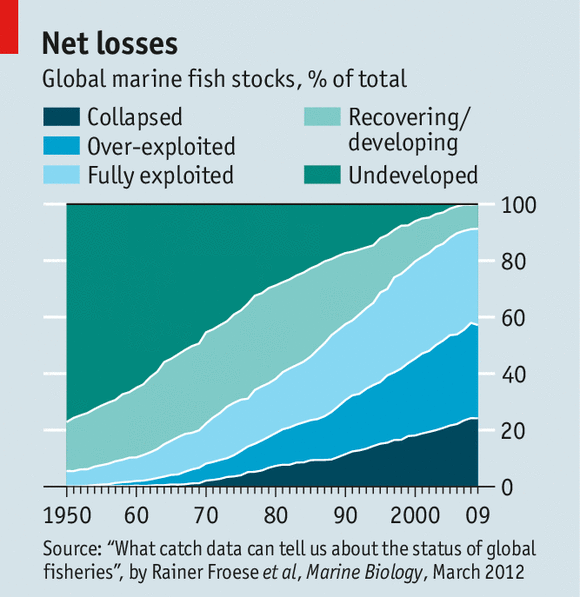
This article in The Economist indicates that the oceans are deteriorating because we haven't managed to develop common property institutions that work to protect them. Fisheries are being over exploited. Large areas are oxygen depleted and dead. Coral reefs are in trouble. Acidification of ocean waters is occurring and likely to become dangerous. Further treats are in view from off shore drilling and deep sea mining. Climate change may threaten the ocean currents, with profound consequences.


UNESCO is the international agency leading in ocean science, and it hosts the Intergovernmental Oceanographic Commission. Its World Heritage Center implements the World Heritage Convention; it has declared Papahānaumokuākea, an oceanic World Heritage site, accepting the U.S. plan for its protection and conservation of its resources. The United States has not paid its assessed contributions to UNESCO for more than two years, and is banned by the Congress from any funding for the Organization.

The following international treaties relating to ocean protection have been submitted to Congress, but never ratified:

  • Vienna Convention on the Law of Treaties, done at Vienna May 23, 1969, and signed by the United States on April 24, 1970; submitted to Senate November 22, 1971.
  • Maritime Boundary Agreement between the United States of America and the Republic of Cuba, signed at Washington December 16, 1977; submitted to Senate January 19, 1979.
  • Amendment to the 1973 Convention on International Trade in Endangered Species of Wild Fauna and Flora (CITES), done at Gaborone April 30, 1983; submitted to Senate October 4, 1983.
  • Convention on Biological Diversity, done at Rio de Janeiro June 5, 1992, and signed by the United States at New York on June 4, 1993; submitted to Senate November 20, 1993.
  • United Nations Convention on the Law of the Sea, done at Montego Bay December 10, 1982 (the “Convention”) and Agreement relating to Implementation of Part XI of the Convention, done at New York July 28, 1994 (the “Agreement”); Agreement signed by the United States on July 29, 1994; submitted to Senate October 7, 1994.
  • Stockholm Convention on Persistent Organic Pollutants, done at Stockholm May 22, 2001, and signed by the United States on May 23, 2001; submitted to Senate May 7, 2002.
  • 1996 Protocol to the Convention on the Prevention of Marine Pollution by Dumping of Wastes and Other Matter, 1972, done at London November 7, 1996, and signed by the United States March 31, 1998; submitted to Senate September 4, 2007.
  • Agreement on the Conservation of Albatrosses and Petrels, with annexes, done at Canberra June 19, 2001; submitted to Senate September 26, 2008.
  • Annex VI on Liability Arising From Environmental Emergencies to the Protocol on Environmental Protection to the Antarctic Treaty (Annex VI), adopted on June 14, 2005; submitted to Senate April 2, 2009.
  • Agreement on Port State Measures to Prevent, Deter and Eliminate Illegal, Unreported and Unregulated Fishing, done in Rome November 22, 2009 and signed that day on behalf of the United States; submitted to Senate November 14, 2011.
  • Convention on the Conservation and Management of High Seas Fishery Resources in the South Pacific Ocean, done at Auckland, New Zealand November 14, 2009 and signed on behalf of the United States on January 31, 2011; submitted to Senate April 22, 2013. 
  • Convention on the Conservation and Management of High Seas Fisheries Resources in the North Pacific Ocean, concluded in Tokyo on February 24, 2012 and signed on behalf of the United States on May 2, 2012; submitted to Senate April 22, 2013. 
  • Amendment to the Convention on Future Multilateral Cooperation in the Northwest Atlantic Fisheries, adopted in Lisbon, Portugal September 28, 2007; submitted to Senate April 22, 2013.

Tuesday, February 11, 2014

U.S. libraries should make a major donation of books to the Bibliotheca Alexandrina


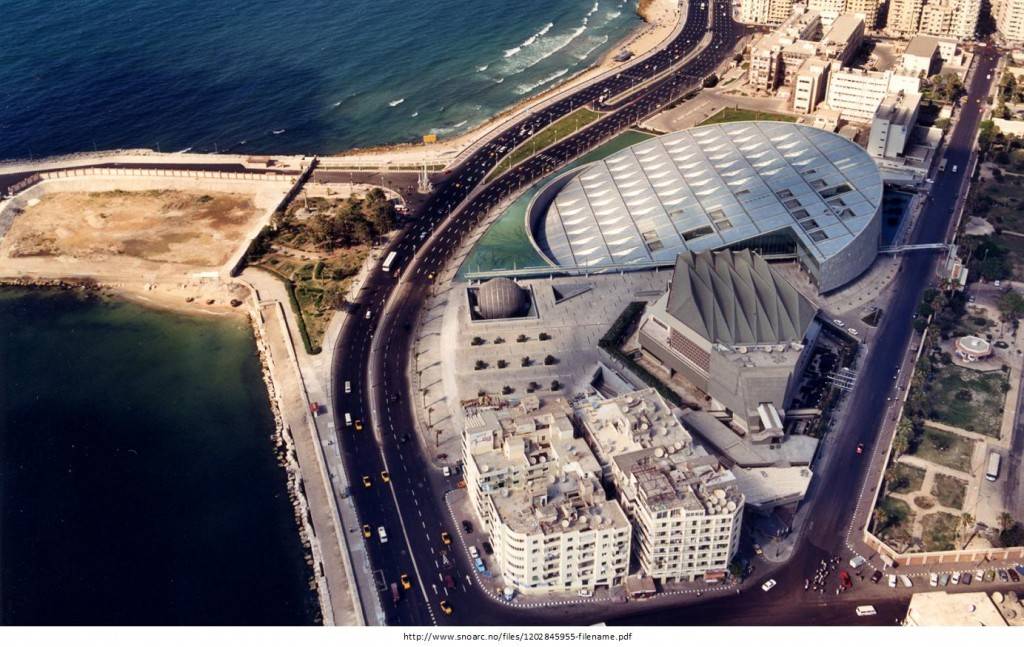
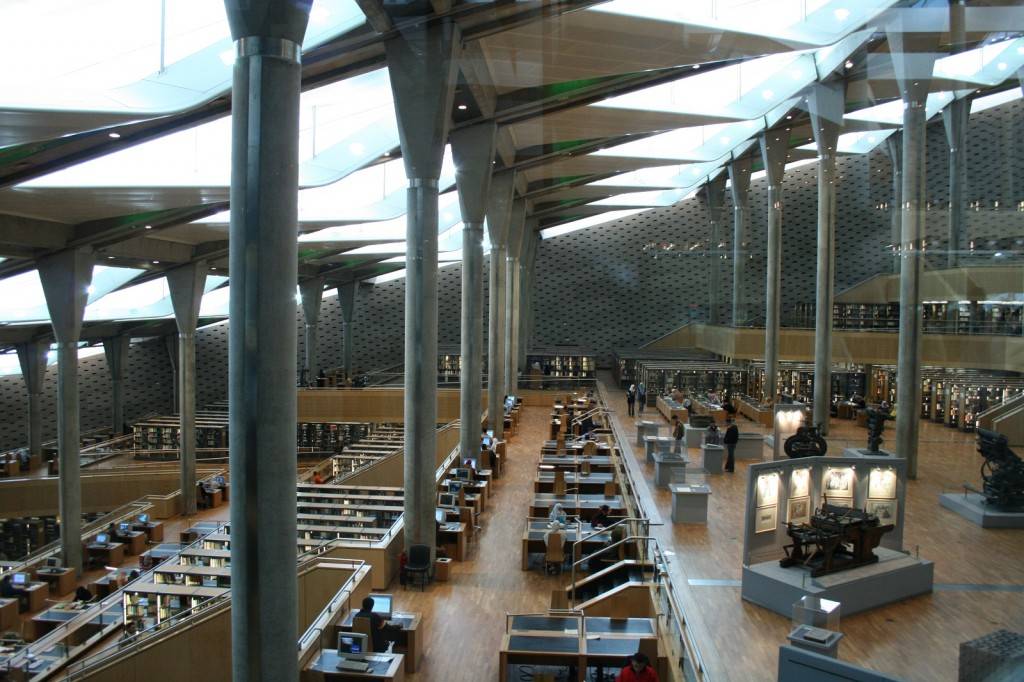
The Bibliotheca Alexandrina is a modern effort to recreate the fabled Library of Greco-Roman  Alexandria. In Ptolomaic times it had the largest collection of books in the world. The idea of recreating the library came from the University of Alexandria in 1974, and a competition for the design of the buildings was organized by UNESCO in 1988.

The modern library is trilingual, containing books in Arabic, English and French. In 2010, the library received a generous donation of 500,000 books from the National Library of France, Bibliothèque nationale de France (BnF). The gift makes the Bibliotheca Alexandrina the sixth-largest Francophone library in the world.

It would be a wonderful gesture of good will to the people of Egypt for the people of the United States to make a comparable donation of books to the library. It would be especially great to do this now, while the Congress is denying U.S. funding to UNESCO; a donation to the Bibliotheca Alexandrina would show support for UNESCO's mission of building defenses of peace in the minds of men.

While English language books would seem to be the obvious counterpart to the gift from the French, there might well be collections of books in Arabic in this country that would be welcomed.

Gifts of books to the library should be carefully coordinated with the its staff. It is costly for a library to organize, store and catalog new accessions, and any library will want to select its collection. Ideally organizations such as the Library of Congress or university libraries might make contributions. Perhaps some organization such as the American Library Association or the U.S. National Commission for UNESCO might assume leadership in such an effort.


Friday, December 06, 2013

Literacy counts

Thursday, December 05, 2013

Monday, November 25, 2013

Posts About UNESCO that have interested people


For many years I have been interested in UNESCO, and for the past decade of so I have been sharing my thoughts on the Organization on social networking sites.

Here are my all time most popular blog postings on UNESCO:

I also had some special purpose blogs dealing specifically with UNESCO:
I also contributed to the Global Memo blog, covering this year's election of the Director General.

I manage and post frequently on the Linked In "UNESCO's Friends" group.

Saturday, November 16, 2013

African Underground Water Resources


UNESCO is the UN agency that focuses on water resources, and it produces a global water assessment. As the map shows, aquifers don't respect national boundaries. Underground water supplies are important for agriculture and for human and household use. Knowledge of the aquifers is important for their proper management.

It sometimes happens that water withdrawn from an aquifer in one country is not available to be withdrawn in a neighbor country. Think of Israel, Palestine and Jordan. Proper management of aquifers and treaties based on agreed knowledge of the properties of aquifers will be increasingly important way to prevent conflict over scarce water supply in the future.

Wednesday, November 13, 2013

I have been called "a Development blogger"


I occasionally am invited to serve as a guest blogger on other sites. Here is a list of contributions to such sites:

Global Solutions Blog
Global Memo (Multilateral Elections and Appointments in the United Nations System)
Zunia (Expert Perspectives)
For a number of years I was the principal blogger on:

Monday, October 28, 2013

The UN Scientific Advisory Board on Sustainable Development

An assessment of the role of the new UN Scientific Advisory Board is presented, as is an overview of the kinds of scientific advice that it might provide from the social sciences and the physical and engineering sciences. Development is emphasized as is environmental sustainability. It is concluded that a small Board might encourage full use of the many scientific advisory resources available to the UN. Some issues are identified with the Board as announced.

In September, UN Secretary General Ban Ki-moon announced that he had decided to to create a Scientific Advisory Board to inform the UN's debate on sustainable development. The Director-General of UNESCO was asked to establish the Board and UNESCO to host its Secretariat. Now the 26 members of the Board have been named. The Board was to be composed of "renowned scientists representing various fields of natural, social and human sciences."

What is the Appropriate Role for the Board?

There already exists a UN Commission on Science and Technology for Development;  it, however, is composed of representatives of governments of UN member states, and is largely drawn from people interested in international science policy rather than from distinguished working scientists.

The decentralized agencies of the United Nations system of course have the ability to draw on scientific expertise. WHO, FAO, UNIDO, ITU, WMO and other agencies regularly draw on thousands of scientists for advice in their areas of expertise.

The Intergovernmental Panel on Climate Change (IPCC) currently serves 195 member states. It has drawn on the expertise of more than 1000 individual scientific experts in making each of its assessments of climate change, demonstrating the complexity involved in science in a single area of sustainable development. The process involved in obtaining consensus of large numbers of scientists representing the best available information from the full range of research and theory, as exemplified by the IPCC, is long and complex.

Individual nations have created national academies, and there is a Third World Academy of Sciences (serving countries that do not have large enough scientific communities to justify national academies). These academies typically are composed of distinguished scientists elected by their peers, and have as part of their charters provision of scientific advice to governments. In the United States, for example, the National Research Council is composed of the National Academy of Sciences, the National Academy of Engineering and the Institute of Medicine; each of these academies has a membership of hundreds of distinguished experts in its field. Moreover, the National Research Council has a large staff that organizes expert panels on specific issues when called upon by the government to do so. At any given time there are hundreds of such panels in operation, and thousands of scientists (Academicians and others) participating. This is considered necessary to bring detailed expertise to bear on important scientific issues of interest to government.

There exists an InterAcademy Council which has been formed to draw upon the expertise of participating national academies to conduct studies of global importance.

Scientific fields and knowledge have proliferated for centuries and the time is long past when a few people can together dominate the entire body of scientific knowledge. Indeed, much of scientific knowledge and understanding is tacit rather than explicit. In order to bring detailed scientific expertise to a wide variety of issues, large numbers of scientific experts are needed with complementary expertise, each bringing his/her specific expertise to bear of the question at hand.

What then does the United Nations expect of its relatively small Scientific Advisory Board, and why has it chosen to establish a new body rather than draw on existing sources of scientific expertise? Why has it chosen to place the responsibility for management of this Board with UNESCO, an agency currently facing a financial crisis? "Gretchen Kalonji, assistant director-general for natural sciences at UNESCO, told SciDev.Net that it was still too early to say how much the advisory board would cost, who would fund it, or how the proposed chief scientific adviser would liaise between the board and the secretary-general."

What is the Task Before the Board?

The purpose of the Scientific Advisory Board is to provide expert scientific advice on "sustainable development". Even in a small Board, I would hope to see a wide variety of professional scientific backgrounds represented.

Fundamental to understanding sustainable development is understanding of demography. In the past emphasis has been on population growth, but now other issues are also of interest.  It appears that birth rates in rich countries are likely to fall below the replacement level while African and Asian populations are still growing. Urban growth, rural-urban migration and international migration seem relevant topics in consideration of global sustainable development, as does the changing gender balance in some large countries.

The bases of sustainable development are institution building and development of appropriate policies; both depend on cultural changes. Thus one would expect expertise in the social sciences on the panel -- economics, political science, sociology, anthropology, organizational science and psychology, It is not obvious that a single economist or a single political scientist would be fully expert on the literature of his/her field bearing on social and economic growth and on the sustainability of that growth. It seems clear that the greatest problems in achieving sustainable development occur in fragile and (especially) failed states and experiencing armed conflict; these too are social science specialties. Thus one might expect several social scientists to participate in the Board.

There is, of course, a need for advice from the physical sciences.  I would expect the panel to be able to advise on the state of the resource base, including water resources, arable soils, fossil fuels and (scarce) mineral resources. Indications are that some of the resources that we have treated as renewable may not prove adequate to development needs over the coming century; other natural resources are clearly not renewable but seem now to be critical for economic development.

I would also expect the panel to advise on scientific issues related to the infrastructure -- telecommunications, the electrical grid, roads, railroads, bridges, ports, airports, water and sanitation, etc. Given the importance of infrastructure to development, I would therefore expect experts from the engineering sciences to be included on such an advisory board.

Economic development is based on increases in production drawn from extractive, manufacturing and service industries. Thus for the primary industries one would expect the Board to include scientists expert in fields relevant to agriculture, forestry, fishing, mining, and extraction of oil and gas. Note that the expertise on extractive industries is not identical to expertise on the resource base from which those industries work.

With respect to manufacturing, scientific advice at first glance is most relevant to high technology and emerging sectors such as industrial applications of nanotechnology, biotechnology, and information and communications technology. However, manufacturing is a very broad field and there are likely to be numerous areas in heavy industry development in which scientific advice would prove valuable. There will even be issues in light industry in which policy makers may benefit from scientific advice.

In service industries such as government, health, educational and financial services there is considerable need for advice based on research findings and theory on how the services can be made more effective and efficient, and in some cases advice on the physical basis of the services (e.g. physiology and pathology, brain development and cognitive psychology).

With regard to sustainability, perhaps the key areas of concern would be climate change and  biodiversity. Biodiversity, like climate change, is an enormously complicated scientific topic, involving many different scientific fields and requiring global understanding to be built upon detailed understanding of local conditions.

Added scientific advice on the sustainability of development efforts, might involve topics such as desertification, deforestation, depletion of fisheries, pollution (water, soil and air), and changes in the oceans and coastal zones, glaciers and ice caps, etc. This would be in addition to the advice described above on water resources and soil resources. Note that the advice from those expert on mineral, gas and oil resources and their depletion might need to be complemented by expert advice from others on the environmental impact of the exploitation of these resources.

One of the important issues for the United Nations in promoting sustainable development will be in measuring progress and identifying problems. I would imagine that the UN might need expert advice on statistics (both in the sense of data collection by the state and statistical analysis of data), remote sensing, and management and analysis of huge data sets.

Thus there is a huge array of topics on which scientific advice should be sought be decision makers formulating the world's development goals and monitoring the achievements toward those goals.

The UNESCO Appointed Advisory Board

UNESCO has balanced the Board for gender and for the national origin of members. I hope that it will provide a public declaration of interests by Board members to help decision makers and the public properly assess the advice provided by the Board.

Having chosen to appoint a fairly small Board, it is important not only that the members have broad knowledge and understanding of sustainable development, but that their advice be seen as worthy of the attention of the global community. While Nobel and World Food Prize winners are included among the members, one might question whether all the appointees have global reputations adequate to assure the credence to the Board's advice. I would also wonder whether people in senior administrative positions (running universities or academies of science) still have active mastery of the scientific literature of their scientific specialties.

I would question the balance of expertise in the Board as chosen. Thus, there are no scientific experts on demography, education, government, infrastructure, deforestation nor desertification, but two on biodiversity, two on climate change, and one on high-energy particle accelerators.

Perhaps the most valuable role that this Board can play is to encourage the United Nations to draw more fully on the other resources that the UN can command for scientific advice with respect to the specific issues of sustainable development. The Board might then add its voice and authority to the more detailed advice from the other advisers. Clearly, the Board will need a strong professional secretariat and a budget sufficient for travel and dissemination of its reports. It will need a strong relationship with the science adviser who is to be appointed to serve on the staff of the UN Secretary General. It may be necessary for the United Nations to help UNESCO to finance and staff this Board.


Sunday, October 20, 2013

Understanding UNESCO


I helped teach a graduate seminar for several years on UNESCO. It served students interested in international careers in areas such as education, foreign policy and museum work, and as such had an obvious relevance.


Still, I tried to see that students in the course learned some lessons on how to understand an organization, and especially an intergovernmental organization. I suggest that a multifocal approach is most useful, including

  • Understanding of the history of the organization, especially its founding and its response to major changes in its environment.
  • The mission, as defined in a mission statement (in the case of UNESCO in the preamble to its constitution) and as it has shifted over time.
  • Governance: UNESCO is governed by its General Conference in which the representative of each member state has a single vote, and its Executive Board, elected from the member of the General Conference.
  • Leadership: UNESCO has an elected Director General who in turn appoints Deputy and a number of Assistant Directors General; they have considerable power over the organization.
  • The program, which includes not only the subjects (education, science, culture and communications for UNESCO), but also the kinds of activities that they conduct (discussion forum, clearinghouse for ideas, etc. for UNESCO).
  • The budget.
  • The staffing -- where they come from, their skill sets, and where they work.
  • The structure of the organization, the organization chart.
  • How the organization gets its funding, its staff, etc.

I find that the traditional discussions of organizations fail to deal very well with UNESCO. For example, a great deal of UNESCO's work is done in partnership with governments, other international organizations, non-governmental organizations, businesses, etc. Organization theory as I studied it in grad school didn't deal with such partnerships as a major theme.

UNESCO staff does not actually implement the global Education for All program or the World Water Assessment, but rather helps and encourages others to do that work.

I also note that to understand UNESCO, one should understand:
  • The international conventions that have been negotiated there and for which it acts as caretaker. There range from those protecting museums from plunder during wars, to agreements on recognition of educational credentials, to those underlying cooperation in marine science and the protection against tsunamis.
  • The work of a vast network of centers that are affiliated with UNESCO, some of which receive part of their financing through UNESCO and others which are fully financed by members states.
  • A vast network of university chairs, university networks and affiliated schools that have voluntarily affiliated with the Organization.
  • National Commissions or similar bodies in the 196 member states, in principle composed of intellectual leaders from those nations, which link the larger intellectual community in each nation with UNESCO and its work, and in some times with each other.
  • A vast network of World Heritage sites, bioreserves, geoparks and wetlands that are affiliated through UNESCO but maintained by the countries in which they are located.
In some sense most of the global impact of UNESCO is achieved outside of buildings occupied by UNESCO's staff and by people other than that staff. Thus UNESCO leadership and staff depend on the voluntary action of people only loosely affiliated with the Organization to accomplish its mission.

Friday, October 18, 2013

A thought on culture and development


I had an interesting conversation yesterday about cultural heritage and development. It got me to thinking.

I suppose development is about changing society in ways that help people live better. The definition will vary from culture to culture, but living longer, healthier lives is probably seen as desirable in most cultures, as is reducing hunger (or at least reducing undesired hunger). Reducing physical and mental disability prevalence would also be seen positively in most cultures. Not having members of the society killed violently would also seem to be desirable.

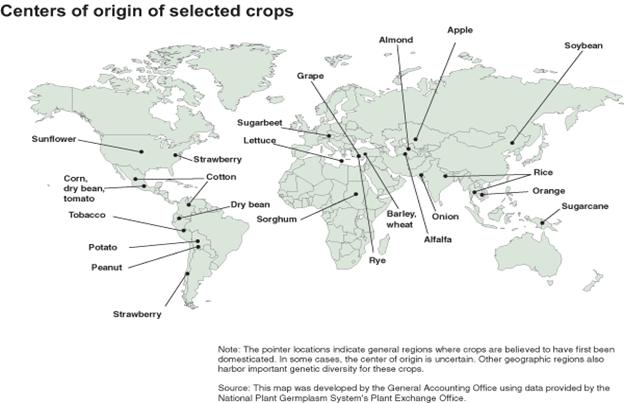
However people in a culture define the goals of development, I think cultural change is historical fact. The ancient Egyptians may have lived within a constant culture for centuries at a time, but today cultures are changing all around us. I would not characterize cultural change as a good thing, but surely some cultural changes not only promote achievement of societies' goals, but are the right paths to those goals.

Eradicating polio is not only a global goal, but would seem to be a good in every culture. Who wants to see people die as they lose the ability to breath enough to sustain life? Who want to see children crippled for life? (Even if there are such monsters, they are a tiny minority that all societies want to repress.) The eradication of polio depends on immunizing the vast majority of the susceptible populations. In a few places (the frontier between Pakistan and Afghanistan, northern Nigeria) there are cultures in which leaders are deeply suspicious of polio immunization campaigns. That is a cultural meme that has to be changed for development to progress.

Cultural heritages come in all flavors. My own comes with a heritage of slavery, Jim Crow, Indian wars, and Indian removals. It also comes with a heritage of being a nation of immigrants, offering refuge and a better life to millions upon millions of people. The question seems to be whether knowing our cultural heritage can help to make those cultural changes that contribute to what we hope to be development, and to avoid those cultural changes deleterious to development.

Culture is complicated. Cultural memes are all reveled up with each other. Who would have thought that the introduction of rock and roll music and blue jeans would contribute to the fall of Communism? Certainly not the Communist elite who worked very hard to maintain their hegemony over their societies.

Still it is clear that schools and other institutions can play a role in the modification of culture for development, including in the use of cultural heritage for that purpose.

I am interested in UNESCO and its cultural programs. One of UNESCO's problems is that when it was created in the aftermath of World War II, the focus was on high culture -- museums, galleries, literature -- and the sharing of the greatest achievements of high culture among nations. Concern for culture in the broader sense used in the social sciences and culture in the sense of "culture for development" is a more recent concern, and one that often loses place.

Still I think high culture has an important place in "culture for development". Certainly literature, ethics and other aspects of philosophy should play a role.

Albert Bierstadt, Among the Sierra Nevada Mountains, California
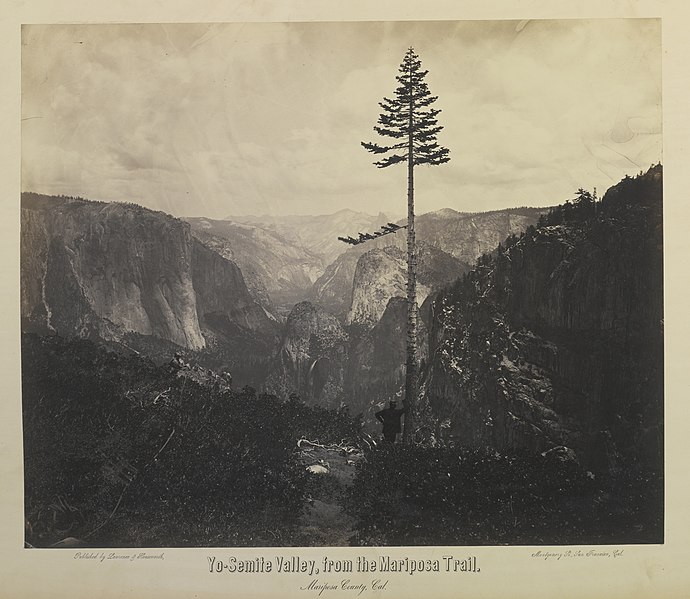
How does one create an appreciation for nature and a concern for the preservation of both some of the natural heritage of mankind and assurance of a more rather than less livable environment? For Americans, the natural park system is a part of our cultural heritage -- the first national park was created here (Yellowstone) and national parks are a great idea born in this country that has spread worldwide. American support for natural parks was in part created by the artists and photographers who brought images of great American sites to the population centers; their images taught Americans how to look at Yosemite and the Grand Canyon, and brought them to recognize that they were a national treasure shared by those who visited, and even those who simply knew of their existence.  I can think of books, movies and even television programs that have helped propagate the ideas. It is also the case that scientists have brought their "high culture" approach to environmental conservation and the preservation of biodiversity, and have used all sorts of media to communicate the import of their findings to the public.

source (1864 photo)
In short, high culture can be used in conjunction with appreciation of cultural heritage (and cultural history) to promote the kinds of cultural additions and deletions that contribute to development. Indeed, it may be a cultural change is needed to help a society articulate its goals for development,

Saturday, October 05, 2013

Election of the UNESCO Director General


Check out my posts on the election via Global Memo. Irina Bokova has virtually assured her continued leadership of the Organization by her victory in the Executive Board.

Wednesday, October 02, 2013

Criteria for the Election of the UNESCO Director General

A meeting of the UNESCO Executive Board
Candidate Irina Bokova
I have been posting elsewhere on the current election of the Director General of UNESCO. I have refrained from supporting one of the three candidates -- in large part because I am not really able to judge which would do the best job. But I will comment here on how that judgement might best be made.

Some seem to feel that the job is managing the UNESCO bureaucracy -- motivating staff to carry out UNESCO's mission, assuring that the systems for financial and personnel management function effectively, leading in the definition of a program and budget. All that is important, but I wonder if it is the most important aspect of the job.

Candidate Rachad Farah
Where has UNESCO contributed most to the world?
  • Over the decades of UNESCO's existence there has been a huge and unprecedented expansion of educational opportunities. That has been accomplished by the nations of the world. UNESCO has played a role helping to direct public attention to educational rights not being observed, convening groups of educators and political leaders to examine the problems of extending school access, defining and collecting educational statistics, and monitoring progress toward Education for All.
  • UNESCO helped the European nations come together to create CERN, the leading global center for "big physics". It helped create the International Center for Theoretical Physics, which has become a center for strengthening science in developing nations. It has convened networks of scientists working globally on bioreserves and biodiversity, water resource assessments, tsunami warnings and other scientific critical issues.
  • It convened the nations of the world to create the World Heritage Convention, under which nations have come forth to guarantee the preservation of 981 sites of cultural and/or natural importance. Its other cultural conventions have served to protect museums and prevent the looting of national heritage treasures.
  • It has encouraged a large number of partners to promote education, science, culture and communications, including many civil society organizations, governments, private enterprises, associated schools, UNESCO university chairs, UNESCO national commissions and thousands of UNESCO Clubs.
Candidate Joseph Maila
What kind of UNESCO Director General could best protect and extend these accomplishments? It seems to me that it would be someone with a good understanding of how positive trends in global education, science, culture and communications are best fostered, how negative trends are best deterred, and how to distinguish the positive from the negative. It should be someone who commands respect on the international stage because of personal qualities and accomplishments, not just as the spokesperson for UNESCO. It would be someone who recognized UNESCO not as a bureaucracy centered in Paris, but as a global network of institutions and people devoted to sets of mutually reinforcing goals, only a few of which get financing from UNESCO or directly involve UNESCO staff. And of course, it would be someone who could communicate this understanding to UNESCO's member states and to the bureaucracy and enlist their wholehearted support for that vision.

Monday, September 30, 2013

Progress In assuring children the right to at least primary education.


This graph is from a good website provided by The Guardian newspaper.

The Millennium Development Goals were set by the United Nations in 2000. Targets were set for 2015, and while most will not be achieved, UN Secretary General Ban Ki-moon called the goals “the most successful global anti-poverty push in history”.

The education goals should be understood in relation to the Education for All movement headed by UNESCO. Net enrollment rates for primary education have increased globally from 83 percent in 2000 to 90 percent in 2011.

Of course, the heavy lifting in getting kids to school has been done by the people in the countries themselves, led by a massive effort by the governments of poor countries and supported by the global donor community. UNESCO's roll has been to monitor progress in Education for All, to make that progress well known internationally, and to provide forums for educational leaders to diagnose problems and re-energize their ambitions. Perhaps more important, UNESCO and UNICEF provided rallying points for the global community of educators and people supporting education for all, helping them to mobilize for the effort.