Showing posts with label emergence. Show all posts

Sunday, May 13, 2012

Emergence may not be enough


Teleonomic processes that have emerged and evolved in our institutions frequently seem to have worked to the benefit of society, but not always. Can we afford to depend on them continuing to work for our species which is increasingly capable of doing harm to itself and our environment?


Fifty years ago I was working in the early days of computer neural network modeling, using simple methods train model networks to recognize patterns. We used both selection and adaptation in the process, and built a device (the Astropower Decision Filter) that illustrated the potential of the approach. The ADF got a fair amount of publicity.

That work was an early example of what has come to be known as "emergence":
the way complex systems and patterns arise out of a multiplicity of relatively simple interactions.
It has influenced my thinking in many ways over the decades.

Source
In a recent post, I suggested that one could regard the Civil War as a pattern emerging out of the interplay of millions of peoples behavior in the charged atmosphere of the 1850s and early 1860s, directed through the political institutions of the time and contingent upon "external" events that occurred during that time. I suspect that many wars can be so regarded -- with horrible results predicted by few if any of their proponents. After a losing war, I would bet that most people on the side most responsible for its start would regret their actions, and perhaps even those on the winning side would also wish they had worked harder to find a better solution.

In like manner, I suggest that one can regard economic bubbles and crashes as patterns emerging out of the interplay of millions of people's economic behavior in specific emotional atmospheres, directed thought economic institutions and contingent upon external events. Social crises such as the rise of drug abuse and criminal networks similarly can be regarded as emerging from the actions of people (unaware of the full implications of their behavior) under the influence of social institutions and contingent on events.

The political, economic and social institutions mentioned above themselves emerge from interactions of people within society. They also evolve, once in existence, and evolution is a process of emergence. In these cases, the development of institutions can perhaps best be perceived as the result of both teleologic and teleonomic processes -- of planning and of unplanned processes that produce orderly patterns.

At one point about 1970, in graduate school studying public administration, I got very interested in ideas that decision making in organizations was less than ideally rational. Important decisions in organizations are often made by small groups, based on incomplete information and understanding, and often by processes that are not optimal but rather dependent on the idiosyncrasies of the participants. Indeed, I came to believe that the behavior of large organizations is similarly the result of both teleologic and teleonomic processes. In our modern societies, formal organizations are also important institutions. Indeed, we now hear that some corporations are too large to fail, but very large organizations turn out to be difficult to manage and prone to failure.

As I have suggested in the past, we think with our brains, not with our "rational minds". Our plans and decisions are influenced by our emotions; our decision processes are less than the rationality too often postulated for "economic man". It is also becoming increasingly clear that the way we behave is strongly influenced by our genetic makeup. For example, there is now evidence that gene deletions and duplications on the seventh chromosome can produce changes in social cognition (increasing risk for the failed social instincts typical of autism in the one case, and the extreme social attention typical of Williams syndrome in the other). As Edward Wilson points out, we are a eusocial species, and our genetically determined fascination with groups and social interactions underlies both our institutions and our behavior within those institutions.

Some very good things have emerged from the modern world. Never in human history have so many people been so health, so wealthy, and so informed. Some very bad things also have emerged; wars in the 20th century killed many tens of millions of people. So did diseases, some of which were new such as the Spanish Flu or AIDS. The Great Depression led to the phrase, when the United States sneezes Chile catches pneumonia.

However, the paragraphs above suggest that somewhat rational humans, with genetically determined mental processes evolved by survival in very different environments, interacting in processes mediated by institutions we only partially understand, have made very bad mistakes in the past and have failed to meet very large challenges.

Society is not only getting bigger but is getting more connected. People living today can expect to live in a world with eight to ten billion people by 2050. Globalization is reflected in much closer economic links among nations. Technological and economic growth have resulted in a much greater "footprint" of mankind on the earth; indeed we now seem likely to produce unprecedented global environmental catastrophes. And above all, everything but man himself is changing with increasing rapidity.

While mankind hopes for development to reduce global poverty, reduce the global burden of disease, and decrease losses due to war and conflict, we have to worry about increasing the scale of dysfunctional emergence. Can we really depend on good things to emerge from a world we understand so poorly, or for catastrophic things not to emerge?

I don't have an answer, but it seems to me that it would be a good idea to have a really major global social science research program on how patterns emerge from societies and the dependence of those patterns on political, economic and social institutions, as well as how the institutions themselves emerge and evolve. We should also be risk adverse. Lets not let political processes lead us too close to war, economic processes lead us too close to crashes nor to risks of crashes to big to withstand.

Click on the emergence label to the right for more on this topic.

Source

Thursday, May 10, 2012

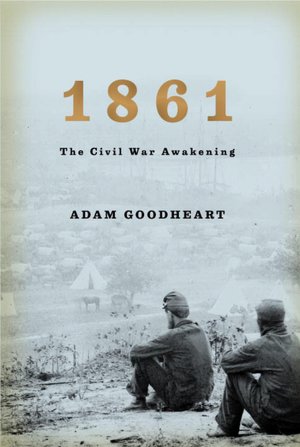
A final comment on 1861, really!


In my previous post on 1861: The Civil War Awakening by Adam Goodheart I suggested that the book described the atmosphere from which the Civil War emerged.

We are in an election today, and even the average citizen is inundated with statistics on the voters and their opinions. Campaigns are fed with detailed statistics based on extensive surveying and massive data processing, in turn based on detailed models of voter behavior which enjoy a strong basis in theory and testing.

Democracy was relatively new in the United States in 1861, statistics was a new field of study, there were no computers available for rapid data processing, and political science was at best a twinkle in the eyes of a few of its founding fathers.

Goodhart can not begin to describe the atmosphere in public opinion at the beginning of the Civil War in a way that is satisfying to our jaded palates. What he has done might be compared to a post impressionist artist who paints a scene to provide a pleasing whole, conveying the feel of the original with broad strokes rather than photographic realism.

Part of the translation of public opinion into government decisions -- and in this case war -- is carried out in the government bureaucracy. Again, we know a lot about how government bureaucracies work, but the bureaucracy of the Confederate government did not exist during the period of this book, and that of the Union was over stressed, expanding at a vertiginous rate to meet the demands of the war (while beginning a period of unparalleled national economic growth). Especially odd to our modern experience was the penetration of the Union bureaucracy by people who would leave to join the Confederacy, but who were providing Confederate leaders with detailed intelligence on Union plans and discussions.

Another part of the translation is carried out in the political system. In 1861 the Whig party and the No Nothing party had disappeared, the Republican party was new born, and candidates from four parties had received electoral votes in the presidential election. The Democratic party would reorganize having lost its base in the south, and the Congress saw the mass exodus of the legislators from the south. Lincoln was elected, his only experience in national office being one term in the House of Representatives.

At the best of time, the processes by which policies emerge from the bureaucratic and political processes are difficult to understand, indeed all but impossible for the average citizen. In 1861, the processes were even more opaque. Clearly complex processes were going on, but they were certainly less informed by data on public opinion, and almost certainly less understood by their participants than the corresponding processes today. Goodhart's book gives only the merest hint of these processes.

Decision making in the Civil War, like decision making today, was contingent on the events that occurred in the course of the war. The firing on Fort Sumter electrified the nation, leading some southern nations to secede and war fever to seize the north. As the war progressed, Shiloh and the first Bull Run would shock people into understanding that this would be a war full of casualties. Antietam and Gettysburg would give a great boost to Union spirits and the fall of Atlanta would assure Lincoln's reelection. Goodhart give a good impression of this contingency of the emergence of policy on events.

For those of us who enjoyed the book, the enjoyment came in large part from the thought that it stimulated about public opinion, the emergence of policy from apparent confusion, and the futility of so many wars.

I had a couple of previous posts triggered in reading and discussing this book:

One last comment: Sometimes there are no good alternatives available to a decision maker. What alternatives were available to Lee, faced by a better equipped and larger opponent, well led by Grant and his officers, supported by Lincoln? Indeed, what options were available to the economic elite in the deep south with their hundreds of slaves working their large plantations? For them, betting all on a long shot may have been the best alternative.

1861 and all that


My history book club met tonight to discuss 1861: The Civil War Awakening by Adam Goodheart. The discussion led me to the conclusion that the book described the atmosphere in the United States from which emerged the Civil War. In some cases it described in some detail the ideas of especially influential people, while in other cases it dealt with more humble folk. The emergence of the war was largely through a political process, and of course on the part of the Union the most influential person was probably the President.

At least a couple of us were bothered by the author's frequent statements as to what someone thought. Others were bothered because we could not figure out whether the people discussed in more detail were the most influential or whether there were other criteria for the author/s choice. I was concerned that the atmosphere of the south was not as well described as that of the north or west.

There was a fairly vigorous discussion as to whether the Confederacy might have won the war or whether the Union was simply too strong, its military too well led (at least by Grant and Sherman), and its political leadership too great.

Similarly, there was a fairly vigorous discussion as to whether the leadership of South Carolina and Virginia, when they chose to fight, was making a reasonable decision or a very bad decision.

I believe they made very bad decisions. They did so, underestimating the leadership of Lincoln and the policy elite of the Union, underestimating the leadership of the Union military, underestimating the fighting power of the Union (numbers, quality of the troops, and superiority of material), underestimating the economic ability of the Union to support the military effort of its army and navy, overestimating the relative capacities of the Confederacy in all these respects, but especially of the southern economy to work well on the basis of slave labor, overestimating the likelihood of aid for the Confederacy from European powers, and especially failing to understand the nature of the total war that they were about to begin. Someone noted that next month, as we will read about World War I, we will find similar errors made by the political elites.

I suggest that South Carolina and Virginia had limited suffrage to a small part of the population and that the political elite that emerged from the white male voters included many slave holders and plantation owners -- people whose wealth appeared to depend on the continuation of slavery. While there must have been other cultural factors which led them to make the wrong decision, "where you stand depends on where you sit"!

One side discussion looked at the pervasive anti-black racism in both the Union and the Confederacy. People on both sides of the Civil War felt that the slaves could not be merged successfully into the majority white population of the United States. It occurred to me that not only did people on both sides feel that the policy of the founding generation to "civilize" the Indians had failed (and that the Indians were racially superior to the blacks albeit inferior to the whites), but that the older people had experienced in their lifetime the removal of the Indians from east of the Mississippi. Our attitudes toward the racism ranged from incomprehension to revulsion.

There was wide agreement that the book was an easy read, a page turner. However, several people in the group found errors of fact that so offended them that they tuned out the rest of the book.


Monday, April 16, 2012

A thought about development theory


Two stages of emergence characterize termite evolution, and may characterize economic development. What would that mean for development theory?


Source of image
Termite species in the dry savannas of Africa, Australia and South America build huge mound nests such as the one shown above. These nests provide an interior environment in which the termite colonies can successfully live and reproduce.

Termites are tiny, with quite simple nervous systems. The construction and maintenance of such a nest, huge with respect to the individual insects that build them. is not the result of conscious planning. Rather certain conditions elicit certain behaviors from the colony from which emerge the mounds. Mound building is an emergent behavior of the simple behavioral repertoire of the species. Importantly, one would not suspect examining the behavior of a single termite that the colony would construct such an edifice.

Not there are some 4,000 species of termites. Not all build huge mounds, but the mounds are found in species widely separated geographically. Mound building therefore must be a colony behavior that is within the repertoire of the termite gene pool, and under certain conditions a species evolves that builds large mound nests. This too is an emergent behavior of the gene pool, since it would be hard to predict looking at the genes that they had the potential to evolve termites that would behave so that mounds would emerge from the behavior. Indeed, scientists are still working to unravel the complex process of individual, kin and group selection that leads to such evolutionary species emergence.

Thus mound building may be a double emergence, species evolving from the gene pool and huge constructions emerging from the simple behaviors of the species.

From the behavior of the many individuals in some societies have emerged structures of institutions and policies that produce economic prosperity and political freedom for the members of those societies. Not all societies have done so. Yet all human beings are genetically very similar, and people by the hundreds of millions have gone from one to another society, integrating well into the social behaviors of the new society.

In humans, culture seems to be a second channel for the determination of behavior. It would seem that some cultures have emerged that foster social and economic development, while others have not emerged those features necessary for social and economic development. Perhaps we should consider socio-economic development also as a double emergence -- the emergence of a development culture from which emerges the socio-economic structure of prosperity and freedom.

In studying termites it would be futile to seek to understand the conditions under which a species that has not evolved to build mounds would build mounds. Such an effort would be focusing on the wrong emergence process. Might it be that seeking to understand socio-economic development in a culture that has not evolved the capacity for such development is equally misguided?


"A property of a complex system is said to be emergent just in case, although it arises out of the properties and relations characterizing its simpler constituents, it is neither predictable from, nor reducible to, these lower-level characteristics."
Prof. Jaegwon Kim, Oxford Companion to Philosophy

Friday, April 13, 2012

Causal Models and the Causes of the Civil War


Thinking About Causality


When we think about causality, we divide causes into those which involve choice and those which do not. That is, some causes can be attributed to a conscious being making a choice, while others are attributed to things controlled by natural law.

Many, perhaps most events have multiple causes. The Fukushima nuclear disaster occurred when a earthquake caused a tsunami that struck the nuclear plant. The earthquake and tsunami we see as natural. The plant was located by people, designed by people, and operated by people, their conscious choices also contributed to the disaster. The disaster would not have happened had the tsunami not happened, but it would also not have happened had the power plant been located on high ground or designed to better resist the tsunami.


Knowledge plays a part. The destruction of Pompeii by Vesuvius could not have been predicted by the Romans with the information available to them at the time, while the destruction of the Fukushima nuclear disaster might have been predicted had scientific findings been mobilized by those responsible for the plant. Thus it seems there is more responsibility for the people making decisions with respect to the location of Fukushima in our time than for the people making decisions on the location of Pompeii in Roman times.

Some knowledge is seen a probabilistic. Thus we may not know the high water mark for the Mississippi river next year, but we can say than only one year out of 100 the water level will exceed such and such a value, that one year out of ten it will exceed another, lower value, etc.

We can also attach a credibility to knowledge. Thus, knowledge claims from authoritative sources backed by theory and data are more credible than knowledge claims from members of the general public or from marginal sources.

Consider climate change. If greenhouse gas emissions continue to grow and major global warming  takes place with the accompanying damage to human welfare, then more responsibility will be attributed to those who failed to credit the opinion and evidence now being adduced by the scientific community -- those refusing to act to limit greenhouse gas emissions.

Intention also plays a part. We strongly distinguish between someone who made decisions resulting in risk to others if the decisions are made for reasons which we find acceptable versus for reasons which we do not find to be ethically acceptable.

As humans, we tend to want to infer agency and intentionality. An earthquake or a tsunami is termed "an act of God". We seek to reify the result of an institutional process as if it were the result of a single intelligent persons intentions. Indeed, we tend to assume accidental results of a persons actions are intentional.

We can structure causes of an event. Some causes are proximate, some are more distant. Some causes are necessary, some are sufficient, some are both necessary and sufficient, some are neither.

More Recent Models


"Chaos Theory" is a title given to recognition that arises from mathematics that seemingly chaotic behavior of some dynamic systems can be explained. Perhaps the prototypical example comes from meteorology. The weather is notoriously unpredictable. Yet the physics of weather seem rather simple. In fact, as data collection on the atmosphere and as computers have become more powerful, models used to predict the weather have become more accurate. Still weather forecasts are still termed in probabilities and we are still sometimes surprised. One cause is the so called "butterfly effect": very small variations in initial conditions can be amplified over time to produce large changes in the predicted weather at later times. Thus is some dynamic systems, while causality is clear, prediction of outcomes can be very challenging. In these systems even though ultimate causes of ourcomes exist, backtracking to identify those ultimate causes can be effectively impossible.

Homeostasis is a phenomenon in which a system maintains a stable state in the face of external changes. Thus a modern home is maintained at constant temperature whatever the outdoors temperature; we set the desired temperature on the thermostat and it turns on air conditioner or furnace as needed to maintain the current temperature. If suddenly the house gets hot in the summer or gets cold in the winter, we attribute the proximate cause to the failure of the air conditioner, furnace or thermostat.

Emergence has been recognized as a process by which a relatively unpredictable outcome can result from  very simple causes. A prototypical example is the construction of very large ant hills by ant, which obviously do not plan the construction; very simple behaviors by individual ant when replicated by all the ants in a large colony can build a very large anthill (and control the temperature within very effectively). In some areas, one can see "cities" of ant "skyscrapers".

Ant hills in Australia

The Causes of the Civil War

It is a century and a half since the Civil War was fought and there is even more interest in the causes of the war than usual.

Clearly the proximate cause was the secession of southern states and their creation of the Confederacy, the decision by South Carolinian leaders to attack Fort Sumter, and the decision by the remaining states of the Union to go to war rather than allow the secession.

The Big Determinants


In our time it seems clear not only that slavery was an evil institution, but that it was on its way out globally by the time of the Civil War. European imperial powers were clearly in the process of abolishing slavery, serfdom, and peonage by the middle of the 19th century. Not only had slavery been abolished by northern states of the United States, but also by Hispanic America. Brazil began a gradual process of abolition of slavery in 1871. Indeed, we are convinced that free labor is a more productive economic system than any based on involuntary servitude, and that slavery is economically unwise as well as a denial of human rights. By 1860, the United States was left with more slaves than any other country. Southern leadership felt that the institution could be saved and continued.


It seems clear that the southern secession was intended to preserve a way of life dependent on the institution of slavery. It seems equally clear that the north was strongly in favor of free labor.

Many in the United States had been disturbed by the conservative backlash that had suppressed the democratic movements in Europe in 1848. European imperialism was triumphant in much of the world, and most of the population of the United States was east of the Mississippi. When Lincoln said in the Gettysburg address that the great war was to determine whether this nation or any nation conceived in liberty and justice for all could long survive, he expressed a widely shared perception. The North was fighting a war to assure "that government of the people, by the people, for the people, shall not perish from the earth."

More Distant Causes of the antebellum American institutions


So why were southern institutions built on slavery? Clearly there are long causal chains that include the southern suitability for growing cotton, the industrial revolution that made cotton cheap and in heavy demand by the cloth industry, racism, colonialism, etc.

Why were northern institutions built on free labor and why were they democratic. There two there are long causal chains, that include the northern climate, the wealth of natural resources in the American continent, enlightenment thought, and the dynamics of British colonization of distant America.

Decision Making


If the proximate cause of the Civil War were the action by some states to secede and by others to contest the secession by arms, then one is faced by the need to explain why those actions occurred.

I have argued that the decision by the government of South Carolina to secede from the Union and the later decision  of the government of Virginia to secede were very bad decisions if only considered from the point of view that following those decisions those states not only failed to achieve the objectives but began a process that led to the four horsemen of the apocalypse riding over their lands. This was not a decision like that of the Spartans at Thermopylae to fight a rear guard action to the death for a larger purpose; one must assume that the decision was taken in the belief that it would in fact save a way of life. South Carolinian and Virginian many, perhaps most, influential leaders simply failed to accurately predict the consequences of secession.

The way a path of action emerges from a political process is complex and I would suggest that it is not properly understood. We tend to simplify the process in our explanations. We say a legislative body voted, or we say that Lincoln as Commander in Chief decided. However, the selection of a course leading to the Civil War involves decision making by individuals, the election processes that chose those individuals, the actual processes within the branches of government and among them, as well as the pressures that were brought to bear, and indeed the reasons behind those pressures.

Virtually everyone had opinions about the situation in 1860 and 1861 and opinions were declared in newspapers, political meetings, marches, and all sorts of other ways. Ministers thundered from the pulpit. Ambassadors presented their governments' positions. Politicians attended to the press and their constituents. The ambitious calculated their chances under different options; those fearing for their loved ones, calculated different chances. The actions of the various states were predicted, observed and debated.

All of this took place within a cultural matrix. Which path would  be honorable, which shameful? Did one's loyalties lie with the city (New York's mayor proposed that the city secede), with the state or with the Federated or Confederated states? Did the family decide as one, or as individuals? Did the community act as one or did it divide? What did religion have to say on the right behavior in the situation? And of course, the 800 pound gorilla in the room, slavery itself.

While the American population was relatively literate for the time, the average level of formal education would have been quite low. Few people perhaps would have had the breadth of historical knowledge and the experience in military analysis to fully understand the paths that lay before the country, nor to judge well which to prefer.

We might best understand the proximate cause of the Civil War as a failure of homeostasis. For generations the political system of the United States had been able to maintain the peace, effectively dealing with the challenges to domestic tranquility that arose from debates over slavery by compromise over compromise. In 1861, that process failed and civil war ensued. Alternatively we can see the Civil War as an emergent property of the the free press, freedom of religion and democratic process as they dealt with fundamentally irreconcilable institutions (slavery in the South and free labor in the North).

So What

I don't know what caused the societies of the South to choose to try to continue slavery over emancipation, nor to choose war rather than compromise. Still it makes sense to think about that in case we might learn something to avoid the next Iraq, the next Viet Nam, or some even more serious mistake.

Some of the causes of war can not be changed, other can only be somewhat changed and with difficulty, and so are relatively easily changed.

One way to look at the Civil War is that it occurred because the people of the South lived with an evil institution, accepting that slaves were not only a powerless underclass but were less than human, people who could not become citizens, who counted as 3/5ths of a person for the census but could not vote at all. Indeed, many of their "men of God" defended the evil institution as divinely inspired, and those preachers were not expelled from their churches. Maybe Google is right -- "Don't be evil".

It did not help that the South had allowed itself to be ruled by a plutocracy, people whose wealth came from the slaves that they owned, people who naturally  enough used their political power to preserve the institution that had made them wealthy and that preserved their wealth.

If Steven Pinker's book, The Better Angels of Our Nature: Why Violence Has Declined, is right, society is learning to avoid violence including war. Perhaps we are somewhat less likely to make mistakes like those that brought the Civil War. But in my lifetime the United States has fought major wars: World War II, the Korean War, the was in Viet Nam, the Afghan War, and the War in Iraq. And that list does not include the minor invasions, police actions, and governments that were overthrown by covert action. Perhaps we need to do a lot better.

Sunday, February 21, 2010

Quotation: Spontaneous Order

The Mandelbrot set image illustrates a pattern
that emerges without conscious planning.

Source: Barry, Norman, "The Tradition of Spontaneous Order," Library of Economics and Liberty
"The simplest way of expressing the major thesis of the theory of spontaneous order is to say that it is concerned with those regularities in society, or orders of events, which are neither (1) the product of deliberate human contrivance (such as a statutory code of law or a dirigiste economic plan) nor (2) akin to purely natural phenomena (such as the weather, which exists quite independently of human intervention). While the words conventional and natural refer, respectively, to these two regularities, the 'third realm,' that of social regularities, consists of those institutions and practices which are the result of human action but not the result of some specific human intention.

"Despite the complexity of the social world, which seems to preclude the existence of regularities which can be established by empirical observation, there is a hypothetical order which can be reconstructed out of the attitudes, actions, and opinions of individuals and which has considerable explanatory power. What is important about the theory of spontaneous order is that the institutions and practices it investigates reveal well-structured social patterns, which appear to be a product of some omniscient designing mind yet which are in reality the spontaneous co-ordinated outcomes of the actions of, possibly, millions of individuals who had no intention of effecting such overall aggregate orders. The explanations of such social patterns have been, from Adam Smith onwards, commonly known as 'invisible hand' explanations since they refer to that process by which "man is led to promote an end which was no part of his intention." It is a major contention of the theory of spontaneous order that the aggregate structures it investigates are the outcomes of the actions of individuals. In this sense spontaneous order is firmly within the tradition of methodological individualism."
The idea of "spontaneous order" apparently goes back to Adam Ferguson while it was Adam Smith who found the metaphor of the "hidden hand". I see spontaneous order as a specific example of emergence. In many systems we can see properties of the system that emerge due to the interaction of behaviors of the parts in ways that are not obvious from investigating the parts themselves. Thus looking at mound building ants it is not obvious that they will collectively build mounds oriented to the sun that moderate temperature by channeling breezes, nor is it obvious looking at the individual cells of the brain that they will collectively organize the behavior of the body nor direct the posting on blogs. Spontaneous order is applied to emergence in which the elemental particles are human beings and the interactions are social.

Think also of the difference between teleological processes, those which result from planning, versus teleonomic processes, those in which order appears unplanned as a result of feedback or selection.

Monday, September 19, 2005

Intelligent Design and the Emergence of Order from Randomness

I was watching television the other day, and came across a discussion between an advocate for the teaching of “intelligent design” (ID) and an advocate of the teaching of “scientific evolution” in schools. Since George Bush added his voice to those in support of teaching ID, the issue seems to have become more serious.

I am no expert, but as I understand the issue, the ID advocates accept the ideas of genes and inheritance of genetic makeup, as well as the idea that new species come into existence based on genetic mutations of existing species. They also accept that many species that once existed but became extinct, and that life has existed on the earth for billions of years. They do not believe the biblical creation story is literally true. They differ from scientific evolutionists in that they believe that this process was guided by the intelligence of some divine creator.

I don’t think their view is that this intelligence is working as does the design of a chemist. That is, a chemist mixes chemicals, usually relatively pure, and controls the conditions so that a specific reaction occurs. Billions upon billions of interactions occur randomly within the beaker holding the mixture, and eventually a relatively pure new compound is to be found in the container. But the chemist has no specific control of the interaction of individual atoms. I suspect that the advocates of ID see omniscient and omnipotent intelligence in action at the molecular level.

I think that the reason that ID is not (now) science, is that it has not been put in the form of a scientific hypothesis and tested. No one has convincingly put forth a statement of the form: “if ID is true then the following should be observed in nature, but if it is false, this alternative observation should occur.” I suppose the prototypical such statement was that made by Einstein about the bending of light from distant stars as the light passed by the sun on its way to earth.

I for one would be happy to see ID taught in schools, in science classes, in order to explain to students why it is not scientific. Scientists, like the rest of us, believe things to be true that are not supported by scientific theory and scientific evidence (repeated observations made under controlled conditions), but they understand the difference between science and faith.

The real objective of this posting, however, is to note how unfortunate it is that the proponents of ID don’t seem to understand the powerful trend in intellectual thought that has emerged over recent centuries, explaining how order can emerge from processes without intelligent design. The theory of evolution is a prototype of this kind of thinking. It postulates that the mixing of genes and mutations create a continuing diversity among members of a species, and that the natural selection of the members of the species to reproduce successfully under environmental conditions favors change in the composition of populations, and eventually the emergence of new species. Initially confirmed on the basis of observation of fossil evidence, it has been confirmed by evidence from many sciences, and eventually by laboratory experiments in which population variations have been observed.

The first prototype of this kind of explanation was I suppose that of Adam Smith and his explanation of the hidden hand of the market as an explanation of the way that prices change to reflect changes in supply and demand for goods and services. The explanation did away with the need to postulate the intervention of an outside intelligence to explain how prices change. I have read that Darwin had studied Smith’s theories and been affected by them in his thinking about evolution.

I suppose too, the ideas from geology were important. Certainly, Darwin was inclined towards “gradualism” by his knowledge of the geological evidence of the age of the earth. But geologists too had develop theories of the evolution of the surface of the earth due to natural processes such as volcanic action, the uplifting of the crust due to internal forces, and erosion by wind and water. These theories did not depend on intelligent guidance of those forces, and allowed for the appearance to be an unplanned emergence from the natural forces at work.

Statistics, if you think about it, have also evolved to explain the appearance of order from random events under certain kinds of conditions. The “law of large numbers” explains why there is an apparent order in the averages of samples taken from a random distribution. Regression analysis, taken from an understanding of the evolution of human populations, explains a similar aspect of the order appearing out of random variations.

Indeed, the political system of the United States developed out of a rejection of the idea that kings were divinely appointed, and defined democratic processes for the selection of leaders. Those processes allowed the creation of political order out of the hundreds of millions of individual opinions of citizens.

I think of Ev Rogers theories of innovation as reflecting how communities can select technological innovations without any individual responsible for the ID of the technological bundle used by the members, but rather by the process of individual decisions based on local observations. (Economists from the evolutionary economics school expand this view to explain how the hidden hand of the market explains the choice of technology made by a society as a whole, beyond the planning of any individual intelligence.)

Indeed, one of the major trends in Organization Theory has been to explain how apparent order is obtained by the individual decisions made by relatively irrational members or groups of members of the organization through organizational processes of selection and reinforcement. This theory has been in direct opposition to earlier theories that the behavior of the organization was explained by the intelligent design of its nominal leaders, and modern organizational theorists see planning and unplanned behavior as jointly determining the behavior of the organization as a whole.

I could go on with examples, but the point is made. Indeed, complexity theory, as practiced by the Santa Fe Institute and in other places, is based on studies of how order can emerge by local decisions made with local individuals, under selective and feedback processes, from random complexity.

This is a beautiful body of knowledge and understanding, and one that apparently far too many people ignore.