Wednesday, July 11, 2007

"Ex-Surgeon General Says White House Hushed Him"

Read the full article by Christopher Lee in The Washington Post, July 11, 2007.

Apparently, two Surgeons General were censored by the Clinton administration, but the censorship of the Surgeon General under the Bush administration is much worse than in previous administrations. Dr. Koop, Surgeon General under Reagan, was famous for speaking out on controversial public health issues. The issue was raised during a hearing yesterday before the House Committee on Oversight and Government Reform. (Click here to go to the Committee webpage for the hearing.)

The Surgeon General is the head of the Public Health Service, a uniformed service of the United States Government. I believe it should be his judgment, informed by his staff and public health advisors, as what public health messages are important to give out to the public, not the judgment of non-public health specialist politicians. Professional judgment is needed to evaluate the credibility of the scientific evidence, the seriousness of risks to public health, and the capabilities of the health services system to respond.

I am sufficiently outraged by this testimony to quote at length from the article:
(Former Surgeon General) Carmona, a Bush nominee who served from 2002 to 2006, told the House Committee on Oversight and Government Reform that political appointees in the administration routinely scrubbed his speeches for politically sensitive content and blocked him from speaking out on public health matters such as stem cell research, abstinence-only sex education and the emergency contraceptive Plan B.

"Anything that doesn't fit into the political appointees' ideological, theological or political agenda is often ignored, marginalized or simply buried," he said. "The problem with this approach is that in public health, as in a democracy, there is nothing worse than ignoring science or marginalizing the voice of science for reasons driven by changing political winds."

In one such case, Carmona, a former professor of surgery and public health at the University of Arizona, said he was told not to speak out during the national debate over whether the federal government should fund embryonic stem cell research, which President Bush opposes.

"Much of the discussion was being driven by theology, ideology, [and] preconceived beliefs that were scientifically incorrect," said Carmona......'This is a perfect example of the surgeon general being able to step forward, educate the American public.' . . . I was blocked at every turn. I was told the decision had already been made -- 'Stand down. Don't talk about it.' That information was removed from my speeches."......

Carmona said that when the administration touted funding for abstinence-only education, he was prevented from discussing research on the effectiveness of teaching about condoms as well as abstinence. "There was already a policy in place that did not want to hear the science but wanted to just preach abstinence, which I felt was scientifically incorrect," Carmona said......

He (Carmona) is the latest in a string of government employees to complain that ideology is trumping science in the Bush administration.

In January, the leader of the National Institutes of Health's task force on stem cells, Story Landis, said that because of the Bush policy -- which aims to protect three-day-old embryos -- the nation is "missing out on possible breakthroughs." And in March, NIH Director Elias A. Zerhouni called the Bush policy "shortsighted."

Last year, NASA scientist James E. Hansen and other federal climate researchers said the Bush administration had made it hard for them to speak in a forthright manner about global warming. In 2005, Susan F. Wood, an assistant FDA commissioner and director of the agency's Office of Women's Health, resigned her post, citing her frustration with political interference that was delaying approval of over-the-counter sales of Plan B.

Tuesday, July 10, 2007

Some resources for my friends and colleagure

My social bookmarking site.

The blogs that I have bookmarked.

Social bookmarks relating to UNESCO and its history.

UNESCO in the Spotlight: Science and Communications -- a blog

UNESCO In the Spotlight: Education and Culture -- another blog on UNESCO

Key Development Gateway communities that I edit or to which I contribute:

DG KE Highlight: Women participation in Sciences and Technology


The Development Gateway Knowledge Economy community has a new highlight on women's participation in science and technology:

"Over the last two decades the number of young women adopting Sciences and Technology as fields of study has been dropping in the US and OCED countries. Sciences and Technology education is the foundation for all applied engineering sciences: civil, electrical, computer, mechanical, telecoms, water, roads, power, etc.....

"Overall the mismatch between demand and supply of qualified workforce has to be addressed both globally and locally, at each country level, with relevant policies, strategies and action plans. The problem of women's participation in that universe is particularly acute as women do not seem to adopt such field of studies because of a non-supporting environment and a lack of incentives, funding, and role models. Even when women adopt such a carrier, barriers haunt them along the way, at the research, promotion, patent and career development stages. How to overcome the male dominated culture prevailing in ICT education and occupation; and enable women professional to reach their full potential? Are women themselves part of the problem? What can the World Bank within higher education reform to include and engender ICT curricula?"

The highlight was contributed by a friend and colleague, Samia Melhem from the World Bank.

The Bank's Duty - washingtonpost.com

The Bank's Duty - washingtonpost.com:

"The Chinese State Environment Protection Administration (SEPA) demanded that the World Bank expunge the pollution-death estimates from a report jointly prepared by SEPA and World Bank analysts, which was presented in preliminary form at a conference in March in Beijing. Chinese officials told the bank that the numbers were too sensitive and might contribute to growing unrest over environmental scandals. Last week, after the Financial Times broke the story, a government official explained that, since the final report has not been released, 'the issue that China has requested the World Bank to delete related data does not exist.'"

Comment: This editorial deals with a difficult issue. On the one hand, governments are unlikely to share data with international organizations and accept their assistance if they fear being embarrassed by publication of the data and results of analyses. On the other hand, the funding of the World Bank is multinational, and the impact of China on the environment will also have global implications; there is global benefit in sharing knowledge of the pollution that Chinese industry is creating and the impacts of that pollution. To what degree should the World Bank, a proponent of openness, accommodate China, one of the most secretive of governments? JAD

Quotations: Voltaire

From this website:

A witty saying proves nothing.


All the reasonings of men are not worth one sentiment of women.
As long as people believe in absurdities they will continue to commit atrocities.
  • An ideal form of government is democracy tempered with assassination.
  • The best government is a benevolent tyranny tempered by an occasional assassination.
Comment: Foolish consistency is the hobgoblin of little minds. Johnson. jad

Chance is a word void of sense; nothing can exist without a cause.

Comment: But since we often don't understand, or even wish to understand causes, treating something as chance is not only common sense, but very efficient. jad

Common sense is not so common.

Le mieux est l'ennemi du bien.
  • Better is the enemy of good.
  • The perfect is the enemy of the good.
  • The best is the enemy of the good.

Comment: But the good is the enemy of the stupid. jad

Doubt is not a pleasant condition, but certainty is absurd.

He is a hard man who is only just, and a sad one who is only wise.

He must be very ignorant for he answers every question he is asked.

I am very fond of truth, but not at all of martyrdom.

I do not agree with what you have to say, but I'll defend to the death your right to say it.

In the case of news, we should always wait for the sacrament of confirmation.

Is there anyone so wise as to learn by the experience of others?

It is dangerous to be right in matters on which the established authorities are wrong.

It is difficult to free fools from the chains they revere.
It is not sufficient to see and to know the beauty of a work. We must feel and be affected by it.

Judge a man by his questions rather than by his answers.

Let us read and let us dance - two amusements that will never do any harm to the world.

Never argue at the dinner table, for the one who is not hungry always gets the best of the argument.
No problem can withstand the assault of sustained thinking.

No snowflake in an avalanche ever feels responsible.

Nothing can be more contrary to religion and the clergy than reason and common sense.

One merit of poetry few persons will deny: it says more and in fewer words than prose.
Opinion has caused more trouble on this little earth than plagues or earthquakes.

Prejudices are what fools use for reason.

The instruction we find in books is like fire. We fetch it from our neighbours, kindle it at home, communicate it to others, and it becomes the property of all.
The multitude of books is making us ignorant.

The progress of rivers to the ocean is not so rapid as that of man to error.

The true triumph of reason is that it enables us to get along with those who do not possess it.

There are truths which are not for all men, nor for all times.

Think for yourselves and let others enjoy the privilege to do so, too.

Those who can make you believe absurdities can make you commit atrocities.

To the living we owe respect, but to the dead we owe only the truth.

We have a natural right to make use of our pens as of our tongue, at our peril, risk and hazard.

Monday, July 09, 2007

SCIENCE, TECHNOLOGY, INNOVATION AND WEALTH CREATION:

The Africa Region of the World Bank, HDNED, and the British Embassy Presents
Professor Sir King David For a Presentation Entitled

SCIENCE, TECHNOLOGY, INNOVATION AND WEALTH CREATION:
SKILLS AND CAPACITY BUILDING IN DEVELOPING COUNTRIES

Wednesday, July 11, 2007
10:30am
Preston Auditorium
1818 H Street
Washington, DC 20433

RSVPs with names and organisations need to go to Ms. Oni Lusk-Stover at

oluskstover@worldbank.org.

People Want to Donate Embryos for Research

A new study published in Science says:
Of the 1020 respondents who reported that they have embryos currently stored, 495 (49%) indicated that they were somewhat or very likely to donate their embryos for research purposes. These 495 individuals controlled the disposition of from 2000 to 3050 embryos. Even if only half of these embryos ultimately were donated, this finding suggests that around 1000 of the 3900 to 5900 embryos currently stored by the infertility patients in our sample would be available for research purposes.

Respondents to the survey expressed even greater willingness to donate embryos to research when certain characteristics of the research were specified. In particular, the percentage reporting that they would be somewhat or very likely to donate increased from 49% for medical research (in general) to 60% for research in which stem cells are derived. [Similar increases were observed for research to understand or develop treatment for human disease or injury (62%) and for research to improve infertility treatment (61%)]. Perhaps most surprising, 28% indicated that they would be somewhat or very likely to donate embryos to improve cloning techniques for medical science.

Our data suggest that it is reasonable to assume that 50% of infertility patients with cryopreserved embryos would be willing to donate their embryos for stem cell research. If only half of these embryos were to be donated, then, based on the Hoffman et al. (7) finding that 400,000 embryos are currently cryopreserved in the United States, as many as 25% of them, or 100,000 embryos, could be available for stem cell research. If we continue with the Hoffman et al. assumptions about the success of deriving lines from cryopreserved embryos, we can calculate that if 65% of the embryos survive the freeze-thaw process, then 65,000 embryos would be available, 25% of which (16,250) could be expected to develop to the blastocyst stage. Of these, a conservative 15% could be expected to become a viable stem cell line, resulting in roughly 2000 to 3000 viable stem cell lines, about 100 times the number of lines currently available for federal funding.
The study is "EMBRYONIC STEM CELLS: Willingness to Donate Frozen Embryos for Stem Cell Research" by Anne Drapkin Lyerly1 and Ruth R. Faden. (Science 6 July 2007: Vol. 317. no. 5834, pp. 46 - 47)

Comment: This is another indication of how wrongheaded is the Bush administration policy on embryonic stem cell research. JAD

Wired 11.09: PowerPoint Is Evil

Wired 11.09: PowerPoint Is Evil by Edward Tufte

Power Corrupts. PowerPoint Corrupts Absolutely.
"Imagine a widely used and expensive prescription drug that promised to make us beautiful but didn't. Instead the drug had frequent, serious side effects: It induced stupidity, turned everyone into bores, wasted time, and degraded the quality and credibility of communication. These side effects would rightly lead to a worldwide product recall.

Yet slideware -- computer programs for presentations -- is everywhere: in corporate America, in government bureaucracies, even in our schools. Several hundred million copies of Microsoft PowerPoint are churning out trillions of slides each year. Slideware may help speakers outline their talks, but convenience for the speaker can be punishing to both content and audience. The standard PowerPoint presentation elevates format over content, betraying an attitude of commercialism that turns everything into a sales pitch."
Chartjunk is a clear sign of statistical stupidity.

Good data well analyzed does little good unless communicated to others


This is a great graph. First the content. I shows how exceptional Homo sapiens is as a species in terms of the size of the brain as compared with other species. It also suggests that species that evolved after the extinction of dinosaurs generally have bigger brains that did the dinosaurs. The graph also illustrates how very good Edward Tufte is at the presentation of information.

Read "The Minister of Information: If this messy world is becoming easier to understand, thank Edward Tufte." by Christopher Bonanos in New York magazine, June 18, 2007.

Tufte is a self publishing genius on the display of information. The article announces the publication of the fourth in a projected series of five works on design and diplay. His "top seller, The Visual Display of Quantitative Information, has been a reliable mover since 1983." Tufte can help you to better display information.

Global public health | More money than sense | Economist.com


Global public health | More money than sense | Economist.com:

"THE money is there. So why is it not being spent? That is the big puzzle about the rich world's efforts to improve health in poor countries. In June the leaders of the G8 (the big industrialised democracies plus Russia) promised up to $8 billion to the Global Fund to Fight AIDS, Tuberculosis and Malaria, an umbrella group co-ordinating health aid. The Global Fund closed its latest round of funding applications this week but much of the money committed remains unused (see chart)."

Comment: The article raises the question about the absorptive capacity of developing nations' health systems. One might also raise the issue of the sustainability of the systems built by foreign donors in the long run; will that funding always be there, and if not will the nations themselves take over the responsibility.

Even more of concern is whether the disease campaigns supported by these donors will divert scarce human and organizational resources from efforts that would be more beneficial. JAD

Education | Dividing and multiplying | Economist.com

Education | Dividing and multiplying | Economist.com:

"REJIGGING government departments is an easy way for a new leader to signal a break with the past. And this is exactly what Gordon Brown has done in his first week as prime minister, with a good deal of reshuffling of ministerial duties and two departmental eviscerations.

The most eyecatching of these divided the education department down the middle. The Department for Children, Schools and Families (DCSF) inherits most responsibilities for under-19s, including some taken over from other departments, such as youth justice and the “Respect agenda” (cracking down on anti-social behaviour) from the Home Office. The Department for Innovation, Universities and Skills (DIUS) takes up where DCSF leaves off, overseeing further and higher education and doling out research funding, much of which previously came from Mr Brown's other main casualty, the now-deceased Department of Trade and Industry."

Comment: I find it interesting that the United Kingdom, the home of university education for gentlemen who did not labor, is putting higher education under a ministry focusing on innovation and skills. JAD

Down's Syndrom Screening: A Case Study in Decision Making

Read "Pre-natal testing: Wanted: perfection" in The Economist, July 5, 2007. (Subscription required.)

The article, subtitled "Doctors try not to be sued over Down's syndrome babies" summarizes the changes in guidelines for prenatal screening of pregnant women to detect fetuses with Down's syndrome. Mew guidelines published in January by the American College of Obstetricians and Gynaecologists urge that all pregnant women, regardless of age, should be screened for babies with Down's syndrome.

Pregnant older women have a higher risk of Down's Syndrome affecting their babies, but there is a risk in any pregnancy; 80 percent of Down's syndrome babies are born to women under the age of 35. Pregnant women may be screened to detect Down's Syndrome "through blood tests and ultrasound scans, then with amniocentesis or chorionic villus sampling......The new recommendation is that all women be screened at the 20th week, using the same tests; and many women are being pushed to have them earlier." In the past full screening was standard for older women in the first trimester, but younger women have been screened too, but often "in their second trimesters and only with blood tests". The full tests are more accurate (amniocentesis has a 99% accuracy rate). Both amniocentesis and CVS tests carry a slight risk of miscarriage. Roughly 80% of women testing positive for Down's under the current system have abortions. Currently, some 350,000 Americans have Down's syndrome.

Comment: Of course, there is no reason for a woman to be screened if she and her family would consider no action as a result of the information provided by the screening. A general rule of medicine is not to screen if you will not utilize the information provided by the screening, since there would be a cost and a risk (however slight) associated with the screening.

Guidelines for screening should change as:
  • The risks associated with the screening tests change;
  • The costs of screening change;
  • The screening techniques are improved;
  • The willingness of patients to act on the screening results changes;
  • The cost and safety of interventions based on the screening information change;
  • The ability of the health system and/or patients to pay for the screening and post-screening interventions changes.
Of course, guidelines are just guidelines. An individual should have the right to choose whether to follow the guidelines or not. The evaluation of the risks and benefits of screening done by the medical association are based on the population as a whole, and an individual may be more or less risk adverse than average, have greater or lesser risk due to her overall medical condition than average, have different than average propensity for medical interventions, and have strong views on the morality of the intervention and its result. JAD

"Millennium Development Goals: The eight commandments"


From The Economist, July 5,2007. (Subscription required.)

This article reviews progress made to date on the MDGs. "Sadly, the UN family is better at making goals than meeting them. In 1977 in Mar del Plata, Argentina, the world urged itself to provide safe water and sanitation for all by the end of the 1980s. In 1990 the UN renewed the call, extending the deadline to the end of the century. In 1978 in what is now Almaty, Kazakhstan, governments promised “health for all” by 2000. In 1990 in Jomtien, Thailand, they called for universal primary schooling by 2000, a goal pushed back to 2015 ten years later. Kevin Watkins, the lead author of the UN's yearly Human Development Report, worries that the pledges the UN mints so readily may become a “debased currency”. In the summer of 2005, at the height of a campaign to “make poverty history”, only 3% of Britons thought the world would meet the 2015 goal of halving poverty, defined as the proportion of people who live on less than the equivalent of a dollar a day. Such fatalism is as unwarranted as complacency. The world is making unprecedented progress against poverty. Thanks to miraculous growth in China and India, the first MDG target should be met. Almost 32% of people in the developing world lived on less than a dollar a day in 1990. In 2004 that figure was 19.2%. It should fall below 16% by 2015.}" The article notes the lack of progress on the MDGs in most of Africa. It sites the difference of opinions among economists on development strategy, citing Jeffrey Sachs, Lant Pritchett and Michael Woolcock.

Sunday, July 08, 2007

New Result on Decision Making

Read "Neuroeconomics: Money isn't everything" in The Economist, July 5th 2007.

Terence Burnham of Harvard University asked a group of students of microeconomics to play the ultimatum game. In this game, played only once by each player for a $40 total, the first player proposes how to divide the sum of money with the second player. If the second player rejects this division, neither gets anything. If the second accepts, the funds are distributed according to the proposal. In Burnham's version, proposers could choose only between offering the other player $25 (ie, more than half the total) or $5.

Dr Burnham took saliva samples from all the students and compared the testosterone levels assessed from those samples with decisions made in the one-round game.
As he describes in the Proceedings of the Royal Society, the responders who rejected a low final offer had an average testosterone level more than 50% higher than the average of those who accepted. Five of the seven men with the highest testosterone levels in the study rejected a $5 ultimate offer but only one of the 19 others made the same decision.

What Dr Burnham's result supports is a much deeper rejection of the tenets of classical economics than one based on a slight mis-evolution of negotiating skills. It backs the idea that what people really strive for is relative rather than absolute prosperity. They would rather accept less themselves than see a rival get ahead. That is likely to be particularly true in individuals with high testosterone levels, since that hormone is correlated with social dominance in many species.

Economists often refer to this sort of behaviour as irrational. In fact, it is not. It is simply, as it were, differently rational. The things that money can buy are merely means to an end—social status—that brings desirable reproductive opportunities. If another route brings that status more directly, money is irrelevant.
Comment: Game theory, as I understand it, deals with this situation suggesting that people seek to maximize utility, not money. The utility of not letting a rival get ahead would be considered greater than that of having five dollars.

More fundamentally, however, I think the experiment illustrates the practical difficulty of figuring out what people are really likely to want most.

Years ago I was teaching a course on decision making. The students were asked as a homework assignment to analyze a personal decision. One of my students came to me perplexed. A law enforcement officer, he had a job offer from another police agency. The new offer would require him to perform more dangerous duties, at a lower salary and grade, and to move to another city, and he wanted to take that job, but could not figure out why. After discussion, he decided that the decision was based on the fact that the excitement of the more dangerous job was a real plus, and more than made up for all the other negatives.

I was truly surprised! For a decision making analysis, never assume!
JAD

Looking Back at the Bush Administration So Far

What are the results of the Bush administration for the United States after 6 1/2 years?

Security

Early in the administration, we have learned, the intelligence community went to the White House to express serious concerns about a potential terrorist attack in the near future. Nothing was done. 9/11 occurred. The Bush administration then created an atmosphere of excessive fear in the United States, which it exploited to pass a number of laws. The Homeland Security Department has done many things to improve homeland security, but it has also wasted many billions of dollars in grants in areas that have no real risks. On the other hand there are many important security threats that should have but have not been reduced. Perhaps most important of these is the global security of nuclear materials, which has to be addressed primarily by diplomatic negotiations.

The 900 deaths and the dismal recovery experience from Hurricane Katrina represents a serious failure in Bush administration homeland security policy, perhaps as bad as 9/11.

Legal System and Human Rights

The Bush administration has established a network of prisons in foreign countries where it could keep prisoners in ways not allowed domestically under the Constitution. It has sent prisoners to other countries where they could be tortured. It has established a system of interrogation that would seem to include cruel and unusual punishment, and used it on thousands of innocent people. It appears that Abu Ghraib was a foreseeable outcome of the policy environment that the Bush administration created.

It has politicized the Justice Department, not only by placing political cronies as the Attorneys General and hiring lots of right wing politicos for policy position at the Department, but also be seeking to use political criteria to hire United States Attorneys.

It has conducted a massive program of illegal surveillance of U.S. citizens as part of the intelligence efforts against terrorism.

Bush and his administration have also managed a conservative shift in the Supreme Court, which has started to undo progress made over some decades in assuring a woman's right to choose, separation of church and state, freedom of speech, and integration.

Military

The Bush administration got the United States into an unjust war against Iraq. In the process it put the United States in violation of international convention that a nation is justified in attacking another only when that other nation's actions constitute an immediate threat to its security.

The United States is now engaged militarily in two insurgencies which are likely to last for a very long time, unless we withdraw. Since the Bush administration is unwilling to pay the political price of building military strength accordingly, the military services have a much reduced strength. Apparently there is no longer sufficient uncommitted military strength to permit the United States to make credible military threats to other nations.

Given the move of Iran and North Korea towards the creation of weapons of mass destruction, the lack of a more credible U.S. threat seems especially damaging to U.S. interests.

Environmental Policy

The Bush administration has not done anything in its term of office to reduce greenhouse gas emissions. It has refused to honor the Kyoto Agreement. As a result, instead of decreasing the rate of emissions, the world has increased the rate, making it that much harder to bring them down to levels compatible with an acceptably low level of climate change.

Its general approach is to favor companies over environmentalists. It has done grave damage in challenging the validity of scientific data in establishing the nature and urgency of environmental risks.

Prototypical of its approach has been its effort to allow snowmobiles in national parks, in spite of the evidence that they do environmental damage.

Foreign Policy

The prestige of the United States has suffered greatly due to Bush administration military interventions and failure to accept environmental conventions. The Bush administration go-it-alone approach has diminished U.S. capacity to form coalitions -- other countries are less willing to make concessions to this country knowing the Bush administration is unwilling to make concessions to them.

The Bush administration has seen the tensions in the Middle East grow substantially, and U.S. allies in Muslim countries have been seriously weakened by their visible alliance with us. It has created serious problems U.S. relations with North Korea and Iran. It appears to have lost significant opportunities to establish stronger relations with Russia, and has refused to recognize any of the treaties among former Communist countries, even when collaboration with such treaties would be to the benefits of the United States.

The Bush administration, while condemning Sudan for the Darfur crisis, has done little to stop the genocide there.

The United States continues to be seriously in arrears in its contributions to the United Nations system. The Bush administration statements to the United Nations before the Iraq invasion, based on lies and/or terrible intelligence work, seriously undermined U.S. credibility in the international community. U.S. representation by John Bolton as Ambassador to the United Nations appears both to have delayed important work of the United Nations and to have decreased U.S. influence in that body.

Economic Policy

The Bush administration has run huge deficits as it paid for the wars, and has allowed huge balance of payments deficits to continue. It has consistently favored policies that increased the income and wealth divisions within the United States. It allowed high levels of unemployment during its first term of office.

Social Policies

The Bush administration sought to reform immigration law, but failed in that attempt when it could not bring along the Republicans in Congress. As a result, the United States continues to have some 12 million illegal aliens living here, continues to have porous borders, continues to lack decent policies to allow in all the highly skilled foreign workers we could use.

There has been no progress in extending health insurance coverage in the United States. The reform of Social Security to allow payment for pharmaceuticals has done nothing to reduce their costs, which are the highest in the world; the system is exceptionally cumbersome.

No Child Left Behind, which was the Bush administration's signature piece of domestic legislation, is drawing increasing criticism. While having information on school performance seems a reasonable idea, the implementation appears to have resulted in decreases in science and technology education and in the arts in schools.

Bush policies on reproductive biology and medicine have been reactionary, and the limitations on stem cell research that the Bush administration has put in place will delay scientific advances and the development of important medical advances.

Politics

While Bush campaigned for office saying that he would improve cooperation between the Democrats and Republicans, between the Executive and Legislative branches of government, the Bush administration has made those relationships worse.

What have I left out?

Saturday, July 07, 2007

nsf.gov - SRS First-time S&E Graduate Enrollment of Foreign Students Rebounds in 2005 - US National Science Foundation (NSF)

nsf.gov - SRS First-time S&E Graduate Enrollment of Foreign Students Rebounds in 2005 - US National Science Foundation (NSF):

"Total U.S. enrollment of foreign graduate students in science and engineering (S&E) fields continued to decline in 2005, but enrollment of first-time, full-time foreign S&E graduate students rose 4% over the 2004 level—the first increase since 2001. First-time, full-time S&E graduate enrollment of students overall and of students with U.S. citizenship or permanent resident status both rose by about 3% over 2004 levels. Total S&E graduate student enrollment and numbers of postdoctoral appointees (postdocs) in S&E fields reached new peaks in 2005. Data are from the 2005 Survey of Graduate Students and Postdoctorates in Science and Engineering, cosponsored by the National Science Foundation (NSF) and the National Institutes of Health (NIH)."

nsf.gov - SRS U.S. R&D Increased 6.0% in 2006 According to NSF Projections - US National Science Foundation (NSF)

nsf.gov - SRS U.S. R&D Increased 6.0% in 2006 According to NSF Projections - US National Science Foundation (NSF):

"Current-dollar R&D conducted in the United States increased 6.0%, or $19.3 billion, in 2006 to a level of $342.9 billion, according to projections released by the National Science Foundation (NSF). In 2005, current-dollar R&D had increased 7.8%, or $23.5 billion, to $323.5 billion. Estimates for 2005 and 2006 are based on projections and survey data that are incomplete or subject to further revision."

nsf.gov - SRS Why Did They Come to the United States? A Profile of Immigrant Scientists and Engineers - US National Science Foundation (NSF)

nsf.gov - SRS Why Did They Come to the United States? A Profile of Immigrant Scientists and Engineers - US National Science Foundation (NSF):

"Over the past decade, both the U.S. college-educated workforce and the science and engineering (S&E) workforce have grown dramatically. An important factor in that growth has been immigration: in 2003, of the 21.6 million scientists and engineers in the United States, 16% (3,352,000) were immigrants. Although it is simple to classify all of these individuals together under one label, doing so masks the great diversity within the group. It includes individuals from every continent in the world including those who came to the United States as infants, as well as those who came when they were well into their professional careers. It also includes those who were fully educated in the United States, some who were fully educated abroad, and some with a combination of degrees earned in the United States and abroad."

Building the Defenses of the Environment in the Minds of Men

I think the climate change, loss of biological diversity, the destruction of habitats and other forms of environmental degradation have reached crisis proportions. The world population is expected to increase by some 40 percent in this century and as per capita production also increases mankind's footprint will grow ever larger. We are in the position of a patient with a potentially fatal disease that is still asymptomatic. The crisis is upon us, and is worse than almost anyone realizes.

I have written an editorial on my two other blogs suggesting that we need urgently to build the defenses of the environment in the minds of men. I further suggest that UNESCO should take a leading position in doing so:
  • In catalyzing the philosophical debate on environmental ethics;
  • In making the dominant global culture more supportive of stewardship of the environment;
  • In leading the natural science community in its study of the environment, environmental problems and their solution;
  • In leading the social science community in its study of the societal causes and solutions of the environmental crisis; and
  • In utilizing is educational, communications, information, and civil society leadership and skills to educate the peoples of the world about the crisis.
Check out the posting on either of the two blogs:

Happy 7/7/07!

Perhaps you will enjoy a Live Earth concert on this felicitous date. I truly hope the concert will raise awareness and lead to more and more effective efforts to save the environment. That would really make today a lucky day!

Thursday, July 05, 2007

UNESCO High Level Group of Visionaries on Knowledge Acquisition and Sharing


UNESCO invited a group of world known visionaries and decision makers from government, civil society, academia and the private sector to a high level dialogue on the future of knowledge acquisition and sharing on 23 June 2007 in Kronberg/Taunus, Germany.

The members of this Group were to anticipate and define future needs and processes of knowledge acquisition and sharing and examine the relationship between these processes and knowledge creation, knowledge preservation, knowledge utilization, technology use and new knowledge models. They were to address issues such as:
* The role of knowledge acquisition and sharing to build a world in which peace, development and human rights prosper;
* The contribution of ICTs to this process;
* The evolution of knowledge acquisition and sharing over the next three decades;
* Political and institutional changes that are needed to address these challenges.
For more information:
* Read the Working Document for the Meeting (PDF, 5 pages)

* Read the Program and List of Participants (PDF, 15 pages)

* Check out the website developed by Core UK to support the meeting with a discussion by participants

* Read the Kronberg Declaration on the Future of Knowledge Acquisition and Sharing and make comments if you desire.

"Presidential Science Advisory Offices Needed"

Calestous Juma, Business Daily (Nairobi) via Harvard's Kennedy School of Government website, June 8, 2007.

"The rising interest among African countries in strengthening the role of science and innovation in development demands strong advisory institutions that serve different sections of government. So far only a handful of African countries have experimented with presidential advisory systems.....The best way forward is to start setting up Science and Innovation Offices in key executive offices and promoting interactions between such offices."

Comment: I agree fully! Science policy needs the inputs of professional societies, academies, and the executive and legislative branches of government. I love to see donor agencies supporting the development of science and innovation policy capacity in Africa. I think organizations such as the InterAcademy Council can help with the academies, and organizations such as the AAAS with their professional society counterparts. There is a network of science advisors in the Americas, and a comparable body might help in Africa. The OECD provides a useful function supporting networking of science policy experts of developed countries. JAD

The Budget for the IAEA

Mohamed ElBaradei, director general of the International Atomic Energy Agency (IAEA), has repeated warnings concerning the tightening finances at the IAEA. The Board had not by mid June adopted the IAEA's 2008/9 budget, which proposed a 2% budgetary increase. ElBaradei believes there has been a "gradual erosion" of the IAEA's ability to perform critical functions. He said on 11 June:
"Even with the proposed budget, the Agency's financial situation remains vulnerable, and we still fall short of what is needed to carry out our mission in an effective manner. Significant additional resources are still sorely needed."
Jurnalo reports in more depth:
"But my colleagues and I cannot sit here and tell you that the agency is able to fulfil its functions if in fact it cannot. "

"The safeguards function is being eroded over time. Today we cannot consistently do environmental sampling analysis ourselves due in part to the unreliability of an instrument that is 28-years-old."

The situation with regards to nuclear safety was equally dire, he added. If a Chernobyl-type accident occurred, the IAEA's incident and emergency centre would be hard pressed to carry out its functions.

ElBaradei's words come at a time when North Korea is slowly moving ahead with implementing a deal struck in February to dismantle its nuclear programme and the international community is trying to find a solution for Iran's refusal to heed UN calls to stop enriching uranium.......

According to diplomat sources the IAEA originally pushed for an 8. 5 per cent increase in its 283. 6 million euro (381 million dollars) annual budget for 2008-09. A number of member states, however, among them most EU states and Japan insist on a zero real growth budget for the agency.

US officials did not comment on their position, but stressed that the United States paid a 25-per-cent share of the IAEA's budget, more than for any other UN organization.
Comment: I don't follow the IAEA budget, but it seems to me that the organization and its staff can and should be an important element in the global effort to avoid the proliferation of nuclear weapons. I hope that in the effort to save money we do not create undue risks! JAD

U.S. Should Ratify the Law of the Seas Convention Now

Read "Reap the Bounty", an op/ed piece recently published by John D. Negroponte, Deputy Secretary of State and Gordon England, Deputy Secretary of Defense, which is available on the State Department website.

They write:
From the earliest days of its history, the United States has relied on the bounty and opportunity of the seas for sustenance, for economic development, for defense and for communication and interaction with the rest of the world. Today, as the world's strongest maritime power and a leader of global maritime commerce, the United States has a compelling national interest in a stable international legal regime for the oceans. The time has come to take action to protect and advance the nation's national security, economic and environmental interests in the maritime domain -- through accession to the Convention on the Law of the Sea.

The convention entered into force in 1994 and now has more than 150 parties. It supports and strengthens navigational rights essential to global mobility and it clarifies and confirms important oceans freedoms. U.S. accession to the convention would put the maritime security and economic rights the nation enjoys on the firmest legal footing......

Accession makes sense from the perspective of U.S. leadership on the world stage. Joining the convention would give the nation a seat at the table, a voice in the debates, to help shape the future development of oceans law, policy and practice. Accession would also give the United States better opportunities to keep a close watch on other nations' efforts to exercise their rights under the law of the sea and to counter excessive claims if necessary.

Finally, accession would powerfully and publicly reiterate the nation's commitment to the rule of law as the basis for policy and action. It would make U.S. leadership more credible and compelling, in important multi-national efforts like the Proliferation Security Initiative -- designed to counter proliferation of weapons of mass destruction and other dangerous materials. And it would strengthen the general argument in favor of more robust international partnership in all domains ? partnerships essential to meeting today's global and transnational security challenges.

For all of these reasons, President Bush has urged the Senate to act favorably on U.S. accession to the Law of the Sea Convention, during this session of Congress. It is simply the right thing to do, to support America's national interests, and to lay an effective foundation for the use and protection of the world's oceans for generations to come.
Elliot L. Richardson is best known as the Attorney General of the United States who resigned in what has been called the Saturday Night Massacre. At that time, rather than quash the Watergate investigation he resigned his office, an action that probably lead to the successful resolution of the national crisis and the resignation of President Nixon.

However, he served President Jimmy Carter as ambassador at large and special representative for the Law of the Sea Conference (1977-80), where he led the U.S. delegation. All accounts were that he did a truly outstanding job.

A distinguished lawyer with a distinguished career of public service, the negotiation of the law of the sea agreement was perhaps his most lasting and important contribution to the world. Richardson died at the end of 1999. Ratification of the Treaty would be a fitting tribute to his memory!

Homegrown science creates sense of community - SciDev.Net


Homegrown science creates sense of community - SciDev.Net:

"Mohamed H. A. Hassan, president of the African Academy of Sciences, argues in this Science editorial that collaboration in science and technology (S&T) will help foster cross-national integration.

African nations are already stepping up their own expenditure in S&T. Other developing countries such as Brazil, China and India are also opening up channels for South-South cooperation, using money and scientists to build capacity in science-poor African states."

Designing Cyberinfrastructure for Collaboration and Innovation: Selected Papers

A special issue of First Monday (Volume 12, Number 6 — 4 June 2007), edited by Brian Kanin, is devoted to papers that were originally presented at this conference held at the U.S. National Academies on January 29-30, 2007. The objective was "to look at how cyberinfrastructure as an evolving enabling vision (rather than a given that merits protection) faces the innovation landscape beyond NSF’s academic constituency. It’s not just a matter of the social and economic impact of cyberinfrastructure, or the constraints that markets, laws, and policies impose on cyberinfrastructure. Rather it is a matter of designing an optimal ecology for knowledge and innovation, drawing on what can be done with science, software, organizations, and policy. This challenge is both technical and political. It is a challenge of how to get infrastructures — including infrastructure implicit in laws and markets — to work together as well as they work internally. This is a crucial test for both interdisciplinary collaboration and U.S. innovation policy. It is also the ultimate challenge of 'virtual organization' — not as the virtual organization in the sense of a like–minded knowledge–centered community but as a process for harnessing distributed heterogeneous resources (including expert individuals and institutions) in pursuit of common goals and objectives."

Thanks Brian both for organizing the meeting and editing the special issue. Thanks also for alerting me to its publication!

China vs. U.S. on Cancer Gene Therapy IPR

Read "To China For a U.S. Cancer Drug? Researchers Say Gene Treatment Was Stolen and Rushed to Market" by Ariana Eunjung Cha, The Washington Post, July 5, 2007.

SiBiono GeneTech is now marketing Gendicine, a cancer drug which works by replacing genes in the cancerous cells. Peng Zhaohui, founder of the Chinese firm which created the drug, put it on the market in the breakneck span of seven years. The "chief executive of Introgen Therapeutics of Austin, said SiBiono's drug is the same one that he and an American colleague developed 15 years ago. He said that while Introgen's drug was making its way past U.S. research hurdles, SiBiono stole the technology and rushed it to market, thereby infringing on Introgen's patents......Peng, a former University of California at Los Angeles medical researcher, denies that his company is infringing on any patents held by Nance's company.....As of last month, more than 5,000 patients had been treated with the drug." Gene therapy research in the United States is subject to extensive ethical review and new drugs have to demonstrate safety and efficacy through extensive trials prior to approval. Gene therapy will only work on some patients and there are other therapies available for cancer patients; both of these factors make the approval process longer. "Introgen says it holds 258 worldwide patents, four of them in China. No lawsuit has been filed. Nance declined to comment about specific patents or to describe the company's Chinese patent position in detail, citing possible future litigation." The article suggest that the situation poses a threat to U.S. (and other multinational) research intensive pharmaceutical firms which depend on patent protected innovations to enable global sales of their products at relatively high prices.

Comment: I am more concerned with delays in making potentially life saving treatments available to large numbers of people who could benefit than I am with the profits of multinational pharmaceutical firms, which will in any case invest in Chinese facilities and research if that is the way to more efficiency. A really good system to track and analyze possible adverse reactions to pharmaceuticals and more funding and reform of the U.S. Food and Drug Administration drug licensing processes would help to speed the process here.

I know that people are adverse to risks that are new and poorly understood. I also know that there are irrational concerns with anything involving the introduction of new genes in our cells. I hope that in spite of these fears we can make rational decisions to accept a reasonable amount of risk in research where there is a reasonable expectation of large gains from the research.

I find it hopeful that 5,000 people have been treated with this gene therapy, many under the supervision of Chinese experts who once worked at Johns Hopkins and UCLA. Perhaps there is real potential in gene therapy.

On the other hand, from what I read in Science, human genetics is much more complicated that we thought 10 or 20 years ago. A lot of the DNA in our chromosomes that was once thought to be junk seems to code for RNA that has direct function in cells rather than simply guiding the production of proteins. There also seems to be a lot of complexity in the numbers of copies of genes, and the ways in which DNA on the chromosomes is cut and pasted into genes.

It is almost certain that as scientists develop better understanding of micro-biology and genetics, as better tools are developed for gene sequencing, and better gene therapies are developed we will see huge progress in medicine (and indeed in agriculture, industrial biological processes and other technologies). It may take longer and more work that was once expected, however, to see these technologies in full flower.

In any case, kudos to the Chinese for their guts in going forward a full throttle with this exciting work!
JAD

Wednesday, July 04, 2007

Pearl's Wisdom about Knowledge for Development

UCLA Professor Judea Pearl.
Source: The Big Picture by Vic Rubenfeld


Judea Pearl, the father of kidnapped and murdered journalist Daniel Pearl, has made me and millions another take notice. Since the death of his son, Dr. Pearl has spoken out to bring peace to the world. As an Israeli, his demands for tolerance of Muslims are especially welcome. His partnership with Professor Akbar Ahmed as co-founders of the Daniel Pearl Dialog for Muslim-Jewish Understanding not only demonstrates his philosophy, but advance peace processes worldwide.

Of course, we all must feel empathy for a man whose son was assassinated and we should all admire this man who sublimates his grief by seeking peace and understanding among men. However, I feel some other bonds with Judea Pearl. He is interested in knowledge and truth. He is a computer scientist with an interest in cognitive systems as I once was. He is a professor at my alma mater, the University of California at Los Angeles. Indeed, he is not to far from my own age, and I too have a son.

Pearl was recently awarded an honorary degree from the University of Toronto. He used the award as the occasion for a wonderful speech. That speech is directly relevant to the theme of this blog. In that speech he said:
Galileo always reminds me of the inextricable connection between science and freedom.

How? Because Galileo showed that to be a scientist you must have both: respect for the truth, and the audacity to believe that you can find it.

This might sound trivial -- science, by definition, is about truth, so what's all this talk about freedom.

It is not so trivial. Truth can be elusive, even in our times, covered by the heavy fog of fear and hidden agenda. It is only after the murder of my son Danny that I came to appreciate how hard it is, even in the age of Internet, to stay the course of truth.

Pearl quotes from Abdurrahman Wahid, the former president of Indonesia and co-founder of the LibForAll Foundation, and Israel Lau, a survivor of the Buchenwald concentration camp and the former Chief Rabbi of Israel. They said:
Today, the countries in which Holocaust denial is most rampant also tend to be the ones that are most economically backward and politically repressive. This should not be surprising: Dishonest when it comes to the truth of the past, these countries are hardly in a position to reckon honestly with the problems of the present. Yes, the short-term purposes of unscrupulous rulers can always be served by whipping up mass hysteria and duping their people with lurid conspiracy theories. In the long term, however, truth is the essential ingredient in all competent policy making. Those who tell big lies about the Holocaust are bound to tell smaller lies about nearly everything else.
Pearl concludes that section of his address, saying:

What Galileo taught us is that permission to read, translate, observe and use fancy equipment is not enough; the development of Science requires a restless and rebellious spirit, a spirit that puts the individual at the center of the universe and proclaims: "I don’t care about Aristotle and his fancy books, I want to see these two rocks dropped from the tower of Pisa, and I want to see them with my own two eyes."

In other words, what Galileo showed us is that you cannot truly search for the truth unless you are free to rebel against the detractors of truth: conventional wisdom, peer pressure, sacred cows, wishful thinking, revered authority and hidden agenda, in short, free to perceive yourself as an AGENT, in control of your destiny, not an OBJECT, at the mercy of destiny.

Remarkably, this Western perception of man as a free agent, sometimes called the "scientific philosophy", it not always taken for granted, even today.
Pearl is right that knowledge is not enough, one needs freedom. Indeed one needs an inquiring spirit. Galileo, his hero, did not simple read, think and write, he went out to solve problems himself. It should be remembered that the telescope was not only important for astronomy, it was a boon to all the maritime trades and arts.

Developing countries will not benefit from knowledge if their people do not have the freedom to inquire and the ability to benefit from their inquiries.

Wahid and Lau are also right to point out the correlation between those countries lead by people who deny the past and ignore truth in favor of propaganda and those countries which have prospered least economically and socially!

Let's Put Donna Edwards in the House

I am still angry that my congressman did not support Net Neutrality during the last session of Congress. Donna Edwards almost replaced him in the last election, and is running again. I will again support her.

Of course I would not support Donna Edwards if I did not think she will make a great Congresswoman and a fine representative for Maryland's Fourth Congressional District!

Technology and Jobs

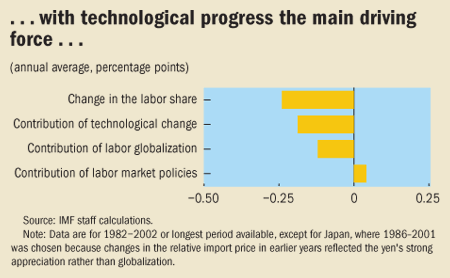
Read "Globalization of Labor" in the current F&D (Finance and Development), June 2007, Volume 44, Number 2.

"Rapid technological change has had the biggest negative impact on labor's income share, followed by labor globalization. Countries adopting reforms to lower the cost of labor to business (by lowering the tax wedge—the difference between the payroll cost to a firm and the net take-home pay of workers) and improve labor market flexibility have generally had a smaller decline in labor share."
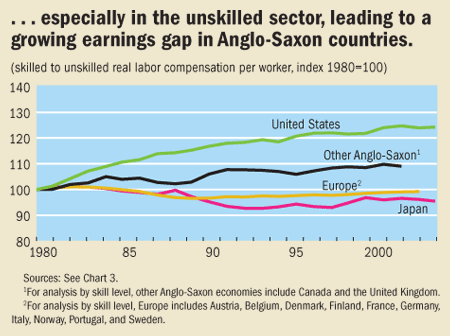
Technological change has especially depressed the share of income going to unskilled labor, and growth in total real labor compensation in unskilled sectors has hence been sluggish. In the United States, the United Kingdom, and Canada, this was reflected in very small increases in real labor compensation per worker and a growing earnings gap between skilled and unskilled sectors while unskilled employment held steady. In Europe (excluding the United Kingdom), in contrast, real compensation per worker in unskilled and skilled sectors has grown broadly in line with each other, but employment in unskilled sectors has contracted.

Tuesday, July 03, 2007

Wolfowitz Joins Think Tank as Visiting Scholar - washingtonpost.com

Wolfowitz Joins Think Tank as Visiting Scholar - washingtonpost.com:

"He was an architect of the Iraq war who was forced from the World Bank presidency amid allegations that he improperly acted to benefit his girlfriend. Now, Paul D. Wolfowitz will turn his attention to the relatively calmer waters of Washington intelligentsia, as a visiting scholar at the American Enterprise Institute."

Comment: I am happy to see this happen. By all reports, Wolfowitz is very smart and a very experienced policy analyst. At a think tank, he can give us the benefit of his thinking, putting it in the marketplace of ideas to be compared with the ideas of others and criticized by his peers. There is no indication that his conduct has ever been criminal, and his thinking is of potential benefit to the nation. JADSource: Baerenpost

Bush Spares Libby From Prison Term - New York Times

Bush Spares Libby From Prison Term - New York Times:

"President Bush spared I. Lewis Libby Jr. from prison Monday, commuting his two-and-a-half-year sentence while leaving intact his conviction for perjury and obstruction of justice in the C.I.A. leak case."

Comment: I wish I trusted the president to do the right thing in this case, since I recognize that I don't have nearly enough understanding of the events and the law to make an informed decision. However, it seems to me that the commutation was the wrong thing to do. The threat of real punishment is, I understand, often used to get felons to cooperate with the law and provide evidence on their co-conspirators. No threat, no cooperation. Moreover, Libby is apparently not to suffer at all from lying to the law and covering up in an investigation of a felony. I don't think the two year probation will be a problem, and I suppose the hat will be passed to pay for his fine. While lots of us now understand he is deserving of our disapprobation, I suspect the millions of remaining Bush true believers will see him as a hero. I bet he gets a good job with high pay in the near future as a result of his connections (as well as his abilities, which must be quite formidable.)
Source: Science Magazine > 29 June 2007 > Kareiva et al., pp. 1866 - 1869

"The human footprint on Earth. Human impact is expressed as the percentage of human influence relative to the maximum influence recorded for each biome. Data include human population density, land transformation (including global landcover, roads, and cities), electrical power infrastructure (NOAA night-lights data), and access (via roads, navigable rivers, and coastline) to the land. Map created from data downloaded from the Human Footprint dataset generated by the Center for International Earth Science Information Network (CIESIN) at Columbia University and The Wildlife Conservation Society.

[View Larger Version of this Image (165K JPEG file)]

In Support of Academic Freedom

The Executive Committee of the International Human Rights Network of Academies and Scholarly Societies (Network), has published a letter in the current Science magazine opposing renewed initiatives that support an academic boycott of Israeli academic institutions. The Committee also opposed Israeli restrictions on Palestinian students that prevent them from studying at institutions of higher education in Israel, the West Bank, and abroad.

I join my small voice to the Committee's powerful one in opposing restrictions on the ability of students to study abroad. The restrictions on Palestinian students seem especially damaging to their rights.

For decades I worked to build linkages between Israeli scientists and their peers in other countries, especially in Muslim countries. We discovered that within the Israeli scientific community there were many people willing to take major risks to cooperate in our programs, that they were willing to provide assistance to counterparts who needed that help, and that the links between scientists across Israel's borders were helpful in improving international understanding in the countries of all participants. People who work together discover that they can live together in peace. Science is now as it has been for centuries, and international enterprise in which scientists cooperate across borders.

So, I also add my voice to those calling for the end of academic boycotts against Israeli scientists. If you find a specific Israeli scientist to be a bigot or otherwise not worthy, boycott that scientist. Do not indulge in prejudice against Israeli scientists as a group, since so many are in the forefront of efforts to build the peace and deserving of our support!

Where our crops were first domesticated!

A New Dawn for Science in Africa

Read the editorial by Mohamed H. A. Hassan in Science, 29 June 2007.

"Several African nations have already increased their investment in science and technology. Rwanda has boosted expenditures on science to 1.6% of its gross domestic product (GDP), striving for 3% within the next 5 years. Research and development funding in South Africa is scheduled to grow to 1% of its GDP by 2009. Nigeria plans to invest $5 billion to create a national science foundation. Uganda, with a $30 million loan from the World Bank, will establish a fund for research initiatives to be selected through a nationwide merit-based competitive process. Zambia, with a $30 million loan from the African Development Bank, will offer postgraduate fellowships to train some 300 science and engineering students in its country. Increasing scientific and technological capabilities across the developing world, most notably in Brazil, China, and India, have opened unprecedented opportunities for South-South cooperation, particularly for the science-poor countries of sub-Saharan Africa. China's $5 billion Development Fund for Africa is designed to help African nations meet the United Nations Millennium Development Goals through cooperative projects with China. Brazil's Pro-Africa Program supports scientific and technological capacity building in sub-Saharan Africa, especially in Angola and Mozambique. A team of Brazilian and Indian experts is now in Senegal to help forge a biofuels industry there. And India, Brazil, and South Africa have launched a tripartite initiative to finance joint problem-solving projects in which science and technology will play a key role."

The current African Union summit offers another opportunity for progress, but only if attention is placed on one of the most critical elements for success: homegrown science.

Did I stovepipe?

Some time ago I posted suggesting that:
  • The natural sciences are the sciences dealing with the natural world;
  • The sciences studying human beings (e.g. medical, psychological) are those dealing specifically with human beings;
  • The social sciences (e.g. sociology, anthropology, economics, organizational sciences, history) are those dealing with society;
  • Technology (in one sense of the term) deals with the human-built world.
I suppose that one could add the humanities (e.g. philosophy), dealing with the human-imagined world.

In Human-Built World: How to Think about Technology and Culture, Thomas P. Hughes mentions technology as dealing with the human built and cultivated world. He made me think. Agriculture has transformed a large part of the land surface of the earth, and that area is better described as cultivated than as either man built or natural. Indeed, there is a body of knowledge about the techniques of agriculture which is different than that dealing with engineering which the original domain of "technology".

There is a gradient in the degree of human influence on the land. It seems to be the case that fire has been used by people for thousands of years to burn grasslands and clear forest undergrowth, with the intention of increasing the productivity of goods from the land. Native Americans modified forests by protecting and planting trees that they found useful and eliminating trees that they found undesirable, making mast (nuts and berries from trees) a major source of human food and animal feed. We have in some cases commercialized gathering, as in the case of the babasu palm industry in Brazil.

It occurs to me that, while humans have modified land for human use, most of the surface of the earth is water, and we have done relatively little to cultivate the ocean. Fishing is generally based on the harvest of wild species, as is some seaweed harvesting. Only in the last few decades has aquaculture become comparable to the harvest of wild fish. I suspect that in a few centuries the seas will be far more fully cultivated by man.

The basic point is that to understand the uses of the land, we have to understand both the natural processes and the processes created or modified by human hunting, gathering and cultivation. Equally, we will not understand the technologies of primary or extractive industries without the basis of knowledge about the environments from the natural sciences.

I think we do not understand society without understanding the relation of that society to its physical environment, and Marx is given credit for recognizing that we can not understand society without understanding its technological basis. Equally, we can not understand man's environment without understanding man's impact on that environment, which in turn is dependent on understanding his society.

Too often, we stovepipe sciences and technologies, thinking about them in terms only of a specific discipline or set of disciplines. It seems to me that I may inappropriately have contributed to such an error. To understand man's world, we need to bring together simultaneously our understanding from all the sciences and technologies.

Getting back to the humanities, that area of scholarly activity has much in common with the sciences and technologies. I have been thinking a great deal for some years about cyberspace. So too, I have been thinking of the bodies of knowledge that are protected as intellectual property, common property, or traditional (and claimed by traditional societies). These form an increasingly important part of our conceptual world, and I predict we will see more and more formal academic study of these spaces. I think the traditional humanities similarly study a virtual world of the mind. Thus we may add to the social, physical, and human-built world, the virtual world. And we need to recognize that the divisions among these worlds is a reductionist artifact -- one to be overcome if we are to gain a holistic understanding of our surroundings.

Monday, July 02, 2007

Established Religion in the United States -- What I didn't Know

I had not realized that, although the First Amendment to the United States Constitution explicitly forbids the federal government to establish a state religion, some individual states did have state religions in 1789. Wikipedia tells me
Connecticut continued to do so until it replaced its colonial Charter with the Connecticut Constitution of 1818; Massachusetts did not disestablish its official church until 1833, more than forty years after the ratification of the First Amendment; and local official establishments of religion persisted even later.
Wikipedia also informs me that
The Fourteenth Amendment to the US Constitution, ratified in 1868, makes no mention of religious establishment, but forbids the states to "abridge the privileges or immunities" of U.S. citizens, or to "deprive any person of life, liberty, or property, without due process of law". In the 1947 case of Everson v. Board of Education, the United States Supreme Court held that this later provision incorporates the First Amendment's Establishment Clause as applying to the States, and thereby prohibits state and local religious establishments. The exact boundaries of this prohibition are still disputed, and are a frequent source of cases before the US Supreme Court — especially as the court must now reconcile this post-1947 view with the original First Amendment clause that explicitly prohibits any restraint on the free exercise of religion.
While deemed unconstitutional now, several states still have on their books religious qualifications requirements to hold public office.

Sunday, July 01, 2007

OK, better, worse


The United States is OK with 4.6 percent of the world's population, and doing quite well with more than one-quarter of the world's GDP, but why is our military spending nearly half of the world's total?

"Should Science Speak to Faith?"

There is an interesting dialog of this title between Richard Dawkins and Lawrence M. Krauss in the current Scientific American. Both are leading proselytizers for science and science education, and both have fought against fundamentalist Christian efforts to teach intelligent design and not to teach evolution in the schools. Dawkins, the author of The God Delusion, is perhaps more anti-religious of the two.

Dawkins suggests that people who believe in the literal truth of the bible (or I suppose of any other religious text) generally lack knowledge of scientific consensus that challenges statements made in the bible.

As any reader of this blog should know, I too feel everyone should know something about what scientists have agreed is true about the social and physical worlds in which we live.

However everyone is ignorant of most things. Even the scientist may be a master of scientific knowledge about ants and termites, and have a good general knowledge of science, but will speak only a few at most of the world's 6,000 living languages, much less understand how religious thought it treated in them all.

In this world, we have to choose what to learn about. What information will we seek out in what depth? So does it make sense for people with strong fundamentalist beliefs to learn much about science, or for that matter for scientists to learn much about religion, or for either to study foreign languages?

Krause poses the question:
Can science enrich faith, or must it always destroy it?
I think the answer is yes, and that is a reason that the religious should study science.

I don't think it is possible to believe both that the earth was created 6,000 years ago (as do some people) and that it was created 4.5 billion years ago as scientists generally believe. I think every adult in America must know that there is a fundamental difference on this and some other issues.

I can only guess, but I assume that those who believe in the young earth must know that their belief is not only not generally accepted, but is actually mocked by a considerable number of highly educated and high status people in our society. I would guess that that knowledge must be very uncomfortable.

Note that both estimates of the age of the earth are conclusions based on arguments drawn from different premises. It seems to me to be obvious that since both conclusions can not be simultaneously true, at least one or the other set of premises is faulty or at least one of the two arguments is untrue. (A scientist of course is reasonable willing to live with a situation in which two alternative conclusions are in direct contradiction, assigning different likelihoods to the alternatives of false premises and false arguments.)

The Catholic Church historically judged statements that the sun is the center of the solar system and that evolution explains the diversity of species as heretical, but concluded that those positions were not necessarily derived by infallible arguments from infallible premises. It seems to me that the religion was strengthened in the process of reconciling concepts which seemed to be articles of faith with conclusions based upon the preponderance of scientific evidence, as was the faith of the members of the church who cared about such things. Others may well have similar experiences.

Of course, some people may conclude that the scientific evidence is weak or the scientific analysis is unsatisfactory, choosing to believe that the authority of the bible and its interpretation are much stronger than the science. Would they not also feel confirmed in their faith by the effort>

Festinger in his book, When Prophecy Fails: A Social and Psychological Study of A Modern Group that Predicted the Destriction of the World described his observations of a cult, many of whose members continued with the cult even though its major prophecy of the end of the world clearly was in error. In some sense, I suppose being wrong in a big way made those who stayed committed to their cult "enriched in their faith". I think that is a poor form of enrichment. Much better for people to enrich their faith by finding any errors in their interpretation that lead to fallacies in their conclusions about the observable world, and trying to correct those errors.

Health Impacts of Climate Change

I ran a meeting on the health impacts of climate change a couple of decades ago, and it occurs to me that it might interest some readers to discuss the subject as a follow up on my Friday posting "Climate Change versus Global Warming".

Obviously, global warming is going to change climates in ways that increase the frequency and/or severity of heat waves in some places. Some people die in heat waves, some health conditions are worsened in heat waves. I think, however, that there will be other much more important epidemiological impacts of global warming.

We know that the sea level will rise. Indeed, scientists tell us that it was hundreds of feet higher than today in during periods in the geological record. There is also increasing evidence that as sea surface temperature rises, at least in some places there will be more and more frequent hurricanes and typhoons. The New Orleans catastrophe clearly demonstrated the dangers, and indeed people drowned in New Orleans during Katrina. The recent deaths in coastal Pakistan as a result of heavy monsoon rains, much less severe than hurricane conditions, illustrate that in poor countries the impact of storm conditions can be much worse that those we experienced in the United States.

Think about the New Orleans experience, however, which involved hundreds of thousands of refugees moving to other parts of the country, and hundreds of thousands of people staying in the devastated city. Think of the rises of crime rates that occurred in the cities that accepted the refugees. Then extrapolate that thinking to the extreme poverty of coastal Asia. How many will die in the aftermath of floods, hurricanes, typhoons and other events that would not have occurred were it not for global warming?

As climates change, so too will the prevalence of disease vectors. New hyper-endemic and endemic areas are likely to be created for malaria, dengue, yellow fever, and other insect borne diseases. I would expect there to be a significant spike in incidence of these diseases as populations with little or no exposure are newly exposed, and as public health systems gear up to meet with historically unprecedented epidemics.

It has been estimated that 80 percent or more of human communicable disease is the result of diseases that have jumped from another species to man. Often human communicable diseases have reservoirs in non-human species. Thus every once and a while a new flu strain arises in birds, is modified in the first people it infects, and becomes pandemic. The flu pandemics kill a million or two people, or perhaps tens of millions as occurred with the Spanish flu during World War I. New diseases seem especially likely to emerge in human populations when people come into unprecedented contact with other species. Thus viral hemorrhagic fevers that are extremely lethal have been observed when people came into unusual close contact with rodent populations, sometimes due to extreme whether conditions, or to people moving into previously unoccupied lands. It seems to me that it is likely that climate change is going to create new circumstances with increasing frequency where such events can happen. How important will the health impact be? Think of HIV/AIDS which seems to have jumped from another primate species into human populations a few decades ago. Think of the plague as rat populations changed and plague in the rodent population became an epidemic in humans, killing one-third the population of Europe.

Speaking of flu, everyone knows that there is a flu season, and indeed there are seasons where epidemics of viral respiratory diseases are much more likely to occur. Change the climate, you are likely to change the occurrence of these seasons. Create weather conditions where viral diseases can become epidemic where they were very infrequent or non-epidemic in the past, and the epidemics will find populations with no herd immunity. The likely impact -- far greater incidence of more severe disease.

It is also the case that diarrheal diseases in developing nations are weather related. Rains come, disease agents get washed into places (like the water supplies) where people are exposed. Global warming is going to put more moisture in the air, and one assumes lots of places will get more rain. It is not a great leap of logic to suppose that many of them will get more diarrheal disease incidence as a result. Indeed, if rainfall greatly increases, the public works infrastructure may not be able to cope in many places, and again disease frequency may increase.

Of course, those areas which become dryer than they are as a result of climate change may also face new health problems. A lot of people are still dependent on surface water, and when there is less of that there will be consequences for those people.

Agriculture is climate sensitive. If the climate changes enough, the crops that were grown in a place will no longer grow there. Indeed, trying to grow crops in an area that will no longer support that agriculture can lead to long term environmental degradation; desertification is not easily reversible! For Americans, with a complex food chain bringing food not only from all over the continent but all over the world, the dislocations of agriculture due to climate change are an economic problem. For subsistence farmers in Africa, they may become a survival problem. Hunger is already a huge problem among the half the world's population that live on an income of less than US$2 per day, and even more for the billion or so people who live on less than one dollar per day. How will subsistence farmers in countries with dysfunctional governments react to climate change? How will already hungry children and families react to changes in food availability? Not with improving health!

All of the above focuses on direct consequences of climate change for health. The indirect consequences must also be considered. People will migrate due to climate change. Farmers who can no longer farm in the new climate and residents of coastal zones that become inhabitable due to sea level rises and increasing storm action are examples. (It is estimated that ten percent of the world's population live in coastal zones that will be affected.) Many will move to urban areas, moving to slums and facing huge social and economic challenges -- not circumstances always conducive to good health. Some will move to other countries, legally or not.

I have always felt that the war between Honduras and El Salvador a couple of decades ago was due to the large number of Salvadorans who had migrated to Honduras. Large scale population migrations can cause social instability. Indeed, I suspect weak governments will not be made stronger by the impacts of climate change on their citizens.

One of the sad facts of public health is that poor health conditions have cummulative impacts. Little kids who get frequent infections tend to be undernourished, even if food is available, and food is often not that available in subsistence households. Undernourished kids have weakened immune systems, and are more susceptible to diseases. Families facing a high likelihood of their kids dying have more kids. Having more kids in the household makes it still harder to feed them all, and these households have more frequent bouts of illness as there are more immunologically naive members to bring home communicable diseases and closer contacts among the crowded household members. Frequently hungry and ill kids don't learn as much in school and frequently hungry and ill parents don't produce as much at work. And so it goes....

Jeff Sachs, in the current Scientific American writes:
Environmental sus­tain­ability is already very difficult to achieve with today’s 6.6 billion people and average econo­mic output of $8,000 per person. By 2050 the earth could be home to more than nine billion people with an average output of $20,000 or more.
More people means more health problems. But unfortunately, even if the world reaches an average output of $20,000 person, not everyone will have that much money. Indeed, over the last half century the inequality of distribution of the world's wealth and income have gotten much worse. Indeed,large areas of the world have gotten poorer for decades at a time not only by comparison but also in real terms. The global demographic and economic changes, unfortunately can not be depended upon to prevent climate change from having severe health impacts.

People in rich countries may think about global warming in terms of their air conditioning bills and hope for less snow to shovel. Poor people in poor countries may have to think about it in terms of disruption of their lives and increased suffering from diseases and deaths.