Wednesday, January 02, 2013

Reasons to Improve the Education Level in the USA


Based on education data from the U.S. Census Bureau’s’ American Community Survey, 24/7 Wall St. identified the U.S. states with the largest and smallest percentages of residents 25 or older with a college degree or more.

The difference in median income between those with only a high school diploma and a college degree is dramatic. Differences in poverty rates related to education are just as dramatic. For U.S. adults with at least bachelor’s degrees, the percentage living in poverty in 2011 was just 4.4%. For adults with only a high school diploma, 14.2% were living below the poverty line.

The effect of wage gap by education becomes clear when comparing the states by graduation rate. Of the 10 states with the largest percentage of college-educated residents, eight are in the top 10 for median income. Among the worst-educated states, eight are among the 10 with the lowest median income.

The U.S. Principles of War


Source
Many authors have proposed and many countries have adopted sets of principles for war.  I wonder whether these would generalize into a useful tool for decision making in civilian life?

Tuesday, January 01, 2013


Visualization of the International Flow of Researchers


Source: World Bank Data Viz

Which countries have the most foreign scientists, and which ones suffer from the worst brain drain? To answer these questions, researchers at the  National Bureau of Economic Research in Massachusetts conducted a Web-based survey of over 17 000 published scientists in 16 countries.
— via the IEEE Spectrum

Monday, December 31, 2012

Quotation


Sunday, December 30, 2012

Will technological innovation continue? Will growth slow?


Paul Krugman wrote a piece in The New York Times recently noting that U.S. national economic forecasts usually are based on the assumptions that recent trends in productivity increases will continue and that recent trends in increasing inequality in the distribution of income will be ameliorated. "Yet this conventional wisdom is very likely to be wrong on one or both dimensions."

Recently, Robert Gordon of Northwestern University created a stir by arguing that economic growth is likely to slow sharply — indeed, that the age of growth that began in the 18th century may well be drawing to an end. 
Mr. Gordon points out that long-term economic growth hasn’t been a steady process; it has been driven by several discrete “industrial revolutions,” each based on a particular set of technologies. The first industrial revolution, based largely on the steam engine, drove growth in the late-18th and early-19th centuries. The second, made possible, in large part, by the application of science to technologies such as electrification, internal combustion and chemical engineering, began circa 1870 and drove growth into the 1960s. The third, centered around information technology, defines our current era. 
And, as Mr. Gordon correctly notes, the payoffs so far to the third industrial revolution, while real, have been far smaller than those to the second. Electrification, for example, was a much bigger deal than the Internet.
Gordon notes that his paper focuses on the United States. Clearly some regions of the world are a century or more behind the "technological curve", not having achieved electrification, indoor plumbing, nor even railroad or automobile transportation.  (Here is a link to the Robert Gordon paper.) 

It seems to me that the "industrial revolutions" have been driven by clusters of technological changes. 

  • The original industrial revolution from 1750 to 1830 included the steam engine, its application to transportation in railroads and steam ships (and thus an expansion of markets), and the development of the American System of Manufacturing (interchangable parts) the mechanization of textile manufacturing, as well as a change from wood to coal as a fuel and increases in the mining and manufacturing of metals.
  • The second industrial revolution from 1870 to 1930 saw electricity, internal combustion engine, running water, indoor toilets, communications, entertainment, chemicals and petroleum technologies combining to drive the economy.
We now seem to be in a third industrial revolution, sometimes called the Information Revolution, and I think we are far from seeing it end. It has already seen widespread economic application of advanced in semiconductor, computer, satellite and laser-fiber optics technologies.

I suspect that if other technologies are added to the mix they will come from the sciences. Some possibilities are:
  • Biotechnology built around the application of modern genetics to agriculture, health and industry
  • Materials technologies, especially nanotechnology
  • Applications of neuro-science, in areas such as education and medicine
  • Applications of cognitive science both in humans and machines.
The final paragraph of the summary of Gordon's paper is disturbing:
Even if innovation were to continue into the future at the rate of the two decades before 2007, the U.S. faces six headwinds that are in the process of dragging long-term growth to half or less of the 1.9 percent annual rate experienced between 1860 and 2007. These include demography, education, inequality, globalization, energy/environment, and the overhang of consumer and government debt. A provocative “exercise in subtraction” suggests that future growth in consumption per capita for the bottom 99 percent of the income distribution could fall below 0.5 percent per year for an extended period of decades.


Friday, December 28, 2012

How valuable are government employees?


There seems to be a general feeling that people who work for the government are bureaucrats who are a burden on the economy. I suppose that most people would feel that the Navy Seals that went into Pakistan and took our Osama Bin Laden were not overpaid or doing an unnecessary job.

How about Anthony Fauci, the head of the National Institute of Allergy and Infectious Diseases? Obviously he could head the research branch of any of the major drug companies, run a major hospital or medical school -- all of which would no doubt pay him more than his current salary. He has led a major effort to develop medical approaches to HIV/AIDS. When the next flu variety arrives capable of causing a global pandemic, and such a variety will surely arrive, our safety will depend in significant part on the work done under his leadership at NIAID. I could go on about the achievements of NIAID under Fauci's 28 years as its head, but you get the idea.

How about the work of DARPA in leading the development of the Internet, or that of the NSF in managing the transition of the Internet to serve the private sector? Or the work of NASA and the DoD developing satellite communications and satellite remote sensing. If you don't make overseas calls you may not realize how good and cheap the telephone connections are, but the businesses that depend on international phone and Internet connectivity do. I am old enough to recall how much  better our weather forecasts are than they used to be -- improvements due to efforts of the weather bureau, drawing on remote sensing and computer advances that the government has stimulated and funded. Farmers can tell you about the economic benefits of those weather forecasts.

I could go on and on, and I may do so in future posts.

A thought about the economics of college education.


Source: Bloomberg BusinessWeek
The salary of an employee is presumably determined by the labor market, and the supply and demand for employees with specific skills. Students graduating from college with systems engineering degrees make more money than those graduating with biology degrees because employers are willing to pay more for the computer types and they can find well paying jobs. Of course, employers must expect to make enough money from an employee's services to pay him and also have a profit consonant with investment (albeit with a new grad, there may be a time delay in the returns).

The ratio of average salary in the first working year to average tuition and fees in the final year of college should be considered carefully. It is likely that the higher the initial salary of the average college graduate in a given field, the higher will be the present value of the average lifetime earnings. It is also the case that a student must live while going to college, so fees and tuition are only part of the cost. There are also "costs" of foregone earnings, assuming that the student could get a full time job if not going to school. Nonetheless, it seems likely that it is a much better investment for a student to get a degree in systems analysis or engineering rather than one in Black studies, Art of Anthropology.

I have always been concerned that the income of the graduate is a poor indicator of the social value of the college degree. How much do people gain from the services of a minister, a nurse, or teacher, and how much of that benefit is appropriated by the provider of the service in terms of salary? How much benefit comes to a community that has well run churches, well run hospitals and well runs schools that is not captured in the salaries of ministers, nurses and teachers? We need measures of such externalities if we are to make good decisions on the funding of public education. It may be that the total social value of the systems analysts and engineers is greater than that of the lower paid professionals, but that is not necessarily so.

Sunday, December 23, 2012

College Educated Immigrants


Source: The Economist
Immigrants with university education seem likely to help the economy. The United States has a higher proportion of such immigrants than the OECD average, but a lower proportion than other English speaking OECD countries. Maybe the Congress should change our immigration policies.

Saturday, December 22, 2012

Homicide Rates Around the World


Map of world by intentional homicide rate per 100,000 most recent year. Source: UNODC.
The rates are high in Sub-Saharan Africa, Latin America and the Caribbean, and Russia among other places.

They appear lowest in some western European countries. 

A thought about Turing tests.


What if an extraterrestrial visitor gave you his equivalent of the Turing Test and decided that you could not pass for an intelligent being?

Source 

Friday, December 21, 2012

More on firearms in the United States.


This is an addition to my previous post on firearms.

The industries producing long guns and hand guns and their ammunition had a military market in the United States. They also had an international market. It has been estimated that there are 300 million guns in civilian hands, so they clearly found a domestic civilian market. I quote from a 2005 study based on a telephone survey:
Thirty-nine percent of households and 28% of individuals reported owning at least one firearm. The majority of firearm owners own more than one firearm, with 60% owning three or more. Over 50% of firearm owners own both a handgun and long gun, but long guns represent 62% of the privately held gun stock. Men more frequently reported firearm ownership, with 45% stating they personally owned at least one firearm, compared to 11% for women. Respondents who had served in the military or had grown up with a firearm in their home were significantly more likely than those who had not to report owning a firearm. The most common reason for owning a handgun was self-defense. Long guns were primarily owned for hunting and sport shooting. Conclusions: Firearm ownership is widespread in the United States with over 60 million adults owning at least one firearm. Among firearm owners, however, ownership appears to be concentrated with 20% of firearm owners owning more than 60% of the firearms.


A market of that size clearly attracted the American advertising industry, and one can assume that gun advertising also influenced the American myths about guns. Think of the Ted Williams Model 200 Sears & Roebuck 12 guage shotgun sold at the height of the baseball player's fame, and marketed via the national catalog and the Sears stores. We also have gun shows and a national wholesale and retail distribution system for civilian firearms. There are firearms museums and collectors, again contributing to a public view that guns are interesting, worth owning.

One element of the gun culture is that there is a strong market in used guns. They are indeed "consumer durables". Thus one can buy guns and not lose too much of their value if one resells that gun later.

The U.S. military during all of the 20th century sought to stimulate civilian marksmanship. I suppose that the idea was something like that of that in Medieval England in which yeomen were required to practice their skills with the longbow. A population that used guns expertly would perhaps be more effective in the soldiers it produced. Sargent York, the backwoods marksman who became the most decorated soldier of World War I, not only demonstrated the value of marksmanship but provided great publicity for the military when it was much desired. In any case, the army sponsored rifle and pistol competitions and encouraged soldiers to enter international competitions.

All of this led to wide spread gun ownership, especially among men who can easily afford what is a fairly significant cost. One wonders, however, how many of the men who buy handguns for "self defense" really understand what they are doing. Do they know how dangerous it is to confront an armed criminal with a firearm? Do they realize what it would feel like for a normal person to kill another person "close up and personal" with a hand gun?

Fortunately, there are relatively few assault weapons in the United States. Here is one estimate:
A November 2012 Congressional Research Service report found that, as of 2009, there were approximately 310 million firearms in the United States: “114 million handguns, 110 million rifles, and 86 million shotguns.” However, author William J. Krouse went on to note that “data are not available on the number of ‘assault weapons’ in private possession or available for sale, but one study estimated that 1.5 million assault weapons were privately owned in 1994.”
Even if that number has increased in the last couple of decades, it should be possible to control their number and distribution.


Economic statistics from the World Bank


In 2011, foreign direct investment in developing countries rose by 11% to a record high of $644 billion. Examine these and other trends in debt flows within the developing world, but also take a closer look at the external debt of high-income countries, and develop a more complete understanding of global financial flows with International Debt Statistics (IDS). http://blogs.worldbank.org/opendata/international-debt-statistics-open-data-on-a-wider-scale

An uninformed thought about guns in America


I am no expert on the history of firearms, but I thought I might share some of my thoughts.

At the time of the revolutionary war, firearms would have been very expensive in North America. I don't suppose there was much use for pistols, which would have been expensive and of little or no use at any distance -- some rich men might own them for duels, and I suppose the few people who carried money might have carried pistols for protection.

The long guns, muskets, would have been expensive since there was little ability to manufacture their parts in the colonies. They would have been inaccurate. Powder would presumably been hard to find and expensive, as would lead for bullets. Loading a musket and keeping powder dry would have taken time and effort.

Apparently rifles became important rather than smooth bore long guns as Americans moved west in the 19th century, but there were also shotguns in use at the time. Flintlock actions and percussion caps were becoming common.

The myths around Daniel Boone (18th century) and Davy Crockett (19th century "King of the Wild Frontier") were around for a long time, but probably became much more common in the days of television and movies.


The Civil War brought minie balls, repeating rifles and revolvers and cartridges into wide spread use in the military, but perhaps most important, resulted in large scale manufacturing of firearms in the United States. While the American System of Manufacturing had long before brought interchangeable parts to the manufacture of firearms here, at the beginning of the war there were few places capable of manufacturing firearms in the United States, and the maximum production of any of these was some 15,000 weapons per year. In the Civil War guns were manufactured by the million.

The 1873 Colt Peacemaker 45
During the Civil War the transcontinental railroad was approved. Prior to the war, Texas had been added to the United States, as had the Southwestern lands taken from Mexico. The Gold Rush had taken place in California, and the Comstock Load of Silver had been found in Nevada. From 1865 to 1900 there was a mass movement into the western United States, marked by the Indian Wars, the cattle drives, the destruction of the buffalo herds, and the spread of rifle and pistol cultures into the west.

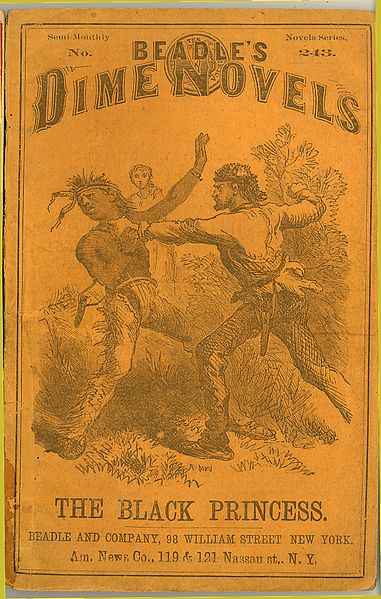
It was also the time of the dime novels. Buffalo Bill and other Wild West shows. Improved printing presses, mass distribution via railroads, and a literate public resulted in a mass market. The myths of the western gun culture went into mass production.

The western movie was popular during the silent era and reached huge audiences with the talkies. During the Great Depression the movies were an affordable mass entertainment, and many of the movies were westerns. The radio brought kids the Lone Ranger and Gunsmoke.

Television in the post World War II years brought us Gunsmoke, Bonanza, the Rifleman, Have Gun Will Travel, and many other westerns, and brought them into the living room. A whole generation had the myths of American gun culture brought into their living rooms.

But we also saw war movies in the aftermath of both world wars. Police procedurals, hard boiled detective stories and other shoot-em-ups were also popular.

It seems to me that our mass media have done a great deal to create and promote a gun culture.

The large numbers of uses of firearms in crimes are not well publicized. There are so many murders and suicides using firearms per year that they are not really news. It is only the mass murders that draw extreme media attention.

The polls suggest that most people feel that gun ownership is appropriate in our culture, and that there is no reason that many people should not be allowed to own guns. They believe however that guns should be regulated and registered. Efforts should be taken to keep people with criminal records and mentally disturbed people from obtaining or having guns. Moreover, there seems to be considerable support to keep some kinds of guns off the market -- the so called Saturday night specials, assault weapons, machine guns, etc.

Thursday, December 20, 2012

A Book About Those Who Stayed Loyal to Britain During and After the American Revolution.


Our book club met on Wednesday, November 12th to discuss Liberty's Exiles: American Loyalists in the Revolutionary World by Maya Jasanoff. The manager at Barnes and Noble had told us we could not use their store due to the holiday season, but the owners of the Kensington Row Bookshop kindly stepped in and provided meeting space.

The book focuses on the colonial loyalists who sided with Britain in the American Revolution. The discussion brought out the fact that the Revolution was a rather brutal civil war North America. Revolutionaries demanded oaths of loyalty to the revolution, mobs used tar and feathers (in one case mentioned in the book lighting the tar thereby causing permanent disability). One must assume old grudges were settled violently on both sides. Property of loyalists was expropriated by the revolutionaries. Thousands of British loyalists were driven into New York, Charleston and  other cities held by the the British forces.

American history as taught in the schools emphasizes that the British troops included not only people from the British Isles, but German military unites rented for the war by the British government. The book notes that there were also American loyalist units. There were Creek and Iroquois Indians fighting on the British side as there were Indians fighting with the revolutionaries. As the American revolutionaries successfully resisted defeat by the British, the French and Spanish eventually joined in war against Britain.

When the war ended there were many loyalist who went into exile. They included English loyalists, Mohawks, and freed Blacks. In addition, many loyalist slave owners took their slaves with them. Jasanoff believes that an estimate of 75,000 refugees may be justified by the existing records. (I wonder whether some uncounted loyalists took refuge to the western wilderness, including Indian refugees. Might others have sought refuge before, during or after the war by simply leaving for Europe, the Caribbean, or Spanish America?)

The largest portion went to what is now Canada. the Mohawks established themselves as part of the Canadian Iroquois community and their leader Joseph Brandt is now considered a Canadian hero. The Whites significantly increased the White population of Canada and eventually used their political power to reduce the liberties that had earlier been given the French Canadians by the British Parliament.

The British in Canada were overwhelmed by the needs of feeding and housing the refugees, whose number was large with respect to the existing population of European-Canadian residents. The promises made to the refugees were not (perhaps could not be) fulfilled. There were also what now appear to be inequities. The Blank freemen were provided smaller land grants than their White counterparts, and aristocrats were better treated than commoners. There was a riot in which the White refugees drove Black refugees out of their separate settlement burning their huts.

Some of the loyalists returned to England, and they and their descendants in some cases moved on to other parts of the empire. The British broke new ground by initiating a policy of reimbursing loyalists who had property confiscated by the revolutionary United States. A commission was created to record claims and where possible to substantiate them. Pensions were provided to some refugees, large for the formerly rich, small for the poor. Eventually many refugees received reimbursements for their losses. Of course the well connected aristocrats did better than others.

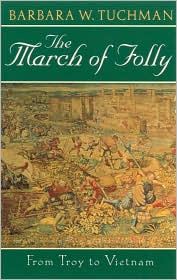
Some refugees were sent to east Florida. We had recently read The March of Folly: From Troy to Vietnam by Barbara W. Tuchman. Tuchman devoted a section of that book to the follies of the British government that led to the American revolution and to its success. This book suggested the follies continued. Thus the British ceded Florida to the Spanish in the treaty ending the war. The Spanish announced that the British loyalist refugees could stay if they became Catholics and swore loyalty to the Spanish king, but many refused and had again to emigrate as refugees.

Many refugees went to British colonial Islands: Jamaica, Barbados and the Bahamas. The book points out that the Bahamas to the east of Florida and in the Gulf Stream are quite different ecologically than the Caribbean Islands. The plantation culture in the Caribbean Islands was economically very successful. The refugee loyalists immigrating to the Bahamas were much less successful.

The Bahamian story is again a march of follies. An American revolutionary force invaded, meeting little and ineffectual resistance by local militias, and then withdrew. The Spanish then took Nassau, and were in turn defeated by a tiny force of irregular American loyalists from Florida, discovering only later that the Spanish had ceded the Islands to Britain in the 1783 treaty ending the war.

The British offered freedom to any slaves who escaped their masters and joined the British military forces. When after the war, Washington and other slave owners demanded the return of their escaped slaves, the British responded that their honor demanded that the promises made to those Black now be kept. Thus a relatively large number of freed Blacks were among the refugees. Some of these eventually helped found Sierra Leon as a state for freed former slaves and their descendants. However, there were also slaves who were taken as property by white loyalists refugees. One of these was instrumental in a slave revolt in the 19th century in the Bahamas. (The willingness of slaves to take up arms against their masters shown in these times must have fueled the fear of slave revolts long after in the South.)

The loss of the North American colonies was a blow to the self image of the British and the government officials who were responsible were quickly replaced. The new cabinet apparently learned many lessons from the experience, and colonial administration was improved. Britain, of course, went on to rule the Indian subcontinent for a century and a half. It colonized much of Africa. It also revised its colonial administration of Canada, Australia and New Zealand. (One of the odd stories told in the book is that an American loyalist refugee in England advanced a plan to settle a community of his fellows in Australia, but revised that plan to substitute prisoners from the overcrowded prisons of the British Islands. That plan was accepted, leading to a history told in another book read in the past by the club -- The Fatal Shore: The Epic of Australia's Founding by Robert Hughes,

We have become inured to the suffering of millions of refugees from wars and their aftermaths, especially for the club members old enough to recall the aftermath of World War II. That in no way reduces the fact that there was great suffering among the loyalist refugees of the Revolutionary War. Many were forced out of their homes, lived with difficulty in overcrowded and poorly supplied towns held by the British during the war, and then were exiled. One of the lessons of the book was that the rich and aristocratic survived much better as refugee loyalists than the poor -- no surprise that.

Fifteen club members showed up for the discussion, not all of whom had been read the book. None the less, the discussion was lively. It appeared that those who had read the book found it interesting and well written.

Jasanoff had broken new ground in her exhaustive research for the books, since she was able to search materials located in the many countries that had received the refugees. She was able to use records from the British government of the transport of the refugees, their resettlement, and the reparations committee. Refugee families were separated in the aftermath of the war, as were people with long established friendships, and some the correspondence among these people survives and was used in the research. Thus the author was able to draw on first hand accounts of the lives and feelings of the refugees.

There was strong agreement among club members that the book explained aspects of the Revolution we had not recognized, and explained them well.

Tuesday, December 18, 2012

Self Explanatory Graphs of Mortality Rates


Global Mortality Rates By Age and Cause

Mortality Rates By Region and Cause

These are static images drawn from interactive graphics published online by The Lancet "Global Burden of Disease Study 2010". Published Dec 13, 2012

Self Explanatory Graphs on Mortality -- Numbers of Deaths


Global Mortality By Age and Cause

Mortality By Region and Cause

These are static images drawn from interactive graphics published online by The Lancet "Global Burden of Disease Study 2010". Published Dec 13, 2012

2.27 billion Internet users!


Susan Cain: The power of introverts


In a culture where being social and outgoing are prized above all else, it can be difficult, even shameful, to be an introvert. But, as Susan Cain argues in this talk, introverts bring extraordinary talents and abilities to the world, and should be encouraged and celebrated. This is part of my series suggesting that we think with our brains, not our minds. Introversion or extroversion does not seem to be a choice, but it does influence what we think.