Tuesday, October 14, 2014

The Long Shadow: Part 3 of my comments


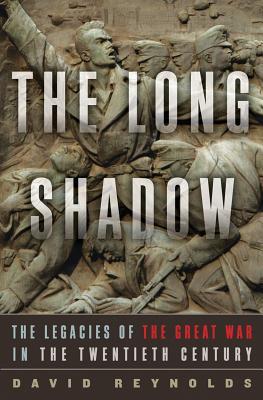
This is my third post on The Long Shadow: The Legacies of the Great War in the Twentieth Century by Davis Reynolds. Click appropriately for the first and second posts.

The fifth chapter of the book, in the section titled "Legacies" is titled "Civilization". It deals with the "cultural" repercussions of the First World War -- the visual arts, movies, architectural memorials, poetry, fiction and non-fiction books.

This is an amazingly ambitious exercise, perhaps difficult for me to appreciate because, as Reynolds states in the video above, his objective in the book involves contrasting what happened in the shadow of the war in Britain as versus in the rest of Europe.

It seems clear to me that World War I was a watershed in many modern culture.

I was unable to judge the art described in the chapter. This program showing the Woodrow Wilson House collection of pictures from World War I helps. I watch the British Antiques Roadshow, and I note that people occasionally bring in works by their ancestors -- air battles painted by an amateur on metal from a plane, or images drawn by someone assigned to make observation drawings from balloons suspended over the front lines come to mind. I suspect that many soldiers tried to express themselves in such works, or perhaps to convey to folk at home what the war was like.

I was surprised that Reynolds did not focus on the role of photography in creating the legacy of the war. Using Google Image to search for "World War I" I found many, many photos. Perhaps the most memorable image from the war in my mind is the recruiting poster shown on the right.

Similarly, I was surprised that Reynolds failed to mention Wings, William Wellman's 1927 film based on his own wartime experiences that won the first Best Picture Academy Award. Similarly, he failed to mention Battleship Potemkin, Sergei M. Eisenstein's 1925 film about the 105 naval mutiny against the Tsarist regime. It seems to me that that film that provided propaganda for the Communist regime would not have been made but for World War I and the Russian revolution it triggered. Battleship Potemkin is widely regarded as one of the greatest films of all time, and has had great influence on later generations of film makers.

The section of the chapter on the war memorials is interesting, and strongly supports the point that different countries responded to the war in different ways. It is interesting that the British way of dealing with the death of its soldiers in World War I was so influenced by the Union way of dealing with its dead soldiers in the Civil War (see my post after reading This Republic of Suffering). The racism evident in the treatment of the Indian soldiers who died fighting for the British empire in the Middle East is sad to read today.

I was pleased to read Reynolds' acknowledgment of the role of T.S. Elliot and Ezra Pound in revolutionizing English poetry, which he regards as having been stuck in 19th century modes before the war. It is nice to see a Brit acknowledge leadership of Yanks, albeit expatriate Yanks, in literature.

The chapter has a brief discussion of intellectuals in the aftermath of the war. It fails to mention the International Committee for Intellectual Cooperation that included such intellectual luminaries as  Henri Bergson, Albert Einstein, Marie Curie, Béla Bartók, Thomas Mann, Salvador de Madariaga, and Paul Valéry. It had the International Institute for Intellectual Cooperation as its secretariat. Moreover, there were hundreds of committees for intellectual cooperation formed at the national level in at least 37 countries. Like the International Bureau for Education, these all were associated with the League of Nations.

Peace

The sixth and final chapter of "Legacies" is titled "Peace".
Ten million had died in the conflict. Twenty million had been severely wounded and eight million had returned home permanently disabled.
Different nations responded to their different levels of loss differently. Russia, which embarked on a major civil war after its revolution and peace with Germany, devoted relatively little commemoration to the First World War. Germany commemorated early victory, while popular opinion sought those to blame its loss and the heavy reparations that were imposed. France, the United States and Britain all celebrated Armistice Day.

The chapter goes on to consider the different roles of veterans groups in the aftermath of the war. Several veterans associations in Germany differed in their support for peace versus disarmament. The British Legion was relatively weak, while the French veterans associations were quite strong and represented a significant portion of the electorate. The American Legion and Veterans of Foreign Wars were larger still, and played a significant role promoting nationalism.

The interwar period saw Mussolini come to power in Italy and Italy invade Ethiopia; Hitler came to power in Germany and there was a rapid military buildup; Italy and Germany aided Franco in establishing a right wing government in Spain. (Portugal too established a right wing government in the 1930s. Facing the militarism of these countries, the Stalinist USSR rapidly built its military capacity, including its heavy industry and rail network. On the other hand, there were strong isolationist and peace sentiments in England and even stronger ones in the United States. It was only late in the 1930s that the latter began to prepare for war.

Refractions and Again

The second part of the book is titled "Refractions". It deals with the Second World War and the latter part of the 20th century.

Chapter 7 of the book, "Again" is a brief summary of World War II. (It makes the point that this war was even more global than the first, and that it required a change in terms. The war of 1914-1918 could no longer be termed the "Great War" and became, the "First World War" or "World War I{.

The chapter focuses almost entirely on the Western Front, recognizing that the Soviet military did most of the fighting against the Germans and that the United States provided the industrial muscle, producing more war materiel than the other combatants combined. Reynolds seems to suggest that Churchill's war rhetoric was rather greater than British accomplishments might have warranted in the light of a couple of generations of historical research.

The chapter is surprisingly silent about the Eastern Front. Japan after all was engaged in a huge war effort against China, had conquered British colonies in Singapore and Burma, French Indochina and the Dutch colony of Indonesia. While the United States emphasized the war in Europe for the first years, the loss of the American fleet at Pearl Harbor and of the Philippines were major blows.

More

It is interesting that Reynolds does not address the shadow of World War I on the development of technology. Obviously the war led to rapid advances in military technology. It seems likely that it promoted the development of aviation technology with both military and civil impacts. Perhaps it also led to the more rapid development of ship building. While Ford had pioneered the assembly line for automobiles just before the war, it seems likely that that manufacturing technology spread internationally more rapidly as a result of the war. All of these and other technological affects occurred in the 1920s and 30s.

Be thankful for artificial foods


Thanks to Calestous Juma for this infographic.

Now is the time to stop the Ebola epidemic!


This is from last week. The current epidemic is no longer contained in three countries, but has spread to Nigeria and Congo. The time to stop the spread of an emergent disease is "as soon as possible". With this disease, which kills half those who get sick, it is especially urgent to wipe it out.

The map shows outbreaks dating back to 1976. We know that Ebola (and other diseases that can effect people) exists in animal populations in Africa. Ebola outbreaks, and outbreaks of other new diseases, will occur in the future. The world needs a better epidemiological surveillance system that will identify such outbreaks very, very quickly; the world needs an emerging disease response system that will stop emerging epidemics before they do what this Ebola epidemic has done.

Monday, October 13, 2014

The world is complicated!


When you change one thing, others change in response. You may not realize what the overall impact of your action will be.

 When they killed off the wolves of Yellowstone, they did not realize that they were changing the ecology of the National Park -- something that the nation had decided must not be changed. Fortunately, restoring wolves to the park is helping to restore the ecology.

Sunday, October 12, 2014

A thought about analysis at different levels.


I am watching Sally Satel on Book TV as she discusses her book, Brainwashed: The Seductive Appeal of Mindless Neuroscience.

She describe experiments that showed not only that drugs affect the operation of the brain while in the blood stream, but also can leave permanent changes in the brain. She also stressed that experience and experiments show that people addicted to drugs also can (sometimes) control their own behavior/ Rewarding avoidance of drug use and penalizing drug use can lead addicted people to stop using drugs. That is important information as we think of drug policy choices. Perhaps there are better means of behavioral modification of drug use than putting people in jail.

What I was especially struck by was her suggestion that different levels of analysis can be useful to different purposes.

  • Neurobiological research is perhaps the most useful for looking at dementia, since many forms of dementia are not understood but do not respond to behavioral modification. For these, the biological knowledge may lead to medical interventions -- drugs -- to slow or even cure these diseases of the brain.
  • Psychological research is perhaps very useful for looking at addictions, since proper uses of rewards and punishments may enable addicted people to control their behavior. Moreover, the biological research, which might produce useful medications and diagnostic procedures, would be unlikely to illuminate the behavioral approaches.
Different levels of analysis are likely to be complementary!

Ignorance about GMOs is funny until you think about it.


This is funny. But it is also sad.

The basic fact is that all the foods we eat are genetically modified from their wild ancestors. That is true for plant and animal based foods. All the common food sources have been modified by long periods of selection. You can find some traditional cultivars if you try hard enough, but anything you buy in your market is almost certainly the result of scientific breeding.

If you think about it, the offspring of a male and a female gets half of its genes from each parent. If a plant breeder finds a variety that has genes providing protection against a specific disease or pest, and tries to move them into cultivation, the breeder brings thousands of genes from that variety into cross with varieties that are already commercial -- that have lots of useful genes. The breeder then goes through generations of cross breeding trying to keep the new useful gene, not to lose too many of the good genes from the commercial varieties, and to eliminate the unwanted genes from the original plant with the the new useful ones.

In recent decades, scientists have discovered ways to add a single gene to a plant. This makes it possible to keep almost all of the useful genes from an existing commercial variety and add a specific trait that is wanted. Plant breeding is faster. Moreover, a gene can be added that was found anywhere in nature, not just in a closely related plant. Then government regulatory agencies require extensive safety testing.

In case you never thought about it, existing crops include many genes that make people sick. I have three food allergies, and know from experience that common foods that don't affect most people affect me like poison ivy. Some people are so allergic to peanuts that they can die from eating them. You are likely to be as safe eating a GMO food as one that you regularly eat.

I know it is a pain to read all that stuff about nutrition, but I wish people would not make snap judgments about GMOs. They will be needed to feed the world's growing population as the global climate is changing.


Index of Intelligence Adjusted Adult Years


Life expectancy at birth has long been viewed as a useful index. The increase in life expectancy worldwide experienced over the last century is clearly a good thing. The World Health Organization some years ago added another health indicator, disability adjusted life years (DALYs). It recognized that a healthy year is better than a year in which a person is sick, and a year in which someone is in command of all functions is better than one in which that person is disabled in some function as a result of some earlier disease.

I wonder if an index of intelligence adjusted adult years might also be useful.

Intelligence is not fixed at birth. We believe that poor nutrition and frequent illness in infancy can interfere with the full development of the brain. Indeed, it seems that a child's brain needs stimulation to develop; kids whose parents talk to them a lot generally turn out to have better language skills than kids whose parents don't.

The Flynn Effect has also been observed. IQ tests, well designed, have results with frequencies that display the well known bell shaped curve (normal distribution). The average IQ is 100, and known portions of test populations fall above and below given values of IQ. The tests are periodically revised and scores are standardized accordingly. IQ tests are perhaps most useful when used for young people, and can predict something about their likely success in schooling. It has been observed that young people on average score higher on earlier tests than they do on the current IQ test. This is the Flynn Effect, a general creeping up of IQ scores in this limited sense. Still, the Flynn effect suggests that each generation is likely to score higher on average on the same IQ tests than would the previous generation. Somehow, IQ's seem to be increasing.

We also know that older people, especially those afflicted by some form of dementia, show a decrease in mental abilities.

What if the IQ distribution were measured for age cohorts of adults, weighted by the size of the population in those age cohorts, to develop an adult distribution of IQ scores. Could that be tracked? measure changes in the IQ of the population?

Of course, as implied in the previous paragraphs, different public policies could influence population IQ in different ways. Medical intervention to prevent dementia or to slow the progression of dementia would affect intellectual abilities in older people; early childhood care could help assure full brain development in children. Indeed, interventions encouraging parents to talk to their preschoolers seem to be useful in developing language skills in their children. I suspect that schooling is needed to fully develop intelligence for people with potential for high IQ scores.

Perhaps it would be useful to have an indicator that would track the evolution of the intelligence of the population, and that would encourage interventions to increase adult intelligence.

Saturday, October 11, 2014

Evolution of Human Communication


Erik R Kuhne posted this chart on Facebook with the following text:
The chart below shows these emerging technologies going back to Cave Painting, Language, Alphabet, Print ... up to the present. This graphic comes from Jude Umeh writing about DIGITAL INNOVATION "The development of computing and internet technologies, and the disruptive effect they had / are having on many traditional industries, is a prime example. In my 2007 book on digital rights management, I described the evolution of human communication (plotted over time and numbers reached) with an early infographic that also captured how computing and internet technologies have parallels with (and essentially re-create, re-interpret or replace) most prior communication technology and formats (e.g. spoken, written, visual, broadcast and telecommunications)."
Architect Kuhne is one smart man, who combines the ability to think visually and technologically as one might expect from a very good architect with a futurist outlook.

It might be interesting to add to the chart. Mathematics is another way to communicate. There are the  the non verbal means -- pictures (painting, photography, etc.), music, dance. How about the institutions we have added to facilitate communication -- schools, news organizations, etc.

Friday, October 10, 2014

The New Tool of Big Data Raises New Interpretation Problems.


I came across an interesting article on the need for replication of scientific results. It quotes the great Irish scientist of the 17th century, Robert Boyle:
“Though the testimony of a single witness shall not suffice to prove the accused party guilty of murder; yet the testimony of two witnesses . . . shall ordinarily suffice to prove a man guilty,” Boyle wrote. In the same way, he said, a scientific experiment could not establish a “matter of fact” without multiple witnesses to its result.
We should now be more cautious about believing eye witnesses in criminal proceedings, but Boyle's point was very good. Scientists should invoke peer review and replication of results to assure the credibility of reported experimental results.

The article goes on to state:
Study after study finds that many scientific results are not reproducible, Heller and colleagues note. Experiments on the behavior of mice produce opposite results in different laboratories. Drugs that show promise in small clinical trials fail in larger trials. Genes linked to the risk of a disease in one study turn out not to have anything to do with that disease at all. 
Part of the problem, of course, is that it’s rarely possible to duplicate a complicated experiment perfectly. No two laboratories are identical, for instance. Neither are any two graduate students. (And a mouse’s behavior can differ depending on who took it out of its cage.) Medical trials test different patients each time.
As I have suggested in previous posts, scientific journals are more interested in publishing surprising results than in publishing new observations that further support already well supported hypotheses. But it is the surprising results that are more likely to be the results of experimental error, statistical flukes, or failures in interpretation of the experiment and its result. So I do not find it surprising that many published results fail the replication test. It is unfortunate when scientists do not volunteer to do the relatively thankless work involved in replication studies.

Incidentally, the long history of cold fusion research shows that replication is needed, and that for an important enough assertion, scientists do step forward to follow up on controversial assertions and research.

The article focuses on a relatively new kind of research. Today it is possible to study the genomes of a large number of people suffering from the same genetic disease to identify genes that might be implicated as causing the disease. These are called "genome-wide association studies" (GWAS).
A GWAS analysis of Crohn’s disease, for instance, tested over 600,000 genetic variations in more than 3,000 people. A follow-up analysis re-examined 126 of those genetic variations.
One would expect that looking at so large a number of genetic variations in so small a sample, a lot of the correlations with the Crohn's disease would turn out to be spurious. Even the follow-up of 126 of the candidate causal genes (which may work in combination) might throw up false positives (and false negatives).

The basic point is that big data analysis is an important emerging tool for scientific research, but it brings with it new problems in validating results.

I recently posted in this blog reflecting some concerns about a criminal investigation in which a task force had thrown up thousands of people suspected of committing a series of crimes. The law occers got a "hot lead" on one of these suspects, and decided that he must be the criminal. They then changed the nature of the investigation, focusing only on evidence to convince a jury of the guilt of their chosen suspect. (They probably were right in the case.) I am doubly skeptical of the police approach to dealing with the results of "big data" analysis to identify large numbers of persons of interest from which to narrow down to still significant numbers of suspects. Failure of police to understand the statistics involved, and failure of lawyers and judges to properly inform juries on how to interpret the results of such investigations, may well lead to convictions of the innocent.

Thursday, October 09, 2014

In real terms average wages stagnant since Reagan


Source
Once this was a country where the average working person could expect to see wages increase from year to year.

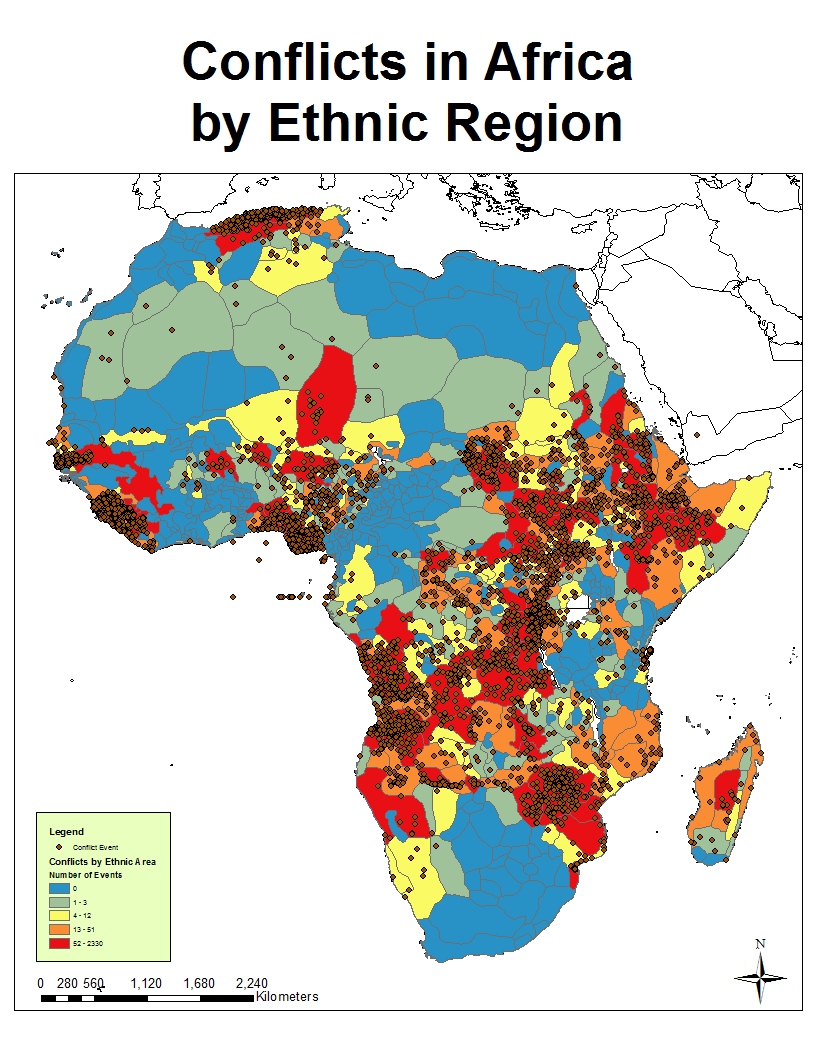
Ethnic Africa Continues Plagued by Conflict


Thanks to Eric R. Kuhne for pointing out the conflicts in Africa mapped atop George Murdock’s map of ethnicities.

Wednesday, October 08, 2014

A thought about indicators for national planning.


I quote from an article in BloombergView:
It took more than 250 years, the Wall Street Crash of 1929, and a worldwide depression for economists to fully appreciate Petty’s quantitative approach to national income. The first to investigate the concept comprehensively was John Maynard Keynes, in “The General Theory of Employment, Interest and Money,” in 1936. Meanwhile, Presidents Herbert Hoover and Franklin D. Roosevelt had commissioned the economist Simon Kuznets to develop estimates of U.S. income to guide their policy responses to the Great Depression. 
Kuznets’s “National Income, 1929-1932,” was the first comprehensive measure of national income and output. His accounts, a set of industry-by-industry estimates, allowed Roosevelt to describe the performance of the U.S. economy in his budget request to Congress.
Guy, a very competent economist, tells me that there is a huge literature seeking other ways to measure the performance of the economy. GDP was introduced following the second industrial revolution (see my previous post). The first had been related to mass production and machine manufacturing; the second involved electrical power and internal combustion engines, as well as the automobile  assembly line. It is perhaps not surprising that after the Wall Street crash and during the Depression, interest was in the total production of goods and services, as well of course as employment.

I tend to be more interested in welfare. It seems to me that adding $1000 per year per child to a poor single mother's income does a lot more good than adding a comparable amount to Bill Gates income. Can we get to a measure of welfare that would help develop policies that favor a more equitable distribution of income?

I also suspect that we have enough goods and work too much. People might be happier if we organized society so that more work was done by machines and people had more time with their friends and families, where they live healthier lives; where more time was spent improving their mins and information to enable them to be better parents and citizens. Could we build national accounts to help move toward such an economy?

I suspect we need many indicators to manage a nation well using modern approaches. Perhaps it is time to look more closely at those beyond GDP per person.

Industrial Revolutions and GDP in the countries that led them.


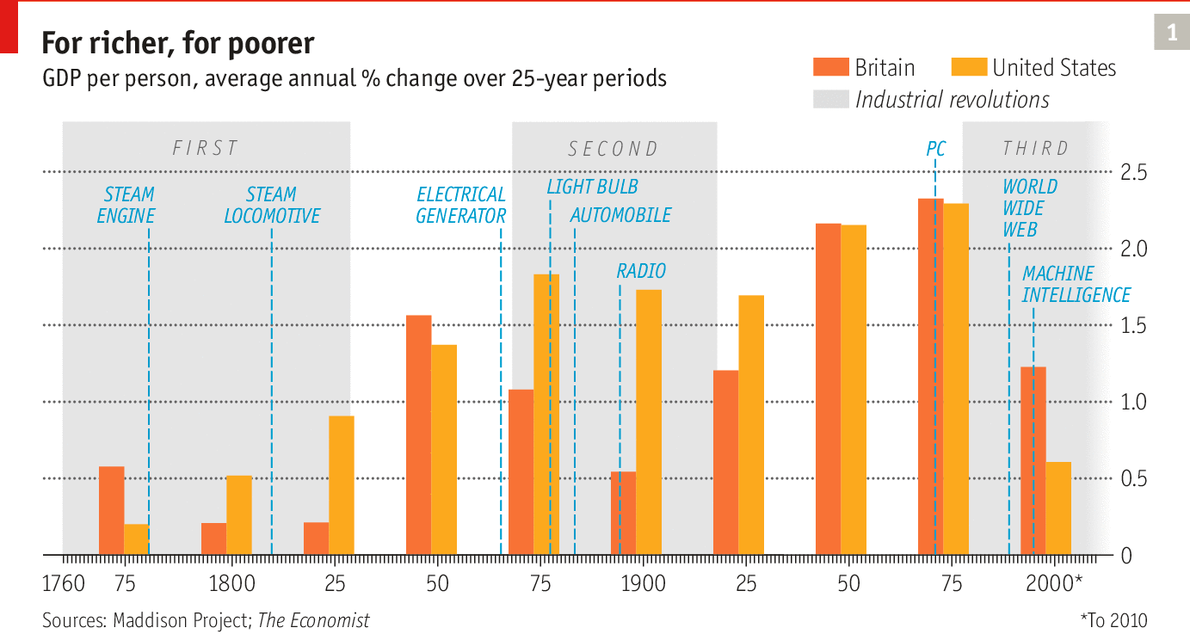
This graph from The Economist relates the rise in GDP per person in 25 year periods to the three industrial revolutions. Note that the last entry is for only 10 years, so that one may hope that the total impact from 2000 to 2025 will be as great or greater than that during quarter centuries in previous industrial revolutions.

I note that growth in these leading economies were greater in the periods after the first two industrial revolutions than during them.

Everyone agrees that a major improvement in one or more of the technological systems can lead to economic progress. The article suggests that it takes a longer time than might be realized for the benefits to be fully realized. It is also clear that the half century between 1950 and 2000 was relatively peaceful, as compared with the previous two quarter centuries, each of which included a world war.

Evolution of the Global GDP


Source: The Economist
I quote for The Economist article:
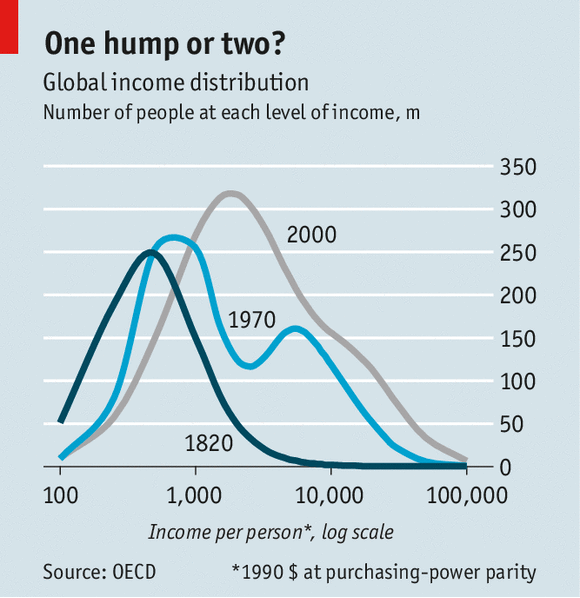
The global Gini rose from 49 in 1820 to 66 in 2000. But this was not caused by widening disparities between rich and poor within countries (inequality in its usual sense). Inequality of that sort fluctuated for 130 years to 1950, before falling sharply in 1950-1980, in what the report calls an egalitarian revolution. Since 1980 it has risen again (as Thomas Piketty, a French economist, has shown), back to the level of 1820.
 That implies the two-century rise in global inequality must come from elsewhere: from what is called “between-country inequality”, the gap between rich and poor nations. This gap has widened sharply. In 1820 the world’s richest country—Britain—was about five times richer than the average poor nation. Now America is about 25 times wealthier than the average poor country. The Gini coefficient for between-country inequality stood at only 16 in 1820 (ie, very low). It soared to 55 in 1950, and has been stable since. The driving force of inequality since 1820, in other words, has been industrialisation in the West.
The good news in shown in the graph is that a much smaller number of people in the world were very  poor in 2000 than in 1820 and 1970, but also that the number of people in the middle incomes and in the upper incomes is much higher! 

Tuesday, October 07, 2014

101st birthday of the automobile assembly line


Henry Ford introduced the Model T in 1908 but continued to improve the production process, creating the Highland Park Ford Plant to automate the assembly of the cars on a single moving production line. The line went into operation on October 7, 1913 -- the birth of the automobile production line. The price of the Model T was reduced to $550, making an automobile of adequate quality affordable for a large market. Ford also paid the factory workers enough that they could themselves buy Ford cars. Read more......

Congratulate an electronics or electrical engineer on her/his day!


Nikola Tesla, Alexander Graham Bell and Thomas Edison were among the members of the Institute of Electrical and Electronics Engineers (IEEE) . Today is the anniversary of the "1884 meeting in Philadelphia when members of the American Institute of Electrical Engineers, one of IEEE’s predecessor societies, gathered for the first time to share technical ideas." So October 7th is also the day the 430,000 members of the IEEE celebrate IEEE Day.

Who says your destiny is not written in the stars? (Some will understand.) Everyone, have a good day.


Monday, October 06, 2014

More on "The Long Shadow"


The third chapter of The Long Shadow: The Legacies of the Great War in the Twentieth Century by David Reynolds it titled "Empire". It deals with the impact of the war on some of the empires that survived World War I, namely the British, French, American and Japanese. (Dutch Indonesia, Belgian Congo and Portuguese Africa are not mentioned.)

Perhaps the most striking aspect of this chapter is racism. The Japanese, the only non-white empire, felt the racism of the others and the shadow of Japanese resentment was perhaps an element causing it to side against its former allies in World War II. Woodrow Wilson, who had racist views himself, thought white ethnic groups ready for their own states, but not Arabs, blacks, nor most Asians. The British and French, perhaps influenced by their own imperial ambitions, too felt that other races should not be granted nation states. While antisemitism seems to have been common, the British at least seemed also to believe that a Jewish state in Palestine was possible.

Germany lost its African colonies to England, France (and Belgium) and lost land in Europe to France and to the new nation states created by the Treaty of Versailles (as described in Chapter 2 of the book). Japan took over Germany's interests in China. including major influence in Shandong Provence. Australia took control of German colonies on New Guinea and New Zealand of German Samoa.

The Ottoman empire disappeared. Turkey was created primarily as a nation-state for the Turkish people. The British empire, which had put a million troops (mainly from India and the Dominions) against the Ottomans, saw the control of oil, the Suez canal, and the related real estate as vital to its imperial interests. British officials had promised Arabs their own nation states in captured Ottoman lands, and had promised Zionists a state in Palestine. Britain was not especially concerned with obtaining new colonies, and the status of League of Nation mandates was quite acceptable. Thus Egypt was granted independence, with Britain retaining rights to define and manage key policies; Iraq was created as a mandate out of three Ottoman provences (Kurdish, Sunni and Shiite); Transjordan was created eventually to be placed under Hashemite control; and Palestine as a mandate. A later treaty left France in control of an area to the north which was eventually divided into Lebanon and Syria. Lebanon, in theory was to have been a state for the Christians in the region, but Moslems were included in sufficient numbers to have created the divisions we see today.

England and France were the world's largest empires (Britain controlled 25 percent and France 10 percent of the world's surface, and both empires peaked in size after the war. India, the jewel in the crown of the English monarchy, saw considerable political development during World War I as it sent a million troops in aid of the allied cause. Home rule movements proved relatively unsuccessful in the interwar period. (Independence of India, Pakistan and Bangladesh would not occur until after World War II.)

The chapter also discusses naval power after the war, including treaties that established a 5-5-3 naval parity between the British Empire, the USA, and Japan. The U.S. and Britain decommissioned warships after World War I in accord with these agreements. The treaties were a tacit acknowledgement that control of the Pacific had been ceded from the British Empire to Japan and America. The Japanese again felt slighted by not having parity with the other empires, and recognized the British construction of a major naval base in Singapore as foreboding future conflict.

Capitalism

In his fourth chapter, titled "Capitalism", Reynolds seeks to describe the economic legacy of World War I from the end of the war until the beginning of the next war. It is of course a topic that could take up a long and dense book of its own. He focuses on the United Kingdom, France, Germany, the United States and the USSR.

These were difficult times for many of the people in these countries. Germany experienced hyperinflation after the war. The great depression was worst in the United States, but affected people all over the world. Ukrainians starved and Russians underwent great hardships under Stalin. Many people were unemployed in the democracies.

The consequences of the war included the decline of British influence in the global economy and the rise of American influence, as America displaced the United Kingdom in some markets and as the dollar challenged the pound as an international currency. Perhaps the end of the gold standard and the floating of many currencies was also a consequence of the war. So too was the rise in importance of the working class, the rise of organized labor, and interest in socialism and communism.

There were boom years in the United States and Britain; the automobile industry grew during this period as did consumer durable industries, made possible by new forms of consumer finance. Mass production techniques pioneered in the United States were copied, especially in the Soviet Union.

One of the major impressions I got from the chapter was that people didn't know what they were doing. Capitalism was not working too well, and leaders of the capitalist countries seemed lost in the thickets of monetary policy, fiscal policy, and regulatory policy; international economic policy led to disastrous reparations imposed on Germany, and lack of stability in international finance. Protectionism worsened the Great Depression; the British and French empires erected tariff walls that protected English and French manufacturing in the short run, but led to deterioration of their competitiveness in the long run. Thus some looked to Communism to replace Capitalism, others thought state ownership and socialism was the best alternative.

Reynolds seeks to deal with this complexity in prose, emphasizing the political debates within countries on specific issues and crisis resolution. He shows how Stalin desperately tried to develop the heavy industries that he correctly predicted would be needed by the USSR in the coming war. He describes the economic conditions leading to Hitler and Mussolini rising to Fascist power, and considers why the United Kingdom and the United States remained democratic and capitalist.

I wish he had included some visual aids such as tables and graphs such as this which I easily found on the Internet.


Source: "EMPIRICAL DETERMINATION OF THE GROWTH–MILITARY EXPENDITURES RELATIONSHIP"
The graph shows how the growth of the GDP of the United States continued through World War I and afterwords until the Great Depression.  It shows how badly the economies of Germany and France were effected, with neither's GDP recovering prewar levels until the 1930s. It also shows how large the U.S. economy was already before World War II in comparison with the other three.

The second of these two graphs from the current edition of The Economist would also have been useful:


It shows a radical reduction in wealth as a fraction of national income in Britain, France and Germany related to World War I and its aftermath, but a much lesser impact in the United States (which does have a reduction related to the Great Depression).

To be continued.  Check out my previous post on this book.

How good is the legal knowledge system?


In a post yesterday I wrote about the way scientists seek to validate hypotheses by finding experiments that might disprove them. If scientists find many hypotheses that follow from a theory and are unable to find evidence that any of them are false, then the confidence in the theory increases. Moreover, scientists replicate each other's work to assure that no errors creep in, and their work is subject to peer review.

I recently heard a very experienced FBI agent discuss how he and a task force he had led conducted a major investigation. I suppose that like all mystery readers, I recognize the detective looks for motive, means and opportunity. I also know the distinction between a "person of interest" and the "suspect", where the law enforcement officers restrict the use of the term "suspect" to those believed to be more likely to have committed the crime.

In the case being described there were apparently a couple of thousand suspects, all of whom could have had motive, means and opportunity.

The FBI agent said that, on the basis of analysis provided by an informant, he became convinced that a specific suspect was indeed the guilty man. At that point, the investigation was transformed in character, and the task force concentrated on finding evidence that would stand up in court to convict that one suspect. I don't see a better alternative, but there is something suspect about an investigation that seeks evidence to demonstrate a preconceive idea.

The protection -- in theory -- in our legal system is that there is an adversarial process in which lawyers for the prosecution and defense both have full access to all the evidence that has been collected by law enforcement. The defense lawyer can also develop and present independent evidence supporting the innocence of his client. Finally, a defendant is not to be convicted of a crime unless guilt is proven beyond a reasonable doubt, as determined in a fair trial.

In the example given by the FBI agent, justice was probably done. Still, one wonders if the defense could muster resources comparable to those of the government's task force, and whether judgement of the existence of reasonable doubt is always adequate.

Are there cases when an innocent person accepts a guilty plea to a lesser charge in order to avoid a trial that he/she can not afford to lose, and can not afford to get the best defense?

The legal system I suppose provides "good enough" decisions on guilt, but the epistemology is not as strong in my opinion as that of the scientific system.


Sunday, October 05, 2014

Is science true?


Bayes Theorem
Source
I suppose I have been conditioned to think in terms of Bayes Theorem. Our estimates of probability are subjective. While there are serious biases, evidence supporting a hypothesis increases our belief that the hypothesis is true, while evidence contradicting a hypothesis decreases our belief that the hypothesis is true.

Ideally scientists should never totally believe in a scientific theory; they should always hold the possibility that a theory is not true, but can be replaced by an alternative that more adequately explains observations. Newtonian physics was great at predicting the paths of planets around the sun and balls shot from cannons on earth; Einstein's physics reduced to Newton's for those applications and better predicted the path of light from distant stars around the sun. Thus Physicists accepted Einstein's theory to replace Newton's as more nearly true. They still search actively for a theory that is still more nearly true than Einstein's.

Scientists seek observations that disagree with the predictions of current theories, for when they can find such an observation it may be a clue to the nature of a better theory. However, they know that such observations are likely to be anomalous -- the result of experimental error of a statistical fluke. One of the functions of peer review is to search for experimental errors or errors in reporting of results.

I suppose an observation that disagrees with previous theory is that IQs as measured by existing tests have tended to increase from year to year (the Flynn Effect). Psychologists are seeking to find better theories of human intelligence that predict such a change, and/or better means of observing the individual's level of intelligence.

Scientific gold is a prediction from a new theory that differs from the corresponding prediction of accepted theory, and that is implementable in an experiment or controlled observation. Thus Einstein, from his theory of relativity, predicted an observation of the apparent location of a distant star (the light from which passed close to the sun during a total eclipse) that differed from that from Newton, and the observation when finally made proved his prediction accurate.

There is all the difference in the world between guessing the nature that a new theory might have from an observation versus accurately predicting an improbable observation from a new theory. The distinction is similar to the distinction between using statistics to test a hypothesis versus drawing a hypothesis from statistical analysis of observations. In the second case, a new set of observations is required to make the hypothesis more credible.

Incidentally, Baysian analysis explains something about scientific publications. I have lived through more than 20,000 days; the sun always came up. Bayes might say that I am pretty sure that the sun will also come up tomorrow. The observation that it did so today is not very interesting because it does not much change my estimate of the probability that it will come up tomorrow. Research results that add a tiny bit of confidence to an already well accepted hypothesis are not likely to be published. On the other hand, a very surprising observation (that changes credibility of what is currently believed)  is likely to be published in scientific journals; it is also likely to be wrong. The equipment may have malfunctioned; the dials may have been misread, the experiment may have been poorly conceived or planned. Thus, other scientists should seek to replicate the observation in their own laboratories to assure that that originally reported was not an error or a statistical fluke. Indeed, it is he very publication of the results that encourages others to try to replicate them.

Two aspects of science thus stand out:
  • Many results reported in scientific journals will turn out not to be replicable (and reported results should not be "believed" until they are replicated.)
  • Scientific consensus tends to be credible because the assertions have proven resistant to many challenges and have been supported by many observations.
The 97 percent of scientists who believe that the cumulative effect of man's activity on earth over many years will lead to climate change is thus very credible; as I interpret the precautionary principle, we should act to ameliorate the risk of catastrophic consequences of climate change.

Good Enough for Practical Purposes

I suppose that our confidence in the scientific consensus about human activity causing destructive climate change is good enough for the practical purpose of taking preventive action.

In like manner, Newton's theory that the attraction of gravity on an apple is proportional to the product of the masses of the earth and an apple, and that therefore the acceleration of an apple falling from a tree is the same for big and small apples, is good enough for our practical purposes of avoiding falling apples and catching them before they hit the ground.

All engineers tend to feel that we don't need "truth" and "exact predictions" to do good engineering. Good enough theory and good enough predictions -- combined with margins of safety -- lead to practical solutions.

Science is not true, but a lot of science is true enough for practical purposes!

Friday, October 03, 2014

Important information for the young -- how to choose a career!


College Majors: How do they pay? How meaningful it the work? Are they recommended?

This graph is a screenshot of an interactive site provided by the Washington Post. I suggest that you check out the original. If you put your pointer on a point, it will tell you what the major is.

The graph shows that a lot of majors lead to meaningful jobs with not very satisfactory pay, and a lot of majors lead to not very satisfactory jobs but with pretty good pay. A lot of people will opt for one or the other of those options. Still, the green spots, representing majors that are recommended by the folk who pursued them are primarily in the top part of the graph, and the red dots below the mean.

The majors in the high pay, high satisfaction quadrant  that are most recommended tend to be in engineering fields. Of course, not everyone is cut out to be an engineer, and some would not find the work rewarding. Still, if you are about to choose a major, consider engineering. I did, and I enjoyed the work and found the training great when I went on to other kinds of work.

Check out the: 10 most-meaningful majors | 10 least-meaningful majors |10 best-paying majors | 10 lowest-paying majors

The Good Thing About Science

The good thing about science is that the consensus of scientists is likely to be very credible because scientists don't accept it as true. Scientists are always seeking counter examples to cast doubt on the assertions of their peers; It is only when they fail to do so for a long time that we can have confidence in those assertions.

The Long Shadow of WWI: Nationalism and Democracy


I have been reading The Long Shadow: The Legacies of the Great War in the Twentieth Century by David Reynolds. The book is so long and so dense in content that I think I better respond to it bit by bit on this blog.

The book begins with an introduction that reminds the reader about World War I. That war was traumatic to the people of its time, but has faded into (or from) memory a century after it began. Reynolds, a Cambridge professor, demonstrates not only his mastery of history in that introduction, but his ability as a writer -- he provided lovely sentences and paragraphs that succinctly convey the information he wants to bring to the readers attention in preparation for the main content of the boo,

The meat of the book then begins with six chapters in a section labeled "Legacies".

The first of these chapters deals with nationalism. Of course, nationalism was an important driving force in the 19th century as even a brief understanding of German, Italian or Polish history makes clear. (See my post on Polish history and my posts on 1848: post 1, post 2, post 3 and post 4.) However, U.S. President Wilson raised the issue of nationalism in a new and powerful way in the peace treaty negotiations at the end of World War I. Reynolds discusses the new nation-states created following the war (and recognizes that England and France were not going to apply Wilsonian principles to their colonial domains. Check my recent post, written after I had read this chapter, on nationalism.

The next chapter is titled "Democracy". The people of Europe were profoundly angered by the leadership that had produced a world war for little purpose. and which had led soldiers to killing fields of nearly unimaginable horror. The people wanted power and the post war period was marked by the fall of monarchies, (Russia, Germany, Austria-Hungary, the Ottoman empire), the loss of power and influence of aristocracies, and expansion of suffrage (reduction of limitations on male suffrage, women's suffrage) -- in short, a major increase in democracy. It was a hard time, and the political systems evolved under that hardship. The inter-war period saw Bolshevism emerge in the Soviet Union and fascism emerge in Italy and Germany. Reynolds explains how Britain and America -- the victors -- remained democratic, and how the big loser -- Germany -- succumbed to Hitler. Italy, which was one of the allied powers, was especially hard hit by the fighting with Austria, leading to the rise of Mussolini. Reynolds emphasizes that socialism and communism were important political economic movements in all these countries, and shows how liberal democracy triumphed in some countries, while ultra right wing groups won in others. He notes the importance of proportional representation in the outcome; where parliamentary systems allowed PR, parliaments tended to fragment into many small parties requiring complex coalitions to govern -- coalitions that often foundered.

Of course, we continue to live through the evolution of nationalist forces, and the political divide among socialism, liberal democracy, and authoritarian government.

Innovation in Obama's Speech on the Economy


President Obama yesterday made a major address on the economy. Here is a video excerpt:


Here are some selected portions of the address:
(T)he day I took office, I said we would rebuild our economy on a new foundation for growth and prosperity. And with dedicated, persistent effort, we have been laying the cornerstones of this new foundation every day since. 
The first cornerstone is new investments in the energy and technologies that make America a magnet for good, middle-class jobs........ 
American manufacturing has added more than 700,000 new jobs. It's growing almost twice as fast as the rest of the economy........That's progress we can be proud of. But we also know that many of these manufacturing jobs have changed. You're not just punching in and pounding rivets anymore; you're coding computers, and guiding robots, and mastering 3D printing. These jobs require some higher education or technical training. That's why the second cornerstone of this new foundation is preparing our children and our workers to fill the jobs of the future...... 
Of course, even if you have the right education, for decades, one thing that made it harder for families to make ends meet and businesses to grow was the high cost of health care. And so the third cornerstone had to be health care reform....... 
Finally, we put in place financial reform to protect consumers and prevent a crisis on Wall Street from hammering Main Street ever again. 
And this:
If we want to make and sell the best products, we have to invest in the best ideas, just like you do at Northwestern. Your nanotechnology institute doesn't just conduct groundbreaking research; that research has spun off 20 startups and more than 1,800 products, and that means jobs. Here's another example. Over a decade ago, America led the international effort to sequence the human genome, and one study found that every dollar we invested returned $140 to our economy. I don't have an MBA, but that's a pretty serious return on investment. Today, though, the world's largest genomics center is in China. That doesn't mean America is slipping. That means America isn't investing. We can't let other countries discover the products and businesses that will shape the century. Let's invest more in the kind of basic research that led to Google and GPS, and make our economy stronger.
I think the key to economic progress is to learn to do things better in the future than we are doing them now. Clearly a large part of that effort has to be based on improving technology. The president has stressed the need to improve energy technology, and implied the need to innovate in health, education and manufacturing technology. We will also have to invent new technology to solve problems we are not adequately addressing now.

Technology is not used simply because it is invented and/or available. As the president indicates, people apply the technology, and they must have the education (and health and incentives) to do so. It also takes finance to invest in the application of the technology. As the president implies, you will not have the capacity to finance technology unless the financial industry as a whole is on a firm basis.

The president does not address the fact that you have to organize to do things better, and I would suggest that you have to better organize for that purpose. Economists have long described the process of creative destruction, in which the business community is reconstructed again and again to apply new ways of doing things to improve production and thus people's lives. I suggest that the same is true in fields of health care, education, and public infrastructure -- which we do not necessarily perceive as part of businesses.

It goes without saying that a gridlocked Congress, inhabited by many entrenched politicians who deny and denigrate science and technology is no help in achieving the technological revolution we need.


More on the living legacy of Blind Raftery


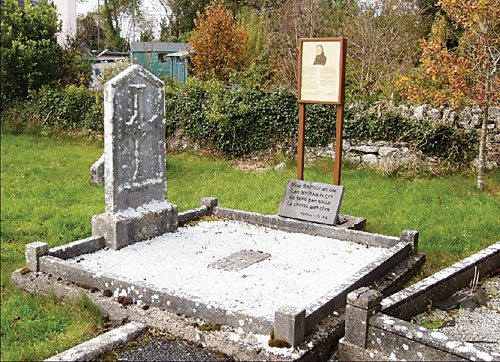
Anthony Raftery's grave at Killeeneen, near Craughwell

I recently posted a thought about the need to use cultural heritage in creating new cultural products. I did so using an example from my personal cultural heritage, an ancestor called Blind Raftery.

Here is a poem by my Grandmother's brother, John Patrick Raftery, from his book. Raftery's Poems: Songs of Life, Love and Liberty. He too was descended from Blind Raftery.

DEAR OLD CLAREMORRIS TOWN.

In fancy I am roaming now, where the hills are smiling down
On gabled roofs and streets I loved, dear old Claremorris town;
And all the tender thoughts of years come rushing back today,
To one who here in exile dreams, four thousand miles away.
Four thousand miles from Sweet Mayo, the ocean waves between,
My spirit ship a-gliding o'er to hills and valleys green,
To lake and stream and woodland sweet and bogs of purpl'd brown,
I see them all a-stretching out from dear old Claremorris town.

0, memory, good, kind, trusty friend, untrue you've never been.
With brush of skill you paint at will my boyhood paths again.
Once more I roam round home, sweet home, a happy, care-free boy,
When life was one long golden hour of bliss, fond hope and joy. ,
I'm passing now by Mophill lake, I he road leads to Brookhill;
I cross o'er meadow, dale and brake and out by Donlon's mill
And on thro' Tubber alley dark and up each slight incline
'Till now I stand upon the hill overlooking old Crossboyne.

From here the winding Robe rolls on, a silvery streak through green,
Then 'cross the sweep of purple moor, meandering by Tauheen,
Thru PuUaweela, dear old spot, by Hollymount to go.
0, fain would I just follow on its course through Sweet Mayo.
But I must with my wandering soul keep to the well-known track.
By Hamilton's green vine clad cot to Ballindine, then back
Thro' wood and moor until I reach where smiling hills look down
Upon the streets my boyhood knew, dear old Claremorris town.

My spirit still a-journeying on to holy Knock I go,
O'er six long miles of hill and dale, each footstep well I know.
By Gastlegar and Reaney's mill, the road to Ballinsmall,
Ballybreheany lake and Loughnamon, Barnacarroll, Rockfield— all.
0, sure, the places come so fast, e'en thro' the lapse of years,
Who wonders that the exile's eyes are now bedimmed with tears,
But thro' their mist I see again the green hills smiling down
Upon the spot I e'er will love, dear, dear Claremorris town.

I'm roaming now up Killeen hill, Kilbeg looms into view.
The old bogroad, next comes Drumkeen, then Ballygowan, too,
And then beyond the railroad bridge, one fork leads to Kylemore,
The other on thro' Meelick, then Gloonconnor hill, Asthore.
From here the workhouse I can see and also sweet Brookhill,
The glistening lake between them both, its waters calm and still.
And again the picture greets my eyes of green hills smiling down
Upon the streets and gabled roofs of dear Claremorris town.

In fancy I the longing feel that comes o'er me, you know.
To see again in all its bloom the old fort at Arflroe,
To drink a draught of purest air, perfumed by hawthorn sweet.
And gaze enrapt at miles of moor, enpurpling at my feet,
Bohergarra lake, Mayfield beyond, then Carrasteelaun hill.
0, wonder not those pictured scenes my eyes with sad tears fill,
That with blest St. Michael's on the mount like angels e'er smile down
Upon the streets my boyhood loved, dear, dear Claremorris town.

To Mount street I send my best wish, my heart's love to the Square,
A kiss I send to James street, 0, would that I were there.
To Church street, where I went to school, I send a heart felt sigh,
I wish that I could lapse the past and once more be a boy.
But, ah, friends, sure that cannot be; life now must run its span,
But ore I die I hope to see where my life's path first began,
And tread once more those emerald hills that smilingly look down
On streets and homes my boyhood knew in loved Claremorris town.

—May, 1912.

Compare this with what is described as a rough translation of the lyrics of Anthony Raftery's song Cill Aodain.

Now coming of the Spring, the day will be lengthening,
And after St. Bridget's Day, I shall raise my sail.
Since it entered my head I won't stay still
Until I shall stand down in the center of County Mayo.
In Claremorris I will be for the first night,
And in Balla down below it, I'll begin to drink.
To Kiltimagh I'll go and spend a month’s visit there
Two miles close to Ballina.

I swear to you my heart's uplifted
Like the rising wind or the drifting fog
When I think of Ceara or Gailleang behind it
Of Milebush or the plains of Mayo.
Cill Aodáin's the town where everything grows,
There's berries and raspberries, and respect for all
If only I was standing in the midst of my people
The years would roll from me and I'd be young again!

I don't know whether John Patrick Raftery knew of this poem (which was included in Douglas Hyde's Songs Attributed to Raftery published in 1903) but it seems likely to me that he would have been. Alternatively he might have heard Cill Aodain as a boy in Claremorris. In any case, I can see a relation between the two poems, written a century apart.

Here is a video with a beautiful version of the song. And here is a book by Terry McDonagh titled Cill Aodáin & nowhere else in which he describes as offering "tribute to the great Anthony Raftery of his home place".

Again, I love the living legacy of Blind Raftery, echoed in the work of poets and musicians long after his death, and long after he was almost lost to history.

Thursday, October 02, 2014

The Sultan's Shadow: Oman and Zanzibar


I just finished reading The Sultan's Shadow: One Family's Rule at the Crossroads of East and West by Christiane Bird. At one level it is a very unusual history in that it discusses:
  • the rise of a family to power in Oman and Omani society at the beginning of the 19th century, 
  • the transfer of the Omani Sultanate to Zanzibar, 
  • the 19th century culture on the island of Zanzibar, 
  • the slave trade from East Africa, 
  • the explorations of Burton and Speke, as well as Dr. Livingston and Henry Stanley, 
  • the Arab-Swahili rule of what would become Tanganyika, 
  • Tippu Tip
  • the scramble for African colonies by the European powers (especially as it affected Zanzibar and Tanganyika, and 
  • especially the life of a Muslim princess from Zanzibar who converted to Christianity, married a German businessman, moved to Germany, was soon widowed with three small children, who spent the rest of her life as an expatriate seeking support from her ruling relatives in Zanzibar.
Source
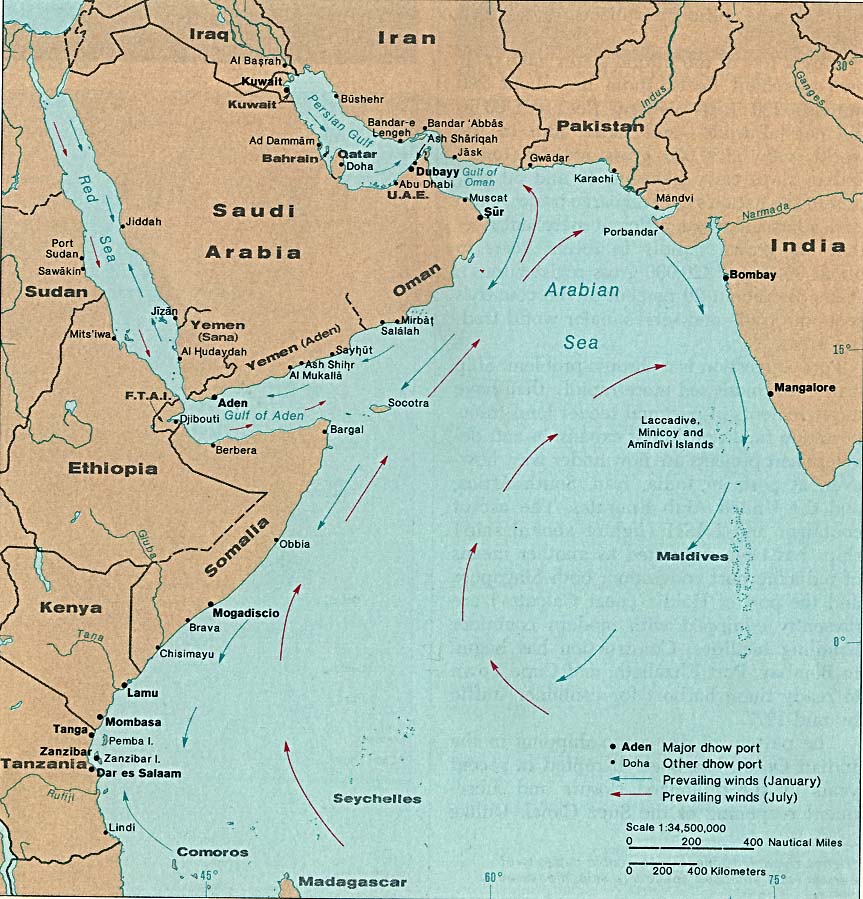
Oman

Oman was in a "catbird seat" in 18th century commerce, receiving ships from India, the north shore of the Indian Ocean, the Persian Gulf, the Red Sea, the east coast of Africa and its neighboring islands. People from many lands mixed in the markets of its cities, buying and selling the products of many lands. It was also a market for slaves brought primarily from Africa. The country had a sect of Islam that was more tolerant than many others. The ruling Sultan gained great wealth from the custom fees charged on those goods. His household, with several wives, many concubines, many children, and slaves was very elaborate.

On the other hand, politics was literally murderous. Brothers sought to overthrow brothers; tribes formed shifting alliances; Persians threatened and sometimes conquered Oman;  Wahabi Sunnis from the Arabian peninsula conducted a jihad against Oman.

The book provides a view of the culture of the country which I certainly did not know and I suspect few readers will know -- but a culture of considerable color and vibrancy.

Zanzibar

Zanzibar was a multi-ethnic society in the 19th century, ruled by Arabs from Oman, with a significant population of Swahilis from coastal Africa, a native population, merchants from India, as well as some Europeans and even Americans. Author Bird focuses primarily on the culture of the ruling Arabs, but gives a flavor of what was an extremely exotic place.

The economy was for much of the century fueled by clove plantations, which were greatly expanded once it was discovered that the island was ideal for the growth of cloves; many clove  plantations were dependent on slave labor, providing luxurious standards of living for their owners; late in the century, a storm decimated the trees leading to bankruptcy for many of the plantation owners.

The Arabs and Swahili of Zanzibar also dominated the nearby African mainland, and thus could control the trade in slaves and ivory. With cloves, slaves and ivory to export, Zanzibar could also import goods, including luxury goods for its relatively small affluent population.

The Slave Trade

The British and French slave trade was primarily from West Africa to North America, and that is the one we in the USA are most familiar with.  Before Bartolomeu Dias and Vasco da Gama pioneered the route around the southern tip of Africa and to India, there was a slave trade from East Africa to Islamic lands. Even when these routes opened, the slaves from what would become Tanganyika were used as bearers for expeditions to and from the interior, for coastal plantations and plantations on the islands, and for sale via Indian Ocean routes.

Author Bird stresses that the treatment of slaves in Muslim culture was different and less severe than in Christian cultures. Indeed, slaves were sometimes armed to serve as bodyguards for their owners. Bird describes different roles for slaves, from concubines, to castrated male household servants in polygamous households, to plantation laborers.

Portuguese slavers, having been effectively barred from West Africa, preyed on the peoples of what became Mozambique; the export was primarily to Brazil.

The capture and transport of slaves was extremely brutal. European explorers described regions laid waste by slave raids. Captives died in great numbers while being marched to the coast. Young boys chosen for castration often died as a result of the procedure. 

The abolition of the slave trade is presented in the book as largely the result of British efforts. Dr. Livingston was a strong abolitionist, and his reports back to England stimulated renewed concern in a people that had become complacent. British warships were dispatched to stop slave ships; British diplomats negotiated treaties obliging the Sultan of Zanzibar to make slavery illegal. By stops and starts, the British succeeded and the slave trade was ended, and finally slavery was abolished late in the 19th century.

The Explorers from Outside Africa

Richard Burton and John Speke were famous explorers of East Africa; Speke has a claim to have discovered the source of the White Nile in Lake Victoria. Author Bird devotes a chapter to their adventures and accomplishments as explorers, as well as their difficulties with each other.

"Dr. Livingston I presume." is surely the most famous quotation from East African history, and the book describes the incredible perseverance and tenacity of medical missionary and explorer David Livingstone, and the journey of Henry Stanley to find and  rescue Livingstone -- leading Stanley to ask the famous question. Stanley was an intrepid and courageous explorer, a shameless self promoter, and an agent of King Leopold in the pitiless exploitation of the Congo (see my post on King Leopold's Ghost: A Story of Greed, Terror, and Heroism in Colonial Africa by Adam Hochschild).

The Sultans

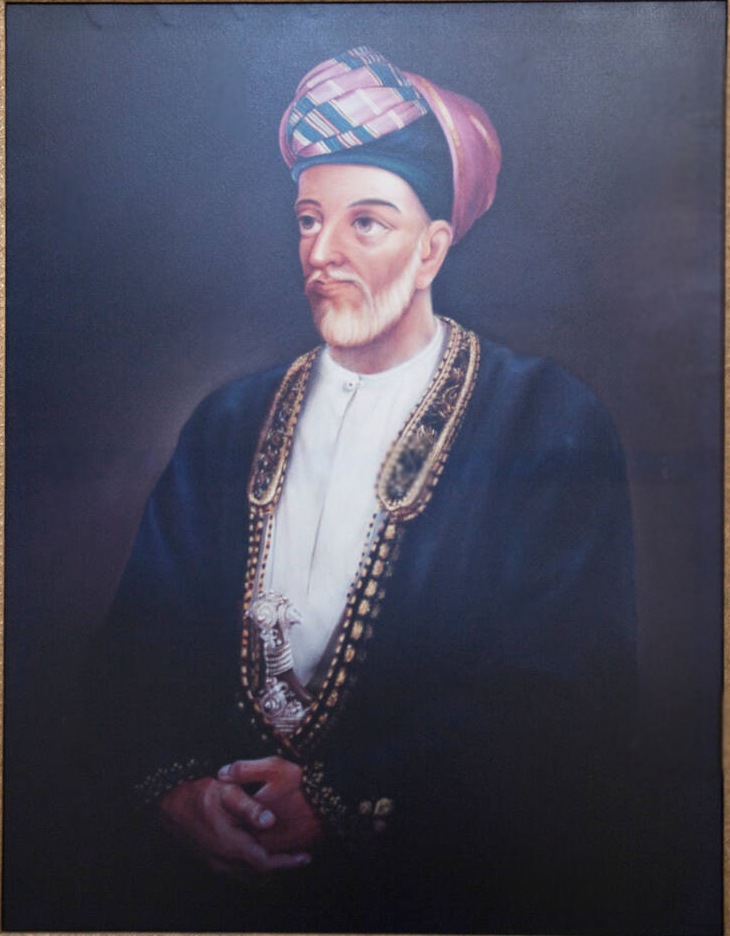
Much of the book focuses on Seyyid Said, the Sultan who moved his seat of government from Oman to Zanzibar, and two of the four of his sons who succeeded him as rulers of Zanzibar. (He also had two sons who succeeded him as Sultans of Muscat and Oman, who are not subjects of the book.) It is hard to fully appreciate the magnitude of the area ruled by Seyyid Said, but it seems to have included Oman, Zanzibar and Pemba islands, a coastal strip of East Africa, and at its peak, a large area of East Africa. In terms of the land area at least nominally under his control in the 19th century, he ruled an area larger than most European countries. He was also very wealthy.

Seyyid had several wives and many concubines, as well as 36 children. His household is a major topic of the book. Seyyid Mujid and Seyyid Barghash are the Sultans of Zanzibar most discussed in the book.

Arab Swahili Rule in East Africa

East Africa was exploited for slaves, ivory and gold. Safaris were organized into the interior to obtain these goods, leading to the establishment of towns occupied by traders, and eventually to conquest of large territories where tribal chiefs paid tribute to the "foreign" rulers in these goods.

The Swahili are described as an African coastal tribe who were converted to Islam very early. They eventually formed a close alliance with the Arabs resident in Zanzibar and East Africa. Author Bird notes that Arab men married into the Swahili although Swahili men did not marry Arab women. KiSwahili, the language of the Swahili with many borrowings from Arabic, became a common language for the region. The Arabs and Swahili apparently became partners in the commercial and eventually the political exploitation of the region.

Tippu Tip

The book contains a chapter devoted to Hamad bin Muḥammad bin Jumah bin Rajab bin Muḥammad bin Sa‘īd al-Murghabī better known for obvious reasons as Tippu Tip. Truly an amazing man.

Of mixed Arab and Swahili ancestry, he began as a trader but took the opportunity to acquire land by conquest. Eventually he ruled the Eastern Congo for himself and for the Sultan of Zanzibar, Bargash bin Said el Busaidi.

After adventurous years in East Africa, including helping explorers including Henry Stanley, Tippu Tip returned to Zanzibar, bringing with him 70,000 pounds of ivory and thousands of slaves.

He became even richer in his subsequent life in Zanzibar, eventually owning many plantations and many thousands of slaves. He even wrote his autobiography!

The Scramble for Africa

The book looks back at East Africa and the Arabian peninsula before Europeans managed to sail around the southern tip of Africa, and continues until the end of the 19th century, when Africa was divided among European nations. Consequently the reader understands that the Sultanate of Zanzibar, no matter how rapid its rise and how splendid its court at its peak, is doomed.

While Portuguese, French and even Americans make appearances in Zanzibar and East Africa, the early power is clearly England, with its control of India. English sea power is applied to abolish the slave trade, and treaty agreements with Britain strengthen the Omani and Zanzibar Sultanates. 

Bird describes the British and Germans, essentially without local input, deciding between themselves that Tanganyika would become a German colony and Kenya would become a British Colony. Later, in 1890, Germany and Britain made a territorial trade, giving the British control over Zanzibar. That spelled the end of power for the Sultans of Zanzibar.

Princess Seyyida Salme - Emily Ruete

Princess Salme
The heroine of the book is Princess Salme. She was one of the daughters of Sultan Seyyid Said, brought up in great luxury in his palaces, in a society formed largely by the Sultan's wives and children and their servants. As an adult she was given plantations and slaves. However, on the death of her father, she was caught in the struggle for power between her brothers.

She did the unthinkable for a sequestered Muslim princess, and fell in love with a Christian -- a German trader living in Stone Town, the capital of Zanzibar named Rudolph Heinrich Ruete. She was smuggled out of Zanzibar, and after some months he joined her. Salme was converted to Christianity, and married to Ruete (taking the name of Emily) in 1867. There were three children born of the marriage, but her husband died in 1870. Emily Ruete was left a widow with three small children in Hamburg, an environment in which she was unprepared; moreover, author Bird indicates that she received little or no support from her husband's family, and was dropped by the friends that she and her husband had shared in Germany.

Emily Ruete
On the other hand, she had brought her personal jewelry with her to Germany, and it was sufficiently large and valuable a collection that she and her husband had difficulty convincing German customs officials that it was for personal rather than professional use. Moreover, she was exceptionally well educated for the daughter of a Sultan, was very intelligent, and had already achieved some fluency in German. As a Princess she could draw on German and English aristocrats for some forms of assistance.

Princess Salme spent almost all the rest of her life seeking an inheritance or at least a supporting pension from her family in Zanzibar. In her efforts she was helped by many aristocrats, and even apparently by Queen Victoria. Still, English and German diplomats were reluctant to champion her cause. Her brothers, the Sultans, apparently saw her conversion to Christianity and her elopement as unforgivable.

Emily Ruete wrote and published her biography, the first African woman to do so. The book and her letters apparently were a major source used by author Bird in writing The Sultan's Shadow.

Final Comment

I have been looking for good books on African history for some time, and this fit the bill. I had no idea of the history of Oman, Zanzibar and East Africa that I learned from this book. As the description above suggests, the book is unusual in that it treats a large number of relatively discrete topics. However, the author intertwines them in an convincing web. It is largely cultural history, and the cultures it depicts, especially those of royal households in Oman and Zimbabwe, fascinated me. The author appears to be a professional travel writer rather than a professional historian, perhaps accounting for her ability to tell a great story. In short, I loved the book!

Wednesday, October 01, 2014

Cultural Heritage Should Be Part of Cultural Evolution


It seems to me that too often people have the idea that heritage should be conserved, while I suspect that it is better to use cultural heritage in an evolving culture. Let me give an example from my own personal cultural heritage.

Impression of the Poet
Anthony Raftery
by Donal MacPalin
Anthony Raftery (1779–1835) is my several times great grandfather. He lived in western Ireland, and spoke Irish as his native language. He was blinded as a child, apparently by a case of smallpox. A Catholic, he was barred by law from school but apparently attended an illegal hedge school. As an adult he composed poetry and lived going from place to place performing on fiddle and performing his songs and poems in the homes of the affluent. Blind, of course he did now write down the songs and poems, but rather committed them to memory. Of course, in his lifetime the works of an Irish Catholic itinerant poet, performed in the Irish language, would not have been published; the English who dominated Ireland wanted to abolish the Irish language and to deny the intellectual abilities of the Irish Catholics.

Raftery's works would have disappeared except for the fact that people liked them and kept them alive. The people of the west of Ireland learned his songs and sang them for a hundred years. They memorized the poems, and some copied them out and kept the copies.

A century later, there was an Irish revival. As part of Irish nationalism, some intellectual leaders began to promote traditional Irish sports, traditional Irish music, and the Irish language. The rediscovery of Blind Raftery was part of this effort.

Douglas Hyde, later President of Ireland, traveled the west of Ireland, collecting poems and songs from the oral tradition. In the process he collected many of Raftery's and published them with biographical notes in the book, Songs Ascribed to Raftery. Lady Gregory, perhaps best known today as the co-founder with Nobel laureate William Butler Yeats of Dublin's Abbey Theater, also collected Raftery's work. She published some with a brief biography in her book, Poets and Dreamers.

Today, Raftery's best known poem is "Is Mise Raifteirí" - "I'm Raftery", probably because it is short and is taught has been taught for generations in Irish schools, where students have had Irish as a required language. Here are the first verse in Irish and in English translation:

Old Irish banknote showing Irish being taught in
school with Raftery the Poet in Irish on the blackboard.
Is Mise Raifteirí an file,
Lán dúchais is grádh,
Le súile gan solas,
Le ciúnas gan crá.

I'm Raftery the poet,
Full of hope and love,
With eyes without sight,
My mind without torment.


There was a novel titled Blind Raftery and his Wife, Hilaria by Donn Byrne published in 1924. It was a work of fiction, only very loosely related to the real Anthony Raftery, but apparently it reached best seller status in its time. There was even an opera Blind Raftery by Joan Trimble published in 1957 (and played on BBC).

Raftery continues in modern Irish culture. Here is a version of his poem Mary Hynes performed by Liam Clancy (one of the Clancy Brothers singing group):


A new edition of Raftery's poetry (in Irish with English translations) was published by Pádraig Ó Siadhail in 1958.

Going back a bit, James Stephens published Reincarnations in 1918. The book contained poems by Stephens that were "reincarnations" rather than simple translations of earlier poems in Irish. The book begins with a number of reincarnations of poems by Anthony Raftery. Composer Samuel Barber later put some of these poems to music in his suite for chorus, Reincarnations. You can find many versions of one or another of the songs from this suite on the Internet, but here is "Anthony O'Daly". I like it in part because I may well be related to the the Anthony O'Daly whose death it commemorates. (He was convicted of trying to assassinate a British Official and hanged.)


Thus the works of my ancestor a couple of hundred years ago are still around, and perhaps more importantly still informing the work of today's poets and musicians. They are being performed in translations and adaptations. Think of a modern university group performing poetry by James Stephens (inspired by Raftery's poems) set to music by gifted composer Samuel Barber! I think it wonderful, and I suspect that if Raftery could hear it, he too would love his work not only to be remembered but to be so alive today.

I at least love the fact that my ancestor's cultural heritage has so informed the work of poets, composers, and musicians in my lifetime. I hope it continues to do so in the future.