Showing posts with label Bush Administration. Show all posts

Tuesday, December 02, 2014

The Obama Administration is managing immigration better than did earlier ones.


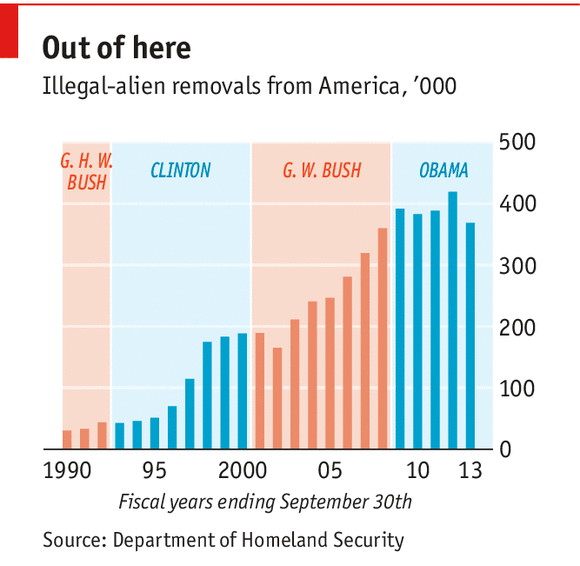
This chart from The Economist shows that the number of unauthorized immigrants in the USA increased from 1990 to the start of the Great Recession, and that in the last years of the Bush administration, some of those illegals went home. The Obama administration has kept the number relatively constant, in spite of the economic recovery.

The second chart shows that the Obama administration, implementing the laws, has deported more illegals than had previous administrations, deporting more each year than had the Bush administration in its last, most active year. That there has not been an increase in illegal residents is due in part to the deportations, but also to increased effectiveness of the efforts to prevent illegals from entering the country.

The recent executive order, quoting the Council of Economic Advisers via The Economist:
will boost GDP in the next decade by between 0.4% and 0.9%, mostly because of provisions unrelated to illegal immigration. These give foreign entrepreneurs more ways to get into America, allow the spouses of skilled visa-holders to work, and let foreign-born science graduates spend more time in America doing their training.
More needs to be done. The bill passed by the Senate last year but blocked by the House Republican leadership would be a good start. 

Tuesday, June 18, 2013

A thought on listening to an Obama interview on the Charley Rose Show.


A couple of comments on the Obama interview on the Charley Rose show.

  • Of course the Obama administration is continuing (with modifications) some of the controversial programs of the previous Bush administration. Some of those programs were worth continuing, (Even a stopped clock is right twice a day.) Moreover, the president's key job is to implement the laws passed by the Congress and signed by whatever president is in office when the Congress passes the act.
  • Perhaps the most important concern for the president is the security of the people of the nation. We have focused on safety from terrorist attacks, but a broken health care system is more dangerous to Americans than the acts of terrorists. A third world war would be more dangerous still, and the security of the nation in terms of such global threats depends on a strong military, a strong economy, and a strong political system. Obama is rightly concerned with the recovery from the Great Recession, but also with building infrastructure, industry and human and intellectual capital for the long term economic success of the nation.
  • "Don't just do something, sit there and think." I like that slogan for a president who is Commander in Chief of the military and takes the lead on foreign policy in our system of governance. Talking heads can pontificate on what should be done, in spite of the fact that they don't begin to have the intelligence available to the president. Ultimately, the buck stops on the desk in the Oval Office in the White House. The decisions on Syria should be taken step by step. I read Obama as saying that the Assad administration in Syria has lost the support of most Syrians, and that a political solution will have to change that administration and have sufficient political support from the various factions within Syria and from the involved foreign powers. We have to have some trust in the folk running our government, recognizing that even when they make errors after taking into account all the information that they have, those errors are likely to be less than those we would make in our ignorance.
Check out this article in The Daily Beast.

Thursday, August 23, 2012

The United States and UNESCO: An Anecdotal History


The United States played a key role in the founding of the United Nations Educational, Scientific and Cultural Organization (UNESCO). During its history, Americans have played important roles in defining programs for UNESCO: examples are Philip Coombs in the foundation of the International Institute for Educational Planning (1960s), Roger Revelle in the creation of the Intergovernmental Oceanographic Commission (1960s), Raymond Dasmann in the creation of the Man in the Biosphere Program (1960s and 70s), Russell Train in the creation of the World Heritage program (1970s), and James Billington in the creation of the World Digital Library (2000s). Yet the United States withdrew from UNESCO in 1984, almost crippling the organization in the process. It rejoined UNESCO in 2003 and has remained (but is currently withholding its financial contributions to the Organization).

U.S. participation has depended on the climate of the Cold War, on the heat of the North-South debate, and on the perception of U.S. interests in the War on Terror. That participation has been the subject of debate within the United States -- a portion of the culture wars in which conservatives have often expressed opposition to and progressives support for UNESCO. Generally, there has been more support for UNESCO in Democratic administrations and less in Republican administrations.

Prehistory: After World War I, the League of Nations was created, a forerunner of the United Nations. Despite political refusal of the U.S. Government to join the League, the U.S. civil sector turned special attention to cultural issues in world affairs, primarily in education and science.

The League’s International Cooperation Committees (ICCs) in every country included a U.S. privately-organized and funded ICC, located at Columbia University, which enlisted giants of intellect among its members. World War II cut off this activity.

Included in the League was the International Committee on Intellectual Cooperation, which included such leading intellectuals of the day as Henri Bergson, Albert Einstein, Marie Curie, Thomas Mann, Paul Valéry, Salvador de Madariaga and Béla Bartok. The secretariat of the Committee, the International Institute of Intellectual Cooperation (IIIC) was established in Paris.

The International Bureau for Education (IBE) was organized is Switzerland with the participation of several governments. It also functioned in the inter-war years, The United States and Britain did not participate in but France and other European nations did, and the IBE formed one of the bases for UNESCO.  Both the IIIC and the IBE were incorporated in UNESCO at its founding.
Source

Planning for UNESCO During the War Years: In London exile, a Committee of Allied Ministers of Education (CAME) began meeting in 1940 to plan for the reconstruction of education systems when the war ended. The Department of State’s Sumner Welles sent a delegation in May 1944 to participate in the CAME deliberations; the delegation was headed by William Fulbright, then a Congressman who would later become Senator from Arkansas in 1945, the creator of the Fulbright Fellowships program. He was assisted by Archibald MacLeish, an intellectual who had lived in France and spoke fluent French, who during his life was a lawyer, poet, playwright, Librarian of Congress, and Assistant Secretary of State. (Macleish won three Pulitzer Prizes, a Tony and an Academy Award.)

The Allied Ministers elected Rhodes Scholar Fulbright to the chair; he and his delegation promptly expanded the discussion to the post-war rebuilding of education, not only in Europe but everywhere. The Preparatory Commission for the program of UNESCO received reports from committees dealing with education, social science, natural science, mass media, libraries, museums, the fine arts, and letters and philosophy. Joseph Needham (U.K.) saw the initiative as a vehicle for his hopes to create an intergovernmental organization to help build scientific capabilities worldwide, and started to build support for the S to be added to UNESCO.

William Benton should also be mentioned in this history. He had been a founder of the Benton and Bowles advertizing agency, a pioneering enterprise in the use of media. He was also publisher of the Encyclopedia Britannica, who was appointed Assistant Secretary of State for Public Affairs in 1945 and served in that post until 1947. One must assume that he was influential in assuring that UNESCO would include a focus on Communication. Benton went on to be a United States Senator and later Ambassador to UNESCO (1963-1968).

The United States had unprecedented influence at this time. President Roosevelt had given high priority to the establishment of international organizations replacing the League of Nations -- organizations that would seek to prevent future world wars. World War I had resulted in some 15 million deaths and World War II perhaps an additional 70 million. Many nations were decimated by the war, their economies in ruins. Alone among the great powers, the United States had emerged from World War II with its farms and factories in full operating order; it has been estimated that the United States was producing half of the world’s goods and services at the time. Moreover, the United States had played a key part among the Allies in winning World War II, providing both its logistic support and millions of troops.

The Founding of UNESCO: While the United Nations was established to deal with political issues, including the Security Council, and the Breton Woods organizations to deal with economic issues, the decision was made to create UNESCO to deal with intellectual issues. In the phrase of Archibald MacLeish, “since wars begin in the minds of men, it is in the minds of men that we must begin to build the defenses of peace.” Thus UNESCO was charged with a broad charter to work through education, science, culture and communications to build those defenses.

In November 1945, representatives of 37 countries signed UNESCO’s constitution, and the organization came into operation in November 1946 following ratification by 20 signatories. Back home, newly elected Senator Fulbright enlisted bipartisan support for two Senate Resolutions (1944, 1945) – one pledging to support a multilateral educational agency for the world. The idea succeeded because of the bipartisan leadership of Fulbright and “Mr. Conservative,” Ohioan Robert A.Taft.

In the preparation for UNESCO, in spite of the difficulties in the war years, nine major meetings were held around the United States to acquaint American leaders with the idea of UNESCO and to seek the advice and consent of the public for the ideas. The Congress passed authorizing legislation for the U.S. National Commission for UNESCO, calling for up to 100 members, with a unique element that three-fifths of the members would be nominated by non-governmental organizations (and appointed by the Secretary of State). The NatCom was to advise the Government on UNESCO policy, to represent U.S. educational, scientific and cultural leaders in UNESCO deliberations, and to link UNESCO programs with the U.S. intellectual communities. Initially headed by Milton Eisenhower, university president and brother of General (soon to be President) Eisenhower, the NatCom had a very distinguished membership. Milfton Eisenhower also served as a member of the UNESCO Executive Board in 1947.

Controversial Beginnings: The organization has been controversial. The United States denied efforts to make it the vehicle for post-war aid to Europe, preferring to program reconstruction aid bilaterally through the Marshall Plan. There were fundamental cultural differences between Anglo-Saxon and European continental approaches to education and culture.

Julian Huxley
The first Director General of UNESCO was Julian Huxley. The Grandson of Thomas Henry Huxley, an agnostic known as “Darwin’s Bulldog” for his defense of the theory of evolution, Julian Huxley was a zoologist distinguished for his synthesis of Darwinian evolutionary theory with genetics. He had a close association with the British secular humanist movement and was known for his left wing political views. A member of a distinguished family, including his brother, novelist Aldus Huxley, and his half brother, Nobel Laureate biologist Andrew Huxley, Julian had headed the London Zoo and served on a commission seeking sites for universities to be created in British Africa.. Later he served as President of the British Eugenics Society and was a founding member of the World Wildlife Fund. Few people would have been more likely to draw the opposition of the conservative side of the American culture wars, and his term of office was limited to two years (rather than six) at the initiative of the United States.

Joseph Needham, the first Assistant Director of UNESCO in charge of its natural science program, was perhaps equally likely to draw American conservative fire. He was a distinguished biochemist who left his post at Cambridge University to serve as the head of the Sino-British Scientific Cooperation Office in China during World War II. Needham served in UNESCO until 1948, returning to Cambridge where he embarked on an encyclopedic study of the history of science and technology in China, a study that radically revised Western understanding of that history. Needham was also well known for his leadership in British nudism, lived in a ménage a trios with his wife and Chinese former graduate student. He was closely associated with the Chinese Communist government, and had been involved in studies which charged American use of biological warfare against the Communists in both World War II and the Korean War.

Alliances in the Cold War
Source

The Cold War: At the founding of UNESCO, there were disputes between the Soviet Union and the United States about membership. Eventually negotiation achieved a settlement in which Argentina (whose membership was supported by the United States and opposed by the USSR) was admitted to UNESCO membership, and the Government of Poland in exile (whose membership was also supported by the United States and opposed by the USSR) was denied membership.

UNESCO, like other agencies of the United Nations system, became a venue for Cold War activity. The Soviet Union did not become a member state until 1954 in a deal that allowed satellite nations of the Ukraine and Belarus also join. In 1952–54 Poland, Hungary and Czechoslovakia temporarily withdrew from the Organization. From 1954 until the fall of the USSR in 1991, the United States continued to confront USSR Communist ideology in UNESCO for a with American democratic-free market ideology.

During the McCarthy era, the United States government put pressure on UNESCO to fire U.S. citizens suspected of Communist leanings. Luther Evans, the American former Librarian of Congress who served as UNESCO Director General from 1953 to 1958, was forced to let go from the Organization seven Americans charged with Communist sympathies. (John W. Taylor became Deputy Director-General of UNESCO in 1950 and was appointed acting Director General upon the resignation of Jaime Torres Bodet in 1952. Evans had served on the Executive Board from 1949 to 1953.)

The first person to be designated U.S. Ambassador to UNESCO was Athelstan Spilhaus who served as the U.S. representative to the UNESCO Executive Board from 1954 to 1958. Born in South Africa, a U.S. citizen after 1946, Spilhaus was a distinguished scientist who worked in meteorology, oceanography and cartography and an inventor. He is estimated to have reached 12 million people a week with his comic strip providing education on scientific matters, and was the father of the Sea Grant program creating centers of excellence in oceanography in American universities. Thus he continued the sequence of distinguished Americans involved in UNESCO.

North South Issues: Later UNESCO became a venue for North-South controversy. In the late 1950s and early 1960s, UNESCO membership began to expand rapidly with newly independent countries. Membership continues to expand, with consequent changes in the worldview and program priorities of UNESCO members.

In UNESCO, as in the United Nations system as a whole, governance is based on one-nation, one-vote, while contributions are assessed by a formula based on the Gross Domestic Product of the member state. Thus China with its huge population has the same voting power as a small island nation, and the United States, paying 22 percent of UNESCO’s assessed budget has the same voting power as a member state paying almost no assessed contribution. The budget of UNESCO continued to grow over several decades, and so too grew the U.S. assessed contributions, while the influence of the United States in the General Conference and Executive Board fell. There was obvious consternation in the U.S. Government over these trends.
Myrna Loy

Howland H. Sargeant is the only U.S. citizen to serve as the Chairman of UNESCO's General Conference, in 1961. A former Assistant Secretary of State for Public Affairs and President of Radio Liberty, Sargeant brought his wife, actress Myrna Loy with him to Paris -- no doubt as a major aid in gaining the attention of the other delegates.

The Constitution of UNESCO gives great power to the Director General. Of the first six Directors General, two were from the United States and three were from Western Europe. The sixth was from Mexico, distinguished for the literacy program that he headed when Minister of Education in that country, and elected when the General Conference met in Mexico in 1947. In 1974, Amadou M’Bow from Senegal became Director General. This proved to be a culture shock for the American government and the American Ambassador to UNESCO, Jean Gerard (a political appointee who had received her law degree four years before her appointment as Ambassador). Some describe a cultural divide between the French educated M’Bow and American diplomats, others describe concerns over the transparency and efficiency of his administration of the Organization.

In the 1970s, there was a move of developing nations at the United Nations in support of a New International Economic Order. While many nations had achieved political freedom, many nations were still mired in an economic system in which they exported raw materials to metropolitan countries at low prices and imported products and services from those metropolitan countries at high prices; political freedom had not come with economic prosperity and poverty was endemic. The concern for a new order expanded to include proposals for a New International Information Order; countries in Africa, Asia and Latin America were getting their news from AP/UPI, Reuters and AFP which paid little attention to their events or views.

Sean MacBride
UNESCO appointed a high-level committee headed by Sean MacBride to study communications, focusing not only on the concerns of the developing nations but also on the changes in the media that were appearing on the horizon. MacBride, an Irish lawyer and politician who was a founding member of Amnesty International, had received the Nobel Peace for his work for human rights. His name is associated with the MacBride Principles for international firms doing business in Northern Ireland. The son of a father who was executed for his part in the Irish Easter Uprising and a mother who was a famous Irish nationalist, MacBride was early in his career the Chief of Staff for the Irish Republican Army.
The report of the committee, now widely known as the MacBride Report, has been increasingly well regarded in the decades since it was issued, but it was rejected by the developing country representatives to UNESCO who substituted their own report for discussion in a UNESCO General Conference. The debate was controversial, and was widely covered (negatively) by the international press.

In 1973, the U.S. National Commission for UNESCO added some star power as Shirley Temple joined the Commission. Long after her career as a child actress, having already served as a U.S. representative to the United Nations, Shirley Temple Black was conversant with both multialteral diplomacy and the arts.

Representatives of the conservative Heritage Foundation had long advocated U.S. withdrawal from UNESCO. They gathered strength from a number of factions, including some concerned with the impact of UNESCO on U.S. education, others concerned with threats they perceived to U.S. sovereignty, and still others concerned with the political tone of UNESCO debates. They also developed a collegial relationship with conservatives in Margaret Thatcher's United Kingdom.

In 1983, conservative forces in the United States used the controversy over the New International Information Order as well as concern for the efficiency of UNESCO to successfully lobby for U.S. withdrawal, and the U.K. and Singapore followed suit the following year. UNESCO, losing a third of its budget, managed to survive and moved steadily forward, but more slowly and without U.S. leadership.  U.S. NGOs, especially in science, ignored the withdrawal and maintained close relations, but American political leadership for most areas of UNESCO cooperation was paralyzed.

Israel-Arab Debates: The state of Israel came into being with the support of the United States and by a vote in the United Nations. With the creation of Israel, came the prototypical UNESCO problem. There have been three wars between Israel and its Arab neighbors, and the conflict has simmered for decades in the failure of the parties to find a solution recognizing the rights of Palestinians and Israelis as they view those rights. Points of conflict have included the intangible heritage of peoples, world heritage sites, importantly those in Jerusalem, the history of peoples, the ways in which children are taught in schools about the conflict, and the control of natural resources. Debates on the conflict have taken place in academia and the media. UNESCO’s efforts to promote a culture of peace, dialog among civilizations and dialog among religions all come to play.

Egypt, Lebanon, Saudi Arabia and Syria have been members of UNESCO since 1946, Israel since 1949 and Jordan since 1950, so the Arab-Israeli situation has been on the UNESCO agenda since the inception of the organization. (The Palestinian people have an observer status.) As the number of member states of UNESCO has increased, the Arab nations have added supporters from Africa and Asia in the UNESCO forums. The United States has been a continuing ally, sometimes in a small minority, of Israel in those forums. In general, the debate in UNESCO has been reasoned, and the parties amenable to finding solutions that were not destructive to the Organization and helpful to the parties. Yet the Arab-Israeli controversy has been a continuing preoccupation of the U.S. delegations to UNESCO.

Palestine was admitted as a member state of UNESCO in 2011,. When the Palestine Liberation Organization first proposed admission two decades before, the U.S. Congress put a "poison pill" into law calling for the United States Government to withhold its contributions to UNESCO were Palestine to become a member. In spite of the provision and after a contentious debate, the General Conference in an unusual split vote, did admit Palestine. Currently, contributions are being withheld.

While out of UNESCO: Although the United States was not a member of UNESCO between 1984 and 2003, U.S.-UNESCO relations did continue. There was a small State Department monitoring group, and many agencies of the U.S. Government continued in touch with the relevant UNESCO programs. Similarly, many U.S. non-governmental organizations continued to have strong interest in and  linkages with UNESCO. The State Department legal staff concluded that those UNESCO international conventions and agreements that the United States had ratified remained in effect, and they continued to be implemented.

Americans for the Universality of UNESCO was active during this entire period. Jack Fobes, an American who had been the Deputy Director General of UNESCO and later the head of the U.S. National Commission for UNESCO, organized AUU with the dual purpose of advocating the return of the United States to UNESCO and of providing a source for information on and experience with UNESCO when it should be needed. AAU has since been renamed Americans for UNESCO, and continues in operation.

Reagan administration attitudes towards UNESCO continued quite negative after the withdrawal. In the latter part of the Clinton administration the State Department conducted a review of UNESCO which found significant improvements in its administration. Moreover, UNESCO Directors General Federico Mayor (1987-1999) and Koichiro Matsuura (1999-2009) had been seen as far more acceptable in terms of U.S. interests. It had been thought that the Clinton administration would call for reentry into UNESCO, but that did not happen.

The politics of East-West relations, North-South relations, and Israeli-Arab relations were all tangled in a complex web. The U.S. and the USSR would often be found on different sides of issues, such as those in relations between Israel and its Arab neighbors or the New World Information Order. Each sought allies in UNESCO debates from emerging nations.

Post 9/11: As the George W. Bush administration prepared for the invasion of Iraq after 9/11, the White House was searching for a positive initiative that the President could make in his major address to the United Nations General Assembly; reentry to UNESCO fit the bill. With both an initiative from a President at the height of his popularity and support from Democrats in Congress (notably Tom Lantos), reentry sailed through domestic politics.

Laura Bush
The Bush administration appeared to have an inconsistent approach to UNESCO. First Lady Laura Bush took an active role in the Organization, serving as an Honorary Ambassador for UNESCO, leading an important initiative in support of UNESCO’s literacy programs, and hosting a level meeting; a Laura Bush Travel Fellowship was created to be administered by the U.S. National Commission for UNESCO. On the other hand, the reconstituted U.S. National Commission for UNESCO was limited to providing advice to the Bush administration, and then only on request for such advice. The long-standing U.S. Committee for the Man and the Biosphere Program was dissolved. The Bush administration was adamantly opposed to a proposed Convention on the Protection and Promotion of the Diversity of Cultural Heritage, casting a lone vote against the Convention and against the funding for the secretariat to administer the convention in the General Conference of 2005. Ambassador Louise Oliver also created a controversial policy that all contact between the UNESCO secretariat and U.S. based organizations were to pass through the State Department, reversing a long established policy of openness. On the other hand, UNESCO proved a valuable ally in promoting educational reforms in Iraq and Afghanistan, and the SESAME project was a valuable initiative establishing scientific linkages between Israel and its Islamic neighbors.
Jill Biden

The Obama administration was involved in the 2009 election, reputedly working behind the scenes to oppose the election of the Egyptian nominee who was on the record as opposed to cultural exchanges with Israel and who stated that he would personally burn any Israeli books found in Egyptian libraries. Jill Biden, the wife of Vice President Biden, herself an educator, has played a visible role in UNESCO higher education activities. There have been unprecedented reciprocal visits between the UNESCO Director General Bokova and Secretary of StateClinton, Ambassador David Killion has embarked on a move visible program with UNESCO, while the National Commission, which had languished in the latter days of the Bush administration is being revived and its mission expanded. UNESCO continues to play an important role in its fields of competence in Afghanistan, Iraq and Libya, indirectly supporting U.S. foreign policy interests in those countries. The Obama administration has requested that the law requiring that contributions be withheld from UNESCO (due to its admission of Palestine as a member state) be revised to allow the President to waive the provision if such funding is found to be beneficial to U.S. foreign policy objectives.

The number of Americans on the UNESCO staff, especially in senior positions was reduced in the  period in which the United States was not a member; that number has begun to increase, but the United States still has fewer staff members than its population would justify. Peter Smith, appointed Assistant Director General for the Education Sector shortly after the United States return to the Organization, proved controversial and he resigned from UNESCO in 2007. The second senior appointment of an American to UNESCO, Gretchen Kalonji the Assistant Director General for the Natural Science Sector, appears to be better accepted.

As this is written, the relations between the United States and UNESCO are again on rocky grounds. The United States iz withholding its contributions to the Organization. Some non-governmental organizations militate continuation of that policy. Non-governmental organizations have also militated against UNESCO awarding a science prize named for an African dictator, another topic that has come up in several recent meetings of the Executive Board. Withholding the U.S. 22 contributions to UNESCO has caused the Organization significant financial problems. If withholding continues, the United States will lose its vote in the 2013 General Conference.

UNESCO Director General Irina Bokova
Concluding Remarks: Today UNESCO has 195 member states and seven associate members, and an annual budget in excess of $500 million (in assessed contributions and extra-budgetary funds). This is a remarkably small and tight budget with which to fulfill its large and expanding mandate. Its staff includes some 2,000 people, about one-third of whom are located in 58 field offices around the world. Unique among U.N. agencies, there is a National Commission linked to UNESCO in each member state, including in the United States. There are UNESCO Centers with more or less direct connections to the organization, and networks of World Heritage Sites, Bioreserves, Geoparks and Wetlands catalyzed by and linked to UNESCO. There are also networks of UNESCO chairs in universities, some 3,700 UNESCO clubs around the world, and 8,000 associated schools.

Looking back over its first six decades—two of them without the United States – impressiveachievements can be attributed to UNESCO’s efforts. The prospects of world war with weapons of mass destruction have receded, perhaps in part due to UNESCO’s efforts to build the defenses of peace in the minds of men.

  • In education, consider worldwide progress has been made since 1946 in literacy, in school access and participation rates (Education for All), in science education, in the schooling of women and girls, in the free flow of cultural materials and books, in the upgrading of educational planning and analytic tools, in teacher training, in the growth of school libraries, in continuing education, in “non-formal” education, in the use of education media and information technologies, in improved educational statistics, in standardization of student credentials, and in the greatly increased international perspectives of most universities. 
  • In the natural sciences, UNESCO helped with the creation of the European Nuclear Center (CERN) where the World Wide Web was invented; UNESCO operates the Trieste Institute for Theoretical Physics; UNESCO’s oceanographic and hydrographic programs are mapping the Indian Ocean and building early-warning systems for tsunamis and producing agreements on interconnected water use and management; UNESCO supported the Human Genome Project (1997), the formulation of national science policies, science and technology education, the Man in the Biosphere project (MAB, 1970), and applying science and engineering to socio-cultural change. 
  • In the social sciences, the world has been forced to look more closely at human rights, reliable statistics, and the free flow of information; 130 nations have ascribed to the Convention on Doping in Sports. 
  • In culture, UNESCO’s flagship World Heritage Convention, introduced by the U.S. in 1972 after UNESCO led the celebrated rescue of the Abu Simbel monuments; member states have now voluntarily guaranteed the protection of 890 World Heritage sites around the world. UNESCO has labored for decades on a general history of Africa and on the documentation of Silk Routes between Asia and Europe.  
  • In communications, UNESCO has assisted in the growth of libraries (including the new Biblioteca Alexandria – a modern Alexandria Library) and book production and translations, while monitoring the growth of the Internet. It has become a major worldwide guardian protecting journalists and press freedom, trivializing the fears of 1983. UNESCO is beginning to face the social, educational and economic reasons behind the dangerous Digital Divide, is quietly looking into the intellectual roots of terrorism, and is attacking the idea of “clashing civilizations” through cross-cultural dialogue.
Millions of Americans each year visit sites in the United States and abroad that have been designated as World Heritage sites. American educators, scientists and cultural leaders continue to be involved in UNESCO programs. Networks catalyzed by UNESCO, such as its Associated Schools and University Chairs, include American institutions and individuals. Indeed, UNESCO’s influence extends far into American society.

American foreign policy tends to focus on security and economic issues. Our security these days requires promotion of a culture of peace, a dialog among religions, and understanding among nations – all UNESCO specialties, As Dick Arndt has written, cultural diplomacy is “the first resort” of kings. In that sense, UNESCO is a first resort in building international understanding valuable for both our security and our economy, albeit a resort that is poorly recognized not only by the public but by many American professional diplomats. American foreign policy is increasingly having to deal with what one might consider to be global systems problems, such as environmental degradation, communicable diseases, international migration. Here too, UNESCO is a valuable multilateral tool of our diplomacy

In sum, UNESCO is an enormously complex institution, both in its means and in its ends. No one fully masters all the intricacies of its history, its programs, and its operations, but students find it challenging and rewarding to attempt to do so. The United States was a central and influential player in its creation. Distinguished American intellectuals played an important role in the Organization in its first four decades. However, there were factions in the United States who opposed U.S. membership in the Organization, and those factions succeeded in the atmosphere of the early 1980s in convincing the Reagan administration to withdraw from UNESCO. Factions favorable to UNESCO, in the post 9/11 atmosphere, convinced the Bush administration to rejoin UNESCO. American participation in the Organization involved political officials in the White House and Congress, professional diplomats and government functionaries in many government agencies, leaders of non-governmental and private sector organizations involved in partnerships with UNESCO, and members of America’s educational, scientific, cultural and communications communities.

Saturday, June 16, 2012

This should be more widely appreciated.


Source 
This would seem to be in current dollars. Remember that we had double digit inflation in the Carter administration due to the oil shocks. It seems to me that the data that would be more interesting would be the rate of growth of government spending relevant to the rates of inflation and to the rate of growth of the GDP.

It is important to realize the budget cycle of the U.S. government. The fiscal year is from October 1 to the following September 30. Presidents submit budget proposals to the Congress in January. The executive branch of government spends months prior to the submission in preparing their proposals. While an incoming president does review budget priorities after the November election, he does not then control the executive branch and is busy staffing his new administration,

The Congress after it receives the proposed budget, reviews and revises it and is to pass its budget bills by September 30th. Sometimes Congress does not get its work done in time and passes continuing resolutions to provide temporary funding to allow government activities to continue in the new fiscal year while the appropriations are finalized.

The Obama administration inherited high government spending, and more important, high levels of deficits; it also inherited from the Bush administration an economy in need of stimulus. The Bush administration in 2008 had also done the heavy lifting in preparation of the budget submitted in January 2009 (Obama's first year in office), and he faced a Republican House of Representatives in 2011 that created deadlock in the budgetary processes.

In short, I don't think the appropriations record to date is much of a basis for evaluation of Obama's fiscal policy.

He seems to have a pretty good take on the need to continue stimulating the economy to create jobs in the short run, as well as the need to cut the deficit and bring down the ratio of government debt to GDP in the next decade, and also the need to invest in education, science and technology, and infrastructure for the long run strength of the economy. Given a functional Congress he might do a pretty good job of balancing these objectives in a second term.

Tuesday, May 22, 2012

When you spend more, shouldn't you get better quality?


Source: The Economist
We did get Obama in 2008, as compared with Bush in 2000 and 2004, so  maybe quality did go up. But the Congress in 2010 was not notably better than the lower cost Congresses elected in non-Presidential elections.

Sunday, May 20, 2012

Colin Powell on information for decision making

Everyone knows the old adage: bad news, unlike wine, doesn’t get better with time.
I am going to quote at length from Colin Powell's article The Daily Beast:
You can’t make good decisions unless you have good information and can separate facts from opinion and speculation. Facts are verified information, which is then presented as objective reality. The rub here is the verified. How do you verify verified? Facts are slippery, and so is verification. Today’s verification may not be tomorrow’s. It turns out that facts may not really be facts; they can change as the verification changes; they may only tell part of the story, not the whole story; or they may be so qualified by verifiers that they’re empty of information. 
My warning radar always goes on alert when qualifiers are attached to facts. Qualifiers like: My best judgment ... I think ... As best I can tell ... Usually reliable sources say ... For the most part ... We’ve been told ... and the like. I don’t dismiss facts so qualified, but I’m cautious about taking them to the bank. 
Over time I developed for my intelligence staffs a set of four rules to ensure that we saw the process from the same perspective and to take off their shoulders some of the burden of accountability:
  • Tell me what you know.
  • Tell me what you don’t know.
  • Then tell me what you think.
  • Always distinguish which is which.
What you know means you are reasonably sure that your facts are corroborated. At best, you know where they came from, and you can confirm them with multiple sources. At times you will not have this level of assurance, but you’re still pretty sure that your analysis is correct. It’s OK to go with that if it’s all you have, but in every case, tell me why you are sure and your level of assurance.


Tell me what you think. Though verified facts are the golden nuggets of decision making, unverified information, hunches, and even wild beliefs may sometimes prove to be just as important.
image source

Most of us don't have the Department of Defense with its huge staff and complex bureaucracy providing us with information (much less the entire foreign policy establishment of the U.S. government) but the approach seems to be worthwhile.

If you are making an important decision, it might be worthwhile making some lists:

  • What you think you know, how you know it and how confident of each assertion;
  • What you think you want to know that you don't know, how much you want to know it, and how hard it is likely to be to find out;
  • What you think, why you think it, how likely each thought might be, and whether to change something from this category to one of the categories above.
  • Being sure to distinguish which is which.
Of course, putting the information on which a decision is to be based is only the first step. It is then necessary to make the decision, and to implement the decision.

(Tim Sloan / AFP-Getty Images)

Colin Powell, who was Secretary of State when we invaded Iraq, points out that the Bush administration did not take to heart his comment, "if you break it, you own it." He points out that the plans were not implemented that would have kept the Iraq military sufficiently in place to maintain domestic order, and would also have kept most of the lower level Baath Party members in place in their jobs in schools, hospitals and government agencies. Had those plans been implemented, we might have avoided years of involvement in insurrection in Iraq.


Sunday, April 01, 2012

Have Americans forgotten the meaning of capitalism?


Shouldn't capitalism be about capital. It is about creating the industrial plant for the nation, about creating the human capital needed to run that plant and to innovate, and it is about creating the public capital in infrastructure, institutions and knowledge to empower industry.

In order to build capital, investment is required. Fundamentally, part of income has to be saved from consumption in order to invest in replacing depreciated capital and creating new capital.

The United States is not saving. Our citizens are not saving. Our businesses are saving, but are not investing their savings. Our governments (federal, state and local) are not saving. Indeed, all are borrowing in order to increase consumption.

During the Great Depression, economists have told us that we had to increase demand for goods and services. It was a time in which people needed goods and services but could not buy them. There was massive unemployment, people wanted jobs, but companies could barely sell the products that they were already producing and did not feel that they could hire more people. Businesses had plants that were in excess of what they needed to produce the goods and services that they could sell. Economists came up with the solution of government spending to "prime the pump". Even then, government invested in infrastructure to increase its spending/

The success of government spending as a process for stimulating the economy worked so well that the United States had a long period of economic growth after World War II. We came to assume that more government spending, even if it had to be supported by borrowing, would lead to more economic growth. We failed to realize that government spending on wars in Iraq and Afghanistan was not investment in our productive capacity.

While deficit spending to prime the pump during the Great Recession may have been appropriate, such spending is not always appropriate. When we have full employment, humming industry, and most needs met, we can save.

The problem is that we have to get our citizens to consume less and save more, putting their savings into investments. (Incidentally, we have to stop consuming more from foreign producers than we produce to sell abroad; we have to stop running a permanent trade deficit.) Businesses need to stop hording more and more savings and to invest them in productive capacity, using that capacity to produce goods and services that they can sell.)

There are some who feel that the way to do this is to let the very rich get still richer faster, believing that they will then invest more. We have been doing that for a long time. How well has that worked? In the 1920s people bought a lot of stocks, driving a bubble in stock prices that eventually crashed; that also didn't work, did it. I think we need to get lots of people to save money and to invest that money in productive enterprises.

Of course, people will not invest if there are not places to invest that will yield returns. We need a high level of innovation, creating new goods and services and new enterprises to produce those new goods and services, to make people want to save and invest their savings.

Incidentally, I doubt that more capitalism must mean a less caring and humanitarian society. Other countries seem to be able to promote more investment and economic growth while also maintaining a more equal distribution of income and wealth and also providing a safety net for their citizens who find themselves in some kind of distress. American can too!

It would seem that America has substituted consumerism for capitalism. Perhaps we should go back to a robust (but caring) but caring capitalism. We need an economy that innovates, one in which people save and invest, one in which students choose to learn things that will make them more productive in the economy, one in which companies invest in the capacity to produce new, more and better goods and services, and one in which the government invests more and spends less on things we don't need.

Incidentally, Bill Clinton ran a government that balanced the budget and actually got to the point where there was a surplus and George Bush ran up unprecedented debts and saw the economy in the dumps by the end of his term. It seems that capitalism can be a Democratic policy while consumerism has been a recent Republican policy.

Not!


Wednesday, March 14, 2012

Thoughts on The Great Gamble


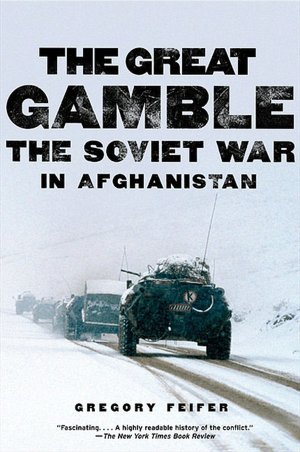
My book club met this evening to discuss The Great Gamble: The Soviet War in Afghanistan by Gregory Feifer. The book focuses only on the role of the Soviet Union during its military adventure in Afghanistan. I came out of the meeting with the feeling that there were some similarities and some differences between the U.S. role in Afghanistan now and that of the Soviets from 1979 to 1989.

Similarities


Decision making in the Kremlin and decision making in the White House were probably done by people who failed to mine the knowledge in their countries on Afghanistan and as a result who sent troops on missions which would prove far more difficult than originally imagined.

War in Afghanistan was not in the critical national interest of either the Soviet Union nor the United States.

In both cases the world power came to support a client government, with the intent of modernizing Afghan society (schools, women's rights, roads, etc.), assuming that the Afghan people would easily accept the ideology of the world power (Communism for the Soviets, Democracy for the Americans), and in both cases the reforming Afghan government had less support than supposed.

In both cases, the world power underestimated the willingness of other (typically bordering) nations to support insurgents. Since the most important ethnic groups (Turkmen, Uzbeks, Tajiks, Pashtuns, Baluchis, Hazara) all have links crossing borders with related ethnic groups, this failure of imagination seems strange.

And of course, in both cases the world power found itself pulling out of military involvement in Afghanistan after a decade, in part due to its own domestic economic problems.

Differences

The Soviet Union included Turkmen, Uzbeks and Tajiks, and troops from those republics were initially sent to Afghanistan under the (apparently misguided) assumption that they would be more acceptable to the Afghans.

The military forces were quite different. The Soviet military was based on conscription while the American army was all volunteer; thus the American soldier is often older than his Soviet counterpart was, and often more extensively trained. American soldiers often had multiple tours in war zones, especially in the later years, while the Soviet conscripts typically had only a single tour. The Soviet military was very poorly supplied while the the American military was lavishly supplied. The American military has a strong cadre of non-commissioned officers which the Soviet military lacked.

Bottom Line

While some of the club members disliked the book before the meeting, the discussion seemed to change their minds and to result in a rather positive judgement on the book's merit.

The mission assigned to the U.S. military changed over time from overthrowing the Taliban government and destroying the threat posed to the United State by Al Qaeda to supporting the institutionalization of the Karzai government so that it could sustain power. The club members wished that the Bush White House decision makers had read this book before making that mission change.

It probably would have been easier to reduce the threat posed to Americans by Al Qaeda to acceptable levels by directly attacking Al Qaeda than by installing a sustainable government in Afghanistan that would not tolerate Al Qaeda presence on its soil.

Other

I am not sure that we fully explored the reasons that Pakistan and Iran have for their policies toward Afghanistan. For example, Pakistan's water resources come largely from Afghanistan so it is important to Pakistan to have a government in Afghanistan with which it can work on water resource management.

We probably should have given more thought to the misery of the Soviet soldiers assigned to Afghanistan, and the even greater, longer lasting misery of the Afghan people beset by seemingly endless war.

The Pakistan Army, which is very influential in Pakistani policy, has large numbers of Pashtuns, Punjabi Pathans, and Baluchis.

Tuesday, March 13, 2012

More from Lane Kenworthy: It is Worse than you thought


The previous post showed that the median income in the United States grew more slowly than the average income during the Reagan administration and the two Bush administrations, breaking the trend of equal rates of growth from 1950 to 1980.

The graph above shows that the median income for households headed by someone age 25 to 34 was essentially the same in 2010 as was the median income for households of the same age in 1980.

The apparent increase in median family income was due to the aging of the population. Basically, the income of people in their 50s is higher than for people in their 30s for reasons we all understand -- seniority, income from savings, experience, etc.

Source: Zillow Blog

There is a long term trend towards smaller households, so that even when the median household doesn't grow, the median per capita income may be growing.

Source: Census bureau via this site

Moreover, single parent households are increasing and households with married couples decreasing as percentage of all households with children. Single adult households, in a society which has so many two earner married couples, are likely to have lower household incomes.

Thus one might with a jaundiced eye suggest that the rich are appropriating a larger portion of our economic growth at the expense of a subset of our children.

The rich grew richer faster after Reagan than did the rest of us.


My friend Julianne alerted me to this graph from Lane Kenworthy's blog, Consider the Evidence. It provides another way of showing what happened in the U.S. economy since Ronald Reagan was elected. The top lines show how the average income has evolved in the United States since 1950 and the lower lines show how the median income has evolved. From 1950 to 1980, the two increased in step -- increases in the productivity of the economy as a whole were shared in such a way as not to make the distribution of income more unequal.

After 1980, the median and the average income levels diverged. The median income continued to grow, but more slowly than the average income. What that means is that the rate of growth of high incomes was greater than the rate of growth of low incomes; the higher income people appropriated more of the growth of the economy for themselves than the poor or than they had previously.

Incidentally, during a period that roughly corresponds to the Clinton administation, the median and average incomes increased at the same rate. The divergence occurred primarily in the Reagan and two Bush administrations -- which of course lasted for 20 years.

Tuesday, October 25, 2011

The 9/11 Commission


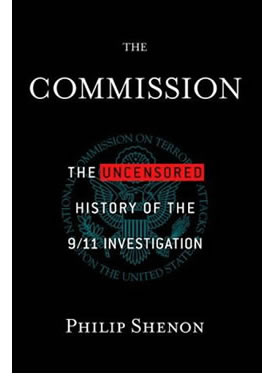
The Commission: The Uncensored History of the 9/11 Investigation is a very readable book. It paints a story of not very knowledgeable Commissioners supervising a staff run by a partisan executive director, operating in a highly politicized environment. While Al Qaeda terrorists are the real villains, the book paints Bush and Rice as failing to provide needed leadership and government agencies fumbling in their counter-terrorist efforts. The Bush administration and their Republican supporters in Congress appear more determined to limit damages to their 2004 campaign than interested in finding how better to protect the nation.


We are conditioned to think of the narrator of a novel as omniscient, but Philip Shenon, a reporter who covered the 9/11 Commission for the New York Times and followed up with this book based in part on extensive interviews with commissioners, staff and principles, has only his own conclusions on which to base this book; moreover, he has selected information and created an engrossing narrative intended to both inform and interest the reader. Shenon's information is largely drawn from interviews of people who often disagree among themselves and who are selective in what they told him; they too are far from omniscient. The people interviewed by the commissioners and staff of the Commission, correctly portrayed by Shenon, were depending on faulty memories, were politicized, and often provided the most self-serving narratives of what had happened. Commission staff went through reams and reams of data, with major gaps of withheld classified information and data that they failed to find, sometimes unable to take notes, trying to make sense of it all. Of course, at the moment of the 9/11 attack the victems and responders were confused and under pressure; the terrorists worked hard to keep their secrets and were never interviewed by commissioners nor staff, much less Shenon. Few books so force the reader to confront the difficulty of understanding what really happened.

The Congress chartered the Commission, giving it only a couple of years to prepare its report. Each party named five members of the Commission, with a Republican Chair and Democratic Vice Chair. The Chair and Vice Chair resigned and were replaced very early in the life of the Commission.

As the Bush White House became more and more concerned about the damage that might be done to it by the Commission report, its spokespeople and Congressional Republican leaders went to the attack, as did Officials of New York City when their interests appeared to be threatened. The organized 9/11 survivors groups lobbied fiercely, and the media (when not otherwise occupied with the invasions and wars) was covering the controversies on front pages.

Philip Zelikow, the Executive Director of the Commission staff, while a brilliant, highly qualified expert on the U.S. government and foreign and security policy, also had apparent conflicts of interest. He was close to National Security Advisor Condoleezza Rice, a member of the Bush administration transition team, and the author of a key policy paper used by the Bush administration in justifying the invasion of Iraq. Shenon describes Zelikow's phone conversations with Bush political adviser Carl Rove and Zelikow's efforts to hide them; Zelikow is portrayed as very controversial, believed by many of the staff as seeking to defend the Bush administration.

The Commission staff was recruited to include young PhD historians, people with long experience in government and intelligence services, and notably for a government report, people who write well. They clearly worked very hard, against tight time limits. Their interactions with each other are portrayed as complex, sometimes adversarial, especially with Zilikow.

The Commission and its staff had great difficulties getting information. They had subpeona powers, but chose not to use them until late in their work and in only very specific cases. Sandy Berger, Clinton's National Security Adviser seems to have stolen secret documents from government archives in an effort to keep them out of the Commissions vision. The Bush administration invoked executive privilege to withhold information from the Commission, and the staff failed to fully investigate the files of the National Security Agency. The book portrays some agencies as withholding information, and describes Commission staff as wanting to bring up some government witnesses on charges of perjury.

The book makes the case that, in spite of the claims of the Bush administration, there was no involvement of the Iraqi government in support of Al Qaeda's attack on the United States. Rather, the book traces links to Saudis and Iranians, although the case was not fully investigated nor so strong as to be pushed in the Commission report.

New York City had an emergency command center that could not be used during 9/11 because it was located near the Twin Towers and not in a hardened facility; the emergency fuel supply of the center apparently caused a fire that destroyed the building in which the center was located. Radios did not work and their was a lack of clarity in command structure; Shenon suggests that first responders died as a result of such failings.

The federal government is portrayed as responding badly. The intelligence services may well have had enough information to prevent the attacks, but failed to pull that information together in such a way that it could be acted on. Shenon attaches considerable blame to Condoleezza Rice and George Bush, writing that they focused on problems from the Cold War, did not organize the NSC staff in such a way as to bring terrorism the attention it merited, and failed to take action when warned of the pending attack.

Shenon seems to believe that the FBI should have been the subject of major reform, perhaps separating the responsibility of domestic intelligence and counter terrorism from that of fighting organized crime and law enforcement. The Commission believed that the FBI reforms would be made by the current director, and gave greater priority to upgrading the overall direction of intelligence from the CIA to the post of Director of Central Intelligence. This together with the combining of various agencies into the Department of Homeland Security were perhaps the major reforms in response to 9/11.

The Commission chose not to point to people who failed the public trust, and now a decade after 9/11 any such people are no doubt out of office. Perhaps the election of 2004 would have been different if the Commission had targeted specific people as culpable for the failures of government. More to the point, making people more accountable for failures might have had a salutary effect on future officials. On the other hand, the Bush White House was pleased with the report.

Dana Priest in her new book, Top Secret America: The Rise of the New American Security State, makes the case that we now have 1,200 top secret facilities, 2000 contractors with top secret projects, and a million people with top secret clearances. The huge size of the post 9/11 bureaucracy, built largely after the 9/11 Commission finished its work, makes it more difficult to bring together enough of the meaningful bits of intelligence to understand threats and make appropriate plans to thwart them. I would also guess that it is extremely unlikely that a million people can keep top secrets secret. Moreover, the cost of this structure seems too high for the protection it provides.

Shenon's book seems more negative about the leadership of Bush, Cheney and Rice, about the behavior toward the Commission of John Ashcroft, Alberto Gonzales and the New York police and fire department officials who testified before the Commission, and the roles of CIA Director George Tenet and FBI Director Robert Mueller than does the report of the Commission.

After the reelection of George Bush he nominated Condoleezza Rice as Secretary of State and shortly after she took that office she reestablished the long vacant position of State Department counselor and appointed Philip Zelikow to the job.

I worked in the White House on a couple of studies in 1977, and in government agencies for many years on other studies. My experience suggests that the studies done at the agency levels were much less political. The studies in the White House, while they had much less visibility than that of the 9/11 Commission, were influenced by political considerations. We worked hard on the agency studies and put in even longer hours on the White House ones. While some personalities in the agency work could be prickly, I think people who showed up in the White House were sometimes more personally ambitious and perhaps more prickly. Thus I found the book to have a feeling of verisimilitude with my own experience.

I found this book with its many short chapters very readable. In some ways I think it might be put on your shelf next to The Good Soldier and The Alexandria Quartet, exposing the multifaceted views of reality that can exist complementing and conflicting with each other in the same volume. I wished that the story it told was more reassuring, but in spite of that I recommend it highly.

Monday, October 17, 2011

Domestic and Foreign Policy Don't Come Together Until the President


I have been reading The Commission: The Uncensored History of the 9/11 Investigation by Philip Shenon and posted on it initially and with a follow up.


I was reminded reading the book that the U.S. government has a fundamental divide between domestic and foreign affairs. In the case of the 9/11 intelligence the divide between the FBI's domestic charter and the CIA's foreign charter meant that information that might have been used to prevent the attack was never shared. Indeed, it appears that the National Security Council (the foreign policy advisory unit to the President) under President Bush didn't see that it had a charter that called for it to deal with foreign based terrorist attacks on the United States even after the terrorists arrived in the United States.


Even stranger, Shenon suggests that the Vice President, in the absence of the President, did not have the legitimate authority under the Constitution to order a plane attacking the White House (where he was at the time) to be shot down.


The separation of domestic and foreign policy might have made sense in 1789, but in our small world undergoing globalization seems to make little sense today. We need government in which all our agencies see both domestic and international aspects of their programs. Health, education, energy, intelligence and law enforcement all have both domestic and international aspects.

Thursday, October 13, 2011

More on The Commission


I have been reading The Commission: The Uncensored History of the 9/11 Investigation by Philip Shenon and posted on it the other day.

The book is interesting in its illumination of the problems of this kind of journalism. People have different recollections of what happened and people color their accounts of what happened according to the impressions that they wish to make and leave.

The book indicates that there were very strong feelings, many negative, among the members of the Commission and among the Commission staff members about each other. This is perhaps not surprising among people with the kinds of careers and accomplishments that lead to appointment to such a body, and of course may have been amplified by Shenon's narrative style and reportorial needs. Still, the description of distrusts and dislikes suggests both caution in accepting the statements quoted in the book and concern for the objectivity of this often conflicted team of investigators.

One think comes through loud and clear. The Commission had a very hard time getting the information that it should have gotten easily. The White House Council, Alberto Gonzales, is pictured as refusing access to documents, the FAA as failing to supply records until forced to do so by subpeona, the military as failing to provide information from the air defense command, and Shenon suggests that key witnesses before the committee were either deliberately misleading the Commission or woefully lacking in the knowledge and understanding that their duties required them to have.

If you think that the people of this country deserved a report that would make as clear as possible what had happened and why, if you think that the political process that created the Commission was designed to get such a report -- a report that contained actionable recommendations on how to improve the situation -- or if you think that the functionaries of the government cooperated with the Commission fully to give it the information needed to produce such a report, then this is a book you need to read!

Tuesday, October 11, 2011

The Commission may not have done as good a job as you assume


I have been reading The Commission: The Uncensored History of the 9/11 Investigation by Philip Shenon, a New York Times reporter who covered the 9/11 Commission and has documented the story of its deliberations in this, his first book. A am about half through.

The Commission was very political, as one might expect where its members were five Republican and five Democratic members appointed by the Congress. The Bush administration senior officials were fearful that its report might be damaging to Bush's reelection and the normal efforts to protect executive privilege were probably increased by efforts to control the report.

The first choices to head the Commission resigned and were replaced. The Chair of the Commission had no foreign policy nor intelligence experience. Another Commission member resigned, apparently tempted out by the offer of a better post after he asked to many questions too angrily.

Shenon is quite negative about the appointment of Philip Zelikow as Executive Director of the study. He is a brilliant man and it is widely agreed that he put together a good team and turned out that rarest of products, a readable committee report. On the other hand, Shenon points out that Zelikow was a member of the Bush transition team, worked with the National Security Council in the early days of the Bush administration, had a history with the key NSC terrorism czar, was the (unacknowledged) author of the document used to justify the policy of preventive war, was a close associate and friend of Condoleezza Rice, and was a difficult man who not only had phone discussions with Karl Rove but tried to get rid of the record of those conversations. (I assume that anyone qualified to lead a major study of such a complex event in a limited period of time would have to have qualifications that some would see as potential interests and Zelikow clearly had the background in the subjects involved.)

Apparently the study directors, Thomas Kean and Lee Hamilton, did not fully understand Zelikow's history as it related to the Bush White House; Zelikow eventually recused himself from some of the deliberations of the Commission. Kean and Hamilton are portrayed as assuming that the commissioners would do more of the work, the staff less, and the Executive Director would be their agent. Shenon and I doubt that that was true; the staff of smart academics who actually searched the files and dealt with the interviews had to be important in the product of the Commission and the Executive Director clearly had to have put his mark on the work.

The serious charges are that the Commission failed to fully explore the possible role of Saudi Arabian and Iranian people in support of Al Qaeda and the 9/11 attack.

More to come later.....


Sunday, August 07, 2011

Rant: The Republicans have gotten us into a fine mess!

I quote from Saturday's Washington Post:
Standard & Poor’s announced Friday night that it has downgraded the U.S. credit rating for the first time, dealing a symbolic blow to the world’s economic superpower in what was a sharply worded critique of the American political system.

Lowering the nation’s rating to one notch below AAA, the credit rating company said “political brinkmanship” in the debate over the debt had made the U.S. government’s ability to manage its finances “less stable, less effective and less predictable.” It said the bipartisan agreement reached this week to find at least $2.1 trillion in budget savings “fell short” of what was necessary to tame the nation’s debt over time and predicted that leaders would not be likely to achieve more savings in the future.
Seemingly, the Republicans, especially those of the Tea Party persuasion, do not think that their actions in the Congress have repercussions. It turns out that President Obama was right and that it would have been better to increase the taxes on the very rich to levels typical of past periods of economic progress in order to get greater reductions in the debt. The Republican refusal to compromise on a comprehensive debt reduction policy has cost us the loss of the AAA credit rating. That may cost us a lot more, notably by making a stall of the U.S. economic recovery more likely.

Republicans should also take note of the fact that economies of European nations, Asian nations and the United States are connected. Those of Europe and Japan are also on shaky grounds, especially due to the debt problems of Greece, Ireland, Spain and Italy. Economic downturns in some of these countries will decrease their imports and thus the exports of other nations, decreasing demand for their products, leading to unemployment, and so it goes.....

U.S. Unemployment Rate
Source: The Washington Post

This is only one case where the Obama administration has gotten it right, and the Republicans got it wrong forcing economy damaging compromises.

It is clearly the case that the George W. Bush eight years of bad policies got us into problems that will take more than a few years to repair, even with good policies. That administration got us into two wars that drag on and on, resulting in huge financial costs as well as costs in human lives. The Bush administration also as a result of tax cuts and spending increases created the debt crisis.

  • The Obama administration was correct in perceiving that its first priority was to stimulate the economy, and that required further deficit spending. Incidentally, the need for deficit funding to stimulate the economy when there is a recession (or worse a depression) is why a balanced budget amendment to the constitution is a bad idea, not to mention the need for deficit funding in other situations, such as when the United States is forced to fight "a good war" such as that of World War II.
  • The Obama administration was right in trying to end the "temporary" Bush administration tax breaks for the very rich, but also right in compromising with the Republicans in agreeing to a temporary extension of those breaks last year as the price of a compromise needed to further stimulate the economy.
  • The Obama administration is correct in perceiving that we need to wind down the wars in Iraq and Afghanistan, reducing the drains on our economy and on our military readiness to deal with other, more serious security threats that might arise.
  • The Obama administration was correct in its attempt to reform our health care law, importantly to reduce the rate of increase of costs for medicare and medicaid, but also to extend health insurance to more of the American public.
  • Incidentally, the Obama administration has also been right in reversing the Bush administration policies on stem cell research and on the military "don't ask, don't tell" policy. It has done a real service in strengthening the scientific leadership in the government, and putting scientific accuracy above political expediency (again reversing the Bush administration policy in areas such as the scientific basis of climate change policies and other environmental policies).