Showing posts with label foreign aid. Show all posts
Showing posts with label foreign aid. Show all posts
Friday, October 30, 2015


Tuesday, April 21, 2015
Children are still migrating alone from Central America to the USA

The article goes on to state that the migration is not primarily to reunite the kids with family members in the USA but for them to escape the violence and poverty of their native lands.
The governments of Mexico, Guatemala, Honduras and El Salvador are working to improve conditions, but appear to need a lot of help to achieve their objectives. That is where Joe Biden's plan to provide $1 billion in aid next year comes in. Lets hope that Congress appropriates the money. It would be an important step in improving U.S. immigration policy.
Indeed, there used to be a Good Neighbor Policy and an Alliance for Progress. It is time for the United States government to return to a policy of offering a friendly hand to our neighbors to the south. If your neighbors house is on fire, and he asks for the use of your hose, you don't rent to him!
Thursday, March 19, 2015
U.S. Economic Support to Israel

Israel is the largest cumulative recipient of U.S. foreign assistance since World War II. To date, the United States has provided Israel $121 billion (current, or non-inflation-adjusted, dollars) in bilateral assistance. Almost all U.S. bilateral aid to Israel is in the form of military assistance, although in the past Israel also received significant economic assistance. Strong congressional support for Israel has resulted in Israel receiving benefits not available to any other countries; for example, Israel can use some U.S. military assistance both for research and development in the United States and for military purchases from Israeli manufacturers. In addition, U.S. assistance earmarked for Israel is generally delivered in the first 30 days of the fiscal year, while most other recipients normally receive aid in installments, and Israel (as is also the case with Egypt) is permitted to use cash flow financing for its U.S. arms purchases. In addition to receiving U.S. State Department-administered foreign assistance, Israel also receives funds from annual defense appropriations bills for rocket and missile defense programs. Israel pursues some of those programs jointly with the United States.
In 2007, the Bush Administration and the Israeli government agreed to a 10-year, $30 billion military aid package for the period from FY2009 to FY2018. During his March 2013 visit to Israel, President Obama pledged that the United States would continue to provide Israel with multi-year commitments of military aid subject to the approval of Congress.
The FY2014 Consolidated Appropriations Act (P.L. 113-76) provides the President’s full $3.1 billion request in FMF for Israel. In addition, it provides another $504 million in funding for research, development, and production of Israel’s Iron Dome anti-rocket system ($235 million) and of the joint U.S.-Israel missile defense systems David’s Sling ($149.7 million), the Arrow improvement program (or Arrow II, $44.3 million), and Arrow III ($74.7 million).
For FY2015, the Administration is requesting $3.1 billion in FMF to Israel and $10 million in Migration and Refugee Assistance. The Missile Defense Agency’s FY2015 request for joint U.S.-Israeli programs is $96.8 million. The Administration also is requesting $175.9 million for Iron Dome.The sum of the foreign aid contributions since the creation of Israel in the 1940s underestimates the real value of that assistance. For example, if the United States had provided $3 billion per year for 40 years the total would be $120 billion. If instead, the United States had invested $3 billion per year for 40 years obtaining 5% growth on total investment per year, the net value at the end of that period would be just under $294 billion.
According to the CIA's World Factbook:
- The population of Israel is 7,821,850
- The GDP of Israel is $272.7 billion (2013 est.)
- The per capita GDP of Israel is $36,200 (2013 est.)
The average Israeli family has 3.72 members. Thus the per family GDP is $134,664. This is not the same as the per family income, but the point is made that Israel is not a poor country, and on average its families are not poor. The proposed U.S. aid to Israel for 2015 would not greatly increase the income of its people.
It should be noted that the United States provides aid to other countries in support of Israel. Thus is has provided large amounts of aid to Egypt as part of the deal leading to a peace treaty between Israel and Egypt. So too, it has provided aid to Jordan at a level that is justified by the importance of peaceful relations between Jordan and Israel.
Since 1992, the U.S. has offered Israel an additional $2 billion annually in loan guarantees. Congressional researchers have disclosed that between 1974 and 1989, $16.4 billion in U.S. military loans were converted to grants and that this was the understanding from the beginning. Indeed, all past U.S. loans to Israel have eventually been forgiven by Congress, which has undoubtedly helped Israel's often-touted claim that they have never defaulted on a U.S. government loan. U.S. policy since 1984 has been that economic assistance to Israel must equal or exceed Israel's annual debt repayment to the United States.......
In addition, there is the more than $1.5 billion in private U.S. funds that go to Israel annually in the form of $1 billion in private tax-deductible donations and $500 million in Israeli bonds. The ability of Americans to make what amounts to tax-deductible contributions to a foreign government, made possible through a number of Jewish charities, does not exist with any other country. Nor do these figures include short- and long-term commercial loans from U.S. banks, which have been as high as $1 billion annually in recent years.Note that the fact that $1 billion in so-called private donations to Israeli causes means that there is significant tax financing of aid to Israel from the United States. Thus the U.S. government is foregoing tax income that it would otherwise receive by allowing the donors to deduct the donations to Israeli causes from their income.
The United States also has free trade agreements (FTAs) with Israel and Jordan. The FTA with Israel was created in 1985, the first such agreement made by the United States. That agreement
continues to serve as the foundation for expanding trade and investment between the United States and Israel by reducing barriers and promoting regulatory transparency.....(There is also a U.S.-Israel) Agreement Concerning Certain Aspects of Trade in Agricultural Products (ATAP), which provided for duty-free or other preferential treatment of certain agricultural products.This agreement has also meant billions of dollars in benefits to the Israeli economy.
There has been an income tax treaty between Israel and the United States since 1975. Here are online copies of the relevant documents. According to the U.S. Internal Revenue Service:
Under these treaties, residents (not necessarily citizens) of foreign countries are taxed at a reduced rate, or are exempt from U.S. taxes on certain items of income they receive from sources within the United States. These reduced rates and exemptions vary among countries and specific items of income. Under these same treaties, residents or citizens of the United States are taxed at a reduced rate, or are exempt from foreign taxes, on certain items of income they receive from sources within foreign countries. Most income tax treaties contain what is known as a "saving clause" which prevents a citizen or resident of the United States from using the provisions of a tax treaty in order to avoid taxation of U.S. source income.It is perhaps time to reconsider U.S. foreign aid to Israel. It is less important than it once was to Israel, given Israel's current GDP, and is perhaps not needed given the relatively high per family GDP. Moreover, there remain other economic advantages that Israel has with respect to U.S. markets and support that are expensive to maintain and of value to Israel.
Tuesday, February 10, 2015
Carl Djerassi, the chemist behind the Pill, died on January 30th, aged 91

I met Dr. Djerassi first when he was the Chair of the National Research Council's Board on Science and Technology for International Development (BOSTID), and I began a two decade association with BOSTID as the manager of the grants from USAID that provided a major part of its funding.
Carl Djerassi was I suppose best described as a polymath. His career as a chemist was distinguished: he synthesized the chemical that made the first birth control pill possible.
He developed synthetic juvenile hormone in insects, preventing them becoming adults, for non-toxic control of mosquitoes and fleas, developed corticosteroids for inflammation—steroids had been a passion since the 1940s—and devised a way of detecting opiates in urine, used by the army in Vietnam.He was a professor of chemistry at Stanford University for many years. As an entrepreneur and expert in research management, he ran two research companies while on the Stanford Faculty. He owned a California winery that produced fine wines. He was an art collector. Later he wrote novels and plays.
I knew him as a man who cared about the poor in poor counties and was willing to devote time and effort to advising the government on how to use science and technology to better the lot of these people; he did so without pay.
I remember others associated with BOSTID, including George Bugliarello, Roger Revelle, Frederick Seitz, E.O. Wilson, Hugh Popenoe, John Gibbons, Joshua Lederberg and Frederick Robbins. Offhand I can think of two Nobel Prizes and two Pulitzer Prizes among these eight people. For those who have thought that leaders in fields of science and technology live in "ivory towers", knowing any one of these men would be a revelation. Each was brilliant in his own field of specialization, each had many skills, and each cared enough about the poor and needy to devote time and effort to their aid.
Thursday, February 05, 2015
Worth viewing this about foreign aid if you are not expert already in some of the inadvertent consequences.
As I understand its history, U.S. aid was created in part to allow allied countries that needed U.S. goods and services to obtain them even though they did not have the dollars to buy them. Thus it made sense to use the U.S. aid dollars to buy the goods and services here and send them to the countries in need.
Of course, the funding for USAID is appropriated by the Congress through a political process. Rice growers, beltway bandits and others who found selling goods and services to the foreign aid program lobbied for funding to be earmarked for their goods and services. Shipping on "American bottoms" seems a case in point -- food aid from the USA shipped under foreign aid has to be shipped on U.S. owned cargo ships, even when it might be better to use other carriers.
Thursday, January 15, 2015

Monday, January 05, 2015
Cultural Groupings Show Up in the World Values Survey
/cdn0.vox-cdn.com/uploads/chorus_asset/file/2886428/image.0.png) |
| The Ingelhart-Welzel Cultural Map of the World. (NB: the green cluster in the center of the map is unmarked, but is labeled South Asian.) |
This is an old graph that still carries a lot of information, that has shown up in a new publication.
Using data from the World Values Survey (WVS), professors Ronald Inglehart of the University of Michigan and Christian Welzel of Leuphana University created this amazing Cultural Map of the World......
According to WVS, traditional values (the bottom of the y-axis) emphasize religion, traditional family values, parent-child ties, and nationalism. Those with these values tend to reject abortion, euthanasia, and divorce. On the other hand, those with secular rational values (the top of the y-axis) place less preference on religion and traditional authority, and are more accepting of abortion and divorce.
The x-axis tracks survival values versus self-expression values. Survival values emphasize economic and physical security and are linked with ethnocentrism and low levels of tolerance. Self-expression values, according to WVS, "give high priority to environmental protection, growing tolerance of foreigners, gays and lesbians and gender equality, and rising demands for participation in decision-making in economic and political life."It is a useful reminder that cultures are different, and people of different cultures really do have different values. One of the problems with foreign aid is that people from one culture (typically on the right hand side of the figure shown) are designing projects and giving funds to meet the (perceived) needs of people of another culture (typically from the lower or left side of the figure).
Tuesday, November 18, 2014
"Rich countries are deluged with data; developing ones are suffering from drought"

I quote from an article in The Economist:
AFRICA is the continent of missing data. Fewer than half of births are recorded; some countries have not taken a census in several decades. On maps only big cities and main streets are identified; the rest looks as empty as the Sahara. Lack of data afflicts other developing regions, too. The self-built slums that ring many Latin American cities are poorly mapped, and even estimates of their population are vague. Afghanistan is still using census figures from 1979—and that count was cut short after census-takers were killed by mujahideen.And:
Poor data afflict even the highest-profile international development effort: the Millennium Development Goals (MDGs). The targets, which include ending extreme poverty, cutting infant mortality and getting all children into primary school, were set by UN members in 2000, to be achieved by 2015. But, according to a report by an independent UN advisory group published on November 6th, as the deadline approaches, the figures used to track progress are shaky. The availability of data on 55 core indicators for 157 countries has never exceeded 70%, it found (see chart).Fortunately, there are now efforts to improve the situation (cited in the article):
A volunteer effort called Humanitarian OpenStreetMap Team (HOT) improves maps with information from locals and hosts “mapathons” to identify objects shown in satellite images. Spurred by pleas from those fighting Ebola, the group has intensified its efforts in Monrovia since August; most of the city’s roads and many buildings have now been filled in (see maps). Identifying individual buildings is essential, since in dense slums without formal roads they are the landmarks by which outbreaks can be tracked and assistance targeted.
On November 7th a group of charities including MSF, Red Cross and HOT unveiled MissingMaps.org, a joint initiative to produce free, detailed maps of cities across the developing world—before humanitarian crises erupt, not during them. The co-ordinated effort is needed, says Ivan Gayton of MSF: aid workers will not use a map with too little detail, and are unlikely, without a reason, to put work into improving a map they do not use. The hope is that the backing of large charities means the locals they work with will help.
In Kenya and Namibia mobile-phone operators have made call-data records available to researchers, who have used them to combat malaria. By comparing users’ movements with data on outbreaks, epidemiologists are better able to predict where the disease might spread. mTrac, a Ugandan programme that replaces paper reports from health workers with texts sent from their mobile phones, has made data on medical cases and supplies more complete and timely. The share of facilities that have run out of malaria treatments has fallen from 80% to 15% since it was introduced.
Private-sector data are also being used to spot trends before official sources become aware of them. Premise, a startup in Silicon Valley that compiles economics data in emerging markets, has found that as the number of cases of Ebola rose in Liberia, the price of staple foods soared: a health crisis risked becoming a hunger crisis. In recent weeks, as the number of new cases fell, prices did, too. The authorities already knew that travel restrictions and closed borders would push up food prices; they now have a way to measure and track price shifts as they happen.It seems to me that drones (remotely operated aerial vehicles), computers with geographic information system software, GPS technology, and cell phones represent a real technological solution to the need for better maps. Some donor (USAID) should leap on this and help to create better maps, that could be shared by the Internet and smart phones, for developing countries.
Saturday, August 23, 2014
On Donating to Charity
"DONATING MONEY TO DEVELOPING WORLD HEALTH CHARITIES WILL REACH AT LEAST 100 TIMES AS MANY PEOPLE THAN DEVELOPED WORLD HEALTH CAUSES."
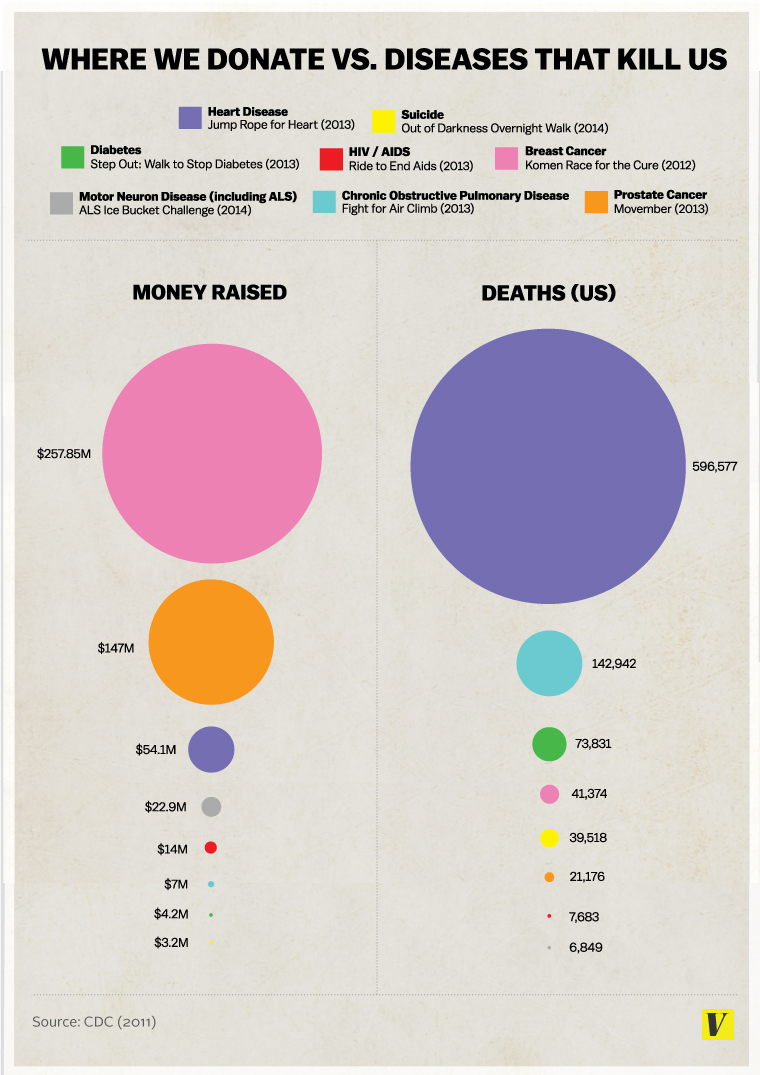
An article makes the good point that people often donate money to charities, missing opportunities to donate to other charities where it might both better meet their objectives and do more real good. Some charities are not good bets -- they spend too much of the money that they collect raising still more money, of which they will again spend to large a portion on fund raising. Other charities are poorly managed, and don't get much bang for the buck. Still other charities focus on programs that are less cos-effective than other available programs with the same objective. I quote from a portion of the article:
There are also tools that can inform your decisions. Charity Watch, for example, measures the effectiveness of non-profits. They look at the ratio of spending on actual programs to administrative costs. According their website: "Rather than merely repeat charities' self-reported finances using simplistic or automated formulas, we delve deep to find the real story of how efficiently charities use your donations to fund the programs you want to support."
Instead of focusing on financials, GiveWell has earned a reputation for scouring the globe to find charities that are most likely to touch the lives of the maximum number of people per dollar spent. As they put it, they conduct "in-depth research aiming to determine how much good a given program accomplishes (in terms of lives saved, lives improved, etc.) per dollar spent."
Charity Navigator, meanwhile, is another well-respected watchdog that looks at the overhead-to-program spending ratio of various non-profits, though they say they're moving toward a more robust calculus that will track how well charities are solving the problems they set out to tackle. For now, they offer a list of tips for savvy donors here.If you want to donate money to save lives, as the quote at the top of this post suggests, you probably will save more lives focusing on health services in poor countries. The mortality is higher there, and a large fraction of the deaths in developing countries are from preventable causes. Simple interventions such as immunizations can save lives. Improving hygiene, reducing exposure to the vectors of vector borne diseases, and improving nutrition can save lives. Moreover, the costs for providing those services can be very low in developing countries, as pay rates are low and sine many organizations effectively use unpaid volunteers.
If you wish to save lives, as the visual aid above suggests, there is some justification for donating to charities that address diseases that kill lots of people. Of course, you might prefer to donate to charities that help people live better, rather than helping them to live longer. Funding a program that provides schooling to kids who would not otherwise get a primary school education makes sense in this way (although educating a girl may save her children's lives when that girl grows up and has children).
It is not the case that a dollar donated to a charity focusing on heart disease or cancer will contribute more to saving lives than one donated to preventing a less prevalent disease. Donating to a program that is in great need of funds, but that uses those funds very effectively to combat a neglected disease might do more good. Lots of children in developing countries die as a result of dehydration resulting from diarrhea; a mother can save the life of such a child by adding a low cost packet of salts to a bottle of boiled water and giving it to the child to drink. A non-governmental organization might teach mothers in a poor village this technique and save lives are a very low cost per life saved.
The best choice for your money may also depend on your time frame. Donating to a research program to develop a malaria vaccine, for example, will save no lives in the near future. However, malaria is a major killer and if a vaccine can be developed it will save many lives per year for many years. If you want results now, perhaps you should fund a project that promotes bed net use in Africa. If you are thinking about deaths averted in this century, perhaps you should consider donating to research on vaccines.
The article that triggered this post was occasioned by the campaign to promote donations to ALS charities that focused on the "ice water challenge". The article suggest that the dumpees may not be getting the best value for the money that they donate. Perhaps, would they have donated money to any charity instead of the ALS Foundation, had there not been this challenge? Certainly the cost of the 60,000 emails sent to the mailing list of the Foundation was used very effectively since at essentially zero cost, it has generated tens of millions of dollars of donations.
Tuesday, April 29, 2014
A Thought on The Tyranny of Experts

In his talk, Easterly seems to confound "development" and "poverty reduction", "democracy" and "human rights", "experts" and "technocratic solutions"; he seems to feel that an approach that recognizes human rights as important per se and leads to democratic rather than autocratic governance somehow does away with the need to technological improvement to attack real health, agricultural and other problems that people and countries face.
Let me make clear that I strongly believe in human rights. As Easterly suggests, poor people in poor countries too often have those rights infringed upon; I believe assuring people of their rights is an objective of development. I recall that since Jimmy Carter became president of the USA, support for human rights has been identified as an objective of both U.S. foreign policy and U.S. development policy. Of course, that concern has not been uniformly honored by all presidents since Carter, nor by all of their administrations.
So too, I believe that governments should be responsive to the will of their people, and should provide a rule of law that helps assure the human rights of their people. Government "of the people, by the people, for the people" is a great democratic ideal. So too, I would like to see my government less supportive of autocratic and coercive governments. Easterly seems to be correct that the world is becoming more democratic. Still, I recognize that in some countries in some circumstances, people have been willing to put government in the hands of "strong men" in the hope of assuring order. In countries with monarchies and dictatorships, those in power will often not want to give up power; they may well will reject aid intended to reduce poverty if it is tied to movements towards democracy, rule of law, and guarantee of universal human rights.
Easterly would like to see the World Bank advocate for democracy and refuse services to countries that are undemocratic. He may advocate that position, but the leaders and staff of the Bank are responsible for carrying out the charter of the Bank and the policies set forth by its member nations. While Easterly may convince the member nations to change the policy of the Bank, but until he and others succeed in doing so, it will continue to act as it has.
More generally, different agencies have different purposes. It would not serve the needs of the world if the World Health Organization or the Universal Postal Union were to refuse to work with countries because of their form of government or even because of the countries; denial of human rights. The insistence by member nations that the international financial institutions act apolitically may be based not only on the self interest of autocrats, but on perception that there is a need for apolitical international financial institutions; major donors and private donors may be perceived as capable of imposing enough pressure to promote democracy without the Bank functioning in that way.
It is touching that Easterly seems to believe that the United States government will subordinate its security and economic interests to its interest in development and/or poverty reduction. Clearly the government of the USA has focused its foreign aid on political objectives. It began aid to Latin America in World War II as part of the war effort, and the Marshall Plan as part of the effort to build barriers to the expansion of Communism. It is no coincidence that in more recent decades it has focused major aid programs on Israel, Iraq and Afghanistan, nor that its major aid program to Egypt was created in support of the Egyptian peace treaty with Israel. So too, some other donors have complex objectives for funding foreign assistance.
The people of the USA seem to me far more willing to support disaster relief than to commit themselves to long range support for holistic development -- what we might call "nation building". Indeed, the electorate seems more willing to support aid that produces great photo ops and sound bites than to deal with fundamentals of building economic, governance, political, or other institutions. They are deeply skeptical of "taxing poor Americans to subsidize rich foreigners" or subsidizing industries abroad that would eventually compete with American industries for markets. The legislative and executive branches of the U.S. government, responsive to the will of the people, fund foreign aid in keeping with those prejudices.
Development versus Poverty Reduction
Individual projects may focus on poverty reduction, but I think of development as being a holistic process "lifting all boats". I suppose people tend to associate national development with improvement in their own condition and that of their families. A government "development" program that helps only the poor while denying economic opportunities to the middle class and to the rich is likely to create class warfare, and unlikely to achieve even its limited goal. (Substitute whatever indicator you like of poverty for "income", and you my doubts remain.)
It also seems to me that development involves social as well as economic objectives and the assurance of human rights. I expect that development will lead to a healthier, more learned population with more opportunities.
Democratization versus Technocratic Projects
Easterly shows a slide in which it is proposed to fight malaria by killing mosquitoes that spread the disease. I would point out that the mosquitoes don't know or care whether you have a democratic or a dictatorial government, nor how fully human rights are protected in a country. You fight malaria by stopping the transmission of the disease. These days you not only spray insecticides, but use bed nets, treat patients, screen windows, and drain water from places mosquitoes breed. Malaria was long ago eliminated from fascist Italy and democratic America (where it was the most serious health problems in the Jim Crow south among the poor). It was not eliminated by arguing for democracy and human rights.
Experts in public health, agriculture, engineering and other fields (yes, even economics) are needed if development is to work.
Of course, in some circumstances, experts can not function to improve people's lives. Some governments are so venial that they will try to appropriate any benefits obtained improving productivity for their members and supporters. In those circumstances aid donors sometimes focus on benefits that can not be appropriated by others, such as increasing child survival.
A dilemma for donor agencies comes in circumstances in which projects can yield benefits to the poor and where a terrible government also exists. I was involved many years ago seeking to allow the export of life-saving drugs to Castro's Cuba. There were a few drugs that were available in the USA, but not in Cuba, which were needed by small numbers of Cuban patients to save their lives; without the appropriate drug, each of those patients would die unnecessarily. Yet the export prohibition imposed by the United States as part of its opposition to the Castro Communist government kept the drugs from the patients who needed them.
That seems to me a prototypical case. Castro's government would suffer a bit from this U.S. policy that resulted in the death of a Cuban citizen. On the other hand, people would die who were in no way responsible for the policies of the Cuban government. It seems to me that in that situation, the drugs should have been allowed to travel to Cuba.
Thus, I believe that there are situations in which the benefits to the individuals targeted by aid projects are so great that the aid should be supplied even when one does not wish to support the government of the country in which they live nor the policies of that government.
A final Quibble
In his talk, Easterly mentions a situation in which the Ugandan government removed people from a forest so that a project with World Bank support could successfully maintain that forest; the project would not only protect biodiversity in Uganda, but would count as counterbalancing carbon emissions in another country (and would receive funding accordingly). This article seems to suggest that the people may well have been living in and disturbing the ecosystem of the forest illegally, and that a serious assessment had been made of the rights involved. I don't know the facts in the case, but it seems possible that the system worked correctly. Sometimes people do act illegally in ways that damage the environment, and in those cases the rule of law should be enforced. Lets not always assume that the guy talking has the rights of the argument without checking on the other view.
So What
Professor Easterly makes an important point. The policies of governments are important in development, and policy dialog with governments to encourage democratic reforms and protection of human rights is an important function for development agencies; that dialog is most effective if backed up with the credible threat of denial of financial aid.
Still, holistic development is a process by which many things must be done well, and indeed improved ways of doing things must be institutionalized. Goods and services will be better produced and distributed, laws will be better made and enforced, people will learn more and better, etc. The process of development is best accomplished when it utilizes expertise. Projects are a useful way of conceptualizing the steps in a continuing, long term process.
Thursday, April 17, 2014

Wednesday, April 16, 2014
Funding for Global Public Goods versus Development Assistance/Poverty Aleviation
Helmut Reisen, an economist I am learning to value greatly, has an interesting post on his blog today.
He asks why the World Bank and others seem so cocksure that extreme poverty can be ended by 2030. I take their promise to be fluff intended to con donors into continued or increased funding to fight poverty. I fear that extreme poverty will still be with us in 2030, and that a lot of poverty that the World Bank defines as not to be extreme is very serious indeed.
He notes that a lot of funding categorized as development assistance is actually funding for "global public goods". Much of that funding would go for prevention of climate change and other environmental deterioration. I would note that some of the efforts to fight communicable diseases (such as the eradication of polio) might also be included as a global public good -- the benefits of eliminating the polio in the last few countries in which it is currently found will be enjoyed worldwide.
There would seem to be no argument against the countries with the most money spending some of that money globally to "buy" global public goods. We regularly use progressive taxes to pay for public goods.
Reisen would seem to be concerned that such funding is being labeled "development assistance" when it is actually intended for another purpose. I see that point. Still, developing countries too will benefit from those global public goods, and in many cases their people are more vulnerable to the deterioration of those goods.
Of course, in some cases we can have our cake and eat it too. Thus, for example, investment in energy efficiency can be a cost effective investment even without including the external benefits of reduced greenhouse gas emissions. So too, the investment in hydropower rather than fossil fuel generation plants may produce lower cost electricity as well as prevent greenhouse gas emissions.
I am afraid that I believe that the world will not do the right thing and reduce greenhouse gas emissions as much as we could or should. Indeed, I believe we will see deforestation, desertification, loss of top soil, destruction of coastal zones, depletion of water resources, air and water pollution, and other environmental destruction that we could and should have prevented. Investments now to help poor people in poor countries to prepare to deal with this onslaught will help avert future poverty and thus be perhaps a legitimate form of development assistance.
Is there an argument that donor nations can provide more money for poverty reduction and global public goods by deliberately mislabeling some of the global public goods funds as development assistance? In the USA, the climate deniers might have more sympathy for international expenditures labeled "development assistance" than for those labeled "climate change prevention and amelioration".
As an aside, it seems to me that "poverty alleviation" is one aspect of "development assistance", but only one aspect. Social and economic development would seem to me to be best seen as "a tide that lifts all boats". Thus I see development as involving capital accumulation, which seems always to result in the rich getting richer, the middle class getting "better off", with relatively little of the capital being accumulated by the poor. I also see general development of poor countries involving their increased competitiveness in global markets, and increased competition from the recipients (current or former) of foreign aid has not been popular with U.S. producers.
Let me end by quoting an especially useful part of the posting:
Assessing vulnerability which is independent of present policy is needed both to identify the most vulnerable poor countries and to design criteria for the allocation of international resources. Two kinds of vulnerability and the corresponding indices can be considered:
- Structural economic vulnerability (as measured by the UN Economic Vulnerability Index, EVI), the UN index thought to replace the non-transparent performance index CPIA. EVI is a composite consisting of 50% ´exposure´ (size, location, agricultural share) and 50% shock intensity (both natural and trade)[1].
- Physical Vulnerability to Climate Change Index (PVCCI), an indicator developed by Patrick Guillaumont (2013)[2] at the Fondation pour les Études et Recherches sur le Développement International (FERDI). PVCCI consists of 50% ´risks related to progressive shocks´ (flooding due to sea level rise; increasing aridity) and 50& ´risks related to the intensification of recurrent shocks´ (rainfall; temperature)[3].
1. A detailed presentation of EVI can be found in Patrick Guillaumont (2011), The concept of structural economic vulnerability and its relevance for the identification of the Least Developed Countries and other purposes (Nature, measurement, and evolution), UN-DESA, CDP Background Paper No. 12, ST/ESA/2011/CDP/12 ,September.
2. Patrick Guillaumont (2013), “Measuring Structural Vulnerability to Allocate Development Assistance and Adaptation Resources”, FERDI Working Paper No. 68, Ferdi: Clermont-Ferrand, March.
3. For detail, see P. Guillaumont and C. Simonet (2011), “Designing an Index of Structural Vulnerability to Climate Change”, FERDI Working Paper I.08, March.
Saturday, April 12, 2014
New Data on Foreign Aid.

From The Economist:
Last year developing countries received $134.8 billion in aid, the highest ever, according to the OECD’s Development Assistance Committee (DAC)........The United Arab Emirates increased aid fourfold, chiefly to help Egypt. It gave the most as a share of its income. America gives less than 0.2% of its GNI
France, Germany and the United Kingdom, with a total population among if 210 million them gave $43.4 billion while the USA with a population of 313 million gave $31.5 billion. The GDP per capita of the USA is 53,101; those of Germany, the UK and France are respectively 40,007, 37,307 and 35,784 (all in international dollars).
Thus the USA, while richer than our European allies, gives much less than they do to alleviate poverty in Africa, Asia and Latin America. The excuse often given is that we spend much more on the military than do the European countries. I think it is that the Congress will not give more because of the views of the more isolationist members, and because the voters don't know how uncharitable the country actually is.
Sunday, March 23, 2014
A thought about cultural differences and working internationally
Homo sapiens are a single species, as we have proven by enthusiastically interbreeding. Most people all over the world can pretty much interpret each others facial expressions. We seem to have the same organs, the same senses. As a species we have a rather narrow genetic variation, consistent with have been few in numbers a couple of hundred thousand years ago.
On the other hand, we are culturally diverse. We speak thousands of different (native) languages. We dress differently, have different food preferences, different kinds of houses, different religions, different ways of governing ourselves, different ways of organizing our economies, etc.
I just read this article that indicates how much of Social Science is based on studies of subjects from Western, Educated, Industrialized, Rich, Developed (WEIRD) populations. Indeed, a large portion of the research published in social science journals seems to be based on American college students, and most of them in psychology courses. The problem noted in the article is that the WEIRD population is an cultural outlier yet many of the results observed in WEIRD populations are assumed to be representative of universal human behavior.
The article gives an example of "the ultimatum game". Here is the Wikipedia description:
The ultimatum game is a game often played in economic experiments in which two players interact to decide how to divide a sum of money that is given to them. The first player proposes how to divide the sum between the two players, and the second player can either accept or reject this proposal. If the second player rejects, neither player receives anything. If the second player accepts, the money is split according to the proposal. The game is played only once so that reciprocation is not an issue.
 |
| Extensive form representation of a two proposal ultimatum game. Player 1 can offer a fair (F) or unfair (U) proposal; player 2 can accept (A) or reject (R). |
- People in industrialized societies tend to make offers to split the money fairly evenly and to reject offers that keep most of the money for the offerer.
- People in small scale societies with only face to face transactions tend to offer small portions of the money, and to accept small portions of the money.
- In some societies, those where gift giving typically involves reciprocal responsibility to return favors with future favors, large portions of the money were often offered and often rejected.
At one time it was assumed that the response of people in industrialized societies was a universal response. It now appears that the response is culturally determined.
- In industrialized societies, economic transactions are formalized by the economic institutions which in turn depend on high levels of trust. People from those societies apparently act in accordingly.
- In the small scale societies, offerers realize that they can keep most of the money since almost any offer will be accepted; recipients choose to accept whatever is offered on the basis that something is better than nothing.
- In societies with institutionalized reciprocal giving, offerers apparently assume that by giving a lot they can expect a lot in return; recipients choose to reject even generous offers assuming apparently preferring to avoid the burden of some future unspecified reciprocal gift.
I note that on one level, the behavior of the offerers and recipients in the ultimatum game is culture dependent, as described. However, at another level it seems to be common -- people in each culture seem to make decisions that are rational given the institutional framework of their own culture, and the way that they expect others to act.
So What
I have worked in more than 35 countries. In some of those I have lived for years and gained some intuitive feel for the ways of the culture. Moreover, I worked a long time in Latin America, and there are some similarities among the cultures of the Latin American nations. However, in others I had only the most limited understanding of culture, perhaps based on a bit of reading.
Some places I think I have pretty good intuition as to how people will make their decisions most of the time; in other places, not so much. The problem is to know in which kind of place one is working at the moment.
I suppose the lesson of that experience is "don't assume", be humble, and be polite.
I tend to feel that there will be common grounds -- that people will prefer health to sickness, will avoid pain and hunger. But even those ideas may not hold up everywhere; there are even times and places where parents will prefer the death to the survival of normal infants.
Thus it is important to recognize that in other cultures, values may be different than one's own. Slavery is still with us, as are prejudice and war. In some cultures, corruption is all but universal where it is possible. For the international worker, I suppose the key is to maintain one's own important values, recognizing that they may not be shared by those with whom one is working.
Thursday, February 27, 2014
About Biotechnology -- An Agricultural Example
Traditional breeding takes half the genes from one plant and half from another to produce a new plant. To get a rare trait, such as resistance to a new virus, breeders may not have much choice of the source. So often, using conventional breeding, they have to take a lot of not very useful genes into the new plant to get the one they really need. Then a lot of time is spent breeding back into good plants to get rid of the junk genes.
Sometimes. to get a really rare gene, plant breeders have to go to a related species that is not commercial and find a way to get the gene into the commercial species and commercial cultivars. If they do not use biotechnology, then they have to get lucky and build a new plant that is the vegetable world's analog to a mule. People have domesticated the major food plants over thousands of years, and the cultivars used by farmers have been cleaned in that time of genes dangerous to man. The species from which important new genes are found haven't gone through that process, and often harbor dangerous genes. In any case, the tests used for the products of biotechnology are not used for the products of traditional breeding.
Properly don't, biotechnology not only produces needed new cultivars more rapidly, but also of more proven safety.
(I was the project officer for a major conference on biotechnology applications for developing countries in the early 1980s, and worked for the following 15 years managing a program funding biotechnology research and development projects, serving for part of that time as the officer responsible for assuring that the research was demonstrably safe.)
Sunday, January 05, 2014
An improvement in the rate of poverty reduction after World War II.

This graph is from a new post on Roger Pieke Jr.'s Blog. It suggests a radical change in the rate of decrease in world poverty since 1950. Since such extreme poverty was concentrated in Asia, Africa and to a lesser extent Latin America, and since for much of this time the rate of growth of GDP was higher in developing than in developed countries, I assume this
How much of the change was due to each of the following factors?
- The growth of the global economy, under the theory that "a rising tide raises all boats"
- Decolonization, and the installation of governance in Asia and Africa more oriented to the welfare of the people of those continents and less to the service of the economies of the imperial powers
- The diffusion of the technological revolutions that had previously brought economic growth to a small nucleus of countries to more and more of the world
- Globalization, leading to more opportunities for developing countries to profit though exploitation of comparative advantage and attraction of international investment
- Improved understanding of development policy, including the importance of reduced population growth
- The introduction and growth of development assistance which led to large concessional financial transfers to the developing world as well as a great deal of technical assistance.
Friday, November 08, 2013
What "Official Development Assistance" is not.
Statistics mean what they measure, not what their titles say.
I read an article in The Guardian which started:
The international rules that define what spending rich countries can count as foreign aid – and which developing countries are eligible to receive aid – are up for grabs for the first time in decades, with potential faultlines being drawn over whether donors should be able spend more aid money on support for private companies overseas.
The development assistance committee (DAC) of the Organisation for Economic Co-operation and Development (OECD), the club of rich countries, defines and polices what its members can count as official development assistance (ODA).Here is the official site for the current definition.
I think of the DAC as a forum for discussion among the members of the OECD -- the club of rich nations. In the DAC, the countries are represented by their governments. The definition of ODA is primarily to assure that when two countries discuss the similarities and differences of the programs, they are comparing apples to apples and not apples to watermelons. I am glad that the DAC is reexamining the way ODA is calculated in an effort to make its discussions of development assistance more and better informed by statistics. But I hope that the people involved in the discussions understand what the indicator measures. I strongly doubt that most of the public does.
Official: This means the statistics focus on aid provided by national, state and local governments. Different cultures differ in the importance of civil society within the culture and the importance of private charity versus government funding. Official development assistance does include the funding provided by governments to civil society organizations, but not the money that is donated to development assistance by private individuals, churches, or businesses.
Note especially that in the US governments exempt charitable donations from taxation, and also exempt charitable and religious organizations from taxes. This is "tax financing" and amounts to billions of dollars a year of what might be considered hidden subsidies for private charity. When people donate to Oxfam America, or when the Gates Foundation funds foreign aid, or when Catholic Relief Services provide projects in developing countries, the government foregoes income, but that amount is not counted in Official development assistance.
Over the past decade I have contributed well over 20,000 items to the Zunia resource base. I have done so as a volunteer, with no payment. Assume that I can find, read and post five items an hour. That implies I have spent at least 4000 hours trying to make relevant professional information more available to people working on development. There is no place that that effort is included in the accounts; it is neither funded by the government nor measured in monetary value by the foundation that supports Zunia.
Similarly, consider my experience as a Peace Corps Volunteer in the 1960s. I received no pay as a trainee, and a living allowance when in country that was less than $100 per month. (Of course, the government spent money on my training, my transportation, and on the support staff.) I finished my two year stint as a PCV on a Friday and the following Monday I moved to the other university in the same town as a Ford Foundation Consultant (for the following three months) with a stipend of $1200 per month. It seems fair to say that my in kind contribution as a PCV might be valued at perhaps $25,000, much more than the government paid me. Then, after my service as a PCV was finished, the government issued me a check for $75 per month ($900 per year) for the time I served abroad. Note that that payment was made to me to be used in the United States while I was not providing any assistance. I am pretty sure that my contribution to the GDP in my host country was more than the cost to me and the government, but that is because I was lucky.
Development: There is a tendency to think of increases in gross domestic product (GDP) as the measure of development, and it is useful, and the ODA actually focuses on "economic development and welfare". The UNDP utilizes the Human Development Index which adds education and life expectancy to GDP for a more adequate measure of development.
I think of the demographic transition as a key element of development. Child survival was radically improved by public health programs based on immunizations, simple curative services, improved sanitation and improved nutrition. Couples chose to have fewer children, and were able to do so to the availability of contraceptive technology. Parents were able to invest more per child in education, food, health services, etc. because they had fewer children. The children, eventually entering the workforce with more human capital per kid, were more productive. The GDP did increase rapidly per capita, but societies evolved in many other ways, many of which must be seen as social or cultural development. How much of this is captured in GDP per capita or the UNDP HDI? Very little.
If we look at success in achieving the Millennium Development Goals, which focus in reduction of poverty, China and India are largely responsible for the global success. They have experienced rapid increases in GDP over many years with export driven economic policies. In the process, a lot of industries have moved production to these emerging economies, leaving unemployment a problem in rusting industrial cities in the USA and other OECD countries. Subsidies to foreign countries to build manufacturing industries to take away markets from the donor nation tend not to be popular with the people who wind up unemployed, nor with their neighbors, nor with the majority of voters.
On the other hand, Americans and citizens of other OECD countries sympathize with the victims of natural disasters, They support efforts to improve health and reduce hunger, especially when those efforts help children. Thus US foreign assistance has tended to focus on humanitarian relief and poverty alleviation (especially "the worst aspects of poverty") rather than industrial development (much less export oriented manufacturing).
Assistance: ODA focuses on concessional assistance. How much of the success of China and India was due to trade policies that allowed imports from those nations without heavy tariffs? How much was due to industrial policies that allow companies to foreign direct investment abroad and allow them to shelter earnings in foreign subsidiaries. I suspect that "concessional aid" are less important for the major successes in economic development than are trade and industrial policy instruments.
The world is -- I hope -- on the brink of eradication of polio. This became possible with the invention of polio vaccines as the result of decades of biomedical research, most of which was funded in the United States. None of this was seen as "assistance". Indeed, much of development can be seen as the result of technological revolutions, such as the green revolution, the development of contraceptive technologies, the information revolution, the development of biomedical technologies, energy technologies, and even space technology. Very little if any of the investment in this technology development occurred in poor countries nor was it accounted as development assistance. Yet the public investments in these technologies and their transfer at low or no cost to developing countries was critical to development. It is not seen as ?assistance".
The DAC is a forum for discussion of a multinational effort involving some $100 billion per year. It is worthwhile to have such a forum, and to have statistics on which to base their discussion, and to have a common definition of terms for the collection of those statistics in the member nations. Of course the definitions can be improved, and thus should be. Still, "the ideal is the enemy of the good". And it is counterproductive for outsiders to criticize the definitions because the do what they were designed to do and not what the outsider would prefer that they did.

Tuesday, October 01, 2013
What do the non-essential government employees do?
I was one of the non essential government employees furloughed in 1995. Let me share what I did and you judge whether it was worth doing.
I worked to implement programs that the Congress mandated. When the Congress appropriates money for a program, the executive branch is legally bound to implement that program. Indeed, the executive branch can not legally implement programs for which the legislative branch does not allocate funds.
The programs that I worked on funded research as part of the U.S. development assistance program. Some of our programs:
- Recognizing that pneumonia killed huge numbers of children in developing countries, we funded a number of projects around the world to find out what diseases were actually causing those diseases and killing the kids. A number of U.S. scientists collaborated in the program donating their time. The results clarified those causes and were used by the World Health Organization in redefining the guidelines for treatment of childhood pneumonia. Those guidelines are used around the world.
- A small grant was used to bring a researcher to a U.S. lab and led to the first fast diagnostic test for Lyme Disease.
- A research project showed a previously unrecognized but huge problem with Hepatitis C in Egypt. This was part of project that the Congress chartered to promote scientific cooperation between Israel and its Arab neighbors. The Congress felt, and I agree, that scientific cooperation helps to build ties across borders, and thus this project helped make the peace process work better. It also helped deal with a huge health problem in Egypt.
- A small project enabled the U.S. National Institute of Standards and Technology pioneer in research on carbon based transistors. The Congress had passed a budget to help Russian scientists after the fall of Soviet Communism. NIST applied for a travel grant to bring a Russian scientists to its U.S. labs. That scientist had developed transistors on a carbon base in his Russian lab and published, but others had been unable to replicate the research, and his results were doubted. The scientist was able to replicate the results in the NIST lab. Carbon based transistors, if they can be produced commercially, should be faster than silicon based ones in use today.
- One of our grantees demonstrated that sugar cane varieties could be grown with symbiotes in their stems and leaves that fixed nitrogen from the air and made it available to the plant. Last I heard, one-third of Brazil's sugar cane was grown without nitrogen fertilizer using the fruits of this research. One impact was that it became less expensive to grow sugar cane, leading to lower cost biofuel for Brazil's fleet of cars, leading to less air pollution. Perhaps more important, the research identified a new approach to biological nitrogen fixation that might be used in other "grasses" such as corn.
- In one of the rare "capacity building" projects we funded, we provided a $150,000 grant to the universities in Costa Rica to build an Internet backbone. That backbone was linked to the United States using unused capacity of a NASA satellite. It was quickly sued as the base of a country wide Internet network, which was then extended through Central America.
I left government shortly after being furloughed in 1995, so my memory of advances based on our program is out of date. We funded hundreds, if not thousands of small projects, and I have only given results of a very few of them. That our work was deemed non essential did not mean that it was without value.
Monday, September 02, 2013
A thought about new institutions,
Author Packer focuses on the deterioration of American institutions. Think also about the creation of institutions.
Perhaps the most obvious kind of institution is the formal organization. There are quite a few new ones since World War II, such as Apple, Google, Microsoft, Amazon, etc.
Institutions organizing international affairs have also been created, such as the United Nations system of organizations and the Breton Woods system including the International Monetary Fund, the World Bank and other international financial institutions, and an increasingly complex system of international conventions such as the Geneva Convention and the conventions implementing the Universal Declaration of Human Rights.
We are seeing gay marriage institutionalized before our very eyes, as states legalize gay marriage, the Supreme Court finds for gay marriage, and the federal government defines policy to provide federal benefits for married couples to gay couples. Perhaps we might also consider the huge increases in single parent households, unmarried heterosexual households and extramarital sex as related to the evolution of new "familial" institutions.
Markets are institutions, and we see online markets growing and replacing face-to-face markets. Examples are EBay, the online book market, etc,
How about the Wikis, such as Wikipedia and Wikileaks?
I would suggest that the social media are new institutions for interpersonal interaction.
Institution building is a key element of international development. We often consider the function of foreign aid projects as supporting the development of institutions, such as legislative institutions, judicial institutions, agricultural extension systems, public school systems, public health systems, the different organizations of the executive branch of government, etc. Perhaps more attention should be directed to the building of new kinds of institutions such as those mentioned above.
Monday, August 19, 2013
We wish the best for Egypt and Egyptians, so let our government take the time to thing through the US position.
According to the poll, 51% of Americans say it's better for Washington to cut off military aid to Egypt to put pressure on the government, with 26% saying it's better to continue military aid to the government in order to maintain influence in Egypt and nearly one in four unsure.I have visited Egypt a number of times and spent months there studying the country. Indeed I headed a study with a large number of Egyptians and foreign consultants reviewing science and technology in the country in order to make recommendations on how those activities might be improved. I know enough about Egypt to know that I don't have a clue how the Egyptian military and caretaker government should act for the best interest of the Egyptians. I also know that I don't have a clue as to what the United States can or should do to improve the situation.
CNN
I am glad that the State Department is taking some time to analyze the situation and make recommendations to the President.
I am impressed that the founding fathers put the lead on foreign policy in the Executive Branch, with the advice and consent of the Senate. I am also impressed that the Senate has been specifically designed to slow down the policy making process, on the assumption that the House would be too likely to act too quickly in the heat of passion.
I am pretty sure that very few of the Americans contacted in a few days by the Pew Research Center have any real appreciation of Egypt, its current situation, U.S. aid for Egypt, or the best thing to do now.
Subscribe to:
Posts (Atom)