
Showing posts with label government. Show all posts
Showing posts with label government. Show all posts
Wednesday, January 06, 2016


Monday, November 09, 2015
Diplomats Earn Their Pay Serving the People of their Countries
Next time someone complains that government employees don't earn their pay, think of these videos.
Saturday, August 01, 2015
How Brazil Got the 2016 Summer Olympics

The 2016 Summer Olympic Games are too be held in Rio de Janeiro. There have been reports of terrible pollution in the waters of Guanabara Bay where some of the water sports are to take place, and of fears that the high levels of street crime may spill over to harm the games. Brazil is going through a period of drought and one of economic recession, both of which may complicate its job of hosting the games.
Recently the President of Brazil made a public announcement, seeking to minimize the dangers of holding the games in Brazil (translation mine):
Dilma mimimized the concerns with the security in the host city, where assaults and lost bullets from the crossfire between drug trafficers and police take victims every day........
Considering the climate of mistrust including corruption scandals that shake the country, Dilma drew a parallel between Brazil and the athletes who overcome adversity with hard work and effort.The Selection Process
Rio was one of seven cities that submitted bids to host the games. The International Olympic Committee evaluated each city's offering. A grade of 6 or above was judged to be adequate to accept the bid from the city. The results of the evaluations were:
Tokyo (Japan) 8.3
Madrid (Spain) 8.1
Chicago (USA) 7.0
Doha (Qatar) 6.9
Rio de Janeiro (Brazil) 6.4
Prague (Czech Republic) 5.3
Baku (Azerbaijan) 4,3
Thus the fifth ranked application, and the lowest of the applications thought to be acceptable by the International Olympic Committee's evaluation team was selected.
The actual selection was made by three rounds of voting of 98 of the 99 eligible voting country delegations. Only four countries received votes: the USA was the first rejected, then Japan, then Spain, leaving Brazil the winner.
Bloomberg reported:
The Brazilian city, which proposed investments of $11.1 billion in preparation for the games, got 66 votes in the final round today, while Madrid received 32 in balloting by the International Olympic Committee in Copenhagen. Tokyo and Chicago lost in earlier rounds.
Brazilian President Luiz Inacio Lula da Silva, who led the Rio delegation, applied his strategy of promoting ties among Southern Hemisphere countries to back his bid. Lula, 63, visited eight countries since April to court developing nations’ support. U.S. President Barack Obama made an in-person pitch for Chicago, his adopted hometown, which was the first city eliminated........
Rio’s campaign was boosted by the presence in Copenhagen of Lula and Central Bank Governor Henrique Meirelles.
The Brazilian president has been promoting Rio’s bid since last year, when he traveled to Beijing for the opening of the 2008 Games. After attending the Group of 20 meeting in April in London, he was the only leader of the four bidding countries to tour the Olympic Park for the 2012 Games.
Billionaire Eike Batista made the Olympics bid part of his quest to become Brazil’s champion of infrastructure development. His EBX Brasil SA group said it donated 23 million reais ($12.8 million) to Rio’s campaign -- about a quarter of the 102 million reais that Brazil’s Olympic Committee invested in the competition with four other company donors.Behind the Scenes
Given the scandal surrounding FIFA and international soccer, one may be excused for suspecting that the true story behind the choice of Rio de Janeiro to host the Olympic Games may be more complex than that presented by Bloomberg's report. The FIFA scandal suggests money payments might lubricate that international voting process. I don't doubt that gifts to delegates and those who instruct delegates might in some cases be used, but I suspect that diplomatic efforts invisible to the public also may play a role.
The 2014 Winter Olympics are described is follows in Wikipedia:
The lead-up to these Games was marked by several major controversies, including allegations that corruption among officials led to the aforementioned cost overruns, concerns for the safety of lesbian, gay, bisexual, and transgender (LGBT) athletes and spectators due to the effects of recently passed legislation, protests by ethnic Circassian activists over the site of Sochi (where they believe a genocide took place), and threats by jihadist groups tied to the insurgency in the North Caucasus.Now Bejing has been chosen to host the 2022 Winter Olympic Games in spite of the fact that it has no history of snow falls, and is planning to hold the games on artificial snow.
I quote from a Wikipedia entry relative to the 2002 Winter Olympics:
The 2002 Olympic Winter Games bid scandal was a scandal involving allegations of bribery used to win the rights to host the 2002 Winter Olympics in Salt Lake City, Utah, United States. Prior to its successful bid in 1995, the city had attempted four times to secure the games; failing each time. In 1998 members of the International Olympic Committee (IOC) were accused of taking bribes from the Salt Lake Organizing Committee (SLOC) during the bidding process. The allegations resulted in the expulsion of several IOC members, and the adoption of new IOC rules. Legal charges were brought against the leaders of Salt Lake's bid committee by the United States Department of Justice, of which all parties were later acquitted. Investigations were also launched into prior bidding process by other cities, finding that members of the IOC received gifts during the bidding process for both the 1998 Winter Olympics and 2000 Summer Olympics.How is it that seemingly inappropriate venues are selected for the Olympic Games? Are bribes involved, and if so, are they the major factor determining the selection? I suspect that diplomatic channels are used by governments to understand the details of each selection process (and intelligence agencies and methods?). Governments have varying degrees of influence over the voters in the final selection process, and the more coercive the government, the greater that influence my be. Do governments make deals among themselves, trading the votes that they influence?
A UNESCO Example
I closely followed the election of a new Director General for UNESCO in 2009, creating a blog to share the material I was finding. Two Brazilians were initially considered very strong candidates for the position:
- Marcio Barbosa, the then Deputy Director General of UNESCO, who had headed the Brazilian Space Agency, and
- Cristovam Buarque, a member of the Brazilian Senate, former Brazilian Minister of Education, with a distinguished academic career.
In fact, the Government of Brazil chose not to submit a nomination for either of these men.
It was reported that Brazil in fact supported the candidacy of the Egyptian candidate for the position. He was a long time minister in the Mubarak government, and thought to be a close associate of President Mubarak's wife. The Egyptian was the early leader in the voting, but lost due to opposition raised by a number of serious charges posted against him during the race. It was suggested that there was president-to-president contact made between Egypt and Brazil resulting in Brazil's support for the Egyptian candidate for the UNESCO job, and Egyptian support for Brazil to host the 2015 Summer Olympics. A secret diplomatic cable published by Wikileaks provides some background.
It was reported that Brazil in fact supported the candidacy of the Egyptian candidate for the position. He was a long time minister in the Mubarak government, and thought to be a close associate of President Mubarak's wife. The Egyptian was the early leader in the voting, but lost due to opposition raised by a number of serious charges posted against him during the race. It was suggested that there was president-to-president contact made between Egypt and Brazil resulting in Brazil's support for the Egyptian candidate for the UNESCO job, and Egyptian support for Brazil to host the 2015 Summer Olympics. A secret diplomatic cable published by Wikileaks provides some background.
Tuesday, July 07, 2015
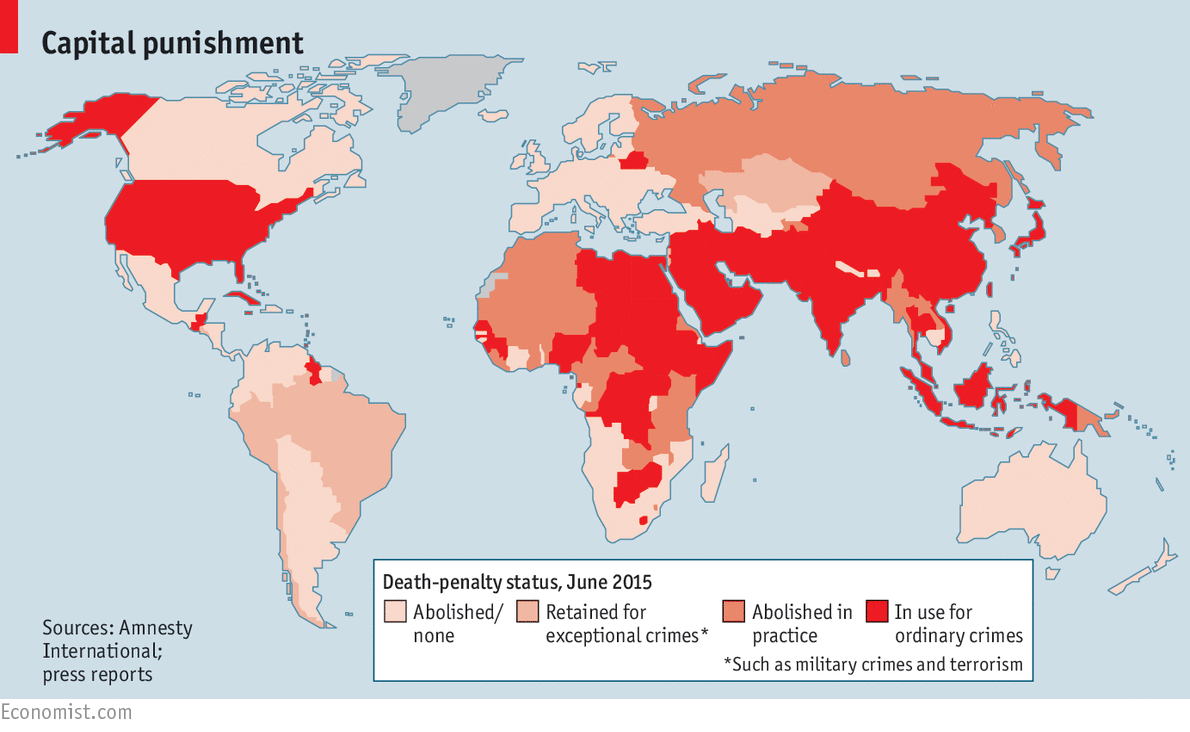
Perhaps it is time to get rid of the death sentence in the USA
 |
| Source: The Economist |
The Western world’s chief executioner, America, is putting fewer people to death, too. Last year it executed 35; even if every execution scheduled for this year were to be carried out, which is unlikely, the total would be no more than 33. Of the 31 states that still have the death penalty, half have executed no one since 2010. In May Nebraska passed a law repealing it, the 19th state to do so—and the first conservative one for many years.
In 1994 80% of Americans said they endorsed the death penalty in principle. The Pew Research Centre reckons that fewer than 60% do so today—and notes that young Americans are less keen than their elders. Blacks are solidly against, as are a small majority of Hispanics. Even the Supreme Court’s recent pro-death-penalty ruling gave comfort to abolitionists by providing a chance to rehearse their case. The death penalty, argued one of the four dissenting judges, Stephen Breyer, is “highly likely” to violate the constitution. Evidence suggested that innocent people, he wrote, had been executed. People on death row had frequently been exonerated. The system was blighted by racial discrimination. Delays between sentencing and executions may violate the eighth amendment, which bars cruel and unusual punishment. And he noted that it is not proven, anyway, to deter crime.I am no expert, but as I understand the evidence the death sentence costs a lot of money, and there is no convincing evidence that it deters capital crimes. Lets get rid of this punishment which looks to me to be an abuse of human rights.
Wednesday, July 01, 2015
Good News from the SCOTUS
 |
| America's Most Gerrymandered Districts |
Gerrymandering is at least partly to blame for the lopsided Republican representation in the House. According to an analysis I did last year, the Democrats are under-represented by about 18 seats in the House, relative to their vote share in the 2012 election. The way Republicans pulled that off was to draw some really, really funky-looking Congressional districts.

The Supreme Court has now ruled on a case, deciding that a state can substitute a redistricting commission for a legislative body in redistricting, This would seem to be a major step in a process that would allow the people to take back the decisions on redistricting, and allow the more representative House of Representatives that the Founding Fathers intended when the Constitution was written and ratified.
That might also make the Congress work a lot better for the American people. Fewer "safe" Congressional districts, in which only the primary really determines who will be elected means fewer districts in which candidates seek only to please the small number of voters who turn out for the primaries -- who tend to be on the extreme wing of their parties.
Sunday, June 21, 2015
A Modest Proposal for A New Legislation to Support Students in Colleges and Universities
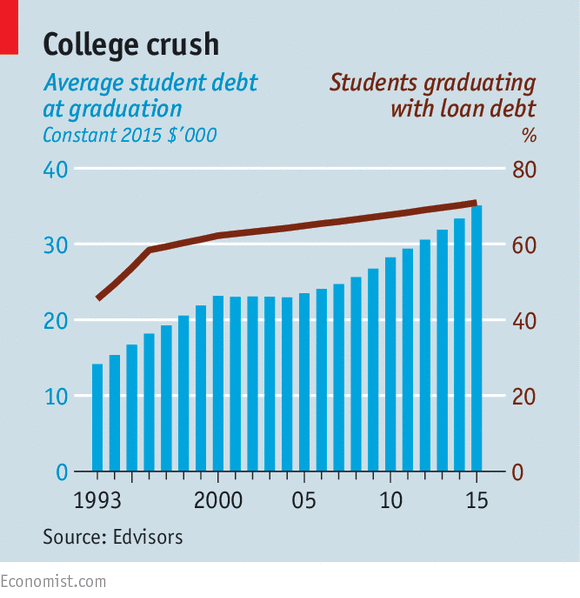
NEARLY three-quarters of the graduates now leaving America’s colleges are saddled with debt. On average, they owe $35,051. By comparison, roughly half of all graduates carried debt in 1995 and it averaged less than a third as much, says Edvisors, which tracks student aid (see chart).We need a U.S. Defense-During-Globalization Education Act that subsidizes the higher education needed for this country to remain competitive in an increasingly global economy, as well as to help those who have been displaced from their previous jobs by competition from abroad to qualify for new jobs in sectors emerging in the USA.
Not only should people not be discouraged from getting the education and training that they need by high costs (incurring debts that will hang on the former students for years), but much of the benefit from such education will accrue to the general society in the form of increased GDP (not to mention, increased tax income for federal, state and local governments).
Of course, there are families that don't need or want help from the government to pay for higher educational services; don't provide it to them, and I wish them the best! Nor should the government subsidize students to attend inefficient schools or schools with sub-standard educational offerings. Students who wish to study fields that have little benefit to society beyond the edification and delight of the individual student should not benefit from subsidies from the legislation I propose, but best of luck to them.
America Must Reform its Legal System and Its Penal System!
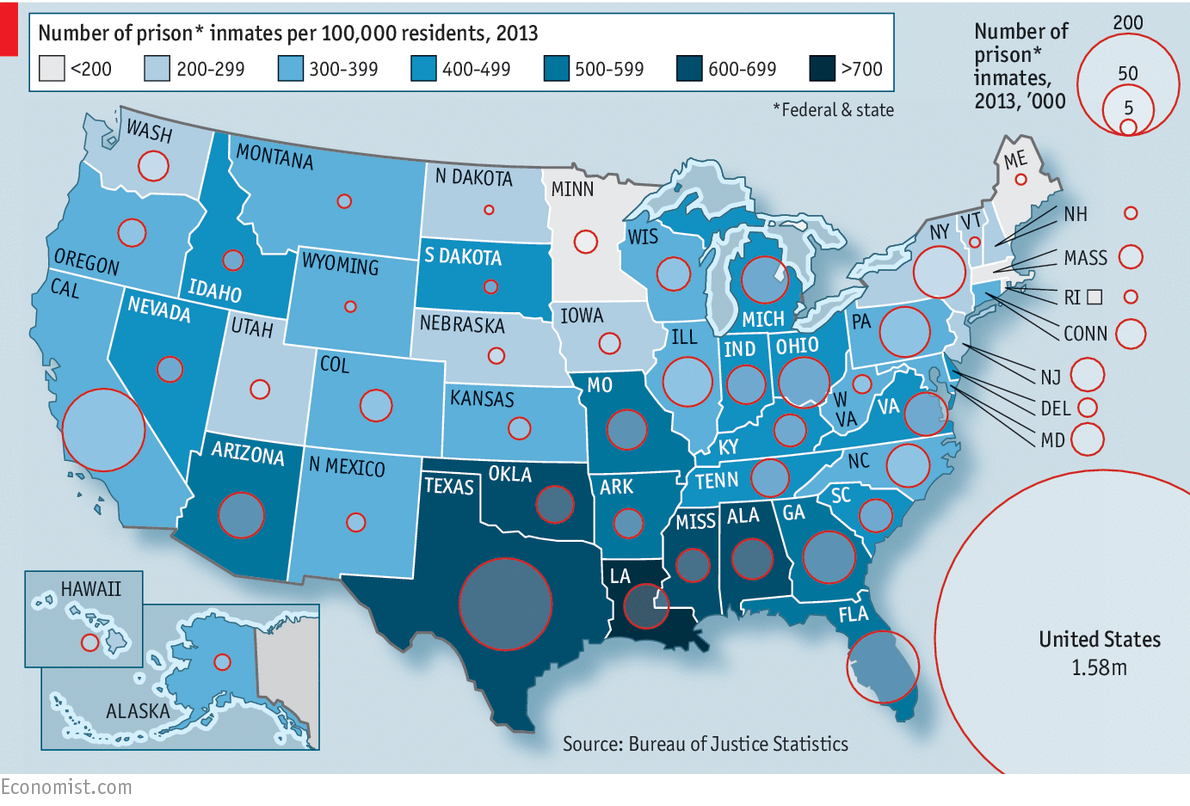
The Economist leads with an article titled "American prisons: The right choices".
No country in the world imprisons as many people as America does, or for so long. Across the array of state and federal prisons, local jails and immigration detention centres, some 2.3m people are locked up at any one time. America, with less than 5% of the world’s population, accounts for around 25% of the world’s prisoners. The system is particularly punishing towards black people and Hispanics, who are imprisoned at six times and twice the rates of whites respectively. A third of young black men can expect to be incarcerated at some point in their lives. The system is riddled with drugs, abuse and violence. Its cost to the American taxpayer is about $34,000 per inmate per year; the total bill is around $80 billion.That $80 billion is of course only the cost of running the prisons payed by taxes. It does not include the an estimate of the human cost of the pain and suffering of the prisoners in the U.S. who would not be in prison had they lived in another country, nor the cost to the economy of the lost productivity from the folk who are in jail but should not be, nor of the loss of productivity from the folk who have been released but can not work due to their "criminal record".
The black states in the map shown above are mostly in states that once were Confederates in revolt against the Union. So you see a relationship between high state incarceration rates and high rates of incarceration of black and Hispanic people?
Saturday, March 28, 2015
The U.S. Exploring Expedition
 |
| Source |

- Here is The New York Times review of the book.
- Here is a long video with Philbrick discussing the expedition.
- Here is the Harvard University Library open collection of online materials on the expedition.
Science and Technology
The Exploring Expedition (Ex. Ex.) took place at a time when modern science was in its infancy in Europe and was hardly known in the United States. The emphasis of the time was, I think, on learning about the world we live in at a rather practical level -- what were the plants and animals, how did they come to be; where was the land, what was it like, how did it get that way, and how was it changing in real time; what were the other natural resources, how abundant were they, and how could they be used.
From the point of view of many of those who sponsored the Ex. Ex., its primary purpose was charting the reefs and islands of the Pacific. U.S. whalers and sealers roamed the seas in search of their prey; they provided vital raw materials for the industry of the time, were an important economic activity of the nation, and had come to dominate an international industry. However, whalers were being lost in the uncharted waters of the Pacific. The Ex. Ex. would charted the waters off the Oregon Territory -- something important in the dispute between Britain and the USA over the border between Canada and the United States. It would chart San Francisco Bay, and it would chart 1500 miles of the coast of Antarctica. It also appears to have charted parts of the South American coast, notably the dangerous waters of Cape Horn. Apparently the charts were fully state of the art for the time; while the quality of the effort in Antarctica was not fully appreciated until the 20th century, others were widely used for considerable time; the chart of Tarawa, the site of an important battle during World War II, was still the best available in 1943. There were 241 nautical charts made in total.
There were important scientific findings by the small group of scientists included on the expedition.
- It was observed that volcanic island chains seemed to be located in straight lines, with the most active volcanoes at one end of the line and the most weathered at the other end; this would prove an important clue to the phenomenon of the shifting of tectonic plates.
- Three coral reefs were observed at different geological ages, showing the pattern predicted by Darwin -- as time passed, the land under the island and reef subsided, and the corals grew. Eventually this would lead to a situation in which there was a coral reef surrounding a lagoon, but no island. This was the first and an important confirmation to Darwin's hypothesis.
- And of course, the discovery that Antarctica was a continent -- to which several explorers and expeditions of several countries contributed -- was a significant advance.
- The expedition created a considerable ethnographic collection, including dictionaries of several of the languages of the Pacific Northwest and Micronesia. These I suppose had considerable value as they predated many of the contacts of the native speakers with other cultures,
On return to the United States in 1842, Charles Wilkes, the commander of the Ex. Ex., led a successful effort to gain public attention for the work done during the four year voyage. He began with a talk on the expedition that was attended by some 400 people, including at least one key Senator and one cabinet officer. The collections made by Ex. Ex. far exceeded in volume those of previous expeditions. A major exhibition of objects that had been collected was put on display in the Patent Office, where it remained for 15 years, drawing 100,000 visitors per year. Collected plants were also put on display in a nearby greenhouse, and later in a larger structure near the Capitol. A five volume report of the expedition was published, which went through some 15 editions before the Civil War. Following that, a number of books were published until the Civil War containing individual reports on the scientific and technical findings of the expedition (making the point that it takes time for scientists to fully study the materials and data that they collected before reporting the results).
 |
| The U.S. Patent Office (now used as gallery space) |
 |
| United States Botanical Garden |
While Smithson had bequeathed the equivalent of some $11 million to the United States, by 1842 the appropriate use for the funds had not yet been determined. It was decided in the mid 1850s that the funds would be used to create what is now the Smithsonian Institution to serve as a research facility and as a repository and display place for the nation's scientific and other collections. The collections from the Ex. Ex. were moved there, and their display revised. Thus the Ex. Ex. was an important element in the creation of the Smithsonian Institution as well as of the United States Botanical Garden. It was also important to the creation of the United States Hydrographic Office and the Naval Observatory.
Perhaps most important, the Ex. Ex. marked a point at which the federal government recognized that support for science and technology would be a fundamental part of its function, and began to regularly allocate funds for that purpose. The many government sponsored exploring missions that would soon open the west benefited from the legacy of the Ex. Ex., as the Smithsonian and the American scientific community benefited from those expeditions.
Before the Ex. Ex. there were Americans who did science. Benjamin Franklin is perhaps the outstanding example, but Benjamin Thompson was also an important American 18th century scientist, less known here because he was a loyalist who did most of his important work in Europe after having left America as a result of the revolution. Joseph Priestly moved to the United States after the Revolution. William Bartram was an important 18th century American naturalist and botanist. Even John James Audubon can be seen as an ornithologist (although his work was done in the early 19th century). John Bartram was an early but internationally known botanist. Thomas Jefferson, that polymath, certainly had scientific interests. Even Lewis and Clark, and their famous expedition early in the 18th century can be seen as scientific, even if its science was not published and its collections not maintained. However, author Philbrick tells us that before the Ex. Ex. an American could not make a living doing science. After the Ex. Ex. it became possible to earn one's bread and have a career as a scientist.
 |
| The Route of the U.S. Exploring Expedition |
The Adventure
A strong point of Sea of Glory is its description of the adventure lived by the officers and crews of the ships of the Ex. Ex. It might seem obvious that people who sailed around the world from 1838 to 1842 -- in the small wooden sailing ships of the time -- lived had an adventure. Author Philbrick's book makes it clear that the facts of the journey were more than most of us could have imagined.
Traversing the cape at the southern extreme of South America was perilous for sailing ships, but the Ex. Ex. not only sought to get past the dangerous shores and terrible weather, but also to chart the area. One of the ships of the Ex. Ex., the Sea Gull, was ordered to meet with the remainder of the squadron at Valparaiso after the charting of Cape Horn had been completed. It failed to arrive, and is assumed to have been lost with all hands aboard. This was one of the two smallest ships of the expedition, chosen specifically for its utility in chart making.
Antarctica is completely surrounded by ocean and not only is it very cold, but the topography makes the weather especially fierce. Three ships of the Ex. Ex. were ordered to pass through that ocean in order to seek out land on the Antarctic continent, and if land could be found to chart a significant stretch of that land. In order to do so, the ships had to find a path through a barrier of ice, and when they did so it was through a channel jammed with icebergs of various sizes. The charting then was done with frequent storms that threatened to drive the ships against the lee shores. Think about dealing with a violent storm, at night, with icebergs looming out of the dark, in ships not made for such duty, with the sure knowledge that death would follow for the crew of any wrecked ship -- adventure enough for anyone. The Ex. Ex. charted some 1500 miles of the Antarctic coast under such conditions.
In the Fiji Islands, the charting was done under threat by hostile Fijian natives who were cannibals. In one encounter, members of the crew of the flagship were killed. The men of the Ex. Ex. retaliated brutally, utilizing the superior weapons of their warships.. Still, sailing in uncharted waters with hidden reefs, beset by cannibals again should be adventure enough for anyone.
In Hawaii, it was decided to establish an outpost on the top of the tallest volcano -- more than 13,000 feet in altitude. The snow covered higher altitudes were so cold that the Hawaiian natives helping to carry supplies and the scientific equipment had to be sent back, to be replaced by a significant portion of the ship's crews. The climb up the huge volcano was itself difficult , especially for men who had been at sea for many months and had perhaps lost the physical conditioning appropriate for such exertions, Moreover, the volcanic surface over which they climbed made the climb difficult and tended to destroy shoes (and the feet of the unshod native Hawaiians). Arriving at the top, the explorers built a village to withstand the cold, and stayed for days to complete their measurements. In the process they encountered hurricane force winds that were icy cold. They also braved the dangers of a very active caldera of the volcano as part of the exploration.
As the Ex. Ex. charted the shores of North America, it was decided that the ships should sail some distance up the Colombia River. Where the flow from the huge river meets the sea with its tides and large waves, the channel is especially dangerous. With sand banks and shoals, not to mention very high and violent surf, this is still judged to be one of the three most dangerous river entrances in the world; some 2000 ships have been lost attempting to pass the mouth of the Colombia. One of the larger ships of the Ex. Ex., the USS Peacock, ran aground attempting the channel, and was battered to pieces. One small boat managed to make several trips to the Peacock to remove the crew and carry it so safety.
Starting with five ships (one of which was sent home early in the voyage), two were lost at sea; and one was replaced as untrustworthy for the remainder of the voyage; repairs on ships were made at several ports during the voyage. There was turnover among the members of the expedition, but the company that started with just over 350 men had 28 die during the voyage; many more were injured or ill over the four years.
Discord
Sea of Glory seems to emphasize discord among people involved in the expedition. That discord was evident in the years of negotiations it took to approve and fund the effort, and in the years that followed as high government officials sought to blame rather than praise the members of the expedition. Originally authorized under Andrew Jackson's administration, the expedition returned in 1842 under the Whig administration of John Tyler to a less than friendly reception.
 |
| Charles Wilkes |
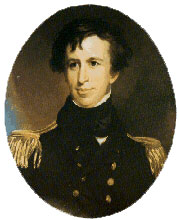
Much of the book seemed to me to be devoted to the discord between Charles Wilkes, the commander of the Ex. Ex. and a group of the officers serving under him. Since Wilkes brought these officers to Courts Martial after the voyage, and since they testified against him in his own Court Martial, the discord is on the record -- more so since it is documented in memoirs of the participants and in letters and journals that the kept at the time.
I found it hard to understand the situation at the time. This seems to have been a time when the discipline considered appropriate for navy ships at sea was changing. Navy discipline had been very brutal in the 18th century, was less so by 1840, but was then still far more brutal than today. Wilkes, quite young and very inexperienced for the magnitude of the command of the Ex. Ex., used his authority forcefully, but was judged not to have exceeded that authority (with one exception) by the senior officers serving as his judges during his Court Martial.
The voyage also took place after a relatively long period of peace since the war of 1812. In 1838, few young men were being accepted as midshipmen and promotions for officers were few and fat between. The officers of the Ex. Ex. were almost without exception young, relatively junior officers; they were worried about their careers. Many would be given responsibility during the Mexican American war, and gain affluence and senior rank in the Civil War when the navy was greatly expanded, but that was in the unknown future as of 1842.
So we have young officers, frustrated by lack of career opportunities, cooped up on sailing ships for years at a time, often under profound stress but also very bored some of the time. While many senior officers had turned down offers to sail with the Ex. Ex., these young men -- often chosen for their unusual experience in marine surveying -- accepted challenges that they may not fully have understood.
While author Philbrick justifies his portrayal of discord among officers in the expedition with notes on his sources, and while there were not and could not have been independent observations of the interpersonal relations, I was unsatisfied by this aspect of the book. It was for me rather like an overlong exposure to the comic strip Dilbert.
The Narrow Leadership Class
I was struck in the book by how many of the principle characters were drawn from what must have been a small aristocratic class. President William Henry Harrison (who died after a month in office in 1841) was not only from a distinguished Virginia family, but was the grandfather of President Benjamin Harrison. Senator Thomas Hart Benton, whose father was wealthy, married into a distinguished Virginia family and was the father-in-law of John C. Fremont; Thomas Hart Benton, the painter was his Great-Nephew.
Charles Wilkes was himself from a well known family. His aunt was Elizabeth Ann Seton, and she took care of him for some time after the death of his mother; known as Mother Seton, she was the first American to be declared a saint by the Catholic Church. Wilkes Henry, a young midshipman on the Ex. Ex., was Charles' nephew; he was killed in the Fiji Islands. James Renwick Jr., another nephew, was the architect who designed the first building of the Smithsonian Institution -- the Castle; hes work is very well known in the nation's capitol as he also designed the Corcoran and Renwick Galeries. Wilkes and his wife eventually became influential members of Washington society, living in the house on Lafayette Square once occupied by Dolly Madison/
 |
| Portrait of George Washington by Charles Wilson Peale |
Among the scientists on the expedition. James Dwight Dana came from a distinguished New England family; his cousin, Richard Henry Dana, at roughly the same time as the Ex. Ex., was making a voyage to California that he described in the memoir, Two Years Before the Mast, which is still in print. Titian Peale was a member of the Peale family of artists, the son of Charles Wilson Peale.
Final Comments
I found this book most interesting. I have a long standing interest in science policy, and this book told me about events in the history of science policy in the United States that I had not even suspected. It strongly makes the case that the Ex. Ex. was a seminal event in the growth of science in what has been for many years the strongest scientific power on earth.
I think almost anyone will enjoy the book. The adventure alone will carry most readers to another time. It is a book in which brave men travel to distant, exotic places.
The book portrays a time in which the history of the United States is little known nor understood. The nation still faced toward the sea, and its population was still concentrated on the Atlantic side of the continent. It was transforming itself from its former colonial status to the international power it would become. Modern institutions were being created. Sea of Glory tells a part of the story, and tells it well!
Tuesday, March 03, 2015
If the Congress Doesn't Legislate, the President Can't Veto

The Economist shows us that the number of bills passed by the Congress has decreased over the last half century, but the last Congress set a record. Obama is setting a record low rate of vetoing, but then he has very few bills passed by Congress that to veto.
Friday, February 13, 2015
People in Many Countries are Dissatisfied With Their Government

I quote from an interesting article from the Pew Research Center:
People in emerging and developing countries around the world are on balance unhappy with the way their political systems are working. A recent Pew Research Center survey finds that, across 31 emerging and developing nations, a median of 52% are dissatisfied with their political system, while 44% are satisfied.......
Political satisfaction is frequently related to economic attitudes. Countries where the economic mood is negative also have high levels of unhappiness with the political system.......In every country surveyed, people who describe the current economic situation as bad are especially likely to express dissatisfaction with their political system.
In addition to being dissatisfied with their political system, a median of 64% across the 34 emerging and developing nations surveyed say that higher-income people have too much influence in their political system.These statements correspond to my intuition, but there is a big difference between what I might think and what capable researchers conclude from the data that they have concluded. Check out the article itself with its interactive graphics.
Sunday, December 07, 2014
Americans Don't Seem to Trust Their Government Very Much
 |
| Source |
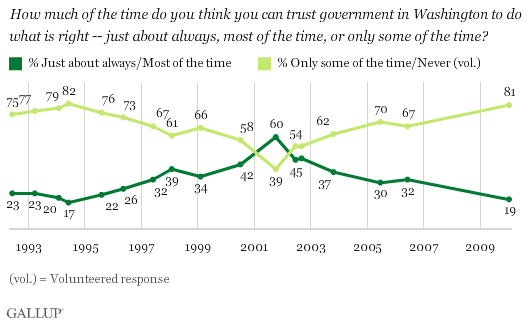
Trust in government has been low over the two decades shown in the graph. It increased in the Clinton administration, peaked in 2002 as the government organized a response to 9/11, and decreased thereafter going to a low value early in the Great Recession.
The legislative branch is producing less legislation these days than in previous decades. Perhaps that is reflected in the falling confidence levels. The massive use of negative advertising in election campaigns, and the rise of cable news networks that are often on the attack may also explain some of the fall in confidence in government.
The results shown in the publication shown don't disaggregate data by specific function. Perhaps there is more confidence in some functions than in others. For example, I have considerable confidence in NIH, CDC, and the statistical offices of government. I have less confidence in some other agencies.
Monday, December 01, 2014
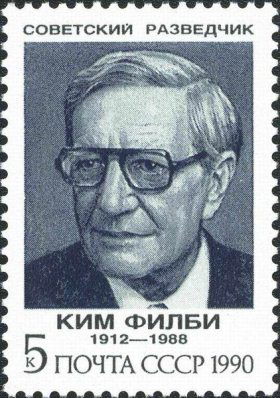
Kim Philby: A Spy Among Friends

Kim Philby was perhaps the most famous double agent of the 20th century, working for Britain's MI6 while also a spy for the USSR. The book seeks to describe Philby and how he could successfully lead such a double life. It also seeks to understand MI6, the British counterpart to the CIA, and how Philby could survive successfully for so long without being caught out by British and/or American intelligence.
Philby was recruited by the Soviets in the early 1930s. He was one of the "Robber Barons", a group of young Englishmen recruited for British Intelligence at the beginning of World War 2. He was a rising star in MI6 when he was implicated in the successful escape to Moscow in 1951 of Burgess and MacLean, two Soviet spies who were British diplomats. His role in the "Cambridge Spy Ring" was not proven at that time, but he was forced to resign from MI6 in 1951 (apparently he also became inactive as a Soviet spy at that time). In 1956 he was reemployed by MI6 as an agent in Beirut, under cover of a foreign correspondent (and apparently was reactivated as a Soviet spy). By 1962 new evidence had developed further implicating Philby as a Soviet spy; he was interrogated and made a partial confession. He then fled to Moscow where he was well treated as a valued long term agent for the Soviets.
Who Was Kim Philby?

Part of Macintyre's answer is that Philby was a charter member of the English establishment, wealth, son of a distinguished and well connected father, educated at Westminster School (one of the posh public schools) and Cambridge University. He was tall and thin, handsome and apparently charming; he dressed well. He was sufficiently competent as a journalist to become a credible foreign correspondent in the Spanish Civil War, with the British Expeditionary Force before Dunkirk, later in France until its surrender to the Germans, and much later for The Observer and The Economist in the Middle East. He was sufficiently competent in his work for British intelligence to rise quickly in MI6, and was an exceptionally important agent for the USSR. He also drank to excess, sometimes disrupting dinner parties with drunken remarks and apparently later in life often drinking to the point of passing out.
Philby married a Communist woman in 1934. After they separated, he began began a long term relationship with another woman, one who was mentally ill, and they had five children together; they were not married until after the war, when he finally divorced his first wife. Later, when he had moved to Beirut, he had an affair with a colleague's wife; when his second wife died and his lover divorced her husband they were married -- his third marriage. After he defected to Russia, although his wife had joined him there, he had an affair with MacLean's wife. His third wife divorced him, and MacLean's wife left him. Finally he married a much younger woman and lived successfully with her in Moscow. He seems to have retained good relations with his children.
Author Macintyre also suggests that Philby had an exceptional capacity to get others to like and trust him, at least others who shared his social background. It seems credible that he in turn believed that many of the people he was in fact betraying were truly his friends.
How Could He So Fool British and American Intelligence Agencies?
There apparently was no real background check before he was recruited for the British government early in World War 2. His father was well known, he was of the right class, and it appeared that the people responsible for his entry could not conceive of his being a Soviet spy. Had they considered his early socialist leanings and his activities in the Great Depression, his marriage to a communist, and his work to extract communists from Nazi Germany before the war, they might have wondered. Indeed, he had also been associated with Nazi related organizations, and Nazi Foreign Minister von Ribbentrop had provided Philby with a letter of recommendation to Franco's Spanish government -- which might have made them wonder if he would be a Nazi double agent.
Clearly the British were desperately trying to expand the size and activities of their intelligence agencies during the war, adding both deception and sabotage to their charter. The failure to uncover Philby's past might have been simply due to a decision to put limited resources to other uses. The U.S. OSS was brand new and was seeking to learn the craft of intelligence from the British. OSS operatives were in no position to challenge Philby during the war.
After the war, Philby's history (described above), his drinking, and perhaps womanizing might have raised concerns. Certainly his association with Burgess (who lived in Philby's house in Washington) and MacLean did. The FBI and MI5 (roughly the British equivalent to the FBI) were very much concerned. However, MI6 was unable to make a convincing case against him in 1951, nor was the CIA. Macintyre suggests that the FBI and MI5 were staffed by more middle class officers, and that they did not have the upper class, club like atmosphere he feels characterized MI6 at the time, especially among the "Robber Barons" who had served through the war together and formed strong interpersonal bonds.
Macintyre suggests part of the explanation was the inability of Nicholas Elliot of MI6 and James Angleton of the CIA to believe Philby was a communist nor a Soviet spy. Both were personal friends of Philby; Elliot was English of the same social class and Angleton was educated in England and is depicted as an Anglophile. Both are depicted as having difficulty in believing someone apparently so like themselves could have such fundamentally different beliefs. or could behave in a way that they found so unimaginable for "one of themselves".
Macintyre suggests that in 1956 Elliot, then "a grandee" of MI6, was almost solely responsible for bringing Philby back into that organization. Perhaps the lack of checks and balances in the hiring process within MI6 was partly responsible, or perhaps the lack of need for the foreign intelligence services to clear recruitment of agents abroad with the domestic intelligence services.
Problems With Any Such Book
It is always difficult to reconstruct the past, and Ben Macintyre is a journalist rather than a professional historian. He perhaps lacks some of the tools of the professional, but even the most consummate historian would have difficulty with this topic. Angleton destroyed records of his interactions with Philby; MI6 will not release its Philby files; the Soviet files that have been released by the Russian Federation may not be fully trustworthy. The secrecy of the intelligence services suggests that there would be few contemporary useful public records to shed light on Philby and his career.
Macintyre was necessarily selective in what he wrote. As we look at succeeding generations of writers dealing with the same moment of history, we know that they choose different items to feature in their texts, supporting different points of interpretation and different purposes for their works.
Sometimes, in this book, Macintyre seeks to imagine what was going on in someone's mind that he should have behaved as he did at a given time; we think with our brains, and are not always fully aware of why the brain comes to the decisions it does. Even if Philby, Elliot, Angleton and others in the book were so aware at the time, they might later not recall correctly. Like all people, these people can not be assumed to be trying to tell the exact, unvarnished truth, but unlike most people, these are professional intelligence officers trained in deception; their memoirs are not to be fully believed. The author picks and chooses which stories to credit, which to reject, which to accept as modified, and he may be wrong.
What I Thought of the Book
Think of the times and places of Philby's life: a child in India during the British Raj, a boy in one of the great public schools of England between the wars, a student at Cambridge during the Depression, in love with a Jewish communist in Vienna in the 1930s helping political refugees escape from burgeoning Nazi persecution, infiltrating Nazi organizations in Europe before the war, covering the Spanish Civil war as a foreign correspondent, covering the British Expeditionary Forces in France before Dunkirk, covering France in the last days before surrender to Germany, running spies in Spain and Portugal during World War II, playing the double game in Istanbul in the late 1940s, spying in the heady social atmosphere of diplomatic Washington (1949-51), living in Beirut and covering the Middle East as a double agent and foreign correspondent in the late 50s and early 60s, and even as an honored former spy in Moscow through the later years of the Soviet Union. Author Macintyre was not trying to portray these fascinating places, times and activities, but I could not help trying to imagine them.
Why was Philby not caught? I tend to assume incompetence or an overloaded bureaucracy letting something important "slip by". Perhaps Macintyre is right that the culture of Philby's stratus of English society (that was running MI6) was responsible for his success. Macintyre also suggests that the Robber Baron's who fought the spy war for Britain and the USA during the war had a comradery that required them to "guard each other's backs"; it seems intuitive that such a loyalty might have existed and would have made it very difficult for Elliot and Angleton to believe in Philby's treachery or to vigorously prosecute him. Whatever the reason that he got away with spying for the Soviets for so long, I suspect that the conditions in the intelligence agencies are much different now. (Intelligence now seems much more a matter of technology, agencies much more established bureaucracies with a far more complex structure, staffed by professionals with a wide variety of skills and backgrounds, with much more developed systems for vetting staff and guarding against penetration.)
The bottom line is that A Spy Among Friends is an interesting book, a page turner, that made me wonder and think about espionage, the diversity of human experience, and interesting times and places! I enjoyed the book!
Wednesday, September 17, 2014


Friday, August 08, 2014
Interesting data on the U.S. federal government workforce.
 |
| Source |
I would note that a president in the first year of his first term heads a government with a budget negotiated by his predecessor. The graph shows, interestingly that under the administration of conservative Republican icon Ronald Reagan, the federal government bureaucracy increased as a percentage of the U.S. population. I has decreased in percentage of the population in the Obama administration after the first year. Perhaps Obama is not the big government Democrat some people think him to be.
Sunday, May 11, 2014
A thought about expertise and government in modern society
The scientific and technological revolutions of the past couple of centuries has made expertise more and more useful and necessary.
There is an average of 87,000 airplane flights per day in the USA. A third of these are airline flights, most of huge planes with many passengers. Yet there are few crashes and very few deaths per mile traveled. In part this is due to the huge effort made over decades to make the aircraft themselves safe. In part it is due to the air traffic control system with its radars, computers, and highly skilled people. The safety is the result of expertise of the designers, builders and operators of the planes and air traffic control system.
The electrical grid of the USA and the generating capacity based on fossil fuel, hydro and nuclear as well as renewable generation plants obviously has required expertise of the highest order.
Walmart with more than 11000 stores and 2 million employees obviously requires expertise in marketing, logistics, purchasing, and other management functions. So too all the successful large multinational corporations require expertise in their management.
The modern U.S. military in battle involves coordination among ground, air and naval forces. Vehicles all carry computers, and there is a complex system providing remote sensing data on the battlefield. Weaponry is highly complex. Again, experts have been involved in creating and operating the systems involved as well as in there various components.
Today your doctor is obviously a certified expert. He/she is supported by an amazing array of complex imaging equipment and radiologists to interpret the images. So too, the doctor is supported by a complex laboratory capable of rapid analysis of many different kinds of samples. The doctor has at his/her disposal thousands of pharmaceuticals of demonstrated effectiveness and safety. There are surgical suits with complex equipment and highly trained experts working as teams to provide curative interventions. Again, the health care system is a highly complex one, built on an amazing variety of expert services, including expert management of hospitals, medical schools, etc.
I could go on and write about many other systems today that demand expertise -- the management of financial institutions, telecommunications, weather forecasting, scientific research, farming, mining, forestry, higher education, and on and on. Modern society differs radically from that of the founding fathers, or indeed that of Abraham Lincoln in that its technological systems are far more elaborate and far more dependent on expertise. This is true too of its institutions, such as its financial markets or police and courts.
The people in government (legislators, executive branch policy officials) who make the laws governing all these (and other) expert systems are not experts in the technology that they oversee. Indeed, they are politicians. Their own field has areas of expertise as politicians -- fund raising, polling, public speaking, managing campaigns. They also have expertise in the art of legislation and the management of bureaucratic organization. Without these forms of expertise they can not obtain and hold office, nor fulfill the duties of the offices they hold.
People are limited. Why would one expect someone who is a good enough politicians to get elected to Congress, and a good enough legislator to exercise influence in the Congress, also to be expert on foreign policy, or medicine, or telecommunications, or ........
Another difference of today's society from that of the founding fathers is geographic scale. Of course in 1775 there was trade between the British colonies and Great Britain, but nothing like the global trade of today. Finance flows globally today, as does communications. We have satellite remote sensing that provides data to our computers that synthesize global images of the environment. There is medical tourism, movies and television programs that go international, airlines fly around the world...... The technological systems are not only vastly more complex and demanding of expertise, but also more global. Yet the governance not only fails to have the expertise in the technology, but it is limited by the geographical imagination of people 200 years ago.
Saturday, April 12, 2014
Two on taxes from today's FB input. Just to make you feel bad before the 15th!

(C)onsider that four of the largest tax expenditures in the tax code – the preferential rate on capital gains, the home mortgage interest deduction, the deduction for property taxes, and employer-provided health care -- overwhelmingly benefit the richest 1 percent, who receive nearly a third of these benefits. Middle and low-income households get less than 5 percent of them. Last year, people making more than $1 million saved $96,000 on their taxes because of them. The poorest fifth of income earners saved less than $5.
Capping these tax breaks at what the typical family saves from them would generate several hundred billion dollars a year -- which could be used for education, infrastructure, and reducing the public debt. Why won’t Republicans accept this? Why aren’t Democrats pushing for it?I have long thought that there should be a cap on many kinds of deductions. Why is it good public policy to encourage people to take on huge debts to buy mansions? While I think it makes sense to consider the current value of past investments while calculating capital gains, I don't see why it is good public policy to provide incentives for taking profits from investments after a year or two.
A Washington Post article was shared on Facebook today, dealing with a new plan by which the federal government will "reclaim" old debts by impounding income tax refunds.
Across the nation, hundreds of thousands of taxpayers who are expecting refunds this month are instead getting letters.........informing them that because of a debt they never knew about — often a debt incurred by their parents — the government has confiscated their check.
The Treasury Department has intercepted $1.9 billion in tax refunds already this year — $75 million of that on debts delinquent for more than 10 years, said Jeffrey Schramek, assistant commissioner of the department’s debt management service. The aggressive effort to collect old debts started three years ago — the result of a single sentence tucked into the farm bill lifting the 10-year statute of limitations on old debts to Uncle Sam.In theory, the government should be able to prove that such a debt existed, and that the person from whom they collected the debt was indeed liable for it. The government position seems to be "possession is nine-tenths of the law" and we have the money. Apparently money is being collected in payment of debts that the government can not document. It is being collected from children of the persons who are claimed to have incurred the debts, without proof that the children in fact benefited from the funds. The feds are impounding the tax returns without prior notification. In one case described in the article, more was impounded than was owed by the tax payer's parent.
Taxes are due by Tuesday, April 15th. Enjoy the weekend!
Friday, January 31, 2014
Waxman, Berman and Miller -- we will miss their leadership

During a congressional career that began when Gerald R. Ford was president, Waxman became one of the Democratic Party’s most prolific and savvy legislators, focusing on issues related to healthcare and the environment. He played a central role — sometimes over opposition within his own party — in passing laws that dramatically cut air pollution, helped reduce smoking, expanded Medicaid coverage for the poor, reduced pesticides in food, made generic drugs more widely available, helped AIDS patients, promoted the development of drugs for rare diseases and improved federal regulation of nursing homes.

He is a liberal who has lent important support to Israel, consistently votes to protect the environment and has delivered for his district. He has served California in Congress since 1982 and enjoys considerable seniority, serving as the ranking Democrat on the House Foreign Affairs Committee and the second-ranking Democrat on the Judiciary Committee. Those positions give Berman broad influence; he is one of Congress' most highly regarded foreign policy lawmakers and is a leading voice on intellectual property issues, a topic close to the heart of his constituents in the entertainment industry. Finally, though he has a long record of bipartisan achievement, he is supported by the overwhelming majority of the California Democratic congressional delegation, including both of the state's U.S. senators, as well as by Gov. Jerry Brown.

Nancy Pelosi’s strong right arm and one of the top Democratic legislators of his generation, is stepping down at the end of this year after four decades in Congress........Miller was a player in the passage of the Affordable Care Act of 2010 as well as the No Child Left Behind Act of 2002 backed by then President George W. Bush and the future Speaker John Boehner. Miller helped write the last minimum wage increase with Kennedy in 2007, and through the years used his committees as a forum to highlight worker safety conditions in the coal, oil and apparel industries.Having grown up in Los Angeles in about the same time as Waxman and Berman, and having attended the same schools, I feel some real linkage with them. I went to school at Berkeley for a couple of years, and that helps me to feel closer to Miller than I might have, since he grew up and was schooled in the Bay area.
We were all of an age to have been affected by the music of Pete Seeger and Joan Baez. As young men we all would have heard John Kennedy tell us to ask not what our country could do for us, but what we could have done for our country; we saw Martin Luther King lead a great crusade for human rights, and heard Bobby Kennedy speak on the evening of King's death. No wonder these politicians became active in Democratic politics in the 1960s, as did I.
Waxman and Miller came to Washington in the 1970s (as I did, to work on international development as a federal employee, and thus unable to participate in politics); Berman came a few years later. We all spent a great deal of our adult lives here.
The Congress has lost three liberal leaders, who have had great influence in health, environmental, foreign, and educational policy. I personally will miss knowing that they are in the Congress fighting the good fight. I fear the nation will miss their leadership, and their ability to work across the isle to advance a legislative agenda that the nation needs.
Saturday, January 04, 2014
A thought about ICT and Government
Did Computers make gerrymandering calculations and complex elections more feasible, and thus lead to a serious disruption in state government and the operation of the House of Representatives?

Maryland has 1,787 voting precincts, 8 Congressional districts, and 47 legislative districts (some of which are further divided into districts electing one or two delegates to the House of Delegates). After the results of every census, the districts are redefined. Agreement of both houses of the legislature and the governor is required for passage of the new district definition. In some cases, the courts also have to approve the plan to assure that it is consistent with the Voting Rights Act and other national legislation.
Each party seeks to achieve party ends in the definition, notably by defining districts to maximize the number of its members elected to the Congress and to the state Senate and to the House of Delegates. On the other hand the definition of districts must maintain comparable numbers of citizens in comparable districts. It may not construct the districts in such a way as to reduce the ability of racial or ethnic minorities to elect representatives. Moreover, districts group precincts that are more or less closely located geographically.
The process is then to take the census data and combine it with voter registration data by party and voting data for recent elections, all disaggregated by precinct. Then working from the previously approved allocation of precincts to districts, move precincts in to and out of districts to achieve the desired political purpose while respecting the legal requirements on redistricting, and not making the districts look too odd.
Gerrymandering
In general, a party in power in the state will try to arrange districts so that it will try to define districts so that it enjoys a modest majority in as many as possible of the districts. These will be safe districts. If it can move some precincts that have shown a strong party majority into another district in which its candidates have not been safely reelected, while retaining a reasonable majority of its party voters in the original district, it will do so.
In obtaining a maximum of districts with modest but safe expected majorities for its party, it may tend to define a few districts that have large majorities for the other party -- thus being very safe for the other party's officials in those districts.
During Elections
The district definition has to be such that elections can be conducted. For example, sample ballots have to be developed. The sample ballot for each of the 1,787 precincts has to have not only the candidates for statewide offices, and for the Congressional and state legislative districts to which the precinct belongs, but also to all the country and city governments and all the non-partisan districts (such as judiciary or school board) to which that precinct may belong.
The voting machines in the district will have to be programmed for the same votes, and each registered voter in the precinct will have to receive by mail a copy of the right sample ballot. When voting is completed, the votes from the 1,787 precincts will have to be tallied in a timely fashion, and the winners of each election determined.
The Role of Information and Communications Technology
In high school, in 1954, I volunteered to spend the night in the Los Angeles City Hall working on the tabulation of the election results. That was the time of punched cards and tabulating machines, but before computers. There was a mob working to receive precinct results, store them appropriately, and pass the information to where it could be key punched and tabulated. Modern politics would not have been possible with that technology, technology which was state of the art 60 years ago.
Today in redistricting, politicians enjoy computers with information bases and geographic information system software which allow instantaneous visualization of the results of proposed changes in the location of precincts in districts. Indeed, with the support of ICT departments, they can program routines to test thousands of alternatives and select those meeting certain standards.
So too. computers have radically improved the ability of election officials to efficiently generate many different sample ballots meeting the needs of all their precincts, to program voting machines, to produce individualized mailings of sample ballots, and to tabulate ballots.
Thus improvements in computer technology have made it possible for a party in power to gerrymander districts far more elegantly and to more effectively achieve its competitive purposes.
The Results
37 states now have single party control of both the legislature and the governor, up from 20 in 1990. Once a party gains control of a state, it is likely to keep control of the state. Perhaps the greater technical ability to gerrymander for party benefit contributes to that single party control of state government and its continuity.
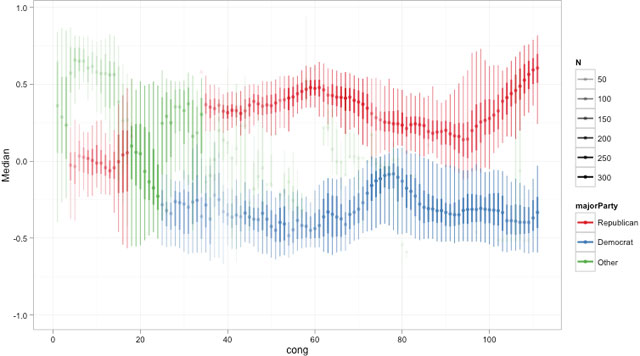
Only 62 of 433 representatives to the House of Representatives (14,5%) were elected by less than a 54 % majority in 2012. Most Congressional districts are safe for their incumbents and their incumbents' party. The party primary is increasingly more important than the final Congressional election. This has been deemed to be an important reason for the increasing ideological division within the Congress. Perhaps the greater technical ability to gerrymander for party benefit contributes to increased partisanship in Congress.
Ideologies of Members of Congress 1789 to 2010
 |
| Source |
An Aside
Not really related, but I note that speeches in Congress have used increasingly simple language (as measured by the grade level needed to fully understand the text) since 2006. The effect is especially visible in the 110th and 111th Congresses, during the crash that started the Great Recession and its aftermath. Impact of the economy, the Internet or both?
 |
| Source |
Sunday, December 15, 2013
Even a stopped clock is right once and a while.
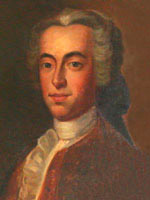
"There is nothing so easy as to persuade people that they are poorly governed. Take happy and comfortable people and talk to them with art of the Evil One, and they can soon be made discontented with their government, with their rulers, with everything around them, and even with themselves. This is one of the weaknesses of human nature of which factious orators make use of to serve their purposes." Thomas Hutchinson
 |
| Thomas Hutchinson |
I recently came across this polling result:
An AP-GfK poll conducted last month found that Americans are suspicious of each other in everyday encounters. Less than one-third expressed a lot of trust in clerks who swipe their credit cards, drivers on the road, or people they meet when traveling.
Americans' Trust in Government
 |
| Source |
Monday, November 25, 2013
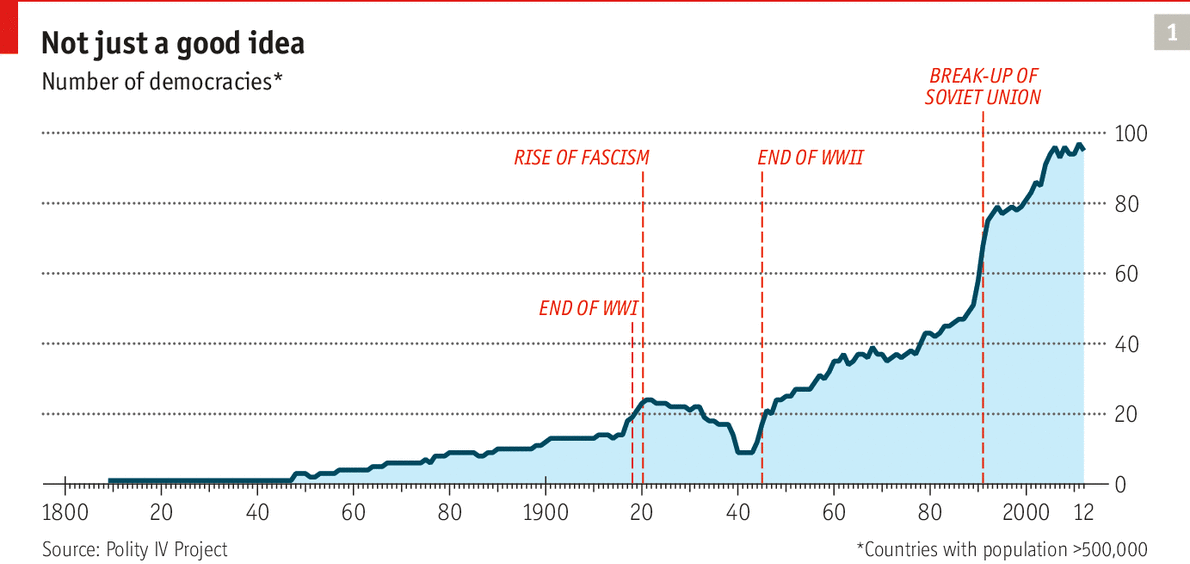
Thinking about the growth of democratic governance.
 |
| Source: The Economist |


Still, that idea of a government of the people, by the people, for the people seems to be gaining pretty wide acceptance.
If you look at the number of people living under democratic governments some democratic countries such as India and the United States are rather large. On the other hand, China is bigger still.
Subscribe to:
Posts (Atom)