Showing posts with label taxonomy. Show all posts

Saturday, June 22, 2013

Taxonomy is the basis of science.


One of the definition of culture is that it is the set of beliefs that you think are self evident, but turn out to be different from the beliefs held in other cultures; people in other cultures sometimes regard your own beliefs as strange and not at all self evident. Last night I watched "Two Spirits", a program from Independent Lens. The program took off from the hate killing of a Navajo kid, born male, who sometimes appeared as a boy and sometimes as a girl during his teen age years. The program pointed out that Native Americans had real problems understanding European American views on sex. The Navajo language for example distinguishes four genders: female, male, born female living as male, and born male living as female. But it is only one of a couple of hundred living tribal languages in the United States, and they too deal with gender differently one from another. It has taken English a long time to come to some kind of acommodation with GLTB as legitimate additions to male and female. Turns out that these may not be self evident concepts at all but deeply culturally determined classifications. Maybe, as the program suggested, it is better just to let people be people and not try to pigeonhole their inherent natures by some predetermined classification. Or at least, lets wait on the classification until we have some credible scientific basis for the one we use.

I have been reading about the Plessy vs. Ferguson decision of the Supreme Court -; the decision that established the acceptance of "separate but equal". The decision of course only could make sense if "black" and "white" were actually distinguishable conditions. The Supreme Court was undeterred by the fact, recognized in the decision, that different states defined the distinction between black and white differently. (Think of a train crossing a state line, and a whole group of passengers having to move from the "black" car to the "white" car because they were classified as "black" in the first state and "white" in the second state. Of course, the science has changed. We now recognize that every person, were s/he able to trace her/his ancestry back far enough, would find all of the ancestors of a generation to be Africans (or perhaps with one or two Neanderthals). What seemed to eight judges of the Supreme Court in the late 1900s to be a self evident classification (albeit fuzzy at the boundaries) turns out to have no scientific basis.

There are legitimate classifications of people that have significant benefits. For example, we seem to be pretty well able to divide students by the grade for which they are qualified in school, and putting kids into classes for which they are qualified seems likely to improve their educational outcomes. It makes sense to divide the world into doctors and non-doctors, permitting only doctors to perform certain medical tasks; to divide people into professional engineers and people who are not professional engineers, limiting bridge design to the former. Still, our culture is riddled with superstitious classifications and erroneous judgments made on the basis of those classifications.

Monday, May 20, 2013

Classification is the basis of science: science is the basis of modern medical technology


The Diagnostic and Statistical Manual of Mental Disorders, Fifth Edition will soon be the bible of clinical psychology and psychiatry. The Economist has devoted a major article to the DSM. I quote from that article:
The third DSM, published in 1980, introduced a new approach—also followed in the fourth in 1994. DSM-III acknowledged that psychiatrists had a poor understanding of the physiological cause of mental illness. Instead specific, observed symptoms became the diagnostic criteria, and clusters of them, known medically as syndromes, that appeared to coexist in individual patients were given labels. The hope was that biological markers of such syndromes would be discovered as physiological understanding increased....... 
The new DSM aspires to include objective criteria in its manual. It also seeks to scrap nonsensical, strict lines between certain disorders........ 
(A) group called the Psychiatric Genomics Consortium, which has looked for links between genetic variations and psychiatric disorders in tens of thousands of patients, has found that variations in four places were common to people diagnosed, using the DSM’s criteria, with attention deficit hyperactivity disorder (ADHD), autism, bipolar disorder, major depression and schizophrenia. Likewise, a series of papers over the past decade have shown similar abnormal activation of part of the brain called the amygdala in people diagnosed with anxiety, major depression and post-traumatic stress disorder.
Neurosctientists and clinicians specialized in mental diseases are seeking to develop a taxonomy that links symptoms and syndromes to specific malfunctions in neural structures and processes. To the extent that they succeed, they may hope to develop better diagnosis for mental disease and more effective treatments to prevent, cure and ameliorate mental illness.

I suspect that this effort and the effort to improve learning and mental performance will be an important area of technological innovation in this century.


Sunday, August 05, 2012

Knowledge starts with taxonomy


How has the development and dissemination of computer technology changed the way we organize knowledge? I end this post with an example postulated to explain how taxonomy can help communication.
Taxonomy:
  • the science of classification
  • a classification into ordered categories
In my previous post I shared a video that discussed the change in orientation of researchers from problems of simplicity, to problems of disorganized complexity, to problems of organized complexity. Let me address a related issue, the metaphor for the organization of knowledge.

The organization of fiction in a library is usually by the name of the author. Books are placed on the shelves in alphabetical order of the authors' names. Of course, the alphabetization is a tree structure, with the first branching being on the first letter, the next branching on the second letter, etc. The library transforms the tree structure into a linear order of books on the shelves.

The Dewey Decimal System provides a tree structure for the organization of books in a library. If you think about it, it also provides a way to map a tree structure on to a line. The numbers of the Dewey Decimal System divide the world of books into classes, subclasses, etc. They correspond to the tree structure described in the video. On the other hand, the books are arranged in rows on library shelves -- in a long virtual line.

Most households have relatively few books. The householder can organize his bookshelves as he wishes, and will recall the location of each book. It is relatively easy to put one's finger on any desired volume. It is only when you get to the library, with more books than one can easily place by memory, and in which there are many users and many people shelving books that filing must be systematized.

The library catalog then deals with the problem that our memories don't work according to the library system. We may recall a title or an author, and want to find the book. The library catalog was then a simple system that allowed a few kinds of searches to supplement the order of books on the shelves. One still found oneself going to the shelves if one wanted a book on the Roman empire or Italian cooking, looking within all the books of the category for the one that caught the eye.

I recall some 30 years ago when we got the first personal computer in our office. We were handling about 1000 funding requests per year, funding 50 or 60 of them per year, with a rapidly expanding inventory of current or completed projects. A computer data base allowed us to give proposals numbers that were in the simple sequence of reception, and file them by number. We could search the data base with an entry for each proposal and a field to describe the status to locate project numbers. We could easily list all the proposals from a given proponent, or from a given university, or a given country. We could identify all the funded projects from a given field of science. There were many, many ways that we could search the database which eventually included nearly 10,000 proposals. It seemed like magic at the time.

Of course, now with Google, we can search the vastly more complex knowledge stored on the World Wide Web conducting vastly more complex searches with much less specialized a priori knowledge about the structure of the information base we are searching. Google has developed a complex system to organize information and a complementary system to interpret our requests. (IBM's Watson software is another example of a complex software platform organizing information and responding to questions.) Google too seemed like magic a decade ago, and today seems routine.

The basic point is that computers and the Internet have added computational power to our world and allowed new ways to think about the structuring of knowledge.

An example: Drones

Medea Benjamin
I listened to a talk yesterday by Medea Benjamin on her book, Drone Warfare: Killing by Remote Control. It occurred to me that there are many categories that can be used in the description of drones. A drone in an unmanned vehicle. Here are some of the categories:

  • Is it areal, surface or underwater, or extraterrestrial? The book is about unmanned aerial vehicles, but we also have unmanned surface vehicles such as those used for bomb disposal. There are underwater vehicles run "by wire" used for deep water exploration in the ocean. The Mars rover is scheduled to land today.
  • Benjamin seemed to be especially interested in whether drones were armed or not. While most of the drones used by the military are for surveillance, and some are for disarming IEDs, she focused on those armed as attack weapons.
  • What is the purpose of the drone. Is it surveillance, or is it perhaps scientific. There are large numbers of unmanned devices providing information for oceanographers and meteorologists. If for surveillance, is the purpose to identify military threats, or to identify crop pests, or to assess damage resulting from a natural disaster such as an earthquake or hurricane?
  • What is the size of the drone. Unmanned aerial vehicles are now available from the size of an insect or small bird, to that of a large model airplane, up to the size of a manned plane. 
  • How long can the vehicle operate. There are now underwater vehicles that can operate for months at a time collecting oceanographic information. On the other hand, the small aerial vehicles carried in backpacks by soldiers for battlefield intelligence operation have rather short missions.
  • How distant is the human operator (assuming there is one) from the vehicle he operates? The predator drones used in Afghanistan are apparently operated from the United States. On the other hand, some drones are operated by ground personnel within sight of the drone.
What bothered me about Benjamin's talk is that she described the variety of sizes of unmanned aerial vehicles used by the military in Iraq, Afghanistan and Pakistan, and said that the vast majority of them were used for surveillance and intelligence, but then treated the subject as if all were armed and used as attack weapons. Clearly the vast majority are not armed and are not used as anti-personnel weapons. 

Classification is the basis of knowledge. It is important to define what you are talking about if your concerns are to be appreciated. Benjamin has legitimate concerns about the use of unmanned aerial vehicles as attack weapons to target and kill people in foreign lands. Those concerns would seem not relevant to the vast majority of uses of drones from military surveillance, and even less relevant to the use of drones for scientific purposes, disaster relief, environmental monitoring, or other applications.

In this artist's rendering, the Mars Science Laboratory Curiosity rover examines a rock on Mars. Interested New Yorkers will have the opportunity to watch Curiosity's Mars landing in Times Square.

Thursday, May 03, 2012

Taxonomy of Knowledge


I have been reading "Technically sound and politically achievable? A taxonomy of knowledge types and their influence on governance in three South-East Asian countries? by Arnaldo Pellini, Maria Dolores Alicias, Nguyen Thi Thu Hang and Palmira Permata Bachtiar. It is a background note from the Overseas Development Institute.

I would point out that this taxonomy is supplementary to other taxonomies, such as UNESCO's ISIS Thesaurus and the USAID Thesaurus.

The purpose of the paper is to make research better used in the policy making process. As I think of the issues in American policy making over issues such as climate change and educational reform, it occurs to me that an important part of the taxonomy would classify the individuals who accept various kinds of information and those who reject it. So too would be some kind of index of the credibility of the information. Thus we have information put forth by supporters and by those who deny that anthropogenic climate change is occurring, and politicians that will believe one or the other set of information but not both; some of the evidence put forward is from crackpots, some is serving economic interests, and some is from exhaustive, peer reviewed science.

Wednesday, July 21, 2010

Classification and Technology

Classification is the basis of science. There are two kinds of classification errors, classifying dissimilar things in the same category and classifying similar things in different categories. Think about mosquitoes. They are small and hard to see. Modern use of DNA analysis has demonstrated that what had been previously classed as single species by visual inspection were actually multiple, non-interbreeding species. What does this have to do with technology? Consider the possibility that only one of several sibling species is actually an important vector of malaria. What is the possibility that one would test methods for the control of the species, find that the methods reduce the population of a sibling species but fail to reduce the infection rate of the disease.

Cancer seems to be diagnosed largely on the basis of the location of a tumor, but different tumors in the same organ may be biologically and biochemically distinct. Medical researchers are now finding treatments that are very effective against sub-categories of cancers previously not distinguished one from another.

Of course, we sometimes find that the same treatment will succeed against a variety of diseases. This is the very meaning of "broad band" antibiotics -- they work against a variety of bacterial agents.

Thus in medical and public health technology it is important to have good classifications as to what remedy to apply to what class of situations. I would suggest that classifications are part of technological knowledge in these circumstances. The same would apply for soil classifications as a basis for soil amendments in agriculture, pest and disease classifications in veterinary medicine and treatment of crop diseases, and other areas.

Monday, July 05, 2010

A Thought About Taxonomy


Quotations

There have been many authorities who have asserted that the basis of science lies in counting or measuring, i.e. in the use of mathematics. Neither counting nor measuring can however be the most fundamental processes in our study of the material universe—before you can do either to any purpose you must first select what you propose to count or measure, which presupposes a classification.
Roy Albert Crowson
The first step in wisdom is to know the things themselves; this notion consists in having a true idea of the objects; objects are distinguished and known by classifying them methodically and giving them appropriate names. Therefore, classification and name-giving will be the foundation of our science.
Carolus Linnaeus
The ends of scientific classification are best answered, when the objects are formed into groups respecting which a greater number of general propositions can be made, and those propositions more important, than could be made respecting any other groups into which the same things could be distributed. ... A classification thus formed is properly scientific or philosophical, and is commonly called a Natural, in contradistinction to a Technical or Artificial, classification or arrangement.
John Stuart Mill
Taxonomy (the science of classification) is often undervalued as a glorified form of filing—with each species in its folder, like a stamp in its prescribed place in an album; but taxonomy is a fundamental and dynamic science, dedicated to exploring the causes of relationships and similarities among organisms. Classifications are theories about the basis of natural order, not dull catalogues compiled only to avoid chaos.
Stephen Jay Gould
So What?


I heard Nell Irvin Painter on Book TV talking about her book, The History of White People. She makes the important point that American racial taxonomy has been the subject of controversy and changed radically in the 20th century. She noted that William Z. Ripley's book, The Races of Europe: A Sociological Study, was very influential in the first quarter of the 20th century, advancing a thesis that there were several distinct European races, a thesis we now see as nonsensical.

The taxonomy we use to classify people clearly influences the way we think. If, as in the pre-Columbian past, we did not classify people by race, the history of the United States would presumably have been quite different. Our ancestors could not have justified slavery on the basis of their theories of racial differences, nor could they have justified the treatment of native Americans on that basis, nor the exclusion, exploitation and ultimately incarceration of groups of Asians on racial grounds. Indeed, we forget that prejudice against immigrants -- be they from Italy, Ireland, eastern Europe or of the Jewish religion -- was justified on the basis that they were of different races than the dominant north European ethnic groups that had earlier colonized the continent.

The Role of Government

Painter read from the chapter of her book that deals with the Census Bureau's system for the classification of races and ethnic groups, pointing out that it has changed from decade to decade. The Bureau publishes the data obtained from its forms, informing the public and those in government that the nation is composed of so many blacks, whites, Asians, and Latinos. More that that, the information is available to all the corporation analysts in the country and is widely used in planning the services provided to communities.

I heard one of the people interviewed on Michael Wood's comment that the British census classified people in colonial India according to religion, and that classification was thought to have created or exacerbated the religious divisions on the subcontinent which eventually led to the separation of Pakistan and Bangladesh from India, which in turn led to a million deaths at partition and half a century of military tensions.

Does the Ottoman division of what is now Iraq into three administrative territories result now in ethnic tensions which threaten the peace of the modern country? Once taxonomies are embedded in a culture I suspect that they last a very long time.

Of course, the government will tend to embody categories already present within the culture of the people governed in its legislation, its reporting, and its implementation of policies. However, the processes are circular, with governmental taxonomies influencing (and usually reinforcing) popular taxonomies as those popular taxonomies influence government. It behooves us to be very careful in the way our government classifies people.

Tuesday, August 11, 2009

Thoughts on taxonomy occassion by an article in the NYT

HUMMINGBIRDS from
Kunstformen der Natur
by Ernst Haeckel

Carol Yoon has an article in the New York Times today discussing taxonomy. She makes a number of important points:
  • Descriptive science is important, and without taxonomy there would be very little good biological science.
  • The field of systematic biology has fallen into doldrums, with many of the practioners reaching an advanced age, collections being closed or even abandoned, and enthusiasm going elsewhere.
  • I would add that, as Ed Wilson has pointed out, we have not identified and classified huge numbers of species, and it is far too early to abandon systematice biology.
  • Once any cultivated person in our dominant culture was an amateur taxonomist, and even today many tribal peoples have extensive knowledge of plants and animals of their environment,
  • Yet today few of our urban folk has much information about or interest in the plants and animals in the world, many of which of course surround us even in our urban or suburban environment.
  • I would add that information on taxonomy is very available if one seeks it out and attends to it.
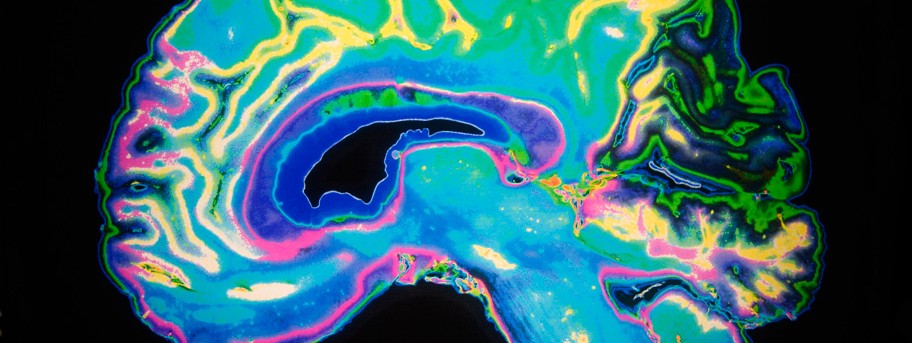
I was especially interested in her account that we seem to have a center of the brain that is critical to our ability to classify plants and animals, and when that center has been damaged life becomes very difficult indeed. She goes on to note that the classifications produced by different cultures share important fundamental characteristics -- we all recognize plants from animals, birds from fish and land animals, and generally group mammals together, we differentiate bushes from trees. So perhaps we have evolved some hard wiring as a species for imposing order on the tree of life.

I was impressed by her comment that we tend to use two words names to identify an object generically and then specifically. While the words are different from language to language, and indeed the classification may differ somewhat from culture to culture, the two word practice seems very broadly accepted.

All of this goes to the point that we think with our brains, and the brain structure and organization imposes structure on our thoughts which is hard to break, and indeed should be broken only with care lest we lose something important.

Incidentally, not only is taxonomy the basis of science, it is the basis of most of good analysis and decision making!