Showing posts with label Health. Show all posts

Thursday, November 05, 2015

Stories for those who don't want Hispanic immigrants


Colombia

I was one of three World Health Organization staffers assigned to a research project in Colombia. Several Colombians were also assigned to the project, all with strong professional qualifications. Our closest Colombian colleague was a physician who spoke fluent English as well as Spanish, and had a post doctoral degree from the Johns Hopkins University school of public health; he was assigned to our project by an internationally respected Colombian university.

He and his wife, a nurse. were suffering a real tragedy in the illness of their son. The child was in the hospital every month it seemed, and required a lot of attention, If his parents were not both trained medical practitioners I don't know how they could have managed. But our colleague never complained, never failed to show up on time and work a full day, and was a always a professional participant in every activity. (The boy died at age 5, about a year after the events described in the following paragraphs.

The project offices were provided by a Colombian university on campus. At the time I am writing about, the students were on strike, holding open air meetings on campus. The campus was surrounded not by police, but by tough mountain troops brought in by the federal government. They were heavily armed.

On the morning in question, three of us were in the project offices: another WHO project member and I and the Colombian colleague described above. I as the senior of the three decided that we were not safe, and should lock up and leave. As we did so we had to walk past a mob of hundreds of demonstrating students to reach the end of the campus and a line of troops (who were apparently there to keep the student demonstration contained with the campus).

A large number of the students rushed our small party. Our Colombian physician, without hesitation, put himself between the mob of students and we WHO staffers, protecting us with his body and with his voice, explaining we were an international research team affiliated with WHO and should not be harmed. We got out safely!

Were we in danger. A couple of things suggest we might have been. The International Edition of the Herald Tribune the next day published a story that we had been beaten up by the mob. That next day, the situation exploded. 14 people were killed on campus, one a few yards from our (then empty) offices. An estimated 25,000 people were arrested that day, a number far exceeding the jail capacity in our city; prisoners were placed under guard in the sports stadium.

Were we saved by our Colombian colleague? I don't know, but I think the important thing is that this man with all his responsibility did not think twice before getting in the way of what he believed to be serious danger in order to protect two foreign colleagues that he had know for less than a year.

Dominican Republic


I had the great good fortune to work for some time with a Public Health physician in the DR; he had spent time in jail under sentence of death. As he explained to me, in medical school he and some fellow student were talking in their dormitory rooms about Rafael Trujilo. Trujillo was dictator of the Dominican Republic for more than three decades. The students agreed among themselves that the only way his rule was likely to end was assassination. Trujillo had a very effective secret police, and discovered "the plot", had the students arrested and condemned to death.

There was a worldwide outcry at the injustice and letters poured in from around the world written by health workers, scientists and human rights advocates. Eventually the sentences were reduced. After Trujillo's death, the students were released, and my colleague returned to medical school, became a physician, went on to specialize in public health, and was teaching health administration and health planning in the medical school in Santo Domingo, the capitol. He too spoke fluent English as well as Spanish (and for all I know, other languages).

I worked with him for a year to do an assessment of the health conditions, health services and health resources in his country. He led a Dominican team, and I brought in experts to provide assistance in areas where such assistance appeared to be needed. On the basis of this assessment, the USAID mission in the Dominican Republic developed, in conjunction with Dominican authorities, a health sector loan; it focused on developing an rural health system aimed at reducing infant and child mortality. The assessment had recognized that the rural families faced very high child mortality, that there were few resources to pay for medical services in the rural area, but that by focusing on appropriate public health interventions, a lot could be done at low cost. Importantly, the assessment recognized that in the 19th century had successfully provided services in the rural areas with army medics rather than doctors -- thus there was a proven domestic model for such a service.  My colleague also held a number of meetings with groups in the DR who had opposed such delegated medical services for the poor in the past, explaining that the new system would not only meet their objections, while saving lives, but would in some cases serve their economic interests better than the existing do nothing process. They achieved adequate Dominican support to make the new rural health system feasible.

Amazingly, just before the loan came through, my colleague was appointed Minister of Health of the Dominican Republic. He not only had an idea of what he wanted to do, but had a plan for how to do it, and new money to implement the plan. He even had a small team who understood what had to be done and how to do is, for he took key members of his assessment teams to the Ministry with him,

Something over five years later he showed up in my office in Washington unannounced. He had made the trip to the USA specifically to tell me what he had been able to do as Minister to implement the plans. In those five years, infant and child mortality in the rural areas of the Dominican Republic had been cut in half. Thousands of lives had been saved, This had been accomplished by an efficient service based on delegated functions to health promoters and auxiliary health service providers. I can only imagine the obstacles he must have overcome to make that rural health service a reality.

How many of us can ever claim such a success, yet this man did so after being condemned to death and held in jail in the country he eventually served so well.

Panama

Hugo Spadafora was a Panamanian doctor and public health official. My office carried out a health sector assessment in Panama, and he was the man chosen to lead the Panamanian team; a long time friend and close colleague led the U.S. funded team of consultants. I was kept abreast of the work of the joint team, and got to visit Panama and meet Dr. Spadafora.

Thus was the Panama ruled by Omar Torrijos, the dictator from 1968 to 1981 (to be replaced by Manuel Noriega, dictator from 1983 to 1989). According to Wikipedia:
Originally a critic of the military regime headed by Omar Torrijos, he (Spadaforo) served as its Vice-Minister of Health. 
Spadafaro was completely dedicated to the welfare of the people and this was risky in Panama. Indeed,:
Concerned about the increased Soviet and Cuban influence in the Sandinista regime of Nicaragua and the delay of free elections, Spadafora joined the Sandino Revolutionary Front (FRS) alongside Edén Pastora ("Comandante Zero"), hero of the August 1978 seizure of Somoza's palace. 
Wikipedia states:
Torrijos died in a plane accident on July 31, 1981. Colonel Roberto Díaz Herrera, a former associate of Noriega, claimed that the actual cause for the accident was a bomb and that Noriega was behind the incident.
Wikipedia goes on to report:
About this time (1984), Hugo Spadafora, a vocal critic of Noriega who had been living abroad, accused Noriega of having connections to drug trafficking and announced his intent to return to Panama to oppose him. He was seized from a bus by a death squad at the Costa Rican border. Later, his decapitated body was found, showing signs of extreme torture, wrapped in a United States Postal Service mailing bag. His family and other groups called for an investigation into his murder, but Noriega stonewalled any attempts at an investigation. Noriega was in Paris at the time of the murder, which was alleged by some to have been at the direction of his Chiriquí Province commander, Luis Córdoba. A conversation captured on wiretap between Noriega (in Paris) and Córdoba included the exchange: 
Córdoba: "We have the rabid dog."
Noriega: "And what does one do with a dog that has rabies?"
President Barletta was visiting New York City at the time. A reporter asked him about the Spadafora matter, and he promised an investigation. Upon his return to Panama, he was summoned to FDP headquarters and told to resign. He was replaced by First Vice President Eric Arturo Delvalle. As a friend and former student of George Shultz, Barletta had been considered "sacrosanct" by the United States, and his dismissal signaled a marked downturn in the relations between the U.S. and Noriega. Herrera, a former member of Noriega's inner circle, told Panama's main opposition newspaper, La Prensa, that Noriega was behind Spadafora's murder, and many other killings and disappearances as well. This resulted in an immediate outcry from the public.
How Proud We Should Have Been Had These Men Chosen to Immigrate to the USA!

These three men were highly cultured, highly educated, who had achieved positions of trust and responsibility in their own countries. One put his safety on the line to assure mine, one served in prison under a death sentence imposed by its dictator, and one was actually tortured and beheaded. All were devoted public health physicians, who took risks of contracting serious diseases every day for years. All faced unsympathetic governments to help their people, All had taken the trouble to learn English as a second language. I would have been proud to sponsor any of these three for citizenship if asked. Each would raise the quality of our people by joining us.

Wednesday, September 09, 2015

A modest NIH grants program might be appropriate!


An article in the current issue of The Economist indicates that the appropriate substitution of deuterium for normal hydrogen in drug molecules extends the time that the drug remains in the body. (Deuterium is a form of hydrogen with an extra neutron. The change in the nucleus changes the chemistry of the atom and of molecules in which it is substituted for normal hydrogen.) This reduction of the frequency with which a medication has to be taken can be quite useful in some therapeutic applications. The article suggests, however, that
examination of the patent literature found that the American patent office has started rejecting applications for deuterated versions of existing drugs. Deuterating, too, has become an obvious practice.
Without patent protection, I wonder if the holders of the original patents on the drugs (assuming that they are still under patent protection) will find it economically desirable to produce deuterated versions of their products. Will generic companies find it profitable to produce the deuterated versions of drugs?

There ought to be some means to assure the public that useful products within the reach of our technology are brought to market, especially if they are pharmaceutical, and thus of direct benefit to patients. Perhaps the government should set up a grants program to encourage such product development.

Thursday, August 20, 2015

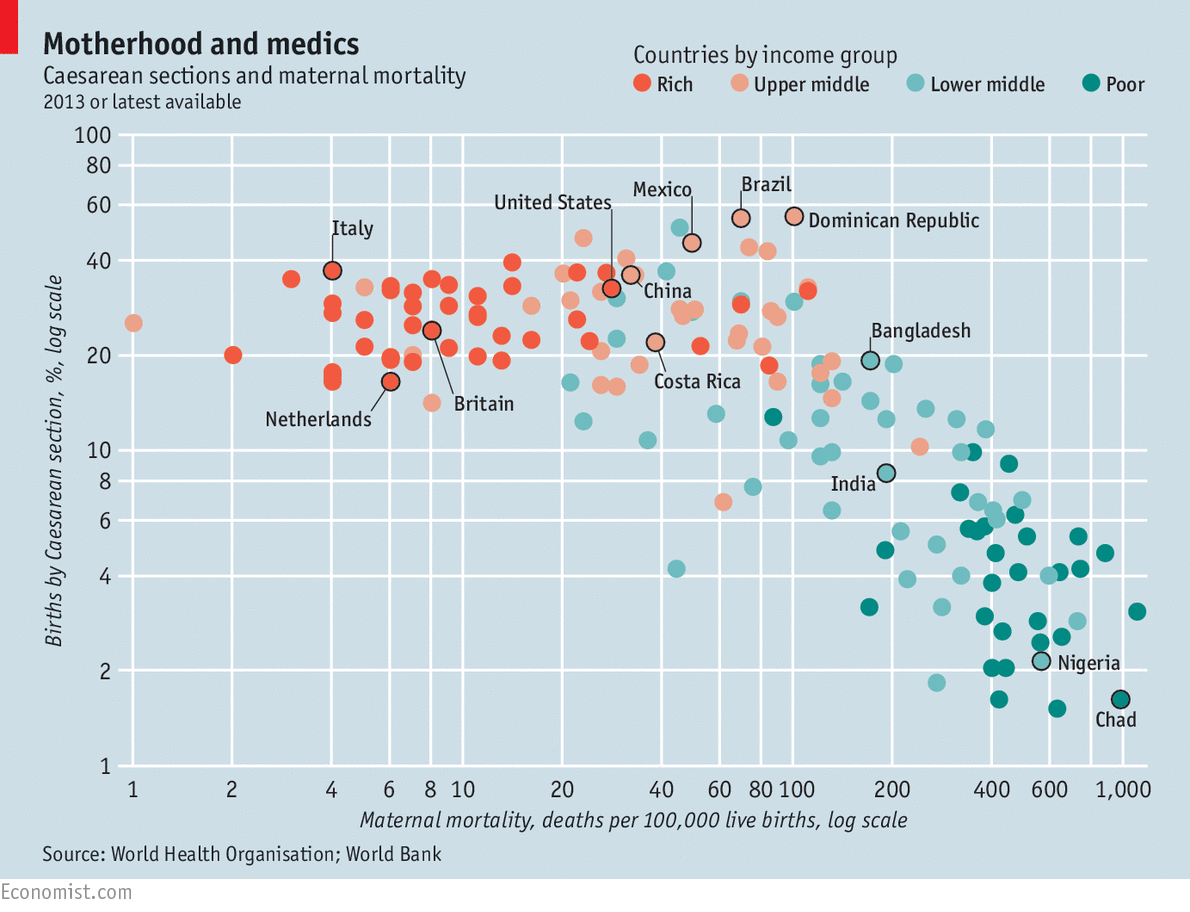
Caesarian sections can save lives, but also waste lives and money


Source: The Economist
There are many things that can be said about this data. Perhaps the first is that maternal mortality is unconscionably high in the developing world. In many rich countries it ranges from 1 to 10 per 100,000 live births; in poor countries it tends to range from 100 to 1000 per 100,000 live births. The maternal mortality in Chad is 1000 times higher than that which is attainable.

Note that the lowest maternal mortality is achieved with about one in five births by Caeserean section. Yet there are countries with higher maternal mortality rates that see half of all births by Caeserian. Now I don't really want to intervene if private patients and their ethical doctors choose to have an unnecessary Caeserian, pay the costs, and accept the added risk. I do object to policies that encourage families to choose a more expensive, higher risk procedure, and I do object to physicians finding financial incentives to encourage patients to have unneeded surgery.

Thursday, July 30, 2015

A New Hope for Control and Eventual Eradication of Malaria


Past and Current Malaria Prevalence Around the World
Source: World Development Report (2009) via Virtual History

I quote from an article in The Guardian:
The world’s first malaria vaccine has been given the green light by European regulators.....The European Medicines Agency (EMA) recommended that RTS,S, or Mosquirix, should be licensed for use in young children in Africa who are at risk of the mosquito-borne disease. The shot has been developed by Britain’s biggest drugmaker GlaxoSmithKline (GSK) and part-funded by the Bill and Melinda Gates Foundation..... 
According to the WHO, 627,000 deaths from malaria were reported globally in 2013, of which the vast majority (562,000) occurred in Africa, mostly among children under the age of five (82%).
WHO estimates that there are 198 million cases of malaria a year now.

Apparently this is not an "ideal vaccine" requiring multiple shots over a period of years to protect a child fully. In Africa, getting a child its shots on a regular basis will be very difficult -- perhaps beyond the ability of public health officials to achieve high levels of immunity in the population. Still, if researchers have the knowledge to develop one vaccine, there is hope that they may develop other malaria vaccines that are better tailored for African needs.

The development of DDT and of a basis of scientific knowledge about malaria led to efforts to eradicate the disease in a number of developed countries. It is worth remembering that when the USA was founded as an independent nation, malaria occurred over its entire extent, and that malaria was a problem not only in southern Europe but in England and much of northern Europe. The World Health Organization created its Global Malaria Eradication Program in 1955, based on the then existing successes, but the successes could not be maintained, and in 1969 the Program was abandoned, to be replaced by a less ambitious WHO Malaria Control Program.

Basic Facts

Malaria is caused by any one of four Plasmodia species. It is transmitted from human to human by any of a variety of mosquito species. Thus a mosquito takes a blood meal from a person with malaria, rests for a while, and (after the agent has gone through a transformation in the mosquito, bites another person injecting the agent as it takes blood. If one can eliminate malaria from a human population, eliminate the mosquitoes capable of transmitting the disease, keep the mosquitoes from biting people, and/or cure the patient before he can transmit the infection, then these public health measures can stop a malaria outbreak or end endemic malaria in a region.

Historically a number of approaches have been used to fight malaria:
  • Drugs to treat the disease, beginning with Quinine and Chloroquine (1946).
  • Use of pesticides, beginning with DDT, to kill mosquitoes.
  • Reduction of mosquito breeding sites, by such things as making sure that there are no open bodies of water in which the mosquito eggs may be laid or the larva develop.
  • Other ways to keep larva from becoming mosquitoes, from spraying oil on the top of ponds, to use of larvacides, to stocking ponds with larva eating fish.
  • Use of window screens and bed nets (including insecticide containing bed nets) to keep mosquitoes from biting people.
Vaccine Development

Dr. Lee Howard, then the Director of the USAID Office of Health, recognized in the mid 1960s that the then current arsenal of means to combat malaria was not adequate for its eradication. True, the disease exists only in man, so if all human cases could be eliminated, the disease would be gone for good. However, getting a human population completely free of malaria was difficult, requiring many approaches to be used simultaneously. Moreover, at least one of the forms of the disease could lie hidden for years, only to reappear and restart a epidemic or become endemic. Moreover, the governments of many of the countries that had the worst malaria problems were weak, and the operation of a large scale public health campaign for a long period with no slip-ups was beyond their capacity. 

Dr. Howard thought that adding a vaccine to the armament of the malaria control workers would be a potential way to get to eradication or at least control. Unfortunately, no one had much of an idea as to how to create a vaccine to an organism as complex as a Plasmodium. Indeed, it was not known how to grow the organism in the laboratory -- a necessary step for all future work. Nonetheless, Dr. Howard convinced his colleagues at the National Institutes of Health to join with USAID and begin basic research toward the development of a vaccine against malaria. Now, half a century later, we finally have a first such practical vaccine. The search has yielded a great deal of fundamental knowledge about the parasite and the immune response, and further research and development can be expected to improve the vaccines against malaria.

So What

If a vaccine can make people immune to malaria (for a period of time) then the prevalence of the disease will be reduced. Indeed, even if the protection is only partial, the danger to a person contracting the disease may be reduced.

Combine the protection of a vaccine (and better protection from future improved vaccines) with improved knowledge of mosquitoes, and full use of the available control techniques (described above) should make control efforts more effective and eradication efforts more possible. The Gates Foundation believes we are now at a point in history when eradication is foreseeable. Certainly governments and public health agencies around the world are generally more capable of managing such efforts well.

The world public health community has eradicated smallpox and Guinea Worm Disease, and is on the verge (I hope) of eradicating polio. Lets hope malaria is next!


Read more....

Monday, July 20, 2015

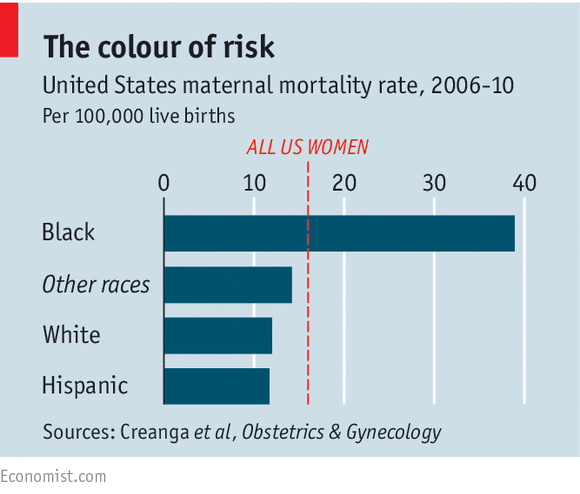
I accuse American racists of killing women.


I quote from the article in The Economist that is the source of the graphs:
By 1987, fewer than eight women died for every 100,000 live births. Over the past quarter of a century, however, America’s maternal-mortality rate has been creeping back up (see chart). 
By 2013 the rate had ticked up to 18.5 women for every 100,000 births (these numbers include women who die within 42 days of childbirth). This makes America an international outlier. Between 2003 and 2013 it was one of only eight countries, including Afghanistan and South Sudan, to see its maternal-death rate move in the wrong direction. American women are now more than three times as likely to die from pregnancy-related complications as their counterparts in Britain, the Czech Republic, Germany or Japan.
 I quote further:
American women are in poorer health when they become pregnant, and are failing to get proper care. Chronic health conditions, such as obesity, hypertension, diabetes and heart disease, are increasingly common among pregnant women, and they make delivery more dangerous. Indeed the traditional causes of pregnancy-related deaths, such as haemorrhage, thromboembolism and hypertensive disorders, have been declining in recent years, whereas fatalities from cardiovascular conditions and other chronic problems have been on the rise. 
These health conditions are more common among black women, 40% of whom qualify as obese, compared with 22% of whites. African-Americans are also more likely to be poor, have limited access to health care and have higher rates of unexpected pregnancies: this may explain why they are nearly four times more likely to die from pregnancy-related complications than white women, almost double the discrepancy that existed 100 years ago.
Remember that many states refused to accept federal Medicaid expansion. The health conditions that cause high maternal morbidity and mortality are often results of poverty.  Good health services could ameliorate the risk, but you need health insurance to get those services if you are poor. The governors who turned down added medicaid for their states are guilty.

Sunday, May 24, 2015

Crowd sourcing as an aid to medical diagnosis


There is an interesting article in The Economist describing CrowdMed, a website that uses crowd sourcing to help diagnose rare diseases.
The need for a “crowdsourced” service like this comes from the number of rare diseases around. The National Institutes of Health, America’s medical agency, recognises 7,000—defined as those that each affect fewer than 200,000 people. A general practitioner cannot possibly recognise all of these. Moreover, it may not be clear to him, even when he knows he cannot help, what sort of specialist the patient should be referred to. Research published in 2013, in the Journal of Rare Disorders, says about 8% of Americans—some 25m people—are affected by rare diseases, and that it takes an average of 7½ years to get a diagnosis. Even in Britain, with all the resources of the country’s National Health Service at a GP’s disposal, rare-disease diagnosis takes an average of 5½ years. Also, doctors often get it wrong. A survey of eight rare diseases in Europe found that around 40% of patients received an erroneous diagnosis at first. This is something that can lead to life-threatening complications.
My wife last year went through the process of getting a diagnosis for a rare set of symptoms, and it took a while, involved many tests, and ultimately a referral to a specialist. I am impressed by the problem of diagnosis for such conditions, and I think crowd sourcing could be useful in the right hands.

I would caution that it could be dangerous as well. I think that one should use CrowdMed only under the care of a physician, and should discuss possible diagnoses with the physician.

Still, I find the idea of a website providing an alternative source of ideas to be discussed with one's doctor to be very interesting.

Tuesday, April 07, 2015

A thought about perverse incentives


I wonder if the incentives built into our system for pharmaceutical research are leading us down the wrong path. Companies that develop new drugs and pay for the extensive testing needed to get FDA approval then:
  • obtain a monopoly on the sale of the drug for nearly two decades. and 
  • protected by the monopoly, price the drug to maximize income to the company.
A drug need not have a huge market to make a big profit if the price can be very high. How much will a patient or insurer be willing to pay for a course of treatment with a drug? Perhaps the same or just less than the preexisting course of treatment that offers comparable therapeutic value. So for a patient that has cancer and is looking at a course of treatment combining radiation and surgery with lots of laboratory work and physician consultation, a drug with comparable therapeutic value might be priced very high indeed.

A vaccine might have a very large market, and prevent a lot of disease, disability and death, but probably could not be priced very high.
  • A lot of the people who would be part of the market could not pay much for a vaccine;
  • People who are not sick are not willing to pay much for a treatment that only reduces still further what they perceive to be a small probability of getting a disease if not immunized/
  • This is true even without the anti-vaccine fears that are being stirred up.
Of course the executives of the firms choosing development projects are making decisions based on the likelihood that they will be successful, that if successful, they will be the first in the field.

So we have Viagra, which is very profitable for the firm that developed it, but we don't yet have a vaccine against malaria nor a vaccine against HIV.


Sunday, April 05, 2015

Nice to See Former Republics of the USSR Doing WellS


Source: The Economist
I spent a little time in Kazakhstan a few years ago and was very positively impressed by how thoughtfully the people I met were going about using their new found oil wealth.

Thursday, March 26, 2015

Vaccines


I saw The Vaccine War on television the other  day. You should know:

  • The development of vaccines to prevent communicable diseases has been one of the reasons that life expectancy improved so dramatically in the 20th century. Communicable diseases used to kill children by the millions in Europe and the United States, and no longer do so. The major communicable diseases that continue to kill people by the million worldwide are killers in those areas where modern public health services have not arrived, or for a few diseases -- such as malaria or HIV/AIDS -- where vaccines have not yet been developed.
  • As science progresses and more is learned about the immune system and disease agents, vaccines are getting more efficacious and safer. Research and development on vaccines for a communicable disease do not stop simply because a vaccine has been developed -- when people see how a better vaccine is possible, they try to develop it.
  • Regulatory agencies work to assure that only the most efficacious, effective and safe vaccines are in use all all times.
Think about immunizing your kids this way:

If your children's school needed some supplies that were not in the school budget, parents might well organize some activity to raise supplementary funds to buy those supplies. If you could participate but chose not to do so, you would be a freeloader. If other parents took up the slack, that supplies might still be bought. If too many parents choose to be freeloaders, the campaign will not work and all the kids will suffer.

If your church needs an expensive repair of the roof, the people who attend the church are likely to organize to raise the needed funds. If you don't participate in the effort, you are freeloading -- after all it is your church. If too many freeloaders are in the congregation, the roof doesn't get fixed, more damage occurs and the bill gets higher to do the necessary repairs.

Say you decide that traffic laws should apply to everyone else but not to you, so you drive after you have had a few drinks. exceed speed limits when you feel like it, and try to beat red lights. You may kill yourself or someone else, but more likely you will be seen driving this way by the police and you will be stopped and ticketed for breaking the law. If your conduct is flagrant enough you will be arrested as a criminal.

Communicable diseases have tipping points that determine what will happen if someone catches the disease in your community. If a high enough fraction of the people are immune, the disease may infect a a few people after it arrives in the community, but will soon die out. If too few people are immune, then an epidemic will occur and a lot of people will get sick from that disease. Sometimes conditions are just right and new vulnerable people will arrive in the community to take the place of those who have died of the disease or achieved immunity, and the disease will stay on as endemic. Public health immunization campaigns are the means by which communities assure that the vulnerability is below the tipping point.

There are some people in almost all communities who can not be immunized -- infants whose immune systems have not yet fully developed, old people whose immune systems no longer function well due to the aging process, and people with some medical conditions. We accept that some people will not allow their children to be immunized because of religious convictions in part because their numbers are small and adequate levels of immunity can still be maintained in the community 

As far as I am concerned, the people who don't have their children immunized due to sloth. or superstitious fear (that is fear of side effects not justified by medical information) are freeloaders. If there are too many such freeloaders, epidemics will take place such as the measles epidemic occurring now in the United States. Some people who get the disease will just be sick for a while, some will be permanently disabled due to the disease, and some will die of it. (I had mumps as an adult, before the MMP vaccine was developed, and I know from personal experience that that was serious enough to hospitalize me for a weak with fever and complications.)

If there continue to be too many freeloaders and periodic epidemics, stricter public health laws will be passed and enforced. Those who then fail to immunize their kids will be criminals.

I have some credentials to write the above message:
  • I wrote my Ph.D. dissertation on mathematical models in health planning;
  • I worked as a health planner in the World Health Organization, the U.S. Office of International Health, USAID, and the White House.
  • I managed research programs on the epidemiology of infectious diseases. One of them helped clarify the causes of pneumonia in children in developing nations, helping WHO to revise it standards for treatment of lower respiratory disease in children. Another showed Hepatitis C to be a far more prevalent disease in Egypt than had been believed or even thought possible, leading it to be recognized as a major public health challenge.
  • I managed research program on the application of biotechnology in bio-medical research. Eventually I directed the Office of Research of USAID, served as the U.S. Commissioner on the United Nations Commission on Science and Technology for Development, and as a consultant to the World Bank, Brazil and Mexico on programs to strengthen research management.

Saturday, March 07, 2015

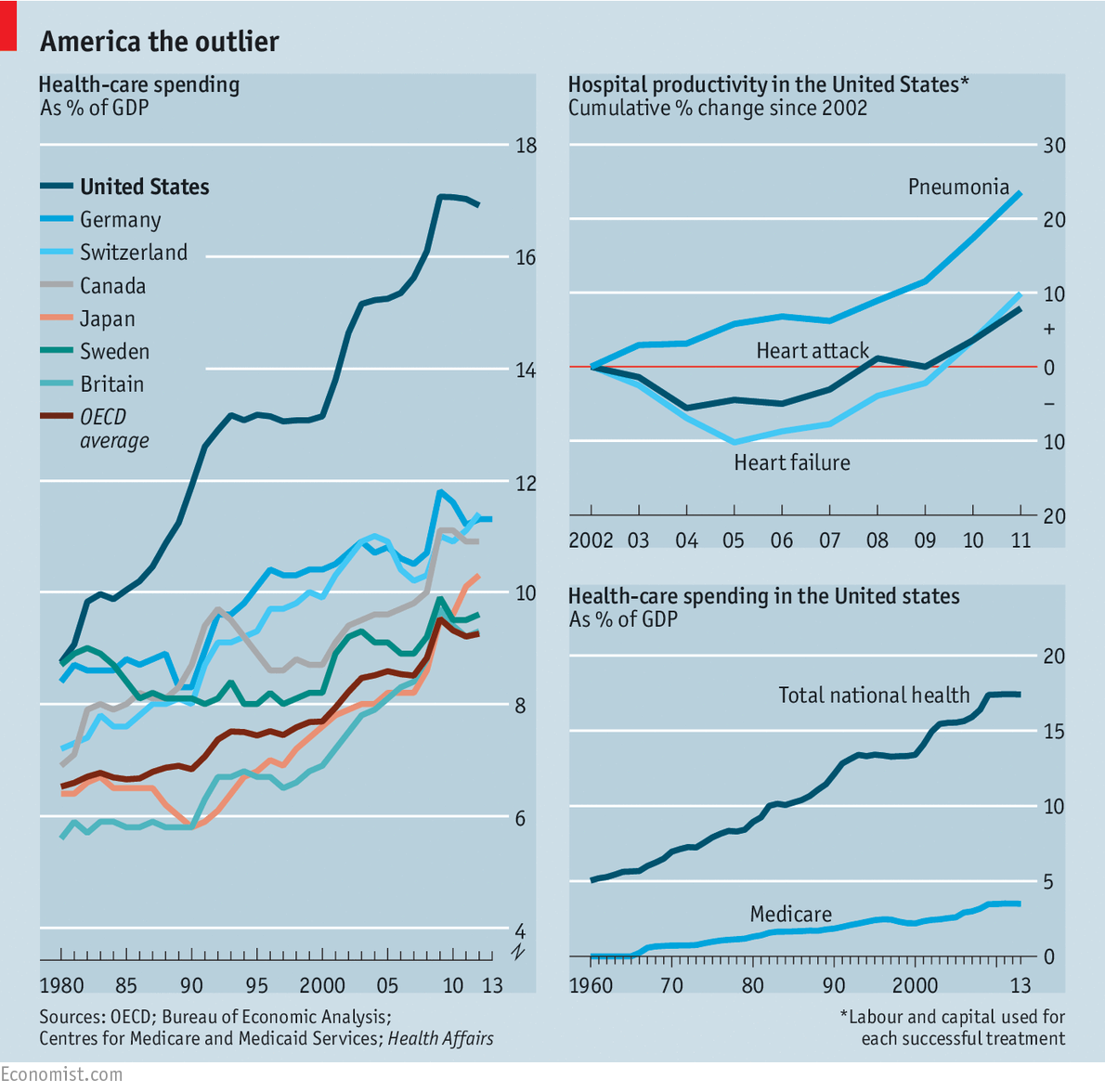
Will Obamacare cut costs?


According to The Economist, "The growth in America’s health-care spending is slowing". The graph on the left suggests that not only is the growth slowing, but costs are actually going down. Of course, that graph also shows that the USA spends a higher percent of GDP on health care than do European countries with socialized medicine. Those countries also tend to have longer life expectancy than does the USA.

Of course, if the Republicans succeed in gutting the Affordable Care Act, the trend may stop at that point. The graph indicates that several times in the past the portion of GDP dedicated to health care held steady for a few years, only to take off again.

I think the problem has been that programs were started to increase demand for health care -- Medicare, Medicaid, public drug cost financing within these services -- without complementary programs to increase supply of services and still more important, to control costs. The law of supply and demand tends to increase costs when demand increases and supply does not. Of course, consumers do not really prescribe their treatments, the doctors do and then bill accordingly. Moreover, new medical technology seems always to provide useful alternatives but to increase costs.

Thursday, February 26, 2015

Did You Know This About Measles"


I quote from the Washington Post article that is the source of the graph:
Measles killed 82,100 children under age 5 in 2013, ranking the disease at No. 7 on the list of the top causes of child death, according to recent statistics from the Global Burden of Disease study published in the Lancet. Lower respiratory infections like pneumonia were the number one killer, followed by malaria, diarrhea, nutritional deficiencies, congenital defects and meningitis. More small children died from measles in 2013 than died from drowning, road injuries or aids.
I suppose the good news is that diarrhea is less lethal than it once was.

More than 80,000 little kids dying of measles in 2013 is an indicator that people carrying the disease are still going to be coming to the USA frequently. It is important that we keep up the immunizations to a very high level to maintain herd immunity. That way, even if a foreign visitor with measles arrives or a U.S. traveler with a compromised immune system returns to this country with measles, the disease won't spread. Incidentally, parents protecting their children with the MMR vaccine have the benefit that their child will not suffer from measles -- a potentially fatal disease. Moreover, the kid won't get mumps nor German measles.

By the way the huge death toll in developing countries from pneumonias, malaria, diarrheal disease, malnutrition and other causes is an ugly testimony to how little we care about others.

Wednesday, February 25, 2015

Why Health Planning Didn't Work -- and When It Did

Plans are nothing; planning is everything.
Dwight D. Eisenhower
In a previous post I mentioned my participation in a health planning research project in the early 1970s. Prior to that project, for a decade or more, the PAHO CENDES health planning method had been disseminated throughout Latin America; more than 2000 health officials had been trained in the method. While that had a beneficial  impact of alerting many officials and health organizations of the need to do more, it seemed to yield few useful plans.

In all, I spent something like eight years thinking about health planning in developing countries as an occupation. I worked in a number of countries, visited others, and had colleagues who worked in still others and told me what they found. I noticed some interesting things:

  • Critical decisions were often about the construction of hospitals and health centers. Once built, these required staffing and budgets. The decisions seemed often to be political. In the Dominican Republic, for example, the dictator Trujillo had all the health centers built during his presidency built in the form of a "T" so that each would support his reign. Even when it was determined that a growing city needed a new public hospital, the decision of exactly where in the city would result in economic benefits for those who owned the land on which it would be built and indeed for those who developed surrounding areas and those who built the facility. I think the choice of location would then become political. So too, a newly elected legislator might try to get a health center approved and built in his district to bolster his chances of future election. A formal plan might not have much influence over such decisions.
  • Manpower allocations were less formal than one might think. Of course a new hospital or health center would have a table of organization with so many doctors, so many nurses, nursing aids, and other workers. But then there would come a need for a doctor in a hospital, and someone would tell a doctor on the nominal staff of another hospital to go work where he was more needed; no formal changes would be made in the staffing pattern. Then there was corruption. For example, a senior official would issue instructions that someone be added to the staff roll of a regional hospital even though he was living in the capitol city or in another country, with no medical responsibility at all. The formal written plans simply didn't catch up or didn't count.
  • I found a major, apparently modern hospital that did not have a modern cost accounting system. The heads of departments knew the direct budgets of their departments, and the senior staff knew all the direct costs. However, there was no accounting of indirect costs. For example, the internal medicine department knew the number of patients it treated and the costs of the salaries of its staff, but did not know how much the drugs it prescribed, nor the lab tests it ordered, nor the x-rays it ordered cost the hospital. Thus there was no way that total costs per service could be monitored, much less controlled.
  • Students I taught did a study of Ministry of Health pharmacies in our region. They discovered that a significant portion of the prescriptions sent to those pharmacies could not be filled because the required drugs were not in stock; on the other had, a significant portion of the stock languished on the pharmacy shelves for very long periods since it was not in demand. There was no adequate system for managing the inventory and ordering of drugs. In another country, having lunch across the street from a hospital, I watched as a shipment of pharmaceuticals was delivered, and then as another truck pulled up and reloaded the pharmaceuticals; I was told that they would be delivered to a private drug store to be sold on the open market. In still a third country,  a consultant we had hired to look at pharmaceuticals quit informing us that he had had threats against his life, and that apparently the organized illicit drug industry also controlled the local pharmaceutical wholesalers.
You can see that in systems with such gross malfunctions, health plans based on a theory of efficiently meeting health needs had little chance of being implemented. If a system is not well managed, it is not likely to be well planned.

A Counter Example

The USAID mission in the Dominican Republic was interested in the possibility of a health sector loan to that country. I was working in the Office of International Health at the time, and we were asked to help them look into that possibility. We had in process a desk study of the DR health sector which avoided going in cold.

We agreed with the mission to help conduct an assessment. A senior academic in the DR was selected to head the assessment team, which he recruited. We provided (Spanish speaking) consultants from the United States. The assessment looked at the health conditions, the health services and the things that had worked and had not worked in the DR health sector reform in the past.


The assessment identified a major unmet health need. There was very high infant and child mortality in the rural areas. It seemed that a rural health service focusing on immunizations, health education, and identification and referral of health emergencies in the target population of young children could do some real good and be affordable. The service could be based on community health promoters and delegated medical functions to auxiliary health workers.  Political and administrative constraints likely to be encountered were identified, and alternative measures considered to resolve them.

In preparing the USAID project documents, in cooperation with assessment team members, we developed a preliminary design for a rural health service, a preliminary plan of action, and a basic budget to cover the projected costs. The project was approved by the DR government and USAID.

Very fortunately, Dr. Amiro Perez, the very man who had led the health sector assessment and participated in the planning of the loan, was named Minister of Health as the project began. He made the development of the rural health service a priority of his administration, having fully mastered all aspects of the assessment on which it was based and its planning. He recruited his deputy on the assessment to help manage the development and administration of the rural health service.

Five years later, Dr. Perez was able to report that the mortality rate in children under the age of five years in the rural area of the Dominican Republic had been cut in half as a result of the action of the new rural health service.

Monday, February 23, 2015

A Map of Health Risks


I quote from the Washington Post article from which the map is taken:
The world map reprinted here is a reflection of more than 300,000 medical incidents which were reported in 2014 by companies to International SOS, which specializes in health care and emergency services to clients with business travelers overseas. Based on that data, a panel took into account threats of infectious disease, hygiene and sanitation, frequency of accidents and the availability and quality of the local health infrastructure to determine how risky a trip to a particular country might be.
I suspect that the map reflects the risks faced by visitors and expats in these countries and that the risks faced by native residents might be different. The risks faced by the poor are often worse than those faced by those with more resources (who can use those resources to reduce or ameliorate consequences of risks).

The article has more detailed maps that have country names included.

Saturday, February 21, 2015

A Thought About Health Planning


I was a member of a health planning research project in the early 1970s. A WHO expert from Geneva at that time told me that for centuries after the fall of Rome, the largest cities were limited to about half a million inhabitants. At that size a city in the dark ages had a death rate that was so high that immigration and the birth rate could not be its equal, and the city would stop growing.

I don't know why Rome was so much larger at its peak that it was later or than were other European cities at a later date. There were possibly many reasons. The Romans were great engineers and had aqueducts that provided abundant water as well as sewerage to remove human wastes, leading to better hygiene than was possible in later centuries; perhaps the inhabitants of Rome were less often sick from water borne or water washed diseases. The Romans imported food in large amounts and distributed food to poor citizens, so perhaps the population was better nourished. The Romans brought slaves into Rome, and perhaps they brought in slaves faster than the slaves left and died.

In those days as a health planner I helped a small group of students do a senior project studying several alternative locations for a hospital to be built in Cali, Colombia -- the city in which we lived and the health planning project was located. The students developed a model based on the number of patients seeking cared for at each of the existing hospitals; the model was then used to predict how many would go to a new hospital were it located at each alternative place and what that flow would mean in terms of demand at the existing hospitals. (The study proved to be useful and used, and all the students involved were hired by the offices of the Ministry of Health in the Department of Valle.)

Cali, like many cities in developing countries, grew fast and had very different neighborhoods. I lived in one that had all the amenities of a U.S. or European city. There were neighborhoods that had minimal infrastructure, shacks, and high population density. (I remember someone calling those neighborhoods full of soil scrapers, making the word play on sky scrapers -- they had the population per acre you might expect in a neighborhood of sky scrapers, but the shacks barely rose above the soil on which they stood.)

It is too bad we didn't develop a model that would predict health status by neighborhood, leading to applications for prediction of demand on health service facilities (were they to be built), as well as an aid for the planning of infrastructure investment.

The epidemic of Ebola in West Africa suggests how useful a model might be that used housing quality, population density, a the availability of piped water and waste disposal facilities to enable quick prediction of the course of an epidemic and "hot spots".


Tuesday, February 10, 2015

On the Modelling of Ebola and Epidemics

There is an article in The Economist about the use that was made of quantitative models to forecast the incidence of Ebola in the current West African epidemic.
With more than 22,000 people infected, nearly 9,000 of whom died, this outbreak was the gravest ever. But it confounded experts who had feared much worse. In September the WHO predicted more than 20,000 cases by November (there were actually about 13,000). Around the same time, a worst-case prediction by America’s Centres for Disease Control and Prevention (CDC) of up to 1.4m cases (reported and unreported) by January 20th made the headlines. Others were similarly bleak. So where did models and reality diverge? 
For a start, the models relied on old and partial figures. These were plugged into equations whose key variable was the rate at which each case gave rise to others. But this “reproduction number” changed as outside help arrived and those at risk went out less, avoided physical contact and took precautions around the sick and dead. So difficult are such factors to predict that epidemiologists modelling a disease often assume that they do not change at all.
I suspect that the authors of this article misunderstand the nature of disease models. One interpretation of such models is as "if, then statements". If the parameters of the model are correct, and if the relations implemented in the equations of the model are correct, then the model's predictions are likely to be correct. A logician will tell you that in such statements, when the if statements are not correct, then no conclusions can be drawn.

Indeed, very often models are used with different parameters to show how different are the conclusions that follow from them. Thus
(For the CDC projections) it was the “very unlikely” worst-case scenario that grabbed the headlines. This assumed not only a stable reproduction number, but that known cases were just 40% of the total (based on the gap between the baseline model and figures for the number of people in treatment on a single day in August).
That is, the worst case scenario studied by the CDC was that each case of Ebola would generate as many new cases as the first ones did, continuing an exponential growth month after month. Moreover, it assumed that the origin of the epidemic in rural villages and the distrust of authority in those villages were such that the number of initial cases that actually came to the attention of medical authorities would only be three for every five people infected.

How does one obtain a parameter for the number of cases that officials don't know about? One guesses. Normally, one would run the model with different values to show a range of possible projections.

Similarly, epidemiologists are not naive; they know that over time people will learn to reduce the new infections per ill person. But how do the estimate the way this parameter will change over time? They guess. Again, it is common to do several projections with different scenarios for the reduction in the reproduction number -- the number of people on average to which each infected person passes his infection.

Indeed, one of the key uses for modeling of epidemics should be to help manage the public health effort in response to the epidemic. How much effort should be devoted to general health education? how much to keeping friends and neighbors from touching people sick with Ebola or their bodies after they die? How much to having teams bury the victims using full isolation and protective methods? The costs of each alternative can be compared with its likely effectiveness.

Ebola was poorly understood. There had been only a couple of dozen previous outbreaks, all in remote areas, all with small numbers of victims, and all with slightly different strains of the virus, one from another. Thus, it was only in this much larger epidemic was it learned that people ill from the disease became much more infectious as the disease progressed; thus only now can epidemiologists begin to quantify the advantage of early identification and isolation of people infected with Ebola.

The public health approach is now changing. At one point there were 1000 or more people being infected each week. The staff was still gathering and tooling up, and were running as fast as they could to educate the public, build trust, identify the new cases and get them into care, to train staff in procedures to limit infections in care facilities, and to bury the dead safely. Now that the incidence is much lower, the officials are going to greatly expand the effort to trace the contacts of each person who comes down with the disease, quarantine those contacts, and stop the chain of infections. As long as the disease is being transmitted, there is a possibility of an epidemic exploding again.

There was once a global campaign to eradicate malaria. It proved impossible to do so, and the small numbers of malaria victims in the countries from which it was not eradicated reinfected the world. Today we are near the global eradication of polio. However, there are a few focal spots left that could serve as the source to reinfect the world; indeed, we were very close to eradicating the disease a few years ago, but there was resistance to the immunization campaigns leading to continuing new cases; when some of these ill persons traveled, they reintroduced the disease into other countries.

Sunday, January 25, 2015

About communication of disease -- Measles


I think some mathematical intuition is helpful if you want to understand communicable disease transmission.

The basic thing to think about is how many people each infected person in turn infects.

  • If the number is less than one, as the infected people get better or die, the number of infected goes down;
  • If the number is exactly one, then as each infected person leaves the pool of those communicating the disease, another replaces him/her; the disease becomes endemic;
  • If the number is greater than one, the number of infectious people (those communicating the disease to others) grows; the disease becomes epidemic.
There is another, actually common situation, in which the number of new infections per infectious person varies over time. When it is greater than one, the number of infected grows; when it is less than one, the number of infected decreases.

The transmission of the disease depends on the contact rate and the portion of the population that is immune to the disease. 
  • The contact rate can change; kids are sometimes in school, with a high contact rate with others with "childhood diseases" and sometimes out of school when that contact rate tends to be less.
  • The immunity in the population can also change; for example, for many communicable diseases, people who have had the disease and recover are then immune.
When an epidemic starts, public health officials seek to stop it by encouraging people to avoid crowds or by immunizing people with vaccines. In a disease like flu, in which the virus is often communicated by contaminating a hand which then carries the virus to the mouth or nose where it can actually infect the person, hand washing can reduce the actual "contact rate".

We know that the current measles epidemic in the USA was started by a foreign visitor to Disneyland. Measles was essentially eliminated from the United States by massive immunization with a long-lasting immunity from a safe vaccine. However, there are parts of the world where it remains a common disease -- either endemic as new generations of vulnerable kids get the disease, or subject to occasional epidemics. Thus, even after the disease has been eradicated once, if the immunity level is allowed to increase, an infected visitor can start a new epidemic.

In the United States some people are now refusing to allow their children to be immunized against measles. Some do so for religious reasons; some for (unjustified) fear of side effects of the vaccine. While the immunity level in the USA as a whole is high enough that we do not need now to fear a measles pandemic, the vulnerable kids tend to live in the same small communities. One measles is introduced into such a community it may experience a local epidemic of the disease. For an infected child, measles can be a very serious disease!

And of course, a family traveling from a measles free country to one where measles is common, exposes itself to the disease. If that family's children are not immunized, the family is asking for heartbreak!

Source
People who have been infected with HIV tend to live a long time with the infection; indeed, life expectancy of an infected person has increased greatly since effective drugs were developed to help fight the disease.

The curve above shows a rapid increase in the number of infected adults (the prevalence of HIV infection in adults) by continent. That number was increasing rapidly in the 1990s; the rate of increase trailed off in the following decade as public health efforts became more effective.

Canada: Number of New Infections Per Year (estimates)
Source
The Canadian data shows how public health measures dramatically reduced the spread of infections in that country among men who had sex with men (MSM) in the 1980s. The rise in infection among intravenous drug users (IDU) was interrupted in the 1980s. The MSM incidence rebounded in the 2000s; the IDU incidence remained more or less constant during that period.

Friday, January 23, 2015

Measles cases needlessly increasing in the USA


Source
Measles is a deadly disease.

A child can be immunized against measles by a vaccine. The vaccine is safe.

People who deny the safety and efficacy of the vaccine, and thus fail to have their children immunized tend to cluster in the same communities.

If one child in such a community comes down with measles, it is much more likely that that child will infect others than if a child in a community with high levels of protection gets the measles.

I think children deserve protection against bad decisions by their parents, but they especially deserve protection against bad decisions by others (such as the parents of other children in their schools or churches). 

Sunday, January 18, 2015

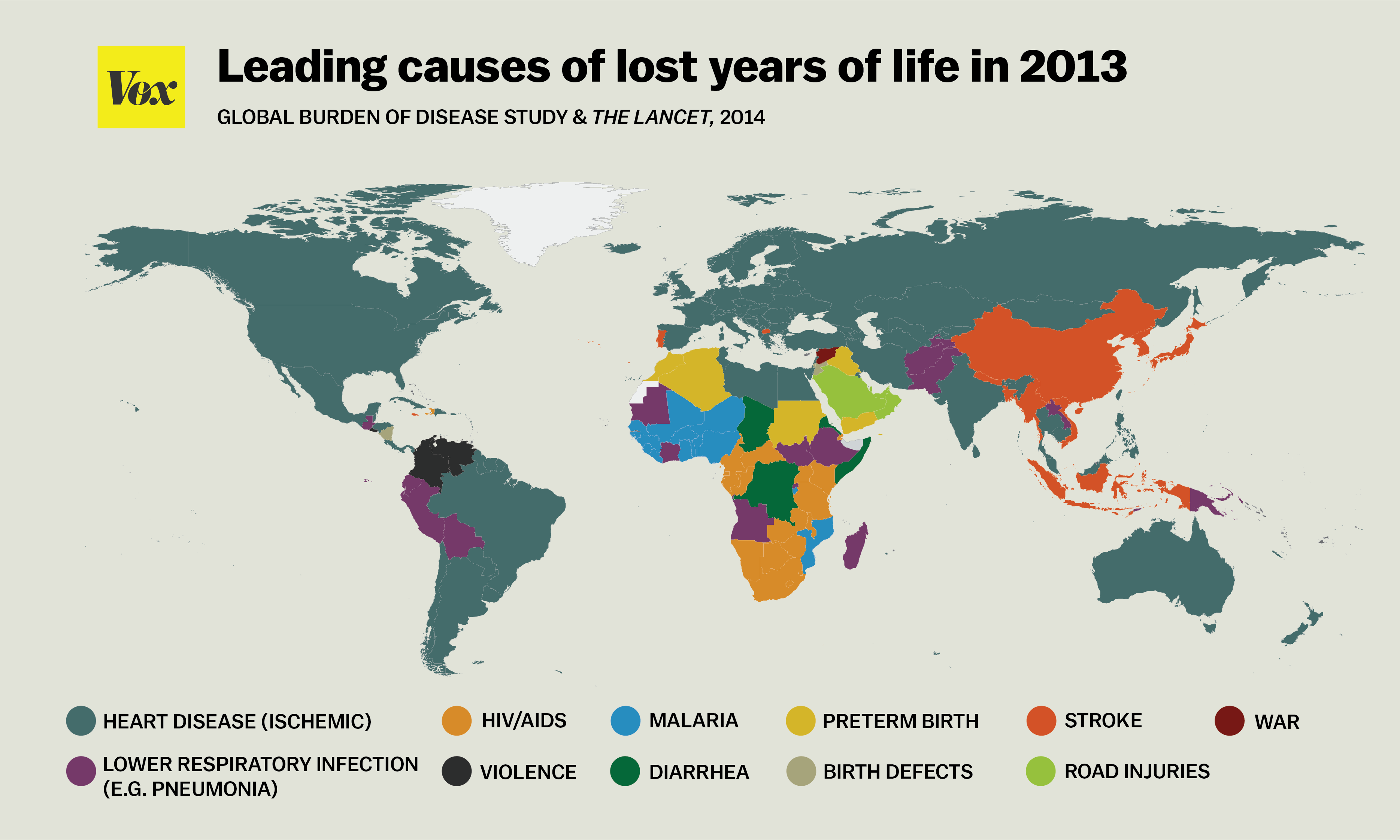
Global Mapping of an Unusual Health Indicator


Source
The data comes from the Global Burden of Disease study.

Years of lost life is an alternative index of disease to the more traditional mortality rate. It recognizes that when a disease kills a child rather than an old person, more years of life are probably lost. Thus when a child dies of diarrhea, pneumonia or malaria, more years are lost than when an old person dies of heart disease or stroke. Thus you can infer from the map above that survival rates are better in more affluent countries than in Africa -- something that we already knew. The map does suggest where public health programs might most usefully focus in different countries.

Monday, December 08, 2014

A thought about evaluation.


I have long wondered about "organization theory". In the organizations in which I worked, people participated for their own reasons. Sometimes they did so on a time limited basis, or even a short term basis. I remember interns and graduate students, as well as post-docs. Sometimes staff was composed of people who worked for my organization, people loaned from other organizations, and people who were paid by organizations contracting with my organization; by and large, we all worked together. I sometimes worked on projects in a collaborative way with people with whom I had no formal organizational link. The idea that an organization has a charter and staff agree to work to accomplish the objectives of the organization in exchange for the remuneration provided seems not to work too often. Note too that I belong to the school that believes that people in organizations work under conditions of limited information, making decisions by processes that are of limited rationality.

Moreover, there seems to be an idea that organizations have boundaries, and that they obtain inputs from institutions outside those boundaries and place the goods and services they produce into institutions outside those boundaries. It has always seemed to me that organizational boundaries are permeable or even fictitious, and that many actions of people within an organization done in the context of that organization, are in fact done in other organizations or in the private sphere.

I recently heard someone say that evaluation should be conceived as providing a platform to allow people to help an organization do better. I like that idea.

It occurs to me, however, that different people have different abilities and that it might be better to think of different platforms to allow different kinds of people to best make their contributions. Consider an organization providing health services. It might have a platform for public comment, another for medical staff providing curative service, a third for preventive medicine staff, another for support staff, still another for outside experts to suggest how health services are and should be evolving.

In the case of K-12 schools, one might have a platform for teachers, one for students, one for parents, one for others in the community, one for administrators, one for curriculum experts, another for ICT opinions, and one for those who might provide teaching aids and materials.

Many years ago a group of engineering students asked me to help them do a project related to related to a real need. I had friends in the local (Latin American) ministry of health office and asked them to identify such a project. They told us that the decision was soon to be made as to where to locate a new hospital in a mid size city that already had several hospitals. Several potential locations had been identified, but they thought the students could provide useful comparative information on those locations.

I taught the students some location theory and agreed to provide computer time for their work. Part of their project was to estimate how many patients would go to the hospital, depending on which site was chosen, where those patients would come from, and what their conditions might be expected to be. Thus the work of the students helped officials to estimate the effect of choice of site on utilization of the facility, and on the health of the city's population. Officials later told me that the information had been useful in the face of pressures based on other factors to chose a less medically useful site.

The example illustrates that real data (obtained from the patient records of existing hospitals) and well executed analysis count. One or more of the platforms for evaluations should enable the inclusion of real data and in depth analytic study of the current situation and future alternatives.

One of the things that the local officials asked them to add was information on the safety of nursing staff traveling to and from the hospital at night (for each site). The staff in question did not own cars, and traveled by bus; if the nearest bus stop were at some distance from the hospital and the streets poorly lit, the women would be in some danger on the trip. That would make recruitment and retention of nursing staff difficult, and hospitals need nurses.

Clearly, hospitals are justified as helping to deal with the medical needs of the population, and all the people involved in deciding where to put a new hospital will agree to that objective. But the safety of nursing staff and the ability to attract and retain nursing staff are also legitimate concerns. So too are costs. So too are the politics of satisficing the expressed demands of the electorate.

Thus there will still be a need in the health sector for managers to put together information from the various platforms in which people contribute to making health services better, taking into account the various objectives, to select a program to implement, and to lead in that implementation.

I suppose a similar argument could be made for most organizations.