Showing posts with label brain. Show all posts
Showing posts with label brain. Show all posts
Friday, June 28, 2013


Saturday, April 13, 2013
Thinking about guns in America
This morning my news station woke me with a reporter complaining about all the coverage we have been getting lately of individuals killed by guns. She was holding the position that the details of children accidentally killing other children would leave the listener with an incorrect perception of gun violence in the United States. Thus, few would realize that the largest number of gun deaths in the United States result from suicides.
Recently we were contacted by Horacio Gutierrez, an independent researcher who contributes to Slate’s tally and wanted to draw our attention to one recent murder in particular – that of Cathy Byus, 34, who was shot and killed by her husband in Shawnee, Okla., last week. Three years earlier, Gutierrez told us, Cathy’s parents were shot to death by three escaped prisoners who came across them while they were camping. She was their only child.Joe Nocera in The New York Times
Of course, part of the problem is that the gun lobby has influenced the Congress to bar the government from collecting and reporting statistics on gun violence. Indeed, the Congress keeps government health agencies from doing research on gun violence. So there are few accurate statistics on guns and gun violence available to the media.
I note however that PBS Newshour has been showing the pictures of the service men killed in Iraq and Afghanistan for years. No one seems to have complained that viewers of PBS Newshour are likely to believe that more Americans are being killed by insurgents and terrorists than by other Americans.
According to the FBI Uniform Crime Report, between 2006 and 2010 47,856 people were murdered in the U.S. by firearms, more than twice as many as were killed by all other means combined.
Wikipedia reports 4,977 American military killed in combat in the Iraq and Afghanistan wars and an additional 1,303 killed in non-combat events.I too regret the lack of good statistics on guns and gun related violence in the United States I also regret lack of research on why people use guns to commit violent acts against themselves and others, and the lack of research on the effectiveness of alternative approaches to promote gun safety.
However, and this is the point of this post, I recognize that statistics and scientific research can only go so far to promote public understanding of the problem. We think with our brains and our emotions. If we want a full intellectual and emotional understanding of the problem with guns in our society, I think we have to combine statistics and research reports with stories of real people who suffer from gun violence and gun accidents (as well as real people who benefit from and enjoy gun ownership).
I am old enough to remember the difference in the public reaction to the Vietnam war as compared with Korea and World War II. I think it was due to the photos coming back from Vietnam and the television coverage. "Seeing is believing." "A picture is worth 1000 words." A video is worth a lot of dry, tabulated statistics. The Sandy Hook massacre got to people emotionally and helped us to understand gun violence, and that is a silver lining to a very dark cloud.
Image of the Slate Map / April 13, 2013
 |
| Source: "How Many People Have Been Killed by Guns Since Newtown?, Slate |
There are more than 129,817 federally licensed firearms dealers in the United States, according to the latest Bureau of Alcohol, Tobacco, Firearms and Explosives numbers (as of Aug. 1). Of those, 51,438 are retail gun stores, 7,356 are pawn shops and 61,562 are collectors, with the balance of the licenses belonging mostly to manufacturers and importers of firearms and destructive devices.........Grocery Stores in the U.S. (2011) 36,569 (source: Food Marketing Institute)
"Guns in America, a Statistical Look", ABC News
Friday, April 05, 2013
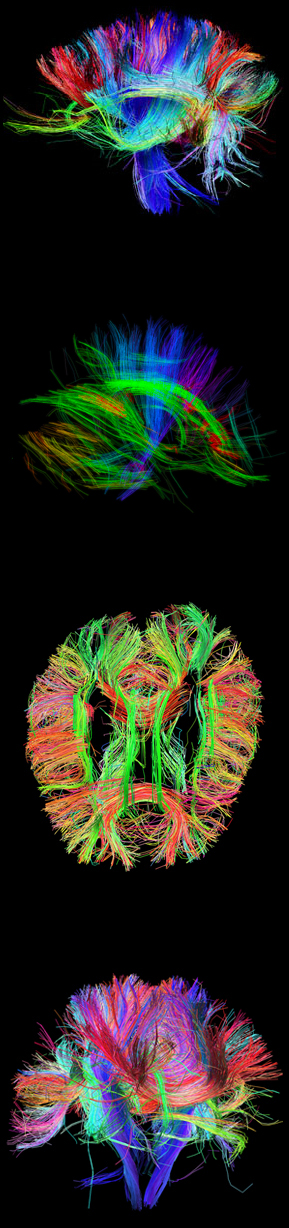
Tuesday, December 18, 2012
Susan Cain: The power of introverts
In a culture where being social and outgoing are prized above all else, it can be difficult, even shameful, to be an introvert. But, as Susan Cain argues in this talk, introverts bring extraordinary talents and abilities to the world, and should be encouraged and celebrated. This is part of my series suggesting that we think with our brains, not our minds. Introversion or extroversion does not seem to be a choice, but it does influence what we think.

Tuesday, October 02, 2012
Styles of thought and the selection of a president.
Here is an interesting idea on the way we think from "Brains in the White House" by Karl Albrecht in Psychology Today:
Our everyday experience tells us that some people are very logical, analytical, systematic, and procedural in the way they think—and talk........(W)e characterize left-brain thinkers as “Blue” thinkers.
In contrast, people.......we can describe as “Red” thinker tend to rely on intuition, hunches, visceral judgments, and a kind of general radar for situations.
Each of these two contrasting patterns, Red and Blue, shows up in two variations. One is the concrete focus—immediate, geared to the here and now, and oriented to direct experience. The other focus is abstract, attuned to conceptual, imaginary, hypothetical, or future-oriented thinking.This gives us four combinations:
1) logical/analytic and concrete, or “Blue Earth;”
2) intuitive and concrete, or “Red Earth;”
3) logical/analytic and abstract, or “Blue Sky;” and
4) intuitive and abstract, or “Red Sky.”He goes on to apply these categories to the candidates based on his reading of their cognitive styles:
- Barack Obama: Blue Earth—logical/analytic and concrete orientation. Raised as a lawyer and a law scholar, he’s a serial problem solver. He takes on issues one at a time. We haven’t heard many references from him to the “big picture,” or the grand vision, which is popular with Sky-type thinkers.
- Joe Biden: Red Earth—intuitive and concrete thinker. Intuitive, down to earth, people-focused, he prefers action to deep thinking. He tends to frame issues and problems in practical, human terms.
- Mitt Romney: Red Earth—intuitive and concrete. "If you analyze his speeches and conversations, you might be struck by the absence of structure, logic, and linearity. Much of his financial success could be attributed to instinct, timing, and opportunity—and the assistance of experts—rather than an intensely analytical orientation."
- Paul RyanBlue Earth—logical/analytic and concrete orientation. "He won the role of the Republican Party’s “budget guru.” His speeches and conversations display a linear, analytical perspective, a love of cause-and-effect ideation, and a preference for logical argument."
Dwight Eisenhower was a Blue Sky thinker.......Harry S Truman was a Red Earth. John F. Kennedy was a Red Sky. Lyndon Johnson was also a Red Earth. Richard Nixon was a Blue Sky. Jimmy Carter was a Blue Earth. Ronald Reagan was a Red Earth and a Red Sky. George Bush the elder was a Red Earth. So was George Junior. Bill Clinton was a Red Sky.I am not sure I agree with the judgments of this management consultant. As I look at Obama for example, I see him putting forth a long term vision for foreign policy (more focus on the Pacific, a new relationship with Russia and with the Muslim world, ending wars and a long term peace). I see him stressing the long term in domestic policy (talking about building the intellectual and physical infrastructure for economic development and a medium term strategy to deal with the debt). You should make your own judgments. You should also think whether you want the president and vice president to share the same style or to have complementary styles.
We want the United States to be successful, and hope that the President we chose will contribute to that success. The success of the president (not the same as the success of the country under the president) will depend on the team he brings to his administration, his success in dealing with the Congress, his ability to communicate and inspire the public, and the challenges he faces as well as his cognitive style.
Moreover, I suspect that different cognitive styles lend themselves to different periods of history and to the challenges presented to the country in those periods. FDR was an intuitive thinker, generating lots of ideas and willing to try them out and fail if a high enough portion proved successful. That was perhaps the best kind of mind to deal with the Depression and World War II, where there was such uncertainty that other approaches might have proven inadequate. On the other hand, FDR never lost sight of the objective -- to bring the nation back to prosperity, to win the war.
There is some evidence that intuitive thinkers do better in situations of great complexity, that the whole brain, conscious and unconscious, does better with such problems, and we take the results of the brain's synthesis of those deliberations as "intuition".
So is the next term's president going to be faced with relatively concrete problems of stopping digging ourselves deeper into a hole, or will he be able to focus on charting a course toward a long term successful future? And does it matter, in comparison with his ability to form and lead a team, to deal with the Congress, and to communicate with the electorate?
Tuesday, March 13, 2012
Emotional Styles
 |
| Prefrontal cortex - implicated by research in emotional styles |
- Resilience, which is how quickly or slowly you recover from negative emotions. For example, some people can hold onto fears or grudges for years, while others may let things go after only a day.
- Outlook, which is the duration of your positive emotions. For example, some people may experience positive feelings like joy to be very fleeting, while others tend to sustain these feelings much longer.
- Context, which is the degree to which you modulate your emotional responses in a context-appropriate way. For example, you probably won’t talk to your boss about the same things as you would when you talk to your spouse or child. In the same way, we often modulate our emotional responses differently depending on the person we are talking to and the setting we are in.
- Social Intuition, which is your sensitivity to social cues, including facial expressions and verbal expressions. This part of your emotional style refers to your ability to understand and empathize with other people’s emotional worlds.
- Self Awareness, which is the extent to which you are aware of emotional signals within your own body and mind. The more aware you aware of your own emotions, the better you’ll be able to manage them. Most people respond to their emotions without ever stopping to reflect on them.
- Attention, which is how focused or scattered your mind is. Are you able to focus your attention on one thing at a time, or do you find yourself being easily distracted? Davidson’s research shows attention plays a key role in emotional regulation.
He has brain scan results that show actions, especially in the prefrontal cortex, that correlate with subjects viewing images.
I am especially interested in his comment that he finds sections of the brain involved both in emotional style and decision making. He suggests that some decisions are made combining logic and emotion.
We think with our brains and not our minds. Emotions count.
Friday, March 02, 2012
Those Darn Mirror Neurons
Mirror neurons fire when an person (or animal) performs an operation or observes an operation being performed by another. It is believed that they help the brain to infer the intentions of others performing an act. Thus it may be the mirror neurons that help the brain to distinguish whether someone picking up a cup from a table is intending to drink from the cup or to clear the table.
Obviously, the brain's mirror neuron systems must have evolved, and if so they evolved over many generations in organisms facing very different environments than we do today.
 |
| How do mirror neurons work |
Check out this about Einstein's brain:
Sandra Witelson, a demure woman who has held the preserved brain of Albert Einstein in her hands and studied it for science, takes a moment to ponder whether people with larger brains are smarter. "That may be the case," the McMaster neuroscientist says cautiously. But more important than overall size is structure, or the size of specific regions -- Einstein's brain being a case in point. The brain of the man who upended 300 years of scientific tradition is of average male size, not out of line with any of the 64 other brains in Witelson's eclectic collection. But it had two unusual characteristics. One is that the parietal lobes, the grey matter just back of the ears where problem-solving and visualization occur, are about a centimetre -- or 15 per cent -- wider than a standard brain's. The other is that Einstein's Sylvian fissure, the crevice that flows through the area in the brain servicing mathematical reasoning and visualization, has a noticeably unique route along the surface, leaving these two areas much more densely packed together. "Every brain is different just like every face is different," says Witelson. "But we have never seen anything like this before."I think I think in words, and I have no mind's eye in the sense that images are not available to my consciousness (except in dreams). Other people think in images. My father who could spell simply by recalling the image of a word that he had read and "reading off" the letters in order could never understand why I could not do the same. Yet of course, I am not conscious of most of what my brain is doing as it is thinking, so maybe a part of my brain is thinking in images.
Some people have synesthesia, such as perceiving sounds as both sounds and colors. Some people found by neurologists have really bizarre ways of perceiving and thinking now recognized as illness.
Maybe if we could see people's brains and compare them with our own, we could recognize how different we really are. But those darn mirror neurons make us assume/feel that other people are like us, that their brains work in the same way.
Monday, January 23, 2012
We need new words to describe what the brain does!
Words reflect our mental models, or at least the mental models when they came into use. The sun "rises" and "sets" because the concepts of sunrise and sunset come from a time when people thought that the sun orbits the earth rather than the earth revolving around its axis. We describe Europe and Asia as separate continents from a time in which geographical models were limited to a small part of the world. Out names for the months come from Roman times and the names of the days come from Roman and Norse cultures.

It seems to me that our language about brain and mind, awareness, consciousness, and thinking need to be updated with improving understanding of the brain in order to clear our thinking about thinking.
Modern understanding of the brain sees it as very complex, with many layers of processing. Even when we are "unconscious" parts of the brain are working to maintain life. "Sleep" is not a single state but a set of states with different brain function.
We use the term "unconscious" as if it were a place, while it implies brain activity which (probably like most brain activity) is not done consciously.
We say that we receive sensory input of which we are "not aware". On the other hand, if something occurs in sensory input that some portion of the brain perceives as worthy of attention, it is brought to our attention. Thus, in some sense we are "subconsciously aware" of the input. But that appears to be an oxymoron, a contradiction in terms as we use "subconscious" and "aware".
There is a condition called "agnosia" in which the brain is unable to attach meaning some kind of sensory input. Aphasia, for example, is a form of agnosia in which language ability fails in some way. "Agnosonosia" is a condition in which a person does not know that they are subject to some form of agnosia, perceiving his/her brain function as normal when others perceive it as failing in some form of comprehension. I guess that would be being unconscious of some are of which one was unconscious.
See the problem with the language we use?
Wednesday, December 23, 2009
The Third Episode in the Charlie Rose Brain Series

I saw this hour long program last night on PBS, and found it excellent. It made the point very well that we surely evolved our brain because it facilitated action that enhanced survival and thus reproductive success, and that is only possible because the brain is able to control our muscles.
I thought that the discussion was quite useful in linking perception, analysis and action. The brain surely evolved as a whole and a focus on perception alone must miss a large part of the substance of what is going on and why.
In a program designed to communicate with the intelligent lay person, the world experts on neurophysiology and neuroanatomy had to simplify concepts and express them in common language. In general, I thought they did so well.
I was struck by the idea that the brain has to be able to model behavior and that our brains are able to model the behavior of others as well as our own. However, it seems to me that the differentiation of feedback control systems from models could have been better done.
The ability of a professional basketball player to predict the success of another player's shot before it leaves his hands seems to me to be different than the operation of the feedback system which allows that professional after thousands of hours of practice to use feedback to control his own shot to assure accuracy.
I don't know how much professional basketball players analyze films of shooting basketballs. I do know that professional golfers analyze films of their own and other golfers swings and can discuss with their swing coaches minute details of the swing which we mere mortals can not perceive at all.
It was interesting to hear the experts point out that we have so perfected our motor skills by the time we are adults that we tend only to recognize how great and finely tuned they are when due to sickness or injury they fail to work. We still can not begin to produce robots that are nearly ad dexterous as humans, despite decades of efforts to do so.
If we can't understand the excellence of our neuro-motor system, and seldom realize how much work is going on under the radar of our consciousness, perhaps we should not expect to understand our cognitive systems well and should expect lots of its functioning to be similarly under the radar of consciousness.
Monday, September 29, 2008
Watch out for appeals to your unconscious racism in this election
Yesterday I saw an interesting talk by Drew Westen, the author of The Political Brain. If I can do him justice, I came away with an increased appreciation of the fact that we make decisions based on our emotional responses to political parties and candidates as well as (and perhaps more than) our conscious analysis of the risks and benefits they offer the country in the current circumstances.
I was especially impressed by his demonstration that political advertising has an impact on our emotional response due to visual and other cues in addition to the more rational impact made by the explicit verbal content. The people who produce television and radio adds for commercial products are aware of this, and work very hard to make you feel you will be more attractive if you buy their product. The national political campaigns no doubt are trying very hard to employ those people to make their advertisements who will deliver the most votes.
Westen really made an impression on me showing how much some anti-Obama adds triggered unconscious racism. If you don't like the appeal to racism by McCain supporters, be conscious of the subliminal content in those adds, and fight against their attempt to unfairly manipulate your decisions!
This is what Josh Marshall says about the attack add the McCain campaign issued on Obama and education (I won't link the add, since even recognizing its bias it might leave a bad residue as well as a bad taste):
(T)oday McCain comes out with this rancid, race-baiting ad based on another lie. Willie Horton looks mild by comparison. (And remember, President George H.W. Bush never ran the Willie Horton ad himself. It was an outside group. He wasn't willing to degrade himself that far.) .......This is ugly stuff. And this is an ugly person. There's clearly no level of sleaze this guy won't stoop to to win this election.
Friday, September 05, 2008
The mind remembers what the brain decides to store and retrieve
 There is an interesting article on the Scientific American website by Robert Stickgold and Jeffrey M. Ellenbogen titled "Sleep on It: How Snoozing Makes You Smarter". As the title indicates, it reviews evidence that sleep has an important role in cognition and memory. I quote an early paragraph that makes a fundamental point:
it helps to review a few memory basics. When we “encode” information in our brain, the newly minted memory is actually just beginning a long journey during which it will be stabilized, enhanced and qualitatively altered, until it bears only faint resemblance to its original form. Over the first few hours, a memory can become more stable, resistant to interference from competing memories. But over longer periods, the brain seems to decide what is important to remember and what is not—and a detailed memory evolves into something more like a story.Comment: It is important to remember that the mind has an inflated idea of its own accuracy, and that what we remember is at best only a part of what we perceived, and that probably modified; at worst........JAD
Subscribe to:
Posts (Atom)