
Showing posts with label SandT literacy. Show all posts
Showing posts with label SandT literacy. Show all posts
Saturday, July 12, 2014


Thursday, May 01, 2014
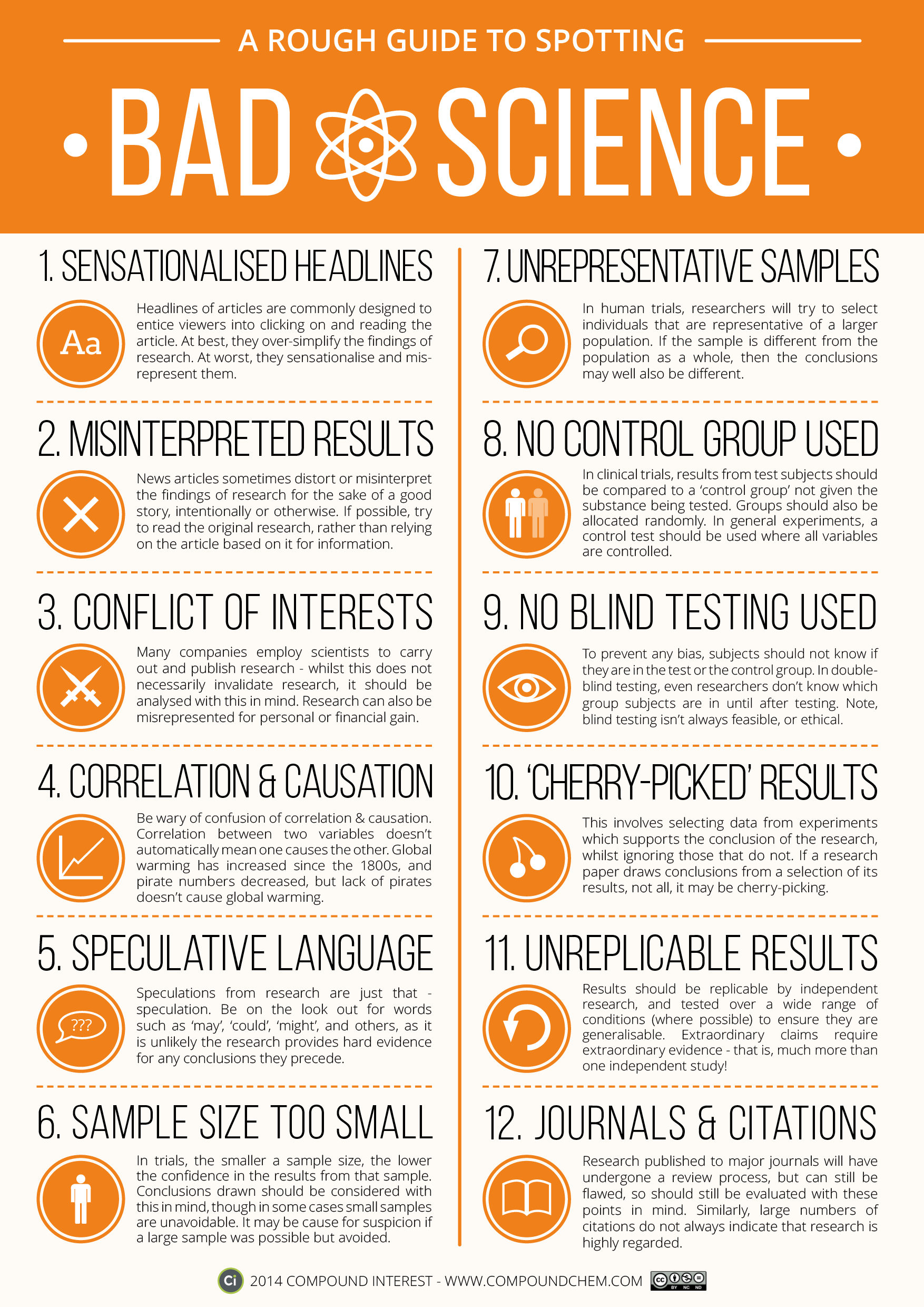
Monday, December 12, 2011
Kids should learn why scientific consensus is worthy of credence
There is something of a parallel between the attitudes in the United States about African American slavery two centuries ago and the attitudes here towards climate change today. In both cases people were concerned that there was a situation which could lead to serious problems in the somewhat distant future. In both cases there was divided opinion about the nature of the problem, its seriousness and what to do about it.
Two hundred years ago there was wide spread agreement, at least among whites, that blacks were intellectually and morally inferior to whites. From that belief and the recognition that a large part of the U.S. economy depended on slave labor, and the increasing pressure for abolition abroad and within the United States led to the concerns as to what to do.
Today there is a wide spread agreement that the releases of greenhouse gases has increased and is continuing to increase. From that belief, and the recognition that a large part of the U.S. economy is geared to produce those greenhouse gases, and the increasing pressure for control of emissions abroad and within the United States there are concerns as to what to do.
There is also a fundamental difference. The belief that blacks were inferior was not scientific (and indeed science was not sufficiently developed to tackle such questions adequately two centuries ago) while the belief that the level of greenhouse gases in the atmosphere affects the temperature is based on science. There were no scientific findings as to what would happen if slavery were not to be abolished, while there are scientific findings as to what will happen if greenhouse gas emissions continue to grow as they have been doing. (And of course, our ancestors were wrong to think that the blacks were racially inferior and it is very, very probable that if we keep emitting greenhouse gases in increasing amounts, we will see global warming, sea level rises that will wipe out coastal zones, and major local climate changes over most of the globe.)
In both cases, intellectual leaders of the time make pronouncements whether or not their knowledge is of a credible kind. The general public had then little ability to judge the quality of the knowledge of the opinion makers, and a large part of the general public today has little ability to judge the quality of the knowledge of those who would make opinion today.
I suggest that scientific knowledge is generally credible. I do so because scientific knowledge is based on controlled observation, based on efforts to challenge hypotheses based on theory, replicated by others in other places, and subjected to peer review. I have been fortunate enough to observe peer review on thousands of occasions and have come to appreciate the qualifications and seriousness that scientists bring to the process. I do not suggest that the wide spread scientific consensus that greenhouse gas emissions will lead to levels of climate change that will be damaging to our global society is to be believed as fact, but that it is quite likely to be fairly accurate, and thus more credible than non-science based opinions of the changes to expect in the global climate.
Why should people who do not understand the scientific method and scientific institutions for the vetting of knowledge claims, and who do not have the ability (nor interest) to read the research results themselves, give credence to those public intellectuals informed by the science as opposed to those who would deny the science? Of course, one can look for interests that might influence people's pronouncements; those who own oil companies might be loath to promote policies to reduce the consumption of oil. But scepticism about the claims of those who profit from the belief of others in those claims is not sufficient. Nor is belief in the accuracy of movie stars nor the credibility of business men when they speak about things outside their areas of expertise.
We need political leaders who are scientifically literate, at least in the sense that they recognize the utility of being informed as to the scientific consensus (where one exists) on issues that inform the policy issues on which they are working. We need political leaders who are constrained to base their public statements on the best available information. We will get such leaders only if we reject politicians who fail those tests, and that in turn demands an informed electorate.
It seems to me that the real answer is that schools should take on a long term effort to explain to students how science works, and how scientists vet knowledge claims. Increasingly we need to teach students information literacy -- the ability to judge the quality of information that they obtain. One aspect of information literacy is the ability to understand whether a scientific claim is widely supported within the scientific institutions or whether it is an outlier. Of course the great advances in science are first offered by individuals and appear as outliers, but they are few and far between. When 95 percent of a large and mature scientific community agree on one thing, while one-in-20 suggest another thing to be true, the 95 percent deserve more credence from the public. They may not be right, but they are more likely to be right than the minority.
The physical sciences differ from the social sciences. The physical sciences offer much greater possibilities for experimental tests of hypotheses. Indeed, they are more easily translated into engineering. We can see if out understanding of physics leads to the design and construction of bridges and buildings that stand up and last more easily than we can check whether our understanding of economics leads to economic policy interventions that work. The social sciences still offer a useful discipline of organized theory, careful taxonomy, and disciplined observation. They offer the institutionalized system for training and certification of new scientists, for networking among social scientists for the development (and rejection) of consensus on theory and the meaning of observations, and importantly for peer review. The unthinking rejection of the advice of economists because that advice conflicts with our prejudice is a very dangerous tactic, one that we should oppose in our politicians.
Thus HIV probably does cause AIDS, evolution probably does explain why the great chain of being exists, the earth probably is roughly spherical, and the earth probably does orbit the sun. And we are probably facing serious economic problems on a global scale if national leaders across the globe do not take advice from the economists on policies to promote economic growth and constrain willingness either to sacrifice future welfare for current consumption or to fail to work together to deal with mutual problems.
As difficult it is to move toward systems for vetting policy relevant knowledge and basing policy on the best available knowledge in developed nations (developed in the sense of nations with relatively strong scientific communities, relatively well educated electorates, relatively strong systems for public information, and relatively strong democratic institutions), the problems are greater still in less developed countries.
I have been reading The Age of Reform by Richard Hofstadter. Hofstadter points out that while the Land Grant College Act was passed in the United States in 1862 to develop national institutions which could strengthen the application of agricultural science to farming, the major impact of scientific farming (and commercial agriculture) was not much felt until a period starting in the late 1890s. The application of scientific approaches to agriculture of course continued through the 20th century, fueling the Green Revolution, and continues today to improve and maintain the productivity of farms.
The point is that the application of better scientific knowledge (and the development of that knowledge) to practical purposes is likely to be a very long term effort.
Remember that the way to create a lawn like that of the great European estates is to use very good seed, and then tend the lawn carefully for 300 years of so. Those who would create such lawns need to start as soon as possible because the effort requires such long term dedication. So too, those who would see the best knowledge applied to development in poor countries better start working as soon as possible because it will take a long time to build the institutions and see their impact diffuse through the society.
Two hundred years ago there was wide spread agreement, at least among whites, that blacks were intellectually and morally inferior to whites. From that belief and the recognition that a large part of the U.S. economy depended on slave labor, and the increasing pressure for abolition abroad and within the United States led to the concerns as to what to do.
Today there is a wide spread agreement that the releases of greenhouse gases has increased and is continuing to increase. From that belief, and the recognition that a large part of the U.S. economy is geared to produce those greenhouse gases, and the increasing pressure for control of emissions abroad and within the United States there are concerns as to what to do.
There is also a fundamental difference. The belief that blacks were inferior was not scientific (and indeed science was not sufficiently developed to tackle such questions adequately two centuries ago) while the belief that the level of greenhouse gases in the atmosphere affects the temperature is based on science. There were no scientific findings as to what would happen if slavery were not to be abolished, while there are scientific findings as to what will happen if greenhouse gas emissions continue to grow as they have been doing. (And of course, our ancestors were wrong to think that the blacks were racially inferior and it is very, very probable that if we keep emitting greenhouse gases in increasing amounts, we will see global warming, sea level rises that will wipe out coastal zones, and major local climate changes over most of the globe.)
In both cases, intellectual leaders of the time make pronouncements whether or not their knowledge is of a credible kind. The general public had then little ability to judge the quality of the knowledge of the opinion makers, and a large part of the general public today has little ability to judge the quality of the knowledge of those who would make opinion today.
I suggest that scientific knowledge is generally credible. I do so because scientific knowledge is based on controlled observation, based on efforts to challenge hypotheses based on theory, replicated by others in other places, and subjected to peer review. I have been fortunate enough to observe peer review on thousands of occasions and have come to appreciate the qualifications and seriousness that scientists bring to the process. I do not suggest that the wide spread scientific consensus that greenhouse gas emissions will lead to levels of climate change that will be damaging to our global society is to be believed as fact, but that it is quite likely to be fairly accurate, and thus more credible than non-science based opinions of the changes to expect in the global climate.
Why should people who do not understand the scientific method and scientific institutions for the vetting of knowledge claims, and who do not have the ability (nor interest) to read the research results themselves, give credence to those public intellectuals informed by the science as opposed to those who would deny the science? Of course, one can look for interests that might influence people's pronouncements; those who own oil companies might be loath to promote policies to reduce the consumption of oil. But scepticism about the claims of those who profit from the belief of others in those claims is not sufficient. Nor is belief in the accuracy of movie stars nor the credibility of business men when they speak about things outside their areas of expertise.
 |
| Image Source |
We need political leaders who are scientifically literate, at least in the sense that they recognize the utility of being informed as to the scientific consensus (where one exists) on issues that inform the policy issues on which they are working. We need political leaders who are constrained to base their public statements on the best available information. We will get such leaders only if we reject politicians who fail those tests, and that in turn demands an informed electorate.
It seems to me that the real answer is that schools should take on a long term effort to explain to students how science works, and how scientists vet knowledge claims. Increasingly we need to teach students information literacy -- the ability to judge the quality of information that they obtain. One aspect of information literacy is the ability to understand whether a scientific claim is widely supported within the scientific institutions or whether it is an outlier. Of course the great advances in science are first offered by individuals and appear as outliers, but they are few and far between. When 95 percent of a large and mature scientific community agree on one thing, while one-in-20 suggest another thing to be true, the 95 percent deserve more credence from the public. They may not be right, but they are more likely to be right than the minority.
The physical sciences differ from the social sciences. The physical sciences offer much greater possibilities for experimental tests of hypotheses. Indeed, they are more easily translated into engineering. We can see if out understanding of physics leads to the design and construction of bridges and buildings that stand up and last more easily than we can check whether our understanding of economics leads to economic policy interventions that work. The social sciences still offer a useful discipline of organized theory, careful taxonomy, and disciplined observation. They offer the institutionalized system for training and certification of new scientists, for networking among social scientists for the development (and rejection) of consensus on theory and the meaning of observations, and importantly for peer review. The unthinking rejection of the advice of economists because that advice conflicts with our prejudice is a very dangerous tactic, one that we should oppose in our politicians.
Thus HIV probably does cause AIDS, evolution probably does explain why the great chain of being exists, the earth probably is roughly spherical, and the earth probably does orbit the sun. And we are probably facing serious economic problems on a global scale if national leaders across the globe do not take advice from the economists on policies to promote economic growth and constrain willingness either to sacrifice future welfare for current consumption or to fail to work together to deal with mutual problems.
 |
| Image source |
I have been reading The Age of Reform by Richard Hofstadter. Hofstadter points out that while the Land Grant College Act was passed in the United States in 1862 to develop national institutions which could strengthen the application of agricultural science to farming, the major impact of scientific farming (and commercial agriculture) was not much felt until a period starting in the late 1890s. The application of scientific approaches to agriculture of course continued through the 20th century, fueling the Green Revolution, and continues today to improve and maintain the productivity of farms.
The point is that the application of better scientific knowledge (and the development of that knowledge) to practical purposes is likely to be a very long term effort.
Remember that the way to create a lawn like that of the great European estates is to use very good seed, and then tend the lawn carefully for 300 years of so. Those who would create such lawns need to start as soon as possible because the effort requires such long term dedication. So too, those who would see the best knowledge applied to development in poor countries better start working as soon as possible because it will take a long time to build the institutions and see their impact diffuse through the society.
Friday, May 21, 2010
Understanding quantitative relationships really helps in life!
 Source: "Subprime borrowing and innumeracy / The fear of all sums: The role of mathematics in America’s housing bust," The Economist, May 13th 2010
I quote from the article:
Even accounting for a host of differences between people—including attitudes to risk, income levels and credit scores—those who fell behind on their mortgages were noticeably less numerate than those who kept up with their payments in the same overall circumstances. The least numerate fell behind about 25% of the time. For those who did best on the test, the number of payments they missed was almost 12%. A fifth of the least numerate group had been in foreclosure, but only 7% of those who were more numerically adept had.Here is the source research quoted in the article published by The Economist.
Surprisingly, the least numerate were not making loan choices that differed much from their peers. They were about as likely to have a fixed-rate mortgage as the more numerically able. They did not borrow a larger share of their income. And loans were about the same fraction of the house’s value.
This is the first article I recall reading indicating that numeracy really makes a difference in ones success in real life. The link seems obvious, but not all that is obvious is true.
Wednesday, October 21, 2009
How I Miss Molly Ivins
Michelle Goldberg, in The American Prospect, tells a story of the Governor of Texas working to assure the execution of a man who appears to have been innocent, defending junk science used in his prosecution against good science presented by those fighting the execution. She writes:
It's lucky for Gov. Rick Perry of Texas that he's not suspected of doing something truly shocking, like having an affair. Instead, it merely seems that he's helped cover up a homicide. Apparently that's not enough to make much of a national splash.Comment: Junk science costs a lot more lives when political leaders refuse to believe good science on public health issues in favor of the junkiest of science (think about South Africa and HIV), but in forensics the victim is individual and can be known to the public. Forensic junk science thus has special emotional impact. The lack of national public attention to such a travesty is an indictment of the press, and the failures of its mission to inform and instruct the public. If the media were doing its job, the public would throw out the politicians who justify bad decisions by junk science. JAD

Sunday, August 23, 2009
Information Literacy Resources Directory
 The Information Literacy Section of the International Federation of Library Association and Institutions (IFLA) has created this database to record information literacy materials from different parts of the world, on behalf of UNESCO. Librarians, educators and information professionals are invited to participate.
Wednesday, April 08, 2009
Texas School Board Strikes Against Evolution Still Again

Source: "SCIENCE EDUCATION: New Texas Standards Question Evolution, Fossil Record," Yudhijit Bhattacharjee, Science 3 April 2009: Vol. 324. no. 5923, p. 25
I quote:
New science standards for Texas schools strike a major blow to the teaching of evolution, say scientists and educators who last week tried unsuccessfully to block the adoption of last-minute amendments aimed at providing an opening for the teaching of creationism. The standards incorporate talking points from the intelligent design literature, including doubt that the fossil record provides convincing evidence of evolution. Supporters of the new standards, who prevailed on 27 March by a vote of 13 to 2, say the next step will be to press publishers to modify biology textbooks.Comment: The Texas standards influence textbook publishers in the United States because of the size of the Texas market, and thus influence the contents of school text books in all 50 states.
I would have hoped that on the 200th anniversary of Darwin's birth and 150th anniversary of the publication of The Origen of Species the vast majority of Americans would accept evolution, but the ignorance of many Americans seems to defy such progress! Arghh!
It the United States is to stay competitive in a global economy increasingly dominated by knowledge-intensive goods and services, facing competition from increasingly educated peoples in Europe, Asia and even Latin America, then we can not afford to write off half of the country's educational systems, nor to take chances with the biological education of the rest of the nation's students. JAD
Tuesday, July 01, 2008
Technological Literacy
"Literacy" and "numeracy" are familiar concepts. Someone is literate if he/she can read and write at a basic level. We do not require someone to write as well as Shakespeare to be considered literate. We call someone numerate if he/she has a mastery of basic numerical operations, such as might be required when shopping or dealing with a bank account. We do not require that a person be a Field Prize winner to be considered numerate (and indeed, some of those folk may not be too great at arithmetic).
"Technological literacy" might be defined by analogy with literacy and numeracy. Someone might be considered literate if he/she has achieved a basic understanding of technology. The analogy is strained, in part because there are so many areas of technology. It seems common to consider fundamental ability to utilize a computer and the Internet to be "technological literacy", but I would suggest that is only one aspect of the literacy involved. I think there is a health technology literacy, since everyone should understand how to take a temperature, the basics techniques of personal hygiene, and have some understanding of immunization and the medications prescribed for himself/herself and his/her immediate family.
Similarly, everyone should have a basic understanding of the technological artifacts and their operation in his/her household. Of course, the implements in an American middle-class urban household will be very different than those in an African, poor, rural household. Thus the standards for "technological literacy" will differ from place to place, and indeed from neighborhood to neighborhood. The skills and knowledge needed to be considered technologically literate as a farmer would be quite different than those needed for an urban factory worker.
This latter point suggests also that there will be different aspects of technological literacy involved for different roles that the person may play. There is one level of understanding needed to participate intelligently in the political process, another perhaps to be able to work in unskilled jobs within the economy, and still another for one's household roles.
Considering the workplace, there are many levels of technological ability beyond that which one would consider basic "technological literacy". Thus we have terms like "journeyman," "foreman" and "engineer" to indicate those who have achieved mastery via experience, on-the-job training, vocational education, or university training.
There seems to be agreement that lifelong learning is now required almost everywhere to maintain technological literacy, both as the standards continue to become more stringent, and as technologies change. There also seems to be agreement that current levels of technological literacy are too low both in the United States and in developing nations.
"Technological literacy" might be defined by analogy with literacy and numeracy. Someone might be considered literate if he/she has achieved a basic understanding of technology. The analogy is strained, in part because there are so many areas of technology. It seems common to consider fundamental ability to utilize a computer and the Internet to be "technological literacy", but I would suggest that is only one aspect of the literacy involved. I think there is a health technology literacy, since everyone should understand how to take a temperature, the basics techniques of personal hygiene, and have some understanding of immunization and the medications prescribed for himself/herself and his/her immediate family.
Similarly, everyone should have a basic understanding of the technological artifacts and their operation in his/her household. Of course, the implements in an American middle-class urban household will be very different than those in an African, poor, rural household. Thus the standards for "technological literacy" will differ from place to place, and indeed from neighborhood to neighborhood. The skills and knowledge needed to be considered technologically literate as a farmer would be quite different than those needed for an urban factory worker.
This latter point suggests also that there will be different aspects of technological literacy involved for different roles that the person may play. There is one level of understanding needed to participate intelligently in the political process, another perhaps to be able to work in unskilled jobs within the economy, and still another for one's household roles.
Considering the workplace, there are many levels of technological ability beyond that which one would consider basic "technological literacy". Thus we have terms like "journeyman," "foreman" and "engineer" to indicate those who have achieved mastery via experience, on-the-job training, vocational education, or university training.
There seems to be agreement that lifelong learning is now required almost everywhere to maintain technological literacy, both as the standards continue to become more stringent, and as technologies change. There also seems to be agreement that current levels of technological literacy are too low both in the United States and in developing nations.
- Wikipedia has an interesting and useful, if brief, discussion of technological literacy.
- The National Academs has a website titled Technically Speaking which was intended to explain "what technological literacy is, why it’s important, and what’s being done to improve it."
- The website is adapted from a 2002 publication of the National Academy of Engineering also titled Technically Speaking.
Thursday, May 29, 2008
A Couple of Thoughts About Teaching
A couple of electronic communications yesterday seemed to come together in my mind.
A student from last semester asked my opinion about her summer project to study ICT and "Africanization" of higher education in Africa. "Africanization" once meant decolonization of higher education, when half a century ago African universities often had curricula designed to be compatible with those in their European colonial powers (so that the African students could study in Europe without problems, and Europeans could run and teach in African universities). Now it seems to me the issue is simply good teaching.
It seems to me that when you teach you should try to:
If African colleges and universities do these these things then I suppose they will be Africanized in the same sense that American universities are Americanized when they do these same things.
Of course, it is easier to develop a relevant educational curriculum in the United States than Africa because here there are so many more examples of relevant curricula on which to draw, educators who themselves enjoyed "Americanized" curricula, lots of materials available for the students and faculty embodying relevant content, faculty with more time and facilities to localize content, and students with more resources to do so for themselves.
I have been involved in a dialog with Anne-Marie Deitering through postings on this blog and on her blog, Info-Fetishist on information literacy. Most recently she wrote:
Teaching Social Construction
Students here are aware of television, and probably have seen courtroom dramas. So you can get them to discuss how knowledge is constructed in the courtroom. They know there will be advocates for the prosecution and the defense, presenting evidence through testimony of witnesses, with rules of evidence enforced by a judge, and a jury deliberating to reach a verdict. They will probably understand that sometimes juries reach the wrong verdict, convicting an innocent defendant, or failing to convict a defendant whose guilt had been demonstrated beyond a reasonable doubt. They should also understand that some lawyers get a lot of money because they are very skilled advocates, and some witnesses are better at presenting evidence than others. They should know that there is a jury selection process which in principle avoids bias in the jurors, and in practice gives the advocates the opportunity to seek jurors with views that favor their clients, or at least avoid jurors who are likely not to favor those clients. Thus one can enter into a discussion of the quality of the process by which legal knowledge is constructed, and thus the link between quality of the process and validity of the outcome.
Students will have similar personal experience with knowledge construction processes in other institutions. As we are in a national election, perhaps one could use the construction of an opinion by the electoral process of the better candidate for public office. Alternatively, one could consider the process by which the Congress construes the knowledge it uses to draft and approve legislation. It should not be hard to get students to explicitly recognize that these processes can come to poor conclusions, and to see the link between the quality of the process and its protagonists and the validity of the outcome.
With a few examples of the social construction of knowledge in other institutions which are better known to the student, one might be better able to teach information literacy for published information, either coming out of the popular media or out of the scholarly media. In this context, the academic qualifications of authors, the prestige of the journal and its effect on the quality of submissions, the quality of the editors and editorial process, and the quality of the peer review could all be adduced as criteria for the process of the construction of knowledge by the journal, and thus for the reader's evaluation of the credibility of its content. Indeed, one could also consider the criteria used by editors and peer reviewers to evaluate the credibility of submissions that they are asked to judge.
The individual's construction of knowledge
It occurs to me that students tend to understand betting, so that you might develop a lesson in which the students bet on whether information from a specific article is credible. Students might be asked to specify the odds that they would require to make a bet based on the information that they got from an article. They might also be asked how much they would be willing to bet given the right odds. If they would a bet giving 100 to one odds, then they would think the evidence very credible. If they would bet their house at those odds, they would be very confident of their judgment of the quality of that judgment.
One could then go into a discussion of the criteria that a student might use in making such a bet.
If you wanted to go further, you might then ask how students who made such a bet might go about adjudicating its outcome. What authority would they trust to decide which bettor won? How would they structure a process for that decision.
I think an important element in teaching information literacy is to get the students to do meta-thinking. Get them to think not only about the accuracy and the validity of the assertions made in a source, but also about the processes by which one legitimately warrants such assertions.
A student from last semester asked my opinion about her summer project to study ICT and "Africanization" of higher education in Africa. "Africanization" once meant decolonization of higher education, when half a century ago African universities often had curricula designed to be compatible with those in their European colonial powers (so that the African students could study in Europe without problems, and Europeans could run and teach in African universities). Now it seems to me the issue is simply good teaching.
It seems to me that when you teach you should try to:
- build new educational experiences on the existing skill and knowledge base of the student,
- choose materials that interest the students by linking to their experience and interests,
- meet the demands and needs of the students for skills, knowledge and understanding for their future lives.
If African colleges and universities do these these things then I suppose they will be Africanized in the same sense that American universities are Americanized when they do these same things.
Of course, it is easier to develop a relevant educational curriculum in the United States than Africa because here there are so many more examples of relevant curricula on which to draw, educators who themselves enjoyed "Americanized" curricula, lots of materials available for the students and faculty embodying relevant content, faculty with more time and facilities to localize content, and students with more resources to do so for themselves.
I have been involved in a dialog with Anne-Marie Deitering through postings on this blog and on her blog, Info-Fetishist on information literacy. Most recently she wrote:
I want to give these beginner academics the grounding in the idea that knowledge is constructed - while focusing on the skills they need to do well on the paper they have in front of them - and do it in a way that will let them build their knowledge of what scholarly and expert information can do for them when they get there in their own work. And so they can choose the doctor that gives them good info. And so they can parse out what's wrong with the diet-of-the-month article in their local paper.I am willing to try a response, although I have not thought as much about this question as I should have. (But of course a blog is a way of thinking through issues publicly, with the help of online friends.)
I'd love to hear your perspective on what those first steps should be !
Teaching Social Construction
Students here are aware of television, and probably have seen courtroom dramas. So you can get them to discuss how knowledge is constructed in the courtroom. They know there will be advocates for the prosecution and the defense, presenting evidence through testimony of witnesses, with rules of evidence enforced by a judge, and a jury deliberating to reach a verdict. They will probably understand that sometimes juries reach the wrong verdict, convicting an innocent defendant, or failing to convict a defendant whose guilt had been demonstrated beyond a reasonable doubt. They should also understand that some lawyers get a lot of money because they are very skilled advocates, and some witnesses are better at presenting evidence than others. They should know that there is a jury selection process which in principle avoids bias in the jurors, and in practice gives the advocates the opportunity to seek jurors with views that favor their clients, or at least avoid jurors who are likely not to favor those clients. Thus one can enter into a discussion of the quality of the process by which legal knowledge is constructed, and thus the link between quality of the process and validity of the outcome.
Students will have similar personal experience with knowledge construction processes in other institutions. As we are in a national election, perhaps one could use the construction of an opinion by the electoral process of the better candidate for public office. Alternatively, one could consider the process by which the Congress construes the knowledge it uses to draft and approve legislation. It should not be hard to get students to explicitly recognize that these processes can come to poor conclusions, and to see the link between the quality of the process and its protagonists and the validity of the outcome.
With a few examples of the social construction of knowledge in other institutions which are better known to the student, one might be better able to teach information literacy for published information, either coming out of the popular media or out of the scholarly media. In this context, the academic qualifications of authors, the prestige of the journal and its effect on the quality of submissions, the quality of the editors and editorial process, and the quality of the peer review could all be adduced as criteria for the process of the construction of knowledge by the journal, and thus for the reader's evaluation of the credibility of its content. Indeed, one could also consider the criteria used by editors and peer reviewers to evaluate the credibility of submissions that they are asked to judge.
The individual's construction of knowledge
It occurs to me that students tend to understand betting, so that you might develop a lesson in which the students bet on whether information from a specific article is credible. Students might be asked to specify the odds that they would require to make a bet based on the information that they got from an article. They might also be asked how much they would be willing to bet given the right odds. If they would a bet giving 100 to one odds, then they would think the evidence very credible. If they would bet their house at those odds, they would be very confident of their judgment of the quality of that judgment.
One could then go into a discussion of the criteria that a student might use in making such a bet.
If you wanted to go further, you might then ask how students who made such a bet might go about adjudicating its outcome. What authority would they trust to decide which bettor won? How would they structure a process for that decision.
I think an important element in teaching information literacy is to get the students to do meta-thinking. Get them to think not only about the accuracy and the validity of the assertions made in a source, but also about the processes by which one legitimately warrants such assertions.
Monday, January 28, 2008
The Professional Science Masters Degree
The Washington Post today has a good article on the creation of masters' degrees in the Washington DC metropolitan area that train students to work in applied science industries.
I understand that the National Academy of Sciences is soon to publish a panel report recommending that these programs be used more widely in the United States. I think they are also widely applicable in developing nations.
I myself have a Masters of Science in Electrical Engineering degree, which was seen at the time as preparing me for professional work as an engineer. A doctorate at the time was focused more on research and teaching; a Bachelor of Science in engineering at the time suited one to work in the huge bays of defense contractor engineering staff facilities.
The MSEE was a two year program, following what in my case was a BS in Engineering, not specialized in any specific field. It was, however, a course that involved 140 class hours of study, considerably more than was required in other disciplines, including undergraduate fields such as electrical engineering or mechanical engineering. Thus the MSEE grad had a very strong, albeit basic background (for the time) in mathematics and engineering analysis and synthesis.
Congratulations to the local universities for leading in the development of these degrees, especially in emerging industrial fields, and indeed congratulations to the WP in publicizing them.
I would also point out that I was an adviser for some time to the James Madison University College of Integrated Science and Technology, which sought to offer an undergraduate degree that prepared students in a general way in the sciences and technology, making them scientifically and technologically literate as well as literate and numerate entrants into the workforce. I hope that many of their graduates will find the PSM degrees appropriate ways to continue their education and preparation for leadership positions in science-based industries,
The PSM program is designed to provide more advanced training in science or mathematics -- with a dose of business skills -- and entice more students who receive bachelor of science degrees to stay in the field without having to pursue a doctorate.American University, for example, began a PSM program in 2004 with three branches: biotechnology, applied computing, and environmental science and assessment."
I understand that the National Academy of Sciences is soon to publish a panel report recommending that these programs be used more widely in the United States. I think they are also widely applicable in developing nations.
I myself have a Masters of Science in Electrical Engineering degree, which was seen at the time as preparing me for professional work as an engineer. A doctorate at the time was focused more on research and teaching; a Bachelor of Science in engineering at the time suited one to work in the huge bays of defense contractor engineering staff facilities.
The MSEE was a two year program, following what in my case was a BS in Engineering, not specialized in any specific field. It was, however, a course that involved 140 class hours of study, considerably more than was required in other disciplines, including undergraduate fields such as electrical engineering or mechanical engineering. Thus the MSEE grad had a very strong, albeit basic background (for the time) in mathematics and engineering analysis and synthesis.
Congratulations to the local universities for leading in the development of these degrees, especially in emerging industrial fields, and indeed congratulations to the WP in publicizing them.
I would also point out that I was an adviser for some time to the James Madison University College of Integrated Science and Technology, which sought to offer an undergraduate degree that prepared students in a general way in the sciences and technology, making them scientifically and technologically literate as well as literate and numerate entrants into the workforce. I hope that many of their graduates will find the PSM degrees appropriate ways to continue their education and preparation for leadership positions in science-based industries,
Monday, November 26, 2007
Presenting and Interpreting Research Results: HIV Data
 "Study Calls HIV in D.C. A 'Modern Epidemic': More Than 80 Percent Of Recent Cases Were Among Black Residents"
Susan Levine, The Washington Post, November 26, 2007.
The lead for the article linked above is:
The first statistics ever amassed on HIV in the District, released today in a sweeping report, reveal "a modern epidemic" remarkable for its size, complexity and reach into all parts of the city.I wonder what the authors mean by the term "modern"? Is the HIV epidemic bigger, more complex or with broader range than the black death, the Spanish Flu pandemic, or the epidemic of diseases of aging (cancer and heart disease) we are not experiencing? Perhaps the author means it is modern in that it is smaller, or better understood by contemporary public health officials.
Why does the title focus on the race of the victims? The District population is about three-fifths black, so the fact that four-fiths of the newly infected people are black indicates that they are at risk. But the population is about equally divided between males and females, and 70% of the new cases are males. But neither being black nor being male is a "risk factor" as normally understood.
Males are presumably more at risk than females and blacks as compared with non-blacks because more people in those large categories have high risk. The important risk factors are unprotected (anal) sex with infectious persons and sharing needles with infected people, are they not? Of course in the District's racially divided society, people tend to associate more with others of their own race, so all other things being equal the group with higher prevalence will have higher incidence of the disease. However, all other things are not equal, and the group with the larger percentage of intravenous drug users or with the larger percentage of people engaging in unsafe sex will tend to have the higher incidence of the disease.
In presenting epidemiological data a basic rule is to present not only the numbers of infected, but also the numbers at risk. Thus the data in the figures to the right indicate that more cases of HIV infection were heterosexually transmitted than homosexually. It seems likely, however, that the risk per person involved in homosexual transmission is still much higher than that for those only participating in heterosexual sex. While we now know that AIDS is not only a disease of homosexual men, and that efforts to prevent heterosexual transmission of the disease are needed, there should still be priority accorded to preventing transmission during heterosexual relations.
It is especially important to use epidemiological information for planning public health responses. The indication that the District has the highest incidence of HIV among large cities in the United States leads me to conclude that the District should spend proportionately more on HIV control in its public health budget.
The report that there is a large number of new-borns with HIV infection, combined with the knowledge that transmission can be blocked and that pregnant women are reasonably available for screening and births are attended in hospitals suggest an immediate priority for preventing transmission to new infants.
According to the District's press release:
The District accounted for 9 percent of all pediatric AIDS cases in the United States during 2005. Between 2001 and 2006, there were 56 children ages 13 or younger diagnosed with either HIV or AIDS in the District of Columbia.Thus the District in 2005 had 18 times the national rate of pediatric AIDS cases!
Prevention efforts should be directed to those who would most benefit, usually those at highest risk. I would assume that in addition to pregnant women, they should be directed to those in the high risk categories identified above. Blacks are at only slightly higher risk than other groups, and if one can effectively reach the high risk groups within the black (and other) populations, that should suffice. Still, there are some general HIV/AIDS education programs, and knowing that 80% of the incidence of HIV is in black populations may have some modest benefits in directing that general education.
Why does the graph reproduced indicate that while the AIDS incidence parallels the HIV incidence it is always higher? Why does the article present such counter-intuitive information without explaining it?
One might argue that the newspaper should not be expected to present such information in the most useful form for its readers, who as citizens affect public health policy, and as individuals are those at risk of being infected. After all. reporters and editors are not epidemiologists. I think, however, that good reporting of this kind of evidence should be held to a very high standard; the editors should get editorial advice from epidemiologists. This is especially true in the District of Columbia where we have easy access to the best in the land! At least the WP put the story on its front page, above the fold.
I offer a link to the report itself, which the WP appears not to have had the courtesy to do.
Wednesday, October 24, 2007
Science Sensei
My old friend Eliene Augenbraun who runs ScienCentral has created Science Sensei to provide science news in a format that works for 14 year olds. A YouTube video covers a couple of science stories in an upbeat manner, with short text support pieces, linked to longer original print media publications for adults.
Eliene says the show
Go directly to the YouTube Videos for ScienCentral.
Or to the YouTube Video for Science Sensei 1.
Eliene says the show
discusses science studies that just came out... In ways you’ve never seen before. Think NOVA meets Ask a Ninja. It stars a guy who is a Duke-educated engineer with a black belt in jujitsu and a very strange sense of humor.Check out Science Sensei 1.
Go directly to the YouTube Videos for ScienCentral.
Or to the YouTube Video for Science Sensei 1.
Monday, July 30, 2007
Three Tidbits from Today's Washington Post
"Bush and Counterfactual Confidence" By Shankar Vedantam, Monday, July 30, 2007
The second example shows that apparent irrationality may actually prove rational with deeped understanding. The assumption that the outcomes of bargaining strategies will be the same for men and women seems pretty doubtful, once that assumption has been pointed out.
Finally, the third story suggests that math helps in all the sciences. Sometimes research adds confirmatory evidence to something we all probably suspected. In the old days, people thought learning math helped you to thing logically. JAD
Bush said at a recent press briefing about the Iraq situation, where he faced a barrage of questions about flagging support for the war. "I firmly believe the world is better off without Saddam Hussein in power.""Salary, Gender and the Social Cost of Haggling" By Shankar Vedantam, July 30, 2007
Bush's argument is based on something known as a counterfactual. In his mind, the president has run an alternate view of history -- one that imagines Saddam Hussein still in power -- and has come to the conclusion that deposing the Iraqi leader was better......
Bush is not alone in using counterfactual thinking. Coming up with what-if scenarios is how people make sense of the world. When we make a financial decision that turns out poorly, we imagine going back in time and not investing in that stock or buying that house. That scenario looks rosier -- it is an upward counterfactual. But let us say we make a good financial decision. When we imagine not buying that stock or that house, we contrast the money we have made with the money we might have lost had we not made the investment -- producing a downward counterfactual.
But what is dangerous about counterfactuals is that while they may seem reasonable, they easily become a way for us to confirm what we already feel.....
Philip Tetlock, a professor of organizational behavior and political science at the University of California, has found that the careless use of counterfactuals is one reason politicians and experts are often wrong in their predictions.
women who work full time and have never taken time off to have children earn about 11 percent less than men with equivalent education and experience."Science Notebook: First, Do the Math," Monday, July 30, 2007.
In one early study, Babcock brought 74 volunteers into a laboratory to play a word game called Boggle. The volunteers were told they would be paid anywhere from $3 to $10 for their time. After playing the game, each student was given $3 and asked if the sum was okay. Eight times more men than women asked for more money.
Babcock then ran the experiment a different way. She told a new set of 153 volunteers that they would be paid $3 to $10 but explicitly added that the sum was negotiable. Many more now asked for more money, but the gender gap remained substantial: 58 percent of the women, but 83 percent of the men, asked for more.
Another study quizzed graduating master's degree students who had received job offers about whether they had simply accepted the offered starting salary or had tried to negotiate for more. Four times as many men -- 51 percent of the men vs. 12.5 percent of the women -- said they had pushed for a better deal. Not surprisingly, those who negotiated tended to be rewarded -- they got 7.4 percent more, on average -- compared with those who did not negotiate......
(A new set of experiments) found that men and women get very different responses when they initiate negotiations. Although it may well be true that women often hurt themselves by not trying to negotiate, this study found that women's reluctance was based on an entirely reasonable and accurate view of how they were likely to be treated if they did. Both men and women were more likely to subtly penalize women who asked for more -- the perception was that women who asked for more were "less nice".
"What we found across all the studies is men were always less willing to work with a woman who had attempted to negotiate than with a woman who did not," Bowles said. "They always preferred to work with a woman who stayed mum. But it made no difference to the men whether a guy had chosen to negotiate or not."
Researchers at Harvard and the University of Virginia analyzed the grades of more than 8,000 undergraduates who took introductory biology, chemistry and physics at 63 colleges and universities. They also looked at how much preparation those students had in high school.Comment: Of course, evaluation is all about counterfactual analysis. It always, implicitly or explicitly compares what actually happened with what might have happened. Sometimes the analysis can be pretty factual, as when one decides not to buy a stock on the stock market. The newspaper will tell you quickly what happened to that stock after your decision. On the other hand, who knows what would have happened had Bush decided not to invade Iraq.
Students who took more high school biology tended to excel in college biology, but they did not do any better in chemistry or physics, the team reported in Friday's issue of the journal Science. Similarly, those who took more high school chemistry did better in college chemistry, but not biology or physics. The same pattern held true for physics.
The one thing that helped students do well in all college science was having taken an advanced high school math class. That undermines a commonly held belief that math training is not particularly important or helpful for the study of biology.
The second example shows that apparent irrationality may actually prove rational with deeped understanding. The assumption that the outcomes of bargaining strategies will be the same for men and women seems pretty doubtful, once that assumption has been pointed out.
Finally, the third story suggests that math helps in all the sciences. Sometimes research adds confirmatory evidence to something we all probably suspected. In the old days, people thought learning math helped you to thing logically. JAD
Tuesday, April 10, 2007
Words and Categories: Science and Technology
In previous postings on and April 2, March 31, March 22 and March 20 I considered Science and Technology Literacy. A major thrust of my thoughts were to define three bodies of knowledge:
Harold Foecke, the distinguished former head of science and technology education for UNESCO, sent me some papers that he wrote on the topic some years ago, for which I thank him. I think we define some key terms differently, but I think we agree in principle. (I suspect that I am in his debt, in that his early thinking probably influenced mine in the past in ways I don't fully recall.)
In any case, this posting on the meaning of words in our field was stimulated by his papers.
Words carry a baggage of historical evolution, and don't always hold the connotations we wish them to hold. "Technician" holds a meaning of a subordinate or assistant to an engineer, at least in the field of electronics where I once worked. Surgeons in England insist on being called Mr. That is a hangover from the time when physicians were gentlemen, and barber-surgeons were commoners. Indeed, the difference between university educated scientists, gentlemen who did not stoop to manual labor, and engineers, who worked with engines in the mine or factory, is similar. I am an American, and I just don't like those distinctions. I think no one is too good to work with his/her hands, and that engineering is as learned a profession as science. So I am going to ignore that distinction.
Foecke makes a great point that there is a difference between those who seek knowledge for knowledge's sake and those who seek knowledge to solve problems -- not intellectual problems, but real life problems. For the latter group, knowledge is judged as to whether or not it "is good enough". Einstein surpassed Newton in pure science by developing a theory that was so little different in practice that it took decades for tests to determine which was right. On the other hand, asperin works, and was used successfully for many decades before medical science had a clear idea of why it worked.
But how good does knowledge have to be to be good enough? As medical science develops further and further, we discover that more complete and more precise knowledge allows more precise, safer and efficacious therapy. Those developing new medical techniques have very high standards for the quality of relevant knowledge. That in part is why is takes more than a billion dollars to develop a new drug and to test it sufficiently to pass the licensing boards.
Dr. Foecke focuses on the engineer as the prototype of the professional who seeks and uses knowledge for practical ends. Not a bad prototype, but as I have suggested in this blog in the past there are lots of professionals in agriculture, medicine and public health, economics and finance, and other fields who share the key characteristics -- professionals thoroughly grounded in science who apply their knowledge to solve real problems.
Development experience has suggested, however, that institutions can be constructed in such a way that people with less formal education than engineers, doctors, public health physicians, agronomists, or economists can apply scientifically sound knowledge to practical purposes. For developing nations facing real problems now, including a shortage of scientifically and technologically trained professionals, the delegation of functions to paraprofessionals is an important process. So too is assuring that the laity is appropriately scientifically and technologically literate to apply scientifically and technologically sound knowledge to solving critical problems in their own lives and lives of their children.
I guess I should point out that our modern approach to schooling is not the only way to produce good problem solvers. The medieval master builders, trained through apprenticeships and years of journeyman service, who built Gothic cathedrals or Buddhist pagodas seemed to do great work without attending institutions of higher learning. So too did the guys who built the great pyramid of Giza or the Pantheon in Rome, not to mention Leonardo and Michaelangelo and their works.
People everywhere, I think, have a problem deciding which are the most authoritative sources of information. Do you go to a family member, a neighbor, a merchant, a clergyman, or a service professional for advice? It of course depends on the kind of advice you think you need. A farmer with a sick crop has a very different problem than a mother with a sick child; the farmer and the mother are likely to go to very different folk for advice.
The problem is more acute for poor people in poor countries. On the one hand, modern science based knowledge systems are inaccessible (and sometimes wrong). On the other hand, traditional knowledge systems are drying up (and many times wrong). One aspect of scientific and technological literacy is related to understanding when it is important to seek professional scientific and technological knowledge, and where to find it when you need it. I think that is an important aspect.
On the other hand, there is a problem in the United States that people think that science and technology is about esoteric things. The term "rocket science" comes to mind, as in "its not rocket science". Science education in schools in the United States seems often to be oriented to conveying scientific knowledge that the students will not be able to use, bypassing scientific knowledge that could be important in their daily lives. (Not to mention that rocketry is technology, not science. The Bush administration's efforts to send a man to mars by rocketry in the name of science, while neglecting the mission to earth is perhaps the extreme example of mistaking technology development for science.) While many Americans still go to traditional practitioners, still use "old wives treatments", still use herbal remedies, we have a medical system that is capable of providing science-based medical information to practically everyone who needs it. Of course, we afford that by devoting a large portion of our very high per capita GDP to health care.
Some other terms:
- Natural science knowledge: knowledge about the world gained from the natural sciences, such as physics, chemistry, geology, meteorology, botany, zoology, etc.
- Social and behavioral science knowledge: knowledge gained from the social and behavioral sciences about man and society, from sciences such as sociology, anthropology, economics, political science, psychology, etc.
- Technological knowledge: knowledge about the man built world, especially knowledge of technological systems and how they work. That would include knowledge of constructed infrastructure (energy, transportation, communications, etc) as well as of machines and factories. It would also include knowledge of the agricultural technologies, biomedical technologies, etc. In short, knowledge of how to do things and how man-made things work.
Harold Foecke, the distinguished former head of science and technology education for UNESCO, sent me some papers that he wrote on the topic some years ago, for which I thank him. I think we define some key terms differently, but I think we agree in principle. (I suspect that I am in his debt, in that his early thinking probably influenced mine in the past in ways I don't fully recall.)
In any case, this posting on the meaning of words in our field was stimulated by his papers.
Words carry a baggage of historical evolution, and don't always hold the connotations we wish them to hold. "Technician" holds a meaning of a subordinate or assistant to an engineer, at least in the field of electronics where I once worked. Surgeons in England insist on being called Mr. That is a hangover from the time when physicians were gentlemen, and barber-surgeons were commoners. Indeed, the difference between university educated scientists, gentlemen who did not stoop to manual labor, and engineers, who worked with engines in the mine or factory, is similar. I am an American, and I just don't like those distinctions. I think no one is too good to work with his/her hands, and that engineering is as learned a profession as science. So I am going to ignore that distinction.
Foecke makes a great point that there is a difference between those who seek knowledge for knowledge's sake and those who seek knowledge to solve problems -- not intellectual problems, but real life problems. For the latter group, knowledge is judged as to whether or not it "is good enough". Einstein surpassed Newton in pure science by developing a theory that was so little different in practice that it took decades for tests to determine which was right. On the other hand, asperin works, and was used successfully for many decades before medical science had a clear idea of why it worked.
But how good does knowledge have to be to be good enough? As medical science develops further and further, we discover that more complete and more precise knowledge allows more precise, safer and efficacious therapy. Those developing new medical techniques have very high standards for the quality of relevant knowledge. That in part is why is takes more than a billion dollars to develop a new drug and to test it sufficiently to pass the licensing boards.
Dr. Foecke focuses on the engineer as the prototype of the professional who seeks and uses knowledge for practical ends. Not a bad prototype, but as I have suggested in this blog in the past there are lots of professionals in agriculture, medicine and public health, economics and finance, and other fields who share the key characteristics -- professionals thoroughly grounded in science who apply their knowledge to solve real problems.
Development experience has suggested, however, that institutions can be constructed in such a way that people with less formal education than engineers, doctors, public health physicians, agronomists, or economists can apply scientifically sound knowledge to practical purposes. For developing nations facing real problems now, including a shortage of scientifically and technologically trained professionals, the delegation of functions to paraprofessionals is an important process. So too is assuring that the laity is appropriately scientifically and technologically literate to apply scientifically and technologically sound knowledge to solving critical problems in their own lives and lives of their children.
I guess I should point out that our modern approach to schooling is not the only way to produce good problem solvers. The medieval master builders, trained through apprenticeships and years of journeyman service, who built Gothic cathedrals or Buddhist pagodas seemed to do great work without attending institutions of higher learning. So too did the guys who built the great pyramid of Giza or the Pantheon in Rome, not to mention Leonardo and Michaelangelo and their works.
People everywhere, I think, have a problem deciding which are the most authoritative sources of information. Do you go to a family member, a neighbor, a merchant, a clergyman, or a service professional for advice? It of course depends on the kind of advice you think you need. A farmer with a sick crop has a very different problem than a mother with a sick child; the farmer and the mother are likely to go to very different folk for advice.
The problem is more acute for poor people in poor countries. On the one hand, modern science based knowledge systems are inaccessible (and sometimes wrong). On the other hand, traditional knowledge systems are drying up (and many times wrong). One aspect of scientific and technological literacy is related to understanding when it is important to seek professional scientific and technological knowledge, and where to find it when you need it. I think that is an important aspect.
On the other hand, there is a problem in the United States that people think that science and technology is about esoteric things. The term "rocket science" comes to mind, as in "its not rocket science". Science education in schools in the United States seems often to be oriented to conveying scientific knowledge that the students will not be able to use, bypassing scientific knowledge that could be important in their daily lives. (Not to mention that rocketry is technology, not science. The Bush administration's efforts to send a man to mars by rocketry in the name of science, while neglecting the mission to earth is perhaps the extreme example of mistaking technology development for science.) While many Americans still go to traditional practitioners, still use "old wives treatments", still use herbal remedies, we have a medical system that is capable of providing science-based medical information to practically everyone who needs it. Of course, we afford that by devoting a large portion of our very high per capita GDP to health care.
Some other terms:
- Systematic science versus experimental science. A lot of scientists seem to think that if an effort does not involved hypothesis testing it is not science. I think the people who are trying to enumerate the species of the biosphere and describe them are not only real scientists, but are scientists doing some of the hardest, most important work in science. Without taxonomy there is no science. We not only have to be able to name things, but to determine which things are alike and which are different if we are to have acceptable and useful knowledge.
- Analysis versus synthesis: I think analysis it the fundamental tool of science; scientists are trying to figure out how things work. Engineers and applied scientists, as problem solvers, do analysis but they also must do synthesis. They must synthesize a solution to the problem that they approach.
- Invention versus innovation: People too often mix up the concepts. An invention is something new to man, and innovation is something new where it is applied. An invention, if it is put into practice, is an innovation; few innovations are inventions. Indeed, most innovations everywhere must be transfers from elsewhere.
Monday, April 02, 2007
More on Scientifically and Technologically Literate Societies
In my previous posting, I may have left that wrong impression that I see training of people in the science and technologically based professions and achieving a general level of scientific and technological literacy as the only priorities in creating a scientifically and technologically literate society.
One of the clear lessons of past decades is that para-professionals can play a key role in developing nations. The barefoot doctors, health auxiliaries, and barefoot biologists can provide important services when and where more formally qualified professionals are not available or affordable. Thus a key element in defining scientific and technological literacy standards for a society is the definition of the standards of knowledge-based competency for primary service providers. Those standards should be based on consideration of the priorities for different services, the pre-training potential of people in the available workforce willing to deliver the services, and the training that can be provided with the available resources.
Literacy for individuals is seen as involving lifelong learning. So too, literacy for a society should be seen in terms of the ability of the society to learn over extended periods of time. As individual literacy involves love of learning, learning skills, and linkages with sources of information, so too should societal literacy involve incentives for knowledge-based improvements of societal performance, societal organization and processes promoting learning, and linkages with (international) sources of information.
The issue, raised in the previous posting, of bringing available expertise to bear where it is needed most deserves considerable thought. In the United States we have lots of physicians offering cosmetic surgery in enclaves of wealth, and too few serving the rural poor. Making conditions attractive enough to bring people with the right training and experience to the jobs where they are most needed is far from easy. I would suggest that the United States faces the other problem -- paying far too much for the services of Chief Operating Officers of big corporations, wasting resources that could be used in other more productive ways to obtain services that in the past were obtained at equal quality and far lower cost.
Scientific and technological knowledge are also embodied in other than human brains. Obviously, technology is upgraded frequently by replacing machinery, because that machinery embodies technological knowledge from its inventors, designers and manufacturers. One may conclude that a scientifically and technologically literate society should have plants and facilities that embody technology appropriate to that society.
So too, knowledge is embodied in institutions -- for example, in organizational and market structures and processes. The economic benefits of the in Industrial Revolution were realized as production and distribution processes in industrializing societies were reorganized. The Information Revolution is being accompanied by similar restructuring of productive sectors and re-engineering of organizations.
In promoting scientifically and technologically literate societies, then, we should presumably encourage societies to seek to modify their institutions to embody appropriate knowledge of the natural, social and man-made worlds in their structure and processes -- setting goals and standards in the process.
One of the clear lessons of past decades is that para-professionals can play a key role in developing nations. The barefoot doctors, health auxiliaries, and barefoot biologists can provide important services when and where more formally qualified professionals are not available or affordable. Thus a key element in defining scientific and technological literacy standards for a society is the definition of the standards of knowledge-based competency for primary service providers. Those standards should be based on consideration of the priorities for different services, the pre-training potential of people in the available workforce willing to deliver the services, and the training that can be provided with the available resources.
Literacy for individuals is seen as involving lifelong learning. So too, literacy for a society should be seen in terms of the ability of the society to learn over extended periods of time. As individual literacy involves love of learning, learning skills, and linkages with sources of information, so too should societal literacy involve incentives for knowledge-based improvements of societal performance, societal organization and processes promoting learning, and linkages with (international) sources of information.
The issue, raised in the previous posting, of bringing available expertise to bear where it is needed most deserves considerable thought. In the United States we have lots of physicians offering cosmetic surgery in enclaves of wealth, and too few serving the rural poor. Making conditions attractive enough to bring people with the right training and experience to the jobs where they are most needed is far from easy. I would suggest that the United States faces the other problem -- paying far too much for the services of Chief Operating Officers of big corporations, wasting resources that could be used in other more productive ways to obtain services that in the past were obtained at equal quality and far lower cost.
Scientific and technological knowledge are also embodied in other than human brains. Obviously, technology is upgraded frequently by replacing machinery, because that machinery embodies technological knowledge from its inventors, designers and manufacturers. One may conclude that a scientifically and technologically literate society should have plants and facilities that embody technology appropriate to that society.
So too, knowledge is embodied in institutions -- for example, in organizational and market structures and processes. The economic benefits of the in Industrial Revolution were realized as production and distribution processes in industrializing societies were reorganized. The Information Revolution is being accompanied by similar restructuring of productive sectors and re-engineering of organizations.
In promoting scientifically and technologically literate societies, then, we should presumably encourage societies to seek to modify their institutions to embody appropriate knowledge of the natural, social and man-made worlds in their structure and processes -- setting goals and standards in the process.
Saturday, March 31, 2007
Scientifically and Technologically Literate Societies
The 2006 Education for All Global Monitoring Report focuses on literacy. It emphasizes that nations must strive not only for universal individual literacy, but to become literate societies.
In previous postings and comments (Click on the SandT literacy tag at the end of this posting to see them all.) this blog has explored scientific and technological literacy for individuals. The discussion made the point that there is a basic core of skills and knowledge about the natural, social and man-made environment that can be considered as defining the standard of individual S&T literacy. That standard will include the literacy necessary for the person's economic, political, familial, and other roles in society. It will differ from group to group within a single nation, as people in rural environments need to know different things than those in urban environments. People living in Alaska need to know different things than those in Hawaii or Maryland!
I suggest further that the standards of S&T literacy should differ from country to country. This is true since different nations have different cultures, social institutions, and natural environments. It is also true in that the economic level of a nation relates to the technology it uses, and thus in the core of technological knowledge its citizens should possess.
The standard of literacy should also depend on what is socially and economically possible. I see little advantage in setting a standard of individual S&T literacy that only a few if any citizens can actually achieve. Literacy as an objective should be reachable, not pie in the sky.
Similarly, the individual standard of literacy should not only change as the physical, social and man-made environment changes, it should be raised as levels of realistic aspirations rise!
S&T Literacy for Societies
Many previous postings have made the point that there is a false analogy between an individuals skills and knowledge and those of an organization or a society. The members of a society obviously command more knowledge collectively than any member does individually. Moreover, people specialize. Farmers know more about farming, healers know more about healing, teachers (should) know more about teaching.
I have pointed out that an organization or a society can "learn" in the sense of improving performance through information-based efforts, simply by bringing the knowledge its members already have more effectively to bear on the problems it faces.
There is an old joke, that heaven like a celestial hotel where
the French do the cooking, the Germans run the cleaning staff,
and the English the administration. Hell, on the other hand is
an infernal hotel where the English do the cooking, the French
the cleaning, and the Germans run the place.
Based on the premises described above, a society should set itself a standard of scientific and technological literacy such that it has the knowledge it can afford organized in such a way to effectively manage its affairs and approach the problems it faces.
I would think that one aspect of a scientifically and technologically literate society is that its members would have attained acceptable levels of individual scientific and technological literacy.
However, no society will understand its own natural, social and man-made environment, nor have the skills to manage and solve problems without geologists and meteorologists, economists and management scientists, engineers and public health experts. The standards of literacy for a society should include the numbers of members in these learned professions and their levels of preparation, as well as the standards for placement of these professionals where their knowledge can be brought to bear for the benefit of the society.
If a nation were really to set itself standards for scientific and technological literacy as a nation, they would be quite complex. Nations might, however, allocate their financial, institutional and human resources better were they to do so!
In previous postings and comments (Click on the SandT literacy tag at the end of this posting to see them all.) this blog has explored scientific and technological literacy for individuals. The discussion made the point that there is a basic core of skills and knowledge about the natural, social and man-made environment that can be considered as defining the standard of individual S&T literacy. That standard will include the literacy necessary for the person's economic, political, familial, and other roles in society. It will differ from group to group within a single nation, as people in rural environments need to know different things than those in urban environments. People living in Alaska need to know different things than those in Hawaii or Maryland!
I suggest further that the standards of S&T literacy should differ from country to country. This is true since different nations have different cultures, social institutions, and natural environments. It is also true in that the economic level of a nation relates to the technology it uses, and thus in the core of technological knowledge its citizens should possess.
The standard of literacy should also depend on what is socially and economically possible. I see little advantage in setting a standard of individual S&T literacy that only a few if any citizens can actually achieve. Literacy as an objective should be reachable, not pie in the sky.
Similarly, the individual standard of literacy should not only change as the physical, social and man-made environment changes, it should be raised as levels of realistic aspirations rise!
S&T Literacy for Societies
Many previous postings have made the point that there is a false analogy between an individuals skills and knowledge and those of an organization or a society. The members of a society obviously command more knowledge collectively than any member does individually. Moreover, people specialize. Farmers know more about farming, healers know more about healing, teachers (should) know more about teaching.
I have pointed out that an organization or a society can "learn" in the sense of improving performance through information-based efforts, simply by bringing the knowledge its members already have more effectively to bear on the problems it faces.
There is an old joke, that heaven like a celestial hotel where
the French do the cooking, the Germans run the cleaning staff,
and the English the administration. Hell, on the other hand is
an infernal hotel where the English do the cooking, the French
the cleaning, and the Germans run the place.
Based on the premises described above, a society should set itself a standard of scientific and technological literacy such that it has the knowledge it can afford organized in such a way to effectively manage its affairs and approach the problems it faces.
I would think that one aspect of a scientifically and technologically literate society is that its members would have attained acceptable levels of individual scientific and technological literacy.
However, no society will understand its own natural, social and man-made environment, nor have the skills to manage and solve problems without geologists and meteorologists, economists and management scientists, engineers and public health experts. The standards of literacy for a society should include the numbers of members in these learned professions and their levels of preparation, as well as the standards for placement of these professionals where their knowledge can be brought to bear for the benefit of the society.
If a nation were really to set itself standards for scientific and technological literacy as a nation, they would be quite complex. Nations might, however, allocate their financial, institutional and human resources better were they to do so!
Tuesday, March 27, 2007
Games and toys in the teaching of science and technology
Author(s): Norman K. Lowe
Published by UNESCO.s Division of Science Technical and Environmental Education
Year: 1988
Abstract: "Low cost educational activities for children in primary and early secondary levels of education. Toys and games, curriculum development trends and out-of-school activities. Examples of games and toys which can be used in the teaching of science and technology and in many other disciplines."
Published by UNESCO.s Division of Science Technical and Environmental Education
Year: 1988
Abstract: "Low cost educational activities for children in primary and early secondary levels of education. Toys and games, curriculum development trends and out-of-school activities. Examples of games and toys which can be used in the teaching of science and technology and in many other disciplines."
Friday, March 23, 2007
Two online books about learning
These are from the National Academy Press
How Students Learn: History, Mathematics, and Science in the Classroom
Committee on How People Learn, National Research Council, 2005
How People Learn: Brain, Mind, Experience, and School: Expanded Edition
Committee on Developments in the Science of Learning with additional material from the Committee on Learning Research and Educational Practice, National Research Council, 2000
How Students Learn: History, Mathematics, and Science in the Classroom
Committee on How People Learn, National Research Council, 2005
This book builds on the discoveries detailed in the bestselling How People Learn. Now, these findings are presented in a way that teachers can use immediately, to revitalize their work in the classroom for even greater effectiveness. Organized for utility, the book explores how the principles of learning can be applied in teaching history, science, and math topics at three levels: elementary, middle, and high school.
How People Learn: Brain, Mind, Experience, and School: Expanded Edition
Committee on Developments in the Science of Learning with additional material from the Committee on Learning Research and Educational Practice, National Research Council, 2000
This trade book, originally released in the Spring of 1999, was expanded to show how the theories and insights from the original book can translate into actions and practice, now making a real connection between classroom activities and learning behavior. It includes suggestions for research that could increase the impact that classroom teaching has on actual learning. It offers new research about the mind and the brain that provides answers to a number of compelling questions. When do infants begin to learn? How do experts learn and how is this different from non-experts? What can teachers and schools do-with curricula, classroom settings, and teaching methods--to help children learn most effectively? New evidence from many branches of science has significantly added to our understanding of what it means to know, from the neural processes that occur during learning to the influence of culture on what people see and absorb.
Thursday, March 22, 2007
Science and Technology Literacy Standards
Following up on the earlier posting and discussion on scientific and technological literacy, here are two sets of standards developed for K-12 education in the United States.
Technological Literacy Standards
Technological Literacy Standards
The International Technology Education Association (ITEA) has published two books (online) and a set of ten videos on one compact disk (CD) explaining technology literacy standards. "Standards for Technological Literacy: Content for the Study of Technology, commonly called STL, and Advancing Excellence in Technological Literacy: Student Assessment, Professional Development, and Program Standards, commonly called AETL, are companion publications that together articulate* a complete set of technological literacy standards* and identify a vision* for developing a technologically literate citizenry." The first of these books was published in 2000 and the second in 2003.National Science Education Standards
The National Science Education Standards, prepared by the U.S. National Academy of Sciences, outline what students need to know, understand, and be able to do to be scientifically literate at different grade levels. There are six major substantive chapters: * Standards for science teaching. * Standards for professional development for teachers of science. * Standards for assessment in science education. * Standards for science content. * Standards for science education programs. * Standards for science education systems. Published in 1996, these have been of substantial importance in the U.S. educational system, and have served as a model for science education standards in other nations. National Academy Press.
Tuesday, March 20, 2007
Science and Technology Literacy
The 1990 World Conference on Education for All in Jomtien declared that:
Since that time, projects have been developed to promote concepts of science and technology literacy, including
Let me begin by suggesting that:
"Literacy", I think, generally implies a basic understanding. When one uses "literacy" or "numeracy" in the traditional sense, one is focusing on the basic skills of reading, writing and arithmetic, not the literary ability of a Pulitzer Prize winning writer or the mathematical ability of a Fields Prize winning mathematician. So too, when one uses the term "technological literacy" one should not be focusing on the technological ability of a Millennium Technology Prize winner. Indeed, professional education at the university level should not be about "literacy" but about advanced levels of knowledge and skills.
Scientific and technological literacy, therefore, should be taken in part to include basic understanding of sciences and technology informing and enriching the individual's basic understanding of the world a person lives in. It goes beyond understanding, however, to include something about skills.
At the university level, there is a fundamental difference between science and technology -- a difference that I understand to have been emphasized by Harold Foecke, the distinguished former head of science and technology education for UNESCO. For the science professional, the core skill is the ability to do research, while for the professional in technology the core skill is design.
Thus engineering education seeks to enable the student to learn design skill, the electrical engineering student to design electrical systems, the civil engineering student to design civil works, the mechanical engineering student to design machines. Medical education seeks to enable the student to learn not only to diagnose disease, but to design a course of treatment to cure or ameliorate that disease.
Science education at the graduate level seeks to impart research skills, and even at the undergraduate level to understand the process of science, and how research tests hypotheses and leads to the construction of bodies of theory.
It might be worth pointing out that, for developing nations, applied research has always been favored over research not designed for application. Countries need geologists to map their mineral resources and identify siesmic risks, epidemiologists to describe the pattern of diseases and the needs for public health programs, soils scientists to identify soils resources and their problems, etc.
At the level of the most basic literacy, however, the core skill for technology is operation and maintenance. While all of us will occasional improvise a technological solution to some problem, the vast majority of people are far more involved in operating technological products or processes designed by others. At this most basic level, the core skill informed by science may well be that of diagnostic -- the identification of the a potential for gain or the cause of a problem.
One of the key advances of the science and technology literacy movement has been the recognition that there are different literacy requirements for different purposes. Thus the technological literacy needed to function as a citizen participating in democratic processes is different than that needed to function as a farmer in an economic role, or as a jury member in the legal system.
It also seems that there are even different levels of basic knowledge needed for different roles in society. The basic scientific and technological understanding required for a legislator making national energy or environmental policy is greater than for the average citizen of that nation. While we do not expect our legislators to be professionally competent in a large range of sciences and technologies, if they are to make good policy they should have sufficient understanding to demand and utilize good advice from fully trained professionals.
Science and Technology Literacy for the Poor in Poor Countries
Poor people in poor countries don't go to school much. Often only a couple of years, sometimes not at all. I would suggest it is as important to prepare the children who do go to school as much as is possible in the time available for scientific and technological literacy as it is for traditional literacy and numeracy. Indeed, being able to read, write and do arithmetic is fundamental for the continuing learning involved in scientific and technological literacy.
Science and technology literacy should be about the world in which the student really lives. Thus the natural science literacy curriculum should be about tropical biology for a student living in the tropics, about the coastal environment for a student living on the coast. So too, social science literacy should inform the student about the culture and society in which he/she lives and technological literacy should be about the technological systems that surround that specific student.
If you continue to read, write and calculate, you generally only have to learn to do so once. Unfortunately, often poor people in poor countries do not continue to read and write after they finish their few years of school. Their literacy and numeracy often decays. But for most of us, the alphabet stays the same, and the arithmetic doesn't change.
In the case of scientific and technological literacy, there is decay even if the knowledge and skill is used regularly. The natural environment changes over time, and now with increasing velocity, as environmental degradation is occurring in response to continuing increase of mankind's footprint on the earth. Moreover, people move -- from rural areas to the cities, from one workplace to another, and sometimes from country to country. So too, economic and social development is a process of social and technological change, and change that seems to be more rapid now than in the past.
Thus, I suggest, scientific and technological literacy must be maintained through a process of lifelong learning. If you only have a kid in school for a couple of years, and that kid is going to see major changes in his/her life, one better not only provide a body of basic information useful at the moment, but also learning skills, understanding of ways and places to learn more in the future, and a will toward continuing education.
This is not to underestimate the importance of providing that basic body of scientific and technological information. I think it is unfortunate when a girl or boy who is going to be a working farmer doesn't learn in schoolabout plants and their growth, or when a girl or boy who will almost certainly be a parent someday doesn't learn something not only about protecting her/his own health, but also protecting that of her/his offspring.
An urban kid should learn something about the operation and maintenance of machines. Similarly, a rural kid should learn about operation and maintenance of machines. The machines will probably be different, and the urban kid may need to know about electrical machines while a rural area may not have electricity. It may be useful to teach kids things known to the ancient Greeks -- about simple machines such as levers and pulleys. (It tends to annoy me when people assume that science and technology literacy is about rockets and space, which have little to do with day to day life, and not about how to lift heavy objects and friction which are important to us all.)
I suggest that teaching scientific and technological literacy for kids who will not be in school much and who live in poor nations is very challenging. It is sad that the schools for the poor in poor nations are (not surprisingly) poorly equipped to do so. The teachers are poorly prepared themselves, and face huge classes who often are poorly equipped to learn for many, well known reasons.
Curriculum developers are few in number in poor nations, and probably too often lacking in the necessary understanding and skills. They are likely to develop curricula that leave too little room to adapt teaching to the natural, social, and technological environment of the school or to the learning needs of the students.
Final Remarks
I have focused in the past in this blog on higher-education for the training of scientists (especially applied scientists) and technologically-based professionals (e.g. engineers, doctors, agronomists). Fortunately, there are secondary schools that prepare students adequately to enter and take advantage of the opportunities offered by university departments of science and technology, as there are primary schools that prepare students for those secondary schools.
Programs of scientific and technological literacy, however, are also a critically important element in a national education system. The vast majority of people need to have basic understanding and skills to deal with the natural, social and technological worlds in which they find themselves; but they will never achieve professional mastery of even one area of science or technology.
Schools are a great means of starting the process of lifelong learning needed for scientific and technological literacy. The challenge confronting schools in starting the process is, I think, greatest in poor communities in poor countries.
There is a need also to institutionalize systems that support lifelong science and technology learning. The systems include vocational education and continuing opportunities for skills training and retraining. They also include popular science and technology education and communication, especially using the increasingly available electronic media. They include agriculture extension services and health education by professionals, paraprofessionals and the media.
Half the people in the world, more than three billion of them, are eking out existence on less than two dollars a day in income (including in-kind income). It is too bad that the thinking about scientific and technological literacy too often leaves them out. It is not that there is not a need to improve the systems of lifelong learning and skilling for the richer half of the world -- goodness knows they need improvement. But in comparison far too little has been done for the half the world who could most benefit from better knowledge, understanding and skills.
The basic learning needs of youth and adults are diverse and should be met through a variety of delivery systems.Literacy programs were call for, including for science and technology. I think many people (including me) think this was a step forward.
Since that time, projects have been developed to promote concepts of science and technology literacy, including
* UNESCO's Project 2000+There are also standards and benchmarks for science and technology literacy, such as:
* The AAAS Project 2061
* The Project 2061 Benchmarks OnlineLet me modestly say, all these efforts, valuable as they are in their own contexts, seem to obscure what could be a key focus for education in the least developed nations.
* The ALA/ACRL/STS Information Literacy Standards for Science and Engineering/Technology
Let me begin by suggesting that:
* Natural science creates/forms a body of information informing our knowledge about the natural world,I suggest that all people need to understand their natural, social, and technological environments.
* Social and behavioral sciences create/form a body of information informing our knowledge about the social world and human behavior, and
* Technology creates/forms a body of information informing our knowledge the human-built world.
"Literacy", I think, generally implies a basic understanding. When one uses "literacy" or "numeracy" in the traditional sense, one is focusing on the basic skills of reading, writing and arithmetic, not the literary ability of a Pulitzer Prize winning writer or the mathematical ability of a Fields Prize winning mathematician. So too, when one uses the term "technological literacy" one should not be focusing on the technological ability of a Millennium Technology Prize winner. Indeed, professional education at the university level should not be about "literacy" but about advanced levels of knowledge and skills.
Scientific and technological literacy, therefore, should be taken in part to include basic understanding of sciences and technology informing and enriching the individual's basic understanding of the world a person lives in. It goes beyond understanding, however, to include something about skills.
At the university level, there is a fundamental difference between science and technology -- a difference that I understand to have been emphasized by Harold Foecke, the distinguished former head of science and technology education for UNESCO. For the science professional, the core skill is the ability to do research, while for the professional in technology the core skill is design.
Thus engineering education seeks to enable the student to learn design skill, the electrical engineering student to design electrical systems, the civil engineering student to design civil works, the mechanical engineering student to design machines. Medical education seeks to enable the student to learn not only to diagnose disease, but to design a course of treatment to cure or ameliorate that disease.
Science education at the graduate level seeks to impart research skills, and even at the undergraduate level to understand the process of science, and how research tests hypotheses and leads to the construction of bodies of theory.
It might be worth pointing out that, for developing nations, applied research has always been favored over research not designed for application. Countries need geologists to map their mineral resources and identify siesmic risks, epidemiologists to describe the pattern of diseases and the needs for public health programs, soils scientists to identify soils resources and their problems, etc.
At the level of the most basic literacy, however, the core skill for technology is operation and maintenance. While all of us will occasional improvise a technological solution to some problem, the vast majority of people are far more involved in operating technological products or processes designed by others. At this most basic level, the core skill informed by science may well be that of diagnostic -- the identification of the a potential for gain or the cause of a problem.
One of the key advances of the science and technology literacy movement has been the recognition that there are different literacy requirements for different purposes. Thus the technological literacy needed to function as a citizen participating in democratic processes is different than that needed to function as a farmer in an economic role, or as a jury member in the legal system.
It also seems that there are even different levels of basic knowledge needed for different roles in society. The basic scientific and technological understanding required for a legislator making national energy or environmental policy is greater than for the average citizen of that nation. While we do not expect our legislators to be professionally competent in a large range of sciences and technologies, if they are to make good policy they should have sufficient understanding to demand and utilize good advice from fully trained professionals.
Science and Technology Literacy for the Poor in Poor Countries
Poor people in poor countries don't go to school much. Often only a couple of years, sometimes not at all. I would suggest it is as important to prepare the children who do go to school as much as is possible in the time available for scientific and technological literacy as it is for traditional literacy and numeracy. Indeed, being able to read, write and do arithmetic is fundamental for the continuing learning involved in scientific and technological literacy.
Science and technology literacy should be about the world in which the student really lives. Thus the natural science literacy curriculum should be about tropical biology for a student living in the tropics, about the coastal environment for a student living on the coast. So too, social science literacy should inform the student about the culture and society in which he/she lives and technological literacy should be about the technological systems that surround that specific student.
If you continue to read, write and calculate, you generally only have to learn to do so once. Unfortunately, often poor people in poor countries do not continue to read and write after they finish their few years of school. Their literacy and numeracy often decays. But for most of us, the alphabet stays the same, and the arithmetic doesn't change.
In the case of scientific and technological literacy, there is decay even if the knowledge and skill is used regularly. The natural environment changes over time, and now with increasing velocity, as environmental degradation is occurring in response to continuing increase of mankind's footprint on the earth. Moreover, people move -- from rural areas to the cities, from one workplace to another, and sometimes from country to country. So too, economic and social development is a process of social and technological change, and change that seems to be more rapid now than in the past.
Thus, I suggest, scientific and technological literacy must be maintained through a process of lifelong learning. If you only have a kid in school for a couple of years, and that kid is going to see major changes in his/her life, one better not only provide a body of basic information useful at the moment, but also learning skills, understanding of ways and places to learn more in the future, and a will toward continuing education.
This is not to underestimate the importance of providing that basic body of scientific and technological information. I think it is unfortunate when a girl or boy who is going to be a working farmer doesn't learn in schoolabout plants and their growth, or when a girl or boy who will almost certainly be a parent someday doesn't learn something not only about protecting her/his own health, but also protecting that of her/his offspring.
An urban kid should learn something about the operation and maintenance of machines. Similarly, a rural kid should learn about operation and maintenance of machines. The machines will probably be different, and the urban kid may need to know about electrical machines while a rural area may not have electricity. It may be useful to teach kids things known to the ancient Greeks -- about simple machines such as levers and pulleys. (It tends to annoy me when people assume that science and technology literacy is about rockets and space, which have little to do with day to day life, and not about how to lift heavy objects and friction which are important to us all.)
I suggest that teaching scientific and technological literacy for kids who will not be in school much and who live in poor nations is very challenging. It is sad that the schools for the poor in poor nations are (not surprisingly) poorly equipped to do so. The teachers are poorly prepared themselves, and face huge classes who often are poorly equipped to learn for many, well known reasons.
Curriculum developers are few in number in poor nations, and probably too often lacking in the necessary understanding and skills. They are likely to develop curricula that leave too little room to adapt teaching to the natural, social, and technological environment of the school or to the learning needs of the students.
Final Remarks
I have focused in the past in this blog on higher-education for the training of scientists (especially applied scientists) and technologically-based professionals (e.g. engineers, doctors, agronomists). Fortunately, there are secondary schools that prepare students adequately to enter and take advantage of the opportunities offered by university departments of science and technology, as there are primary schools that prepare students for those secondary schools.
Programs of scientific and technological literacy, however, are also a critically important element in a national education system. The vast majority of people need to have basic understanding and skills to deal with the natural, social and technological worlds in which they find themselves; but they will never achieve professional mastery of even one area of science or technology.
Schools are a great means of starting the process of lifelong learning needed for scientific and technological literacy. The challenge confronting schools in starting the process is, I think, greatest in poor communities in poor countries.
There is a need also to institutionalize systems that support lifelong science and technology learning. The systems include vocational education and continuing opportunities for skills training and retraining. They also include popular science and technology education and communication, especially using the increasingly available electronic media. They include agriculture extension services and health education by professionals, paraprofessionals and the media.
Half the people in the world, more than three billion of them, are eking out existence on less than two dollars a day in income (including in-kind income). It is too bad that the thinking about scientific and technological literacy too often leaves them out. It is not that there is not a need to improve the systems of lifelong learning and skilling for the richer half of the world -- goodness knows they need improvement. But in comparison far too little has been done for the half the world who could most benefit from better knowledge, understanding and skills.
Subscribe to:
Posts (Atom)