
Showing posts with label culture. Show all posts
Showing posts with label culture. Show all posts
Sunday, August 30, 2015
Interesting correlation: Per capita GDP and Reported Religiosity


Saturday, July 25, 2015
Basic Library for my Cousins
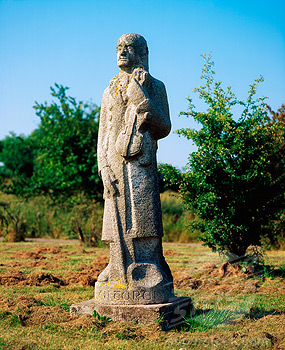

Raftery's poems; songs of life, love and liberty (my Grandmother's and Julia Heneghan's brother, John Patrick). (Also available here free online.)
Reincarnations by James Stephens (English language versions of Blind Raftery poems)
Songs Ascribed to Raftery by Douglas Hyde (This is the book by the former President of Ireland, reflecting his collection of Blind Raftery's works; bilingual.) (Also available here free online.)

Poets and Dreamers: Studies and Translations From the Irish by Lady Gregory (This book by one of the founders of Ireland's Abbey Theater, reflects stories about Blind Raftery collected by the author and some of his poems translated into English. The Blind Raftery material is in the first part of the book.) (Also available free online.)
Blind Raftery by Criostoir O Flynn (relatively new, bilingual edition)
 |
| The old Irish bank note with the first verse of Blind Raftery's "Raftery the Poet" in Gaelic on the blackboard. |
(I am Raftery, the poet)
by Antoine Ó Raifteirí
I am Raftery the poet,
Full of hope and love,
With eyes without light,
Calm without anguish.
Going back in my travels
With the light of my heart
Weary and tired
To the end of my journey.
Look at me now
And my back to the wall,
Playing music
To empty pockets.
Monday, July 20, 2015
On Being Black in America
There was a panel discussion at the recent Harlem Book Fair on “Wealth and Finance in Post-Civil Rights America”. I think one of the key points made by a panel member is that black people in the USA have significantly less wealth at all income levels than do whites at the same income levels. So why don't blacks save more?
- The have more expenses related to police and court action. (Ferguson reminds us that many jurisdictions make money from tickets and charging for court and jail costs; blacks are much more likely to face such costs.
- Blacks pay more in interest charges.
- Blacks do more physical labor, that breaks down the body -- which contributes to health problems and shorter life expectancy.
- Blacks get targeted more often by for-profit educational programs; they too often take out loans to pay for schooling that does not pay off in future earnings so they keep paying interest on loans that they can not pay off.
- Blacks live in neighborhoods where shopping is harder and more expensive.
A legacy of past racism and impact of current racism in America is that we don't think of these things, and that they are embedded in our institutions and policies.
FYI: Panelists were":
- Dalton Conley, the author of Being Black, Living in the Red: Race, Wealth, and Social Policy in America,
- William Tabb, the author of The Restructuring of Capitalism in Our Time, and
- Vesla Weaver, the author of Arresting Citizenship: The Democratic Consequences of American Crime Control.
Sunday, June 28, 2015
Deep Cultural Roots of the Regions of the USA

I quote at length from an article by Colin Woodward in the Tufts Magazine (Fall 2013)
I should underscore that my observations refer to the dominant culture, not the individual inhabitants, of each region. In every town, city, and state you’ll likely find a full range of political opinions and social preferences. Even in the reddest of red counties and bluest of blue ones, twenty to forty percent of voters cast ballots for the “wrong” team. It isn’t that residents of one or another nation all think the same, but rather that they are all embedded within a cultural framework of deep-seated preferences and attitudes—each of which a person may like or hate, but has to deal with nonetheless. Because of slavery, the African American experience has been different from that of other settlers and immigrants, but it too has varied by nation, as black people confronted the dominant cultural and institutional norms of each.
YANKEEDOM. Founded on the shores of Massachusetts Bay by radical Calvinists as a new Zion, Yankeedom has, since the outset, put great emphasis on perfecting earthly civilization through social engineering, denial of self for the common good, and assimilation of outsiders. It has prized education, intellectual achievement, communal empowerment, and broad citizen participation in politics and government, the latter seen as the public’s shield against the machinations of grasping aristocrats and other would-be tyrants. Since the early Puritans, it has been more comfortable with government regulation and public-sector social projects than many of the other nations, who regard the Yankee utopian streak with trepidation.
NEW NETHERLAND. Established by the Dutch at a time when the Netherlands was the most sophisticated society in the Western world, New Netherland has always been a global commercial culture—materialistic, with a profound tolerance for ethnic and religious diversity and an unflinching commitment to the freedom of inquiry and conscience. Like seventeenth-century Amsterdam, it emerged as a center of publishing, trade, and finance, a magnet for immigrants, and a refuge for those persecuted by other regional cultures, from Sephardim in the seventeenth century to gays, feminists, and bohemians in the early twentieth. Unconcerned with great moral questions, it nonetheless has found itself in alliance with Yankeedom to defend public institutions and reject evangelical prescriptions for individual behavior.
THE MIDLANDS. America’s great swing region was founded by English Quakers, who believed in humans’ inherent goodness and welcomed people of many nations and creeds to their utopian colonies like Pennsylvania on the shores of Delaware Bay. Pluralistic and organized around the middle class, the Midlands spawned the culture of Middle America and the Heartland, where ethnic and ideological purity have never been a priority, government has been seen as an unwelcome intrusion, and political opinion has been moderate. An ethnic mosaic from the start—it had a German, rather than British, majority at the time of the Revolution—it shares the Yankee belief that society should be organized to benefit ordinary people, though it rejects top-down government intervention.
TIDEWATER. Built by the younger sons of southern English gentry in the Chesapeake country and neighboring sections of Delaware and North Carolina, Tidewater was meant to reproduce the semifeudal society of the countryside they’d left behind. Standing in for the peasantry were indentured servants and, later, slaves. Tidewater places a high value on respect for authority and tradition, and very little on equality or public participation in politics. It was the most powerful of the American nations in the eighteenth century, but today it is in decline, partly because it was cut off from westward expansion by its boisterous Appalachian neighbors and, more recently, because it has been eaten away by the expanding federal halos around D.C. and Norfolk.
GREATER APPALACHIA. Founded in the early eighteenth century by wave upon wave of settlers from the war-ravaged borderlands of Northern Ireland, northern England, and the Scottish lowlands, Appalachia has been lampooned by writers and screenwriters as the home of hillbillies and rednecks. It transplanted a culture formed in a state of near constant danger and upheaval, characterized by a warrior ethic and a commitment to personal sovereignty and individual liberty. Intensely suspicious of lowland aristocrats and Yankee social engineers alike, Greater Appalachia has shifted alliances depending on who appeared to be the greatest threat to their freedom. It was with the Union in the Civil War. Since Reconstruction, and especially since the upheavals of the 1960s, it has joined with Deep South to counter federal overrides of local preference.
DEEP SOUTH. Established by English slave lords from Barbados, Deep South was meant as a West Indies–style slave society. This nation offered a version of classical Republicanism modeled on the slave states of the ancient world, where democracy was the privilege of the few and enslavement the natural lot of the many. Its caste systems smashed by outside intervention, it continues to fight against expanded federal powers, taxes on capital and the wealthy, and environmental, labor, and consumer regulations.
EL NORTE. The oldest of the American nations, El Norte consists of the borderlands of the Spanish American empire, which were so far from the seats of power in Mexico City and Madrid that they evolved their own characteristics. Most Americans are aware of El Norte as a place apart, where Hispanic language, culture, and societal norms dominate. But few realize that among Mexicans, norteños have a reputation for being exceptionally independent, self-sufficient, adaptable, and focused on work. Long a hotbed of democratic reform and revolutionary settlement, the region encompasses parts of Mexico that have tried to secede in order to form independent buffer states between their mother country and the United States.
THE LEFT COAST. A Chile-shaped nation wedged between the Pacific Ocean and the Cascade and Coast mountains, the Left Coast was originally colonized by two groups: New Englanders (merchants, missionaries, and woodsmen who arrived by sea and dominated the towns) and Appalachian midwesterners (farmers, prospectors, and fur traders who generally arrived by wagon and controlled the countryside). Yankee missionaries tried to make it a “New England on the Pacific,” but were only partially successful. Left Coast culture is a hybrid of Yankee utopianism and Appalachian self-expression and exploration—traits recognizable in its cultural production, from the Summer of Love to the iPad. The staunchest ally of Yankeedom, it clashes with Far Western sections in the interior of its home states.
THE FAR WEST. The other “second-generation” nation, the Far West occupies the one part of the continent shaped more by environmental factors than ethnographic ones. High, dry, and remote, the Far West stopped migrating easterners in their tracks, and most of it could be made habitable only with the deployment of vast industrial resources: railroads, heavy mining equipment, ore smelters, dams, and irrigation systems. As a result, settlement was largely directed by corporations headquartered in distant New York, Boston, Chicago, or San Francisco, or by the federal government, which controlled much of the land. The Far West’s people are often resentful of their dependent status, feeling that they have been exploited as an internal colony for the benefit of the seaboard nations. Their senators led the fight against trusts in the mid-twentieth century. Of late, Far Westerners have focused their anger on the federal government, rather than their corporate masters.
NEW FRANCE. Occupying the New Orleans area and southeastern Canada, New France blends the folkways of ancien régime northern French peasantry with the traditions and values of the aboriginal people they encountered in northeastern North America. After a long history of imperial oppression, its people have emerged as down-to-earth, egalitarian, and consensus driven, among the most liberal on the continent, with unusually tolerant attitudes toward gays and people of all races and a ready acceptance of government involvement in the economy. The New French influence is manifest in Canada, where multiculturalism and negotiated consensus are treasured.
FIRST NATION. First Nation is populated by native American groups that generally never gave up their land by treaty and have largely retained cultural practices and knowledge that allow them to survive in this hostile region on their own terms. The nation is now reclaiming its sovereignty, having won considerable autonomy in Alaska and Nunavut and a self-governing nation state in Greenland that stands on the threshold of full independence. Its territory is huge—far larger than the continental United States—but its population is less than 300,000, most of whom live in Canada.I think there is something to this. I belong to a History Book Club which is located in the Maryland suburbs of Washington, DC (part of what Woodward calls the Tidewater.) This is an area in which slavery held on rather late in U.S. history. The Club has tended to read widely, but to focus in U.S. history on history up to the Civil War, and thus on eastern United States history. At my suggestion the group is now reading about Texas history (early 19th century, when what was called Texas fell entirely in El Norte) and California history in the Spanish Colonial period. Earlier we had read about the Pueblo Revolt against the Spanish colonizers of what is now New Mexico. I believe that there is a heritage in El Norte that is different than that in Maryland. I suspect it will be useful for the club to explore histories of the other regions on the map above.
The map may be too clearly divided into regions. Texas, south of the Balcones Escarpment was importantly settled by slaveholding immigrants from the Deep South before the Texas revolution against Mexico. Thus this region has cultural roots that are both Hispanic and Deep Southern -- perhaps it should be rose grey on the map?
Here is an earlier map with similar pretensions:
 |
| Source: "Nine Nations of North America, 30 Years Later" by Joel Garreau in The New York Times |
Thursday, June 18, 2015
TV as a Factor in Elvis Presley's Career.

Elvis is of course a phenomenon, hugely popular in the late 1950s and early 60s, his popularity decreased. He went on a downward slide of use of (perhaps prescription) drugs, weight gain and crash diets, until his death at age 42 in 1977.
The book is very good at explaining how a certain kind of television show comes about and how it is made. For the early Elvis Presley television programs, he simply fit into a slot in a continuing variety show. His later shows were built around him (and in one case another established star -- Frank Sinatra). These were negotiated by his manager (Colonel Tom Parker), sometimes with the participation of his record company or a firm of agents.
Then one or two people were chosen to pull together the show. They would come up with a theme. Elvis would usually bring his own small band and backup singers. The producers/directors might add a network orchestra and dancers. There would be set design and construction. There would be a plan for the camera work, and the cameras and camera operators would be chosen. The book makes mention of the people working the sound system and the lights. There would be costume design, fittings, etc. as well as makeup. Sometimes new music would be selected or written for a TV show (coordinated with the record company, that would be thinking about issuing singles and albums to take advantage of the public interest that the TV special would generate). Colonel Parker would be looking at commercial tie-ins which might include sale of programs to live shows, sales of pictures and posters, fees to hotels or other businesses to be mentioned in the show, to food served in the venue. Since Elvis was such a gifted audience favorite, shows tended to have a live audience, and that would also involve arrangements, up to the selection of the lucky audience members. Finally, there would be an editing job to make a great show out of an abundance of film material. Moreover, network executives and representatives of the sponsors had to be consulted and their views taken into account (even if not accepted). The hour of light entertainment for the viewer was the result of a lot of work by a very gifted and skilled group of people.
I found myself looking into the technological changes that made the Elvis phenomenon possible: http://j.mp/1L3zzBw
I also thought about the more general cultural changes that were occurring during the 1950s and 60s: http://j.mp/1Li4MSz
What Was There About Society That Made the Elvis Phenomenon Possible?
After World War II, the American economy tooled up to meet the pent up consumer demand; people had money in their pockets and were willing to spend it on more comfortable housing, cars, and notably in terms of Elvis, electronics. Factories that had produced guns and ammo now used mass production techniques to meet the market demand with new and more affordable radios, cars with radios, record players, records, and starting in the 1950s, televisions. By 1956, a family might of an evening be found with the father in the living room watching the news and sports on TV, the mother in another room listening to top 40 music while doing chores, and the kids in still another room listening to records on the family record player.
The family still went to the movies, albeit less often, but might see one of Elvis' 27 movies (in the 60s), Mom and dad, or the teenage kids, or the whole family together might go out to a restaurant where they would hear music on the jukebox,
While by 1956 most families had a black and white TV (and would get color TVs in the 60s) the best entertainment was on one of the three networks. Thus, a program like The Ed Sullivan Show on Sunday nights would draw a huge audience, especially if there had been a lot of buzz about an act such as would occur when Elvis appeared in 1956.
Record stores were to be found conveniently to where most people lived, stocked with the latest 45 rpm hit singles and with hit albums. Even kids could now afford their products, and the top hits of the day sold like hot cakes.
The music audience had somewhat fragmented by the late 1950s and early 1960s, but there were indications that it was ready for something new. Elvis could draw a youth audience, some of the audience for country music, some of the black audience, and the audience for something new.
Then there was synergy. As more people bought his records, they were more interesting to radio disk jockeys and TV shows were more interested in featuring him. The jukeboxes brought in more money if they had his top hits, and so they did. People talked about his appearances on TV, and then went out to buy his records.
By the time Elvis arrived on the scene, the record industry was multinational, and he quickly got an audience abroad. For his 1968 television special, satellite broadcasting was possible, and in fact that special was the first to go world wide.
What Was It About Elvis That Allowed Him to Grow Rock and Roll So Big So Fast?
Allen Weiner, after his extensive interviews, seems to feel that Presley had a good voice and a good understanding of the music he performed (often based on the gospel music he heard as a child in church or the music of the black communities in which he lived as a young man). His overt sexuality worked at the moment in time that he was discovered and most popular. He was very good with audiences, and seemed to learn and repeat what worked with an audience.
I think that we also have to give credit to "Team Elvis". This fairly simple young man lucked out when he met the folk at Sun Records who recognized a talent in him, put him together with the right group, and made some good records. He was lucky to get on Louisiana Hayride, a well established show with a regional audience where he learned a lot about performing for the media.
He was exceedingly lucky when he signed on Colonel Tom Parker as his manager -- a man who had already developed a couple of music stars and who was full of ideas for getting Elvis' music before the public and able to negotiate the contracts to implement those ideas. The Team Elvis also included back up musicians and singers who fitted his music and stayed with him for years at a time.
When RCA Records signed him up, Team Elvis got their staff of people who got his records into the record shops, who got the radio disk jockeys to play his new releases, who helped get him good TV appearances, and who got his music onto the country's jukeboxes.
When Elvis got on a major TV show, others joined Team Elvis on a short term basis to build the audience for that show. When he did a TV special, the network PR staffs went all out. When he made a movie, the studio joined the team to publicize the film and to increase the buzz about Elvis.
And of course, fans by the million joined Team Elvis, buying his pictures and posters, playing his records for their friends, and adding to the buzz~
Final Comments
The book turns out to be very sad, telling a history of a nice young man with talent who becomes too famous and too rich too fast, loses his career and his health and dies young.
This book may not be for the died in the wool Elvis hater, nor the Elvis fan who knows all that it contains already, but I found it interesting and readable.
About the Culture in Which the Elvis Phenomenon Occurred"

The 1950s (The Silent Generation Comes of Age)
U.S. Population: 132.2 million in 1940, 151.3 million in 1950
U.S. Real GDP: $1.27 trillion in 1940, $2.27 trillion in 1950
Elvis Presley was raised in poverty, and had had only a relatively short career in the South before exploding into the national consciousness in the late 1959s,. Elvis began his TV career appearing multiple times on popular national TV programs in 1956 when he was 21 years old. He performed early in the years in six shows of Stage Show, hosted by Tommy and Jimmy Dorsey, a show that shared an hour time slot with Jimmy Gleason's very popular Honeymooners show. Then Presley appeared twice on The Milton Berle Show, again very popular, and The Allen Moore Show. There was an interview with Hy Gardner on a New York City station, and finally three appearances on The Ed Sullivan Show (the third in January 1957); the Sullivan Show appearances not only provided a large audience, but were a sort of "seal of approval" that Elvis Presley was a really big star! Elvis had four albums that topped the charts in the USA in the 1950s and 12 #1 singles plus two more that were in the top ten.
Consider a 16 year old girl in 1956 who was therefore born in 1940. Her parents had just lived through the Depression when she was born, the war was on in Europe, and Americans would fight World War II from 1941 through 1945. The Cold War would soon follow. The Korean War was fought from 1950 to 1953; President Eisenhower fulfilled a campaign promise and ended it. For a few years there was peace, and 1956 was for an American teenager a relatively peaceful time. That was the life experience of the girls in the audiences that screamed and made Elvis "the King".
I think there was a lot of interest in rebellious young people at the time. The Catcher in the Rye by J. D. Salinger.was published in 1951. Marlon Brando starred in The Wild One in 1953. James Dean starred in Rebel Without a Cause in 1955. Jack Kerouac published On the Road in 1957.
As I look back on the run up to the birth of Rock and Roll and the sudden stardom of Elvis, my first thought is of the "moon-June" music that I associate with the network radio that dominated home entertainment prior to television invading every living room in America. But that is not a full picture:
- "The Third Man Theme," redolent of Austrian cafes and featuring a zither solo, spent 11 weeks at number one on Billboard's U.S. Best Sellers in Stores chart in the 1950.
- "Goodnight Irene," written by Leadbelly (a black man who was in and out of jail) as sung by the Weavers was named by Billboard as the number one song of 1950.
- "The Tennessee Waltz, originally a country song, became a multimillion seller via a 1950 recording by Patti Page.
- "On Top of Old Smokey" -- a fok song -- was made hugely popular by The Weavers in 1951;
- 'Auf Wiederseh'n, Sweetheart" was ranked #5 for 1952 on Billboard, and was the first song recorded by a foreign artist to make number one on the U.S. weekly Billboard chart.
- 1953 saw "Vaya con Dios," "Eh, Cumpari!" and "C'est si bon" among Billboard's top 30 songs for the year.
- "Shake, Rattle and Roll" by Bill Haley and His Comets made the top 30 in 1954.
- Haley's "Rock Around The Clock' made number 2 in 1955.
- Elvis Presley had 5 of the top 30 Bilboard songs in 1956, but Carl Perkins version of "Blue Suede Shoes," Tennessee Ernie Ford's "Sixteen Tons" and Fats Domino's "I'm In Love Again" also made the top 30.
Maybe the American audience was looking around for some new music (or at least some of its now fragmented portions) and Rock and Roll was successful in the mid 50s in reaching a portion of that audience. Wikipedia says:
Accompanying Presley's rise to fame, a cultural shift was taking place that he both helped inspire and came to symbolize. Igniting the "biggest pop craze since Glenn Miller and Frank Sinatra ... Presley brought rock'n'roll into the mainstream of popular culture", writes historian Marty Jezer. "As Presley set the artistic pace, other artists followed. ... Presley, more than anyone else, gave the young a belief in themselves as a distinct and somehow unified generation—the first in America ever to feel the power of an integrated youth culture."

In November 1956, Presley made his film debut in Love Me Tender. In 1958, he was drafted into military service. He resumed his recording career in 1960, although recordings made before his military service and on leave were actually released during the time Elvis was in Germany.
Colonel Parker, Presley's manager broke new ground as television, top-40 radio, jukeboxes, record sales, movies, in-person concerts, and commercial tie-ins (posters, photos, concert programs, and even food) were combined in a synergy to increase Elvis' fame, increase his record sales, and make money!
The 1960s (Early Baby Boomers Become Adults)
U.S. Population: 179.3 million in 1960
U.S. Real GDP: $3.08 trillion trillion in 1960
I remember the 1960s as hard years. There was the Bay of Pigs and the Cuban Missile Crisis at the beginning of President Kennedy's term in office. The Cold War turned hot in Vietnam -- brought into American living rooms by TV -- and American involvement escalated through the decade. The Anti-War movement grew, and people took to the streets to protest the war. Johnson decided not to run again for President in 1968, and Nixon won, in part on his promise to end the war -- but the war went on. Bombing of North Vietnam did not sap the will of the enemy. A massacre in My Lai by American troops badly shook American public opinion. So too did the Tet Offensive of 1968. President Nixon began secret bombing of Cambodia in 1969, a bombing that continued into 1970. The U.S. public was shocked when college students were killed in 1970 by militia at Kent State University.
Foreign policy remained complex, demanding attention from government leaders if not from most of the American public. President Kennedy began the Alliance for Progress (in the Americas) and the Peace Corps. The Middle East demanded attention, as there was an Israeli-Egyptian War in 1967. As Cuba moved into the Soviet camp, Washington became concerned with Communist intrusion into other Latin American countries. Decolonization took hold after World War II, new nations in Africa and Asia took seats in international organizations, and often became surrogate battlegrounds for the Cold War principals; the political, economic and social development of Africa, Latina America and Asia became a concern. The former imperial European powers sought to adjust to their new, more-limited international role.
President Kennedy was assassinated in 1963, Martin Luther King, Jr. in April of 1968, and Bobby Kennedy in June of 1968. The Civil Rights Movement which had started in the 1950 continued and grew through the 60s. The movement contributed to the Civil Rights Act of 1964 and the Voting Rights Act of 1965, but also saw freedom riders killed and unforgettable televised police brutality against peaceful demonstrators in the South. A wave of inner city riots in black communities wracked the country from 1964 through 1970. President Johnson began a War on Poverty, assuring the country that it could afford guns and butter.
The Hippie movement, centered in San Francisco, captured the attention of the nation for a bit. While U.C. Berkeley got a lot of attention for the Free Speech Movement, university campuses across the nation became involved in counter culture activities. The Pill made more impact, and sexual mores were liberalized. Marijuana and other drugs were more in the news and more widely used.
The 16 year old girl Elvis fan of 1956 would be 26 in 1966. She might well be married and have children of her own, but she might also continue to be his fan. A new generation of young fans also had arrived, some having first heard Elvis on TV, radio or records at their mother's knee. Older fans were also recruited to the mix, including older folk. For that young mother, the world was perhaps a more threatening place than it had been a decade earlier.
As to the music scene, I quote from Wikipedia:
During the early 1960s, Britain's new wave of musicians gained popularity and fame in the United States. Artists such as the Beatles paved the way for their compatriots to enter the US market. The Beatles themselves were influenced by many artists, among them American singer/songwriter Bob Dylan, who was a lyrical inspiration as well as their introduction to marijuana. Dylan's early career as a protest singer had been inspired by artists like Pete Seeger and his hero Woody Guthrie. Other folksingers, like Joan Baez and Peter, Paul and Mary, took the songs of the era to new audiences and public recognition.
The music of the 1960s moved towards an electric, psychedelic version of rock, thanks largely to Bob Dylan's decision to play an electric guitar at the 1965 Newport Folk Festival. The newly popularized electric sound of rock was then built upon and molded into psychedelic rock by artists like The 13th Floor Elevators and British bands Pink Floyd and the Beatles. The Beach Boys' 1966 album Pet Sounds also paved the way for later hippie acts, with Brian Wilson's writing interpreted as a "plea for love and understanding." Pet Sounds served as a major source of inspiration for other contemporary acts, most notably directly inspiring the Beatles' Sgt. Pepper's Lonely Hearts Club Band. The single "Good Vibrations" soared to number one globally, completely changing the perception of what a record could be. It was during this period that the highly anticipated album Smile was to be released. However, the project collapsed and The Beach Boys released a downgraded version called Smiley Smile, which failed to make a big commercial impact but was also highly influential, most notably on The Who's Pete Townshend..........
The 1960s was also an era of rock festivals, which played an important role in spreading the counterculture across the US. The Monterey Pop Festival, which launched Jimi Hendrix's career in the US, was one of the first of these festivals. Britain's 1968–1970 Isle of Wight Festivals drew big names such as The Who, The Doors, Joni Mitchell, Hendrix, Dylan, and others. The 1969 Woodstock Festival in New York state became a symbol of the movement, although the 1970 Isle of Wight Festival drew a larger crowd. Some believe the era came to an abrupt end with the infamous Altamont Free Concert held by The Rolling Stones, in which heavy-handed security from the Hells Angels resulted in the stabbing of an audience member, apparently in self-defense, as the show descended into chaos.The Beatles broke up at the end of the decade, but other British bands soldiered on,
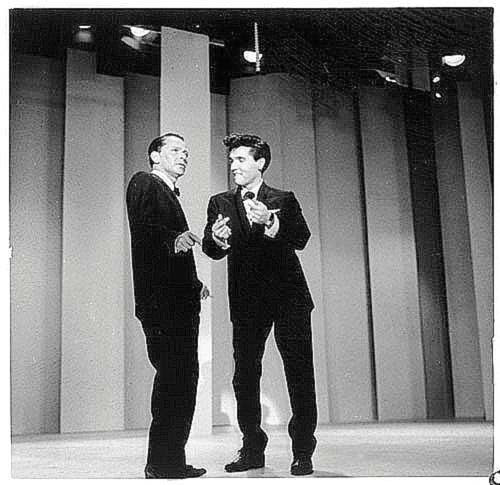
Elvis Presley began the 1960s with a TV special costarring with Frank Senatra. It was very well received, and effectively restarted his career with a bang after his two years of army service. Elvis turned out 27 movies in the 60s, commercializing on his reputation. They were virtually all profitable for Elvis, Parker and the movie studio, but had little serious value as film or to Elvis' career as a musician. In 1968, having missed out on much of the musical excitement of the decade, he made another TV special, Elvis. Author Wiener sees this show as marking a comeback for Elvis due to the show's very large TV audience (even if it failed to garner great critical success). The following years were devoted to touring for concerts. Those in Las Vegas and Tahoe were lucrative and important as the locale for the creation of his stage performance, but he toured the country extensively, packing in the audiences and making himself and his manager, Colonel Tom Parker a lot of money. However, this was for Elvis the early stage of a downward slide, marked by addiction to pills, weight gain, family problems (he was married in 1967 and his only daughter was born a year later), and loss of motivation for his career.
Elvis recorded music during the period; it continued to sell, making money for Elvis and Parker. He had four number one albums and two more in the top ten in the USA from 1960 through 1964. and then not another until 1969. Similarly, he had five #1 singles and five more that were in the top 10 from 1960 to 63, but only one #1 and two that hit #3 in the rest of the decade.
 |
| Elvis' home, and now visitors attraction |
The 1970s (More Baby Boomers Become Adults/The Hippies)
U.S. Population: 203.2 million in 1970, 248.7 million in 1980
U.S. Real GDP: $4.71 trillion trillion in 1970, $6.50 trillion in 1980
The Vietnam War ground on. The release of the Pentagon Papers by The New York Times and The Washington Post in 1971 undermined trust in the government statements and in its Vietnam policy. The Paris Peace Accords were signed in 1973 but were not accepted. President Nixon ordered U.S. ground troops to cross the Cambodian border in 1970, seeking to interdict Vietcong supply routes. A "Vietnamization" policy was initiated strengthening the armament of Vietnamese forces, but withdrawing U.S. forces. By the beginning of 1972, over 400,000 U.S. personnel had been withdrawn, virtually all combat troops. With public opinion in the U.S, against the war, and Democrats controlling the Congress and against the war, the South Vietnamese were increasingly left to fight the Vietcong on their own. The final invasion and surrender of Saigon came in 1975, again playing on TV in American living rooms. The majority of Americans were happy to see American losses in Vietnam put to an end.
Vice President Spiro Agnew resigned his office in 1973 having been charged with bribery, conspiracy and tax fraud. A break in at the Democratic headquarters in the Watergate in June of 1972 unraveled into the Watergate scandal that would end the Nixon Administration and result in the first resignation of an American president. Day after day, newspapers screamed stories of illegal acts planned and carried out by White House operatives, a massive cover up, slush funds, and involvement reaching up to the president himself. A special prosecutor was appointed, key leaders in the Department of Justice resigned rather than carry out the president's orders, and President Nixon finally resigned from office on August 9, 1974.
1973 was the first of the oil shocks as the Oil Exporting Countries exercised their monopoly power by reducing exports and thus raising oil prices. Not only did this result in long lines at gas stations in the USA, but in a global financial crisis (the financing of needed oil imports) and in crucial fuel shortages for the South Vietnamese government that helped bring on its military collapse. There would be another energy crisis in 1979.
The 70s were a time in which women's issues came more to the fore -- women's rights and feminism. More women entered the workforce, Rowe vs. Wade in 1973 established a woman's right to abortion, and other changes advanced the lives of women. It was also a time when the environmental movement gained momentum. In 1970, the United States celebrated its first Earth Day in which over two thousand colleges and universities and roughly ten thousand primary and secondary schools participated.
That 16 year old girl of 1956 was 36 in 1976 -- possibly still an Elvis fan. The Presley fan base added men as well as women, and many younger than his now maturing original fans, but also older people, some of whom were drawn by his gospel music or his country tracks. But that 36 year old woman was now more mature, with more concerns in her personal life, and much more distrusting of government. Depending on her political ideology, she might be happy or disconcerted by the social changes in the country; she would have more political and cultural power, were she to choose to use it.
I quote from Wikipedia again on the music scene:
The early 1970s saw the rise of many diverse forms of popular and rock musical styles, including jazz rock (aka "fusion"), southern rock, folk rock, and soft rock, with the latter including recording artists such as The Carpenters, Carole King, and James Taylor. It also included the rise of such popular, influential rhythm and blues (R&B) and Motown artists as Stevie Wonder, The Temptations, and The Jackson 5.
Funk, an offshoot of Soul music with a greater emphasis on beats, influences from rhythm and blues, jazz, and psychedelic rock, was also very popular. The mid-1970s also saw the rise of disco music, which dominated during the last half of the decade with bands like the Bee Gees, ABBA, Village People, Boney M, Donna Summer, KC and the Sunshine Band, etc. In response to this, rock music became increasingly hard-edged with British early metal artists like Led Zeppelin, Black Sabbath, and Deep Purple. Minimalism also emerged, led by composers such as Philip Glass, Steve Reich and Michael Nyman. This was a break from the intellectual serial music of the tradition of Schoenberg which lasted from the early 1900s to 1960s.
Experimental classical music influenced both art rock and progressive rock genres with bands such as Yes, Pink Floyd, Supertramp, Rush, Genesis, King Crimson, Emerson, Lake & Palmer, Jethro Tull, The Moody Blues and Soft Machine. Hard rock and Heavy metal also emerged among British bands Led Zeppelin, Queen, The Who, Black Sabbath, UFO, Deep Purple, Uriah Heep, and Judas Priest. Australian band AC/DC also found its hard rock origins in the early 1970s and its breakthrough in 1979's Highway to Hell, while popular American rock bands included Aerosmith, Lynyrd Skynyrd and "shocksters" metalists Alice Cooper, Blue Öyster Cult, and Kiss, and guitar-oriented Ted Nugent and Van Halen. In Europe, there was a surge of popularity in the early decade for glam rock. The mid-'70s saw the rise of punk rock from its protopunk/garage band roots in the 1960s and early 1970s. Major acts include the Ramones, Blondie, Patti Smith, the Sex Pistols, and The Clash, while seminal band The Runaways would produce 1980s solo recording artists Joan Jett and Lita Ford. The highest-selling album was Pink Floyd's The Dark Side of the Moon (1973). It remained on the Billboard 200 albums chart for 741 weeks.The Wikipedia discussion goes on to mention art rock and progressive rock genres, jazz-rock fusion and the beginning of Hip Hop music in the late 70s. John Lennon was assassinated in 1980.
 |
| Presley from Hawaii in 1973 |
Wikipedia sums up his career in these paragraphs:
Presley is one of the most celebrated and influential musicians of the 20th century. Commercially successful in many genres, including pop, blues and gospel, he is the best-selling solo artist in the history of recorded music, with estimated record sales of around 600 million units worldwide. He won three Grammys, also receiving the Grammy Lifetime Achievement Award at age 36, and has been inducted into multiple music halls of fame. Forbes named Elvis Presley as the 2nd top earning dead celebrity with $55 million as of 2011........
As the catalyst for the cultural revolution that was rock and roll, he was central not only to defining it as a musical genre but in making it a touchstone of youth culture and rebellious attitude. With its racially mixed origins—repeatedly affirmed by Presley—rock and roll's occupation of a central position in mainstream American culture facilitated a new acceptance and appreciation of black culture.Many videos of Elvis are now available for viewing online.
 |
| Elvis circa 1977 |
Friday, May 08, 2015
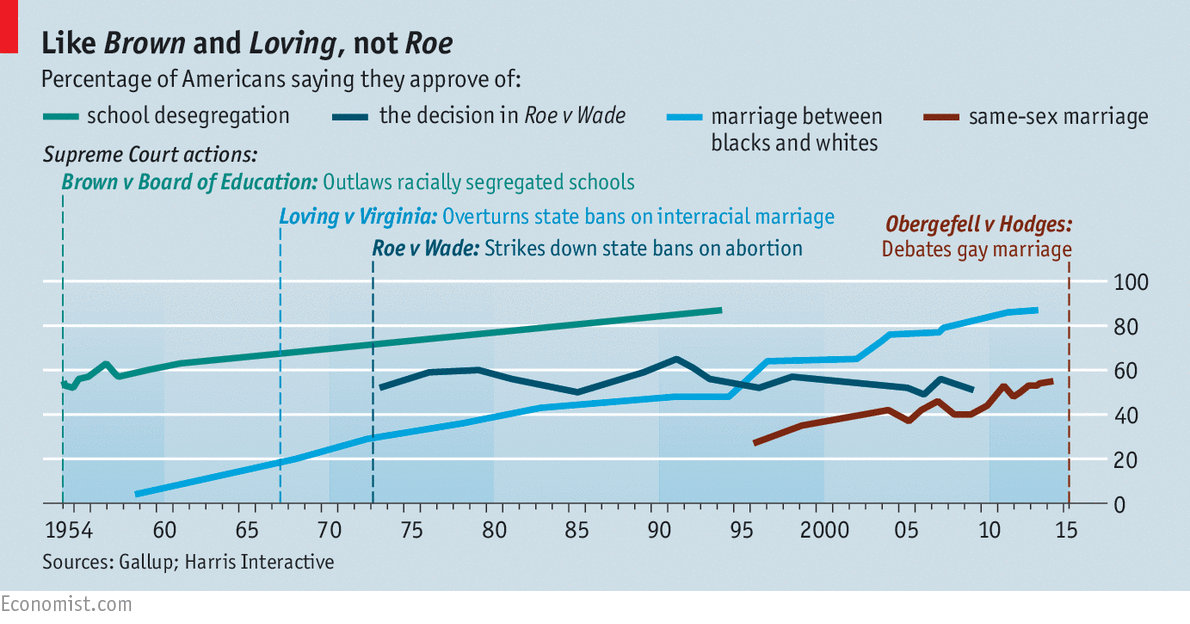
The Rate of Change of Public Opinion on Selected Human Rights Issues
 |
| Source: The Economist |
I don't know if my opinion means much, but it seems to me that we have separation of church and state. If a religious institution wants to define marriage in its own way, it is free to do so. Civil law marriage seems to me to be about a single act defining a number of conditions simultaneously, some of which could be done by individual legal instruments (wills, powers of attorney, designation of heirs, etc.) and some of which require "marriage" (inheritance under social security, parental rights, etc.) I am with the majority of Americans favoring same-sex marriage, although perhaps it is time to reconsider some of our public policies. Thus I think a same-sex couple raising children is more similar in terms of social security to a male-female couple raising children than it would be to a male-female couple with two earners and no children.
Sunday, April 05, 2015
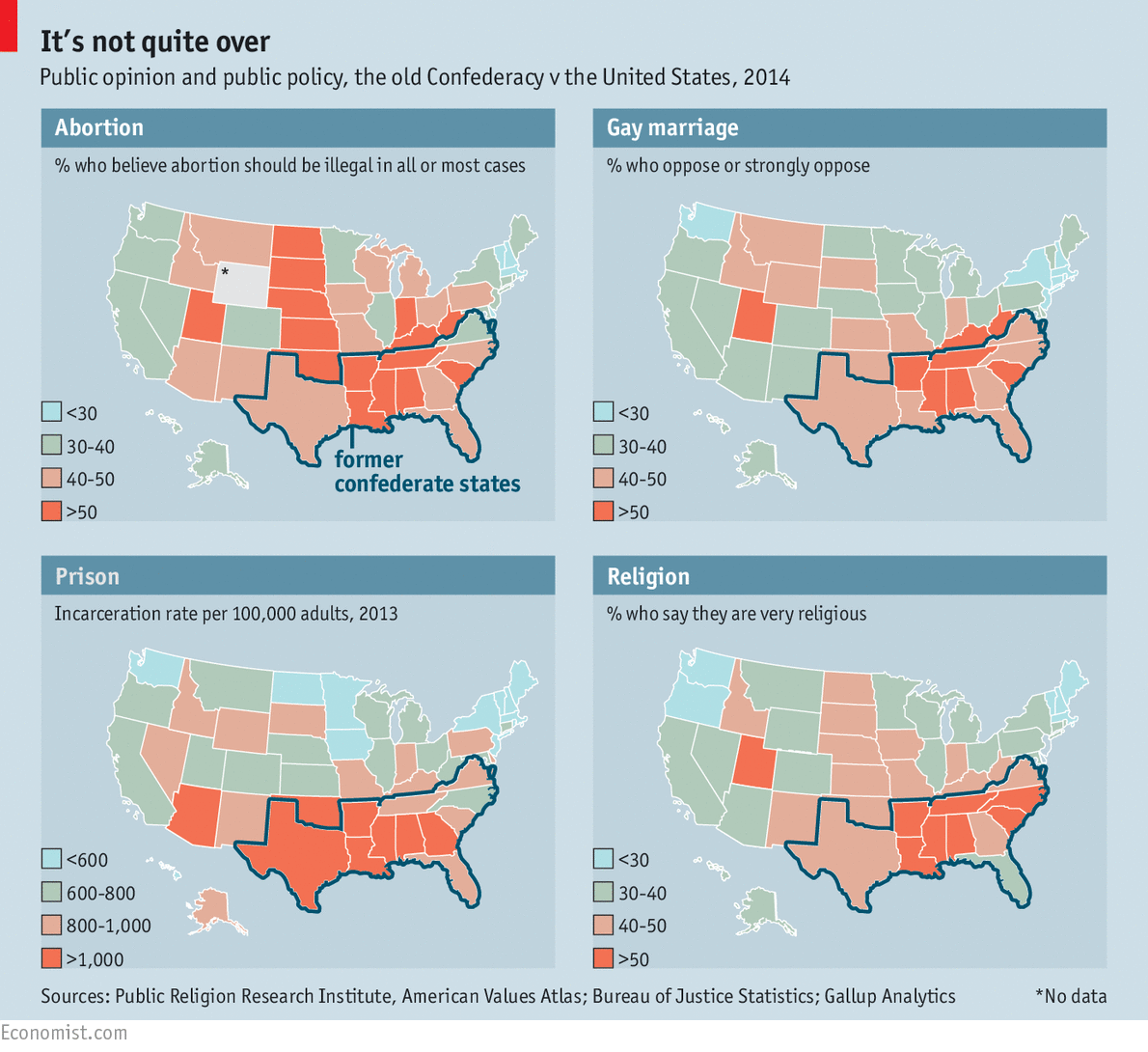
The Culture Wars in the USA
 |
| Source: The Economist |
Thursday, March 26, 2015
Lets at least get rid of the word "racism"
I suppose what bothers me is that the term allows bigots to continue believing that there is some significant genetic difference between African Americans and European Americans based on their races -that is their genetics. Race is a social concept, dividing people according to culturally transmitted classification schemes.
Scientists now know that genetics are the basis of heredity, and that the genetics of human populations today are complicated. (Check out this interactive map, for example.)
Scientists know that Homo sapiens as a species emerged in Africa, and went through hard enough times that the species was reduced to very small numbers from which all modern humans are descended. Thus it is perhaps an acceptable generalization that we are all members of the human race.
While the majority of Homo sapiens remained in Africa, some migrated into the Eurasian land mass and the species spread across Europe and Asia; some humans later migrated to Australia, the Americas and various islands. Thus, I suppose all Americans are all genetically African Americans; we share most of our genetic heritage with all Homo sapiens because we are all relatively recently descended from Africans (at least as geneticists think of evolutionary time.)
Local variations occurred and some as a result of natural selection became common in local human populations. There was most genetic diversity in Africa, the continent of origin of the species and thus the continent of longest genetic history of Homo sapiens.
It appears that there has been some introduction of genes into human populations from non-human sources. Thus it would appear that a relatively small number of genes was introduced into European human populations from Homo neanderthalensus; some of them were sufficiently useful to be retained at least locally; these include perhaps the genes for light colored skin and hair.
Anyone who has watched Finding Your Roots on TV will have a pretty good idea that African Americans tend to have a lot of European ancestors. (I remember a "Black" friend who told me after we had known each other for years that one of her grandfathers came from Ireland and the other grandfather came from Germany; I was kind of annoyed that in public she tended to deny her Irish ancestry -- something that Barack Obama does not do.) So not only do African Americans tend to have European ancestors, European Americans tend to have African ancestors. (My Irish ancestors had the belief that they descended from a people who in relatively recent times migrated from Asia via North Africa to Spain and then Ireland.)
"Hispanics" are even more clearly defined by culture than genetics, since it tends to be their common heritage of the Spanish language that defines the group. Hispanics may trace their ancestry to Spain, but in Spain people tend to be divided into such categories as coming from Aragon, Caatile, Catalonia, the Basque country, Galicia, etc. Historically in Latin America categories such as Mestizo (both Spanish and American Indian ancestry), Mulato (Spanish and African ancestry) and Zambo (European, African and American India ancestry) with torturous nomenclature for different combinations of ancestors. I find it impossible to use genetics as a basis for distinguishing Hispanics from other taxonomic groups of Homo sapiens.
So as long as the United States is stuck with prejudice of one group against another, lets find a better term. We have religious prejudice and class prejudice, why not use terms such as "cultural prejudice" or "ethnic prejudice" instead of "racial prejudice"?
The world's most and least ethnically diverse countries
 |
| Source |
Sunday, March 22, 2015
Racism and a Broken Justice System
 |
| Source: The Economist |
Robert Putnam is a former dean of Harvard’s Kennedy School of Government and the author of “Bowling Alone” (2000), an influential work that lamented the decline of social capital in America. In his new book, “Our Kids”, he describes the growing gulf between how the rich and the poor raise their children. Anyone who has read “Coming Apart” by Charles Murray will be familiar with the trend, but Mr Putnam adds striking detail and some excellent graphs (pictured).College graduates are shown to have vastly different average life experiences than people with no more than high school education in the USA. The fourth graph -- showing that kids from families in the upper quarter of the income distribution have much better chances of graduating from college than do kids from the lower quarter, with comparable pre-college grades -- is especially disturbing.
I recently watched a Book Discussion on The Political Roots of Racial Tracking in American Criminal Justice. Nina Moore in that talk focused on the racism that is structured in our criminal justice system, leading to a number of serious national problems in the USA. She described four categories of research (to which I do not do justice in the following bullets):
- Deliberate of subconscious discrimination on the part of lawmakers and law enforcement officers;
- The way the legal system applies the laws, especially the way the criminal justice system functions (e.g. mandatory sentencing laws);
- The way racism is reflected in socio-economic disadvantage to Black and Hispanic people in the USA, leading to more criminal acts by Blacks and Hispanics (e.g. if one can not get a good job, one is much more likely to seek income and opportunity via criminal activity)
- A culture of violence in these minority communities -- community values that are more accepting of criminal behavior than those of the White and the more affluent communities.
Moore goes on to suggest that the politicians create the laws that they do, because those laws are responsive to public opinion, and the public opinion is formed by a media that overstates the risks of drugs and crime and that portrays the general public as being at risk from the Black and Hispanic communities. She points out that the poorer Black and Hispanic communities themselves are much more victimized by crime than are White and more affluent communities, and that crime rates have actually been low and decreasing.
I find it persuasive that kids brought up by single mothers (who are often working very hard to keep bodies and souls together under conditions of poverty), in communities where the schools are bad, are more likely to be denied decent jobs and are more likely to commit crimes.
It also seems likely to me that police tend to police more where crimes are more likely and more likely to be detected. After all, it is hard to see how many crimes have been prevented, but easy for police to see how many people have been arrested and convicted.
I hate to see another generation of American Blacks and Hispanics suffer the lack of opportunity that stems from this racism. It is not just, but it is going to hurt everyone in the country as its people will on average be less ready to compete in a global economy than they might be.
I suspect that "the War on Drugs" is wrong-headed, and that better means should be used to deal with addiction. I suspect that mandatory sentencing laws are dysfunctional, and should be eliminated. But I suspect the real effective action would be to take on racism directly, and that a first step would be to improve schools for Black and Hispanic kids in the USA.
Friday, March 13, 2015
Americans Are Measurably Exceptional in Some Ways

The graph is from an interesting report by the Pew Research Center showing several ways in which the people of the United States are culturally unusual. Notable, there tends to be a relationship between affluence (as measured by per capita GDP) and adherence to formal religions and participation in religious activities; the richer the country, the more secular it seems to be. The United States stands out since its citizens report that religion is important in their lives at rates comparable to much less affluent country residents, and to a greater extent than do British, Australians, Canadians, French, Japanese and Israelis. Check the report for some other examples of ways in which Americans respond differently than might be expected on survey questions.
Saturday, February 21, 2015
The Variation in Religious Attendance in the USA
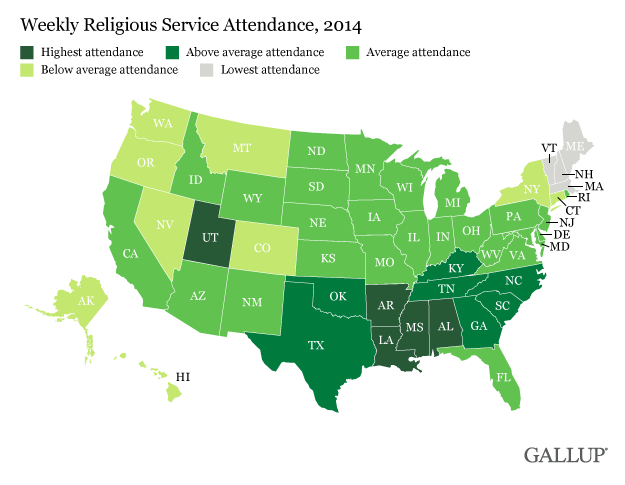
These results are based on Gallup Daily tracking interviews throughout 2014 with 177,030 U.S. adults, and reflect those who say "at least once a week" when asked, "How often do you attend church, synagogue or mosque -- at least once a week, almost every week, about once a month, seldom or never?" Church attendance self-reports are estimates, and may not reflect precise week in and week out attendance, but provide an important measure of the way in which Americans view their personal, underlying religiosity. In particular, the focus on the top category of "weekly" attendance yields a good indicator of the percentage of each state's population that is highly religious, and for whom religion is likely to be a significant factor in their daily lives.......
The state-by-state variations in church attendance are significant because attendance is a powerful indicator of underlying religiosity, which in turn is related to Americans' views on life, culture, society in general and politics. For most segments of U.S. society -- blacks being the exception -- those who are the most religious are also most likely to be Republican, which helps explain the significant relationship between states with the highest church attendance and those that are traditionally red states. Church attendance also provides ties that bind members to their communities, and research shows that at the individual level, those who are most religious have higher well-being than those who are less religious.Utah has the highest rate of churchgoing residents, attributed to the large Mormon population and the high rate of church service attendance among Mormons.
Comparison Maps
 |
| Source |
Nationwide, the creative class totals more than 40 million workers, more than a third of the total workforce, including professionals in the fields of science and technology, design and architecture, arts, entertainment and media, and healthcare, law, management and education.
 |
| Source |
Wednesday, February 18, 2015
The Angels and Devils of Our Nature

Though passion may have strained it must not break our bonds of affection. The mystic chords of memory, stretching from every battlefield and patriot grave to every living heart and hearthstone all over this broad land, will yet swell the chorus of the Union, when again touched, as surely they will be, by the better angels of our nature.My last post asked if Texas will remain Texas in the future in spite of all the changes that will come to the state. I believe the question was meant to be, will the people living in Texas in the future share the values of the people living there now. My guess is that people in Texas today do not all share the same set of values, nor will they in the future, but that the dominant values in the future will differ from those of today. Indeed, one of the lessons from the study of history is that the past is a different country, and we should not judge people of the past by today's standards.
Abraham Lincoln, First Inaugural Address
I quote President Lincoln for a couple of reasons. One is that 150 years ago President Lincoln believed that "the better angels of our nature" would come to the fore, and that people who sought to secede from the Union would again "swell the chorus of the Union". There are people in Texas who still call for secession from the Union (and people elsewhere who would let them go).
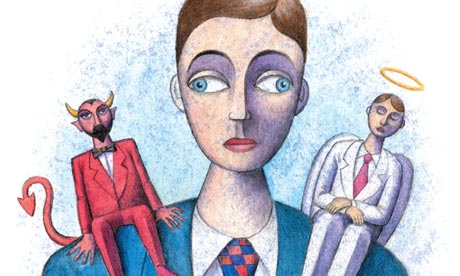
The other reason is to suggest that there are devils of our nature as well as angels, and that both seem to weigh in on changes in values. The Civil War freed the slaves but Jim Crow came to replace chattel slavery, especially in the South. The work ethic led to prosperity, but the nation suffered once and suffers again from a acquisitive class that most of us feel appropriates far more than its fair share of the income and wealth of the nation.
Today we have red and blue states and culture wars. However our values evolve, I would bet that there will be some people longing for the good old days when -- according to their beliefs -- people had better values. I would also bet that there will be people hoping for a better future when people will at last achieve the nation that -- according to their beliefs -- was implicit in the hopes and dreams of the founding fathers.
Global Views on Morality
 |
| Source: Pew Research Center |
Monday, February 16, 2015
Will Texas Stay Texas
plus ça change, plus c'est la même chose
the more the change, the more it is the same
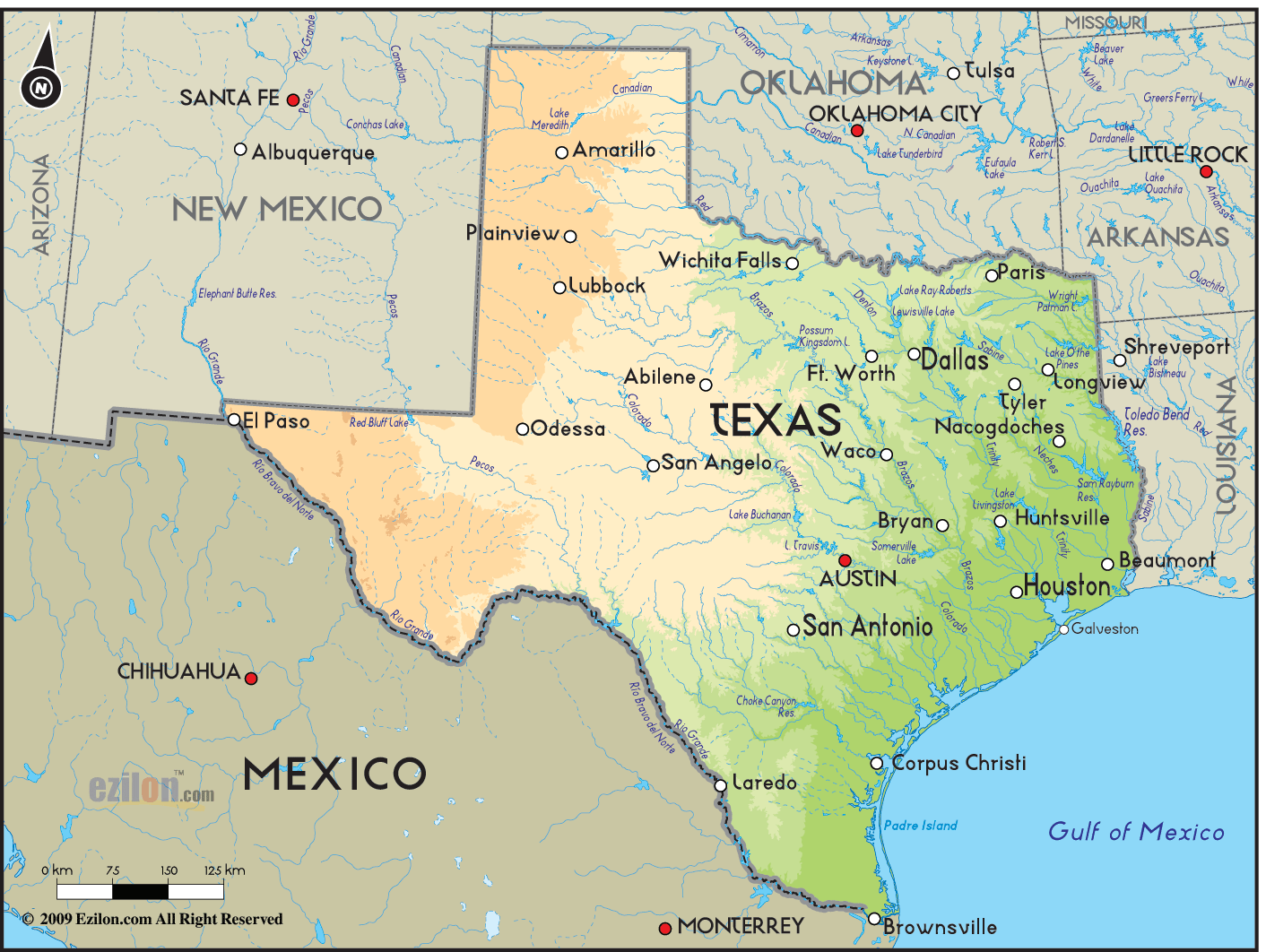
Yesterday I watched a televised talk by Richard Parker about his book Lone Star Nation: How Texas Will Transform America. In that talk he described massive changes that will occur in the state, from increased urban population, migration from the rest of the United States to the triangle formed by Huston -- San Antonio and Dallas-Fort Worth, increase in the portion of the population of Hispanic ancestry, changes in the religious makeup of the population, and changes in the economy of Texas, the nation and the world. Then he addressed the question, will Texas remain Texan?
 |
| Source |
This year marks the 60th anniversary of my graduation from high school. A decade ago I returned to Los Angeles to meet with five of my close friends from high school for a mini-reunion. It was an interesting experience. On the one hand, I drove past the school and the house I lived in when I was in high school and they were both there, although they seemed smaller than I remembered them. On the other hand, the culture of the neighborhood seemed to have changed a great deal. Indeed, California had changed a great deal (I had lived out of the state for more than 40 of the 50 years, but California continues to make news.) Perhaps you need to be old to perceive how much things change.
Texas today is not the same as it was when it was inhabited only by Indians, nor when it was part of Mexico, nor when it was the Lone Star Republic, nor when it was thought by its inhabitants to be one of the states of the Confederate States of America. It is not the same as it was in the reconstruction, nor in the depth of its Jim Crow past. Why should it be the same a half century in the future as it is now?
On the other hand, Texas culture today bears legacies from its history as Texas in the future will almost certainly bear legacies from today.
I think of the United States as a whole. We benefit from the political legacy of Washington, Madison, Jefferson, Jackson and Lincoln; we benefit from the economic legacy of centuries of investment in the nation's productive capacity and economic institutions. On the other hand, we suffer from the racist legacy of slavery and Indian wars and removals; we have perhaps been too warlike a people. The question is whether we will listen to the better angels of our nature to achieve a more just, more perfect society; alternatively we may fall back to evils of the past or discover new evils in which to indulge ourselves/
So too, Texas may become more Texan as it evolves in the future. (Some would dread that possibility.) It may become more like the rest of the country, or it may evolve into something really new.
Wednesday, February 04, 2015
Languages convey ideas, and sometimes you need another language to convey a specific idea well.
From an interesting article:
Friluftsliv: the Norwegian concept that being outside is good for human beings' mind and spirit.
Shinrin-yoku: a Japanese term that means "forest bathing": The idea being that spending time in the forest and natural areas is good preventative medicine, since it lowers stress, which causes or exacerbates some of our most intractable health issues.
Wabi-sabi: the Japanese idea of embracing the imperfect, of celebrating the worn, the cracked, the patinaed, both as a decorative concept and a spiritual one.
Jugaad: a Hindi word that means "an innovative fix" or a "repair derived from ingenuity,"
Some words from other languages clearly convey feelings that I have had that are hard to convey in English. Susto from the Spanish is another such word.
Monday, January 05, 2015
Cultural Groupings Show Up in the World Values Survey
/cdn0.vox-cdn.com/uploads/chorus_asset/file/2886428/image.0.png) |
| The Ingelhart-Welzel Cultural Map of the World. (NB: the green cluster in the center of the map is unmarked, but is labeled South Asian.) |
This is an old graph that still carries a lot of information, that has shown up in a new publication.
Using data from the World Values Survey (WVS), professors Ronald Inglehart of the University of Michigan and Christian Welzel of Leuphana University created this amazing Cultural Map of the World......
According to WVS, traditional values (the bottom of the y-axis) emphasize religion, traditional family values, parent-child ties, and nationalism. Those with these values tend to reject abortion, euthanasia, and divorce. On the other hand, those with secular rational values (the top of the y-axis) place less preference on religion and traditional authority, and are more accepting of abortion and divorce.
The x-axis tracks survival values versus self-expression values. Survival values emphasize economic and physical security and are linked with ethnocentrism and low levels of tolerance. Self-expression values, according to WVS, "give high priority to environmental protection, growing tolerance of foreigners, gays and lesbians and gender equality, and rising demands for participation in decision-making in economic and political life."It is a useful reminder that cultures are different, and people of different cultures really do have different values. One of the problems with foreign aid is that people from one culture (typically on the right hand side of the figure shown) are designing projects and giving funds to meet the (perceived) needs of people of another culture (typically from the lower or left side of the figure).
Sunday, December 07, 2014
Generally, people in rich countries think people can be moral without believing in God.
 |
| Source |
Many people around the world think it is necessary to believe in God to be a moral person, according to surveys in 39 countries by the Pew Research Center. However, this view is more common in poorer countries than in wealthier ones........
The U.S., however, stands out as a clear exception to this pattern. Americans are much more likely than their economic counterparts to say belief in God is essential to morality.So what accounts for the differences in developed countries?
There are also significant divides within some countries based on age and education, particularly in Europe and North America. In general, individuals age 50 or older and those without a college education are more likely to link morality to religion. For example, in Greece, 62% of older adults say it is necessary to believe in God to be a moral person, while just 29% of 18- to 29-year-olds agree. In the U.S., a majority of individuals without a college degree (59%) say faith is essential to be an upright person, while fewer than four-in-ten college graduates say the same (37%).I offer the hypothesis that the U.S. is such an outlier among affluent countries. This is a country that has had a history of religious diversity, and since the founding of the USA there has been a separation of state and church. Thus churches have had to compete for members, churchgoers, and resources. They have successfully done so, so that there are more people in the USA who say that religion is important in their daily lives than in other affluent countries. I would suppose that people who so respond are more likely to feel that religion is the basis of morality.
Friday, October 03, 2014
More on the living legacy of Blind Raftery
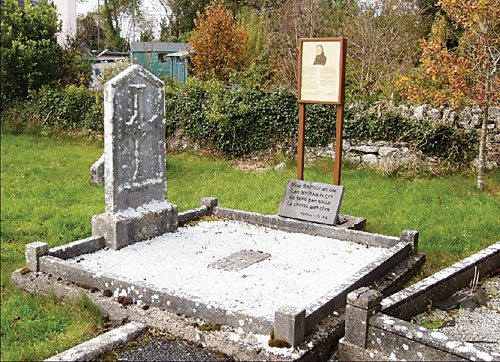 |
| Anthony Raftery's grave at Killeeneen, near Craughwell |
I recently posted a thought about the need to use cultural heritage in creating new cultural products. I did so using an example from my personal cultural heritage, an ancestor called Blind Raftery.
Here is a poem by my Grandmother's brother, John Patrick Raftery, from his book. Raftery's Poems: Songs of Life, Love and Liberty. He too was descended from Blind Raftery.
DEAR OLD CLAREMORRIS TOWN.
In fancy I am roaming now, where the hills are smiling down
On gabled roofs and streets I loved, dear old Claremorris town;
And all the tender thoughts of years come rushing back today,
To one who here in exile dreams, four thousand miles away.
Four thousand miles from Sweet Mayo, the ocean waves between,
My spirit ship a-gliding o'er to hills and valleys green,
To lake and stream and woodland sweet and bogs of purpl'd brown,
I see them all a-stretching out from dear old Claremorris town.
0, memory, good, kind, trusty friend, untrue you've never been.
With brush of skill you paint at will my boyhood paths again.
Once more I roam round home, sweet home, a happy, care-free boy,
When life was one long golden hour of bliss, fond hope and joy. ,
I'm passing now by Mophill lake, I he road leads to Brookhill;
I cross o'er meadow, dale and brake and out by Donlon's mill
And on thro' Tubber alley dark and up each slight incline
'Till now I stand upon the hill overlooking old Crossboyne.
From here the winding Robe rolls on, a silvery streak through green,
Then 'cross the sweep of purple moor, meandering by Tauheen,
Thru PuUaweela, dear old spot, by Hollymount to go.
0, fain would I just follow on its course through Sweet Mayo.
But I must with my wandering soul keep to the well-known track.
By Hamilton's green vine clad cot to Ballindine, then back
Thro' wood and moor until I reach where smiling hills look down
Upon the streets my boyhood knew, dear old Claremorris town.
My spirit still a-journeying on to holy Knock I go,
O'er six long miles of hill and dale, each footstep well I know.
By Gastlegar and Reaney's mill, the road to Ballinsmall,
Ballybreheany lake and Loughnamon, Barnacarroll, Rockfield— all.
0, sure, the places come so fast, e'en thro' the lapse of years,
Who wonders that the exile's eyes are now bedimmed with tears,
But thro' their mist I see again the green hills smiling down
Upon the spot I e'er will love, dear, dear Claremorris town.
I'm roaming now up Killeen hill, Kilbeg looms into view.
The old bogroad, next comes Drumkeen, then Ballygowan, too,
And then beyond the railroad bridge, one fork leads to Kylemore,
The other on thro' Meelick, then Gloonconnor hill, Asthore.
From here the workhouse I can see and also sweet Brookhill,
The glistening lake between them both, its waters calm and still.
And again the picture greets my eyes of green hills smiling down
Upon the streets and gabled roofs of dear Claremorris town.
In fancy I the longing feel that comes o'er me, you know.
To see again in all its bloom the old fort at Arflroe,
To drink a draught of purest air, perfumed by hawthorn sweet.
And gaze enrapt at miles of moor, enpurpling at my feet,
Bohergarra lake, Mayfield beyond, then Carrasteelaun hill.
0, wonder not those pictured scenes my eyes with sad tears fill,
That with blest St. Michael's on the mount like angels e'er smile down
Upon the streets my boyhood loved, dear, dear Claremorris town.
To Mount street I send my best wish, my heart's love to the Square,
A kiss I send to James street, 0, would that I were there.
To Church street, where I went to school, I send a heart felt sigh,
I wish that I could lapse the past and once more be a boy.
But, ah, friends, sure that cannot be; life now must run its span,
But ore I die I hope to see where my life's path first began,
And tread once more those emerald hills that smilingly look down
On streets and homes my boyhood knew in loved Claremorris town.
—May, 1912.
Compare this with what is described as a rough translation of the lyrics of Anthony Raftery's song Cill Aodain.
Now coming of the Spring, the day will be lengthening,
And after St. Bridget's Day, I shall raise my sail.
Since it entered my head I won't stay still
Until I shall stand down in the center of County Mayo.
In Claremorris I will be for the first night,
And in Balla down below it, I'll begin to drink.
To Kiltimagh I'll go and spend a month’s visit there
Two miles close to Ballina.
I swear to you my heart's uplifted
Like the rising wind or the drifting fog
When I think of Ceara or Gailleang behind it
Of Milebush or the plains of Mayo.
Cill Aodáin's the town where everything grows,
There's berries and raspberries, and respect for all
If only I was standing in the midst of my people
The years would roll from me and I'd be young again!
I don't know whether John Patrick Raftery knew of this poem (which was included in Douglas Hyde's Songs Attributed to Raftery published in 1903) but it seems likely to me that he would have been. Alternatively he might have heard Cill Aodain as a boy in Claremorris. In any case, I can see a relation between the two poems, written a century apart.
Here is a video with a beautiful version of the song. And here is a book by Terry McDonagh titled Cill Aodáin & nowhere else in which he describes as offering "tribute to the great Anthony Raftery of his home place".
Again, I love the living legacy of Blind Raftery, echoed in the work of poets and musicians long after his death, and long after he was almost lost to history.
Wednesday, October 01, 2014
Cultural Heritage Should Be Part of Cultural Evolution
It seems to me that too often people have the idea that heritage should be conserved, while I suspect that it is better to use cultural heritage in an evolving culture. Let me give an example from my own personal cultural heritage.
|
| Impression of the Poet Anthony Raftery by Donal MacPalin |
Raftery's works would have disappeared except for the fact that people liked them and kept them alive. The people of the west of Ireland learned his songs and sang them for a hundred years. They memorized the poems, and some copied them out and kept the copies.
A century later, there was an Irish revival. As part of Irish nationalism, some intellectual leaders began to promote traditional Irish sports, traditional Irish music, and the Irish language. The rediscovery of Blind Raftery was part of this effort.
Douglas Hyde, later President of Ireland, traveled the west of Ireland, collecting poems and songs from the oral tradition. In the process he collected many of Raftery's and published them with biographical notes in the book, Songs Ascribed to Raftery. Lady Gregory, perhaps best known today as the co-founder with Nobel laureate William Butler Yeats of Dublin's Abbey Theater, also collected Raftery's work. She published some with a brief biography in her book, Poets and Dreamers.
Today, Raftery's best known poem is "Is Mise Raifteirí" - "I'm Raftery", probably because it is short and is taught has been taught for generations in Irish schools, where students have had Irish as a required language. Here are the first verse in Irish and in English translation:
 |
| Old Irish banknote showing Irish being taught in school with Raftery the Poet in Irish on the blackboard. |
Lán dúchais is grádh,
Le súile gan solas,
Le ciúnas gan crá.
I'm Raftery the poet,
Full of hope and love,
With eyes without sight,
My mind without torment.
There was a novel titled Blind Raftery and his Wife, Hilaria by Donn Byrne published in 1924. It was a work of fiction, only very loosely related to the real Anthony Raftery, but apparently it reached best seller status in its time. There was even an opera Blind Raftery by Joan Trimble published in 1957 (and played on BBC).
Raftery continues in modern Irish culture. Here is a version of his poem Mary Hynes performed by Liam Clancy (one of the Clancy Brothers singing group):
A new edition of Raftery's poetry (in Irish with English translations) was published by Pádraig Ó Siadhail in 1958.
Going back a bit, James Stephens published Reincarnations in 1918. The book contained poems by Stephens that were "reincarnations" rather than simple translations of earlier poems in Irish. The book begins with a number of reincarnations of poems by Anthony Raftery. Composer Samuel Barber later put some of these poems to music in his suite for chorus, Reincarnations. You can find many versions of one or another of the songs from this suite on the Internet, but here is "Anthony O'Daly". I like it in part because I may well be related to the the Anthony O'Daly whose death it commemorates. (He was convicted of trying to assassinate a British Official and hanged.)
Thus the works of my ancestor a couple of hundred years ago are still around, and perhaps more importantly still informing the work of today's poets and musicians. They are being performed in translations and adaptations. Think of a modern university group performing poetry by James Stephens (inspired by Raftery's poems) set to music by gifted composer Samuel Barber! I think it wonderful, and I suspect that if Raftery could hear it, he too would love his work not only to be remembered but to be so alive today.
I at least love the fact that my ancestor's cultural heritage has so informed the work of poets, composers, and musicians in my lifetime. I hope it continues to do so in the future.
Subscribe to:
Posts (Atom)