Showing posts with label social construction. Show all posts

Thursday, October 16, 2014

A thought about the social construction of the past.


Homo sapiens is a social species. We are made to live in company with others. Since the invention of language, people have been explaining things to each other. Hunter gatherers would sit around a fire at night and tell stories. The way we understand the world is by constructing that understanding together -- socially.

Journalists construct their understanding attending to other journalists and interacting with the people they are reporting. They communicate their understanding under the constraints of the media, under editorial guidance, and according to the ethics of their profession.

Artists construct their understanding attending to journalists, to other artists and to the people around them. They too communicate their understanding through their work, under the constraints imposed by getting those works to the public/

Historians construct their understanding of the past attending to other historians, to the documented record of the past, and by interaction with people who lived that history when that is possible. They too seek to construct their understanding of the past according to a code of ethics. They communicate their views to other historians, especially in written form; it is the community of professional historians that socially constructs its understanding of the past, based on these writings. Sometimes they communicate that understanding to the public directly, and sometimes via intermediaries, again subject to the constraints involved in that communication to the public.

We the public construct our understanding of the past depending on journalists, artists, and historians, but also exchanging stories among ourselves.

Tuesday, August 06, 2013

Formal Versus Informal Social Construction


I recently posted on another blog suggesting that UNESCO should be involved in international discussions of "Gross Domestic Product in Intellectual-Property Products". That started me thinking about socially construction.

GDP is a formally constructed indicator. Economists developed theory about the total product of an economy and then proposed ways of measuring that product -- what would be measured, by what procedures with what frequency, etc. Eventually governments formalized the index, set up bureaucracies to gather the GDP statistics, institutionalized the process and began to publish GDP statistics. Eventually international bodies sought to achieve international agreement so that the measures of GDP would be comparable between countries.

GDP is measured in money. Money is itself a social construct. My wife and I have been watching a television program, House Hunters International, which follows people finding homes to buy or rent in countries other than their own. Watching shows it becomes very obvious that the costs of very similar dwellings vary greatly from place to place. Indeed, we now see international GDP comparisons made in terms of Purchasing Power Parity.

Source
I suspect that few people who regularly use the term GDP fully understand its technical meaning, nor the details of how it is measured. There is a tacit understanding that an economy is growing if the GDP is increasing and that a decreasing GDP if sustained is bad economic news. That informal understanding is sufficient that journalists can convey information quickly to a significant portion of the attending audience.

Do people realize that a billion dollars worth of property destroyed by a hurricane does not decrease the GDP, but the billion dollars that goes into rebuilding that property adds to the GDP? Do they understand the GDP impact of the eradication of smallpox; millions of dollars per year disappeared from the GDP when it was no longer necessary to immunize all children, inspect all foreign visitors, and provide medical treatment for the people sick with the disease; a great benefit to the public was associated with a decrease in GDP.

Thus GDP has both a formally constructed meaning by society and an informal social construction. Many people using their tacit understanding of the informally constructed meaning are likely to make significant errors in interpreting reports based on the formally constructed meaning of GDP. Thus during the housing bubble shown in the graph above, the construction industry saw in "artificial" increase in its product as houses sold for a number of years at prices that exceeded their historic values and that would not be sustained in the future -- and relatively few people understood what was happening.

Wednesday, July 31, 2013

Improving institutions for the social construction of knowledge


Public debate is always around issues in which people disagree. Is Bradley Manning guilty of a crime and if so, which crime (or was his action justified)? Was George Zimmerman guilty of a crime? Is human activity releasing so much greenhouse gas that the climate will change? Is autism best described as a single condition or a spectrum of conditions? When does human life begin?

It seems to me that a first step in dealing with these issues is for everyone to recognize that he/she could be wrong. Newton's theory of gravitation stood for more than two centuries until Einstein came along to suggest that there was a better way to understand gravity and that Newton's theory gave false answers in some situations. We know that eye witnesses are often wrong in reporting what they saw, and indeed that we sometimes fail to consciously perceive what our eyes are telling our brains.
I'm not going to buy my kids an encyclopedia. Let them walk to school like I did.
Yogi Berra 
Perhaps the best way to regard matters of fact is to think of the probability that of fact is actually true. Some statements will be almost certainly true, some very doubtful. Indeed, one might go further to assign both a probability of a statement being true and a degree of confidence in that probability. For example, one might say that there is approximately a 50 percent probability that it will rain, but that that probability might actually be anywhere in a range of 40 to 60 percent.

We may choose to act as if a statement is true even if we accept the possibility that it is not. In law, juries are instructed to find a person guilty of a crime when all the members believe that to be true beyond a reasonable doubt. On the other hand, a grand jury can indict a person for trial on far less convincing evidence. Between these two levels of assurance there is "preponderance of evidence" as the standard for selecting between the claim of the plaintiff and that of the defendant in civil suits.
In theory there is no difference between theory and practice. In practice there is.
Yogi Berra 
So how should you decide how true something is, and how much you believe that estimate. Clearly there are many, many things about which you would like to have such opinions. For many of those things, the decision is not very important to your everyday life -- which flavor of pizza is the best, whether Casablanca or Citizen Cane was the better movie, whether other galaxies have different physical laws than this one. Others are very important. If I can't get the pizza I most like, I will almost surely like the pizza I get. On the other hand, if we fail to take appropriate action to curb greenhouse gas emissions and global warming does occur, the costs may be measured in trillions of dollars and lives will surely be lost unnecessarily; collectively on this issue our opinions will sway legislation.

You don't have time to make informed decisions on all the issues that come before you. The approach that we have come up in civilization after civilization is to institutionalize processes to seek the truth on different kinds of issues, leaving the heavy lifting of decision making to the institutions that are created. We construct knowledge socially.

In our society, courts are the institutions developed to decide on the truth of allegations of guilt and liability. The FDA judges whether clinical trials have established a drug is safe and efficacious. The CDC uses epidemiological procedures to establish the existence and causes of epidemics. Congress uses hearings and debate to discover the right laws to pass. Scientists use replication of experiments and peer review to establish the validity of scientific claims. Journalists uses interviews and investigative reporting, checked and double checked, and reviewed by experienced editors to determine what to report to the public. Historians use research in archives and debate to establish the likelihood of statements about the past. In other societies, alternative ways to judge truth are institutionalized. For example in theocratic states there is more recourse to religious leaders; in traditional societies more recourse to tradition and traditional authority figures.

It is easy to see that our own society has institutionalized very inadequate means for judging truth in the past. Political leaders on both sides began the American Civil War believing that it would be short and relatively painless, and each believed that their side would win; that war turned out to be relatively bloodier than any other war in our history; the society that southerners believed the war would protect was destroyed by the war and its aftermath. Prior to the Civil War, most white Americans accepted falsehoods that their churches preached, that many of their governments proclaimed, and that their schools taught -- that African Americans were of an inferior race and American Indians were of an inferior culture.

Our institutions, when they work well, allocate resources to different knowledge questions reasonably, spending more time and effort on those which are important and less on those which are unimportant, avoiding those which are unlikely to yield to existing methods in order to focus on those that are soluble, stopping the search for a specific truth when the search process is facing decreasing returns to investment of time and effort.

Unfortunately, we seem to be institutionalizing "sound bite" decision making. Otherwise uninformed, we watch brief arguments by two opposing "talking heads" on television programs, all too often accepting that position that best fit our own prejudices. That may be an adequate process for deciding which of two movies would most reward a visit to the local theater, but I suggest it is not a good way to decide whether gun control laws are adequate nor whether to have your child immunized against common childhood diseases.

I would rather believe the decision of the jury to be true, than try to judge the truth on the basis of a five minute televised debate. I would rather believe the FDA than the TV "talking head" fulminating about the lack of safety of immunizing children. I would rather believe the government and scientific community about the safety of GM foods than adopt the fears of a politician without the adequate training to read and understand the evidence. Of course, in accepting the decisions of our formal knowledge institutions I will make some mistakes, but fewer than by trying to judge all issues myself, each on the basis of inadequate information (from biased sources) and little analysis.

There remains the problem of deciding when different institutions advance opposing hypotheses as true. What do we do when Republican politicians tell us that their truth seeking methods lead them to decide that global warming is not taking place while 97 percent of scientists who have studied the issue tell us that it is? We have no choice, I fear, than to decide which source is more credible on that specific topic. That is why we need to teach our kids "information literacy" -- ways to judge accurately which institutional position is more credible.

Different cultures have institutionalized the social construction of knowledge in different ways, Moreover, the truth seeking institutions change over time. An important effort in every culture is to improve truth seeking institutions. There are many ways of doing so. Science has progressed often through technological innovations such as the telescope and microscope that allow better observation. We have invented computers and simulation software to better explore the implications of our assumptions. Governments are opening their decision mechanisms allowing more people to participate in order to improve the knowledge on which decisions are based as well as the utilization of that knowledge. Western society invented large corporations and professional management to deal with the issues of expanding markets and commerce, notably in the 19th and 20th century.

One important method for improving knowledge institutions is to scan the approaches used by other cultures, adopting memes from those other cultures that work to improve our own. American universities in the early 20th century adopted models of knowledge creation and dissemination from European universities. The former Communist countries adopted market models to signal the scarcity and abundance of goods and services when their central planning systems proved inadequate. The problem of course is how to accurately decide which institutional models are in fact so superior to those we already have as to merit the substitution.
I never blame myself when I'm not hitting. I just blame the bat and if it keeps up, I change bats. After all, if I know it isn't my fault that I'm not hitting, how can I get mad at myself?
Yogi Berra

Saturday, April 14, 2012

We think smarter together than individually


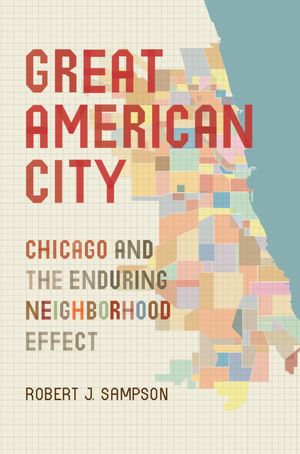
Douglas S. Massey has a very useful review in Science magazine of Great American City Chicago and the Enduring Neighborhood Effect by Robert J. Sampson. He writes:

Cognitive science reveals that human rationality is not simply constrained by information and resources; it is not even rational in the deductive sense. Instead, it is structured by characteristic shortcuts known as heuristics that lead us to think in categorical rather than Boolean terms. 
At the same time, neuroscience indicates that our highly imperfect “rationality” is itself strongly conditioned by powerful emotions emanating from a parallel and interconnected but substantially independent processing system rooted in the mammalian brain. As a result, our “reasoned” actions often serve emotionally grounded motivations of which we are only dimly aware. They are often prejudiced rather than rational. 
Lastly, sociological studies have demonstrated that the social contexts in which people make decisions are not unstructured but segmented in complex ways at a variety of organizational levels. The resulting social structures are connected to one another in ways that tend to reproduce and reinforce the status quo over time and strongly shape individual choices and outcomes.
Apparently Sampson's book extends this understanding showing that geographic location is one of the factors that structures social interactions and thus decision making.

In the same issue of Science Stephen M. Fiore reviews Reinventing Discovery The New Era of Networked Science by Michael Nielsen.
In the book's first half, “Amplifying Collective Intelligence,” Nielsen describes the benefits to cognition that can emerge from collaboration and through the use of technological scaffolds...... 
Nielsen opens the book's second half, “Networked Science,” with the case for a more concerted effort to develop a “scientific information commons,” making data freely available and easily accessible.
It kind of makes you wonder if we are going to see a quantum leap in technologically augmented social networking for assessment, analysis and decision making. And wouldn't it be nice if we take advantage of the opportunity and do it well, since surely here as everywhere, there is a "dark side to the force."

Wednesday, April 04, 2012

Emily Bell on Elusive Objectivity


Emily Bell of Tow Center for Digital Journalism notes that the traditional focus of journalism has been on making sure that every word that appeared in public had been triple checked & "lawyered," and that it has not invested in tools/technologies that could potentially help produce better quality reporting.
Bell points out that a quality journal like the Guardian (where she once worked) spent a lot of time, effort and money assuring that the things that it printed were true. In the crisis of journalism caused by the Internet, with people seeking information elsewhere and the financial basis for journals decaying, most are having to cut back on fact checking.

The Internet has its own ways of attaining quality of assertions. Think of Wikipedia with its social networking approach to fact checking. Think of Amazon with its reviews of books and quality judgments of the reviews.

The interesting question is whether we as individuals can find better ways of fact checking for the facts we attend to. Can we find better ways of  selecting the facts to which we attend. We know that people make better decisions in groups than alone, so perhaps social networking is such an approach.

On the other hand, can we find ways to network with the right people, or will we network with people who share our biases and ignorance. The newsroom of a quality journal found a way to get well qualified people to work together -- it hired them and put a well qualified and experienced journalist in charge of them. I find a history book club, based on self selected members of the book store frequenting public, to be a good way to gather people to select and comment on books of history. My Linked In group, UNESCO's Friends, seems a way to gather interested people to share and discuss UNESCO via the Internet.

Anyone reading this who wants to chime in, please leave a comment.

Wednesday, February 08, 2012

Thinking about the past


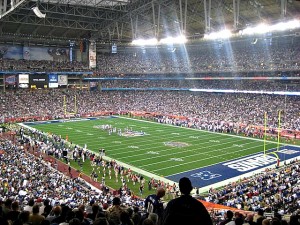
111.3 million people
 watched the Super Bowl on television on Sunday. Football is a game with clear rules. The broadcast was very well done, with numerous cameras and a production staff selecting clear and appropriate views; knowledgeable announcers explained what was happening. There were flashbacks to review plays, and where calls on the field were in doubt, the officials on the field could review the play with a variety of recorded views of the incident. One would think that what happened was very clear.


It occurs to me that even the players on the field understood what was happening in very different ways. The quarterback sees a different game than does the center or the wide receiver on his own team. The players on the Giants saw the game from a different perspective than those on the Patriots.

Probably the head coaches of the teams brought more expertise to the game than anyone else. Each knew the playbook of his own team and the strategy for the game. Each knew his own players abilities and limitations well, and each had studied the other team carefully. Each brought a lifetime of study of the sport to his understanding of this game. And I am sure each has carefully reviewed the game in retrospect to draw lessons from it.

Chess masters can remember games very clearly. They do so not only because they care a lot and have good memories, but because they can recall that the opening was according to a specific gambit already memorized, met by another gambit also already memorized. The master knows a priori what moves are likely and which can be ignored during the game. Thus the new information needed to describe a specific new game is much less for a master than for a neophyte. So too, the head coaches of the Giants and Patriots must have been able understand and recall the game more fully and more clearly than the members of the television audience because they brought expert knowledge to the task.

Memory is selective. One is bombarded constantly by a huge amount of information, and the brain selects from that flood only a small part to recall. Indeed, recollection is a reconstruction of what was perceived and is not always accurate. Moreover, we forget. There is no such thing as a photographic memory. Things we once knew disappear from memory, are no longer available for recall.

Moreover memory is fallible in the sense that myth and false memories intrude upon reality. So too, the communication of memory is at best a noisy process, with the recipient gaining only a partial version of that which is intended, filtered by his own processes, and by the sender's. In the case of the Super Bowl, there are more than 100 million different recollections of the game, all incomplete and all at variance one from another in some way.

The way that those recollections are shared depends on who is sharing and for what purpose. The post game comments of the participants will be brief and polite. The newspaper sports reporters columns on Monday would have been designed to interest the newspaper readers, while the television reporters would have voice over to complement the visual coverage of high points of the game. The post game discussions of the coaches would probably be detailed and knowledgeable. The discussions among fans around the office water fountain would have been superficial and casual.

Thus the way in which a very simple event in the recent past is construed is very complex. Getting at the "truth" of what happened would be very hard. Indeed, even if one could find a recording of the video of the game, that video would present only one version of the game, and in all probability a version less nuanced and less well understood than that of many of the participants in the game.

Consider then the memory of the causes and effects of the 1929 stock market crash or World War II. Here we have events that were much more complex, much wider in scale, much less orderly, involving hundreds of millions of people as direct participants. It is no wonder that there are different narratives as to what happened and why.

I would suggest that there are not only the memories of individuals of these events, but the socially constructed memories of groups of people. Moreover, not only do the "real" memories of participants in the events influence the socially constructed views of the past, so do do the socially constructed narratives influence the memories of individuals. Indeed, as the generations that actually experienced these events pass away, the entire memory of members of the culture comes to be that socially constructed narrative.

I would further suggest that there are many social groupings that construct their own narratives of historical events. Perhaps the most common in the American news is the school board that determines which books will be used in the schools, and thus the version of events that will be taught to children. Unconsciously holding their own socially constructed views of past events, the newsworthy boards often deliberately select curricula to views in the children which the members of the board find desirable as moral, patriotic, etc.

Obviously different nations construct different views of the same events, Not only are views of the winners and losers of a war different, but the views of the English, French, Russians and Americans of World War II are different within the allies. Moreover, subgroups within nations may construe the war differently, as skin heads construe the war differently than do mainstream members, or holocaust deniers from the majority who recognize the holocaust.

Military historians, economists, sociologists, and other professional groups also create social constructions of these events, as Kuhn described in his book, The Structure of Scientific Revolutions.


Moreover, the memberships of these groups overlap, and so too do the versions of the narrative influence one another. We hope that the versions of the groups with the strongest institutions for validating information inform those of other groups -- that the accepted versions of the community of historians informs the school boards and citizens. It must be the case, however, that the narratives of historians are influenced by the views of their nation and the schools which they attended.

If the construction of the narrative of a single event is so complex, so open to the intrusion of myth and false memories as well as the deletion of aspects of what happened, how then are we to regard the narrative of the history of a people, of a nation state?

Friday, June 04, 2010

A Thought About American History and the creation of myths

There is a current in American history of exploitation, discrimination and disenfranchisement of weaker groups by stronger groups. That current includes slavery imposed on African Americans and driving Native Americans into reservations in a small and undesirable portion of their original lands. It includes discrimination against blacks, Irish, Italians, eastern Europeans, Catholics, Jews, Mormons, and Muslims, and the disenfranchisement of women.

There is a counter-current of opposition to exploitation, discrimination and disenfranchisement of those groups. Most importantly, that opposition has been in the form of millions of people seeking to better themselves through education, work, saving, investment and good living. Millions of people from minorities facing prejudice have served in the American military, many sacrificing their lives for the country in which their families faced such prejudice.

The counter-current also involved organization to secure rights, including the trade unions, the NAACP, and the women's suffrage movement. In a few cases such as the abolition movement, the Civil Rights Movement and the ACLU, people who themselves would not benefit themselves aided in the securing civil rights for others.

I am posting this because I have been thinking of the facility with which the empowered groups create mythologies to justify their behavior. I have been reading about the post Civil War Period (The Bloody Shirt: Terror After Appomattox by Stephen Budiansky and Slavery by Another Name: The Re-Enslavement of Black Americans from the Civil War to World War II by Douglas A. Blackmon). During slavery, there had been a widely believed myth among whites that slavery if not good for the slaves was the only way in which blacks and whites could live successfully together. With Emancipation, the southern whites adjusted that mythology. They created myths of Northern carpetbaggers, evil former slaves, and righteous night riders, even coming to believe that they were forced to a campaign of murder and brutal intimidation of blacks by Northern policies which failed to understand the nature of African Americans. Eventually they created myths of idyllic antebellum southern society with paternalistic plantation owners and happy slaves. The Ku Klux Klan was in the southern myth turned into a knightly crusade protecting white women rather than a brutal group of thugs seeking white power via the disenfranchisement of blacks.

As I think about knowledge for development, I wonder how to prevent the creation of myths which hinder development. In the postbellum south, it might have been possible to move ahead educating the former slaves and their children, introducing small farm systems and work-for-pay systems. Instead, supported by their evolving myths, the white power structure instituted systems of debt peonage, share-cropping, oppressive labor contracts, and intimidation that effectively replaced slavery with forced labor from a black underclass.

I suspect that modern development is similarly hindered by dysfunctional mythologies. It is perhaps easy to understand how societies adapt existing myths to account for new conditions, but difficult to understand how the myths can be more successfully replaced by functional understanding of reality or even by less destructive myths.

Friday, May 14, 2010

Nicholas Christakis: The hidden influence of social networks

My friend Julianne recommended this great video talk:

I have recently been reading about the creation of the U.S. Constitution, and been struck by the fact that individually the creators of the Constitution had a lot of crackpot ideas, but together they constructed a system that was capable of improvement over time and that has served the nation very well. This would seem to be an example of the good that can come out of social networking -- the theme of Christakis' talk.

I was also struck some years ago by Orhan Pamuk's thesis that Istanbul's population share a certain sadness and that in fact many cities are characterized by their own characteristic emotion -- an emotion that differs from city to city. Christakis' talk would seem to suggest ways that such a situation could develop, based on the genetics of the population and the social network of the city, as well as contingent on the history of that population.

It will be interesting to see how the changing global information infrastructure affects society. In the 20th century, mass media resulted in a very few people being connected by one-way channels of communications to very large numbers of people; those mass media networks were primarily constrained within national boundaries. The Internet now connects many people to relatively large numbers of others, often via two way channels. Think of email, social networks, blogging, etc.