Showing posts with label Maryland. Show all posts

Wednesday, June 03, 2015

Slavery: Why Was It Concentrated in the South of the United States


Where the Slaves Were in 1860
Source: "These Maps Reveal How Slavery Expanded Across the United States"


I quote from Wikipedia:
(I)n the American South an entire civilization was based the "King Cotton". As the chief crop, the southern part of United States prospered thanks to its slavery dependent economy. Over the centuries cotton became a staple crop in American agriculture. 
Cotton is grown where it is economically productive to grow cotton. Even today, as the next map shows, cotton is primarily grown in the United States in the South, where the climate and other conditions favor cotton farming.

"Map 07-M189 Acres of Upland Cotton Harvested as Percent of Harvested Cropland Acreage, U.S., 2007." by National Agricultural Statistical Service, United States Department of Agriculture - http://www.agcensus.usda.gov/Publications/2007/Online_Highlights/Ag_Atlas_Maps/Crops_and_Plants/. Licensed under Public Domain via Wikimedia Commons - http://commons.wikimedia.org/wiki/File:Map_07-M189_Acres_of_Upland_Cotton_Harvested_as_Percent_of_Harvested_Cropland_Acreage,_U.S.,_2007..gif#/media/File:Map_07-M189_Acres_of_Upland_Cotton_Harvested_as_Percent_of_Harvested_Cropland_Acreage,_U.S.,_2007..gif
In the early 19th century -- when cotton was manufactured into cloth not where it was grown but in the north-eastern, industrial states and in Great Britain -- it was important that American cotton be grown not only were it grew best, but also where it could easily be shipped to market. Thus the Mississippi served as a trade route for shipment of the cotton bales, as did the Atlantic ports.

Slaves were crucial to the successful growth of cotton on the southern plantations, but free men were more successful in the small farms and industries of the northern United States. Thus, the abolition movement could be successful and slavery had been abolished in these northern states prior to 1860.

I note that the production of cotton fiber was greatly facilitated by the invention of the cotton gin in the last decade of the 18th century. The cotton gin automated the previously very labor intensive job of eliminating the seeds from the fiber. and thus made cotton fiber much less costly to produce.

A key industry in the British Industrial Revolution (as well as the development of the mills in the northern United States) was the manufacture of cotton cloth, which replaced wool cloth as the major output of the mills. I quote again from Wikipedia:
By the turn of the 19th century, imported American cotton had replaced wool in the North West of England, though wool remained the chief textile in Yorkshire. Textiles have been identified as the catalyst in technological change in this period. The application of steam power stimulated the demand for coal; the demand for machinery and rails stimulated the iron industry; and the demand for transportation to move raw material in and finished products out stimulated the growth of the canal system, and (after 1830) the railway system...... 
Apart from coal and iron, most raw materials had to be imported, so that in the 1830s the main imports were, in order, raw cotton (from the American South), sugar (from the West Indies), wool, silk, tea (from China), timber (from Canada), wine, flax, hides and tallow. By 1900, the UK's global share soared to 22.8% of total imports. 
Slavery in Maryland -- The Douglass Connection

I got interested in this topic because I am reading My Bondage and My Freedom,by Frederick Douglass (1818-1895). He was born and lived his early life as a slave on the Eastern Shore of Maryland, and was consumed in those years by the desire to escape from slavery via the free states of Delaware or Pennsylvania.

Quoting from "Agriculture and Labor in Maryland":
Throughout the 17th and 18th centuries, Maryland was a tobacco growing colony. Gradually, the labor force transitioned from indentured servants to enslaved Africans, and by the Revolutionary War they comprised the large majority of agricultural labor. During the 18th and into the 19th centuries, however, things began to change. Tobacco had been harsh on Maryland soils, and planters in the northern and eastern shore counties began to replace it with wheat, which required less labor. This had an effect on enslaved labor, and planters began to find ways to get rid of their labor force. In the southern counties, however, tobacco was still a major cash crop, and was part of a diversified agricultural production. Because of this, the slave population remained steady leading to the Civil War. 
For Maryland planters in the northern and eastern counties, the move to less intensive crops meant that they had to reduce their slaveholdings. Maintaining a large workforce was expensive: food, shelter, and clothing had to be provided for a number of laborers. Wheat, however, only required large workforces twice a year, for planting and harvest, unlike tobacco which required labor for most of the year. In order to reduce their slaveholdings, planters used a number of strategies. Some freed their slaves, either immediately or through a system called term slavery, where African Americans were enslaved until a certain age and then freed. Others rented their slaves to other plantations or into the growing industrial sector or to urban areas such as Baltimore. Finally, many sold their remaining slaves, either to the Southern Maryland counties or to the Southern states, where the demand for slave labor was growing. All of these approaches had dramatic effects on the stability of African American families. It also meant that Maryland had the highest percentage of free blacks out of any slaveholding state in the United States heading into the Civil War.
Slavery was of course introduced into Maryland early in its history and was an integral part of the plantation system for the production of tobacco in Maryland for export to Great Britain. However, there were relatively strong abolition forces in Maryland in the 19th century and a fairly active underground railroad helped people escaping slavery move through the state. By 1860, as the following map shows, there was a significant divide in the state, with slavery concentrated in the southern parts of the state (the Chesapeake Bay region). So too, abolitionists had been more common in the north of the state, supporters of slavery among the whites in the southern parts.

Slaves as a Percentage of Each Maryland County's 1860 Population
Source
Importation of slaves into the United States was abolished under law in 1808. However, interstate sales of slaves continued to be legal in the United States until the 13th amendment to the Constitution in 1865.

Quoting from "The Domestic Slave Trade":
The export trade from Delaware, Maryland, and Virginia was very well established by the 1780s........The interregional movement of the enslaved population was made up of two elements. The substantial majority - from 60 to 70 percent (or 1.2 million people) - migrated by the long-distance domestic slave trade, while the rest were part of planter migrations. In the latter case, planters looking for new opportunities moved all or most of their slaves together to work new western land. 
By the 1790s, Maryland, Delaware, and Virginia had become the main exporting areas, the bulk of their "shipments" going to Georgia, Tennessee, Kentucky, the Carolinas, and the sugar-planting regions of Louisiana. But by the 1820s the Carolinas and Kentucky were exporting more people than they were importing. 
Thirty years later, Tennessee, Missouri, Georgia and Alabama had joined the ranks of net exporters. From 1760 until the Civil War, the number of men, women, and children traded to the South and West increased substantially during each decade, with the exception of the 1840s when numbers slackened.
Thus I think that the booming market for cotton was leading to a great demand for slaves in the deep south, while the northern states did not need nor want slaves and abolished slavery. Maryland, was split with the northern part of the state having relatively few slaves but the south having more, notably in its continuing tobacco plantation system.

Sunday, January 18, 2015

Community Concern for a Proposal of the Montgomery County Public Schools


I attended a community meeting last week in which several hundred residents of my community came together to discuss proposals from the Montgomery County Public Schools (MCPS) to:
The community meeting suggested alternative measures:
Here is a map showing some relevant school locations.

The members of the community offered reasons that I found convincing that their alternative was superior to that of the MCPS.

Better for the Students

The Blair Ewing Center is currently operating successfully for its population of those middle school and high school students who require alternative education. Its physical structure allows the middle school students to be separated from the older high school students, and it has a number of rooms designed for enrichment programs. Moving the students to the smaller and older facility with fewer specialized facilities -- a facility that was designed for primary school students -- would not serve the older students well; there would be less separation of the middle school students from the older high school students.

The Barnsley School is now serving both magnet students and students from the local community; it has more than twice the student population for which it was designed. Moving half the students to a reopened English Manor school would be better for both the remainning Barnsley and the new English Manor students.

Moving the School Bus Depot to Avery Road Is a Bad Idea

Currently 400 school buses are based at the current depot in Crabb's Branch Way (see map). That facility will be closed. 700 cars owned by drivers and employees of the depot are parked at the Crabb's Branch daily. Even demolishing the Blair Ewing Center and using the existing park paid for by the City of Rockville as a parking lot, the Avery Rd. site (see map) is not large enough to house the School Bus Depot.

The MCPS proposal would add significantly to congestion on Route 28, which is already one of the most congested roads in the county. 400 school buses would leave from and return to Avery Rd. during morning rush hour, and the same 400 school buses would leave from and returning  to Avery Rd. during the afternoon; 700 cars would arrive at Avery Rd. in the morning hour and leave in the evening rush hour  

Parking 1100 vehicles at the Avery Rd. site on a daily basis, as well as the other operations of a School Bus Depot would appear likely to pollute Rock Creek, which is quite nearby. Millions of dollars have been spent to assure the creek water is clean. The creek (and its related walking trail and park) runs all the way into Washington DC. At least an environmental impact study would appear to be required before such an action were taken. It was suggested that the  Maryland-National Capital Park and Planning Commission be involved in any decision involving a potential threat to the Rock Creek environment.

The Local Community Has Not Been Adequately Involved in the Decision Process

The families of the students of the Blair Ewing Center are deeply concerned with the welfare of the children who would be moved under the MCPS proposal. 

The MCPS proposal would greatly increase vehicle traffic into the English Manor neighborhood. It also raises safety concerns for the residents of the neighborhood.

The community proposal to reduce crowding at Barnsley Elementary School and reopen English Manor Elementary school would be beneficial to the students of both schools and their families, as well as to many residents of the neighborhoods surrounding those schools.

A large number of Montgomery Country residents would be negatively affected by an increase in congestion on Route 28, and a large number of residents would be affected by any deterioration of the Rock Creek environment.

Property values would be affected, perhaps quite negatively in some cases, with implications for the property taxes raised by the county. The economic impact on county residents of the MCPS proposals should at least be considered.

The Aspen Hill Civic Association representatives were informed of the MCPS plan three days before the Board of Education held its hearing to consider that plan; residents along Avery Rd. and in other concerned areas learned of the plan only much later than that meeting and than the vote of the Board approving the plan. Thus county residents have had inadequate opportunity to properly evaluate the plans, much less to respond to the Board of Education and the County Council.

The Board of Directors of the Aspen Hill Civic Association voted unanimously against the MCPS plan, and a large majority of the members of the Association expressed opposition in a poll that was taken. Other local Civic Associations are only now taking up the issue.

For more information I suggest you check out:

Monday, April 21, 2014

Maryland Counties by Population


This map is taken from a Census Bureau website that makes data from the 2010 census easy to show on maps.

Sunday, May 26, 2013

Quotation


"[Barack Obama] is a thoughtful and a resolute leader who understands that America is strongest when her economic power, her diplomatic power, and her military power align with the power of our principles -- the beliefs we share in freedom, in justice, and in the dignity of every human being."
Governor Martin O'Malley

Wednesday, February 06, 2013

Maryland in the 1640s.


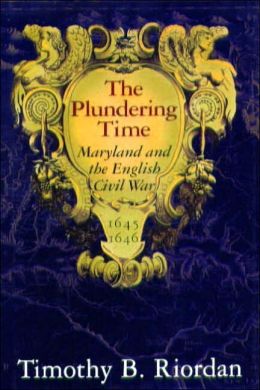
I just finished reading The Plundering Time: Maryland and the English Civil War, 1645-1646 by Timothy B. Riordan. It tells the story of years of conflict that almost destroyed the British colony in Maryland.

The first colonial settlement in what is now Maryland was in Kent Island in 1631, as part of colonial Virginia. A charter was given to Cecil Calvert Lord Baltimore in 1632 for the Maryland colony. Riordan states that the charter was granted (over the objections of Virginia) because the British government felt Baltimore's proposed colony would be the best available option to counter Dutch and Swedish colonies in Delaware. Led by Leonard Calvert, Cecil Calvert's younger brother, the first group of colonists consisted of 17 gentlemen and their wives, and about two hundred others, mostly indentured servants arrived in Maryland in March 1634. They established a town at St. Marys. In 1838, led by Calvert, the colonists seized the trading post at Kent's Island.

The 17th century was a turbulent time in Britain. The English Civil War between Royalists and supporters of Parliament took place between 1642 and 1651. Under the Stuart kings, James I and Charles I, in the early part of the century the country had grave economic problems. There were battles internal to the Anglican church as to its governance and role in society, with Catholics and Puritans dealing with institutionalized prejudice. In the wake of the European exploitation of the Americas, the Reformation and the Counter Reformation, turmoil roiled the European continent. Britain was threatened with both religious and political wars, and foreign policy was central to domestic political disputes. It was in this context that British colonies in North America were established.

The Calverts intended to establish a colony on a manorial structure. Catholics themselves, they made an effort to include both Protestants and Catholics in the settlement. The intent was that the colony would abide by British laws. Leonard Calvert was named governor of the colony and a committee of five gentlemen was established as a legislative body. Judicial processes were established (and the records of the judicial proceedings, assembly and governor provide much of the evidence discussed in Riordan's book). However, the Calverts also invited Jesuit missionaries to bring Christianity to the Maryland Indians at a time when Jesuits found in England would be executed.

Establishing a new colony in North America was hard! The Maryland colony was to pay for itself by growing tobacco and exporting it to Britain. The colonists could also trade with Indians for furs which could be exported. Colonists were also to grow corn and raise livestock to support themselves, but were heavily dependent on materials imported from England. The voyage from England to Maryland took from 8 to 10 weeks as did the return voyage; a single tobacco fleet was sent each year carrying trade goods to Maryland and returning with its tobacco harvest; remember the ships of the day were small and the voyage dangerous. All this to be done by Europeans with few skills to deal with the new land, subject to the climate and illnesses they found there with few protections. Colonists in the 17th century were also under threat from Indians (who had survived the decimation of the Colombian Exchange) whose territory they were occupying. Still, by the early 1640s the immigrant population of the Maryland colony numbered about 800, most of whom were men. They were concentrated in three areas.

As the English Civil War broke out, the Royalists issued a letter of marque to the Calverts allowing their ships to attack ships and ports supporting the Parliamentary side and take their property, while Parliament issued a letter of marque to Richard Ingle, a hot tempered ship captain who had traded in the Chesapeake for some years.

Ingle recruited the crew of his ship, some Virginians and some Protestant Maryland colonists and attacked and captured a couple of ships and then began to plunder Catholic households in the Maryland colony. The supporters of the Calverts fought back. Both sides build forts for protection (and presumably as bases for their attacks on the other). Within a couple of years most of the colonists had died or moved away and the economy of the colony was in tatters.

Still, the Calverts were able to recruit forces to retake the colony and reestablish its government. The population was quickly rebuilt, in part by recruiting Independent Protestant (those not affiliated with the Church of England) settlers from Virginia (where they were subject to persecution). The Puritan faction would create their own crisis later in the century.

The rebuilt colony was then governed by Protestants rather than Catholics, freemen rather than gentlemen. Moreover, it established a policy under which people were to be allowed to follow their own religious beliefs and not bound to a state religions -- an important precedent.

I found the book too academic for my interests. After all, it deals with conflict within a population of fewer than 800 people centuries ago. Indeed the people involved seem to be very litigious and not very likable. Riordan argues for interpretations of events, citing existing textual records from the time extensively, An archaeologist, he also cites the results of his own archaeological research. All of this is important for his fellow historians, but I was more interesting in the simple fact that the English Civil War had an impact in the early days of the Maryland colony that almost destroyed it. 

Monday, February 04, 2013

Gun Licenses and Gun Users Licenses for Maryland


We license cars and drivers. Why not license guns and their users?
Licensing Guns

Why not require that there be a license for each pistol and long gun? The state could define a set of licensing fees for different kinds of weapons. The fee for a simple shotgun used for hunting or a deer rifle might be modest, while that on an attack weapon might be quite high. High quality weapons cost hundreds of dollars so that licensing fees could not only pay the costs of a registration system, but net the state a modest income.

Individuals found carrying or using an unlicensed weapon might have the weapon expropriated and be subject to legal penalties. This would seem parallel to the practice of sanctioning a person driving an unlicensed automobile.

At the least this would provide the state authorities with information on where guns were to be found and a means to remove guns from criminals who would be unwilling to license them.

Licensing Users

It occurs to me that if we require licenses to drive a car or fly an airplane, we should require licenses to carry and use guns. In all three cases there are dangers justifying public intervention.

To get a license, one would take a written examination and demonstrate the ability to safely use a gun before a state examiner, as one takes a written exam and a driving test to get a driver's license. As one can be denied a license to drive if one can not pass a test of visual acuity of if one is subject to epileptic seizures, there would be standards for gun users licenses. In the case of weapons, a conviction for a crime involving violence of the threat of violence might disqualify a person for a license (as a driver may have his/her license revoked for traffic violations).

As there are different requirements to fly different classes of airplanes or to drive personal vehicles or to chauffeur, so too there might be different firearms licenses for pistols, rifles and shotguns.

As in the case of driver's licenses, gun user licenses would be renewed periodically. The testing for the initial granting of a license might be more detailed than a renewal.

A fee would be charged to someone applying for a gun user license to cover the costs of testing and issuing licenses. One side effect of licensing would be to make is more expensive to obtain and carry guns.

And of course, carrying or using a gun without a license should carry severe penalties.

Should there also be insurance required for people carrying guns, as there is for drivers???

Tuesday, January 15, 2013

Maryland to see new legislation to reduce gun fatalities


Maryland's Governor Martin O'Malley is introducing gun legislation in the state legislature. He will unveil a three-pronged strategy focused on gun safety, school safety and mental health.
1.) Gun safety: We should ban military-style assault weapons, limit large ammunition capacity, and require licenses for handgun purchases. We respect the rights of hunters and sportsmen and that's why our licensing requirements will NOT apply to shotguns or rifles. 
2.) School safety: We will invest in security upgrades for schools, including cameras at entrances, automatically locking doors, shatterproof glass and buzzer entrance systems. We will also establish a "Maryland Center for School Safety," which will amplify our efforts by gathering meaningful data and serving as a central hub for collaboration between our federal, state and local law enforcement partners.  
3.) Mental heath: We will improve data sharing practices between federal and state officials. In addition, we will invest more to improve mental health services so we can intervene early and reduce the potential for violent behavior. We'll expand crisis intervention teams, expand response services and establish a center for excellence on early intervention for serious mental illness. 
How about gun licensing requiring passing a written test on gun safety and an in person demonstration of safe handling of the type of gun to be owned? Someone would have to show a license to buy a gun and someone found with a gun without a license would be guilty of a crime. Guns would seem to be a lethal as cars and we demand a license to drive. 

Wednesday, November 07, 2012

On the Maryland 6th Congressional District Election


The Maryland legislature changed the boundaries of the state's congressional districts after the 2010 census. The 6th Congressional District which had been a Republican stronghold was changed, removing rural areas in the northeast of the state and extending it into the Washington suburbs. The new shape of the district is shown in the map above.

Roscoe Bartlett, a Tea Party Republican and 10 term Congressman is now running against John Delaney to represent the district. Delaney, a successful businessman, is a moderate Democrat who appears well suited to represent the people of the district and work with the state delegation in Congress.

The more I read about Bartlett, the more unhappy I am that he represents me in Congress. I have been posting on the things I find. Please check these out:

UPDATE ON THE DAY AFTER THE ELECTION

John Delaney won the election and will represent Maryland's 6th Congressional District in the next Congress, More....

The Washington Post reports that the Congressional redistricting done this year has been approved by a large majority. Thus the Maryland 6th Congressional District should remain as shown at least until 2022. Here is the count as of this morning (November 7, 2012):

Sunday, September 23, 2012

More on Roscoe Bartlett


Following the 2010 census, the boundaries of congressional districts were changed in Maryland. My neighborhood was moved into the 6th Congressional District. John Delaney is running against Roscoe Bartlett to represent that district.

I came across this story relevant to Bartlett who represented the district for decades:
U.S. Rep. Roscoe G. Bartlett (R) in person is not necessarily the man behind his campaign literature, news releases and ads, according to the congressman, leaving his opponent, John Delaney, to wonder just who he is challenging this fall.
And:
At a recent town hall meeting, a man confronted Bartlett with what he perceived to be a negative campaign on the congressman’s part.......“You said you don’t get negative in your literature, but I checked it out, and it’s all I see,” the man said. 
“I haven’t seen it,” Bartlett said at the Aug. 30 meeting in Frederick....... 
When the man handed Bartlett a campaign flier he’d received in the mail that labeled Delaney a “loan shark,” Bartlett shrugged it off. 
“That wasn’t me; that was the campaign,” he said, handing back the flier and shaking his head.
And:
This is not the first time the 10-term congressman has denied knowledge of negative attacks on his political opponents. 
The weekend before this year’s Republican primary, tapes of 911 calls from 2008 were released recounting the marital discord of Bartlett’s top challenger. 
Bartlett issued a statement denying any role in the release of the information, which surfaced under the name “Victory for Bartlett.” Email links from “Victory for Bartlett,” however, ended up at Bartlett’s campaign website, BartlettforCongress.com.
 And:
David Ferguson, director of the Maryland Republican Party, said the party’s mailings “are not a coordinated effort with Congressman Bartlett.”
Alex Moodey, Chair of the Maryland Republican Party is employed by Bartlett's Congressional office.

Previous posts on the Bartlett candidacy:
Here is a video of Bartlett on Fox News from January 2012. He sounds like a Democrat when he discusses Mitt Romney and expresses his preference for Ron Paul for president.

Sunday, September 16, 2012

Roscoe Bartlett Campaign Financing -- Maryland 6th Congressional District


Source

Republican Roscoe Bartlett, in his campaign for Maryland's 6th Congressional District appears to have had a skeet shoot last week, requesting $5,000 contributions from political action committees (PACs) and $2.500 contributions from individuals.

OpenSecrets.Com provides information on contributions to his campaign which appears to be up to date:


The largest attributed contribution to his campaign, totaling $40,000, comes from the Rogers Group, a Real Estate Investment and Property Management Company in North Carolina. Why is this group spending so much money to elect a Maryland congressman?

The second largest individual donor is attributed to Loeb Partners, $13,000. The Loeb Partners website provides no information on the New York firm. Wikipedia states:

Loeb Partners Corporation was founded by Thomas L. Kempner in 1982 to focus on managing assets for the Loeb family, wealthy clientele and institutions. Kempner, a grandson of Carl M. Loeb, was the final chairman of Loeb, Rhoades, serving from 1978 until the sale of the company in 1979. Loeb Partners launched the Loeb Arbitrage Fund in 1988 as an investment vehicle for the Loeb family and other family office clients. In 2008, Loeb Partners Corporation was renamed Loeb Capital Management.
Why was this contribution made to a Maryland congressman?


Congressman Bartlett is on the Armed Forces and Science, Space and Technology Committees (as well as on the Small Business Committee). Among the largest industrial contributors to his campaign are: Defense Aerospace $56,600; Misc Defense $31,500; and Defense Electronics $22,000. Lockheed Martin is reported specifically to have contributed $7,000.

A recent report from U.S. News states:

The report by the Washington, D.C.-based Project on Government Oversight details how Lockheed Martin, the defense contractor that produces the $79 billion jet fleet, has provided each member of the Tactical Air and Land forces subcommittee on average $6,130 in campaign contributions since last year, well above the average for the rest of Congress. 
In Thursday's hearing, the subcommittee debated whether the jet was suitable to fly after problems with its oxygen system have caused pilots to pass out during flight and experience oxygen deprivation, or hypoxia. The hearing's witnesses, including Air Combat Command operations chief Maj. Gen. Charles Lyon, insisted to the committee members that the $350 million jet was safe to fly. 
"These are very subjective things," subcommittee's chairman and Maryland Republican Rep. Roscoe Bartlett said in regards the health problems pilots have reported. "If you think there's going to be a problem, the least little thing will … cause the pilot to believe he has exactly the symptoms of the thing that he dreaded, hypoxia." 
The POGO report says Bartlett has received $8,000 in campaign contributions from Lockheed Martin just in the last 12 months. 
"It was kind of a pro forma hearing. As someone who's looking for legitimate oversight of the F-22 it was disappointing," said Ben Freeman, national security investigator for POGO. "The result of this hearing was largely that the House bought into what the Air Force was saying about the F-22."
OpenSecrets.Com also reports that Bartlett's campaign has received $65,000 from leadership PACs, $32,400 from lobbyists, and $21,000 from Candidate Committees. He apparently has not contributed himself to his own campaign.

Bartlett's campaign has made the claim that his congressional votes are independent. I note the following from a Washington Post article published just after Bartlett won the primary race in April:

Bartlett survived a crowded Republican primary Tuesday in his redrawn district, winning with 44 percent of the vote against seven challengers. Bartlett was helped by the fact that, while he is not a prolific fundraiser compared to most incumbent House members, he did take in a lot more cash than any of his primary opponents. And he had some help. 
In total, Bartlett received $63,000 in contributions from the campaign accounts or political action committees of 28 different House Republican colleagues since Jan. 1, according to Federal Election Commission records. That represents roughly a quarter of the total amount Bartlett raised over the period. 
Members of the party leadership were particularly generous. House Speaker John Boehner (Ohio) gave Bartlett $14,000 from two different accounts, while House Majority Whip Kevin McCarthy (Calif.) and Chief Deputy Whip Peter Roskam (Ill.) kicked in $5,000 apiece. Bartlett also got donations from the chairmen of the House Appropriations, Budget and Armed Services committees. And fellow Maryland GOP Rep. Andy Harris gave Bartlett $4,000. 
Beyond the cash from individual lawmakers, Bartlett also got $5,000 from the National Republican Congressional Committee, the party’s official campaign arm, as well as donations from two different groups devoted to electing moderate Republicans — the Tuesday Group and Republican Main Street Partnership PACs.


Saturday, September 15, 2012

Why I Oppose Reelection of Roscoe Bartlett


Following the 2010 census Maryland revised the boundaries of its congressional districts. My neighborhood was moved into the Maryland 6th Congressional District. The voters of the district will choose between Democrat John Delaney and Republican Roscoe Bartlett. I am posting this to share what I have found out about Rep. Bartlett and thus explain why I am voting for John Delaney.

Roscoe Bartlett
According to Wikipedia, Bartlett, born in 1926, at 86 years of age is the second oldest member of Congress.
He attended Columbia Union College (now Washington Adventist University), a college affiliated with the Seventh-day Adventist Church, and graduated in 1947 with a B.S. in theology and biology and a minor in chemistry. He had intended to be a Seventh-Day Adventist minister, but he was considered too young for the ministry after receiving his bachelor's degree at the age of 21.
He later received masters and doctoral degrees in physiology.

Bartlett had underreported property sales by over $1 million since 2004 on his official financial disclosure forms ( a serious crime for government employees). Bartlett said that the underreporting was an oversight and that he was “bit player” in the real estate transactions. Also according to the Frederick News-Post, Bartlett made $299,000 in unreported loans in order to sell his daughter's home, over which he exercised power of attorney.
Bartlett joined the Congressional Tea Party Caucus in 2010. Claiming that he is a founding member, he reports on his Congressional profile:
“I have been cheered at every Tea Party event that I’ve attended because I’m one of only 18 members in Congress who has voted against every bailout bill.  The Tea Party Caucus is one of the new tools, such as American Speaking Out and YouCut, that House Republicans have introduced to help Americans regain the control over their lives and their pocketbooks that’s been taken away from them by the jobs-killing, out of control regulation and spending agenda of President Obama and Congressional Democrats.”
I quote at length from an article from the Washington Post, because it is so telling about Bartlett's survivalist philosophy:
Deep in the West Virginia woods, in a small cabin powered by the sun and the wind, a bespectacled, white-haired man is giving a video tour of his basement, describing techniques for the long-term preservation of food in case of “an emergency.” 
“We don’t really think of those today, because it’s so convenient to go to the supermarket,” he cautions. “But you know, you’re planning because the supermarket may not always be there.” 
The electrical grid could fail tomorrow, he frequently warns. Food would disappear from the shelves. Water would no longer flow from the pipes. Money might become worthless. People could turn on each other, and millions would die. 
Such concerns are typical among “survivalists,” a loose national movement of individuals who advocate self-sufficiency in the face of natural or man-made disasters, gathering online or in person to discuss the best ways to prepare for the worst. 
What is atypical is that the owner of this cabin is Roscoe G. Bartlett, the longtime Republican congressman from Maryland. Over the past two decades, he has developed a following as one of the country’s premier proponents of preparedness against impending doom, even urging the more than 80 percent of Americans who live in urban areas to relocate.
 The Washington Post also has published an article on Bartlett's radio advertisement in which it is claimed that "Roscoe Bartlett is different. Roscoe isn’t your typical congressman."
Delaney spokesman Justin Schall suggested Bartlett’s record showed he was anything but “independent.” 
“The facts are pretty clear: Congressman Bartlett has voted 93.4 percent of the time with the leadership of the Republican Party during his 20 years in Congress and is a founding member of the [Congressional Tea Party Caucus],” Schall said, citing voting data compiled by Congressional Quarterly.
Bartlett is a far-right Republican according to GovTrack's analysis of bill sponsorship. The following graph from GovTrack shows Bartlett indeed on the far right of most of his party:


Recently, again according to a Washington Post article (which includes a video of Bartlett's remarks):
“Not that it’s not a good idea to give students loans; it certainly is a good idea to give them loans,” Bartlett said. “But if you can ignore the Constitution to do something good today, tomorrow you will be ignoring the Constitution to do something bad. You could. There are more people in our, in America today of German ancestry than any other [inaudible]. The Holocaust that occurred in Germany — how in the heck could that happen? And when you start down the wrong road, it can be a very slippery slope.”
Bartlett has apologized for suggesting that student loans could lead to the Holocaust. I am not sure he realizes how offensive is his linking of Americans of German ancestry to Nazi Germany and the Holocaust.

In 2001, Bartlett cosponsored a bill that defined a person to include "unborn offspring at every stage of their biological development." It stated:
No unborn person shall be deprived of life by any person: Provided, however, That nothing in this article shall prohibit a law permitting only those medical procedures required to prevent the death of the mother.
As I read it, this bill would not only outlaw abortion, even in cases of rape or incest, but would also outlaw many methods of contraception.

OnTheIssues tracks Bartlett's votes on a number of issues. Here are some of those votes:
  • Voted YES on banning federal health coverage that includes abortion. (May 2011)
  • Voted NO on expanding research to more embryonic stem cell lines. (Jan 2007)
  • Voted NO on allowing human embryonic stem cell research. (May 2005)
  • Voted YES on terminating the Home Affordable mortgage Program. (Mar 2011)
  • Voted NO on $192B additional anti-recession stimulus spending. (Jul 2009)
  • Voted NO on modifying bankruptcy rules to avoid mortgage foreclosures. (Mar 2009)
  • Voted NO on additional $825 billion for economic recovery package. (Jan 2009)
  • Voted NO on monitoring TARP funds to ensure more mortgage relief. (Jan 2009)
  • Voted NO on $15B bailout for GM and Chrysler. (Dec 2008)
  • Voted NO on $60B stimulus package for jobs, infrastructure, & energy. (Sep 2008)
  • Voted NO on prohibiting job discrimination based on sexual orientation. (Nov 2007)
  • Rated 7% by the ACLU, indicating an anti-civil rights voting record. (Dec 2002)
  • Rated 0% by the HRC, indicating an anti-gay-rights stance. (Dec 2006)
  • Rated 25% by the NAACP, indicating an anti-affirmative-action stance. (Dec 2006)
  • Voted NO on letting shareholders vote on executive compensation. (Jul 2009)
  • Voted YES on prohibiting needle exchange & medical marijuana in DC. (Oct 1999)
  • Voted YES on subjecting federal employees to random drug tests. (Sep 1998)
  • Voted YES on barring EPA from regulating greenhouse gases. (Apr 2011)
  • Voted NO on $2 billion more for Cash for Clunkers program. (Jul 2009)
  • Voted YES on deauthorizing "critical habitat" for endangered species. (Sep 2005)
  • Voted YES on speeding up approval of forest thinning projects. (Nov 2003)
  • Rated 30% by the LCV, indicating anti-environment votes. (Dec 2003)
  • Voted NO on supporting democratic institutions in Pakistan. (Jun 2009)
  • Voted YES on prohibiting product misuse lawsuits on gun manufacturers. (Oct 2005)
  • Voted YES on prohibiting suing gunmakers & sellers for gun misuse. (Apr 2003)
  • Voted YES on decreasing gun waiting period from 3 days to 1. (Jun 1999)
  • Voted YES on the Ryan Budget: Medicare choice, tax & spending cuts. (Apr 2011)
  • Abolish federal Medicare entitlement; leave it to states. (Dec 2000)
  • Limit anti-trust lawsuits on health plans and insurers. (Mar 2002)
  • Rated 22% by APHA, indicating a anti-public health voting record. (Dec 2003)
  • Redefine "birthright citizenship" to exclude illegal aliens. (Jan 2011)
  • Declare English as the official language of the US. (Feb 2007)
  • Declared English the official language of the US. (Jan 1999)
  • Rated 0% by the AU, indicating opposition to church-state separation. (Dec 2006)


Monday, September 10, 2012

Roscoe Bartlett discusses student loans and compares them to the Holocaust.


Of course, it is stupid to suggest that Pell Grants will lead to an American Holocaust. One hopes that all the German-Americans in the Maryland 6th Congressional District who feel insulted by this video will vote, and will vote against Bartlett. His rambling answer to this reasonable question from a college student suggests his mind is not very sharp. The federal government provided land grants to create state colleges in the Lincoln administration. Major current programs date to 1965 and 2006 (under the Bush administration). If unconstitutional, someone would surely have noticed.

 I am no Constitutional scholar, but given the large numbers of international students in American colleges and universities and the large numbers of students who go to colleges and universities in states other than those of their parents, I would assume that the federal government has constitutional authority under the commerce clause.

Sunday, October 02, 2011

Maryland should abolish the death penalty


I quote from The Economist:
The number of countries that carry out judicial killings fell from 41 in 1995 to 23 in 2010, according to Amnesty International, a pressure group. China (chiefly), Iran, North Korea, and Yemen accounted for most of the executions. Votes against the death penalty at the UN General Assembly have passed with big and growing majorities since 2007. Capital punishment has virtually gone in Europe (only Belarus still uses it, most recently in July). This year China whittled down its list of crimes punishable by death....... 
A leading Republican candidate for the presidency, Rick Perry, is governor of Texas, the state that uses it most. The state has carried out a record 236 executions in his nearly 11 years as governor. Mr Perry says he loses no sleep over it.
Great, we have a potential president who does not lose sleep over presiding over a government classed with China, North Korea, Iran and Yemen for brutality to its own citizens!

I regret to say that Maryland, where I live, still has laws imposing the death penalty. The evidence is clear that these laws do not deter capital crimes, that they result in death sentences for innocent people, that they are unevenly and thus unjustly applied, and that they are more expensive to implement than more humane laws of life imprisonment. It is time for Maryland to abolish the death penalty.

Saturday, March 26, 2011

O'Malley is right! Maryland should develop offshore wind energy resources

Governor O'Malley has proposed development of wind turbines offshore in Maryland. He has proposed limiting the increase in cost per month that the utilities can charge customers for the new source of energy. This is a very good idea and deserves our support!

Thursday, February 04, 2010

Maryland's Genuine Progress Indicator

The State has developed this indicator to describe progress in more general and more useful terms than does the Gross Domestic Product (GDP) Per Capita. Check out the website for the index!

The per capita GDP has been growing nicely since World War II, but the GPI suggests that for most of the past 20 years it has been doing so at the expense of the society as a whole, with environmental problems in inequity of the distribution of income increasing.

I encourage Governor O'Malley to get us back on track to more genuine progress in the next decade!