Showing posts with label Hunger. Show all posts

Monday, October 05, 2015

Improving Crop Yields to Respond to Global Warming and Population Growth


A couple of weeks ago there was an article in The Economist titled "Agricultural biodiversity: Banks for bean counters". I quote extensively from the article:
Climate change is expected to cause higher temperatures and more frequent droughts, changing the distribution of pests and diseases. Population growth will add to the pressure on productive land: the UN expects the number of people in the world to rise from 7.3 billion today to 9.7 billion by 2050. This, together with a switch to more meat-eating, will mean a big increase in the demand for food. The UN Food and Agriculture Organisation (FAO) says humanity will need 70% more food by then.
Dependence on a few staples worsens the consequences of any crop failure. Just 30 crops provide humans with 95% of the energy they get from food, and just five—rice, wheat, maize, millet and sorghum—provide 60%. A single variety of banana—Cavendish—accounts for 95% of exports. A fast-spreading pest or disease could see some widely eaten foodstuffs wiped out. 
That makes it even more important to preserve the genetic diversity found in crop wild relatives and traditional varieties as an insurance policy. Alas, much of it has already disappeared. The FAO estimates that 75% of the world’s crop diversity was lost between 1900 and 2000. As farming intensified, commercial growers favoured a few varieties of each species—those that were most productive and easiest to store and ship. 
According to Cary Fowler of the Global Crop Diversity Trust, an international organisation based in Germany, in the 1800s American farmers and gardeners grew 7,100 named varieties of apple. Today, at least 6,800 of them are no longer available, and a study in 2009 found that 11 accounted for more than 90% of those sold in America. Just one, “Red Delicious”, a variety with a thick skin that hides bruises, accounts for 37%. 
Meanwhile urbanisation, pollution, changing land use and invasive species are threatening the crop wild relatives that survive. A study in 2008 concluded that 16-22% of those related to peanuts, potatoes and cowpeas (a legume grown in semi-arid tropics) will have vanished by 2055 as a result of climate change.
So what if climate does change? Don't you just grow the same crops a few miles further from the equator? Well, what if the soils are different. What if there is not as much water in the new spot as the old one? What if you were on the western side of a hill, and the new spot is on the southern side, and the light conditions are different? What if there are different pests and diseases in the new spot? What if your machinery won't work as well in the new spot as it did in the old? I think that the world will need a lot of crop improvement to produce new varieties of major crops that will produce well under the new conditions.

One solution is pretty much out of the question. Most of the arable land is already in agricultural production. The world will no longer solve its food needs by putting unused arable land into production.

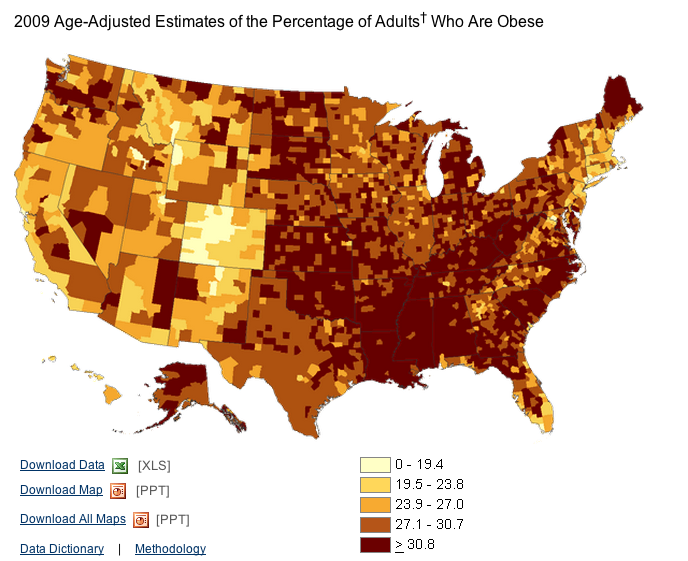
We could not do a lot be simply rationalizing our distribution and use of food. Obesity is harmful to the health of the obese as well as wasteful of food, and should be reduced globally.  Cows are a very wasteful way to produce protein as compared with legumes, and the fat intensive diet found in the USA not only uses a lot of land to feed cattle, a lot of grain to fatten them, but also results in poor health in people who have too much fat in their diet. It would be great if the world could rationalize protein production, getting those who eat too much animal protein to stop doing so, increasing the production of vegetable protein, and distributing protein more appropriately so that fewer people are protein starved and fewer people eat too much of the wrong kinds of protein.

Ultimately, we will have to have better varieties of food crops, and that means varieties with genes that better suit them to produce well in the places that they will be planted. Those genes can come from already domesticated plants, or from the much larger source in non-domesticated species. They can be transferred into new varieties of crops by mass transfers of genes as in traditional plant breeding, and then subjected to a long process of selection to weed out the genes that don't improve the variety. Alternatively they can be transferred by much more scientific and efficient processes of biotechnology. Society will choose. but I think I know the better way.

Tuesday, December 02, 2014

Bad News About the World's Nutritional Status


Source: The Economist
While GDP per person has gone up significantly worldwide, and the number of people living in absolute poverty has gone down appreciably, the number of undernourished has remained unacceptably high.

I quote from the Global Nutrition Report 2014 recently published by the International Food Policy Research Institute:
All countries in the world, bar two, that collect nutrition data experience one of the following forms of malnutrition: stunting, anemia, or adult overweight.,,,, 
Under existing assumptions, projections from the World Health Organization (WHO) and UNICEF show that the world is not on track to meet any of the six WHA nutrition targets. Globally, little progress is being made in decreasing rates for anemia, low birth weight, wasting in children under age five, and overweight in children under age five. Progress in increasing exclusive breastfeeding rates has been similarly lackluster. More progress has been made in reducing stunting rates in children under five, but not enough to meet the global target under current projections. 

Friday, November 07, 2014

A couple of videos from Bill Gates Gatenotes.


Bill Gates believes we’re now in a position to eradicate malaria—that is, wipe it out completely in every country—within a generation. This is one of the greatest opportunities the global health world has ever had.  
We’ve seen a huge scale-up in the resources and brainpower focused on this disease. Four countries have eliminated malaria since 2000, and two dozen more could do it in the next decade. Mortality rates worldwide have gone down by a remarkable 42 percent in that time—a good-news story that ought to make critics wary of trumpeting claims that foreign aid doesn’t work. More than 3.3 million people who would have died of malaria are alive today.
The world tried to eradicate malaria once before but failed. I hope that Gates is right, and that it will be eradicated in the near future. Even if not, I hope that the incidence is greatly reduced and that control measures are continued to keep the incidence low.


Bill Gates recently met with some researchers at Cornell University. Cornell is one of the world's top universities for research on improving crops. Their work involves a lot of plant breeding. Because most of the world's poor people are farmers, helping farmers grow more food is one of the most powerful levers we have for fighting poverty.
Biotechnology is the application of biological science to the development of practical applications -- in the case of this video, to producing better cultivars for farmers to plant in their fields. It includes the development of genetically modified plants -- that is those that have had genes introduced into the plant genome by new methods -- but goes far beyond GMOs. If plant breeders know the genome of corn or cassava, and understand which genes are linked to which traits, they they have a better basis for breeding desired traits into new varieties. 

Monday, October 20, 2014

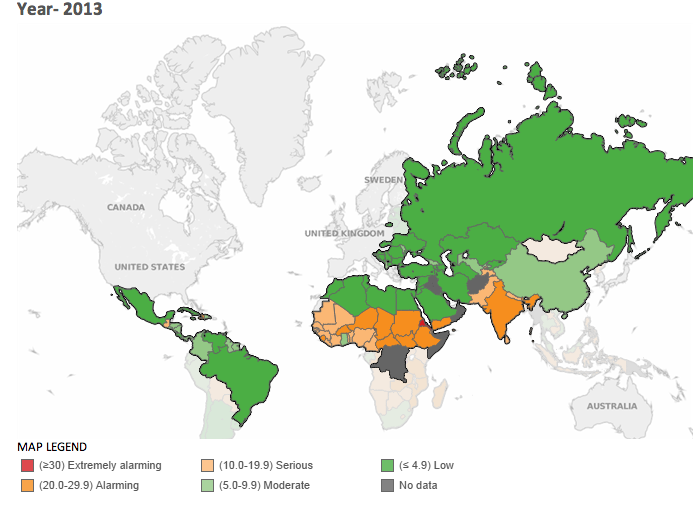
Global Hunger Index


Tuesday, October 14, 2014

Be thankful for artificial foods


Thanks to Calestous Juma for this infographic.

Sunday, October 12, 2014

Ignorance about GMOs is funny until you think about it.


This is funny. But it is also sad.

The basic fact is that all the foods we eat are genetically modified from their wild ancestors. That is true for plant and animal based foods. All the common food sources have been modified by long periods of selection. You can find some traditional cultivars if you try hard enough, but anything you buy in your market is almost certainly the result of scientific breeding.

If you think about it, the offspring of a male and a female gets half of its genes from each parent. If a plant breeder finds a variety that has genes providing protection against a specific disease or pest, and tries to move them into cultivation, the breeder brings thousands of genes from that variety into cross with varieties that are already commercial -- that have lots of useful genes. The breeder then goes through generations of cross breeding trying to keep the new useful gene, not to lose too many of the good genes from the commercial varieties, and to eliminate the unwanted genes from the original plant with the the new useful ones.

In recent decades, scientists have discovered ways to add a single gene to a plant. This makes it possible to keep almost all of the useful genes from an existing commercial variety and add a specific trait that is wanted. Plant breeding is faster. Moreover, a gene can be added that was found anywhere in nature, not just in a closely related plant. Then government regulatory agencies require extensive safety testing.

In case you never thought about it, existing crops include many genes that make people sick. I have three food allergies, and know from experience that common foods that don't affect most people affect me like poison ivy. Some people are so allergic to peanuts that they can die from eating them. You are likely to be as safe eating a GMO food as one that you regularly eat.

I know it is a pain to read all that stuff about nutrition, but I wish people would not make snap judgments about GMOs. They will be needed to feed the world's growing population as the global climate is changing.


Sunday, August 31, 2014

With hunger a huge problem, don't spread false information on farming.


I am really annoyed by this article in The Guardian. I quote:
Kumar, a shy young farmer in Nalanda district of India's poorest state Bihar, had – using only farmyard manure and without any herbicides – grown an astonishing 22.4 tonnes of rice on one hectare of land. This was a world record and with rice the staple food of more than half the world's population of seven billion, big news 
It beat not just the 19.4 tonnes achieved by the "father of rice", the Chinese agricultural scientist Yuan Longping, but the World Bank-funded scientists at the International Rice Research Institute in the Philippines, and anything achieved by the biggest European and American seed and GM companies. And it was not just Sumant Kumar. Krishna, Nitish, Sanjay and Bijay, his friends and rivals in Darveshpura, all recorded over 17 tonnes, and many others in the villages around claimed to have more than doubled their usual yields........ 
That might have been the end of the story had Sumant's friend Nitish not smashed the world record for growing potatoes six months later. Shortly after Ravindra Kumar, a small farmer from a nearby Bihari village, broke the Indian record for growing wheat.
I suggest you watch this video from The Guardian which shows one of the farmers described in the article. It shows what seems to be a simple man proud of his accomplishments as a farmer.

This story got picked up by others. Here is a quote from one such follower:
Another Bihar farmer broke India’s wheat-growing record the same year. They accomplished all this without GMOs or advanced seed hybrids, artificial fertilizer or herbicide. Instead, they used a technique called System of Rice [or root] Intensification (SRI). It’s a technique developed in Madagascar in the 1980s by a French Jesuit and then identified and promulgated by Cornell political scientist and international development specialist Norman Uphoff.
Do you really believe that application of the farming system developed for growing rice could be used to grow wheat, and the result would be record yields? The article even suggests that it improved potato yields for another farmer.

Here is a report from a world leader in agricultural research, Achim Dobermann. I quote:
The Guardian article suggests that Mr. Kumar and other farmers achieved something beyond what can be achieved by scientists and GMO companies, and that they used only farmyard manure and no herbicides. The much more detailed article in Agriculture Today shows almost the opposite. No GM rice is grown anywhere yet. However, all five record farmers grew commercial rice hybrids from Bayer or Syngenta; their seed was fungicide-treated (carbendazim); they used intensive tillage (two deep plowings plus two puddling operations); they applied green manure, farmyard manure, mineral fertilizer (N, P, K), and other nutrient input products (poultry manure, vermicompost, phosphorus-solubilizing bacteria, micronutrient foliar spray of zinc sulfate); and some also used herbicide (2,4-D) for additional weed control. These are in fact very intensive input management practices, perhaps not something that many poor, small farmers could afford.
Here is the link to the Agriculture Today article mentioned.

I believe Dobermann and not the Guardian -- that the farmers used hybrid seed, both artificial and processed natural fertilizers, and chemical inputs.

Scientists from the International Rice Research Institute and from China doubted the accuracy of the yield reports.  Here is what Dr. Dobermann says in the article cited:
In summary, given what we know about the upper limits of nutrient supply from soils in that region, I conclude again that the actual yield may have been in the 10–12 t/ha range at best. Japanese researchers studying SRI fields in Madagascar have shown a clear linear relationship between nutrient supply (enhanced by deep plowing as also done in Bihar) and rice yield, irrespective of other SRI management practices, but also not exceeding yields of about 10 t/ha.
And this from an article quoting a distinguished Chinese scientist:
China’s most renowned agricultural scientist has described as “120 per cent fake” claims that farmers in Bihar harvested a world record 22.4 tonnes of rice from one hectare of land without using herbicides or genetically modified (GM) seeds last year. A national icon, Yuan Longping is known here as “the father of hybrid rice” for developing varieties that enabled China to transform its grain output. His rice varieties were subsequently introduced widely in the world, and marked a record yield of 19.4 tonnes a hectare.
OK, a few farmers in Bihar claimed huge yields in various crops. The claims were picked up and shared by politicians, newspapers, and various factions opposed to modern agricultural techniques. The farmers got famous, and at least one of them got prize money from the government. Clearly most of the people who picked up on the story spread false information.

This is not a critique of Oxfam and its Indian collaborating organization that provided extension services to the farmers promoting good farming practice. It is important in growing rice when you transplant, what density you plant at, how you irrigate your crop, how you treat the soil, how well you control weeds, what fertilizer you use, and how you deal with pests and diseases.

People should also recognize that improved crop varieties have been responsible for huge increases in crop yields. Among other things, varieties have been developed to provide resistance to diseases and pests and to utilize water and nutrients more effectively.

As the Indian farmers and extension workers recognize, there is an appropriate place for water and chemical inputs. As all recognize, good farming practice counts. Smart farmers use all the tools that they can get to efficiently increase the yield of their crops.

Scientific breeding has produced improved cultivars and they are important. Since the first domestication of crops, crop variety improvements have been sought, and they always come from genetic changes in the crops grown. Ancient practice was random and very slow. For most of the 20th century, scientific breeding was more directed by knowledge and faster than in the distant past; the development of hybrid varieties for some crops greatly improved the effectiveness of breeding of those crops. We have been dependent on hybrid corn (and chickens) for many decades. New techniques of biotechnology utilize even more knowledge, are still faster, and make fewer genetic changes to improve a variety; they are safer in part because the new varieties are so extensively safety tested.

As the world population moves to 11 billion by the end of the century, and as climate change increases and increases the challenges faced by farmers, lets not spread false information and fear about the science we need to feed people.

Tuesday, August 26, 2014

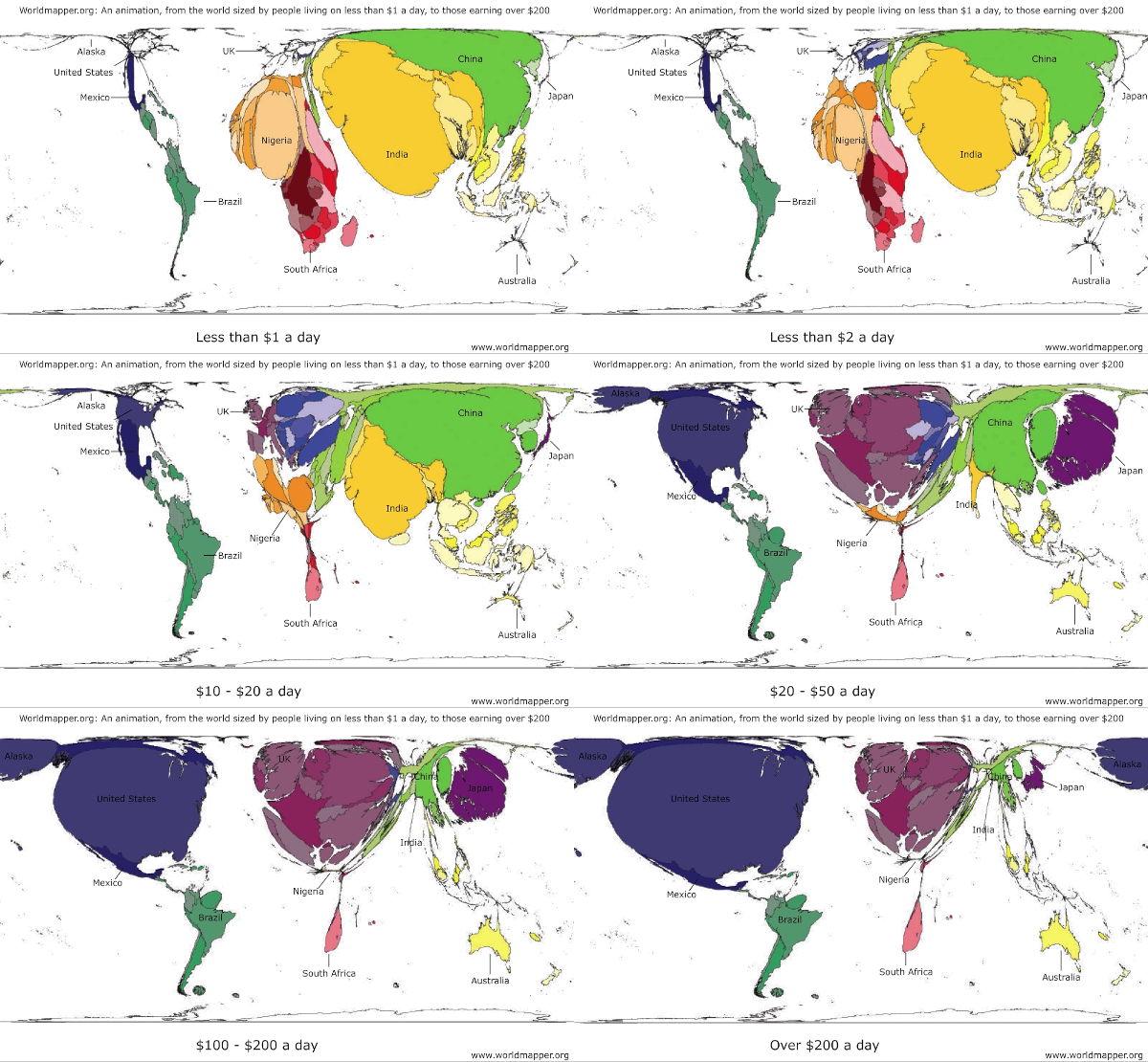
Two Maps That Illuminate the Geography of Global Poverty


Global Hunger


These two maps (from this article) show how poverty and hunger are concentrated in Africa and Asia. Americans are richer than those in other countries, but Europe is also doing well.

Saturday, August 23, 2014

Interesting Map -- Green is the Vegetable Intensive Diet.


Source: The Washington Post

If you grow corn, you can produce corn for human food, corn for animal feed, or corn for alcohol fuel. Presumably:
  • If people eat the corn grown of the farm, all the calories go to people. 
  • If animals eat the corn, how much of the corn goes to nourish people depends on which animals. If you feed the corn to a pet, none gets to people; if you feed it to chickens, it that corn produces a considerable amount of protein for people's nourishment; if you feed it to cows, less protein gets to people per bushel of corn.
  • If the corn is used to produce alcohol to be added to gasoline, it may help to get corn, beef, eggs, milk and chicken to market, but it doesn't do much for nutrition.
In poor countries, people eat a lot of plant food and little meat; the meat that they do eat is likely to be from animals that produce relatively more protein for humans per pound of feed. Thus they get a lot more calories out of the crops that they grow than we do.

Of course, food that gets to the food system does not all get to be eaten. There are a lot of losses from the farm to the table. (And not all the food that is eaten is used efficiently by sick people.)

If the world population keeps growing (and it is predicted to hit 11 billion by 22000, it may be appropriate to switch away from meat and get more of our protein from vegetables. That is probably a good idea for health anyway. Homo sapiens evolved as omnivores, not carnivores. The heavy meat diet that many Americans eat takes a tole on their health.

Tuesday, July 22, 2014

Research Results vs. Popular Opinion -- GMOs


I quote from a recent article on GMO foods:
The facts about GMOs and the science of biotechnology are indisputable. In an effort to catalog the science on GMOs, a team of Italian scientists summarized nearly 2,000 studies about the safety and environmental impact of GMO foods. These scientists could not find a single instance where GMO food posed any harm to humans or animals. GMOs are safe and healthy. 
Studies over the past 30 years -- by such groups as the World Health Organization, the Food and Drug Administration, and the National Academies of Science -- have produced no evidence of health or safety harms. On the contrary, all of them have concluded that GMOs are as safe as, or safer than, conventional or organic foods. Recently, Jon Entine of the Genetic Literacy Project explained on the John Stossel program that "we've eaten about 7 trillion meals in the 18 years since GMOs first came on the market. There's not one documented instance of someone getting so much as a sniffle."

Tuesday, July 08, 2014

We in the USA were once the best nourished in the worled


Quoting Robert Reich:
The United States used to be the tallest country in the world but is now one of the shortest of all developed nations.....Low-income kids in America consume an inordinate amount of fast food. That’s bad for height. In a recent British study, one group of schoolchildren was given hamburgers, French fries, and other fast foods; the other got 1940’s-style wartime rations like boiled cabbage and corned beef. Within eight weeks, the children on the rations were both taller and slimmer than the ones on a regular diet.
I am not sure that it is important to have the tallest people in the world (unless basketball is your only interest), but it may be important not to have a poorly nourished underclass.

Source

Sunday, May 25, 2014

A New Integrating Technology for Farming


Source of this illustration

There is a good article in The Economist on a coming agricultural technology. I quote a long section because of its importance:
Monsanto’s prescriptive-planting system, FieldScripts, had its first trials last year and is now on sale in four American states. Its story begins in 2006 with a Silicon Valley startup, the Climate Corporation. Set up by two former Google employees, it used remote sensing and other cartographic techniques to map every field in America (all 25m of them) and superimpose on that all the climate information that it could find. By 2010 its database contained 150 billion soil observations and 10 trillion weather-simulation points. 
The Climate Corporation planned to use these data to sell crop insurance. But last October Monsanto bought the company for about $1 billion—one of the biggest takeovers of a data firm yet seen. Monsanto, the world’s largest hybrid-seed producer, has a library of hundreds of thousands of seeds, and terabytes of data on their yields. By adding these to the Climate Corporation’s soil- and-weather database, it produced a map of America which says which seed grows best in which field, under what conditions. 
FieldScripts uses all these data to run machines made by Precision Planting, a company Monsanto bought in 2012, which makes seed drills and other devices pulled along behind tractors. Planters have changed radically since they were simple boxes that pushed seeds into the soil at fixed intervals. Some now steer themselves using GPS. Monsanto’s, loaded with data, can plant a field with different varieties at different depths and spacings, varying all this according to the weather. It is as if a farmer can know each of his plants by name........ 
The benefits are clear. Farmers who have tried Monsanto’s system say it has pushed up yields by roughly 5% over two years, a feat no other single intervention could match. The seed companies think providing more data to farmers could increase America’s maize yield from 160 bushels an acre (10 tonnes a hectare) to 200 bushels—giving a terrific boost to growers’ meagre margins.
The article also mentions a Du Pont Pioneer-John Deere partnership and a Land O’Lakes-Geosys partnership to develop comparable systems.

As society seeks to find ways to feed two or three billion more people, with little more agricultural land available and threats from climate change and other environmental degradation, an increase in yields is a big deal. Moreover, as people want better diets with more meat, the production of grain crops will have to increase much faster than the population increases. Five percent in two years and 25% overall increase is a very big deal.

Clearly the article focuses on a very high technology, one that is quite capital intensive. Indeed, the article stresses that accepting this technology would require major cultural change from American farmers, and they may not accept it in large numbers.

Still, this seems a technology most likely to first be used in the United States (and perhaps in parts of South America). American farmers already have highly mechanized farming technology and long experience accepting changes in cultivars and tilling practice. There is a lot of data available on American farms. The market for new technologies in the USA is huge, justifying major investments by companies seeking to introduce new products into that market.

Will this technology transform the labor intensive agriculture in Asia or the capital poor agriculture in Africa? Perhaps in the long run, but perhaps not as quickly as would be desired.

Sunday, May 11, 2014

On the promise of genetic engineering to improve rice varieties.


Five years after the first field trials, 5m farmers across the world are planting more than a dozen varieties of rice with flood-resistant genes, collectively called “Sub 1”. They are proliferating even faster than new rice varieties during the heady early days of the first green revolution in the 1960s.
The Economist

The current issue of The Economist has a very good article on the use of genetic engineering in the effort to meet the growing demand for food. Here are some quotes from the article:

  1. As a rule of thumb, if the world’s population grows by 1 billion, an extra 100m tonnes of rice is required to feed them. Given current world-population forecasts, total rice consumption, now under 450m tonnes, is likely to grow to 500m tonnes a year by 2020 and to 555m by 2035—an increase of 1.2-1.5% a year. That would be manageable if rice yields were also growing at that rate. But they are not. They are rising at barely half that pace.
  2. Now the gains seem to have levelled off. Plant breeders fear that, with current technology, ten tonnes a hectare for rice in intensive-farming systems may be the limit, though it is not clear why. What is clear is that, out in the fields, output per hectare is stalling, and in some places falling.
  3. Without new seeds, yields will decline further. Global warming will tend to push harvests down: higher night-time temperatures are associated with lower yields. The richest rice-growing areas in the world are the deltas of Asia’s great rivers, such as the Mekong, Brahmaputra and Irawaddy; they are vulnerable to rising sea levels and increased salinity, which kills rice. The plant uses two to three times as much water as other cereals ........but water is scarce everywhere. 
  4. (To meet the demand for more rice) researchers will tailor seeds (utilizing genetic engineering) for particular environments (dry, flooded, salty and so on). And they are also trying to boost the nutritional quality of rice, not just the number of calories.
  5. Drought- and flood-tolerant seeds could double yields from these areas (where rain fed rice is grown). That would boost harvests from 110m tonnes to 220m, and push global output to 550m tonnes—enough to meet expected demand in 2035. In short, all the extra rice could come from rain-fed areas alone.
  6. The original green revolution transformed Asia from a continent stalked by hunger into one that could think and plan beyond the next harvest. It helped lay the foundation for the continent’s economic miracle and made possible Asia’s demographic transition from high fertility and high mortality to smaller, richer families. The second green revolution will not do that. But it should complete the first one, mainly by bringing benefits to the poorest, who missed out first time round. It will help mechanise and move more people off farms and into more productive labour. And it should prevent Asia slipping back under the shadow of hunger and all the political and social disruptions that such misery causes. Few other things can promise as much.

Monday, May 05, 2014

Saturday, February 01, 2014

Thursday, January 02, 2014

In 2014 lets reduce the number of hungry in the world!


Did you know that about 842 million people in the world do not eat enough to be healthy?

Read more such facts on the state of hunger in the world in a list compiled by the UN World Food Programme: http://bit.ly/1lCekqv

Thursday, December 26, 2013

A World Hunger Map


This map is taken from a nice interactive display of food availability over the past half century, provided by The Economist. The site makes the case that while population has increased, food production has increased even more rapidly and there are more calories available per person worldwide than there used to be. That is not true however for all countries -- check the site.

In the United States, there are more than enough calories for everyone to be well fed. Hunger in America is due to our willingness to see some go hungry.

On the other hand, some countries have barely enough food to feed the population, and any failure to distribute the food evenly means that some will be very hungry.

Tuesday, November 26, 2013

Food and Farming in 2030


Check out the interactive graphic from the International Food Policy Research Institute (IFPRI).

We will depend on yield increases to feed the increasing population while improving their diet. IFPRI notes that environmental problems, notably global warming, will tend to reduce yields, to varietal improvement becomes still more important. Those who (in their ignorance) oppose the use of biotechnology to produce improved cultivars should explain how they think the yield increases will be achieved using only traditional breeding methods.

Friday, November 08, 2013

Think about this when you read that Republicans oppose food stamps!


Source: Pew Research Global Attitudes Project
Something is very wrong about living in a rich country in which more than 20 percent of the population has trouble buying food.  Note that the U.S. point on the graph (on the far right) is way off the trend line. Other rich countries do much better at fighting hunger. 

Sunday, November 03, 2013