
Showing posts with label social networks. Show all posts
Showing posts with label social networks. Show all posts
Thursday, August 01, 2013


Sunday, November 18, 2012
Social Networking for Researchers.

With the growth of online science networks, geography and economics no longer dictate how research is undertaken or published, finds Smriti Mallapaty.
Just as matchmaking sites connect romance-seekers based on their relationship compatibility, new academic social networks are connecting scientists based on their professional research interests.The article mentions:
"(T)he most popular countries for ResearchGate and Mendeley are Brazil, China, India and Indonesia, with between 19,000 to 250,000 users in each country."
The article also lists Chinese sites:
"MedicineAfrica designed an online tutorial space and social network modeled on Facebook but specifically aimed at healthcare professionals."
The Synaptic Leap — in an open-source process of scientific development initiated in an effort to develop cheaper drugs for the parasitic infection schistosomiasis.

Friday, October 19, 2012
So much for the land of opportunity!
I quote from The Economist:
Scandinavian societies (are) very mobile. Only around 20% of parents’ relative wealth (or poverty) is passed on to their kids. China, in contrast, is fairly immobile: 60% of income differences persist between generations. The big surprise is the United States, where parental income explains around half of the differences in adult children’s income, much more than in Canada, and more than in any European country except Italy and Britain. According to this measure, social mobility in America now is lower than in most of Europe.
Saturday, April 14, 2012
We think smarter together than individually
Cognitive science reveals that human rationality is not simply constrained by information and resources; it is not even rational in the deductive sense. Instead, it is structured by characteristic shortcuts known as heuristics that lead us to think in categorical rather than Boolean terms.
At the same time, neuroscience indicates that our highly imperfect “rationality” is itself strongly conditioned by powerful emotions emanating from a parallel and interconnected but substantially independent processing system rooted in the mammalian brain. As a result, our “reasoned” actions often serve emotionally grounded motivations of which we are only dimly aware. They are often prejudiced rather than rational.
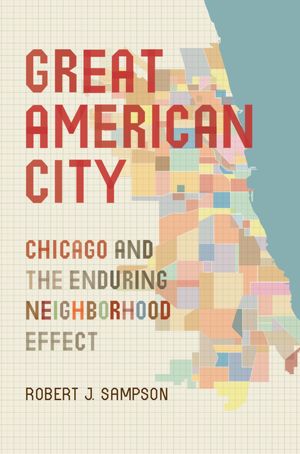
Lastly, sociological studies have demonstrated that the social contexts in which people make decisions are not unstructured but segmented in complex ways at a variety of organizational levels. The resulting social structures are connected to one another in ways that tend to reproduce and reinforce the status quo over time and strongly shape individual choices and outcomes.Apparently Sampson's book extends this understanding showing that geographic location is one of the factors that structures social interactions and thus decision making.

In the book's first half, “Amplifying Collective Intelligence,” Nielsen describes the benefits to cognition that can emerge from collaboration and through the use of technological scaffolds......
Nielsen opens the book's second half, “Networked Science,” with the case for a more concerted effort to develop a “scientific information commons,” making data freely available and easily accessible.It kind of makes you wonder if we are going to see a quantum leap in technologically augmented social networking for assessment, analysis and decision making. And wouldn't it be nice if we take advantage of the opportunity and do it well, since surely here as everywhere, there is a "dark side to the force."
Wednesday, April 04, 2012
Emily Bell on Elusive Objectivity
Emily Bell of Tow Center for Digital Journalism notes that the traditional focus of journalism has been on making sure that every word that appeared in public had been triple checked & "lawyered," and that it has not invested in tools/technologies that could potentially help produce better quality reporting.Bell points out that a quality journal like the Guardian (where she once worked) spent a lot of time, effort and money assuring that the things that it printed were true. In the crisis of journalism caused by the Internet, with people seeking information elsewhere and the financial basis for journals decaying, most are having to cut back on fact checking.
The Internet has its own ways of attaining quality of assertions. Think of Wikipedia with its social networking approach to fact checking. Think of Amazon with its reviews of books and quality judgments of the reviews.
The interesting question is whether we as individuals can find better ways of fact checking for the facts we attend to. Can we find better ways of selecting the facts to which we attend. We know that people make better decisions in groups than alone, so perhaps social networking is such an approach.
On the other hand, can we find ways to network with the right people, or will we network with people who share our biases and ignorance. The newsroom of a quality journal found a way to get well qualified people to work together -- it hired them and put a well qualified and experienced journalist in charge of them. I find a history book club, based on self selected members of the book store frequenting public, to be a good way to gather people to select and comment on books of history. My Linked In group, UNESCO's Friends, seems a way to gather interested people to share and discuss UNESCO via the Internet.
Anyone reading this who wants to chime in, please leave a comment.
Monday, October 24, 2011
"If Americans want to live the American dream they should move to Denmark!"
Richard Wilkinson: How economic inequality harms societies
This is clearly something worthy of thinking about, especially given the huge inequality of incomes in the United States which is growing rather than shrinking.
On the other hand, Wilkinson's talk depends on correlations and there are some things one should always look for in conclusions based on correlations, such as is there a hidden underlying variable that influences both of the correlated variables.
One notes that many of the societies that have both more equal distributions of income and many good outcomes on measures of societal success are in smaller countries, with highly educated people which have more homogeneous populations (or which have more successfully integrated immigrants into their societies). Could it be that smarter societies that see all their members as part of the same "tribe" may find better ways to reduce income inequalities and better ways to allocate social services including health services?
Richard WilkinsonIn "The Spirit Level," Richard Wilkinson charts data that proves societies that are more equal are healthier, happier societies. Full bio and more links
"We feel instinctively that societies with huge income gaps are somehow going wrong. Richard Wilkinson charts the hard data on economic inequality, and shows what gets worse when rich and poor are too far apart: real effects on health, lifespan, even such basic values as trust."
This is clearly something worthy of thinking about, especially given the huge inequality of incomes in the United States which is growing rather than shrinking.
On the other hand, Wilkinson's talk depends on correlations and there are some things one should always look for in conclusions based on correlations, such as is there a hidden underlying variable that influences both of the correlated variables.
One notes that many of the societies that have both more equal distributions of income and many good outcomes on measures of societal success are in smaller countries, with highly educated people which have more homogeneous populations (or which have more successfully integrated immigrants into their societies). Could it be that smarter societies that see all their members as part of the same "tribe" may find better ways to reduce income inequalities and better ways to allocate social services including health services?
Friday, May 14, 2010
Nicholas Christakis: The hidden influence of social networks
My friend Julianne recommended this great video talk:
I have recently been reading about the creation of the U.S. Constitution, and been struck by the fact that individually the creators of the Constitution had a lot of crackpot ideas, but together they constructed a system that was capable of improvement over time and that has served the nation very well. This would seem to be an example of the good that can come out of social networking -- the theme of Christakis' talk.
I was also struck some years ago by Orhan Pamuk's thesis that Istanbul's population share a certain sadness and that in fact many cities are characterized by their own characteristic emotion -- an emotion that differs from city to city. Christakis' talk would seem to suggest ways that such a situation could develop, based on the genetics of the population and the social network of the city, as well as contingent on the history of that population.
It will be interesting to see how the changing global information infrastructure affects society. In the 20th century, mass media resulted in a very few people being connected by one-way channels of communications to very large numbers of people; those mass media networks were primarily constrained within national boundaries. The Internet now connects many people to relatively large numbers of others, often via two way channels. Think of email, social networks, blogging, etc.
Subscribe to:
Posts (Atom)