Showing posts sorted by date for query The Spirit of UNESCO. Sort by relevance Show all posts

Tuesday, September 23, 2014

UNESCO Could Better Promote Peace by Shifting its Culture Programs


© UNESCO/Michel Ravasdsar

UNESCO was created to build the defenses of peace in the minds of men. It was supposed to deal in culture (as well as education, science and communications) with that objective. I wonder if its programs on the conservation of historical sites and artifacts and its recognition of unique expressions of diverse cultures are the only or even the best way for cultural programs to increase the probability of peace.

UNESCO has focused on "culture" in the narrow sense of the arts and the interests of museums. The broader interpretation of "culture" would include the institutions of a society and the technology that it uses. Perhaps UNESCO would better focus on helping people to understand the heritage from which they currently benefit in everyday life, and the ways in which cultures are converging by adopting parts of the global heritage that solve current problems.

Giza Pyramids from the Air.
UNESCO’s World Heritage program’s recognition of the Giza pyramids in Egypt can be used to exemplify the problem with UNESCO’s current approach, especially since the World Heritage Program is probably UNESCO’s flagship. What would we do today if someone claimed that he was a god in human form and demanded that when he died his mummified body be placed in a huge pyramid so that his spirit could ascend to the heavens to live forever with his fellow gods.  I suspect that such a person would be assessed for mental illness. If, as seems likely, the assessment positive and the condition could not be cured, we have the ability to assure that he would not do harm to himself and others.

Why would we celebrate the fact that the ancient Egyptians accepted a claim of divinity and built the pyramid for a pharaoh -- and then did so again and again? Rather than celebrate the pyramids built to support such delusions millennia ago, might UNESCO not equally well celebrate the fact that our understanding of mental illness has developed greatly and is widely shared among world cultures.
Many societies today share the ability to build such a pyramid, should they so choose, and to build it bigger, better and faster than the ancient Egyptians could have done. (Indeed, many countries could then vaporize the pyramid in a single thermo-nuclear explosion – something a pharaoh might have liked.) The accumulated heritage of know how to do such construction and the fact that that cultural heritage of knowledge is widely shared might also be worthy of UNESCO's celebration, at least since that knowledge is applied towards improving people's lives.

The ancient Egyptians were wrong about what was above us in the heavens. Today we inherit centuries of accumulated astronomical knowledge. We know quite a bit about the solar system, and we have put a man on the moon and vehicles on Mars. If we choose to do so we could very quickly put a man’s ashes into orbit, or his mummy in a casket on the moon. Indeed, if we choose, we could put a colony on Mars in this century. The cultural heritage of centuries of human effort to build that understanding of man’s place in the universe is truly worthy of UNESCO’s celebration. That shared knowledge that we are so insignificant a part of the universe might even be used to encourage mankind toward peace on our fragile planet.

Source

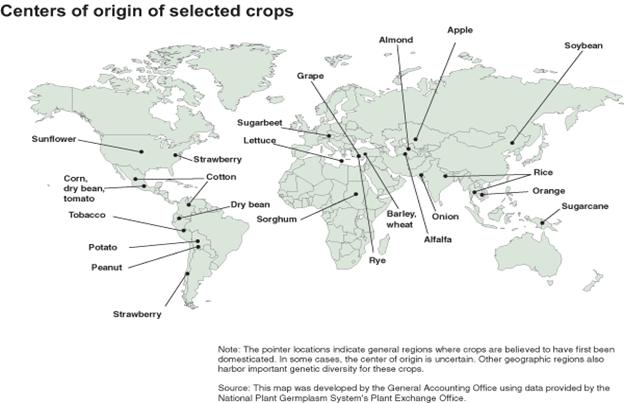
People live longer, healthier lives than ever before in history, and we do so by the billions. This is the result in part of modern medical technology and institutions that have been developed and shared worldwide. So too, our health and longevity are the result of agriculture that benefits from crops and livestock domesticated all over the world and are now shared among cultures; farmers everywhere benefit from technology and institutional forms developed outside their own countries. So too, people live in more hygienic environments enjoying the fruits of engineering and building technology developed in many countries over centuries and now shared globally. Manufacturing provides the inputs needed by medicine, agriculture, and engineering -- again the heritage of an industrial revolution that has lasted centuries and taken place in many countries. UNESCO could celebrate the heritage shared by all nations in these modern sectors.

In its celebrations of cultural heritage, UNESCO has focused on accomplishments of the past – typically very old accomplishments of cultures shared by relatively small populations. (The population of Egypt at the time the pyramids were built was onle a couple of million.)  In its focus on cultural diversity, UNESCO emphasizes aspects of a country’s tastes in food, music or drama from those of other countries. Might UNESCO also focus on cultural heritage that saves lives and helps people live healthier, more comfortable lives? Might UNESCO not also to focus on aspects of modern culture that have benefited from developments in many places at many times, and that are widely shared? Would people be as likely to go to war if they recognized more fully how much they owed to other cultures, and how similar their modern culture really is to other modern cultures?

UNESCO unlikely to promote peace by emphasizing things made in the past in cultural isolation, nor by emphasizing the differences in tastes among current cultures? Rather, UNESCO should emphasize the centuries of effort that constitute the heritage of modern societies and the continuing accumulation of new abilities that will be the heritage of future generations; UNESCO should emphasize that the sharing of useful knowledge and abilities is leading to convergence among cultures. UNESCO can help build the defenses of peace by showing how we are alike and becoming more so as we work together to create better lives for people?

Tuesday, June 24, 2014

Thoughts on Reading "The Age of Culture" by Schafer


I suppose I most fundamentally think of the world in terms of three elements:
  • People: The seven billion humans, all probably descended from a small band that lived some 200,000 years ago. Evolved from previous manlike species, all people share most of their DNA. We tend to start out pretty similar biologically.
  • The Natural World: If you will, this is the realm of things studied by the natural sciences.
  • The Social World -- the things studied by the social sciences.
I like to think of "culture" in the anthropological sense -- the complete pattern that characterizes the social world of a specific society. (See the defination at the end of this post.) Of course, my tripart view of reality is a product of my culture. Moreover:
  • A person's culture affects his/her body and mind. Thus the brain of someone speaking Japanese is actually wired differently than that of someone speaking English, and the bodies the children of Irish can identify me at a distance as a Yank (and have done so) in spite of the fact that my father was born in Ireland. 
  • So too, we live in landscapes that are to greater or lesser extent artifacts of our cultures.
We think of a person's behavior as determined by nature, nurture and the situation faced. In that construct, one's "nature" is determined by one's genetic heritage, and "nurture" by the way the potential in that nature has been helped to develop in one's youth. Identical twins raised identically in the same household will of course behave differently, say if one lives as a monk in the desert and the other as an artist in a well watered city.

I like the analogous idea that the nature of a culture is determined in part by its heritage of memes. But it is also determined by the way that those memes have been nurtured within the culture, and the environment in which that culture exists.  Thus the meme of farming has been very widely shared among cultures, but farming has developed distinct institutional frameworks in different cutures, is done differently in different cultures, as it is done differently in different climates with different soils and different demands from consumers.

Cultures evolve. Our culture is not like that of our ancestors in the 19th century, and more distant still from those in previous centuries. Just think how language has changed. Moreover, future cultural patterns are contingent on those of today and yesterday. Radio and television technology have swept the world, but programming is culture specific.

Much of culture in implicit. It is around as all the time but as invisible as the air we breath. Consequently efforts to influence the evolution of culture tend to be partial; often unrecognized aspects of culture interfere with efforts to reform political, economic and other institutions. Moreover, the ability to guide cultural evolution seems itself to be an aspect of culture (e. g. Giving Up the Gun: Japan's Reversion to the Sword, 1543-1879 by Noel Perrin).

We tend to be ethnocentric, assuming that other cultures function as ours does, or even that where we recognize cultural differences, our own culture is assumed to be superior (albeit without evidence of that superiority). This is not to say that all culture should be accepted as good and desirable. There are cultures that foster crime and violence, cultures where human rights of  large numbers of people are not respected, and indeed, most cultures have their own Jerimiahs, revealing the sins of their own peoples.

Cultures include the set of values held by people within the culture; these values change as part of cultural change. Only 150 years ago many people in the south of the United States went to war to protect the institution of slavery which they defended as good for the slaves and good for the masters; their values we can hardly fathom today. We tend to be tempocentric, assuming that the values of our time will also be those of other (future times) or that the values of our time are superior to those that will be held in our evolved culture in the future.

The Age of Culture

I am reading The Age of Culture by D. Paul Schafer. The author starts from a recognition that current patterns of international development are marked by major problems. They are not sustainable. Conflict is everywhere and threatens to worsen.  A large portion of the seven billion people living today are living in poverty. The worst aspects of that poverty are sickness  disability, and early death, but lack of choice, lack of power, lack of voice are also to be fought. On the other hand, a tiny fraction of the world's people are hugely wealthy and  rapidly accumulating more wealth. (Schafer perhaps fails to recognize the progress that has been made in improving the lives of the poor, as shown by the degree of success in achieving the Millennium Development Goals.)

He perceives that we need to move toward a new order in which people are enabled to live a good life, rich in development of the body, mind, taste, and -- if you will -- soul, but not demanding of excessive material possessions and with a limited and sustainable environmental footprint. In one of the meanings of the word, Schafer seeks a world in which people everywhere would be cultured.

Schafer lives in Canada and I live in the USA, both multicultural societies. Yet our countries are relatively homogeneous cultural when compared to say India or Nigeria. Schafer points out that in multicultural societies, cultures rub against one another, changing and being changed in the process, and such multiculturalism is itself a culture. As the world globalizes, it is increasingly useful to recognize all 7 billion of us living in a huge global culture.

Cultural Ages

For thousands of years, before history, people lived in relatively small bands as hunter-gatherers. Schafer refers to theirs as a Hunter Culture, and I see similarities across many such cultures. The range over which a band might move would be limited. While they transformed their local environments, as compared with today the Hunter Culture had a limited footprint. Thus, for example, the rate at which other species were becoming extinct was much lower than today, forests still dominated more of the earth and the oceans were relatively untouched.

I think of the 20th century as marking the end of an Age of Imperial Culture. While the Spanish Empire fell earlier, the 20th century saw the fall of the Austro-Hungarian, Ottoman, British, Belgian, Dutch, French, Japanese and Soviet empires. These empires had been built around the advantages that the metropolitan power enjoyed by its early lead in the Industrial Revolutions -- what Jared Diamond termed Guns, Germs and Steel, plus fossil fuels in steam and internal combustion engines, the telegraph and telephone, etc. World War I, World War II and the Cold War contributed to the end of that epoch.

Schafer suggests that we currently live in an "economic age" but that we should strive to transform society so that people in the future may live in an "age of culture." He was trained as an economist and worked as an economist early in his career before moving into arts administration. I was trained as an engineer and worked as an engineer before moving into science administration. Perhaps that is why I tend to think of our current culture as having been importantly formed by centuries of technological innovation. I also think that since mankind has seen the world from space and learned to use computers to better deal with the diversity of ecosystems, our global culture is becoming much more aware of the planet on which we live and the complex ways in which our environment functions. Yet clearly, ours is an age in which governments, corporations and markets are key institutions, and economists play an important role in studying those institutions and helping define societies policies with respect to those institutions.

The current epoch is characterized by a concentration of wealth. Forbes magazine estimates that there are 1645 billionaires in the world today with an aggregate net worth of 6.4 trillion U.S. dollars. This may be compared with estimated total global wealth in 2013 of 241 trillion U,S. dollars. Thus 0.00002 percent of the world's population has 2.65 percent of the world's wealth. On the other hand, according to the World Bank1.22 billion people lived on less than $1.25 a day in 2010, and 2.4 billion people lived on less than US $2 a day. Multinational corporations unknown in previous ages, owned by the relatively wealthy and managed by a bureaucratic elite, have largely escaped the control of national governments. Commerce has become global in many commodities.

This is an epoch dependent on fossil fuels, and they are being depleted. The ecological footprint of this cultural epoch is creating global warming, melting ice caps and glaciers, raising sea level and flooding coastal zones, creating mass extinction of other species, destroying forests and top soil, polluting surface water, ground  water and coastal zones, expanding deserts, and generally making the earth less livable for the species.


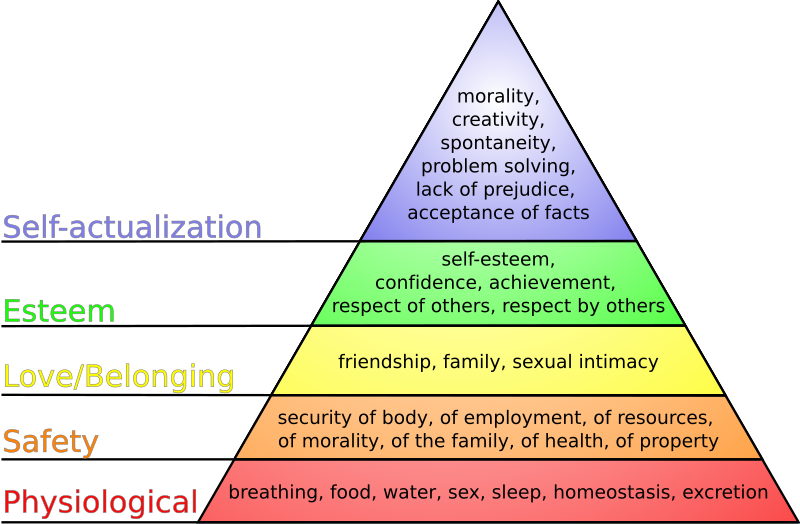
Maslow's Needs Hierarchy
Source (and license information)

Schafer maintains that mankind should consciously change global culture seeking to achieve an Age of Culture. Here he is using a definition in part similar to this from the Merriam-Webster Dictionary:
a :  enlightenment and excellence of taste acquired by intellectual and aesthetic training 
b :  acquaintance with and taste in fine arts, humanities, and broad aspects of science as distinguished from vocational and technical skills
I think he and I share a critique of the current epoch that can be explained in terms of the Maslow Needs Hierarchy.  Today a billion people are barely meeting their physiological needs and billions more are not meeting their safety needs, while a small fraction of the world's population is accumulating great wealth, enjoying most of the fruits of an unsustainable use of natural resources.

Since the higher levels of Maslow's hierarchy do not require resource intensive production of goods and services, a shift in societies' processes could focus more on their achievement while diminishing mankind's global ecological footprint. Production of goods and services would be modified to make the use of natural resources sustainable. The new social system would share the wealth and income of the world more evenly, allowing the poor to satisfy physiological and security needs more fully, and to begin to fulfill higher order needs.

Schafer feels that our current culture fails to act with sufficient attention to the whole person, the whole of society, and the whole global environment with which people and society interact. He sees our priorities as biased towards the "economic" -- increase in income and wealth, and not adequately taking into account sustainability nor the higher aspirations of mankind.

In achieving his age of culture, Schafer then proposes a model of development, as shown in the following diagram:

The Cultural Model of Development
He devotes a chapter in the book to "The Cultural Personality", focusing on the characteristics of people who will inhabit his desired Age of Culture. He is especially interested that they have a holistic view, working to develop their potential to the fullest. I very much like this focus. Let us ask what it is in their culture that makes people who they are; what is it in people that makes their culture what it is. Perhaps we call the latter "personality". I note that Orhan Pamuk in his great book Istanbul: Memories and the City suggests that his city has a special feeling shared by its inhabitants, a feeling which has changed with time, and that other cities too have what we might call personality traits shared by their inhabitants. So it seems logical that to move culture in desired directions, people's personalities must change over time in supportive fashion.

D. Paul Schafer in his book is concerned with the extent of specialization in our current culture. On the one hand, I feel that it would be great if people could be less single minded about work and money to spend more time on family, learning about others and improving their minds and spirits. On the other hand, trying to get Mozart to paint or write, or to get Shakespeare to play more music and dance more seems unwise. A good economist, a good engineer, or a good scientist needs thousands of hours of work to learn his/her profession, and needs to practice it to maintain the skill. I think specialization is  here to stay in that sense.

Schafer also devotes a chapter to "The Culturescape: Self-Awareness and Communities". It seems clear that people in the next century or two will live primarily in cities and towns. Indeed, finding ways to make urban living sustainable will be high on any agenda for human welfare. Making towns and cities livable, in the sense of places that not only allow people to fulfill their physiological and safety needs, but increasingly to fulfill higher order needs seems an obvious goal, but one that is clearly going to be difficult to achieve. We need not look back to the horrific cities of Dicken's England or Civil War New York; we can focus on the enormous slums in Africa, Asia and Latin America.

UNESCO

UNESCO was founded in the aftermath of World War II to build the defenses of peace in the minds of men. In the terms used above, it was an explicit effort created by the allies to change world culture in such a way that wars would be less frequent and less brutal. Indeed, UNESCO has created a project promoting the culture of peace, and there was an International Year of the Culture of Peace. Federico Mayor, the former Director General of UNESCO (who wrote an introduction to Schafer's book) has on leaving his post at UNESCO created a Foundation for the Culture of Peace.

More fundamentally, the "C" in UNESCO is for Culture. It has used its convening power to bring leaders together from all over the world to discuss culture, it has been a laboratory and clearinghouse for ideas about culture. It has fostered the creation of international agreements about the protection of cultural artifacts and heritage and created programs for the protection of world heritage sites and intangible cultural heritage, as well as the promotion of cultural expression. Importantly, it has sought to promote dialog among cultures to increase mutual understanding and decrease conflict.

Author Schafer's thinking has been significantly influenced by UNESCO (as has my own). Moreover, UNESCO is the logical place for the ideas in this book to be discussed and further developed.

Reservations

Schafer and I are both native English speakers from North America, of the same age, with somewhat similar life experiences. Our values seem quite similar, yet they may be different in many ways from the values of people in a century or two -- the people who will be living in the age for which Schafer wishes to influence culture. There is an inescapable contradiction in the fact that their future culture will be contingent on the decisions made now with our current value system, but they will have to live in that future with their own values.

The question is most pertinent in Schafer's final chapter, "Culture and Spirituality: Key to Life and Living in the Twenty-First Century". Schafer suggests that he attains spiritual states through the arts, through experience with nature, and through physical exercises. Others, especially devotees to some religions, might find this chapter offensive. Remember that one of the divisions between some of the Reformation Protestant Churches and the Counter-Reformation Catholic Church was just over whether and how music, paintings, and sculpture were to promote religious spirituality. While I find visiting UNESCO's natural World Heritage sites (e.g. Yosemite, Yellowstone, the Everglades) to refresh my spirit, I recognize other people don't share those experiences. Perhaps most importantly, as Michael Brown implies in Who Owns Native Culture?, indigenous people have all too often had their cultural preferences, and even their spiritual beliefs, run over by people from dominant economic and political groups.

Culture is complex and implicit. In my opinion, many development efforts have gone awry having been bitten by cultural memes that had not been recognized or interactions among memes, people and environment that were too complex to predict. As Robbie Burns wrote:
The best-laid schemes o' mice an' men
Gang aft agley,
An' lea'e us nought but grief an' pain,
For promis'd joy!
Governments and large organizations in the private and non-profit sectors are key institutions today, and they are responsive to people with wealth and political influence. While participatory democracy is more prevalent today than ever before, people are influenced by the media, educational institutions, political parties and other institutions -- all of which are led by people "with skin in the game". It is not clear how cultural change can be guided to achieve the ends Schafer desires when the change is likely to often be detrimental to the perceived interests of the people with influence.

Final Comment

It is clearly not possible to do justice in a short post such as this to ideas that Paul Schafer has expressed at book length. Indeed,  I am sure that I have not fully digested his thought myself. Read the book for yourself.

I will leave you with a video in which 75 people of Cuban culture together play that quintessential Cuban song, Guantanamera. People proud of their Cuban heritage can differ violently over issues of politics and economics, but they can come together to make music. Perhaps cultural expression is a tool to move toward a culture of peace.

Playing for Change - Guantanamera


From the Merriam-Webster dictionary, a definition of culture
a :  the integrated pattern of human knowledge, belief, and behavior that depends upon the capacity for learning and transmitting knowledge to succeeding generations
b :  the customary beliefs, social forms, and material traits of a racial, religious, or social group; also :  the characteristic features of everyday existence (as diversions or a way of life) shared by people in a place or time
c :  the set of shared attitudes, values, goals, and practices that characterizes an institution or organization
d :  the set of values, conventions, or social practices associated with a particular field, activity, or societal characteristic

Sunday, September 02, 2012

The Continuity of UNESCO's Mission


UNESCO is 67 years old. Its program has experienced the winds of international change for decades and is very different in detail today than it was on the founding of the Organization. When it was founded, UNESCO was one of very few intergovernmental organization, and today there is a plethora of international organizations. Yet I think that those who participated in the founding of the Organization would easily perceive today's UNESCO as a realization of their original ideas.

Of course the Organization responds to its member nations. The General Conference of UNESCO could change UNESCO programmatic directions, and has done so. However, the member states have honored UNESCO's original mission, its charter if you will, and the changes that they have made have conserved its original purpose.

The purpose of UNESCO is defined in its Constitution, and more specifically in the preamble to that constitution. The states party to this Constitution
create(d) the United Nations Educational, Scientific and Cultural Organization for the purpose of advancing, through the educational and scientific and cultural relations of the peoples of the world, the objectives of international peace and of the common welfare of mankind for which the United Nations Organization was established and which its Charter proclaims. 
Further, the preamble indicated that:
the States Parties to this Constitution, believing in full and equal opportunities for education for all, in the unrestricted pursuit of objective truth, and in the free exchange of ideas and knowledge, are agreed and determined to develop and to increase the means of communication between their peoples and to employ these means for the purposes of mutual understanding and a truer and more perfect knowledge of each other’s lives
Underlying the purpose, the signatories declared:
That since wars begin in the minds of men, it is in the minds of men that the defenses of peace must be constructed;  
That ignorance of each other’s ways and lives has been a common cause, throughout the history of mankind, of that suspicion and mistrust between the peoples of the world through which their differences have all too often broken into war;  
That the great and terrible war which has now ended was a war made possible by the denial of the democratic principles of the dignity, equality and mutual respect of men, and by the propagation, in their place, through ignorance and prejudice, of the doctrine of the inequality of men and races;  
That the wide diffusion of culture, and the education of humanity for justice and liberty and peace are indispensable to the dignity of man and constitute a sacred duty which all the nations must fulfill in a spirit of mutual assistance and concern;  
That a peace based exclusively upon the political and economic arrangements of governments would not be a peace which could secure the unanimous, lasting and sincere support of the peoples of the world, and that the peace must therefore be founded, if it is not to fail, upon the intellectual and moral solidarity of mankind. 
Today UNESCO provides the following:

UNESCO’s mission is to contribute to the building of peace, the eradication of poverty, sustainable development and intercultural dialogue through education, the sciences, culture, communication and information. The Organization focuses, in particular, on two global priorities:
  • Africa
  • Gender equality
And on a number of overarching objectives:
  • Attaining quality education for all and lifelong learning
  • Mobilizing science knowledge and policy for sustainable development
  • Addressing emerging social and ethical challenges
  • Fostering cultural diversity, intercultural dialogue and a culture of peace
  • Building inclusive knowledge societies through information and communication
 UNESCO was conceptualized primarily by the western victors of World War II, and naturally focused initially on the purging of propaganda from European textbooks and concerns relevant to the rebuilding of societies damaged by the war. With the entry of the USSR as a member state, the organization came to reflect the tensions of the Cold War and did so for decades. After the massive decolonization that occurred in the 1950s and 60s, many new nations joined UNESCO and the organization added a strong concern for nation building. These and other changes have occurred, but UNESCO always continued to act within the purposes and their rationale expressed in its Constitution. Even the increased emphasis on building educational, scientific, cultural and communications institutions in developing nations can be seen as inherent in the beliefs that underlie UNESCO's purpose.

Comparison with the U.S. National Commission


Other organizations experience "mission creep" that is far more extensive that UNESCO has shown. For example, the legislation that authorized the U.S. National Commission for UNESCO in 1946 simply does so "In fulfillment of article VII of the constitution of the Organization". The relevant portion of that article states:
1. Each Member State shall make such arrangements as suit its particular conditions for the purpose of associating its principal bodies interested in educational, scientific and cultural matters with the work of the Organization, preferably by the formation of a National Commission broadly representative of the government and such bodies.  
2. National Commissions or National Cooperating Bodies, where they exist, shall act in an advisory capacity to their respective delegations to the General Conference, to the representatives and alternates of their countries on the Executive Board and to their Governments in matters relating to the Organization and shall function as agencies of liaison in all matters of interest to it. 
The current charter of the U.S. National Commission defines the purpose as follows:
The purpose of the U.S. National Commission for UNESCO (the Commission) shall be to serve the Department of State in an advisory capacity with respect to the consideration of issues related to education, science, communications culture, and the formulation and implementation of U.S. policy towards UNESCO.
Thus the purpose of the National Commission has been narrowed to completely eliminate the first purpose defined in the legislation -- associating the U.S. intellectual community with the work of UNESCO. Moreover, the current charter eliminates the role of the National Commission of advising the U.S. delegations to the General Conference and the Executive Board. It further limits the role of the National Commission from "advising the U.S. Government" to "advising the Department of State" (thereby eliminating its ability to advise the Congress, other Departments of Government or the White House).

Note that later legislation also stated that
The National Commission shall call general conferences for the discussion of matters relating to the activities of the Organization, to which conferences organized bodies actively interested in such matters shall be invited to send representatives..........Such general conferences shall be held annually or biennially, as the National Commission may determine, and in such places as it may designate. They shall be attended so far as possible by the members of the National Commission and by the delegates of the United States to the General Conference of the Organization. The National Commission is further authorized to call special conferences of experts for the consideration of specific matters relating to the Organization by persons of specialized competences.
Under the current charter, the National Commission has no such power.

Thursday, August 23, 2012

Understanding UNESCO's Evolution


While many of UNESCO's founders and some of its Directors General have seen the Organization as embodying a philosophy of humanism, its portfolio, Secretariat and extended networks of partners can best be understood as having evolved through legislative and social processes, yet it has significantly achieved the hopes of its founders.


Students beginning the study of UNESCO are surprised by the diversity of its activities. For example, UNESCO has a key role in the Education for All program and the Millennium Development Goals for education, and also works in literacy and lifelong learning, but it also plays a key role in the development of a global tsunami warning system, supports a global network of bioreserves, is responsible for the international convention against the illicit market in historical artifacts and the international convention against doping in sports, and supports international work in support of libraries and protection of reporters.

Other decentralized agencies of the UN system such as the World Health Organization, the Food and Agriculture Organization, the International Postal Union or the International Telecommunications Union have charters which more obviously impart coherence to their programs; in comparison, UNESCO seems to lack a central organizing philosophy.

UNESCO was founded in the aftermath of World War II and it was seen as the complement of the United Nations. The UN and its Security Council were seen as a political means for the prevention (or amelioration) of armed conflicts in the future. UNESCO was seen as focusing on changes in societies that would in turn change the way in which people thought, changes that would make war less and less likely.

There clearly was no charter for UNESCO to favor one world religion over another, nor was there a charter for UNESCO to favor Capitalism, Communism nor Socialism as an economic system. The preamble to the UNESCO Constitution states:
That the great and terrible war which has now ended was a war made possible by the denial of the democratic principles of the dignity, equality and mutual respect of men, and by the propagation, in their place, through ignorance and prejudice, of the doctrine of the inequality of men and races;

That the wide diffusion of culture, and the education of humanity for justice and liberty and peace are indispensable to the dignity of man and constitute a sacred duty which all the nations must fulfil in a spirit of mutual assistance and concern;
While UNESCO could focus on "democratic principles", no agreement could have been presumed that UNESCO would militate against the political system of the USSR, nor that of the United States, nor against the constitutional monarch of the United Kingdom, nor indeed against the empires then held by Great Britain, France, and Portugal.

How then was UNESCO to accomplish its fundamental purpose? It was
to contribute to peace and security by promoting collaboration among the nations through education, science and culture in order to further universal respect for justice, for the rule of law and for the human rights and fundamental freedoms which are affirmed for the peoples of the world, without distinction of race, sex, language or religion, by the Charter of the United Nations.
Various people have seen an implied philosophical position that would serve as a basis for more specific actions such as the proposal of initiatives for UNESCO that would be strongly related to its purpose or to the exclusions of less relevant initiatives. Thus Julian Huxley, UNESCO's first Director General, proposed that UNESCO promote "Scientific Humanism" while Irina Bokova, the current Director General, has proposed a "New Humanism for the 21st Century":
The major challenge is to turn the crisis into an opportunity and create a more democratic and humane world where the values of human dignity and human rights, of equal access to education and culture, will underpin all economic and political considerations.
Such a fundamental philosophical position is no doubt useful for the Director General of UNESCO, occupying a position with considerable power and authority over the program of the Organization.

However, it is also important to recognize that UNESCO operates on a charter that was a compromise developed by the representatives of very different countries with very different histories and interests. Moreover, it has been subject over almost seven decades to the instructions of its governing bodies composed of the representatives of its member states.

These instructions have reflected changes in global understanding of culture and society, and the political winds of the Cold War , decolonization and globalization as well as of smaller wars, economic crises. Not only has the number of member states changed, but the balance has away from imperial powers to new states that have emerged from political or economic imperialism, and so the interests of the majority of representatives to the General Conference and Executive Board also have changed.

UNESCO's portfolio has evolved over time reflecting the interests of its leadership and Secretariat, the initiatives of key outsiders (who have championed specific initiatives -- see this for a list of some of the American influentials), the interests of the governments member states and their representatives to UNESCO bodies, the adhesion and expansion of networks that associated with UNESCO's programs, and the interests of international and national educational, scientific, cultural and communications communities.

That evolution has been marked by a continuity as the Organization continued programs, activities and networking that had once been started, but also by change as from time to time new initiative have been added to the mix and less often as older efforts have been stopped -- either spun off as successful and able to stand alone or as unsuccessful and not competitive with other demands for limited resources. While not perfect, that evolution has been focused both by adherence to the UNESCO Constitution and by the guidance of Directors General who often shared key elements of a vision for UNESCO.

The result of this politicized program evolution is not a bureaucrat's dream but all in all it must been seen as having significantly realizing the hopes of UNESCO's founding fathers. The very modest resources assigned to UNESCO have been used to promote education, science and culture, focusing often on societies that have in fact been especially receptive to increasing humanism in their philosophical basis, and resulting in a more peaceful world with better understanding among peoples and more dialog among cultures.

It is time for the United States to recognize this reality and modify its foreign policy as it relates to support for UNESCO.


Sunday, November 06, 2011

Thinking About the Evaluation of UNESCO

I find that it is almost impossible to evaluate UNESCO well, as evaluation is generally understood. Of course, it is possible to monitor various aspects of the implementation of UNESCO's program. Of course it is quite reasonable to ask for a group of interested experts to advise on UNESCO and how it might improve its work; the Independent External Evaluation of UNESCO seems to me to be useful in the latter sense. It is also possible for a funding agency to get external advice as to whether to continue its support to UNESCO. the recent review by the UK's DfID provides that kind of advice, albeit advice with which I largely disagree. But for reasons described below I think that such reviews should not be called evaluations.


The objectives of UNESCO

UNESCO was planned during the second of two world wars and came into being in immediately after the war. The initial planning came out of the Committee of Allied Ministers of Education (CAME), and CAME would have focused on the needed rebuilding of the educational and cultural infrastructure of allied Europe which was being destroyed during the war. On the other hand, the U.S. Government was opposed to creating UNESCO to implement reconstruction programs, preferring other mechanisms for that purpose. What was decided instead was that UNESCO would seek to build the defenses of peace in the minds of men. (UNESCO only began to carry out reconstruction and development programs in Africa much after its founding.) Of course no one knew how to build these defenses, but UNESCO was given a statement of its purpose:
The purpose of the Organization is to contribute to peace and security by promoting collaboration among the nations through education, science and culture in order to further universal respect for justice, for the rule of law and for the human rights and fundamental freedoms which are affirmed for the peoples of the world, without distinction of race, sex, language or religion, by the Charter of the United Nations.
Thus the purpose of UNESCO was to promote social and cultural changes in nations, and specifically those changes that would contribute to peace and security. Certainly the highest priority would be to help protect against a third world war, a war which it was thought would be fought with nuclear weapons.

  • What specific changes have the greatest power in contributing to peace and security?
  • What changes are most cost-effective in reaching for peace and security?
  • How do the many changes that might contribute to peace and security interrelate?
  • Are there negative impacts of these changes?
  • What tools consistent with UNESCO's emphasis on education, science, culture and communications are available to affect social and cultural changes in the desired directions?
  • How effective are these tools?
These questions could not have been answered with any confidence in 1945 and still can not be answered with confidence. The best that has been done is to propose that UNESCO's mission involves the promotion of humanism on a global basis.

While UNESCO is a constitutional organization, its short term program and budget and its mid term goals and objectives are determined by its governing bodies. In response to the changing global situation and the changing composition of its governing bodies, UNESCO has evolved over the decades and its system of goals and objectives have changed.

I find it hard to understand how functions that have been foisted on UNESCO relate to the humanism that would contribute to peace and security. The Declaration Against Doping in Sports and the promotion of multilingualism on the Internet seem at best to have only distant relation to peace and security. In fact, UNESCO deals with a vast array of specific objectives with little understanding of how they combine to achieve the overall purpose give in the Constitution -- if they do so at all.

The Structure of UNESCO

UNESCO is not like the corporate or national governmental organizations for which much of management theory has been built. It must be seen as an intergovernmental organization, with implicit objectives of accommodating the differing concerns of its member states, balancing its staff geographically, and avoiding siding with one or another faction in the diplomatic alliances that infect its governing bodies.

While there is a UNESCO Secretariat that to some degree corresponds to the organizations for which management theory was developed, the organization has decentralized and is surrounded by a huge network that has affiliated itself with the Organization. 

Portions of UNESCO have been created to implement terms of international conventions and not only have their own goals and objectives but their own governing bodies. Consider also the Category I and Category II Institutes and Centers of UNESCO. The Category I organizations have their own governing bodies, charters, and receive funding from donors other than UNESCO; the Category II centers are still more independent. 

To identify UNESCO with only its Secretariat would be to make a fundamental error in understanding. The spirit of UNESCO is also embodied in a huge network of partners that have chosen to affiliate with the Organization. These partners have their own understanding of the purposes, goals and objectives of UNESCO, and bring to their partnerships their own goals and objectives. Not only don't these networks obey the governance of UNESCO in carrying out programs and activities, they would be unlikely to provide evaluators with detailed information on what they do, why they do it, and what their impact has been.

Resource Constraints

The financial resources of UNESCO's Secretariat are fairly evenly distributed between assessed contributions and extrabudgetary resources. While the assessed contributions of the regular budget are at least nominally programmed by UNESCO's governance, countries donate other resources tied to their own purposes. Thus the budget of UNESCO's Secretariat is not only beset by uncertainties, but is specifically intended to achieve a complex set of objectives, only some of which are those of the Organization. 

Extending out into the network, which includes many volunteers and voluntary organizations, there is much less explicit tying of budget to UNESCO's objectives, much less formal management toward UNESCO's purposes, and much less accountability to UNESCO and its funders.

Human resources available to UNESCO are in fact people with their own objectives. That is of course true of any formal organization, but in the case of UNESCO the staff is multinational and multiethnic, with a Director General elected by the members states in a process that is intended not only to obtain the best leader possible, but to satisfice all the factions in the governing bodies and to achieve regional balances historically and within the UN system.

Results 

The statement of UNESCO's purpose itself recognizes that UNESCO could at best contribute to peace and security; achieving peace and security would require other actions by other parties. The budget of UNESCO, which is less than that of my local school system, is very small with respect to the global educational, scientific and cultural enterprise, and thus the impact of UNESCO on global society must be relatively modest in any given year or decade.

Moreover, everyone realizes that that purpose is to be achieved over historic time, not the two year term between elections of American congressmen, nor the four year term of office of an American President, nor the decade that a UNESCO Director General can expect to serve. Indeed, it is far from having been achieved in 66 years since UNESCO was founded.

Thus UNESCO has an incompletely defined purpose, which is to contribute marginally for a very long time to a poorly understood process, which specific goals and objectives changing over time, implemented not only by a multinational, multi-ethnic Secretariat with governance shared with other bodies and a budget implementing other objectives as well as its own, and a huge network of affiliates with their own purposes, goals and objectives, little accountable to UNESCO or its governance. How do you evaluate that?

So What?

Not everything that is worth doing can be captured in numbers! It still seems reasonable that the world can become more peaceful and security be increased if cultures change to become less warlike and more oriented towards international cooperation and understanding. It seems reasonable that the changes will be in the minds of men, and that it will be through the development of intellectual institutions that those changes will be achieved. It seems right that UNESCO's objectives have been broadened to include the reduction of poverty and the social and economic development as ends in themselves; these ends are not incompatible with a culture of peace and indeed may be necessary if a culture of peace is to exist. It seems reasonable that a multinational approach is helpful in that UNESCO provides a forum in which nations can debate on the institutional and cultural changes that are desirable and the means that are desirable to achieve them, and by coming to agreement on such issues increase the likelihood that they will be achieved nationally and internationally. It seems clear that UNESCO has contributed to the development of educational, scientific and cultural institutions in many nations and internationally. It seems clear that the job is better done by the Secretariat plus the affiliated networks than would be the case were the Secretariat to go it alone. And of course, it seems obvious that UNESCO could do better than it has done, and that it can with proper direction do better in the future.


Friday, August 28, 2009

Thinking About the Election of the New UNESCO Director General

A critical determinant of the behavior of an agency is its mission, and for UNESCO that mission is still best described by the preamble to its constitution. Here is that preamble in its entirety:
The Governments of the States Parties to this Constitution on behalf of their peoples declare:

That since wars begin in the minds of men, it is in the minds of men that the defenses of peace must be constructed;

That ignorance of each other's ways and lives has been a common cause, throughout the history of mankind, of that suspicion and mistrust between the peoples of the world through which their differences have all too often broken into war;

That the great and terrible war which has now ended was a war made possible by the denial of the democratic principles of the dignity, equality and mutual respect of men, and by the propagation, in their place, through ignorance and prejudice, of the doctrine of the inequality of men and races;

That the wide diffusion of culture, and the education of humanity for justice and liberty and peace are indispensable to the dignity of man and constitute a sacred duty which all the nations must fulfil in a spirit of mutual assistance and concern;

That a peace based exclusively upon the political and economic arrangements of governments would not be a peace which could secure the unanimous, lasting and sincere support of the peoples of the world, and that the peace must therefore be founded, if it is not to fail, upon the intellectual and moral solidarity of mankind.

For these reasons, the States Parties to this Constitution, believing in full and equal opportunities for education for all, in the unrestricted pursuit of objective truth, and in the free exchange of ideas and knowledge, are agreed and determined to develop and to increase the means of communication between their peoples and to employ these means for the purposes of mutual understanding and a truer and more perfect knowledge of each other's lives;

In consequence whereof they do hereby create the United Nations Educational, Scientific and Cultural Organization for the purpose of advancing, through the educational and scientific and cultural relations of the peoples of the world, the objectives of international peace and of the common welfare of mankind for which the United Nations Organization was established and which its Charter proclaims.

Which of the eight candidates for the position of Director General of UNESCO is likely to be most committed to that mission? Which is likely to do the best job of leading UNESCO as it carries out that mission? (Commitment to the mission is only one factor in the ability to lead well.)

The eight active candidates come from eight different countries. They have different life experiences and different professional histories. All have achieved very senior professional positions indicating considerable accomplishment. All are multilingual, all have lived in more than one country, and all have experienced living in more than one culture. Perhaps most important, all have been nominated for the position by one of more UNESCO member nations, and thus require serious consideration for their candidacies.

Leading towards peace

There appears to be a difference among the candidates in terms of experience in the promotion of peace. One has graduate educational training in the promotion of peace. Two have direct experience in international negotiations for the promotion of peace. One has a long history of opposing cultural exchanges that might have diffused potential conflict due his demand that the other country should reform its policies before exchanges would take place.

Recognition of Geographic Priorities/Sensitivity to Cultures

UNESCO works in the real world. The task of "advancing, through the educational and scientific and cultural relations of the peoples of the world, the objectives of international peace and of the common welfare of mankind" will differ from situation. It will depend in part on the specific cultures involved. The different candidates have personal experience with different cultures, and it seems likely that they have different capacities for the appreciation of cultures not their own.

UNESCO's mission must be seen in terms of the importance of conflicts, the urgency of efforts to reduce conflict, and the relative power of UNESCO to make a difference. The threat to the world of a breach of the peace between two powers, each with weapons of mass destruction, is obviously greater than that between to less well-armed powers. Active conflict, such as that in Afghanistan raises more urgent problems than do potential future conflicts. For some countries UNESCO can be expected to have relatively little influence as compared with other international organizations, while in others UNESCO may well be comparatively well positioned to make an impact.

UNESCO has very limited resources, and thus must focus its efforts carefully. The Director General has great influence in how those resources will be allocated. Therefore, the Director General should have broad understanding of global issues, and should be able to rise above the specific issues of interest to his/her home country in order to be able to lead in the most effective application of UNESCO's efforts to problems of global importance whereever they arise.

Consider some of the issues faced by a global agency. The problems of Arab-Israeli relations have received a great deal of attention in the media coverage of the current election. The occupation of Iraq by Coalition forces, the war in Afghanistan, and the potential development of nuclear weapons in Iraq all direct attention to the Gulf rather than the Levant?

Societies in flux, such as rapidly developing, transition, or failing states, offer special challenges and opportunities for UNESCO. Sub-Saharan Africa has been the site of the most deadly conflicts over recent decades, and has been identified as the priority for UNESCO by its governing bodies. The fall of Communism has led to radical social and economic transformations in the former Communist nations of Europe, and those transformations would seem to require their own priority from UNESCO.

Asia, with its huge population, includes a number of countries that have experienced rapid economic development in recent decades. Several are nuclear powers, and these countries are expanding international markets for both raw materials and finished products. Asia has been the greatest rural to urban migration in history, and some Asian countries are experiencing major environmental problems.

It may well be that some of these situations involve long term potential threats to peace rather than immediate threats, but UNESCO's approach to the promotion of peace is long term also, and the magnitude of the threats must be taken into account as well as their immediacy.

The candidates would seem to differ considerably in their experience with these global problems. Two are culturally Arab, one of whom appears most focused on Arab-Israeli issues while the other is experienced in Latin American issues as well as those of the Levant. Three are from transition countries, one of whom is a senior official of the Russian Foreign Ministry with experience representing that country at the United Nations. One is a senior official responsible for aspects of foreign policy of the European Commission, who also has experience as foreign minister of her own neutral country as well as experience in the United Nations. Two come from Sub-Saharan Africa.

Prioritization of Types of Knowledge

The task of "advancing, through the educational and scientific and cultural relations of the peoples of the world, the objectives of international peace and of the common welfare of mankind" also requires understanding of real world sources of conflict.

Some of those sources are physical. Thus, climate change is likely to force massive population dislocations in the coming century and those dislocations may occasion conflict. Exhaustion of water resources in increasingly heavily populated arid lands is also predicted to be a source of conflict in the 21st century. Both of these factors may result in dramatic changes in patterns of agricultural productivity, and hunger is a powerful motivation for conflict.

Some of the sources of conflict are socio-economic. Globalization is resulting in new economic rivalries that in turn have the potential to spawn conflict. The development of the global information infrastructure is driving massive new exposures of formerly isolated cultures to the culture of the Western nations that dominate the global media, and we have seen that that clash of cultures has been a source of conflict.

If UNESCO is promote educational, scientific and cultural relations among peoples, given the huge range of such relations and the limited resources of UNESCO, it should focus on the exchanges that will do the most to prevent the escalation of conflict. Thus, for example, it may be important that UNESCO focus on education and science relating to water resource and climate change, to globalization and the cultural impact of media.

In consideration of the candidates for Director General, it is important that the person to be elected have a deep understanding of these real-world, physical, economic and social sources of conflict. Unfortunately, little of this understanding can be inferred from their biographies nor their vision statements for the future of UNESCO.

Final Comment

The purpose of this posting is to help think through the issues, not to come to a conclusion. Even if there appear to be significant differences among candidates in the breadth and depth of understanding of and identification with global issues, as suggested above, the leadership ability will also depend on the ability to motivate people within and outside UNESCO, the understanding of the educational, scientific, cultural and communications tools available to UNESCO, and the organizational ability to manage the resources of the organization to pursue its mission.

Thursday, November 02, 2006

"Where do scientists fit into Africa's science plans?"

The modern Library of Alexandria. (The rebirth of the most famous of ancient libraries might symbolize the reinforcement and regeneration of African science in general.)


David Dickson, in this editorial, wrote:
Defining an appropriate policy-making role for Africa's scientific community requires a careful balance between 'science push' and 'demand pull'.
"Science and technology" is a big field, and science and technology policy is necessarily complex. The United States, with the world's biggest national R&D enterprise, is perhaps the prototypical example. There is the National Science Foundation as well as a plethora of foundations and other entities involved in financing fundamental research. Industrial, agricultural, medical and other sectoral research systems have largely separate and autonomous R&D policy systems. In part this complexity is due to the system evolving -- just growing like Topsy -- rather than being the result of some grand plan. But the complexity is probably also due to the fact that decisions are better made by different means according to the circumstances of those decisions.

Thus in the past, crop development was largely a local matter of developing and adapting varieties to meet local needs. A variety grown in Iowa may not do well in Florida or Hawaii. It was estimated that more than half of the benefits of such R&D were realized within 100 miles of the field station where the work was done. In those circumstances, a extremely decentralized system of agricultural science developed, with block grants made to research stations, to be divided among projects by local judgment.

Biomedical research, on the other hand, faced a nation-wide population with relatively similar health needs, and biomedical research policy could be more centralized. However, since the investment in R&D in the development could be recouped by sale of products, that field was left to the private sector and to the hidden hand of the market. On the other hand, techniques for clinical practice were first the responsibility of the medical schools, and later of the National Institutes of Health, not the commercial sector.

It seems to me that the major challenge of science and technology policy is institutionalizing a process that brings the right knowledge and understanding to bear on the right issues at the right time.

Scientists obviously have the best understanding of their science, and the opportunities that exist for doing important science. Indeed, it seems that highly productive scientists who have produced widely cited papers may have even a better understanding of the dynamics of their fields than the "run of the mill" scientists. On the other hand, sometimes older scientists fail to see that the frontier that they explored has been relegated to a backwater by some other frontier in their field.

Those most knowledgeable about technology are perhaps those involved in advancing the frontiers of each specific technology -- in industry for industrial technology, in biomedical and clinical research for health technologies, etc.

In some cases, there are experts with superior knowledge of the need for new technologies. Sometimes they are technology users. Sometimes they are people who have a broad overview of the sector, as a health planner may be a good source for information on the relative needs for new vaccines, or an agricultural planner of the relative needs for new crop varieties.

Similarly, in some cases, there are experts with superior knowledge and understanding of the need for new information. Thus there are experts in the field of public health who might first detect the need for new epidemiological data about a potential disease outbreak; experts in agriculture who might first detect the need for new knowledge from plant pathology of entomology on a new crop disease or pest.

We live in societies in which those who pay the bill call the tune. Thus the owners of businesses, or the managers they pay, should be heard on the needs for industrial technology. Where governments fund R&D, it is important that not only the public interest but the public preference be considered.

There is a famous example, that of polio research. Polio was not the most serious health threat when pressure was brought to bear on the development of a vaccine, but it was probably most in the minds of the American public. There was fear fired by images of people in leg braces, wheel chairs and iron lungs. The public demand that there be an end to that fear had to be taken into account, and not just the relative burden of disease.

There are of course other values and interests at stake, but this list should suffice.

At issue in science and technology policy are: the allocation of resources, the definition of policies, the building of institutions. I would suggest that the processes of decision making on these matters are by definition political, as is the bringing to bear of different parties and influences on the decision making process.

I think political science is not sufficiently advanced to specify a process by which the best science policy decisions could be made. Some things do seem clear. Substituting the judgment of politicians for that of scientific peers in the selection of individual scientific projects seems to court inefficiency and rent-seeking behavior. Market forces seem to be very effective in the promotion of technological innovation.

In the political arena, however, efficiency is not the only criterion. The legitimacy of the decision process is also of concern. A process that in fact gets high returns from investments in S&T, but which is widely seen as illegitimate, will not fly.

I agree with Dickson's conclusion:
The optimal solution, as so often, lies somewhere between the two (science push versus demand pull). The creative spirit at the heart of scientific enterprise requires a certain degree of autonomy to flourish. But if this spirit is not harnessed to the goals and values of the society that supports it — which means in practice contributing to technological innovation for social and economic progress — such support is likely to evaporate.
For Africa, I hope to see a number of participants in the science and technology process. These would include Academies of Science, Engineering and Medicine providing inputs especially from established scientists and people in the technological professions, as well as from profession societies representing a wider range of professionals. So too, I would like to see participation of legislators, people from industry and from civil society. It seems to me that the legislative and executive branches of governments should play central and analytic coordinating roles, both in terms of allocations for publicly funded S&T, and for creating policies to foster development of S&T in the for-profit and non-profit private sectors.

I am glad to see the InterAcademy Council, the African Academy of Sciences and the World Academy of sciences playing roles in Africa. I am also glad to see the International Scientific Union (ICSU), the American Association for the Advancement of Sciences (AAAS) and other professional societies playing roles in Africa. The fact that the Gates Foundation has joined in an effort supported for many years by other foundations (notably Ford, Rockefeller, and Carnegie) is great!

I hope to see more firms developing technology to meet African needs and sell in African markets, and indeed helping to develop technologies that Africans can utilize to sell better in their own and in international markets.

Many donors are needed. The technical agencies of the UN system are important, and UNESCO, WHO, FAO, UNEP, UNIDO, UNCTAD and WTO all should play important roles in their spheres of influence. So too, the international financial institutions (World Bank, African Development Bank, UNDP) have a key role, providing the funding for institution building as well as expert advice from their professional staffs.

The need is huge, and the resources severely limited. Africa needs all the players it can get to help. Integrating the efforts of the various players into sustainable science policy institutions and institution building will be complex and difficult, but should not prove impossible with good will.

Saturday, May 14, 2005

"Open Access and the Public Domain in Digital Data and Information for Science: Proceedings of an International Symposium"

Summary: "The proceedings are now online of a meeting which expressed concern in April 2003 at the growing tendency of governments to treat public-funded research as a commodity. The participants were particularly preoccupied by the implications for scientists in developing countries of growing restrictions on access to digital data and information. They asked themselves, 'How do we preserve and promote access to open science without unduly restricting commercial opportunities and the moral rights of authors? Many of the meeting's conclusions fed into the first round of the World Summit on the Information Society eight months later. The meeting on open access and the public domain was co-organized at UNESCO Headquarters by UNESCO, ICSU and its Committee on Data for Science and Technology (CODATA), the US National Academy of Sciences and the International Council for Scientific and Technical Information (ICSTI). For an account of discussions, read 'What future for open science?' published in A World of Science in July 2003. The PDF version of the Proceedings may be downloaded free of charge courtesy of The National Academies Press, in keeping with the spirit of open access." UNESCO, 2004. (HTML, the PDF version of the complete report can also be downloaded.)

Sunday, April 17, 2005

Report: Heritage Dossier is against the Sikh spirit!

The Panthic Weekly article:

"The five-member sub-committee constituted by the SGPC to review the dossier on Sri Harimandar Sahib sent to UNESCO, finally submitted its report this week. Speaking to mediapersons this Monday, Dr Jasbir Singh Sabar, a member of the the sub-committee, said that the document was against the very spirit of the Sikh Gurdwara Act of 1925, and denigrated the very authority of Sri Akaal Takht Sahib and other cherished Sikh institutions. Providing references from the 500-page dossier, Dr Sabar said that the contents were against the spirit of the Sikh prayer as well. 'The dossier seems to have been formulated under a 'deep-rooted' conspiracy,' he stated. Reportly, other members of the sub-committee, Prof Niranjan Singh Dhesi , Dr Darshan Singh and Dr Sarbjinder Singh agree with Dr Sabar."