Read the full article on Xinhuanet.com (China, January 17, 2006.)
"Nearly 700 delegates representing over 100 countries and 20 international organizations gathered in Beijing Tuesday in a bid to pool financial resources to curb the spread of avian influenza.
"'The recognition that there are significant resource gaps within countries - and within the main technical agencies that support national efforts - prompted the Government of China to offer to host an International Pledging Conference on Avian and Human Influenza,' United Nations System Influenza Coordinator David Nabarro said at the meeting. Both the European Commission and the World Bank agreed to co-sponsor the event.?
Tuesday, January 17, 2006


Let us Celebrate the 300th Anniversery of the Birthday of Benjamin Franklin
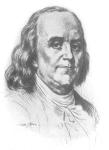
Read a tribute in the Washington Post to the great man.
Perhaps the founding father of "Knowledge for Development" in what was to become the United States of America. Scientist, inventor, social innovator, economist, writer, editor, publisher, educator, founder of the first lending library, humorist, and sage, Franklin was born in Boston on Jan. 17, 1706.
The Autobiography of Benjamin Franklin is considered to be the greatest autobiography produced in Colonial America.
Franklin was the only person to have signed all four of the documents which helped to create the United States: the Declaration of Independence (1776), the Treaty of Alliance, Amity, and Commerce with France (1778), the Treaty of Peace between England, France, and the United States (1782), and the Constitution (1787). He actually helped to write parts of the Declaration of Independence and the Constitution. No other individual was more involved in the birth of this nation.
Among the quotations from Franklin, one finds:
"If a man empties his purse into his head no one can take it away from him. An investment in knowledge always pays the best interest."
"Furnished as all Europe now is with Academies of Science, with nice instruments and the spirit of experiment, the progress of human knowledge will be rapid and discoveries made of which we have at present no conception. I begin to be almost sorry I was born so soon, since I cannot have the happiness of knowing what will be known a hundred years hence."
"Genius without education is like silver in the mine."
"The definition of insanity is doing the same thing over and over and expecting different results."
"We assemble parliaments and councils, to have the benefit of their collected wisdom; but we necessarily have, at the same time, the inconvenience of their collected passions, prejudices, and private interests. By the help of these, artful men overpower their wisdom, and dupe its possessors; and if we may judge by the acts, arrêts, and edicts, all the world over, for regulating commerce, an assembly of great men is the greatest fool upon earth."
"Those who govern, having much business on their hands, do not generally like to take the trouble of considering and carrying into execution new projects. The best public measures are therefore seldom adopted from previous wisdom, but forced by the occasion."
"We are more thoroughly an enlightened people, with respect to our political interests, than perhaps any other under heaven. Every man among us reads, and is so easy in his circumstances as to have leisure for conversations of improvement and for acquiring information."
"Without Freedom of Thought, there can be no such Thing as Wisdom; and no such Thing as publick Liberty, without Freedom of Speech."
"A plural Legislature is as necessary to good Government as a single Executive. It is not enough that your Legislature should be numerous; it should also be divided. Numbers alone are not a sufficient Barrier against the Impulses of Passion, the Combinations of Interest, the Intrigues of Faction, the Haste of Folly, or the Spirit of Encroachment. One Division should watch over and controul the other, supply its Wants, correct its Blunders, and cross its Designs, should they be criminal or erroneous. Wisdom is the specific Quality of the Legislature, grows out of the Number of the Body, and is made up of the Portions of Sense and Knowledge which each Member brings to it."
"God grant, that not only the Love of Liberty, but a thorough Knowledge of the Rights of Man, may pervade all the Nations of the Earth, so that a Philosopher may set his Foot anywhere on its Surface, and say, 'This is my Country.'"
"Experience keeps a dear school, but fools will learn in no other."
"Who is wise? He that learns from every One. Who is powerful? He that governs his Passions. Who is rich? He that is content. Who is that? Nobody."
"I confess that there are several parts of this Constitution which I do not at present approve, but I am not sure I shall never approve them. For having lived long, I have experienced many instances of being obliged by better information, or fuller consideration, to change opinions even on important subjects, which I once thought right, but found to be otherwise."
And perhaps unusually pertinent for this time:
"In these sentiments, sir, I agree to this Constitution, with all its faults, if they are such; because I think a General Government necessary for us, and there is no form of government, but what may be a blessing to the people if well administered; and believe further, that this is likely to be well administered for a course of years, and can only end in despotism, as other forms have done before it, when the people shall become so corrupted as to need despotic government, being incapable of any other."
Monday, January 16, 2006
"The Metrics of the Physician Brain Drain"
Read the full article by Fitzhugh Mullan in the New England Journal of Medicine. (Volume 353:1810-1818; October 27, 2005; Number 17)
ABSTRACT:
"Background: There has been substantial immigration of physicians to developed countries, much of it coming from lower-income countries. Although the recipient nations and the immigrating physicians benefit from this migration, less developed countries lose important health capabilities as a result of the loss of physicians.
"Methods: Data on the countries of origin, based on countries of medical education, of international medical graduates practicing in the United States, the United Kingdom, Canada, and Australia were obtained from sources in the respective countries and analyzed separately and in aggregate. With the use of World Health Organization data, I computed an emigration factor for the countries of origin of the immigrant physicians to provide a relative measure of the number of physicians lost by emigration.
"Results: International medical graduates constitute between 23 and 28 percent of physicians in the United States, the United Kingdom, Canada, and Australia, and lower-income countries supply between 40 and 75 percent of these international medical graduates. India, the Philippines, and Pakistan are the leading sources of international medical graduates. The United Kingdom, Canada, and Australia draw a substantial number of physicians from South Africa, and the United States draws very heavily from the Philippines. Nine of the 20 countries with the highest emigration factors are in sub-Saharan Africa or the Caribbean.
"Conclusions: Reliance on international medical graduates in the United States, the United Kingdom, Canada, and Australia is reducing the supply of physicians in many lower-income countries."
Bush Administration Criticized for Little Push on U.N. Human Rights
Read the full article by Colum Lynch in The Washington Post. (January 16, 2006)
"The Bush administration is defending itself against criticism that it has not followed through on promises to lead a vigorous campaign at the United Nations to establish an effective new human rights council to condemn rights abusers.....
"The Bush administration responded last week with a new high-level push in New York and foreign capitals to rally support for a strong council to replace the Human Rights Commission, whose credibility has suffered because of the membership of noted rights abusers, including Zimbabwe and Sudan. A six-month stretch of negotiations on the new council resumed Wednesday."
The article suggests that "John R. Bolton, the U.S. ambassador to the United Nations, has been unduly fatalistic about the prospects for success, indicating he is prepared to abandon the effort if he cannot overcome opposition to a credible council.......
"Until recently, Bolton's priority at the United Nations has been restructuring the organization's bureaucracy to upgrade its management and combat corruption.
"Negotiations on the human rights council had been left to Mark P. Lagon, the U.S. deputy assistant secretary of state for international organization affairs. William E. Lucas, his deputy, managed the day-to-day talks through a critical stage of negotiations last month.
"Some delegates said they interpreted Bolton's absence from the talks as a signal that the issue is low on Washington's priority list."
The San Mateo Times provides a stronger tone (Bolton has wrong solution for U.N. human rights council):
And the Washington Times reports (Rights council stalled):
This goes beyond my expertise, but I would guess that key issue in replacing the existing U.N. Human Rights Commission with a higher ranking U.N. Human Rights Council would be the membership of the new Council, and perhaps more importantly, how that membership would be determined in the future, and what powers would be given to different members. The United Nations decides issues on the basis of one member, one vote. The United States will not succeed in getting a strong Human Rights Council unless it can form a coalition of countries to vote for a single plan. It is not clear in my mind that any Council that was likely to take strong action to protect human rights, and that would include the member states with the strength needed to make such action effective, would get the votes needed for it to come into existance The Security Council was created at the end of World War II, when the U.N. had many fewer members, the United States had much more influence over other nations, and the war had scared leaders into recognizing a need to promote national security, and yet it was difficult to achieve the needed consensus for its creation.
Let us hope that the debate on the Human Rights Council will prove fruitful.
"The Bush administration is defending itself against criticism that it has not followed through on promises to lead a vigorous campaign at the United Nations to establish an effective new human rights council to condemn rights abusers.....
"The Bush administration responded last week with a new high-level push in New York and foreign capitals to rally support for a strong council to replace the Human Rights Commission, whose credibility has suffered because of the membership of noted rights abusers, including Zimbabwe and Sudan. A six-month stretch of negotiations on the new council resumed Wednesday."
The article suggests that "John R. Bolton, the U.S. ambassador to the United Nations, has been unduly fatalistic about the prospects for success, indicating he is prepared to abandon the effort if he cannot overcome opposition to a credible council.......
"Until recently, Bolton's priority at the United Nations has been restructuring the organization's bureaucracy to upgrade its management and combat corruption.
"Negotiations on the human rights council had been left to Mark P. Lagon, the U.S. deputy assistant secretary of state for international organization affairs. William E. Lucas, his deputy, managed the day-to-day talks through a critical stage of negotiations last month.
"Some delegates said they interpreted Bolton's absence from the talks as a signal that the issue is low on Washington's priority list."
The San Mateo Times provides a stronger tone (Bolton has wrong solution for U.N. human rights council):
For months, we have been arguing that the Bush administration has generally the right substantive agenda for badly needed changes at the United Nations, but that Ambassador John Bolton's scorched-earth alternative to diplomacy is undermining the prospects for successfully achieving these reforms.
Now it turns out that our criticism has been only half-right in at least one crucial area — in restoring the United Nations' moral authority on human rights by excluding egregious violators from a new human rights monitoring council. Bolton's latest proposal on this gets the substance wrong as well.
And the Washington Times reports (Rights council stalled):
U.S. Ambassador John R. Bolton warned delegates that "membership on the commission by some of the world's most notorious human rights abusers mocks the legitimacy of the commission and the United Nations itself."
The United States, which has advocated a ban on human rights abusers serving on the Human Rights Council, appears to have dropped an effort to win permanent seats for the five permanent members of the Security Council, which would have guaranteed seats to Russia and China, and disturbed nations concerned by U.S. treatment of prisoners of war or its use of the death penalty.
This goes beyond my expertise, but I would guess that key issue in replacing the existing U.N. Human Rights Commission with a higher ranking U.N. Human Rights Council would be the membership of the new Council, and perhaps more importantly, how that membership would be determined in the future, and what powers would be given to different members. The United Nations decides issues on the basis of one member, one vote. The United States will not succeed in getting a strong Human Rights Council unless it can form a coalition of countries to vote for a single plan. It is not clear in my mind that any Council that was likely to take strong action to protect human rights, and that would include the member states with the strength needed to make such action effective, would get the votes needed for it to come into existance The Security Council was created at the end of World War II, when the U.N. had many fewer members, the United States had much more influence over other nations, and the war had scared leaders into recognizing a need to promote national security, and yet it was difficult to achieve the needed consensus for its creation.
Let us hope that the debate on the Human Rights Council will prove fruitful.
"The East Asian miracle : economic growth and public policy"
The full report is available in PDF format from this website.
This is an old report by a stellar team of World Bank economists, focusing on economic development from about 1960 to the late 1980's, now available online.
World Bank description:
The study was by a team lead by John Page and including Nancy Birdsall,Ed Campos, W. Max Corden, Chang-Shik Kim, Howard Pack, Richard Sabot, Joseph E. Stiglitz, and Marilou Uy. Robert Cassen, William Easrerly, Robert Z. Lawrence Peter Petri, and Lant Pritchett made major contributions. Lawrence MacDonald was the principal ditor.Published for the World Bank by the Oxford University Press, 1993. (PDF, 402 pages)
I note especially this statement:
I suggest that the accumulation of human capital, high rates of investment, and technology based increases in productivity are all highly causally interrelated.
For example:
This is an old report by a stellar team of World Bank economists, focusing on economic development from about 1960 to the late 1980's, now available online.
World Bank description:
This study discusses the relationship between public policy and rapid economic growth. East Asia has a record of high and sustained economic growth during the last twenty-five years. Most of this growth occurred in eight economies - Japan, Hong Kong, the Republic of Korea, Singapore, Taiwan, and the newly industrializing Indonesia, Malaysia, and Thailand. The High Performing Asian Economies (HPAEs) use a variety of policies to achieve three functions of growth - accumulation, allocation, and productivity growth. They are diverse in natural resources, culture, and political institutions; and they differ in the degree of government intervention in the economy and the manner in which policies are shaped and implemented. The study attempts to explain East Asia's success and to develop a model of rapid growth with equity. It finds that the diversity of experience, the variety of institutions, and the variations in policies among the HPAEs does not allow a model to be developed. However, some lessons for other developing countries can be learned from the East Asian experience. First, it is essential to get the fundamentals right. High levels of domestic saving, broad based human capital, good macroeconomic management, and limited price distortions provide the basis for growth. Second, careful policy interventions to accelerate growth produces very rapid growth.
The study was by a team lead by John Page and including Nancy Birdsall,Ed Campos, W. Max Corden, Chang-Shik Kim, Howard Pack, Richard Sabot, Joseph E. Stiglitz, and Marilou Uy. Robert Cassen, William Easrerly, Robert Z. Lawrence Peter Petri, and Lant Pritchett made major contributions. Lawrence MacDonald was the principal ditor.Published for the World Bank by the Oxford University Press, 1993. (PDF, 402 pages)
I note especially this statement:
About two-thirds of East Asia's extraordinary growth is attributable to rapid accumulation; that is, to unusually rapid growth in physical and human capital. The remaining third of its growth cannot be explained by accumulation and is therefore attributable to increased efficiency or TFP. This is large relative to other economies, both absolutely and as a share of output growth, and therefore partly explains why these economies have been catching up writh the industrial economies, while most other developing economies have not. (page 48)
I suggest that the accumulation of human capital, high rates of investment, and technology based increases in productivity are all highly causally interrelated.
For example:
* increasing the education levels of a population probably eventually helps its workers innovate technologically and helps those workers to master and improve the technology they adopt;This sounds a little like "all good things go together", and I guess it is true. But it may well be that investments in human capital and policies that stimulate technological innovation are drivers for rapid economic growth, in countries were institutions, policies and other conditions are suitable for such growth.
* increasing productivity encourages investment;
* economic growth changes relative factor prices, calling for technological change to produce more efficiently with the new factor costs;
* the demand for more technological change and innovation calls for more investment;
* economic growth means education is more affordable thus there is more of it.
Sunday, January 15, 2006
Influenze Vaccine Supply International Task Force
Go to the IFPMA website for the task force.
A specialized group within the International Federation of Pharmaceutical Manufacturers & Associations (IFPMA), the Influenza Vaccine Supply international task force, was created in 2002. It was intended to help business leaders in vaccine companies in making necessary decisions to ensure adequate capacity to produce and distribute influenza vaccine in interpandemic and pandemic years, as well as to assist health authorities policy makers in making decisions on vaccination recommendations and reimbursement, the level of vaccine use and vaccine delivery strategies.
Member companies are: Baxter Vaccines, Berna Biotech, Biken, Chiron Vaccines, CSL Ltd, Crucell, Denka Seiken, GlaxoSmithKline Biologicals, ID Biomedical, Kaketsuken, Kitasato Institute, MedImmune, sanofi pasteur, Sanofi Pasteur MSD and Solvay Pharmaceuticals.
The member companies - representing more than 90% of the world production - are seeking to ensure that if a pandemic is thought imminent, large quantities of a specific pandemic vaccine will be made available in the shortest period of time.
The Scientific, Production and Research (SPR) subgroup of the task force is described as "actively working on the technical issues for developing, licensing and producing a pandemic vaccine in close collaboration with national and international agencies, including the World Health Organization (WHO), the European Medicines Agency (EMEA) and the National Institute of Health (NIH) in the USA......
"Meanwhile the Policy, Practices and Communication (PPC) sub-group has published a series of articles in the scientific journal Vaccine, has initiated an analysis of influenza vaccine distribution throughout the world and a large health economic study on influenza vaccination in healthy adults 50-65 years old, which should support the public health and societal value of influenza vaccination. Finally the IVS international task force will shortly issue a position paper on the industry perspective on pandemic preparedness."
(Sackler NAS Colloquium) Mapping Knowledge Domains
Read the report online.
From the Introduction:
The term "mapping knowledge domains" was chosen to describe a newly evolving interdisciplinary area of science aimed at the process of charting, mining, analyzing, sorting, enabling navigation of, and displaying knowledge......Although thousands of years old, this area has undergone a sea change in the last 15 years, a change fostered by an explosion of the amount of information available, the accessibility of that information due to electronic storage, and the new techniques of analysis, retrieval, and visualization that are made possible by vast increases in computational storage capacity and processing speed and power.......The Arthur M. Sackler Colloquium on Mapping Knowledge Domains, held at the Arnold and Mabel Beckman Center of the National Academies of Sciences and Engineering in Irvine, CA, May 9-11, 2003, was designed to showcase the ongoing developments in this transformation and provide pointers toward the directions it will move.
Integrity in Scientific Research: Creating an Environment That Promotes Responsible Conduct (2002)

Read the report by the National Academy of Sciences.
"Many people say that it is the intellect which makes a great scientist. They are wrong: it is character." -- Albert Einstein
Summary:
Integrity in Scientific Research attempts to define and describe those elements that encourage individuals involved with scientific research to act with integrity.
Recognizing the inconsistency of human behavior, it stresses the important role that research institutions play in providing an integrity--rich environment, citing the need for institutions to provide staff with training and education, policies and procedures, and tools and support systems. It identifies practices that characterize integrity in such areas as peer review and research on human subjects and weighs the strengths and limitations of self--evaluation efforts by these institutions. In addition, it details an approach to promoting integrity during the education of researchers, including how to develop an effective curriculum. Providing a framework for research and educational institutions, this important book will be essential for anyone concerned about ethics in the scientific community.
Note especially the definition of scientific integrity at an individual and at an institutional level.
An article in today's Washington Post ("Deception by Researchers Relatively Rare" by Rick Weiss) points out that last year, 265 allegations came in to the ORI, but only a small fraction led to findings of actual misconduct.
Although the number of allegations has grown in recent years, no one knows whether the actual prevalence of misconduct has changed much. Less than one-quarter of the allegations ORI receives advance to formal inquiries, and the office makes fewer than a dozen findings of misconduct in a typical year. Many and perhaps most instances occur under the radar, Pascal (Chris Pascal, director ORI) and others acknowledge. Among them may be some of the many cases that are reported but go uninvestigated because they fall outside ORI's jurisdiction, which is limited to science supported by public health service funds. (Other offices, including one at the National Science Foundation, cover other realms of federal science but handle far fewer cases than ORI.)(I suppose that the NSF office is the Office of Investigations).
The article includes a discussion of the case of South Korean scientist Hwang Woo Suk who is accused of research falsification with regard to his stem cell research:
Several scientists and ethicists said it is becoming clear that, if anything, Hwang Woo Suk was a rather typical faker. What made the case big was not the scope or creativeness of his lies, but the extremely high profile of the scientific field in which he chose to perpetrate his charade.I note, however, that the Hwang case, and that of Abdul Quadeer Khan in Pakistan raise an issue about the effect of the lionization of some scientists in some developing nations. In contrast to the United States and other scientifically developed nations that have taken steps to assure scientific integrity, developing nations often have weakly institutionalized scientific regulatory systems. (For example a recent survey by the WHO Regional Committee for Africa indicated that 36 percent of the repondent countries did not have Research Ethics Committees.)
Despite all the recent hand-wringing, there may be precious few new lessons to be learned from the Korean debacle, several experts said. Even the journal editors who promised to beef up their screening of submitted manuscripts say privately they doubt there is a practical way to intercept the small proportion of scientists determined to cheat.
As David Dickson suggested ("Stem-cell research must keep its house in order" in SciDev.Net, 28 November 2005)
The downfall of South Korea's leading stem cell scientist says more about the pressures on modern researchers than it does about the ethics of the research involved. But the two remain linked......two important sets of pressures link these aspects, and need to be addressed by everyone concerned about responsible scientific conduct. The first are the pressures on individual researchers due to the highly competitive nature of much modern science. The second are parallel pressures caused by globalisation.Similarly (in "Scientists caught in a 'crisis of objectives'" by T. V. Padma, SciDev.Net, 6 January 2006): :
Swiss Nobel laureate Richard Ernst has urged governments and research institutions not to push scientists to produce "glamorous" results that could lead them to do sloppy work or breach research ethics. Ernst, who won the Nobel Prize for chemistry in 1991, made the comments while referring to the recent scandal surrounding results obtained by South Korean researcher Hwang Woo Suk of the Seoul National University53-year-old scientist Hwang Woo Suk was once regarded as a hero in South Korea for bringing the country to the global forefront of stem-cell and cloning studies. He was a member of a panel on science and technology advising the South Korean president between 2001 and 2004 and was awarded the country's top science prize in 2004. The South Korean government promoted Dr. Hwang as a national hero and an international celebrity. Peoples Daily Online reports:
Like a film or singer superstar, Hwang's name appeared in local media very often in the past two years.....In 1987, he became a SNU professor and started his hard research work with working 17-18 hours a day and only four hours sleeping. After years of such intensive researchs, he made South Korea's first test-tube cow in 1993.....His team hit headlines of international media after its paper on cloning the world's first embryonic stem cell line published in February 2004 in journal of Science.He was appointed head of the World Stem Cell Hub in Seoul. Even after his disgrace, as TMCNet reported on December 24, 2005:
Hwang's online support community "I love Hwang Woo-suk" showed their unwavering support for the professor. They plan to hold meetings with candlelight tonight near the Chonggyechon stream in central Seoul and other major cities to show their support.
William Langewiesche writes (in "The Point of No Return", The Atlantic Monthly, January/February 2006 - subscription required)
By 1990 the mastermind behind Pakistan's nuclear bombs, Dr. Abdul Quadeer Khan, was living flamboyantly in Islamabad—indulged by Pakistan's military and civilian leaders; adored by the masses; ensconced in a multitude of luxurious houses; surrounded by bodyguards and sycophants; writing checks to schools, charities, and mosques; lecturing; and continuing to lead the large government laboratory that carried his name, in nearby Kahuta......Particularly since the successful showdown with India three years earlier, during which both Khan and the Pakistani president were alleged to have threatened their Hindu neighbors with annihilation, Khan had been freed from the need to be discreet. In public he had assumed the role he believed he deserved, no longer of just another refugee from the Partition, or of an arriviste in a land of the poor, but, rather, of Khan the Magnificent, a "brilliant scientist" who was wise and progressive, a patriot, and, indeed, the savior of Pakistan. Moreover, all Pakistan seemed to agree.Khan is accused of having transferred the technology of atomic weapons to a number of governments of nations that would seem to pose a real threat.
Both Hwang and Khan were accorded star status in their countries, and both were under great pressure to succeed in order to enhance the prestige of their nations. Would others indulge in misconduct under similar circumstances? The quotation with which I began this posting, by a scientist who clearly achieved star status himself, is pertinent. A man of truely good character would not. But the Romans had a preventive process:
In imperial times the conqueror was crowned with a laurel wreath and wore a purple tunic (!) embroidered with palms under a purple toga embroidered with stars. Sometimes his children, robed in white, stood with him in the chariot, or rode the trace-horses. A slave stood behind the conqueror, holding a golden crown over his head, and whispering in his ear a warning that all glory's fleeting.Perhaps the global scientific community too requires such a process to keep scientist's head's straight when they achieve star status, or lest they long too much to become stars!
Steps Forward
More seriously, I give very high priority to strengthening capacity in developing nations to assure the confiability of scientific and technological publications, and indeed to strengthening the capacity to encourage and assure ethical conduct of scientists, engineers, and others in the science-based professions. Use of the book that is cited in the beginning of this posting is a step in the right direction.
The Office of Research Integrity of the U.S. Department of Health and Human Services has a very good website on activity worldwide related to the protection of scientific integrity. The Fogerty International Center at the U.S. National Institutes of Health also has a useful website on International Research Bioethics Initiatives.
SciDev.Net has a Dossier on Ethics of Research, with policy briefs on key issues as well as news and editorial content on the topic as it pertains to developing nations. The Hastings Center, in addition to its online publications on bioethics, has a good has a good set of links on international ethics resources. There is even a journal, Developing World Bioethics.
The Wellcome Trust publishes its Guidelines on Good Research Practice, as well as a dossier of publications on research ethics; it also has an interesting website describing its approach to research ethics in developing nations, and giving some useful links.
An importand player in this field is the United Nations Educational, Scientific Cultural and Cultural Organization. UNESCO operates a program titled "Ethics of Science and Technology". The program was created in 1998 with the establishment of the World Commission on the Ethics of Scientific Knowledge and Technology (COMEST) and has been a priority of UNESCO since 2002. It aims to promote consideration of science and technology in an ethical framework by initiating and supporting the process of democratic norm building. The Program is organized into three main areas of action:
* Standard-setting
* Capacity building
* Awareness raising
Currently, UNESCO is drafting studies on the feasibility of elaborating universal declarations on the ethics of outer space and on the ethics of the environment as well as that of elaborating an internationally applicable code of conduct for scientists.
The World Health Organization also carries out an Ethics Program. While WHO is concerned generally with the ethics of health and health service provision, it has specific interests in the ethics of biomedical research, Among its efforts is the publication of "Operational guidelines for ethics committees that review biomedical research".
There are of course many other efforts at building capacity to deal with issues of scientific ethics in developing nations. Thus SIDCER is a global network dedicated to developing ethical review for the promotion of ethical and scientific values in biomedical research'. The African Malaria Network Trust, for example, has conducted training workshops, such as one on Protection of Human Research Participants held 29-31 August 2005, Dar es salaam, Tanzania.
In conclusion, let me just suggest that the strengthening of developing nation capacity in the area of scientific ethics is an important, and indeed urgent task. It warrents support.
Saturday, January 14, 2006
Credibility: Authority and Standards
Thomas Friedman, in The Lexus and The Olive Tree, tells the story of a Chinese judge, Wang Guoliang, who complained that he was getting a lot of his information from his son, who in turn got it from the Internet. He is quoted:
In reading Friedman, I was impressed by how much credence he seems to give to anecdotes and to the people he interviews. Indeed, he seems to cite people as if their fame were correlated with their credibility. I found myself wishing that Friedman had fewer anecdotes, and more data; that he had relied more on analysis and less on opinion.
The ICT Revolution Changes Cultural Patterns of Authority
The Internet is a prototypical example of a technology changing where we go for information. The judge now gets information from his son, who gets it from the Internet; the judge's cultural expectation is that his son would get information from him, and he would get that information from his training and his experience with the world. The judge's world is turned upside down!
Culture institutionalizes where we go for credible information, and changing that cultural pattern is a fundamental cultural change. Think about some of the current controversies. For credible information on the creation of the world, do we go to church where the authorities in turn have gotten that information from sacred texts and professional theologians or do we go to school where the teachers in turn have gotten their information from science texts and professional scientists? Are environmental NGOs or business leaders to be believed about the environment? Do we believe political leaders or do we believe the media when they seem to tell different stories?
The word “authority” has two different meanings. On the one hand, the word refers to the power to give directions – as in the debate on the limits of presidential authority. On the other, it refers to the credibility – as in the authority of religious versus scientific texts. But the two are linked. We hesitate to give power to people who we do not believe, and indeed we tend to believe people to whom we have given power.
Examples of implications:
It is increasingly possible to replace person-to-person communication with ICT mediated communication in all these situations. Distance education via radio, television or the Internet can substitute for school based education. Health information can be disseminated via radio, television, or other electronic means, and telemedicine is increasingly accessible. Agricultural information is increasingly being disseminated via radio and even via Internet kiosks in rural communities in developing nations. What are the social implications of replacing person to person channels with disembodied channels?
ICT can empower people to seek information from disembodied sources when previously they would have had to resort to personal contact with experts. To what degree can we make the disembodied source credible? (Certainly with expert systems, we can go much further than is possible with mass media.) How do we change the authoritativeness attributed to books, libraries and ICT sources, versus traditional sources, versus professionals from modern systems (such as schools, medical services or agricultural extension services)?
ICT can also be used to improve the information provided by traditional or modern institutions. We can use technology to help the midwives or to help the health auxiliaries, to help the agricultural cooperative leaders or to help the agricultural extension workers, to help the school teachers or to help the traditional councilors in the community. I suspect that those who introduce ICT are modernizers, who naturally think of working with the schools, health centers and agricultural extension services, and do not give appropriate attention to using the technology to help more traditional sources of information. Can this approach always be right?
How do we analyze and understand the social and cultural repercussions of the changes in credibility patterns that are induced by the Information Revolution? More importantly, how do we empower people to control the processes of institutional change in order to ameliorate the undesired impacts of the Information Revolution?
The ICT Revolution Changes the Epistemological Standards We Use to Judge Credibility
There is a lot on the web about the evaluation of information available on website, the credibility of Wikipedia, etc. That is not my subject here.
We all act all the time on information which we feel is “credible enough”. After all, it cost time and effort, and sometimes money, to collect and analyze information. We have to balance the potential benefits and costs of seeking more information (which may not be available or if available still not be accurate) with the likely benefits and costs of acting now with the information we have.
ICT can radically reduce the costs of gathering and analyzing information. It should therefore significantly change the criteria of “good enough”. We should make decisions now on the basis of more and better information, and better analysis of that information, than was appropriate in the past.
Indeed, we should insist that our information sources provide better information, since they too can benefit from technological advances to improve their own information gathering and analysis.
Since the ICT revolution is continuing, the criteria for “good enough” should continue to evolve. Education should prepare people to extend their information gathering and analysis activities in the future, and to appropriately modify their “good enough” criteria in that future.
Mass media includes many more channels, and the Internet and the blogosphere expand and change the nature of the mass media available to us. The changes in communication technology allow us easier point-to-point than even the recent past; we should ask more questions of more carefully chosen informants in our search for information. The Internet makes stocks of information readily available, and digital libraries are coming on line that will make well vetted information more accessible; we should look things up more and more carefully. Computers allow us not only to search text and mine data, but to use quantitative analytic techniques – including statistical analysis and modeling – to improve our understanding of data; we should analyse more and more quantitatively.
More and better information is transforming markets. It is transforming the way organizations are run, including governments, businesses and NGOs. Citizens should demand more and better information on their governments, and demand that more an better information on their views be available to and used by legislators and government administrators. More and better information is transforming health care and educational service systems. And ultimately, more and better information will transform society and culture.
The question is, how do we improve the process by which these transformations are taking place? How do we create appropriate levels of demand for more and better information? How do we disseminate continually increasing demands? How are the demand and supply of more and better information to be coordinated? Education to equip people in all their roles as information consumers to evaluate information well is an important element of the strategy. But what other public policies and institutional changes are required?
Monitoring and Evaluation
What are the indicators to be used of the quality and quantity of information used in decision making? How does one attribute changes in the use of information in decision making to project or program interventions? These are difficult issues, but I suggest they are critical issues for those of us interested in social and economic development.
Even more difficult are the issues of deciding what is good or bad. Do we ask the judge or the son whether it is good that the father is now getting more advice from the son? Do we ask the traditional or the modern source of education and advice whether the substitution of the latter by the former is good or bad? It is not only a situation in which “where you stand depends on where you sit”. The values a culture holds dear change as that culture changes. As the ICT revolution changes culture, it will change the values held by the members of that culture.
Clearly, foreigners do not understand cultural values as well as the members of teh culture itself, and consequently (as we have learned from hard experience) they foreigners should be hesitant to induce technological changes with major cultural impacts! I see no good alternative but to seek to help people within a culture understand the institutional changes that the ICT revolution is to bring, and to try to empower them to exert some control over the introduction of ICT into their own societies. Given how difficult it has been in my own culture to project the impacts of ICT, how controversial those impacts have been, and how difficult it is to change the course of the ICT revolution, I am not optimistic about the chances of so empowering the peoples of developing nations to make good decisions on the technology they will adopt and the cultural changes that they will encourage.
“But fathers should not be guided by sons. My son also makes suggestions to me, but I don’t like most of what he suggests. The father should not listen to the son. It undermines authority. I told my son to read the Internet less and to study more.”
In reading Friedman, I was impressed by how much credence he seems to give to anecdotes and to the people he interviews. Indeed, he seems to cite people as if their fame were correlated with their credibility. I found myself wishing that Friedman had fewer anecdotes, and more data; that he had relied more on analysis and less on opinion.
The ICT Revolution Changes Cultural Patterns of Authority
The Internet is a prototypical example of a technology changing where we go for information. The judge now gets information from his son, who gets it from the Internet; the judge's cultural expectation is that his son would get information from him, and he would get that information from his training and his experience with the world. The judge's world is turned upside down!
Culture institutionalizes where we go for credible information, and changing that cultural pattern is a fundamental cultural change. Think about some of the current controversies. For credible information on the creation of the world, do we go to church where the authorities in turn have gotten that information from sacred texts and professional theologians or do we go to school where the teachers in turn have gotten their information from science texts and professional scientists? Are environmental NGOs or business leaders to be believed about the environment? Do we believe political leaders or do we believe the media when they seem to tell different stories?
The word “authority” has two different meanings. On the one hand, the word refers to the power to give directions – as in the debate on the limits of presidential authority. On the other, it refers to the credibility – as in the authority of religious versus scientific texts. But the two are linked. We hesitate to give power to people who we do not believe, and indeed we tend to believe people to whom we have given power.
Examples of implications:
· Poor people in poor countries have learned on the job, starting work as children. If we want them to go to schools, the schools must be credible sources of useful knowledge. But if the school are the authoritative sources for knowledge, what does that do to the authority of the elders and the community leaders from whom children were supposed to learn in the past?
· People have gotten health advice from family members, neighbors, and traditional practitioners. If we want them to use new health services, those services must be credible sources of health advice. But what does the medical authority of the health auxiliary and doctor do to the traditional authority of older family members and traditional practitioners? How will they react to a potential diminution of their authority.
· Farmers have gotten advice from neighbors and leaders in their farming community. If we want them to seek advice instead from extension workers, that advice should be credible. If farmers do indeed seek the advice of the extension worker instead of that of the community leaders, what does that do to the role of the latter in the community?
It is increasingly possible to replace person-to-person communication with ICT mediated communication in all these situations. Distance education via radio, television or the Internet can substitute for school based education. Health information can be disseminated via radio, television, or other electronic means, and telemedicine is increasingly accessible. Agricultural information is increasingly being disseminated via radio and even via Internet kiosks in rural communities in developing nations. What are the social implications of replacing person to person channels with disembodied channels?
ICT can empower people to seek information from disembodied sources when previously they would have had to resort to personal contact with experts. To what degree can we make the disembodied source credible? (Certainly with expert systems, we can go much further than is possible with mass media.) How do we change the authoritativeness attributed to books, libraries and ICT sources, versus traditional sources, versus professionals from modern systems (such as schools, medical services or agricultural extension services)?
ICT can also be used to improve the information provided by traditional or modern institutions. We can use technology to help the midwives or to help the health auxiliaries, to help the agricultural cooperative leaders or to help the agricultural extension workers, to help the school teachers or to help the traditional councilors in the community. I suspect that those who introduce ICT are modernizers, who naturally think of working with the schools, health centers and agricultural extension services, and do not give appropriate attention to using the technology to help more traditional sources of information. Can this approach always be right?
How do we analyze and understand the social and cultural repercussions of the changes in credibility patterns that are induced by the Information Revolution? More importantly, how do we empower people to control the processes of institutional change in order to ameliorate the undesired impacts of the Information Revolution?
The ICT Revolution Changes the Epistemological Standards We Use to Judge Credibility
There is a lot on the web about the evaluation of information available on website, the credibility of Wikipedia, etc. That is not my subject here.
We all act all the time on information which we feel is “credible enough”. After all, it cost time and effort, and sometimes money, to collect and analyze information. We have to balance the potential benefits and costs of seeking more information (which may not be available or if available still not be accurate) with the likely benefits and costs of acting now with the information we have.
ICT can radically reduce the costs of gathering and analyzing information. It should therefore significantly change the criteria of “good enough”. We should make decisions now on the basis of more and better information, and better analysis of that information, than was appropriate in the past.
Indeed, we should insist that our information sources provide better information, since they too can benefit from technological advances to improve their own information gathering and analysis.
Since the ICT revolution is continuing, the criteria for “good enough” should continue to evolve. Education should prepare people to extend their information gathering and analysis activities in the future, and to appropriately modify their “good enough” criteria in that future.
Mass media includes many more channels, and the Internet and the blogosphere expand and change the nature of the mass media available to us. The changes in communication technology allow us easier point-to-point than even the recent past; we should ask more questions of more carefully chosen informants in our search for information. The Internet makes stocks of information readily available, and digital libraries are coming on line that will make well vetted information more accessible; we should look things up more and more carefully. Computers allow us not only to search text and mine data, but to use quantitative analytic techniques – including statistical analysis and modeling – to improve our understanding of data; we should analyse more and more quantitatively.
More and better information is transforming markets. It is transforming the way organizations are run, including governments, businesses and NGOs. Citizens should demand more and better information on their governments, and demand that more an better information on their views be available to and used by legislators and government administrators. More and better information is transforming health care and educational service systems. And ultimately, more and better information will transform society and culture.
The question is, how do we improve the process by which these transformations are taking place? How do we create appropriate levels of demand for more and better information? How do we disseminate continually increasing demands? How are the demand and supply of more and better information to be coordinated? Education to equip people in all their roles as information consumers to evaluate information well is an important element of the strategy. But what other public policies and institutional changes are required?
Monitoring and Evaluation
What are the indicators to be used of the quality and quantity of information used in decision making? How does one attribute changes in the use of information in decision making to project or program interventions? These are difficult issues, but I suggest they are critical issues for those of us interested in social and economic development.
Even more difficult are the issues of deciding what is good or bad. Do we ask the judge or the son whether it is good that the father is now getting more advice from the son? Do we ask the traditional or the modern source of education and advice whether the substitution of the latter by the former is good or bad? It is not only a situation in which “where you stand depends on where you sit”. The values a culture holds dear change as that culture changes. As the ICT revolution changes culture, it will change the values held by the members of that culture.
Clearly, foreigners do not understand cultural values as well as the members of teh culture itself, and consequently (as we have learned from hard experience) they foreigners should be hesitant to induce technological changes with major cultural impacts! I see no good alternative but to seek to help people within a culture understand the institutional changes that the ICT revolution is to bring, and to try to empower them to exert some control over the introduction of ICT into their own societies. Given how difficult it has been in my own culture to project the impacts of ICT, how controversial those impacts have been, and how difficult it is to change the course of the ICT revolution, I am not optimistic about the chances of so empowering the peoples of developing nations to make good decisions on the technology they will adopt and the cultural changes that they will encourage.
Friday, January 13, 2006
"The Information Puzzle"
Read the full article By Sam Palmisano (CEO of IBM) in Newsweek (December 2, 2005).
IBM has a unique perspective on innovation. It has earned the most U.S. patents of any corporation in each of the past 12 years, yet it is also the leading business investor and innovator in the open movement. Its CEO explains the apparent contradiction. He distinguishes between "open source" and "open standards" as follows:
IBM has a unique perspective on innovation. It has earned the most U.S. patents of any corporation in each of the past 12 years, yet it is also the leading business investor and innovator in the open movement. Its CEO explains the apparent contradiction. He distinguishes between "open source" and "open standards" as follows:
* Open source is a method of tapping a community of experts to develop useful things.....In a sense, open source fuels innovation much the way science fuels technology. Science is created by communities of experts, whose fundamental discoveries are typically made available to all, including individuals and companies that are able to capitalize on the new knowledge in novel ways.He also distinguishes between "intellectual property" and "intellectual capital".
* Open standards, in contrast, are not a methodology, but an underlying condition for economic or social progress because they make possible the free flow of capital, information and ideas. A currency system is an open standard. A highway system is an open standard. The Bill of Rights is an open standard of sorts. The Internet's founding protocols—http, html, etc.—are important open standards.
"More and more of the innovation that truly matters today functions not only as intellectual property (the brilliant work of individuals), but as intellectual capital (a deep well of knowledge created collaboratively). As with open standards, this is about enlarging the pie and fostering innovation on top of what is available to all. And it's not about gizmos, but about new enterprise models—such as "networkless" telecoms, online auctions or real-time retail systems. Our intellectual-property laws, based on an earlier paradigm, will have to catch up."
In the end, the new, emerging model of collaborative innovation—balancing different aspects of openness and different kinds of ownership, and drawing on the historic and deeply productive relationship between science and technology—has the simplicity and clarity that we always find in big, game-changing shifts.
Thursday, January 12, 2006
ESTNet: The ECA Science and Technology Network
Go to the ESTNet website.
ESTNET stands for the United Nation's Economic Commission for Africa (ECA) Science and Technology Network. It is a collaborative policy research network promoting the dissemination and exchange of information related to science and technology management and policy issues in Africa. ESTNET aims to increase the understanding of issues and policies related to science and technology that bear specifically on the development of African countries in the current context of the global economy. Its ultimate objective is to provide a comprehensive 'one stop shop' information service for S&T policymakers and other stakeholders in Africa. The website contains information on the ESTNet meetings and reports, as well as on S&T projects in Africa. There is an especially extensive set of links related to S&T in Africa.
ESTNET stands for the United Nation's Economic Commission for Africa (ECA) Science and Technology Network. It is a collaborative policy research network promoting the dissemination and exchange of information related to science and technology management and policy issues in Africa. ESTNET aims to increase the understanding of issues and policies related to science and technology that bear specifically on the development of African countries in the current context of the global economy. Its ultimate objective is to provide a comprehensive 'one stop shop' information service for S&T policymakers and other stakeholders in Africa. The website contains information on the ESTNet meetings and reports, as well as on S&T projects in Africa. There is an especially extensive set of links related to S&T in Africa.
Wednesday, January 11, 2006
"Scientists praise new UK ethics code"
Read the full article by Stephen Pincock in The Scientist.
"A new ethical code which sets out the values and responsibilities of all scientists will be launched later this year, the British government said this week. The code has been welcomed by researchers who say it might help junior scientists blow the whistle on senior colleagues and serve as a basis for more specific codes of conduct."
"A new ethical code which sets out the values and responsibilities of all scientists will be launched later this year, the British government said this week. The code has been welcomed by researchers who say it might help junior scientists blow the whistle on senior colleagues and serve as a basis for more specific codes of conduct."
The Lexus and the Olive Tree: Understanding Globalization

I have been reading Thomas Friedman’s The Lexus and the Olive Tree. Here are some comments I would share:
The overall point he makes – that the world is changing with commerce becoming more global now that the Cold War is over – is obviously correct.
The book was written at the height of the dot.com bubble, and Friedman was more impressed with the impact of the technology then than I am now. But many of us were more optimistic seven or eight years ago.
The book seems to assume that the virtues of the American system that lead to rapid innovation in Internet technology were the virtues of the future. It was not so long ago that the virtues that Japan typifies, virtues that lead to technology deepening and high quality, were seen as paramount. The Economist has suggested that in the future the situation may change and Japanese style virtues may again dominate those of the American style (or indeed, the virtues of Indian or Chinese culture may dominate).
Friedman treats the Information Revolution as if "all good things go together". He seems not to consider that people with malevolence in their hearts will seek to harness the technology for their own ends, to the detriment of others. Unfortunately, some of the corrupt are likely to enhance their corruption with ICT; some of the power hunger are likely to utilize the technology to coerce more effectively; some of the greedy are likely to achieve their greedy ends at electronic speeds. While Friedman recognized that hackers might use ICT for destructive ends, he did not seem to foresee that terrorists would use their laptops and the Internet to advance international terrorism.
Friedman is a journalist and the book is often fun to read, since he has developed the skills of a professional newspaperman. It is full of anecdotes and quotes from people who generally have something to say. I found however, that it took too long to make its points, and that it lacked the rigor that a more quantitative treatment might have produced. Arguing anecdotally is helpful when the anecdotes are prototypical, but dangerous when they are atypical. Interviews are great when the interviewee is right, but perilous when the interviewee is wrong.
The chapter on the McDonnald's theory of modern war already had to be revised between the first and second edition of the book. Friedman did not seem to predict that the United States and a few allies would invade Iraq. He does not discuss the high level of civil and limited wars.
The Lexus versus the Olive Tree
The title refers to the warring tendencies for growth of political and economic systems to take advantage of economies of scale versus the emphasis on local autonomy and local control. This was an issue faced by the founding fathers of the United States of America, and resolved for centuries in the U.S. Constititution.
Today globalization is clearly taking place. It is not the first time that large areas have been unified for commerce. One thinks about the Persians, the Greeks and Phoenicians, the Romans, China and the Mongols. At the peak of Islamic power, it was possible for a Moslem to travel peacefully from Spain to China in Islamic lands. In all these cases, there were limits to expansion related to the transportation and communications technologies of their times. The political and economic institutions differed from empire to empire, but all of these failed eventually.
In the time leading to World War I, European powers created huge colonial empires, and there was an era of globalized trade analogous to our own. That era ended with the two world wars and the Great Depression. I suppose the current era will also end, but Friedman doesn’t seem to tell us how or when.
Free Market Capitalism
It seems to me that Friedman sees the American brand of Free Market Capitalism as providing the basis for globalization, and this is certainly true in the sense that the fall of Communism undermined Communism as an alternative. He was writing at the peak of success of the Washington Consensus, which defined privatization of state enterprises and export-oriented production as priorities for development. The book today seems optimistic about the universality of the American brand of capitalism given the success of countries such as India and China with their versions, the failures of Latin America and Africa to grow rapidly and their versions, and the continued success of more socialistic states in Europe.
The six D’s
The book sets out six dimensions for the analysis of globalization, based on Friedman’s learning experiences as a reporter: politics, culture, technology, finance, national security and environment. Not a bad list, if somewhat short.
The main item left out, in my opinion, is the nature of the real world. It counts who has the oil! HIV/AIDS is a factor in Africa. Land-locked countries lag economically. Geographic access to markets helps.
Friedman’s concern with institutions and governance seems pretty conventional. Everyone I know has talked about getting the institutions and policies right for decades.
Getting institutions right is not all that easy. The United States, for example, has institutionalized a political system that gives rural states more Senatorial power in comparison with the large urban states than their population would justify. This will not be easily changed. We have institutionalized worker protection systems (insurance, pensions, wage increases) and some of our enterprises are finding it difficult to compete in the new globalized economy, but the protections will not be easily changed.
This blog focuses on Knowledge for Development, and I was pleased to read in the just published Global Industry Report of UNIDO that they see knowledge as a key determinant of success. The knowledge stock of a people is not to be expanded quickly nor cheaply, and knowledge depreciates as that used in a poor society will not serve to operate the richer society to which it aspires. Friedman underestimates the importance of knowledge.
The Internet
The book treats the Internet as a magic carpet. Friedman did not seem to realize that the growth of the Internet would be most rapid among those who already had telephones and computers, and would slow down when people had to get one or the other for access. It slows down further when people have to hook up the electricity before they can plug in the computer and install the telephone, and further still when they have to build the road to lay the power lines before the electricity is available. There is a lot of the world still without electricity and telephones!
Don’t get me wrong. I think the Internet is a great thing. Just not quite as great as Friedman portrays it.
He writes glowingly about the growth of mobile phone access. I think that most of what is happening is that people with home and/or office phones are adding personal, mobile phones to the mix. Certainly wireless technology makes phone connections affordable to poor people who could not afford land lines to their villages, but the technology is not yet a panacea for connecting the poor.
Friedman does not address broadcast technology, but that is now transforming in developing nations as it was in the early 20th century in the United States and Europe.
Friedman seems to assume that once there is connectivity, there will be access, use, and benefit. He does not address the issue of content. Nor does he address the issues of reengineering and structural adjustment that are required to achieve the full benefits available from information and communication technologies.
Winner takes all and the elimination of poverty
There is an interesting discussion about the huge salaries that stars of the international media receive. Friedman extends the metaphor to companies and nation states without much thought. It seems easier to make a million selling one movie to a global audience than to make a million selling food to that same global audience, and Friedman does not seem to realize that there is a difference between goods were use by one person excludes use by another versus those goods that can be used by many without loss to any.
Divergence between the wealth of rich countries and that of poor countries has been the rule for two centuries. There was “club convergence” after World War II, when the countries that had been heavily damaged during the war rebuilt. A few countries have crossed the gap between poverty and prosperity – notably the Asian and Celtic Tigers.
I think that the citizens of all countries are increasingly realizing that good government, good institutions, and good policies count. There is hope that more countries will develop rapidly. But unfortunately the success of poor nations is less likely than Friedman appears to suggest.
An alternative view
I wonder whether it might be more useful to view regional development, and the interplay among great regions of the world:
· Europe is unifying economically and politically under a common market and the EU;
· The North American Free Trade Association is faced by huge disparities between Mexico and the Anglophone nations, and the United States faces the challenges as the sole world superpower combined with the need to reengineer its institutions and policies to continue its world economic leadership;
· The nations of the former Soviet Union are seeking to build new institutional frameworks, as well as new political and economic culture;
· The former satellites of the USSR are moving into the Western European block’
· China is embarked on a highly successful economic development, while seeking to adapt political institutions to its changing reality;
· India too is embarked on a successful economic path, and is also seeking to perfect its political institutions;
· Latin America, after a long hiatus of lackluster economic performance, is seeking new solutions to its economic problems and seems to be moving to the left politically;
· Africa is seeking to emerge from decades of economic stagnation, inept and corrupt governance, and a plethora of failed and almost failed states.
· The Islamic world is seeking to find an Islamic path.
I don’t think “globalization” as a conceptualization captures all of the richness of these paths.
"Capability building for catching-up: Historical, empirical and policy dimensions"

Summary: "IDR 2005, entitled Capability building for catching-up: Historical, empirical and policy dimensions, devotes a special section to assess lessons learned from catching-up experiences throughout modern history. From these experiences it draws a framework for operational policy analysis as well as a methodology for the assessment of capability building needs, thus filling a gap in the current understanding of economic development. The Report also includes a section monitoring and assessing global industrial trends, following the tradition of previous reports."
From the Executive Summary: "The Report provides a framework for operational policy analysis and a guide for the assessment of capability building needs to help overcome evident limitations in the current understanding of economic development. Thus, the Second Part of the Special Topic focuses on the interactions between the knowledge, business innovation and policy making subsystems, and addresses the policy capabilities needed to match the demand and supply of innovative resources – one of the most intractable problems still plaguing policymaking in the developing world. Two specific areas, standards and food safety, are explored to highlight these interactions and test the suggested policy analysis framework."
The Industrial Development Report is UNIDO's Flagship Publication. January, 2006.
Temporary Resolution of the US Funding Threats to UN
Read the full article by Thalif Deen published on January 9, 2996 on the Inter Press News Agency website.
Lead: "The United States, a major funder of the United Nations and its myriad agencies, has a longstanding notoriety for exercising its financial clout to threaten U.N. bodies refusing to play ball with Washington."
Excerpts from the article:
Lead: "The United States, a major funder of the United Nations and its myriad agencies, has a longstanding notoriety for exercising its financial clout to threaten U.N. bodies refusing to play ball with Washington."
Excerpts from the article:
* Last month, the administration of President George W. Bush threatened to hold up the U.N. budget for 2006-2007 until and unless member states agreed to U.S.-inspired management reforms, including the appointment of a chief operating officer mandated to run the world body along the lines of a U.S. corporation. Since the overwhelming majority was opposed to some of the proposed reforms, the U.N.'s administrative and budgetary committee eventually agreed on a U.S.-proposed compromise: Secretary-General Kofi Annan was authorised to spend only 950 million dollars over a six-month period pending significant action on reforms, thereby emasculating the U.N.'s traditional biennium budget.
* Meanwhile, the Bush administration has withheld a total of about 127 million dollars -- a sum duly appropriated by the U.S. Congress -- from the U.N. Population Fund (UNFPA). In 2002, Washington cut 34 million dollars; in 2003, 25 million dollars; and in 2004 and 2005, 34 million dollars each. The cuts were prompted by a misconceived charge that UNFPA was supporting and promoting abortions in China -- a view strongly held by neo-conservatives and right wing Christian fundamentalists who are strong political supporters of Bush. "UNFPA does not support abortion, neither in China nor anywhere else in the world," a UNFPA spokesman told IPS.......
UNFPA executive director Thoraya Ahmed Obaid told reporters last week that more countries contributed to UNFPA in 2005 than in any year since its establishment in 1969: 171 donors compared to the 2004 record of 166. Contributions to the UNFPA regular resources last year were also the highest ever, increasing to some 350 million dollars, from the previous year's level of 322 million dollars.
When Does "Economic Man" Dominate Social Behavior?
Article by Colin F. Camerer1 and Ernst Fehr, Science, 6 January 2006: Vol. 311. no. 5757, pp. 47 - 52 (Subscription required.)
Abstract: The canonical model in economics considers people to be rational and self-regarding. However, much evidence challenges this view, raising the question of when "Economic Man" dominates the outcome of social interactions, and when bounded rationality or other-regarding preferences dominate. Here we show that strategic incentives are the key to answering this question. A minority of self-regarding individuals can trigger a "noncooperative" aggregate outcome if their behavior generates incentives for the majority of other-regarding individuals to mimic the minority's behavior. Likewise, a minority of other-regarding individuals can generate a "cooperative" aggregate outcome if their behavior generates incentives for a majority of self-regarding people to behave cooperatively. Similarly, in strategic games, aggregate outcomes can be either far from or close to Nash equilibrium if players with high degrees of strategic thinking mimic or erase the effects of others who do very little strategic thinking. Recently developed theories of other-regarding preferences and bounded rationality explain these findings and provide better predictions of actual aggregate behavior than does traditional economic theory.
This article is a tough read, but interesting. I have wondered for a long time why communities act in ways that appear more rational than one would expect when considering the decision making of individuals in the community. (Why do farming communities in developing countries often make choices on the crops to grow and the way to grow them that seem to be economically very rational, when the individual farmers have limited educations and don't seem to go about decision making based on economic calculations?) The article suggests some theory that would partially account for such behavior.
The article also might help understand how "trust" develops in communities. In many developing nations, corruption is rampant. In developed nations, markets work in part because people comply with obligations. The rule of law seems to explain only part of the difference. This analysis seems to suggest that small changes in the numbers of altruistic people who inforce compliance with obligations, and small differences in the costs of non-compliance can result in large changes in the stable operations of groups.
"Framing the Engineering Outsourcing Debate: Placing the United States on a Level Playing Field with China and India"

Downolad the report.
According to a Science magazine (Volume 311, Number 5757, Issue of 06 January 2006) Random Sample:
"A new study suggests that data used to bolster claims that the United States is losing its technological edge over other countries are off the mark.
"It has been widely quoted that the U.S. awards only 70,000 B.S. engineering degrees each year, whereas India churns out 350,000 and China 650,000.....But a group at Duke University group led by sociologist Gary Gereffi and high tech entrepreneur Vivek Wadhwa suggests that any degree disparity may actually favor the U.S.
"After much legwork, the researchers obtained degree data from India's National Association of Software and Service Companies, China's Ministry of Education, and individual universities in both countries. The numbers, it turned out, include information technology and computer science degrees, as well as graduates of 2- and 3-year programs. When the researchers broadened the U.S. definition of engineering degrees accordingly, the U.S. total grew threefold, to 221,000 degrees. The group also found that India's figures double-counted many students and were based on estimated enrollments, suggesting that 215,000 would be more accurate.
"A revised per capita comparison gives the United States a considerable lead over both countries (see graphic, below). Gereffi says that the data don't change the fact that the United States should be concerned about its competitiveness. 'I'm not saying we don't have a problem," he says. "All we wanted to do is set the record straight.'"

Tuesday, January 10, 2006
"Why Mosquitoes Trump Birds"
Subtitle: "Worried about avian flu? Never mind. What about yellow fever?" (Jack Woodall, The Scientist, Volume 20, Issue 1, Page 61, 1/10/06.
There is a virus that has already mutated to pass from human to human, and it kills around half its victims. It causes yellow fever, and all it needs is the Aedes aegypti mosquito to achieve that.
This mosquito thrives in the humid tropics and subtropics. After being almost eradicated from the Americas by a hemispheric campaign, the A. aegypti mosquito has reappeared in many places along the Gulf coast of the United States, including Houston, Galveston, and New Orleans.
Aedes aegpti also carries the viruses for dengue. Where there's dengue transmission, yellow fever transmission also can occur; it just needs an infected human to arrive and set it off. Dengue is found in most of the capital cities of tropical countries
A human vaccine proven effective against yellow fever does exist; 10 days after getting your shot, you're protected for life. The vaccine is not widely used. It is available in the United States only at certain specified clinics, and for some, it's too much trouble or expense to get there.
A yellow fever epidemic in Galveston in 1867 killed 1,100 people; another epidemic could do so again. In 2005, 17,000 dengue cases were reported in Jakarta, more than 800 in New Delhi, 5,000 in Kuala Lumpur, and 13,000 in Singapore. Again, if dengue is present, yellow fever transmission can occur, too.
I realize that no one is going to take a blind bit of notice of what I've written here, because you're all suffering from information overload about bird flu (much of it wrong), and you can't take any more dire prophecies of doom and gloom. But I've written it anyway: Forget about bird flu, and lose sleep about Yellow Jack instead.
Monday, January 09, 2006
"UN plans bird flu alert system for North Africa"
Read the full article by Wagdy Sawahel on SciDev.Net. (5 January 2006)
"The UN Food and Agriculture Organization (FAO) has approved plans to create an early warning system to alert North African countries of outbreaks of the deadly bird flu virus, H5N1.
"The plans, agreed on 24 December, will be implemented through the FAO's Technical Cooperation Programme and will cover Algeria, Egypt, Libya, Mauritania, Morocco and Tunisia.
"The FAO has warned that migratory birds could bring the virus to Africa from parts of Asia and Eastern Europe where outbreaks have been reported."
MSNBC reports:
Thus, the FAO initiative in North Africa seems very timely!
"The UN Food and Agriculture Organization (FAO) has approved plans to create an early warning system to alert North African countries of outbreaks of the deadly bird flu virus, H5N1.
"The plans, agreed on 24 December, will be implemented through the FAO's Technical Cooperation Programme and will cover Algeria, Egypt, Libya, Mauritania, Morocco and Tunisia.
"The FAO has warned that migratory birds could bring the virus to Africa from parts of Asia and Eastern Europe where outbreaks have been reported."
MSNBC reports:
According to latest figures released by Turkish officials, 12 people have been confirmed as having contracted avian flu, while a further three, all children from the same family, succumbed to the virus last week.
Currently, there have been outbreaks of avian flu in wild and domestic poultry in 16 of Turkey’s 81 provinces, with one of the latest being Istanbul, the country’s most populous city.
Thus, the FAO initiative in North Africa seems very timely!
Gender Selection in India
Read the full BBC article (9 January 2006)
Researchers in India and Canada, publishing in the Lancet, report that prenatal selection and selective abortion may causing the loss of 500,000 girls a year. Their research was based on a national survey of 1.1m households in 1998.
This from an earlier article (18 July, 2003) on the BBC website:
These trends seems to be the result of Indian cultural tendencies to prefer male over female children, as well as of technological developments which enable families to determine the sex of the fetus and to terminate pregnancy.
I wonder, however, what the social results will be of a society with many more males than females, and with relatively few young women with older sisters? Apparently young men are already finding difficulties in finding marriage partners in some places in India.
I cite this as an case in which knowledge may be critical for development. Health programs, especially those designed by outsiders to benefit Indian populations, must have knowledge of these gender trends and apparent gender biases in the Indian population. Perhaps even more importantly, serious efforts should be undertaken now to project the social and economic consequences of these trends, and to consider alternatives to change the factors contributing to those trends.
In most countries, women slightly outnumber men, but in the year 2001 for every 1,000 male babies born in India, there were just 933 girls.
Researchers in India and Canada, publishing in the Lancet, report that prenatal selection and selective abortion may causing the loss of 500,000 girls a year. Their research was based on a national survey of 1.1m households in 1998.
They found that there was an increasing tendency to select boys when previous children had been girls. In cases where the preceding child was a girl, the ratio of girls to boys in the next birth was 759 to 1,000. This fell even further when the two preceding children were both girls. Then the ratio for the third child born was just 719 girls to 1,000 boys. However, for a child following the birth of a male child, the gender ratio was roughly equal.
This from an earlier article (18 July, 2003) on the BBC website:
Medical research in India suggests that baby girls are much more likely to die than infant boys, even from illnesses that can be treated.The research, published in the British Medical Journal, was carried out at St Stephen's Hospital in Delhi......The researchers analysed autopsy reports of babies in three socially deprived parts of Delhi over a five-year period and discovered that the overall death rate for girls was almost one-third higher than that for boys. This was particularly the case for sudden, unexplained deaths - three out of four cases were girls. The researchers suggest that some of these deaths may be cases of parents actually killing their female babies.
These trends seems to be the result of Indian cultural tendencies to prefer male over female children, as well as of technological developments which enable families to determine the sex of the fetus and to terminate pregnancy.
I wonder, however, what the social results will be of a society with many more males than females, and with relatively few young women with older sisters? Apparently young men are already finding difficulties in finding marriage partners in some places in India.
I cite this as an case in which knowledge may be critical for development. Health programs, especially those designed by outsiders to benefit Indian populations, must have knowledge of these gender trends and apparent gender biases in the Indian population. Perhaps even more importantly, serious efforts should be undertaken now to project the social and economic consequences of these trends, and to consider alternatives to change the factors contributing to those trends.
Subscribe to:
Posts (Atom)