Thursday, June 04, 2009

"Science diplomacy: the case for caution"

David Dickson posted some thoughts on the SciDev.Net blog occasioned by a meeting organized in London by the American Association for the Advancement of Science (AAAS) and the Royal Society on the topic “New Frontiers in Science Diplomacy“. He points out, quite rightly, that scientists talking about diplomacy often throw out all of the epistemological discipline that characterizes science.
There has been much lively discussion on the value of international collaboration in achieving scientific goals, on the need for researchers to work together on the scientific aspects of global challenges such as climate change and food security, and on the importance of science capacity building in developing countries in order to make this possible.

But there remained little evidence at the end of the meeting on how useful it was to lump all these activities together under the umbrella term of “science diplomacy”.
According to Answers.com, diplomacy is:
The art or practice of conducting international relations, as in negotiating alliances, treaties, and agreements.
It is possible to consider "science diplomacy" in two senses:
  • diplomacy for science
  • science for diplomacy
In the first sense, one can include the diplomacy carried out:
  • to arrange for multinational support for mega-projects or programs, such as those of CERN or SESAME
  • to arrange for multinational clearances for cross border research, such as that needed to facilitate access to national waters for oceanographic research voyages
  • to allow donor support for efforts to build scientific capacity in developing nations.
Diplomacy, at least in the United States, is generally thought to focus on international economic affairs and secutity. It seems obvious to me that social sciences are relevant to both these concerns. The diplomacy of international economic negotiations must necessarily be informed by economic theory and data. The diplomacy of security should be informed by political science, history, and the other social sciences.

It seems to me that the physical sciences also have their place in science for diplomacy. Wars have been fought over water resources in the past, and will be in the future; hydrology can provide a basis of scientifically agreed upon information on which to base diplomatic negotiations to secure the peace. Similarly, geology can provide scientific information for negotiations over exploitation of mineral and fossil fuel resources. It would be foolish for a nation to embark on negotiations in the ITU on spectrum allocation without understanding the physics of electromagnetic communications.

More generally, however, I think the traditional view of diplomacy has to be expanded to include the diplomacy of global systems problems. Diplomats have to negotiate protections against the international spread of communicable diseases, and would be foolish to do so without the advice of epidemiologists. They must negotiate protections against climate change and its adverse effects, and would be foolish to do so without the advice of climatologists and other scientists. They must negotiate protections against international cyber-crime and cyber-attacks, and would be foolish to do so without the advice of experts involved in the emerging science of cyberspace.

These comments have been written in the spirit that science begins with taxonomy. I would further suggest that science depends on the formulation of specific questions. One question that might be asked is whether science has informed diplomacy in the past. A different question is whether science might inform diplomacy in the future. The sample one would construct to study the second of these questions would be quite different than that for the first.

Departing from science for the more comfortable realm of anecdote, I recall some years ago in a public meeting the U.S. Assistant Secretary of State for Oceans, Environment and Science said that her criterion for a science attaché was a person who could read and understand one or two articles in an issue of Scientific American. Since Scientific American is accessible to the intelligent layperson, I fear she thought that even a rather dim lay person could do the job. The failure of diplomats to adequately take advantage of science in the past of course should not imply that science is intrinsically useless for diplomacy, nor that efforts to strengthen the links between the scientific and diplomatic communities would not bear fruit.

Wednesday, June 03, 2009

Obama wants Lula as next World Bank president, Brazilian magazine says

Image source: Con Underground

"Barack Obama has reportedly tapped Brazil's president, Luiz Inácio Lula da Silva, to be the next head of the World Bank.

"The US president, as Bill Clinton did in 1995, is said to be ready to break with the tradition of appointing US citizens in order to install an outsider who would symbolise a commitment to fighting global poverty.

"Lula, an immensely popular leader at home and abroad, has indicated he would be "honoured" to take the job at the bank after he steps down as Brazil's president in 2011, according to the Brazilian magazine Exame."

Comment: The Guardian published this story, apparently depending on a Brazilian magazine article. Even if it is currently accurate, who knows what will happen in a couple of years.

Still this would be a great move by Obama. Lula would be likely to combine the fiscal responsibility he has shown as President of Brazil with a lifelong commitment to social justice.

The President of the United States has traditionally had the appointment of the head of the World Bank, and were Obama to appoint Latin American with Lula's credentials would truly symbolize a new approach to development for this country.
JAD

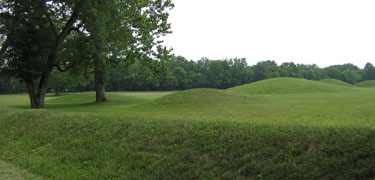
Hopewell Mound City

Last week I had the opportunity to visit Hopewell Mound City in southern Ohio. It is one of the nine archeological sites of monumental earthworks constructed by the Ohio Hopewell culture during the Woodland Period (1-1000 CE) which together have been added to the tentative list by the United States Government for consideration for World Heritage status.
The park protects the prehistoric remains of a dynamic social and ceremonial phenomenon that flourished in the woodlands of eastern North America between 200 B.C. and A.D. 500. The term Hopewell describes a broad network of economic, political, and spiritual beliefs and practices among different Native American groups. The culture is characterized by the construction of enclosures made of earthen walls, often built in geometric patterns and mounds of various shapes. The culture is known for a network of contacts with other groups, which stretched from the Atlantic coast to the Rocky Mountains. This network brought materials such as mica, shark's teeth, obsidian, copper, and shells to Ohio.
The visitor center includes a video presentation and a small museum which helped to understand the artifacts collected from the site as well as the historical importance of the Hopewell people. We were especially grateful for the attention of three National Park Service staff members who work in the visitors's center and who spent considerable time explaining the site and its history.

I was especially taken by the fact that the site included objects made of copper that came from Canada, Obsidian from deposits near Yellowstone, mica from the Carolinas, and shells from the Gulf coast. While this was a culture that lived on hunting and gathering, the Hopewell peoples also understood astronomy, could build large earthwork structures, and obtained materials that they valued from all over the North American continent.

World Heritage status for the sites preserving the monuments of the Hopewell culture may help Americans to recognize the accomplishments of the people who lived on the continent before 1492. I wish that all the school children in the United States would learn about the pre-Columbian cultures of the continent!

Images from the National Park Service.

Serpent Mound


Last week my wife and I visited Serpent Mound. The site has been added by the United States Government to the tentative lists of sites to be considered for UNESCO World Heritage status. The Great Serpent Mound is 1,330 feet in length along its coils and averages three feet in height. Excavation of Serpent Mound revealed wood charcoal that was radiocarbon dated to a time consistent with the Fort Ancient culture (AD 1000 to 1500). It is the largest documented surviving example of a prehistoric effigy mound in the world.

The coils of the snake appear to be chosen to point towards celestial sites, such as the the extreme points on the horizon for sunrise and sunset. The site chosen is a rock outcropping on the rim of an ancient meteor crater. Moreover, near the serpent mound on the site managed by the State of Ohio there are far mor ancient mounds.


After the visit I chatted with young people from nearby Indiana, discovering that they had never heard of Serpent Mound. Again, our schools seem not to do a very good job in acquainting their students with the pre-history of our region, even of globally significant artifacts that are near to them.

Sunday, May 31, 2009

I am on vacation

I am currently in Indiana, enjoying beautiful weather and views of the Ohio River. I expect to be back home in a few days to take up blogging again.

View of the Ohio River from The Overlook,
a restaurant where I had breakfast

How Technology Can Support Education in Africa

I published a short piece on the online magazine, Foreign Policy Digest, titled "How Technology Can Support Education in Africa". It describes examples of use of information and communications technology applicable to education in Africa.

Wednesday, May 27, 2009

A thought on reading Tamerlane

I have been reading Tamerlane: Sword of Islam, Conqueror of the World by Justin Marozzi. He happily describes populations of cities in Central Asia as being very large -- 150,000 for Samarkand in the time of Timur, for example. He also describes Timur's army as 200,000 strong, marching into Samarkand. Figures like that made me wonder about the factors that limit the size of a city's or an army's population.

Sanitation was a limiting factor in the past. Rome reached a population of a million people at its height, in part because it had an infrastructure of aqueducts and sewerage that could support so large a population. Lacking that kind of infrastructure, considerably smaller cities would stop growing because their death rates got so high that the balanced immigration (probably in part because people did not want to move to a city which appeared to be very unhealthy.)

Clearly it had to be possible to feed the city. I suppose one reason that cities often grew on the banks of navigable bodies of water was that water transport was an affordable way to bring food from afar, even before the advent of mechanical power and good roads or railroads.

The food going to a town or city had to be from the production of farms that exceeded the needs of the farmers. Subsistence farms don't support cities. In 14th century Central Asia, there was a history of irrigation, a fairly wide variety of crops, and a fair amount of animal power. The region also depended significantly on livestock that was herded by nomadic peoples, but who probably brought animals to urban markets in order to obtain other goods that they needed. The city was also apparently surrounded by orchards and vinyards, and the people managing the orchards and vinyards may produce more surplus per capita than other farmers. (i recall my days in Chile where you could buy very bad wine for nine cents a liter; it was the cheapest source of calories for the poor!)

Grazing lands could be quite distant from the city since cattle and sheep could walk to market. Similarly, there appeared to be a pretty good road system (at least for mounted messangers who provided a "pony express" linking Timur's widespread empire. One assumes that animal power was used to bring crops to market in the city.

A Tartar army supported its food needs by plundering the lands that it conquered, by hunting, probably by bringing livestock on the march for food, and probably by bringing supplies of grains by wagon or pack train. We are told that Timur's army could stay in the field for years at a time, and that it would camp around a town or city rather than seek to be quartered within the city. Still, one wonders wether 200,000 troops actually returned to Samarkand, or if they did whether they did more than march through town before returning to their tribal homes.

I have read that a number of ancient cities grew to the point where they so destroyed the local environment, for example cutting forests for firewood or overworking the land or water resources to the point that a drought or other environmental event could not be withstood.

It seems clear that these cities on the Silk Road also grew because the trade brought resources to the city which allowed it to acquire more of the food and environmental services that the population needed. The rare goods brought from afar were expensive enough that they would justify a fairly expensive trading infrastructure. Similarly, the plunder brought back from foreign conquests would pay for food and other services brought from afar for the small aristocratic class.

It might be interesting to do an economic model of the affordable size of cities. It would fit into the Zipf law relationships of the distribution of sizes of urban places.

Satellite Remote Sensing Applied to Tropical Diseases

Source: "Satellites and global health: Remote diagnosis," The Economist, May 21st 2009.

The article describes how researchers at the Goddard Space Flight Center in Maryland used meteorological data to predict the development of weather conditions that would favor an epidemic of Rift Valley Fever in East Africa, and how their warning was used by public health officials to reduce the lethality of the epidemic.
Attempts to foresee epidemics such as these have traditionally relied on fieldwork on the ground. This is often slow and expensive. Crunching data from satellites is much less costly. Satellites transmit copious information on temperatures, precipitation, vegetation cover and even the health, moisture content and chlorophyll-production of plants.
The article also mentions applications of satellite data and computer processing to predict tsetse fly vector capacity and thus the danger from sleeping sickness, and to identify the frequency of mosquito breeding sites to help deal with malaria.

Comment: This is a technology that I had hoped would develop more rapidly. As I recall there was an application to screw worm control in Mexico decades ago. I suspect that the problem is that the tropical diseases that are weather related are most problematic in places with few scientists using satellite data (and little funding for remote sensing research. On the other hand, I would think that there could be comparable studies done on air pollution with important health benefits in developed nations as well as developing nations. JAD

Broadband Subscription Rates

Source: The Economist

"The number of broadband subscribers in OECD countries increased by 13% last year to 267m. More than a fifth of the combined population of the 30 mostly rich nations in the OECD now have high-speed access to the internet."

Comment: I notice that the United States is lower in per capita penetration not only than South Korea and some of the Nordic countries, but also the UK, France and Germany. Low connectivity is indicative of failing competitiveness!! JAD

Tuesday, May 26, 2009

Nominee Sonia Sotomayor


President Obama's nominee for the Supreme Court, Sonia Sotomayor, has had the following posts, having graduated from law school in 1979:
  • Editor of the Yale Law Journal
  • Assistant District Attorney in New York County
  • Partner at the commercial litigation firm of Pavia & Harcourt, where she specialized in intellectual property litigation
  • Judge of the United States District Court for the Southern District of New York
  • Circuit Judge of the United States Court of Appeals for the 2nd Circuit
While in private practice, Sotomayor was appointed in 1988 as one of the founding members of the New York City Campaign Finance Board, where she served for four years. She has also been a member of the Board of Directors of the State of New York Mortgage Agency (SONYMA), the Puerto Rican Legal Defense and Education Fund, and the foundation then known as the Maternity Center Association (now called Childbirth Connection).

Sotomayor was an Adjunct Professor at New York University School of Law from 1998 to 2007 and has been a lecturer-in-law at Columbia Law School since 1999. She is a member of the Board of Trustees of Princeton University and a longtime fan of the New York Yankees.
Do you think she has trouble holding a job? I guess she will hold the new one for a while.

David Dickson leads me to think about culture

David Dickson has an editorial in SciDev.Net on the occasion of the 50th anniversary of the publication of C.P. Snow's essay on the two cultures. That essay focused on the divide between the scientific and technological culture and the culture of the literary intelligentsia in Europe and the United States. I tend to think of his point in simplistic terms -- too many people who saw themselves as intellectuals didn't know anything about science and didn't understand modern (or any) technology. I think that point was and is valid.

Dickson points out that Snow had "originally intended to emphasise how a lack of access to science and technology was separating the rich from the poor.'
Both the strength and continued value of Snow's analysis lies in his advocacy that all societies, both rich and poor, should recognise and accept science as an important strand of their culture. It is this idea, for example, that underpins recent efforts in developed and developing countries alike to promote the public's understanding of science.
However:
The shortcomings of this scientific determinism became apparent in the decades following Snow's lecture. In that period, political discourse became increasingly centred not on science's promises, but on its unacceptable side-effects — from nuclear weapons and environmental pollution to global warming and climate change.
It occurs to me that the "two culture" approach owes more to our dialectic tradition than to reality.

Today we talk about the culture wars, based on disagreements between two subcultures on issues such as the teaching of evolution and stem cell research. We also focus on tensions between Muslim and Christian communities. World War II and the Cold War may be seen in terms of a clash of democratic and faschist/authoritarian cultures. Oscar Lewis wrote about the "culture of poverty" implicitly contrasting it with dominant culture or culture that would promote economic success. There is a history within development theory of contrasting "modern" and "traditional" cultures.

It may be useful to think of culture in terms of memes. Many memes make up a culture. Individual memes arise, are diffused, and die out. The result is populations of countries that are not homogeneous culturally as well as cultural gradients rather than cultural boundaries. Framing the discussion in terms of memes leads one to question on the utility of individual memes, how acceptance of memes may be changed, and the degree to which mutual reinforcing memes cluster together.

Having said that, it seems to me that it may be useful to consider the sources of authority in cultural dialog. Scientific culture sees authority as rooted in replicated controlled observations, while technological culture sees authority as rooted in the functioning of applications of technological knowledge. This pragmatic view of authority may be contrasted with a view that authority is based on religious revelation or tradition.

Not surprisingly, in a blog focusing on knowledge for development, I have a strong preference towards observation based authority. At the least it seems to me that everyone should accept that if observation does not agree with belief, and observations are replicated to preclude observational error, then beliefs should be examined and my be seen as mininterpretations of the bases of belief.

Monday, May 25, 2009

Marni Nixon: The Voice You Didn't Know You Knew

Marni Nixon sang the following uncredited roles in the movies:
  • Eliza Doolittle in My Fair Lady
  • Maria in West Side Story
  • Anna in The King and I
The Hollywood studio system used voice doubles for their stars in these films, but refused to acknowledge the fact with billing for the singer. Nixon also sang the high notes for Marilyn Monroe in Gentlemen Prefer Blondes.

Susan Boyle Does it Again: Memories

Teaching How to Promote Peace

The Knowledge Policy blog has a posting on Innovative Thinking and Peace: The Peace Innovation Course at Stanford. That in turn led me to a Facebook site related to the class.

Those in turn reminded me of David Adams website, Culture of Peace.

I suppose that the UNESCO course I teach at GWU is a peace (social) innovation, as UNESCO itself was a social innovation six decades ago, "building the defenses of peace in the minds of men".

Thinking about thinking and Mark Kac


When I was a young research engineer, I had the opportunity to work with Mark Kac during a summer. Kac was a very great mathematician, a Fields Prize winner. He had come to the lab in balmy southern California for a summer as a vacation from his post as a full professor of Mathematics at Rockefeller University. Two of my colleagues in the lab had been his graduate students in the past.

Professor Kac was a colorful man, and there were many stories of his totally logical approach to situations that seemed to defy logic. I might be able to add one.

On arrival he informed me and my colleagues that he had noticed over the years that he produced good mathematical results at a rate of four per year. Moreover, it didn't seem to matter whether he worked hard or not during that year. Therefore, the logical thing was not to work hard. Therefore he proposed to take it very easy for the next couple of months. In fact, he did so! However, in the final month of the summer he started working long hours, and indeed at the end of the summer published a major paper in a prestigious journal.

In retrospect, I wonder whether he had trained his subconscious mind to work while his conscious mind was taking a break. Perhaps in those first couple of months that summer while he appeared to be taking it easy and enjoying the southern California weather and sites, he was also mulling over a critical problem faced by our laboratory, and when he was ready to put thought to paper, that thought was mature and ready to crystalize and share.

In any case, that summer provided a rare opportunity for me to get to know a man with a really great intellect!

Sunday, May 24, 2009

Big ot Small Best for Innovation?

There is an interesting article in The New York Times. I quote:
There was a rich vein of business-school research supporting the notion that innovation comes most naturally from small-scale outsiders. That was the headline point that a generation of business people, venture investors and policy makers took away from Clayton M. Christensen’s 1997 classic, “The Innovator’s Dilemma,” which examined the process of disruptive change......

Solutions won’t come from the next new gadget or clever software, though such innovations will help. Instead, they must plug into a larger network of change shaped by economics, regulation and policy. Progress, experts say, will depend on people in a wide range of disciplines, and collaboration across the public and private sectors.

“These days, more than ever, size matters in the innovation game,” said John Kao, a former professor at the Harvard business school and an innovation consultant to governments and corporations.
Comment: I am increasingly concerned that the emphasis on technological innovation is misplaced. Innovation is easier in my opinion that mastery of the innovation. It was not the first firm to produce an operating system, but Microsoft that built a global software powerhouse. Apple has been a consistent innovator, but the IBM clones dominate the PC market.

Indeed, it is almost a rule that an invention is uneconomical at first, requiring improvements to become economically successful. JAD

Saturday, May 23, 2009

Layers and layers of knowledge systems

Jared Diamond
Photo: TOM JOHNSON
BLACK STAR/NEWSCOM

Science
magazine has an article focusing on a suit brought against Jarad Diamond, a well known scientist who has also gained a following for his non-fiction writing. The suit apparently charges that he wrote untrue and damaging things about people he portrayed in a New Yorker article as involved in a blood feud in New Guinea. I was caught by this statement:
Three worlds collide in this case. First is the world of science, specifically anthropology, which uses fieldwork and scientific methodology to study human cultures. Next is the craft of journalism, with its own set of ethics and practices aimed at reaching the general public. Finally, there is Papua New Guinea, a young nation still struggling to integrate many hundreds of tribes and clans into a modern state.
Actually, I see two more worlds colliding: the world of courts, judges, lawyers and expert witnesses, and the world of science journalism (as opposed to popular journalism) as Science reporters seek to explain the situation to an audience composed mainly of professional scientists, very few of whom are ethnologists.

The point is, each of these worlds has its own processes for validating information, its own standards for the transmission of assertions, and its own culture of knowledge.

I assume that folk in New Guinea, like the folk in my ancestor's Ireland, may feel that a good story is worth telling even if it differs substantially from recalled facts if the deviations are enough fun. For an ethnologist, verbal behavior is worth recording, and it is interesting what and how an informant tells a story; of course the interpretation of the story is a different thing -- interpretation rather than observation -- explaining observation in terms of theory. A serious news article should seek to provide accurate accounts of events in a timely fashion. The legal system is involved in ascertaining blame and levying penalties in accordance with blame. Science presumably is seeking to accurately portray the events of the "meta story" (the story about Diamond's New Guinea story) interpreting its importance for the scientific community.

Makes me want to recur to Stephen Colbert's concept of "truthiness".

6 Heads Are Better than 2

From Science magazine:
A study of the gregarious house sparrow suggests that individuals in larger groups are swifter at solving new problems than those in smaller groups—findings that add a behavioral dimension to the ecological costs and benefits of group living. Using wild-caught birds that were then acclimatized to experimental aviaries, Liker and Bókony investigated whether group size affected the success rate at which birds figured out how to obtain seeds from a familiar feeder when access was blocked with a transparent lid. The larger groups, which contained six birds, were able to dislodge the lids roughly 10 times as quickly as smaller groups of two birds—a pattern that was consistent across all individuals in the groups. Also, birds from urban environments were faster than birds from rural backgrounds. Increased success at problem-solving in larger groups may reflect a wider diversity of experience and skill among the individuals in the group and may constitute an adaptive advantage in complex habitats.
Comment: Interesting. I wonder if this extends to other social species. JAD

Are Perceptions of Patterns and Intentionality Inherited

Michael Shermer has an article in the current issue of Scientific American suggesting that we have evolved both to see patterns and to perceive the patterns that we see as intentional. I think he must be right that the perception of patterns is a survival trait. Our ancestors had to learn where to find food and how to avoid predators and those skills involve pattern recognition. Where they concluded that it was dangerous to have one's path crossed by a black cat or that knocking on wood could protect from bad luck, the costs were small.

More interesting is his suggestion that people evolved to attribute intentionality to a perceived pattern. Of course, if one is avoiding being eaten by a predator is it probably useful to assume that the predator is actively seeking a meal. However, our ancestors tended to believe that if one was sickening, it must be because some thing or some one willed one to get sick.

I have often thought that the development of a body of understanding of processes that could produce order without intentionality was not only one of the great advances of science, but a major cultural advance. We can see how markets can set clearing prices, how evolution can produce a web of complex species, and indeed how organizations can behave in ways none of their members fully understand. If Shermer is right, substituting intellectual for instinctive understanding is even more impressive than I had thought.

An interesting parallel

A grove of Aspens appears to the uninitiated as a grove of individual trees. Biologists these days tend to regard them as a single organism since they are clones grown from a single seedling. A root system proliferates underground, and may live for thousands of years, sending up new trees from time to time. The individual trees live for a century or more, but the entire organism is very long lived.

We think of Manhattan, one of the places in which the skyscraper was invented, in terms of its above ground buildings and indeed its skyline. However, there is an underground support network of subways, aqueducts, sewerage, steam lines, fiber optics, gas lines, not to mention outmoded systems such as the pneumatic tubes that once carried messages from building to building. The network is dense, and parts of it are more than 100 feet deep. Individual building are replaced but the overall structure of the city remains.

I could try to extend the analogy to discuss the social and economic environment which determines the growth and survival of the city, but I will refrain from doing so!