Abstract: "Despite having the costliest medical care delivery system in the world, Americans are not particularly healthy. Recent international comparisons show that life expectancy in the U.S. ranks 49th among all nations, and infant mortality rates are higher in the U.S. than in many far less affluent nations. While these statistics are alarming, the bigger problem is that we do not know how to reverse this trend. Our lack of knowledge is due in large part to significant inadequacies in the system for gathering, analyzing, and communicating health information about the population.
"To inform the public health community and all other sectors that contribute to population health, the Robert Wood Johnson Foundation commissioned the IOM to examine three major topics that influence the health of the public—measurement, laws, and funding. In this, the first of three reports, the IOM reviews current approaches for measuring the health of individuals and communities and suggests changes in the processes, tools, and approaches used to gather information about health outcomes and their determinants. The IOM recommends developing an integrated and coordinated system in which all parties—including governmental and private sector partners at all levels—have access to timely and meaningful data to help foster individual and community awareness and action."
Monday, December 13, 2010
Brazil is growing its science
Source: Science magazine
According to Science magazine, Brazil is now spending 1.1% of GDP on research and development. Its publication rate is growing rapidly. There is still a long way for Brazil to grow if it is to achieve world class, although it is already strong in some limited fields such as agricultural R&D. It has a long way to go to develop the science and technology to exploit the Amazon basin well and to exploit its huge offshore oil deposits. It is making a good start on the latter.
The progress is both a result of the great economic progress that the nation has made and of the priority the Government places on science, technology and innovation as a motor for future growth. The Brazilian economy picked up when Fernando Henrique Cardoso was appointed Minister of Finance in the Itamar Franco administration (1992-95) and implemented the Plan Real which stabilized the Brazilian economy. Stability and growth continued in the subsequent 8-year long Cardoso administration and the now ending 8-year long Lula administration.
In the 1990s I as a consultant helped plan a World Bank loan to the Government of Brazil that supported research and development. It was one of several such loans from the World Bank and other such loans were made by the Inter American Development Bank. Why loans, after all they had to be paid back? The loans made it easier for Brazil to obtain the hard currency needed to grow its research labs in a timely manner, but perhaps more important they promoted planning for support of science and technology and provided an outside advocate (the international financial institutions) for stability in the growth of support for research and development.
I am very pleased that the support seems to have worked, and that Brazilian science and technology seem well on their way to a status comparable to the potential of Brazil in the world stage.
Labels:
SandT for Development
Symmetry and Asymmetry in International Science and Technology Activities
Development assistance is by nature an asymmetric relationship, as relatively affluent countries provides funding for relatively poor nations. The former tend to feel that "he who pays the piper calls the tune". The latter feel that they know better what needs to be done and what works or does not work in their own countries.
After World War II, the United States was by far the most economically productive nation in the world. European nations and Japan recovered in a couple of decades, and joined in the club of economically developed nations. Over the past decades some once-poor nations have converged economically with the United States and other developed nations, while some nations have remained in poverty traps. There remain a number of middle income countries, neither affluent nor poor. Economic relations with these middle income countries remain asymmetric, but can be more collaborative than in the form of development assistance.
Asymmetric relations are also common in science and technology. The United States is the world's strongest scientific and technological power. We are relatively stronger in the biomedical sciences than in other S&T fields, but we are quite strong across the board. Following World War II, the United States represented more than half the world's scientific production and was comparably strong technologically. Over the decades, Japan has come to spend proportionately more of its GDP on research and development than does the United States, Europe has risen to comparable power in S&T to the United States, while a number of countries remain spending a very small portion of their small GDPs on research and development. However, a number of countries now populate a middle range in science and technology, and among them countries such as China, India and Brazil are increasing S&T capacity rapidly.
Thus U.S. scientific and technological relations with other nations will range from extremely asymmetric to symmetric, from aid to collaboration including mixed aid and cooperation approaches. Note too that scientific and technological capacity development and economic development are closely correlated, and both are correlated with social development.
U.S. foreign policy has, I think, focused both on collaborative relations with economically and political powerful countries and development assistance for poor countries, including humanitarian assistance for the poorest countries. I would suggest that there should also be a strong focus on relations with the countries in the intermediate range.
Science and technology can be an effective area for collaboration and for assistance. Thus they have a role in our relations with countries across the spectrum of development of foreign countries. However, the nature of the the scientific and technological linkages will depend on the degree of asymmetry. For example, I would suggest that private sector technological activities would be strongest with developed and emerging economies, but would be limited with the least developed nations because of their lack of S&T capacity.
It seems to me that it might be useful now to have a new agency to promote S&T activities with countries in the middle range. Such an agency might promote a mix of collaborative arrangements in Government supported and implemented R&D, training of foreign S&T students in American universities, increasing private sector technology activities, and some areas of S&T assistance and capacity building.
For the poorest countries, in which the S&T relations are most asymmetric, I think the focus should be on building S&T capacity and on focusing a portion of U.S. S&T capacity on solving problems that these countries can not solve for themselves. Importantly, some of the S&T capacity will have to be conceptualized as shared among poor countries. Thus the very poor nations of Sub-Saharan Africa and the very small nations of the Caribbean will probably have to collaboratively develop S&T institutions within their regions which they will share.
Labels:
SandT Cooperation,
SandT for Development
Sunday, December 12, 2010
Thinking about causality: The causes of the Civil War.
Lincoln was elected 150 years ago last month. The Civil War began 150 years ago next Spring. There is already more discussion about the causes of the Civil War, and there will be more still in the new year. Some people, typically with sympathies for the Union side, say that the Civil War was about slavery. Other people, typically with sympathies for the Confederate side, say that the Civil War was about states' rights.
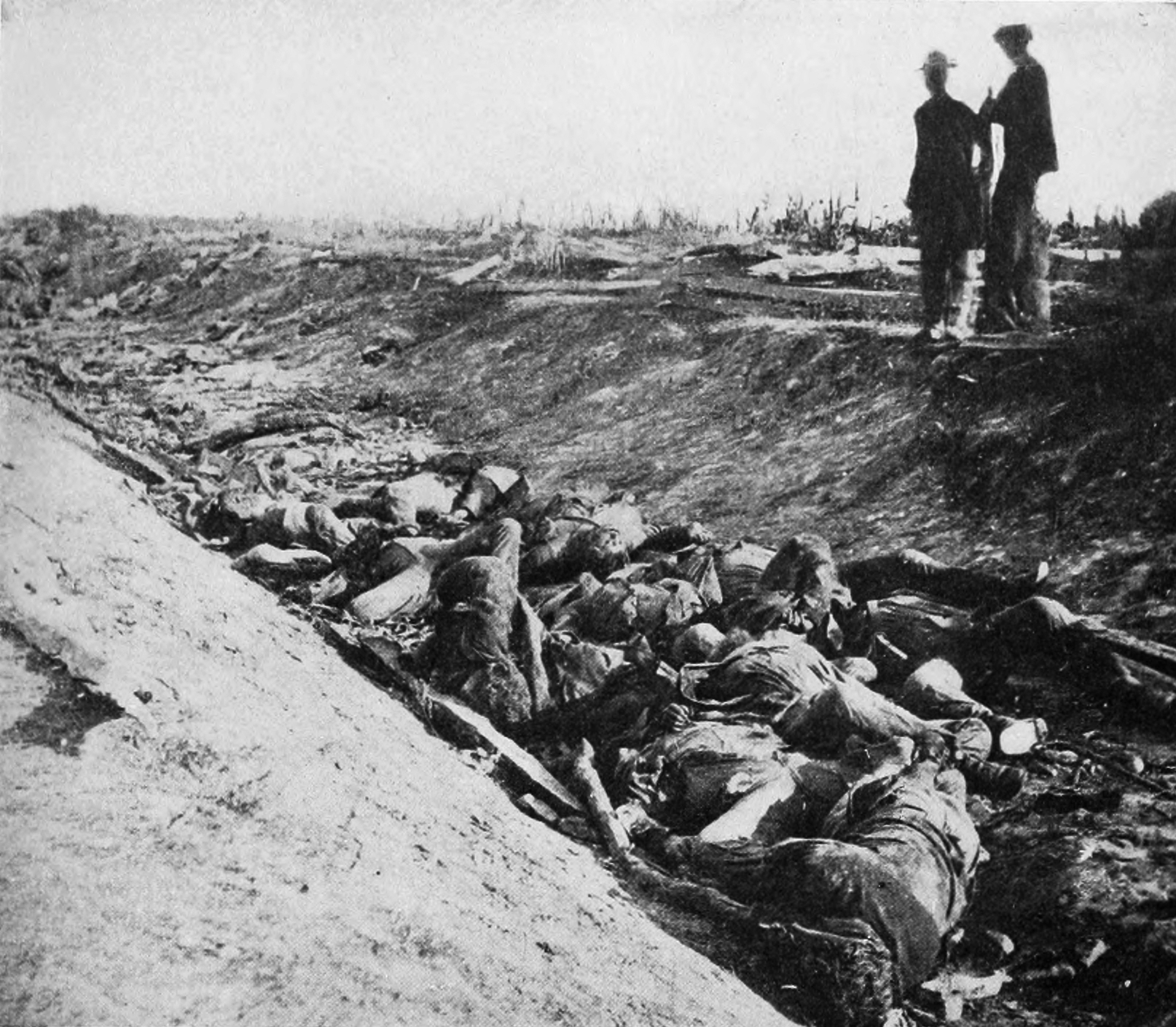
It occurs to me that few of the people discussing the causes of the Civil War seem familiar with such things as the statistical technique of path analysis, the critical path method of operations research, or the WWW path analysis method used by experts in online marketing. The point I would make is that it is useful to think of structures of causality. Proximate causes of the Civil War were themselves caused by more distal causes.
Historians tell us that both in the South and in the North, most people in 1861 thought that the war would be short and that their side would win. Few if any people realized that the war would result in 600,000 deaths, huge numbers of wounded, and enormous economic costs. Those in the South almost surely did not understand that it would end in the defeat of their military, the destruction of their economic system and the destruction of their political system, to be followed by occupation by a Union Army. I suspect that no one suspected that the war would be followed by the Ku Klux Klan, insurgency, suppression of the African Americans in the South, etc. I also suspect that there could have been a much better path for the nation that would have begun earlier to phase in emancipation, that would better have prepared the slaves for eventual freedom, and that would have used resources to compensate those losing economically in the transition instead of for war. However, our forefathers did not imagine how to construct a system of governance that would have achieved such a better result. Thus the proximate cause of the war may well have been failure of imagination.
At the other end of the causality chain, it is too bad that the British had not outlawed slavery before 1492, and that American culture was warlike. If the states had not been arrayed in a South to North line, their geography would not have favored so different an economic basis as existed between the deep south and New England, and perhaps the difference in cultures would not have led to war. I could go on.
If one thinks of causal models in other contexts, it often seems that there are many factors, each of which makes an event more probable. Thus as people think of the causes of cancer there seem to be both genetic and environmental causes. In terms of genetics, it seems increasingly likely that there are a number of genes that each make cancer more likely, and that they interact in complex ways. So too, there are many carcinogenic substances and the more one is exposed to these, the greater the probability that a tumor will be created. Perhaps one might think of the causes of the Civil War in this way as well -- a number of factors which combined to make the war more and more probably until it finally occurred. Surely even at the time of the Revolutionary War, some leaders were worried that the differences among the colonies would result in a failure of the union, and indeed the colony in Canada did not join the Revolution.
It also seems useful intellectually to differentiate the reasons that a war occurred at all from the reasons that the war occurred in 1861. Clearly the immediate trigger of the war was the election of 1860 and its result, but equally clearly that would not have caused a war had the conditions not been as they were.
The Civil War of course would not have occurred had the southern states not seceded from the Union and had the northern states not gone to war to preserve the Union. Thus one might consider separately the causes for the decision of each side. It is clearly an error to reify either side, treating it as unified making a reasoned decision. On each side there were many factions and those factions interacted according to the political institutions imposed by their culture. In the South, the slaves had a very different view of the war than the white power structure, but the views of the slaves were not influential. In the North, too, there were anti-war factions that did not manage to win the debate for their views. Clearly there were people who went to war not to achieve "the goals of their side" but out of solidarity with their friends and neighbors. Recall that before the Civil War, people referred to the states in the plural -- "the United States are" .... It is only after the Civil War that we began to say, "the United States is"....
Is there a lesson from this analysis, for example for the wars in Iraq and Afghanistan? Certainly not a simple one since the situations are so different. Perhaps we can conclude that understanding the causes of a war in any satisfying way is difficult, if not impossible. I think we can conclude that an important cause is a failure of imagination on each side, as our limited rationality means we never fully predict the course of a war and its aftermath, nor do we fully explore the alternatives to war and the ways to achieve a better alternative.
It occurs to me that few of the people discussing the causes of the Civil War seem familiar with such things as the statistical technique of path analysis, the critical path method of operations research, or the WWW path analysis method used by experts in online marketing. The point I would make is that it is useful to think of structures of causality. Proximate causes of the Civil War were themselves caused by more distal causes.
At the other end of the causality chain, it is too bad that the British had not outlawed slavery before 1492, and that American culture was warlike. If the states had not been arrayed in a South to North line, their geography would not have favored so different an economic basis as existed between the deep south and New England, and perhaps the difference in cultures would not have led to war. I could go on.
If one thinks of causal models in other contexts, it often seems that there are many factors, each of which makes an event more probable. Thus as people think of the causes of cancer there seem to be both genetic and environmental causes. In terms of genetics, it seems increasingly likely that there are a number of genes that each make cancer more likely, and that they interact in complex ways. So too, there are many carcinogenic substances and the more one is exposed to these, the greater the probability that a tumor will be created. Perhaps one might think of the causes of the Civil War in this way as well -- a number of factors which combined to make the war more and more probably until it finally occurred. Surely even at the time of the Revolutionary War, some leaders were worried that the differences among the colonies would result in a failure of the union, and indeed the colony in Canada did not join the Revolution.
It also seems useful intellectually to differentiate the reasons that a war occurred at all from the reasons that the war occurred in 1861. Clearly the immediate trigger of the war was the election of 1860 and its result, but equally clearly that would not have caused a war had the conditions not been as they were.
The Civil War of course would not have occurred had the southern states not seceded from the Union and had the northern states not gone to war to preserve the Union. Thus one might consider separately the causes for the decision of each side. It is clearly an error to reify either side, treating it as unified making a reasoned decision. On each side there were many factions and those factions interacted according to the political institutions imposed by their culture. In the South, the slaves had a very different view of the war than the white power structure, but the views of the slaves were not influential. In the North, too, there were anti-war factions that did not manage to win the debate for their views. Clearly there were people who went to war not to achieve "the goals of their side" but out of solidarity with their friends and neighbors. Recall that before the Civil War, people referred to the states in the plural -- "the United States are" .... It is only after the Civil War that we began to say, "the United States is"....
Is there a lesson from this analysis, for example for the wars in Iraq and Afghanistan? Certainly not a simple one since the situations are so different. Perhaps we can conclude that understanding the causes of a war in any satisfying way is difficult, if not impossible. I think we can conclude that an important cause is a failure of imagination on each side, as our limited rationality means we never fully predict the course of a war and its aftermath, nor do we fully explore the alternatives to war and the ways to achieve a better alternative.
Labels:
decision making,
History
Saturday, December 11, 2010
Industry collaboration enhances academic science, sociologist finds
This article summarizes research published by University of Chicago sociologist James Evans.
There is the obvious point that companies keep secrets when it is helpful to their business to do so. There is also the question of what would have happened had industry not increased funding for research on Arabidopsis. Have the best researchers been diverted to less important research than they would have undertaken with peer reviewed funding priorities? Note too that there is a considerable spill over from research on one plant system to other plant systems. That indeed is the very reason that so much research is done on Arabidopsis, a plant with little if any economic value.
An alternative approach to bibliometrics might show that researchers were drawn away from basic research needed to understand the very complicated biology of plants in order to do more remunerative but less scientifically valuable crop development research.
Still, the article is clearly interesting.
Evans looked at over 18,000 research articles involving Arabidopsis, mapping out which articles are linked together by common research themes, methods, or citations......I want to believe that government and industrial funding of research are synergistic, but I am not sure that the article really supports that assertion.
The results show that government-funded studies tended to cluster around related themes and theoretical hubs. Industry-funded work on the other hand tended to stray more from hubs and explore novel gene combinations, use new techniques, or investigate previously unexplored biological processes. “For the network of scientific ideas surrounding Arabidopsis, industry sponsorship weaves discoveries around the periphery into looser, more expansive knowledge,” Evans writes. In short, industry pushes scientists “to know less about more.”.....
“Governments reward replication; companies enable novelty. Governments sponsor refinements in the thick of existing hubs of scientific activity; industry patronizes pioneering activity into unknown, sometimes desolate, scientific territory.”
There is the obvious point that companies keep secrets when it is helpful to their business to do so. There is also the question of what would have happened had industry not increased funding for research on Arabidopsis. Have the best researchers been diverted to less important research than they would have undertaken with peer reviewed funding priorities? Note too that there is a considerable spill over from research on one plant system to other plant systems. That indeed is the very reason that so much research is done on Arabidopsis, a plant with little if any economic value.
An alternative approach to bibliometrics might show that researchers were drawn away from basic research needed to understand the very complicated biology of plants in order to do more remunerative but less scientifically valuable crop development research.
Still, the article is clearly interesting.
Labels:
Science Policy
ACCELERATING GLOBALIZATION
I quote from "4 Trends Shaping the New Decade" by Verne Harnish:
We've only seen the tip of the iceberg when it comes to exporting. In 1950, world exports per capita were just six dollars. By 1980, they had jumped to $437. Thus, the relative jump was enormous. However, the absolute numbers are starting to accelerate. By the year 2000, world exports per capita more than doubled to $ 985. They jumped to $ 1,600 by 2005. And they reached almost $ 2,400 in 2008.I had not realized that the increase in world trade was so great. Some of my friends doubt the credibility of the economic growth estimates for China and India (and other developing nations) and if they are right then the export data might also be suspect, although there is an automatic check for these gross numbers since everything exported from one country is imported to another. Thus, the total value of world imports should equal the total value of world exports. It is also not clear if the figures given are corrected for the depreciation of the dollar. Note too that world population is much greater now than in 1950. We do know from other sources and personal experience that globalization has been taking place over a period of decades.
The figures lend credibility to the assertion that trade policy changes may be more important than development assistance. If poor country producers were given more access to rich country markets, the flow of remuneration and FDI might well dwarf foreign aid.
Labels:
Development,
Economics
A thought about the Obama compromises
The American public has been furious about the failure of the politicians in Washington to pass legislation in its interest. That was evident in both the elections of 2008 and 2010, but the fury has been building for some time.
Barack Obama has been criticized by both parties for the compromises he pushed forward in the stimulus bill, in the health bill, and in the recent budget package for 2011. This session of Congress has been quite good in passing important legislation, and I feel that the economy is in much better shape than it might have been due to that legislation. The health care law is going to provide health insurance for millions of people who would otherwise not have been served, and according to independent sources will not increase our health care expenditures. Incidentally, this term has seen real support for infrastructure expenditures, for science and technology and as such is likely to help America's long term economic prospects.
I note however that there have been a lot of angry voices on each of the important bills, not least on the compromises that Obama has made. The people who have been loudest in their complaints are of course exactly the people who have jammed up the legislative process in recent years preventing those compromises necessary to its functioning -- people both in party leadership and in the media.
Perhaps their screams are a good sign that Obama is really changing Washington and getting things done!
Labels:
Obama administration
Science in America About the Time of the Revolution
I suppose that Benjamin Franklin is fairly widely known for his accomplishments in science and technology. He pioneered in the scientific study of electricity, recognizing it as a flow phenomenon and giving us some of the categories we still use to think about. He also pioneered in the recognition of ocean currents. He invented the Franklin stove, the lightning rod and the bifocal, as well as making a number of inventions of new institutions.
Benjamin Thompson is much less well known in the United States. Although he was born in what is now the United States, he chose to remain loyal to the British during the Revolutionary War and made his life in Europe after the war. He made an enormous scientific contribution in recognizing and demonstrating that heat was a measure of energy and not of a "caloric" fluid in matter. He also contributed to the understanding of gun powder, invented the Rumford stove and Rumford fireplace. (He became the Baron Rumford of the Holy Roman Empire for his service in Bavaria after the war.) He pioneered in the development of an affordable diet for the poor, and also is credited with institutional innovations.
Joseph Priestley immigrated to the United States after the Revolutionary War. His support for the American cause made him unpopular in England and perhaps made the new republic more attractive. Priestley discovered Oxygen, showed it was necessary to animal life, was important in the development of scientific understanding electricity and optics, and invented cabonated water and the process that makes our soda fountain drinks fizzy. He also made innovations in education.
All three were perhaps better known in their own time for other aspects of their careers than the scientific and technological.
Ely Whitney (inventor of the cotton gin, the milling machine, and the production of interchangeable parts which led to the American system of manufacture), John Fitch (an inventor of the steam boat). William Pollard (the spinning machine) and David Bushnell (the submarine and torpedo) all lived in the United States in the late 18th century.
Wikipedia gives the population of the colonies in 1775 as 2.4 million. Many of those people were slaves and most were scrambling to make a living and survive. I find it amazing that so many innovators in science and technology should have lived in such a provincial backwater (although Philadelphia may have been the second largest English speaking city in the world at the time after London). Perhaps the society that gave us those people as well as Jefferson, Adams and Madison was not so much of a backwater as I had believed.
Labels:
History
Poll: Education backed, but not new school taxes
I quote from the AP story:
Kids in some other countries enter college convinced that the right degree will really help economically in adult life but that the wrong degree will lead to a high probability of unemployment or poorly paid employment, and they choose appropriately. That does not seem to be equally true for the United States.
Don't get me wrong. I am all in favor of university education as a consumable to enrich the student's cultural and intellectual life. Higher education has intrinsic as well as instrumental value. However, I don't see much reason to use tax funds to subsidize consumption; in tough economic times taxes should go to invest in productive assets including intellectual assets.
The public verdict is in and overwhelming: The better the education people get, the stronger the U.S. economy will be, a poll shows. But don't count on folks to support higher taxes to improve schools.I suspect that the problem is that getting kids to college is not doing enough in the United States to strengthen national economic capacity. The drop out rate from American colleges is too great. Grads are not adequately prepared to work in the economy. A lot of recent college graduates are currently unemployed, in part because they have studied topics such as folklore, renaissance literature, and art appreciation that have little value in the workplace.
Eighty-eight percent say a country's education system has a major effect on its economic health. Nearly as many — 79 percent — say the U.S. economy would improve if all Americans had at least a two-year college degree, according to an Associated Press-Stanford University poll.
Yet when it comes to financing public school improvements, people tilt slightly against raising taxes to do so, with 47 percent opposing and 42 percent in support. The findings underscore the tensions confronting federal and local officials across the country balancing the competing pressures of strengthening education while not overburdening taxpayers at a time of economic weakness and huge federal and state budget deficits.
Kids in some other countries enter college convinced that the right degree will really help economically in adult life but that the wrong degree will lead to a high probability of unemployment or poorly paid employment, and they choose appropriately. That does not seem to be equally true for the United States.
Don't get me wrong. I am all in favor of university education as a consumable to enrich the student's cultural and intellectual life. Higher education has intrinsic as well as instrumental value. However, I don't see much reason to use tax funds to subsidize consumption; in tough economic times taxes should go to invest in productive assets including intellectual assets.
Labels:
education
Friday, December 10, 2010
The Company in the Future: A Book Review
The final chapter of The Company: A Short History of a Revolutionary Idea considers the future of the corporation. I was not very pleased by the brief treatment, so let me take a shot.
At least for the short term (thinking in historical terms) trends will continue. World population will increase, per capita production will increase, services will grow more rapidly than goods, emerging economies will continue to emerge challenging the currently dominant economies, technology will continue to evolve, and the infrastructure will grow permitting still more globalization of trade and migration.
This means the space for enterprises producing and distributing goods will increase, and organizations will fill the space. There will be more differentiation of niches for organizations, and organizations will fill those niches so that there will be more different kinds of production and distribution organizations. With organizations growing out of more cultures, and organizations being influenced by the cultures in which they are located, there will be more organizational cultures.
The various stakeholders in corporations -- owners, managers, white collar employees, blue collar employees, vendors, customers, and communities in which they work -- will seek to take advantage of the changing environment and the changing nature of the organization to gain influence over the company and to appropriate benefits utilizing that control that they achieve.
More and more corporations will be international in scope. Governments too will continue to evolve, and one assumes that small nations will tend to give up some sovereignty and band together in regional and other affiliations for a number of reasons, including seeking the benefits of larger economies and having power more commensurate with that of large nations. Similarly, governments of nations with growing economic power will seek to exercise more political power commensurate with that economic power.
The evolving system of companies and the evolving system of governments will need to accommodate to each other, and the people in power in companies and governments will perceive both opportunities and threats in the rubbing together of business and government.
Institutional evolution will continue. There will be new kinds of companies, new kinds of governments, new kinds of markets, etc., etc. etc. We will fail to predict the details of the future. The overall system will not be "damped" and we will see booms and bubbles, busts and crises.
All in all, I strongly recommend The Company: A Short History of a Revolutionary Idea by John Micklethwait and Adrian Wooldridge. It is a short, readable volume and I predict it will surprise you from time to time as it surprised me. It is thought provoking. And the authors can write a good sentence, a good paragraph and a good chapter.
This is the last of of a series of posting
on the book. The other are:
At least for the short term (thinking in historical terms) trends will continue. World population will increase, per capita production will increase, services will grow more rapidly than goods, emerging economies will continue to emerge challenging the currently dominant economies, technology will continue to evolve, and the infrastructure will grow permitting still more globalization of trade and migration.
This means the space for enterprises producing and distributing goods will increase, and organizations will fill the space. There will be more differentiation of niches for organizations, and organizations will fill those niches so that there will be more different kinds of production and distribution organizations. With organizations growing out of more cultures, and organizations being influenced by the cultures in which they are located, there will be more organizational cultures.
The various stakeholders in corporations -- owners, managers, white collar employees, blue collar employees, vendors, customers, and communities in which they work -- will seek to take advantage of the changing environment and the changing nature of the organization to gain influence over the company and to appropriate benefits utilizing that control that they achieve.
More and more corporations will be international in scope. Governments too will continue to evolve, and one assumes that small nations will tend to give up some sovereignty and band together in regional and other affiliations for a number of reasons, including seeking the benefits of larger economies and having power more commensurate with that of large nations. Similarly, governments of nations with growing economic power will seek to exercise more political power commensurate with that economic power.
The evolving system of companies and the evolving system of governments will need to accommodate to each other, and the people in power in companies and governments will perceive both opportunities and threats in the rubbing together of business and government.
Institutional evolution will continue. There will be new kinds of companies, new kinds of governments, new kinds of markets, etc., etc. etc. We will fail to predict the details of the future. The overall system will not be "damped" and we will see booms and bubbles, busts and crises.
All in all, I strongly recommend The Company: A Short History of a Revolutionary Idea by John Micklethwait and Adrian Wooldridge. It is a short, readable volume and I predict it will surprise you from time to time as it surprised me. It is thought provoking. And the authors can write a good sentence, a good paragraph and a good chapter.
This is the last of of a series of posting
- Multinationals and the extent of institutions
- The Company in America Since 1975
- The Growth of Large Formal Organizations Run by Professional Managers
- Thinking about the historical development of big companies
- Currents and Counter-currents in the History of the Company
- Companies Changed the World
- The History of the Company
- Institutional and technological inventions and innovations compared
- The Company
Labels:
book review,
Economics,
History
December 10 = Human Rights Day
The theme for Human Rights Day 2010 – 10 December – is "Human Rights' Defenders who act to end Discrimination". Human rights' defenders acting against discrimination, often at great personal risk to both themselves and their families, are being recognized and acclaimed. At this occasion, the UNESCO/Bilbao Prize for the Promotion of a Culture of Human Rights will be awarded to Asma Jahangir (Pakistan) in recognition of her exceptional and courageous contribution to building a universal culture of human rights. The Award Ceremony will take place in Bilbao (Spain). More on the UNESCO celebration.......
Unfortunately the United States has failed to ratify some of the key conventions implementing the Universal Declaration of Human Rights. We have failed to ratify:
When Eleanor Roosevelt presented the Universal Declaration of Human Rights to the UN General Assembly, she proclaimed: "We stand today at the threshold of a great event, both in the life of the United Nations and in the life of mankind." On December 10, 1948, the world moved to recognize and protect the equal and inalienable rights of all people, inspiring individuals around the globe to claim the rights that are our common heritage.
Hillary Rodham Clinton
Unfortunately the United States has failed to ratify some of the key conventions implementing the Universal Declaration of Human Rights. We have failed to ratify:
- The Convention on the Elimination of All Forms of Discrimination Against Women (CEDAW)
- The Convention on the Rights of the Child (CRC)
- The Convention on the Prohibition, Use, Stockpiling, Production and Transfer of Anti-Personnel Mines and on Their Destruction (The Ottawa Treaty)
- Six out of the eight Conventions of the ILO which it describes as fundamental to the human rights of workers.
- The International Covenant on Economic, Social and Cultural Rights (ICESCR)
- The International Convention on the Protection of the Rights of All Migrant Workers and Members of Their Families (MWC)
Labels:
Event
Thursday, December 09, 2010
Multinationals and the extent of institutions
Chapter 8 of The Company: A Short History of a Revolutionary Idea is titled "Agents of Influence: Multinationals, 1850-2002. As the title suggests, this is a very brief history of the development of multinational corporations over a century and a half. I quote some interesting data from the chapter:
Micklethwait and Wooldridge, the authors, make the point that the trend is for multinationals to be more benign. Of course, the early multinationals not only enslaved people but literally branded their slaves with their corporate names.
The Extent of Institutions
I got to thinking about the relative extent of institutions. The Australian and North American hunter gatherers found by European explorers did not have companies, but there were trade routes that allowed certain high-value, light products to be moved hundreds and even thousands of miles from their source to their ultimate destination. These routes apparently were institutionalized, moving from tribe to tribe along the route based on relations of trust between members of the trading tribes.
Military institutions, such as those of Alexander the Great or the Roman Empire, spanned hundreds or even thousands of miles. The governance institutions were not always coterminous with the military ones. Sometimes conquered territories could not be held, sometimes governance was extended without conquest when new people sought affiliation with an empire based on the economic benefits that citizenship in the empire conferred.
Religious institutions seem often to have grown in the past within empires with a single governmental institution. Think of Buddhism and the Empire of Ashoka, Christianity and the Roman Empire, or Islam and the Arab expansion. Today, however, the world religions are, as the term suggests, international. Their institutions are not limited in geographic scope by the scope of the country in which they are "headquartered".
In the hay day of European empires, their multinationals were related to the extent of their imperial control. Loss of colonies could be economically devastating because the loss of government control meant loss of markets for the products of the center and loss of raw materials from the periphery. Obviously, that pattern was not rigid or universal. The British empire profited greatly from the sale of Opium produced in India to people in China. Still, I think there is a major difference today in which so much trade crosses national boundaries as compared with the 19th century when much was limited within imperial boundaries.
I have read that a trader in the Islamic world could move freely from across North Africa, the Middle East and Central Asia under the protection of his religion and of local Muslim rulers. In the British Empire the British navy and British army similarly could provide safe passage for trade. Today, international law (with some minor exceptions such as Somali pirates) similarly protects trade, and empire is not necessary. That is fortunate because we moderns don't much like being governed by people far away who do not put our interests first.
By 2001, there were about sixty-five thousand "transnational" companies in the world, roughly five times the number in 1975; around the globe they gathered together 850,000 foreign affiliates, employed 54 million people, and had revenues of $19 trillion. In the late 1990s, foreign direct investment grew four times faster than world output and three times faster than world trade. Roughly a third of trade flows consisted of payments within individual companies, reflecting the way that multinational production systems stretched around the world. In 2000, the global figure for FDI passed $1 trillion.Not only have multinationals grown larger and more powerful over the period, the action has shifted. At the beginning of the period, British firms dominated the multinationals. American firms surpassed them in scope and influence early in the 20th century and were made relatively more powerful still by the European destruction of World War II. There was concern in Europe about "the American Challenge" in the third quarter of the 20th century, and about the "Japanese Challenge" in the 80s and 90s, as there is not concern about the growing international power of companies from China, India, Russia and Brazil.
Micklethwait and Wooldridge, the authors, make the point that the trend is for multinationals to be more benign. Of course, the early multinationals not only enslaved people but literally branded their slaves with their corporate names.
The Extent of Institutions
I got to thinking about the relative extent of institutions. The Australian and North American hunter gatherers found by European explorers did not have companies, but there were trade routes that allowed certain high-value, light products to be moved hundreds and even thousands of miles from their source to their ultimate destination. These routes apparently were institutionalized, moving from tribe to tribe along the route based on relations of trust between members of the trading tribes.
Military institutions, such as those of Alexander the Great or the Roman Empire, spanned hundreds or even thousands of miles. The governance institutions were not always coterminous with the military ones. Sometimes conquered territories could not be held, sometimes governance was extended without conquest when new people sought affiliation with an empire based on the economic benefits that citizenship in the empire conferred.
Religious institutions seem often to have grown in the past within empires with a single governmental institution. Think of Buddhism and the Empire of Ashoka, Christianity and the Roman Empire, or Islam and the Arab expansion. Today, however, the world religions are, as the term suggests, international. Their institutions are not limited in geographic scope by the scope of the country in which they are "headquartered".
In the hay day of European empires, their multinationals were related to the extent of their imperial control. Loss of colonies could be economically devastating because the loss of government control meant loss of markets for the products of the center and loss of raw materials from the periphery. Obviously, that pattern was not rigid or universal. The British empire profited greatly from the sale of Opium produced in India to people in China. Still, I think there is a major difference today in which so much trade crosses national boundaries as compared with the 19th century when much was limited within imperial boundaries.
I have read that a trader in the Islamic world could move freely from across North Africa, the Middle East and Central Asia under the protection of his religion and of local Muslim rulers. In the British Empire the British navy and British army similarly could provide safe passage for trade. Today, international law (with some minor exceptions such as Somali pirates) similarly protects trade, and empire is not necessary. That is fortunate because we moderns don't much like being governed by people far away who do not put our interests first.
This is one of a series of postings on the book. Others are:
- The Company in America Since 1975
- The Growth of Large Formal Organizations Run by Professional Managers
- Thinking about the historical development of big companies
- Currents and Counter-currents in the History of the Company
- Companies Changed the World
- The History of the Company
- Institutional and technological inventions and innovations compared
- The Company
Labels:
book review,
Economics,
History
After the Conflict: Nation- Building and Corruption
I quote the summary of the report:
Specifically, our expectations for post conflict conditions in Iraq and Afghanistan should be modest and conditioned by experience in other post conflict situations around the world.
Globally, there are 26 ongoing armed conflicts and nearly one sixth
of the world’s population lives in so-called ‘weak governance’ zones.1 In 2009 alone, the United Nations estimated that 42 million people were displaced due to conflict and persecution.
The scale and scope of the challenge to end violence and rebuild countries cannot be underestimated. Corruption poses a unique set of obstacles to reconstruction and recovery in countries suffering the aftermath of violent conflict, whether internally or externally sparked.
In a post-conflict context, corruption undermines state legitimacy and can undo the process of reconciliation, leading to a return to violence. The manifestations of corruption are various and may be perceived differently in different countries depending on the local norms and rules about corruption.
Yet there is one common lesson on corruption that applies to all post-conflict countries: tolerating corruption erodes the prospects for sustainable stability and nation-building. Corruption destroys the idea that there can be a fair power sharing agreement, collective peace and trust.In general, conflict is very bad for development, and donor agencies are faced with the rock of people in great need and the hard place that their efforts to help will probably be diluted by corruption and partially reversed by future problems.
Specifically, our expectations for post conflict conditions in Iraq and Afghanistan should be modest and conditioned by experience in other post conflict situations around the world.
Labels:
Development,
Iraq
If you are looking for a holiday gift, consider choosing a charitable donation from the Oxfam Collection
Minnie Driver and Scarlett Johansson ask for your support for Oxfam, one of the best known and most effective donors of foreign aid. Click here to give a great gift.
Labels:
Other
Wednesday, December 08, 2010
A Hint of Good Job Market News
Source: Economix, Catherine Rampell
The newly agreed upon budget deal should provide an additional stimulus package, and it is estimated that it will create/protect 2.2 million jobs.
Labels:
Economics
PISA/ Education What do students know and what can they do?
The 2009 results from the Program for International Student Assessment (2009) are out. Students in the United States did not do as well on the tests as those in some other countries, such as Canada, Finland or Japan. More of the scores were predicted by differences in socio-economic status in the United States than in other countries.
Labels:
education
Tuesday, December 07, 2010
Most states are weak or very weak!
I quote from the article:
Of 163 countries covered by an index of state capability devised by the Economist Intelligence Unit (EIU), only 34 are classified as highly capable. State capabilities are rated as moderate in 38 countries. The majority of countries have either weak (33) or very weak (58) states.The United States has proposed to promote democracy abroad, which is a nice ideal. It is probably even a better ideal to promote stronger states for few people would not want "physical security, efficient institutions and capable administration" while there are powerful people who want theocracy, monarchy or dictatorships. But in spite of people wanting governments to do their duty, most don't. We might temper our ambition to install democracy, even if by force, with a little humility about how hard it is to build a good government, let alone a good democratic government.
The basic functions of a state are to provide physical security, efficient institutions and capable administration. If you can find a way to measure these things, you can get a rough idea of a state’s strength. The EIU’s index is based on an (unweighted) assessment of 12 indicators that collectively capture a state’s ability to deliver its essential functions. These are: its age, its recent history of stability, the security of its citizens, the level of corruption, the size of the grey economy, the rule of law, the quality of its bureaucracy, whether the government controls all its territory, the extent of foreign influence, and the degree of ethnic fragmentation, social cohesion and trust in public institutions.
Labels:
government
A thought about international university cooperation
As Europe and Asia have now joined the United States in the forefront of science and technology (after decades of catching up), there should be more interest in twinning of U.S. and overseas university groups. While I have been primarily interested in the past in university partnerships in which U.S. institutions help build developing country institutions, it is increasingly to U.S. interests for our best institutions to partner with the best institutions abroad.
The Internet makes a big difference since it makes transaction costs so much lower. It is possible to offer joint courses or to develop joint curricula or joint research projects with little added cost using the Internet, the cloud, email, Skype, etc.
Actually being present in someone's lab or classroom remains important. There is a lot of tacit knowledge that is transferred by "being there", as there is a lot of information transferred by non-verbal communication such as body language. I discovered in my grant management in the past that university professors in the United States often have resources at their disposition that they can use to support someone once that person is located nearby, but have great difficulty obtaining the travel money to move themselves or their colleagues across borders. A small grants program, with grants of a few thousand dollars each, could make a lot of difference in promoting better international networking of U.S. universities.
Labels:
education,
international travel
An interesting result on education
Source: The Economist
I quote:
McKinsey says, throwing money at education does not seem to do much good, at least in those countries that already send all their young people to school (see chart). America, for example, increased its spending on schools by 21% between 2000 and 2007, while Britain pumped in 37% more funds. Yet in this period, according to PISA, standards in both countries slipped.The graph is interesting, but I think hard to interpret correctly. Public spending per student depends in part on the per capita GDP, since people providing services are paid more in more affluent countries. The quote also should be understood in terms of the increasing per capita income of the nation. I would also wonder about the time lags in improving educational performance by increasing teacher pay.
In theory, one would increase school performance by incentives by providing financial rewards to teachers whose students learn more. Increasing the pay rates for all teachers might not do that. Some school systems in the United States seem to be doing better by providing incentive pay to teachers.
There is also the issue of what PISA measures. Does it in fact measure the intellectual abilities we most want the schools to produce? I also wonder whether we might best compare the small countries in Europe with high PISA performance with comparably sized states or regions in the United States with high performance.
Still, it is of concern that the United States is not doing better on the PISA tests and that the increase in school funding has been accompanied by slipped PISA standings.
Labels:
education
Handful of U.S. Schools Claim Larger Share of Output
Source: Science 19 November 2010: vol. 330 no. 6007 1032
I quote:
I quote:
The report (GLOBAL RESEARCH REPORT, USA © 2010 THOMSON REUTERS) documents the growth by Asian and European nations in overall research productivity. It notes that the 27-member European Union surpassed the United States in 1995 and remains ahead, and that the Asian-Pacific countries did likewise for the first time in 2008 as part of their explosive growth (see first figure). It also finds that U.S. scientists work disproportionately in the health and social sciences when compared with the rest of the world (see second figure).
Labels:
science,
Without comment
Universities Report $55 Billion in Science and Engineering R&D Spending for FY 2009
I am impressed that university research funding, which had been flat in the later years of the Bush administration has grown during the last couple of years in spite of the severe recession.
Labels:
science
Democracy Is Looking Up in Latin America
Source: The Economist
Latinobarómetro has published its 2010 report on its survey of public opinion in Latin America. In the graph above, note that in most of the countries half or more of the respondents did not report that they were satisfied with their democracy. On the other hand, in almost all of the countries respondents were more positive than they had been in earlier surveys.
Labels:
democracy
Monday, December 06, 2010
I wonder how many people know what marriage means in the law or in their religion?
According to Answers.com (citing Lamda Legal), there are 1,400 legal rights conferred by marriage in the United States. There are also duties attached to marital status. Some of those legal rights and duties are federal. For example, married couples have rights to inherit social security and other government pension benefits from each other that unmarried people do not enjoy.
The Bill of Rights reserves to the states powers that are not explicitly provided by the Constitution to the federal government. Consequently states have legislated legal rights and duties to be conferred by marriage, These rights and duties are not necessarily the same from state to state. Thus different states provide different formulas for inheritance by family members. The members of a married couple that moves from the state in which they were married to another state may change the rights and duties attached to their marital status. So too does moving to another country change the rights and duties attached to marital status.
I wonder how many people could accurately enumerate the rights conferred by marriage by the federal government and by the state in which they live. I suspect very few, excepting perhaps lawyers specialized in marriage law.
In the United States, those empowered to officiate at a religious marriage ceremony may also be considered legally to be conducting a civil ceremony. It is not, however, the case that all religious marriage ceremonies necessarily confer civil marriage status. Marital status may also be conferred by common law without a specific ceremony. I wonder how many of those religious leaders are fully versed in civil marriage law and thus able to council the people they are marrying on the legal rights and duties they are incurring in a marriage ceremony that is recognized as a civil marriage? How many of them do in fact brief the couple to be married on these legal duties and responsibilities?
There are many religions in the United States, and clearly marriage has different meanings within different religious traditions. I suspect that few Americans fully understand the religious meaning of marriage within their own religions. For the many Americans who are married in a church other than their own, I suspect there is very little knowledge of the full meaning of the ceremony in which they participate.
If I suspect, few people understand well either the legal or the religious aspects of the marriage contract, then how good can the public debate on marriage possibly be?
Labels:
Other
The Company in America Since 1975
Chapter 7 of Micklethwait and Wooldridge's book, The Company: A Short History of a Revolutionary Idea, is titled "The Corporate Paradox, 1975-2002. It brings the history of the corporation, and especially the corporation in the United States, up to the time that the authors were writing.
I note that during the period involved, information and communications technologies were developing rapidly and the information and communications infrastructure were evolving rapidly and creating the Information Revolution. It was also a time in which oil prices were quite high for some time. It was also a time of globalization in which it was not only easier to send a message from place to place, but to move physically from place to place and to ship goods from place to place.
In countries in which wages were high, there was a long term trend to either automate functions and replace workers with devices, or to move the work to a country or region in which wages were lower. Not only were manufacturing functions often outsourced to other nations, but some services became tradable and were outsourced. We saw jobs for secretaries, gas station attendants and unskilled assembly line workers disappear from the United States, automobile manufacturing jobs move from the dust belt to southern states, and call centers move to India.
We also saw a rise in the percentage of the U.S. workforce with college degrees, graduate degrees and even doctoral degrees. We also saw an increasing inequality of incomes in the nation. I would suggest that the degree heavy knowledge workers brought a new form of human capital to the companies for which they worked in white collar jobs, and successfully demanded remuneration commensurate not only for their labor but for the depreciating intellectual capital which they invested in the firms.
Micklethwait and Wooldridge do not emphasize these changing conditions in which companies existed, but they emphasize others. For example, pension plans changed from defined benefits to defined contributions and pension funds became major players in the stock market and in the ownership of companies. Mutual funds also grew and similarly became more important relative to the individual stockholder in the market and in the ownership of companies. The decades saw the development of junk bonds and leveraged buy outs, leading to dismantling of some conglomerates that were composed of parts worth more than the whole.
Perhaps surprisingly, even though the period saw a huge increase in management consulting activities, the professional managers seemed to maintain their control of the corporations (and to increase their ability to extract money from those companies).
The authors recite round after round of deregulation, abuse of freedom and reregulation. I might have focused on the invention of new instruments such as junk bonds, derivatives and the financial instruments used by Enron. I suspect that not only did these instruments escape effective regulation by their novelty, but they tended to be so complicated that few (if any) people understood the risks that their wide spread use implied.
Perhaps the point could have been made more strongly that there is a very fine line between over regulation that requires too much red tape and which slows companies versus too little regulation that results in events such as the sub-prime mortgage meltdown or the saving and loan breakdown. Perhaps with our clunky legislative processes there is no better alternative than a swinging pendulum between regulation and deregulation.
The period of course saw the growth of new large corporations such as Microsoft, Intel, Amazon and Google that rode the wave of the new technologies and industries. While some big companies disappeared, typically in mergers, (perhaps surprisingly) some remained among the largest in the country. I am not sure that Micklethwait and Wooldridge do justice to the development of new chains in the service industries such as McDonalds and Walmart, and for that matter the impact of the invention and development of franchizing.
The authors do reflect on the phenomenon of Silicon Valley. The region is characterized not only be companies that lead in the new high technology industries developed in recent decades, but in new ways of doing business. I wonder whether the new industries have called forth the new ways of doing business. Perhaps, but perhaps it was the new ways of doing business in Silicon Valley that allowed the region to be more successful than others in exploiting the openings created by the technology. The other centers of innovation that are developing around the world seem to be replicating Silicon Valley's way of doing business.
I am enjoying the book, and highly recommend it.
This is one of a series of postings on the book. Others are:
- The Growth of Large Formal Organizations Run by Professional Managers
- Thinking about the historical development of big companies
- Currents and Counter-currents in the History of the Company
- Companies Changed the World
- The History of the Company
- Institutional and technological inventions and innovations compared
- The Company
Labels:
book review,
History
Sunday, December 05, 2010
Kevin Kelly on Technology
Keven Kelly is a very bright guy. In this talk he talks about "the technium" which I think of as analogous to the ecosystem. He makes the very important point that there is a parallel between the two. Evolution has tendencies to make ecosystems more complex with more species that interact more and fill all the niches in the ecology. There are teleonomic processes that result in the technium also evolving in ways that show trends but are not necessarily planned. He make the further point that the ecosystem and the technium are intimately related, each affecting the other,
I would suggest that human society is a third similar system, evolving in ways that show trends but which are not planned by any individual nor organization. Kelly recognizes that we -- human society -- has choices that we can make that influence technological paths of development, and I think he believes (as do I) that we should move our social system in such a way that it better influences technological outcomes. Kelly points out, correctly, that since the invention of tools, humans and our ancestor species have modified climate. Indeed, we with our technology have modified the ecology more and more for millennia. Thus we have three interacting teleonomic systems.
Kelly does not note that evolution produces trends, but that every once and a while something happens that interferes with these trends. Sometimes the things that happen are truly exogenous, as when comets have caused mass extinctions. Sometimes the things that happen are more endogenous, as when organisms evolved that changed the oxygen content of the atmosphere, allowing radical change in the trends produced by evolution. If one looks at history, there have been collapses of civilizations which took the technium that they had developed with them. Think of the Romans, the Anasazi, etc.
It would be nice if our civilization does not collapse in the next few generations!
Labels:
Technology
Tuesday, November 30, 2010
Monday, November 29, 2010
Gone With The Wind and The Birth of a Nation
Yesterday I saw the film Gone With The Wind. I was struck by the parallels with the earlier film, perhaps because I had heard someone that morning talking about the film Birth of a Nation. Both of course are set in the South during and after the Civil War. Both were enormously popular films of their day, based on best selling novels that were longer and more compelling to their audiences than previous films had been. Indeed, more tickets have been sold in the United States to Gone with the Wind than to any other film. Both films romanticized the South, ignoring the immorality at the heart of 19th century Southern culture.
Birth of a Nation glorified the Ku Klux Klan or at least the myth of the Clansmen as they existed after the Civil War. It is infamous for having led to the rebirth of the KKK after it was released in 1915.
Gone with the Wind romanticizes the white plantation owners in the pre-Civil War period, calling the men "cavaliers" and viewing the rich whites as rather silly people who treat their slaves well. The blacks are shown as caricatures -- mostly childish, foolish people devoted to their owners. the black characters remain in the service of their former owners even after being freed. In one scene the male field hands go off happily to dig trenches for the Confederate troops defending Atlanta from Sherman's troops. Other whites are either evil "carpetbaggers" or "white trash" (with the exceptions of the character played by mega-star Clark Gable and of another caricature -- the woman who owns a house of prostitution but has a heart of gold). The female protagonist employs a chain gang in her mill after the war knowing that they will be badly mistreated, but the film seems to gloss over the immorality of that act, implying it was a direct result of the poverty she suffered immediately after the war (having to work in the fields with her own hands). When she is attacked while driving her horse and buggy through a bad part of town occupied by carpetbaggers and emancipated former slaves, the men in her family act as vigilantes to attack random people in the town. This seems a direct throwback to the romanticization of the KKK in Birth of a Nation.
I was rather shocked when the audience (at the American Film Institute theater) applauded at the end of the film. It seemed to me a film that probably helped to prolong racism in America, pandering to the prejudices of segregationists and reinforcing their myths that distorted the immorality of slavery and involuntary servitude.
It is perhaps interesting that Gone With the Wind was released in 1939. It seems to have been strongly anti-war, showing how devastating the Civil War had been to the South (in spite of the fact that southerners entered the war assuming an easy win). Yet the Second World War had already begun, and American would have been well advised to have been preparing for its entry into the war.
John Dower, in his book Cultures of War: Pearl Harbor / Hiroshima / 9-11 / Iraq
, describes how the Japanese misperceived the likely impact on Americans of their attack on Pearl Harbor showing it as parallel to the way in which the American military failed to apply the lessons about insurgency from Viet Nam to the occupation of Iraq (and the misuse of the history of the occupation of Germany and Japan after World War II). In the Civil War, Americans on each side failed to understand the culture of the other side and that misunderstanding led to a war that killed more than 600,000 people. In spite of repeated lessons of the importance of understanding others, it is only now after nearly a decade of war, that we are told that the U.S. military is trying to understand the peoples and cultures of Afghanistan.
Gone With the Wind glosses over the brutality of an American culture that included a history of slavery, of chain gangs, and of the KKK. In the Second World War, Americans would embark a couple of years after its release, enthusiastically bombing civilian targets in Germany and Japan and killing more than a million civilians while incarcerating Japanese-Americans in concentration camps. The wars in Iraq and Afghanistan have resulted in damage to their peoples that dwarf the damage done to America by 9/11. Perhaps it would have helped had we understood ourselves better and avoided myths of a virtuous past.
Birth of a Nation glorified the Ku Klux Klan or at least the myth of the Clansmen as they existed after the Civil War. It is infamous for having led to the rebirth of the KKK after it was released in 1915.
Gone with the Wind romanticizes the white plantation owners in the pre-Civil War period, calling the men "cavaliers" and viewing the rich whites as rather silly people who treat their slaves well. The blacks are shown as caricatures -- mostly childish, foolish people devoted to their owners. the black characters remain in the service of their former owners even after being freed. In one scene the male field hands go off happily to dig trenches for the Confederate troops defending Atlanta from Sherman's troops. Other whites are either evil "carpetbaggers" or "white trash" (with the exceptions of the character played by mega-star Clark Gable and of another caricature -- the woman who owns a house of prostitution but has a heart of gold). The female protagonist employs a chain gang in her mill after the war knowing that they will be badly mistreated, but the film seems to gloss over the immorality of that act, implying it was a direct result of the poverty she suffered immediately after the war (having to work in the fields with her own hands). When she is attacked while driving her horse and buggy through a bad part of town occupied by carpetbaggers and emancipated former slaves, the men in her family act as vigilantes to attack random people in the town. This seems a direct throwback to the romanticization of the KKK in Birth of a Nation.
I was rather shocked when the audience (at the American Film Institute theater) applauded at the end of the film. It seemed to me a film that probably helped to prolong racism in America, pandering to the prejudices of segregationists and reinforcing their myths that distorted the immorality of slavery and involuntary servitude.
It is perhaps interesting that Gone With the Wind was released in 1939. It seems to have been strongly anti-war, showing how devastating the Civil War had been to the South (in spite of the fact that southerners entered the war assuming an easy win). Yet the Second World War had already begun, and American would have been well advised to have been preparing for its entry into the war.
John Dower, in his book Cultures of War: Pearl Harbor / Hiroshima / 9-11 / Iraq
Gone With the Wind glosses over the brutality of an American culture that included a history of slavery, of chain gangs, and of the KKK. In the Second World War, Americans would embark a couple of years after its release, enthusiastically bombing civilian targets in Germany and Japan and killing more than a million civilians while incarcerating Japanese-Americans in concentration camps. The wars in Iraq and Afghanistan have resulted in damage to their peoples that dwarf the damage done to America by 9/11. Perhaps it would have helped had we understood ourselves better and avoided myths of a virtuous past.
Labels:
rants
Saturday, November 27, 2010
A response to Thaler's Question
Thaler's Question:
Examples:
The flat earth and geocentric world are examples of wrong scientific beliefs that were held for long periods. Can you name your favorite example and for extra credit why it was believed to be true?How about "the world is the way we perceive it to be, that things that are distant obey the same laws as those that are close, and over time things are either static or cyclical."
Examples:
- Optical illusions are the obvious example, where psychologists have shown many ways in which our eyes are fooled.
- Most people believe that the universe is composed of regular matter and space, leaving out dark matter and dark energy.
- People have assumed that the laws of our macroscopic world apply to the sub-atomic world. Einstein said "I, at any rate, am convinced that He does not throw dice." Quantum weirdness was not perceived and thus was not assumed to exist, and still is not assumed by most people.
- Assumption that since nearby astronomical space is expanding with constant acceleration, that must be true for things in distant astronomical space, but the Hubble constant is not constant.
- Living beings that look alike must be members of the same species. This has been challenged not only by convergent evolution theories, but also by genetic determination that similar beings may be members of sibling species.
- We are aware of our conscious thought and it is perceived as rational, but research is showing that much of our thought is not conscious and there are many irrational biases in our logic.
- Weather seems cyclical, with winter, spring, summer and fall occurring in a regular pattern, but in fact research has shown ice ages occurred in the past and that we are now witnessing global warming.
- Geology seems fixed, but for hundreds of years scientists have been illuminating the changes which have taken place in the surface of the earth.
- Many Americans still do not believe in evolution, preferring to believe that species exist as they were originally created by God.
Labels:
thinking
Wednesday, November 24, 2010
The Growth of Large Formal Organizations Run by Professional Managers
Chapter 6 of Micklethwait and Wooldridge's book The Company: A Short History of a Revolutionary Idea is titled "The Triumph of Managerial Capitalism: 1913-1975". In 1975 I was 38 years old and that was the year I received my PhD from (what was then) the Graduate School of Administration of UCI, so this chapter focuses on the development of the world that seems natural to me.
By 1975, the 200 largest firms in the United States owned more than 3/5th of the corporate capital in the nation, and they were managed by a class of corporate managers. The federal government was huge, and largely managed by people quite similar to those managing the big corporations, indeed there was considerable exchange of managers between federal government and large corporations. The ownership of the corporations was widely distributed with 40% of workers owning shares and pension plans and mutual funds also managed by people from the class of corporate managers. Large labor unions represented a large portion of the workers. Corporate health insurance was the American counterpart to socialized medicine with large insurers, managed by people from the class of corporate managers, covering a majority of workers.
European governments experimented more than did the United States with state owned corporations, and lagged the United States in the growth of private corporations, but they too were dominated by big companies. Many of the large companies were multinational, escaping some of the control of national governments.
Americans worked in large corporations, bought goods and services produced by large corporations and distributed by large corporations. They put their savings in the care of large corporations. The owner manager was responsible for only a small part of the economy.
Large corporations had enormous influence in government, and not only in the military-industrial complex. In 1977, Vice President Rockefeller's former White House secretary was assigned to work with me for a couple of months on a special project. I remember being shocked when she told me that the CEOs of big corporations would call her and instead of asking for appointments, simply tell her to clear the VP's calendar so that he could meet with them at a time convenient to the CEO.
Mickelthwait and Wooldridge make the point that the America of 1975 was fundamentally different from that of 1840 in the way society was institutionalized. The large corporation which had not existed in the early 19th century had become a dominant institution at the end of the third quarter of the 20th. The authority and influence of the owner operator of the farm or small business was now eclipsed by the authority of professional managers of large, formal organizations.
This blog has often focused on technological innovation, but this book shows the enormous influence that an institutional innovation -- the creation of the professionally-managed, limited-liability stock company -- has had on modern life. I would say it was also an innovation that radically improved the productive and distributive capacity of the economy. Of course, I would also hold that large, powerful companies would not have been possible except for the evolution of the human-built world (see my previous post on that book) that Thomas Hughes has described in his book. Without the machinery for mass production and the transportation and communications infrastructure for mass markets, the large corporation would not have been possible.
Labels:
book review,
History
Tuesday, November 23, 2010
Catching a Spammer Can Reduce Spam Volume
Source: The Economist
The frequency of spam did in fact get significantly reduced after two actions to take major spammers off the Internet, as the graph shows.
Labels:
ICT
Sunday, November 21, 2010
Tuberculosis is very much with us.
Source: The Economist
"The World Health Organisation estimates that 14m people around the world had tuberculosis (TB) in 2009. Last year the disease killed 1.3m people who did not also have HIV. Another 400,000 people are counted as having died from AIDS but also having TB, to which HIV makes people more susceptible."
Two of the dozen of so colleagues with whom I worked in the White House many years ago were later diagnosed with TB and had to go through a long course of treatment. Of course, they were people who worked in international health, but it made an impression on me that the disease is serious and still with us!
Labels:
Health
Old saying
A politician uses history the way a drunk uses a street lamp -- for support rather than illumination.
The saying reminds me of the old story of the drunk who was found crawling around on the street under the street light. When asked by a passer by what he was doing, he responded, "I dropped my car keys and I'm looking for them."
Passer by: "Where did you drop them?"
Drunk: "Half a block down the street."
Passer by: "Why are you looking for them here?"
Drunk: "Its dark down there, so I looking for them here where there is enough light."
Labels:
quotation
A thought about how to measure social progress
Gross Domestic Product (GDP) is an index of the total production of goods and services by an economy. Per capita GDP is then an index of the average productivity per person. These are clearly useful, but they are probably overused as indices of progress. Even as an economic indicator, GDP has problems. It fails to account for externalities such as pollution caused by production. Expenditures to repair damages are counted in the same way that are expenditures to prevent those damages; thus health services for the unsuccessful treatment of disease are counted at their cost as are health services that successfully prevent diseases. GDP per capita does not reflect the distribution of income and wealth in a population and thus may disguise poverty in a society with very unequal distribution of income.
The UNDP's Human Development Index adds components of life expectancy and schooling to economic production. That is an advance on a simple indicator of economic production. It begins to move towards a multidimensional indicator that can be used to measure progress of a nation or society.
Mens sana in corpore sano (a healthy mind in a healthy body). This would seem to be an important aim for a society -- healthy citizens whose minds are fully developed. I would suggest that disability-adjusted life years (DALYs) is a better measure of health, but it too falls short of the idea of complete physical and mental wellbeing advanced by the World Health Organization. Similarly, schooling is a useful indicator, but falls short of measuring intellectual development. For example, years in a second rate school are counted equally with years in a good school; the benefits of continuing education, non-formal education and self-education are ignored. One might prefer measures of learning and wisdom, could they be established and standardized.
The Millennium Development Goals represent a serious attempt to develop indicators to measure the reduction of poverty. Again, the approach is to use a set of indicators, but in this case directed to measuring a single factor of development -- the elimination of the worst aspects of poverty.
Some suggest that happiness is a suitable measure for the success of a society, using measures such as Gross Domestic Happiness. I think that these folk are on to something. One can be affluent, healthy and educated yet not happy. On the other hand it seems very difficult to me to find an indicator that allows comparison of happiness of one person versus another, of one group versus another. Moreover, I like Orhan Pamuk's suggestion that Istanbul citizens live in an emotional state which is short of happiness and which is comparable to a malaise felt in other cities but specific to Istanbul. Thus happiness may depend on the weather, the climate, the insolation, the genetics of the population, or other factors which are not subject to policy manipulation. Still, happiness seems to me a useful element to include in a multidimensional measurement of progress.
I just saw a televised awarding of the Congressional Medal of Honor. Kwame Anthony Appiah has recently published a book titled The Honor Code: How Moral Revolutions Happen
. It seems to me that honor might be the basis of another indicator of importance for a society. How many people are worthy of honor? How may people in a society would qualify for its highest honors? This would be a measure of moral worth and/or personal achievement and contribution to society. I note that world class universities proudly proclaim the number of their faculty members who have been awarded the Nobel or other international prizes. Ultimately I think an indicator of honor might focus on the ethical basis and moral behavior of people in a society.
So perhaps we need a multidimensional concept of progress. It would measure the degree to which people were healthy and intellectually developed, the degree to which they had the resources to assure comfort and choice, the degree to which those benefits were universally shared within the society, happiness, and honor.
The UNDP's Human Development Index adds components of life expectancy and schooling to economic production. That is an advance on a simple indicator of economic production. It begins to move towards a multidimensional indicator that can be used to measure progress of a nation or society.
Mens sana in corpore sano (a healthy mind in a healthy body). This would seem to be an important aim for a society -- healthy citizens whose minds are fully developed. I would suggest that disability-adjusted life years (DALYs) is a better measure of health, but it too falls short of the idea of complete physical and mental wellbeing advanced by the World Health Organization. Similarly, schooling is a useful indicator, but falls short of measuring intellectual development. For example, years in a second rate school are counted equally with years in a good school; the benefits of continuing education, non-formal education and self-education are ignored. One might prefer measures of learning and wisdom, could they be established and standardized.
The Millennium Development Goals represent a serious attempt to develop indicators to measure the reduction of poverty. Again, the approach is to use a set of indicators, but in this case directed to measuring a single factor of development -- the elimination of the worst aspects of poverty.
Some suggest that happiness is a suitable measure for the success of a society, using measures such as Gross Domestic Happiness. I think that these folk are on to something. One can be affluent, healthy and educated yet not happy. On the other hand it seems very difficult to me to find an indicator that allows comparison of happiness of one person versus another, of one group versus another. Moreover, I like Orhan Pamuk's suggestion that Istanbul citizens live in an emotional state which is short of happiness and which is comparable to a malaise felt in other cities but specific to Istanbul. Thus happiness may depend on the weather, the climate, the insolation, the genetics of the population, or other factors which are not subject to policy manipulation. Still, happiness seems to me a useful element to include in a multidimensional measurement of progress.
I just saw a televised awarding of the Congressional Medal of Honor. Kwame Anthony Appiah has recently published a book titled The Honor Code: How Moral Revolutions Happen
So perhaps we need a multidimensional concept of progress. It would measure the degree to which people were healthy and intellectually developed, the degree to which they had the resources to assure comfort and choice, the degree to which those benefits were universally shared within the society, happiness, and honor.
Labels:
Evaluation
Saturday, November 20, 2010
START: HAVE THE REPUBLICANS COMPLETEY LOST THEIR MINDS?
From Bob Park's What's New:
So I agree strongly with physicist Bob Park.
Here's the picture: It's been 20 years since the Cold War ended, but thousands of thermonuclear warheads, still reside in Russia and the US under conditions of questionable security. How many megatons does it take to counter the threat from Iran and North Korea? Meanwhile, armies of religious fanatics dream of the glory of being the first nuclear suicide bomber. It would seem to be a sensible plan to reduce the number of these things, but the Republicans seem to be in no hurry to ratify the agreement. There is always danger in delaying international agreements; windows have a way of closing in response to unrelated incidents. We knew Jesse Helms (Senator No) was dangerous; he enjoyed blocking progress. Jesse went to his reward seven years ago. Now we are finding that the Republicans are all crazy. Their sole objective seems to be blocking Obama.As I understand this, the treaty under discussion is a first step that would make modest reductions in the number of warheads but significantly improve relations with Russia. It has been discussed at length between the White House and Republican senators, and at there request would be accompanied by a large budget to maintain U.S. nuclear capacity. Many international leaders have asked that the Senate ratify the treaty.
So I agree strongly with physicist Bob Park.
Labels:
rants
Older is not better, at least for thinking
My friend Julianne pointed me to this article in Scientific American which describes a study which found that older people are not more risk adverse than younger people, but they are less accurate in making decisions that avoid the probability of loss. A useful tip for those of us who are surely in the "older" category.
I note the more general statement from the article:
This hypothesis matches up with what psychologists know about cognitive aging. "There's a pretty straightforward story," says Scott Huettel, a cognitive neuroscientist who studies decision-making and aging at Duke University's Center for Cognitive Neuroscience. "More or less all of our cognitive abilities decline throughout the life span." A large body of research has shown that a wide variety of skills, including memory, analytical reasoning and processing speed, decrease as we age. The one thing that stays constant or even increases, Huettel says, is crystallized intelligence, a person's accrued knowledge about the world—in other words, experience.I can provide first hand evidence that this is true. On the other hand, even us old guys can learn and become faster and more accurate on a specific task if we work at it.
Labels:
psychology,
thinking
Why I worry about U.S. Competitiveness in the Future
I quote from a recent study:
The other states score even lower. Math is a good topic for these comparisons since there are fewer problems in language and focus that complicate comparisons between states and nations. I suspect it is also a good indicator of the success kids will have in science and engineering education and in the working in the modern economy of their future.
Unfortunately, the percentage of students in the U.S. Class of 2009 who were highly accomplished in math is well below that of most countries with which the U.S. generally compares itself. No less than 30 of the 56 other countries that participated in the Program for International Student Assessment (PISA) math test had a larger percentage of students who scored at the international equivalent of the advanced level on our National Assessment of Educational Progress (NAEP) tests. While 6 percent of U.S. public and private school students rated as advanced in 8th-grade mathematics, 28 percent of Taiwanese students did.
The other states score even lower. Math is a good topic for these comparisons since there are fewer problems in language and focus that complicate comparisons between states and nations. I suspect it is also a good indicator of the success kids will have in science and engineering education and in the working in the modern economy of their future.
Labels:
education
Lets cut USDA expenditures promoting agricultural products in the market
According to Need to Know on PBS, USDA spends nearly $700 million per year on 17 programs which seek to increase domestic consumption of U.S. agricultural products. In this program, it supports organisations like Pizza Hut and McDonalds. In theory the program is not tax supported, but is rather paid for by contributions from farmers whose products are promoted. However, the farmers are not allowed not to make the specified contributions. That sounds like a tax to me!
It is one thing to have the government promote the sale of American goods abroad, but it is quite another thing for the government to do so at home. In this case, asking USDA both to advise the public on good nutrition habits and to promote agricultural products leads to mission confusion. The government is a good place for us to seek information on how to avoid foods that make us fat and eating habits that make us unhealthy. Lets let industry advertise its own products, at least at home.
If we are looking for ways to reduce the deficit, this is $700 million that could be better spent elsewhere!
Labels:
rants
Subscribe to:
Posts (Atom)