Saturday, February 11, 2012

Top posts measured by page views in the last two years


These are the most viewed posts over the past two years from this blog.

Jan 10, 2009, 2 comments
7,590 Pageviews
Aug 10, 2011
3,999 Pageviews
Jan 7, 2010
2,921 Pageviews

Science versus Religion


The recent contraception brouhaha seems to me not so much about a government that might trample the sensibilities of religious leaders but more about the role of religion versus science in making U.S. government policy.

The Institute of Medicine was created to offer disinterested, expert advice on matters of health policy. If my experience over two decades with the organization is any guide, IOM panels are chosen to achieve both deep expertise and balance of positions. Panelists take their tasks very seriously. Reports are vetted to assure quality and lack of bias. And the report on clinical preventive services for women seems to have fit that description.

The report recommends that all women receive contraceptive services. Moreover we know from surveys that 98 percent of American women use contraception at some point of their lives. Moreover, the cost of providing contraceptive services to women who want them is less than the cost to insurers and health service providers of dealing with the complications of pregnancies that arise in women who are denied those services by economic problems.


Leaders of some churches loudly objected by the requirement proposed by the government that all employers contract for health insurance that provides contraceptive services to their employees and do so without co-payments. Their concern was that faith based organizations such as schools and hospitals would be charged for providing services which they believed to be immoral. This became a political hot potato in spite of the fact that conscientious objectors have long been required to pay their taxes knowing that a large portion of those taxes go to pay for a military that they find to be immoral.

So essentially some among us are willing to deny services which the experts say improve health, which 98 percent of women use at some time in their lives, and which will actually save money for the health care system because of their religious beliefs. Note that the Catholic Pope, head of one of the most conservative religious organizations on reproductive health, considers it permissible to use condoms to prevent HIV transmission.

Fortunately the Obama administration seems to have found a way to do the right thing while avoiding the controversy.

The Guides


I was searching for material on Henry Dermot Daly and came across The Story of the Guides by G. J. Younghusband. Daly led the Guides in the siege of Delhi during the Indian mutiny of 1857. The book is very short, but it reads like a Kipling story. Indeed, it suggests that Gunga Din, the hero of a Kipling poem made into a popular adventure movie of my childhood, was based on a water carrier of the Guides who was awarded the title of the bravest man in a battle, enrolled in the Guides (although that was not normally allowed for lower caste Indians), eventually becoming a native officer of the Guides and winning another award for bravery.

My son points out that the Guides were also the subject of the Kipling poem, "The Ballad of East and West":

OH, East is East, and West is West, and never the twain shall meet,
Till Earth and Sky stand presently at God’s great Judgment Seat;
But there is neither East nor West, Border, nor Breed, nor Birth,
When two strong men stand face to face, tho’ they come from the ends of the earth!


For the Victorian age, this is quite a surprising statement of the equality of people from England and India.

The Guides were an amazing innovation when created in 1846. They served on the frontier between India and Afghanistan, drawing their soldiers from the mercenaries from the border. They were dressed in khaki, designed for comfort in the Indian climate rather than in the red wool of most British troops of the time. They were to be expert in the areas in which they served, available for use as guides of other troops (hence the name) and for intelligence, as well as the normal military functions of the time.

General Sir Henry Dermot Daly

Henry Dermot Daly one of the Dalys from Daly's Grove in Roscommon, although he saw the Isle of Wight as his home in the British Isles. His father, who served under Wellington in the Peninsula Campaign, also served in India. Henry Dermot served as the Agent for the Governor General for Central India, as later did his son Hugh. Apparently my branch of the Dalys is connected to that of the Indian Dalys from some time in the 18th century, and in fact the two branches are still in touch today.

Friday, February 10, 2012

A last thought on The Enemy at the Gate.


Perhaps one of the lessons from studying history is that history is full of myths, that the myths are sometimes created for ugly purposes, and sometimes the mythical history leads to war and savagery.

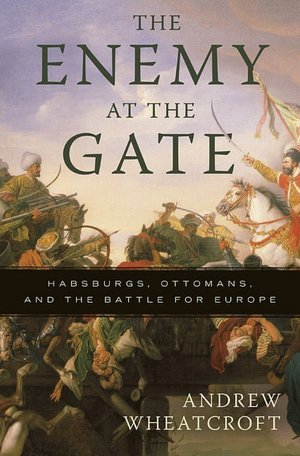
I posted a couple of times (first, second) about The Enemy at the Gate: Habsburgs, Ottomans, and the Battle for Europe byAndrew Wheatcroft, but I now think I had missed the point of the book entirely. I now think the book was about the way in which myths evolve in history and the ugly results of some myths.

From today's point of view, the long war between the Habsburg Empire and the Ottoman Empire was much like many other wars in the 17th and 18th century. They were primarily initiated as wars of conquest by expansionist empires, although many factors influenced their courses. The Emperor and the Sultan/Caliph needed war to sustain their monarchies, and their aristocracies supported war for their own reasons.

Among the myths was the belief on both sides that the two empires were so fundamentally different that they could never be at peace. That belief is belied by the fact that the two empires became allied against a common Russian enemy in later times and both allied with Germany in World War I. For many decades the borders between the Habsburgs and Ottomans were peaceful.

Mehmed IV
The Ottomans used the myth that Islam was incompatible with Christianity in justification of the wars, even though Christians and Jews were regarded as "people of the Book" and had been accepted parts of Muslem nations in many places including the Ottoman Empire itself. Indeed, Islam appears to be a religion of peace.

Leopold I
Christian Europeans used the myth that Christianity was incompatible with Islam in justification of the wars even though Christianity is a religion of peace. Subsequent history has proven that Christian and Muslim nations can live at peace with one another, even with common borders, and that they often have done so.

The Ottomans sought allies in Christian Europe against the Habsburgs and the Habsburgs explored the possibilities of allies among Muslim states to the east of the Ottomans. How then could either have believed that the division between Christian and Muslims was fundamental and unbridgeable.

There were also parallel myths on both sides that monarchs had the right to rule because they were directly descended from individuals who had seized power at some distant time in the past. Both held myths that they were the legitimate inheritors of the Roman emperors. Both had myths that there was a religious basis for their rule: Leopold I anointed by the Catholic Church, and Mehmed IV as Caliph. Both had myths that the legitimate ruler had the right to take the nation as a whole to war.

Wheatcroft points out that while the leaders of the two sides were obviously muddling through, making many mistakes in the process, they were later incorporated into later historical myths as heroes; there must have been real heroes in the fierce fighting that took place, but they would have been common people, lost to historical memory. The myths of a heroic past and heroic ancestors helped shore up imperial power as the empires gradually lost their vitality.

Wheatcroft notes that these ugly and dangerous myths are rising again in some groups in Austria and Germany as Turkish immigrants have arrived and begun to seek work.

Perhaps we should be warned that such myths do not influence our conduct in Iraq, Afghanistan, nor with any of the Muslim nations.

Thursday, February 09, 2012

Shareholder Value Maximization Is Not Good for Society


Between 1960 and 1980, CEO compensation per dollar of net income earned for the 365 biggest publicly traded American companies fell by 33 percent. CEOs earned more for their shareholders for steadily less and less relative compensation. By contrast, in the decade from 1980 to 1990 , CEO compensation per dollar of net earnings produced doubled. From 1990 to 2000 it quadrupled. 
Meanwhile real performance was declining. From 1933 to 1976, real compound annual return on the S&P 500 was 7.5 percent. Since 1976, Martin writes, the total real return on the S&P 500 was 6.5 percent (compound annual).  The situation is even starker if we look at the rate of return on assets, or the rate of return on invested capital, which according to a comprehensive study by Deloitte’s Center For The Edge are today only one quarter of what they were in 1965.
Steve Denning
Denning in an article in Forbes magazine in 2011 argued that "shareholder value management" movement of the last quarter of the 20th century was very destructive. The movement was based on a theory that corporate managers should manage a firm to maximize the value of the shares of its shareholders. The theory went further to suggest that compensation of the top managers should be based on the increase in shareholder value.

There are some tricky details to work out in applying such a theory. Which stakeholder values are to be maximized? Do you maximize the value for the long term holder at the time she sells her stocks in the company, or do you maximize the value for the short term holder who plans to sell after the next annual report of the company is released? And what financial incentives to the managers will encourage the greatest increase in stockholder value?

I have argued in the past that the investors who hold stock in a company are not the only investors in the company. The employees have made investments in their own persons, and the human capital thus created is placed in the service of the company for which they work. There are investments in the markets, both input and output, on which a company depends. Government invests in public infrastructure on which the corporation also depends. As an example, consider a corporate management which channels all the growth of the firm into shareholder value, without channeling a fair amount into staff value. Will that firm not lose staff and find it difficult to recruit new staff members of comparable capabilities? Will that firm not thereby lose human capital?

We should also consider externalities. Somali pirates might be seen as prototypical maximizers of shareholder value, since the ransom that they obtain from hijacking a cargo boat is hugely more than the capitalization of their enterprise. Obviously, there is no value created by the pirate, only a cost to the global society. Consequently. societies seek to eliminate the pirates.

Many financial firms at the turn of the 21st century were taking large risks in order to maximize shareholder value (and to maximize managerial remuneration). The cumulative impact of all that risk taking was a financial crisis that resulted in high levels of unemployment, the Great Recession, and considerable pain to the public, not to mention the required bailout and stimulus packages from the government and loss of tax revenue to the government.

Certainly one of the roles of government policy is to find ways to internalize such externalities, or to regulate them away. One way to get management to consider the investments of the corporate workforce in determining its policies is to put worker representatives on corporate boards. So too, limiting the amount of risk that financial firms can take must be considered. At the very least, governments should prevent the Bernie Maddoffs of the world from emulating the Somali pirates.

Mitt Romney Dropping Out Four Years Ago


Mitt Romney is seeking to provide a narrative that will bring him to the Presidency, and that narrative is different than the one he presented four years ago.

Although he has spent four or five years running for President spending tens of millions of dollars of his own money in the process, although he successfully ran for and was Governor of Massachusetts, and although he is the son of a man who also ran for President himself, he would have you believe he is not a politician primarily interested in political office.

Although he was a vulture capitalist, making a huge fortune as CEO of Bain Capital which was in business to make money for its owners and investors, he would have you believe that as a businessman he was good at creating jobs and that those skills would transfer to creating jobs from the White House.

Although he has never run an organization of nearly the size and complexity of the U.S. Government, and although he does not have experience getting legislation through the U.S. Congress, he would have you believe that he has the experience required to be a good President.

Like the other candidates, he is also busy seeking to disrupt the narratives that the other candidates (at least those who are polling well) are seeking to use to support their own chances for election.

It is of course half a century since television changed the nature of political campaigning. When the nation was founded, those who wished to be president felt that it would have been inappropriate to be seen as seeking the position, waiting to be drafted for the job by colleagues who knew them well. Lincoln was elected president on the basis of long, closely argued speeches in which he laid out clear arguments supporting his beliefs about the needs of the country and the way to satisfy those needs: transcripts of his speeches were published widely in the newspapers of the day. Since the 1960s, campaigning is done in sound bites for an audience with the attention span of a gnat, focusing on the emotions of the viewer rather than the viewer's intellect. I would prefer Lincoln's approach, or lacking that Washington's which at least had the virtue of creating less sound pollution.

Wednesday, February 08, 2012

A Janissary's Essay: How I Spent the Summer of 1683


Janissaries
The Janissaries were an elite infantry of the Ottoman Empire. In the siege of Vienna in 1683 the most elite of them formed the shock troops for the assault. If one of them wrote of the summer campaign, it might read like this:
First we marched 1000 miles. 
When we got to the outskirts of Vienna, we made camp. The camp was very large because in addition to our elite Janissary corps there were very many cavalry and other troops gathered from all over the empire. 
As the summer wore on, the camp became dirtier and more polluted. There was more and more sickness. I got sick too. Food got scarcer as the supply lines were overstretched and as the ability of our foraging parties to find food from the surrounding area got worse, the foraging was exhausted. 
Most of our time was spent digging trenches approaching the city fortifications. If it rained, the trenches got muddy. From time to time the defenders of the city would sally forth and try to kill us. 
Some of us spent time tunneling in order to place mines under the fortifications. The defenders dug counter tunnels and when they were successful, blew up our miners.  Sometimes the mines we placed blew up early, killing the sappers. 
Artillery kept firing the entire time we were in camp. They shot at us, and we shot at them, each seeking to destroy the enemy fortifications, destroy the enemy's morale, and kill the enemy. 
When we succeeded in breaching the defenses, I was sometimes part of a "forlorn hope" attacking through the breach seeking to force and entry into the city. It is called a forlorn hope for a reason. As we advanced, we were subject to artillery fire from the surrounding fortifications. When we got to the breech, we were met by the elite force set to defend the breach. They would shoot at us with bow and arrows and with musket fire. They would use grenades, and if we got that far, there would be a hand to hand battle with saber and lance. We never succeeded in forcing an entry. 
Finally a relief force from Christian Europe appeared from an unexpected part of our flank, and our troops were defeated after a pitched battle. We ran. 
The following cavalry killed a lot of us, but eventually reduced their pressure as we retreated. 
Then we walked 1000 miles back to Istanbul. Unfortunately there was not very much food and we were often hungry. Lots of us were sick. People kept attacking and picking off stragglers. 
I was lucky to live to tell the tale.
The Enemy at the Gate: Habsburgs, Ottomans, and the Battle for Europe by Andrew Wheatcroft tells the story of the siege, but doesn't really deal with the experience from the point of view of the foot soldiers who did most of the suffering and dying. Still, it was possible to read through the story of the "movers and shakers" responsible for these events to see the absolute horror of the experience of the foot soldier. Of course, the Janissary who succeeded in some act of great and conspicuous gallantry and survived received great honor, advancement and even wealth, but many died, often of illness but also in battle, and even for those who survived the experience must have been truly awful.

The Media Helped Fuel the Age of Reform


In Chapter V of The Age of Reform by Richard Hofstadter, he traces part of the stimulus of the reform movement to the rapid increase in the number of newspapers in the United States from 1870 to 1899 and the explosive growth of newspaper readers. Associated with the growth were a dramatic increase in exposes and human interest stories, content which drew readers' interests. The changes also brought new sources of income to the papers and diminished their dependence on the political sources that they had previously needed.

By the turn of the 20th century, the public was learning about corruption not only as a theoretical problem, but as something that identified people were doing in their cities and states, corruption that was affecting them personally. The human interest stories were (metaphorically) rubbing the public's nose in the destitution of a large part of the population of the United States and the pain that that poverty caused.

In some sense, I am reminded of the current situation in which the Tea Party movement and the Occupy movement are fueled by an awareness of the inequities of the current situation. On the other hand, it is not clear what the media have done or are doing to create this awareness. Of course, many people are out of work and many have lost their homes -- so many that most of us know someone affected.

The media have done a good job of explaining that the very rich have not suffered while so many of the rest of us are in economic trouble. They have shown the gridlock in Washington as politicians jockey for position in the upcoming elections rather than working hard to find solutions to the nation's problems. They perhaps could do a lot more to show the degree to which politicians have sold out to corporations and the rich, and to return to the muckraking that brought down the Nixon administration and so embarrassed the Reagan administration.

Thinking about the past


111.3 million people
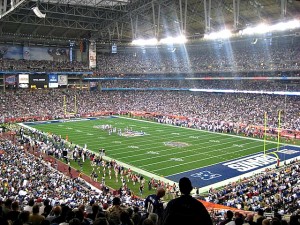
 watched the Super Bowl on television on Sunday. Football is a game with clear rules. The broadcast was very well done, with numerous cameras and a production staff selecting clear and appropriate views; knowledgeable announcers explained what was happening. There were flashbacks to review plays, and where calls on the field were in doubt, the officials on the field could review the play with a variety of recorded views of the incident. One would think that what happened was very clear.


It occurs to me that even the players on the field understood what was happening in very different ways. The quarterback sees a different game than does the center or the wide receiver on his own team. The players on the Giants saw the game from a different perspective than those on the Patriots.

Probably the head coaches of the teams brought more expertise to the game than anyone else. Each knew the playbook of his own team and the strategy for the game. Each knew his own players abilities and limitations well, and each had studied the other team carefully. Each brought a lifetime of study of the sport to his understanding of this game. And I am sure each has carefully reviewed the game in retrospect to draw lessons from it.

Chess masters can remember games very clearly. They do so not only because they care a lot and have good memories, but because they can recall that the opening was according to a specific gambit already memorized, met by another gambit also already memorized. The master knows a priori what moves are likely and which can be ignored during the game. Thus the new information needed to describe a specific new game is much less for a master than for a neophyte. So too, the head coaches of the Giants and Patriots must have been able understand and recall the game more fully and more clearly than the members of the television audience because they brought expert knowledge to the task.

Memory is selective. One is bombarded constantly by a huge amount of information, and the brain selects from that flood only a small part to recall. Indeed, recollection is a reconstruction of what was perceived and is not always accurate. Moreover, we forget. There is no such thing as a photographic memory. Things we once knew disappear from memory, are no longer available for recall.

Moreover memory is fallible in the sense that myth and false memories intrude upon reality. So too, the communication of memory is at best a noisy process, with the recipient gaining only a partial version of that which is intended, filtered by his own processes, and by the sender's. In the case of the Super Bowl, there are more than 100 million different recollections of the game, all incomplete and all at variance one from another in some way.

The way that those recollections are shared depends on who is sharing and for what purpose. The post game comments of the participants will be brief and polite. The newspaper sports reporters columns on Monday would have been designed to interest the newspaper readers, while the television reporters would have voice over to complement the visual coverage of high points of the game. The post game discussions of the coaches would probably be detailed and knowledgeable. The discussions among fans around the office water fountain would have been superficial and casual.

Thus the way in which a very simple event in the recent past is construed is very complex. Getting at the "truth" of what happened would be very hard. Indeed, even if one could find a recording of the video of the game, that video would present only one version of the game, and in all probability a version less nuanced and less well understood than that of many of the participants in the game.

Consider then the memory of the causes and effects of the 1929 stock market crash or World War II. Here we have events that were much more complex, much wider in scale, much less orderly, involving hundreds of millions of people as direct participants. It is no wonder that there are different narratives as to what happened and why.

I would suggest that there are not only the memories of individuals of these events, but the socially constructed memories of groups of people. Moreover, not only do the "real" memories of participants in the events influence the socially constructed views of the past, so do do the socially constructed narratives influence the memories of individuals. Indeed, as the generations that actually experienced these events pass away, the entire memory of members of the culture comes to be that socially constructed narrative.

I would further suggest that there are many social groupings that construct their own narratives of historical events. Perhaps the most common in the American news is the school board that determines which books will be used in the schools, and thus the version of events that will be taught to children. Unconsciously holding their own socially constructed views of past events, the newsworthy boards often deliberately select curricula to views in the children which the members of the board find desirable as moral, patriotic, etc.

Obviously different nations construct different views of the same events, Not only are views of the winners and losers of a war different, but the views of the English, French, Russians and Americans of World War II are different within the allies. Moreover, subgroups within nations may construe the war differently, as skin heads construe the war differently than do mainstream members, or holocaust deniers from the majority who recognize the holocaust.

Military historians, economists, sociologists, and other professional groups also create social constructions of these events, as Kuhn described in his book, The Structure of Scientific Revolutions.


Moreover, the memberships of these groups overlap, and so too do the versions of the narrative influence one another. We hope that the versions of the groups with the strongest institutions for validating information inform those of other groups -- that the accepted versions of the community of historians informs the school boards and citizens. It must be the case, however, that the narratives of historians are influenced by the views of their nation and the schools which they attended.

If the construction of the narrative of a single event is so complex, so open to the intrusion of myth and false memories as well as the deletion of aspects of what happened, how then are we to regard the narrative of the history of a people, of a nation state?

Tuesday, February 07, 2012

Some Good News for a change


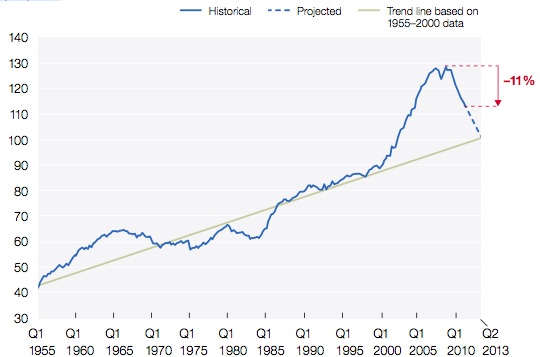
US household debt as % of gross disposable income
quarterly, seasonally adjusted
Source
 Household debt is coming down. The exceptional rise at the end of the Bush administration, which no doubt contributed to the financial crisis, is being corrected toward the long term trend.

The bad news is the long term trend of increasing household debt as a percentage of gross disposable income. That trend should be halted and reversed for a while to bring debt to income more into balance with historical levels and with levels which can be maintained. It is time to get away from the Macmansions, luxury vehicles, and conspicuous consumption that market the 90s and 2000s.

An interesting graph


My friend Julianne sent me a link to this graph:

Source: The Economist
Think about this. In the 2012 years of the current era, almost a quarter of all economic output occurred in the 21st century. As population growth has exploded, more than five percent of all person years of life were also in this century. I wonder how much of our schooling is devoted to helping kids to understand what has happened in the 20th and 21st centuries. How much is devoted to helping them understand what has happened to the majority of the people who live in Asia and Africa?

Boycott Against High Prices for Scientific Publications


A boycott against Elsevier is gaining momentum. An online pledge was created by Timothy Gowers, a mathematician at the University of Cambridge. The online site allows scientists to pledge not to publish, referee or do editorial work for any Elsevier title. It now has over 4,500 signers (as of Feb 7, 2012). Impressive work considering that the pledge has been up for a couple of weeks.

According to The Economist, Elsevier in 2010 "made a £724m ($1.16 billion) profit on revenues of £2 billion, a margin of 36%." The company charges lots for its individual journals, encourages libraries to buy bundles of journals to afford its key journals with the bundle discounts, and lobbies against government programs that would make journals more accessible to scientists.

I would support both requirements on grants that research results be made available free on the Internet as well as open access policies for scientists in developing nations.

Donor Funding for Health


Source: The Economist

The graph shows a significant increase in donor assistance for health services, an increase that has occurred from all sources. The Great Recession has reduced the rate of increase of funding, but funding continues to increase. A lot of the credit goes to President George W. Bush and to the Gates Foundation.

Two Maps from The Economist Magazine


Source: The Economist

Facebook has swept most of the world, with the major exceptions of China, Russia and Africa. Africa has the problem that there are relatively few personal computers, but Twitter is reaching the huge number of cell phones on the "Dark Continent".

Some 20 years ago I arranged for a briefing for USAID on networking. At the time we glimpsed however dimly the potential of the Internet. Indeed, some hoped for something like the World Wide Web. I at least didn't have a clue about the future of social networking.

Monday, February 06, 2012

Review: The Enemy at the Gate


Andrew Wheatcroft, in his book, The Enemy at the Gate: Habsburgs, Ottomans, and the Battle for Europe, tells a story of centuries of relations between a Western, Christian empire and an Oriental, Muslim empire. The book focuses on warfare.


The central piece is the siege of Vienna. The Ottoman troops marched a thousand miles from their base to lay siege to the capital of the Habsburg empire and due to the logistical superiority of the Ottomans almost succeeded in capturing Vienna. The core of the Ottoman force were well trained professional infantry and cavalry, supported by Tartar irregular cavalry, artillery and a strong engineering core (which could build roads, bridge rivers, and destroy fortifications), supported by irregular troops raised from a feudal system.


Encouraged by the success of a last minute rescue of the city by a multinational force, the Habsburgs were fortunate in the arrival of a highly capable military leader, and reformed their logistics and training to develop an effective military that eventually conquered Budapest and regained Hungary for the empire.

It is not clear that there was any greater animosity between the Habsburg Catholic empire and the Ottoman Muslim empire than there was between Catholic and Protestant nations in Europe, and indeed the military progress gained by the Habsburgs in fighting wars against Protestants was an important factor in the improvement of the Habsburg chances against the Ottomans, who were similarly at war with other Muslim forces on their eastern borders.

On the other hand, the book suggests that religious zeal was a powerful motivational factor for the troops themselves; it also suggests that they demanded money to fight. The hand to hand fighting that did occur from time to time during pitched battles and sieges must have been truly terrible.

Wheatcroft concludes his history with a consideration of how the imperial powers replaced historical events with myths that supported the status of their imperial monarchs. This seems to me typical of monarchs over time. (I note how the Windsors are seeking to create their own myth, and if Wheatcroft is right that such behavior marks the decline of empire, that bodes badly for the Queen's descendants.) Indeed, the presidential candidates in our current election are trying hard to create myths of their suitability for the head of the U.S. government. (Recall that 150 conservative evangelical leaders endorsed Rick Santorum before the South Carolina primary, suggesting that religious aspects to the myth of presidential qualification remain even in our republic which in theory separates church and state.)

Wheatcroft notes how the old myths seem to have a new life in Western Europe which is seeing immigration of Muslims and a bid for membership in the European Union. From this side of the pond, fear and prejudice against Muslim immigrants to Europe seems a lot like the fear and prejudice against Hispanic immigrants to the United States today, or against the European and Asian immigrants to the United States in the 19th century. The mythical reasons for the antagonism may be different, but both probably are based on human nature.

I suggest that one of the functions of history is to challenge the destructive aspects of our myths with fact and new interpretations. Perhaps the public intellectual should help to build new myths which help us to behave more humanely. Washington may not have confessed to his father that he cut down the cherry tree, but generations of kids were encouraged toward honesty by the myth!

Foldit: Biology for gamers - by Nature Video


Guessing how a protein will fold up based on its DNA sequence is often too difficult for even the most advanced computer programs. Now scientists have created Foldit, an online game that lets human players do the work. Read the original research at: http://go.nature.com/zsfaKP and read more about 'citizen science' in this Nature News feature: http://go.nature.com/sfBFPM


This is a great example of crowdsourcing applied to a real and important scientific problem. It seems to complement the use of heuristic programs for protein folding with the insight of humans. If I understand this correctly, scientists by analyzing the successful behavior of people who find new and better folds for the proteins, are then able to add new heuristic tools to their software. I suspect that getting a lot of people to work on the folding problems, including people who have not been exposed to the existing heuristic tools in the field, is a good way to find new approaches.

A Day Made of Glass 2: Unpacked. The Story Behind Corning's Vision.


I am old enough to remember that we could not have envisioned the modern world's technology when I was young. This view of the technology of the future seems impossible, but is it?

The implications for educational opportunities are huge! Who will be smart enough to take advantage of them? Not the United States unless we work harder to get the brightest, most innovative people into education!

Sunday, February 05, 2012

A Thought on Watching American History TV


History is a booming, buzzing confusion. Our species seeks to find patterns in confusion, to impute meaning to those patterns that we perceive. One way to do so is to tell stories from history, and those stories include mythical beliefs and errors as well as narratives linking selected facts.

Historians, in my opinion, can be primarily seen as unearthing unrecognized (or inadequately recognized) facts about history, organizing selected facts of history, documenting their work, and critiquing the work of other historians. In doing so, they invariably also select topics and facts from the confusion of history, depending on the information that has been archived or is otherwise available. I suppose too that what historians do depends on the tools available to them. History was made different by the printing press, the library, and improvements in transportation, not to mention computers and the Internet.

Of course, the meanings we draw from our perception of history can by useful or harmful. The Nazi's came to believe that Germans were a "master race" leading their policy makers to start a disastrous war, while economists drew lessons from the Great Depression which (although they failed to prevent) helped American policy makers ameliorate the Great Recession.

I suspect that historians inevitably are drawn to areas of history which may lead to changes in the perception of history which make that perception more useful and less harmful. They are frustrated when their evidence and its interpretation fail to influence the public discourse on current affairs in ways that they feel would be appropriate. It is even more frustrating when our political leaders, who are supposed to be informed by history, express serious misunderstanding of historical fact and draw undue inferences from misunderstood history.

For most of us, there is more a problem of ignorance of history than of misuse of the lessons of history. I quote from a blog post:
A few days back a friend of mine forwarded this civics/history test that was conducted by the Intercollegiate Studies Institute. The original test was administered to 2,508 Americans in 2008. The results were dismal. The overall average test score was a pathetic 49% correct. College Educators (professors & teachers and NOT just those with college degrees) only scored marginally better at 55%; still a failing grade. Indeed, over 70% of participants failed. Only 3.4% of participants received an “A” or “B” grade on the exam. I guess our education system really does need to grade on a curve to keep too many folks from appearing to be ignorant.
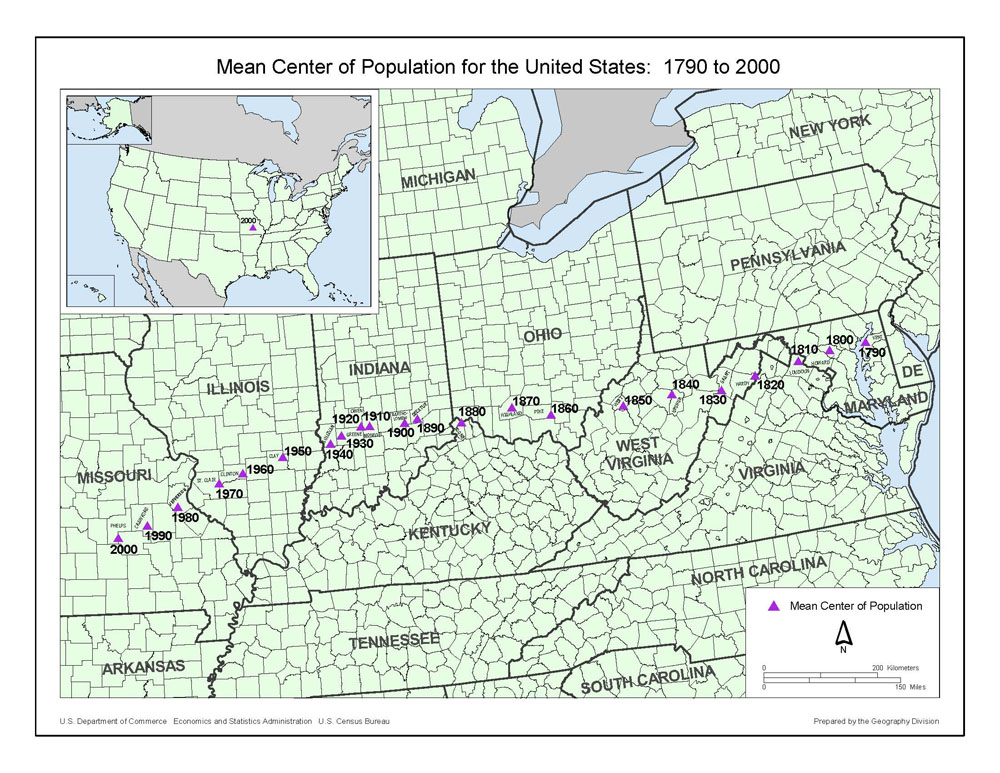
Source of map
 It seems to me that a great deal of American history writing deals with the Revolution and the Civil War, a time when the Euro-American population was concentrated in the eastern part of what is not the United States. Not only is the past a different country, but the East is a different country from the west. At least that is true if you believe that cultures respond not only to their material endowments but also to the physical environments in which they live. Indeed, if our local culture is contingent on the history of our locality, and if that history is as local as it seems, we should be studying more modern, western history than we do.

I grew up an Irish Catholic in the Los Angeles suburbs while my wife grew up an Irish Catholic in the Boston suburbs. Her experience and that of her family was as much different than mine, as is the history of Boston from that of Los Angeles.

Saturday, February 04, 2012

The Food Price Index Chart Looks Like a Mountain Range


Source: Swinnen and Squicciarini, "Mixed Messages on Prices and Food Security", Science


Food price index. Weighted average of meat, dairy, cereals, oil and fat, and sugar price indices. The average during 2002–04 is set to 100. Data from UN FAO, deflated using the World Bank Manufactures Unit Value Index.

The effect of global food prices on poverty is complex. On the other hand, the huge increase in food prices in in 2007 and again in 2010-11 has had to have had serious negative effects. Indeed, I wonder how much it influenced common people in north Africa during the Arab Spring to express their concern that things were getting worse instead of better, and governments had to change!

Forget the Digital Divide and think about the Computational Divide


Scientists hope the next generation of supercomputers will carry out a million trillion operations per second. But first they must change the way the machines are built and run.
I quote from Science magazine:

Using real climate data, scientists at Lawrence Berkeley National Laboratory (LBNL) in California recently ran a simulation on one of the world's most powerful supercomputers that replicated the number of tropical storms and hurricanes that had occurred over the past 30 years. Its accuracy was a landmark for computer modeling of global climate. But Michael Wehner and his LBNL colleagues have their eyes on a much bigger prize: understanding whether an increase in cloud cover from rising temperatures would retard climate change by reflecting more light back into space, or accelerate it by trapping additional heat close to Earth. 
To succeed, Wehner must be able to model individual cloud systems on a global scale. To do that, he will need supercomputers more powerful than any yet designed. These so-called exascale computers would be capable of carrying out 1018 floating point operations per second, or an exaflop. That's nearly 100 times more powerful than today's biggest supercomputer, Japan's “K Computer,” which achieves 11.3 petaflops (1015 flops) (see graph), and 1000 times faster than the Hopper supercomputer used by Wehner and his colleagues. The United States now appears poised to reach for the exascale, as do China, Japan, Russia, India, and the European Union.
Available Supercomputing Power 


A teraflop is one trillion floating point operations per second.

The term "digital divide" was common a few years ago, typically focusing on the difference in penetration of personal computers or telephones in poor communities versus affluent communities. Sometimes the term was used to describe the situation within a country, sometimes between countries.

I come from a very long computer background, and I have suggested that there remains a very large divide between poor countries and affluent countries in terms of high end computer power. How many developing countries (other than China) would you have to put together to get 10,000 teraflops of supercomputer power?

North American manufacturing volume remains fairly steady.


Real Manufacturing Production by Region: 2005-2011
Source: Euromonitor International

The media discussion of the growth of the Chinese economy and the increasing importance of China and India in the world economy seems to have led a lot of people to be concerned about a decline in U.S. manufacturing. The graph suggests that U.S. manufacturing GDP is not declining all that much. Of course, increasingly automated manufacturing means we produce the same value of goods with fewer workers in the factories. It remains to be seen if China can satisfy the demands of its population and adjust to its aging population while continuing to maintain it competitive advantages in manufacturing goods for global markets.

More on the responsibility for our unemployment


The other day I posted on the responsibility for unemployment in the United States. Check out this figure from Rachel Maddow's blog "showing the change in private-sector job totals by month since the start of the Great Recession, with red columns showing the months when George W. Bush was president and the blue columns showing the Obama era":


And this "chart showing private-sector job totals by year over the last two decades":


Note that these graphs show private sector jobs, leaving out public sector jobs. The public sector employment in the state and local governments have been contracting as those governments are hit by the drop in property taxes, the Great Recession drop in payroll taxes, and their frequent requirements to balance budgets.

It is also the case that employment is a following indicator, and economic production (GDP) will normally increase a few months before the improvement shows up in employment.

In fairness, the Bush administration put a stimulus package in place (with the approval of the Congress) in 2008.

Still, the graphs seem pretty clearly to show that the Obama administration has had a very good record of improving the employment situation, as did the Clinton Democratic administration in the 1990s.

While I agree that the government needs to cut deficit spending over the next decade, and we need to bring down the ratio of government debt to GDP, I do fear that the Republican Congress has moved too reduce the federal stimulus inputs too soon. 

The Need for more and better public health services


I notice that The End of Illness byDavid B. Agus is getting a lot of attention. Agus' basic point is that appropriate preventive measures can be very effective at preventing illness. They can also be much more cost effective than our available curative services.

The great progress in the 20th century in improving health in developed countries was in the improvement of hygiene and sanitation, improvement of nutrition, and public health measures to prevent the transmission of communicable disease. Antibiotics helped!

Agus is an oncologist, and his clinical experience is with one of the diseases of aging, a disease which is increasingly seen as chronic, requiring long term treatment. He is of course much better qualified than I am to describe the research that has shown that simple means -- an aspirin a day, exercise, a proper diet, not smoking -- can reduce the incidence, or at least delay the onset of many diseases common in our aging population.

I would note that when I started working in the area of public health in developing countries in 1970, the emphasis was on interventions to increase child survival, including immunizations, nutrition education, hygiene, and education of mothers to assure that they sought simple medical care for sick kids in a timely fashion. The world has changed, and poor countries too are seeing a lot more older people and a lot more cancer, heart disease, and dementia.

In the old days, as well as today, people seem willing to spend a lot more for curative services when they are sick than for preventive services when they are not sick. Perhaps it is time to think with our rational mind about health service priorities rather than with our primitive brain. We should focus more on preventive services!

Friday, February 03, 2012

Attributing Unemployment to AdministrationsSo


Labor Force Statistics from the Current Population Survey
Source: Bureau of Labor Statistics
Recall that Obama was elected in 2008 and took office in January 2009. The U.S. government budget process takes time, and the Bush administration would have been working on the budget all through 2008, so the budget submitted early in 2009 would have been primarily developed by the Bush administration. It would have been the 2010 budget submission, to have gone into effect on September 1, 2010 that had the major imprint of the Obama administration.


Look at the graph! Unemployment took off early in 2008, leveled off late in 2009, and started down late in 2010.


Anyone reading this blog might know that I believe that our unemployment is due to the burst of the housing bubble, the related crisis in the finance industry, and the Great Recession that they triggered. I also think those problems were most seriously caused by the failure of the government to regulate sub-prime mortgages and financial derivatives -- problems that I attribute primarily to Republican administrations and Republican lawmakers.


But the data simply do not support a charge that Obama is responsible for unemployment not being solved by now. Indeed, the graph shows that unemployment is coming down faster now than it did during the best years of the Bush administration.

Malaria May Be Worst Than We Realized


According to The Lancet:
According to Christopher Murray and colleagues at the Institute for Health Metrics and Evaluation (IHME) at the University of Washington in Seattle, there were 1.24 million deaths (95% uncertainty interval 0.93—1.69 million) from malaria worldwide in 2010—around twice the figure of 655 000 estimated by WHO for the same year.
Source: The New York Times
The good news is that there is progress in reducing the mortality from malaria. The better news is that there seems to be progress being made on the development of malaria vaccines.

I think the key to dealing with malaria is still a comprehensive program, locally planned to maximize relevance, that uses all the available means to reduce the numbers of mosquitoes in the environment, to keep them away from people, and to treat people. Engineering solutions, neighborhood cleanup, bed nets, spraying indoors and outdoors, case finding and treatment, hopefully to be complemented soon by immunization all have a place. Soon there may even be new means to reduce mosquito populations or to make the mosquitoes that are present in the environment incapable of transmitting the disease agent.

The H5N1 Strain of Flu is Still a Threat


Science magazine reports that the H5N1 flu continues to be found "in poultry in much of south and southeast Asia—and the human death toll is mounting. Since the beginning of the year, the virus has killed individuals in Cambodia, China, Indonesia, and Vietnam, and there has been a case of human infection in Egypt, according to the World Health Organization (WHO) and local press accounts. WHO reports that most of the recent human cases can be traced to contact with sick birds. Since 2003, avian influenza has proved fatal in 343 of the 582 humans infected with H5N1."

People tend to mistakenly judge the threat of a disease from their personal experience with the disease. The annual flu hits most of us from time to time, and causes a self-limiting illness which is inconvenient but not very dangerous. With the increasing use of the flu vaccine, most of use modern enough to use the Internet find, the annual flu epidemic seems even less of a threat. In fact, the annual flu epidemic kills tens of thousands of people each year and is a serious (sometimes lethal) illness for the vulnerable -- small children, old people and people with compromised immune response systems.

Every once and a while a new strain of flu emerges in the human population that is highly contagious, one for which there is no human herd immunity. The H5N1 threatens to be such a strain. If the H5N1 continues circulating in birds, changing over time in the bird population, and if it continues to jump from bird to man from time to time, it may occur that a variety highly contagious in humans will make that jump. "Earlier this year, two labs created a strain of H5N1 that might do just that, spreading from ferret to ferret with ease." That high death rate from H5N1 suggests that a devastating pandemic may then occur. 

New biodiversity map of the Andes shows species in dire need of protection


The Cloud-forest Screech-owl
is endemic to the Andes
I quote from BioMed Central:
The Andes-Amazon basin of Peru and Bolivia is one of the most biologically rich and rapidly changing areas of the world. A new study published in BioMed Central’s open access journal BMC Ecology has used information collected over the last 100 years by explorers and from satellite images which reveals detailed patterns of species and ecosystems that occur only in this region. Worryingly, the study also finds that many of these unique species and ecosystems are lacking vital national level protection. 
The Andes provide many, many habitats from their eastern foothills in the Amazon forest to their western foothills rising from the Pacific Coast, to the very high mountains and mountain plateaus. Due to the rugged topography, many specific ecosystems are small and isolated from similar zones. I recall driving through areas of the Andes and passing through a small desert area with an arid microclimate and quickly finding another area with lush vegetation symbolic of generous precipitation. The result is exceptional biodiversity, but a biodiversity with many species present only in small numbers, and thus likely to become extinct with any disruption of their environment.

The reported study is of course very useful in identifying more fully the problem and could provide a useful tool in its solution.

However, I am very sorry to say that I fear a lot of this biodiversity will be lost. Poor people will seek to utilize the land to support themselves and their families and in so doing will destroy ecosystems vital to the survival of their species, and governments facing all sorts of other problems will be unwilling or unable to stop the process.

Thursday, February 02, 2012

Summer internships for foreign students could be a very good idea


Signaling a sharp change of course in the country’s largest international cultural exchange program, the State Department has banned a leading sponsor company from bringing foreign students to the United States for summer jobs and will add new restrictions to protect students from labor abuse, officials said Wednesday.
 The New York Times reports today that a program to bring foreign students to the United States for summer jobs. The strike by some 400 working in one factory last year triggered the change, and surely this country should not put foreign students in dangerous work environments, nor exploit them in other ways.

The NYT article stresses that the students should not be placed in jobs that unemployed Americans are seeking. Indeed, I wonder if it is to our advantage to place them in jobs that could be filled by American students on summer vacations.

On the other hand, the program could have some very valuable aspects. Placing foreign students from developing nations in the right jobs in the United States for a summer could serve as a great foreign assistance program. The program could make friends for American who could be expected to play important roles in the country in the future. Adding part time course work in special sessions could enrich the education of the students.

I would hate to throw out the baby with the bath water!

A thought on the 1683 Siege of Vienna


As I have been reading The Enemy at the Gate: Habsburgs, Ottomans, and the Battle for Europe byAndrew Wheatcroft I have been thinking about the difference between secular states and states with a state religion. The Habsburg empire was Catholic, at a time of conflict between Catholics and Protestants, and the the Ottoman empire was Muslim.

Actually, according to Wheatcroft, the Pope was financing the Christian coalition fighting to defend Vienna, The Ottoman Sultan also held the religious title of Caliph, the designated follower of Mohammed.

It rather seems that both the Holy Roman Emperor Leopold and the Ottoman Sultan Mehmed IV were motivated by the desire to expand their terrestrial empires and to gain enduring fame in the process. Indeed, the senior officers on both sides may have been motivated by professional reasons. However, religion was used to motivate the people actually doing the face to face fighting.
“Sir, my concern is not whether God is on our side; my greatest concern is to be on God's side, for God is always right”
Abraham Lincoln during the Civil War
While some have charged that the NATO forces have been engaged in a new crusade in Iraq and Afghanistan, our secular governments and our peoples who belong to many religions are not engaged in "holy wars", and perhaps those wars are more easily limited and less viscous as a result. 

Wednesday, February 01, 2012

Thinking about Romney's dog, Seamus


This is an Irish Setter, presumably like Seamus

Here is the story from a 1983 trip made by the Mitt and Ann Romney and their five kids:

Seamus’ story first came to light in a 2007 Boston Globe profile of Mr. Romney that told the story of the voyage to his father’s cottage in the gated Beach O’ Pines community on Ontario’s Lake Huron:
“The white Chevy station wagon with the wood paneling was overstuffed with suitcases, supplies, and sons when Mitt Romney climbed behind the wheel to begin the annual 12-hour family trek from Boston to Ontario. … Before beginning the drive, Mitt Romney put Seamus, the family’s hulking Irish setter, in a dog carrier and attached it to the station wagon’s roof rack. He’d built a windshield for the carrier, to make the ride more comfortable for the dog.
According to the Globe, Mr. Romney told his family he would “be making predetermined stops for gas, and that was it,” but one of his sons, Tagg, eventually noticed something was amiss:
As the oldest son, Tagg Romney commandeered the way-back of the wagon, keeping his eyes fixed out the rear window, where he glimpsed the first sign of trouble. ”Dad!” he yelled. ”Gross!” A brown liquid was dripping down the back window, payback from an Irish setter who’d been riding on the roof in the wind for hours.
Mr. Romney responded to his dog’s defecation by “coolly” stopping at a gas station where he “borrowed a hose, washed down Seamus and the car, then hopped back onto the highway” with Seamus strapped back on the roof.
I also quote:
According to a trusted Politicker tipster, two of Mr. Romney’s sons had an off-record conversation with reporters where they revealed the dog ran away when they reached their destination on that infamous journey in 1983.
The Romney children were born between 1970 and 1981. Tagg, Matt and Josh would have been about 13, 12 and 8 at the time of the trip. Mitt Romney had graduated from law school and business school in 1975, and been recruited by a consulting firm, before switching to Bain and Company in 1977; he should have had a good income by 1983.

Not surprisingly lots of us are sickened by the idea of putting a dog through 12 hours of that kind of traumatic experience. I too had a young son in 1983 as well as a pet, and my wife and I had no difficulty finding ways to care for our pet if we went on vacation. Surely the Romney's could have boarded the dog in a kennel or had a neighbor take care of the animal at home.

I am wondering about Mrs. Romney and the three older children who apparently sat quiet in that car for hours while the dog was on the roof. What kind of father and what kind of mother would set a precedent like that for their kids? What did the kids do about the safety of their dog? About the dog's welfare?

This is not the first family I want for my country!