Wednesday, June 06, 2012

Why increasing concentration of wealth is bad for the economy


There is a good article by Joseph E. Stiglitz, Nobel laureate in Economics, in The Atlantic. He shows why the increasing concentration of income and wealth the hands of the top one percent of American families is a problem.

  • It causes "the consumption problem". Poor people spend a greater portion of their income on goods and services; they need to in order to get by. As a result, the greater the portion of the income that is captured by the rich, the smaller the portion that is recycled into the economy. We saw this process in the 1920s and the 2000s before the crashes. (The economy can appear to grow if there is a bubble that makes ordinary people feel richer than they are and thus go into debt to consume. When such a bubble bursts, there are major economic problems. It makes me wonder if there may be some hidden causality in which a consumption problem leads to bubbles, bursts, and crises.)
  • It causes "the rent seeking problem". The rich get richer by drawing income from rents. The rents include not only rent from real property, but also from the power to appropriate funds from others. Basically rent seeking transfers money from those with less power to those with more power, and in our society, from the poor to the rich. This is what Stiglitz describes as the problem with rent seeking: "Rent seeking makes nothing grow. Efforts are directed toward getting a larger share of the pie rather than increasing the size of the pie. But it’s worse than that: rent seeking distorts resource allocations and makes the economy weaker. It is a centripetal force: the rewards of rent seeking become so outsize that more and more energy is directed toward it, at the expense of everything else."
  • It causes "the fairness problem". The demand for fairness is a deep psychological phenomenon characterizing American society as a whole. If people don't feel that they have a fair break in the economy, they tend to work less. Indeed, widespread feeling that the country is not treating people fairly can lead to political unrest. It is clear now that many Americans feel that the economy is increasingly unfair due to the increasingly visible wealth and conspicuous consumption of the one percent, and the long term economic stagnation of the poor and the middle class.
I would suggest that the economy functions better when buyers trust sellers and sellers trust buyers. Indeed, there are a lot of people that trust is a key part of "social capital" -- that a society invests in building trust in its economic and political institutions, and they work better as a result of that investment, yielding long term benefits to the public. If people feel that the society is not fair and that the rich are using their power to take money from the rest of us, how much trust are they likely to feel in "the system"?

Monday, May 28, 2012

Thoughts on reading "To End All Wars"


Europe 1914
Source of map
1914 was the beginning of the end of empires. It was the culmination of development of a thick network of treaties intended to preserve the peace. It was a moment in which great mistakes were made. It was the start of a global war.

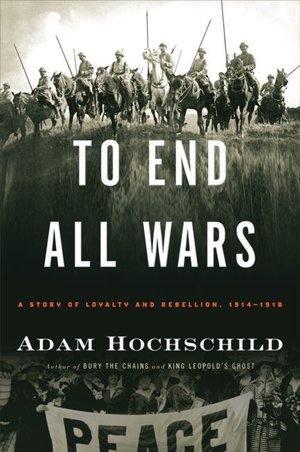
I just read To End All Wars: A Story of Loyalty and Rebellion, 1914-1918 by Adam Hochschild, a book about World War I, told primarily focusing on the English experience of the war.

The proximate cause of the war was the assassination of Archduke Franz Ferdinand of Austria by a young Serbian fanatic from a tiny group of Bosnia Serbs. That led to the invasion of Serbia by the Austro-Hungarian empire, the declaration of war on that empire by Russia, leading to entry into the war by Germany, France, Belgium, the United Kingdom, the Ottoman Empire, Italy, Bulgaria and ultimately the United States. The metropolitan powers brought in troops from their scattered empires.

It seems obvious to me that the root cause of the war was a series of mistakes. It seems obvious that the violent act of a single young man should not have triggered a war that resulted in the deaths of some 20 million people; some better solution to the problem that the assassination posed should and could have been found.

How did the war work out for the key people who influenced the decision to go to war? Within a few years:
  • The Austro-Hungarian empire was dissolved, its territory distributed among several states, the monarchy overthrown and the monarch in exile.
  • The Russian empire had lost much of its most valuable territory, the monarchy was replaced by a Communist Government and the royal family assassinated.
  • Germany had lost some of its European territory and its overseas colonies, its monarchy was deposed and in exile.
  • The Ottoman empire was broken up, the Sultanate lost control of even Turkey, and the Sultan was in exile.
Would the monarchs of these countries have acquiesced to the wars, much less promoted them, had they recognized that the war would lead to the end of their dynasties?

Even winners such as the British empire, the French empire and Italy had lost huge numbers of killed and wounded and had incurred huge debts as well as destruction of property. Their leaders were so embittered by the war that they imposed a peace that historians agree would lead to a global depression and inexorably to the next and vastly more destructive war. Indeed, it seems likely that the Spanish flu pandemic would have been less lethal but for the war.

It seems inescapable that if those influential people had been able to foresee accurately the consequences of the war that they favored and allowed to occur, they would have moved heaven and earth to prevent it.
They must not have understood the nature of the war that their nations were unleashing, the abilities of their nations to prevail or even to survive the war, nor the implications for the form of government that they led.

While apparently some military men understood the nature of the war that was being unleashed, their understanding was not effectively communicated to the monarchs, nor to the aristocracy in general, nor most definitely to the public. I find myself wondering if this too (like the Civil War that I have previously discussed) was not a war most directly caused by a failure of knowledge -- that the people who should have known did not understand the war that they were unleashing on the world.

On the other hand, looking back the 20th century seems to have seen a massive cultural transition. It saw the emergence of the middle class and the distribution of power, including some power to the working class. It saw a massive improvement of the economic status of people, and a massive improvement in educational attainment. It seems inevitable that there would have been decolonization, the end of monarchies and empires, and a shift of power from the landed aristocracy to other socio-economic classes, a shift in institutions from monarch and oligarchy to democracy. Could these transitions ever have been made without war and devastation? 

The book focuses on a few English people, following them from the Boar War through World War I and indeed providing a epilogue summarizing their post-war fates. Those followed include generals and politicians that played central roles in the British war effort, but also key members of the anti-war movement. Interestingly, some families had both field marshals and public pacifists, some broke apart due to disagreements over the war. 

Thank goodness for Wikipedia. I found a frequent need to go to other sources to figure out what the broad trends were in the war. On the other hand, Hochschild's narration rooted in the lives of real people makes the story more accessible and interesting, and he does write a good sentence, a solid paragraph, and a sound chapter. I found I read the book quickly and with interest.

Friday, May 25, 2012

Thoughts on scientific merit review.


A international meeting of senior officials from agencies funding science recently produced a statement of principles for scientific merit review.

I spent a couple of decades managing or advising on scientific merit review, and the basic fact is that the proponents of new projects, whose professional careers depend on getting funded and who seek to identify a great project that they would be happy to implement, spend a lot longer and more serious time preparing a proposal than do the peers in preparing their review.

A second basic fact is that key decisions are made at the margin. It is likely that the best proposal in a competition will be funded and the worst will not be funded, if the process works at all. But say an agency is going to fund 15 percent of proposals. How accurate is the distinction between the 15th and the 16th best proposals? My guess is that few review processes are good enough to be accurate at this level. Indeed, the proposal is at best a poor surrogate for the quality that the project would have if funded.

Consider further, an agency that is planning to fund projects in say four different areas will have to judge not only whether the 15th proposal in one group is really better than the 16th, but also whether it would not be better to shift funds among groups to fund 14 proposals in one or two groups in order to fund more an another group. There will not be true peers of different scientific areas.

A principle that might have been added was to entrust the management of the scientific merit review to well trained professionals -- those who have experience in finding peer experts, in balancing peer review panels, in dealing with borderline conflict of interest issues, in determining whether reviews are adequate for decision making or whether the decision should be postponed to obtain still more information, and in managing the process of obtaining written reviews and conducting in person peer review meetings.

Another important principle of peer review is that there must be an appeal process. Reviewers make mistakes. Review managers make mistakes. Project proponents must have an opportunity to respond to comments on their proposals and appeal unjust decisions.

The effort to develop internationally approved standards for peer review is important, and the report is useful. But there are lots of errors that can be made in implementing a good set of principles.

Thursday, May 24, 2012

We need to act now to eradicate polio


Polio in the World Now

Following its sixth meeting, held from 15-17 May 2012, the Independent Monitoring Board of the Polio Eradication Initiative wrote to the Director-General of the World Health Organization in advance of the World Health Assembly's deliberations regarding polio eradication. This letter highlights the crisis facing the Global Polio Eradication Initiative, reaffirms the importance of the World Health Assembly's discussions, and underlines the severity of the Initiative's funding shortfall. 


Polio was once a disease feared worldwide, striking suddenly and paralysing mainly children for life. The Global Polio Eradication Initiative, the largest private-public partnership for health, has reduced polio by 99%. Polio now survives only among the world's poorest and most marginalized communities, where it stalks the most vulnerable children. The Initiative's goal is to reach every last child with polio vaccine and ensure a polio-free world for future generations.


Food and health crisis in Sahel


The Sahel suffers from chronic malnutrition. With the poor harvest and increasing food insecurity, there are serious concerns of a full-scale disaster this year. There are an estimated 20 million people living in vulnerable areas and 15.6 million of these people are affected by food insecurity. Malnutrition makes people, particularly children under five, weaker and more prone to disease. This crisis is further exacerbated because it is occurring in countries with very fragile health systems and services.

The World Health Organization (WHO) is calling for health interventions to urgently be scaled up, mainly in areas not yet covered, to complement on-going nutrition and food interventions.

WHERE GOOD IDEAS COME FROM by Steven Johnson


One of our most innovative, popular thinkers takes on one of our key questions: Where do good ideas come from? With Where Good Ideas Come From, Steven Johnson pairs the insight of his bestselling Everything Bad Is Good for You and the dazzling erudition of The Ghost Map and The Invention of Airhttp://www.barnesandnoble.com/w/invention-of-air-steven-johnson/1015194568?ean=9781594484018 to address an urgent and universal question: What sparks the flash of brilliance? How does groundbreaking innovation happen? Johnson provides an encouraging story of how we generate the ideas that push our careers, our lives, our society, and our culture forward.

Johnson suggests that the question we need to ask is, What kind of environment fosters the development of good ideas? 

Kitaro - Matsuri (喜多郎-祭り)


Wednesday, May 23, 2012

Some of Africa is Growing Fast


Source
Look at:

  • Angola with a reasonably high per capita GDP and a very high growth rate.
  • Morocco, Congo and Egypt with some $3000 per capita GDP and 5 percent growth rates.
  • Nigeria, Sudan, and Ghana with quite a large population among them and growth rates in the 6 to 7 percent range.
We worry about the countries grouped in the low income low growth corner of the graph, but that is not the whole story of Africa.

This seems impossible to believe.


I don't normally comment on news stories on which I have no special knowledge but the story seems so appalling that I am going to share it here. I gathered this from an article from The New York Times:

  • One in three American Indian women have been raped or have experienced an attempted rape, according to the Justice Department. 
  • Their rate of sexual assault is more than twice the national average.
  • Alaska Natives are 15 percent of that state’s population, but constitute 61 percent of its victims of sexual assault.
  • According a survey by the Alaska Federation of Natives, the rate of sexual violence in rural villages like Emmonak is as much as 12 times the national rate.
  • Nationwide, an arrest is made in just 13 percent of the sexual assaults reported by American Indian women, according to the Justice Department, compared with 35 percent for black women and 32 percent for whites.
  • The Justice Department did not prosecute 65 percent of the rape cases on Indian reservations in 2011.
  • The White House proposed reauthorization of the landmark Violence Against Women Act of 1994 .
  • A Senate version, passed with broad bipartisan support, would grant new powers to tribal courts to prosecute non-Indians suspected of sexually assaulting their Indian spouses or domestic partners. 
  • House Republicans, and some Senate Republicans, oppose the provision as a dangerous expansion of the tribal courts’ authority.
  • It was excluded from the version that the House passed last Wednesday.
Who are the House Republicans protecting, the whites who are sexually assaulting their Indian partners or the assaulted women?

Tuesday, May 22, 2012

When you spend more, shouldn't you get better quality?


Source: The Economist
We did get Obama in 2008, as compared with Bush in 2000 and 2004, so  maybe quality did go up. But the Congress in 2010 was not notably better than the lower cost Congresses elected in non-Presidential elections.

Child Mortality: A Huge Development Success

Monday, May 21, 2012

"Legacy" versus "impact" of the Civil War


"Legacy" as it is most frequently used refers to that left at the death of a person in his will. Indeed, I think we frequently speak each bequest in the will as the legacy from the deceased to that inheritor. In that sense, we can talk about the legacy of the Civil War:

  • to African Americans, freed from slavery and set on a long perilous path towards equality;
  • to the West, which was developed much more rapidly due to the policies instituted by the Republicans that survived the Civil War;
  • to the United States, thereafter a singular noun rather than a plural as it had been, strong enough to spread from sea to sea, and thus to have an increasing role in global affairs;
  • to the world, leaving a model democracy still standing to serve as a model for other states.
"Impact" seems to me to imply counter factual analysis. Thus we might wonder:
  • What would have happened had the Union allowed secession? The difference between that scenario and the actual history might be seen as the impact of the decision to go to war.
  • What would have happened had Virginia and North Carolina not joined the Confederacy, but rather remained with the Union, Might the states of the deep south have come back into the Union? Would there have been a shorter, less destructive war and a peace more conciliatory to the south? Again, the difference between the best counter factual scenario and the actual history might be seen as the impact of the decisions by North Carolina and Virginia.
  • What would have happened had South Carolina not fired on Sumter?
  • What would have happened had the deep south not seceded from the Union before Lincoln took office?
In thinking about history, I suggest "legacy" and "impact" have quite different implications. I would suggest an even better question might be, what was different after the event as compared with before the event, and what followed from that difference.

Are the Republicans leading a dumbing down of Congress?


There is a new study of the complexity of speech used by members of Congress. The study looks at addresses to the Congress. Longer sentences and increases in multisyllabic word counts suggest that the language is more complex. Complexity is scaled according to the grade level of students that on the average would be required to fully understand the text.

The following chart shows that the complexity of language has decreased markedly in recent years:

Note that there was a precipitous drop in complexity of remarks by Republicans after the 2006 congressional election (that is in the Congressional sessions in 2007 and 2008). There was a further major decrease after the 2008 presidential election (i.e. in 2009 and 2010). The 2010 congressional election saw the Republican level of discourse remain about the same, but the Democrats's remarks after that election also decreased in complexity. The Democrats made more complex remarks than the Republicans on average 2006, reversing a long standing pattern.

Note how the complexity depends on the ideology of the speaker, based on data since 1996.

As one would expect, Republicans (red) are more conservative than Democrats (blue). There does not seem to be any marked relationship among liberals between ideology and complexity of speech (Although the handful of Democrats with the least complex speech have the most liberal voting records in Congress). The more conservative the Republican, the simpler the language he/she used. Indeed, the simplest language used in the Congress was by the speakers with the very most conservative voting records.

The trend here is not in stump speeches, where it might be explained as an attempt to communicate better with the general public, who have an average of an 8th grade level of comprehension; this is is speeches on the floor of the Congress, presumably to fellow members. I would suggest that the complexity of speech in this context represents more the level of complexity of the speaker's thinking than of his/her conscious effort to communicate with his/her peers.

I find this data quite disturbing. There are serious political issues before the Congress and I would expect them to demand debate with sophisticated thinking expressed in elegant language. That clearly is not what is happening. Note too, would would hope that the people with the most extreme views in the Congress, who would have the greatest ideological distance to move their colleagues, would use the most complex and elegant language, where quite the opposite seems to emerge from the data.

Sunday, May 20, 2012

Colin Powell on information for decision making

Everyone knows the old adage: bad news, unlike wine, doesn’t get better with time.
I am going to quote at length from Colin Powell's article The Daily Beast:
You can’t make good decisions unless you have good information and can separate facts from opinion and speculation. Facts are verified information, which is then presented as objective reality. The rub here is the verified. How do you verify verified? Facts are slippery, and so is verification. Today’s verification may not be tomorrow’s. It turns out that facts may not really be facts; they can change as the verification changes; they may only tell part of the story, not the whole story; or they may be so qualified by verifiers that they’re empty of information. 
My warning radar always goes on alert when qualifiers are attached to facts. Qualifiers like: My best judgment ... I think ... As best I can tell ... Usually reliable sources say ... For the most part ... We’ve been told ... and the like. I don’t dismiss facts so qualified, but I’m cautious about taking them to the bank. 
Over time I developed for my intelligence staffs a set of four rules to ensure that we saw the process from the same perspective and to take off their shoulders some of the burden of accountability:
  • Tell me what you know.
  • Tell me what you don’t know.
  • Then tell me what you think.
  • Always distinguish which is which.
What you know means you are reasonably sure that your facts are corroborated. At best, you know where they came from, and you can confirm them with multiple sources. At times you will not have this level of assurance, but you’re still pretty sure that your analysis is correct. It’s OK to go with that if it’s all you have, but in every case, tell me why you are sure and your level of assurance.


Tell me what you think. Though verified facts are the golden nuggets of decision making, unverified information, hunches, and even wild beliefs may sometimes prove to be just as important.
image source

Most of us don't have the Department of Defense with its huge staff and complex bureaucracy providing us with information (much less the entire foreign policy establishment of the U.S. government) but the approach seems to be worthwhile.

If you are making an important decision, it might be worthwhile making some lists:

  • What you think you know, how you know it and how confident of each assertion;
  • What you think you want to know that you don't know, how much you want to know it, and how hard it is likely to be to find out;
  • What you think, why you think it, how likely each thought might be, and whether to change something from this category to one of the categories above.
  • Being sure to distinguish which is which.
Of course, putting the information on which a decision is to be based is only the first step. It is then necessary to make the decision, and to implement the decision.

(Tim Sloan / AFP-Getty Images)

Colin Powell, who was Secretary of State when we invaded Iraq, points out that the Bush administration did not take to heart his comment, "if you break it, you own it." He points out that the plans were not implemented that would have kept the Iraq military sufficiently in place to maintain domestic order, and would also have kept most of the lower level Baath Party members in place in their jobs in schools, hospitals and government agencies. Had those plans been implemented, we might have avoided years of involvement in insurrection in Iraq.


Do you believe the Republicans want to cut Federal spending?


From an article in The New York Times: Republican Congressman Harold Rogers, now the chairman of the House Appropriations Committee, added an earmark to a 2009 spending bill requiring the DOD to buy steel "'leakproof' drip pans in the last three years to catch transmission fluid on Black Hawk helicopters." The drip pans would keep oil from splashing passengers in the helicopters, apparently more securely than the original plastic drip pans.
Mr. Rogers said in a statement. “These dripping pans help accomplish both of these goals.” (Emphasis added to illustrate the Congressman's expertise on "dripping pans".
"As of October, the Army had bought 374 drip pans from Phoenix Products at an average cost of $17,000." "(A) similar pan from another company costs a small fraction of the price: about $2,500."
The company’s owners are political contributors to the congressman, who has been called the “Prince of Pork” by The Lexington Herald-Leader for his history of delivering federal contracts to donors and others back home..........The company has paid at least $600,000 since 2005 to a Washington lobbying firm, Martin Fisher Thompson & Associates, to represent its interests on federal contracting issues, records show. 
Mr. Rogers, in turn, has been a strong supporter of the manufacturer. He has directed more than $17 million in work orders for Phoenix Products since 2000.

Saturday, May 19, 2012

A thought on thinking


Sometimes counter factual reasoning from history can be interesting and possibly even interesting. For example, I find it interesting to think about what changes could have resulted in leaders in South Carolina or Virginia to have chosen to support the Union rather than secede.

On the other hand, it seems to me that the farther from historical fact that one strays, the more dangerous counter factual reasoning becomes. To continue the Civil War example, the Confederacy was crushed; it lost the war in a big way. Trying to figure out how it might have succeeded in secession seems to me to be intellectually perilous. 

World Record Paper Airplane Distance


Do we as a people believe origin myths or scientific evidence?


I quote from the AAAS ScienceInsider:
A federal court judge in San Francisco granted a temporary restraining order Friday to prevent the University of California, San Diego (UCSD), from handing over 9000-year-old human bones to Native Americans, in the latest twist in an unusual custody battle for two human skeletons that are among the earliest found in the Americas. Three University of California professors filed a lawsuit last week to prevent UCSD from transferring the bones, which have been described as better preserved than those of the Kennewick Man, another ancient skeleton that has been the center of debate and lawsuits..... 
After years of legal dispute, UCSD officials were preparing to give the bones to representatives of the Kumeyaay, against the advice of a UCSD scientific advisory committee and a separate system-wide UC research committee that reviewed the claims......The scientific advisory committee found that the Kumeyaay language moved into the region 2000 years ago, and that the Kumeyaay traditionally cremated their dead rather than burying them. Moreover, Schoeninger's lab's analysis of stable isotopes from samples of the skeletons indicated that they ate a diet of marine mammals and offshore fish—a coastal adaptation that contrasts with the desert origins of the Kumeyaay. Anthropologists who study the bones and DNA of Paleoindians also agree that the remains are probably too old to have any affiliation, cultural or otherwise, with tribes living in southern California today.
So who should we believe? The Kumeyaay who believe that these bones to be their ancestors, based on their tribal knowledge system or the scientists who believe that the bones are not based on the scientific knowledge system? I have no doubt. Unfortunately, our Congress which includes many people who distrust science (especially in areas such as human evolution) seems not to have agreed when they wrote and passed  Native American Graves Protection and Repatriation Act.

Image source

Without comment


Fungi infect billions of people every year, yet their contribution to the global burden of disease is largely unrecognized. Most are “relatively” minor infections, but millions contract diseases that kill at least as many people as tuberculosis or malaria. Although true mortality rates are unknown because of a lack of good epidemiological data, the incidence of invasive fungal infections is rising as a result of modern medical interventions and immunosuppressive diseases, such as AIDS. Despite the high mortality rates of invasive fungal infections, they remain understudied and underdiagnosed as compared with other infectious diseases. What can be done to remedy this unfortunate situation?
Editorial, Science magazine

Are our genes in the saddle riding mankind?


I have been posting examples of us thinking with our brains, not our minds. Jonathan Haidt, in his book The Righteous Mind: Why Good People Are Divided by Politics and Religion, suggests that our brain's morality is rooted in our genes.
The arresting image Haidt gives for our sense of morality is that it's like a rational rider on top of an intuitive elephant. The rider can sometimes nudge the elephant one way or the other, but no one should be in any doubt that the elephant is making the important moves. In fact, the main job of the rider is to come up with post-hoc justifications for where the elephant winds up. We rationalise what our gut tells us. This is true no matter how intelligent we are........ 
Haidt wants us to understand that our moral instincts are inherently judgmental: being moral makes us moralistic. Much of the book is devoted to the experimental evidence that shows how often moral judgment is a case of us v them rather than right v wrong. In Haidt's terms, morality "binds and blinds". It binds us to the group and blinds us to the point of view of outsiders.
David Runciman in a review of Haidt's book in The Guardian
I have been reading To End All Wars: A Story of Loyalty and Rebellion, 1914-1918 by Adam Hochschild. I am reminded how stupid the first World War was. Many of the most influential people in the build up to the war came off very badly as a result of the war. The Russian, German, Austro-Hungarian and Ottoman empires all fell, and an entire generation of the young men who formed the officer class in most of Europe -- the sons of the aristocracy and affluent -- was decimated. The political and military leadership of Europe largely failed to understand the deadly nature of the war that they were letting loose and the destruction that the war would wreak on their country and its social order.

It seems to me that we better learn how to more accurately predict the results of the actions we contemplate as nations, and that we more effectively tame our instincts with that knowledge or we will harness our increasing power to our still greater destruction.