Monday, December 03, 2012

Where to be born in 2013.


Source: The Economist
"Small economies dominate the top ten. Half of these are European, but only one, the Netherlands, is from the euro zone. The Nordic countries shine, whereas the crisis-ridden south of Europe (Greece, Portugal and Spain) lags behind despite the advantage of a favourable climate. The largest European economies (Germany, France and Britain) do not do particularly well.

"America, where babies will inherit the large debts of the boomer generation, languishes back in 16th place. Despite their economic dynamism, none of the BRIC countries (Brazil, Russia, India and China) scores impressively. Among the 80 countries covered, Nigeria comes last: it is the worst place for a baby to enter the world in 2013."

The lottery of life methodology.

Some Interesting Graphics on the Economy

Sunday, December 02, 2012

An impact of Civil War Industrial Scale Up of Production.


I watched a talk by Merritt Roe Smith on the technology of the Civil War. The United States had pioneered the American System of Manufacturing and was selling guns and clocks into England before the Civil War. The war, however, saw a huge expansion of manufacturing in the Union. While the increase included uniforms, boots, canned foods, wagons and other materials, in his talk Smith concentrated on rifles and pistols, and the machine tools used in their manufacture.

The American System of Manufacturing, featuring machine production of devices with interchangeable parts was pioneered at the Springfield and Harper's Ferry Armories. Army officers led the development, and introduced processes to assure that parts were indeed interchangeable. Military armories and private firms were able to utilize the approach, but were able to scale up production by more than an order of magnitude during the war.

Most of the long gun production during the war was muskets. This decision was described by Smith as based on the need for rugged reliability of weapons to be used on the battlefield.

I find myself wondering how important the military model was it in terms of regimenting the production process under the direction of top leaders with production managers, like military non-commissioned officers, to assure that things were lined up on the factory floor and that tolerances were met in the production,?

Smith points out that not only did armories scale up production, as did firms like Colt and Remington , but some textile firms switched over to weapons production. (In World War II, many firms switched from production for civilian markets to military production.)

Why were textile manufacturers successful in switching over to military manufacture? Some possibilities:
  • They were already engaged in mechanical production following the industrial revolution model, and could shift to produce weapons using some of the same skills and equipment.
  • Work force discipline from textile production could be utilized for weapons manufacture.
  • People in the textile industry had an entrepreneurial spirit of management and willing to compete for new markets.
  • The mill owners and managers were experienced in the purchase and installation of production machinery.
  • The mills already had water power that could be utilized for new production,
Smith suggested that the lessons learned in the Civil War in expanding manufacturing volume were important in the post war period and were in fact an early example of mass production of the kind we tend to associate with Henry Ford. Indeed, the experience may have led rather directly to mass production.

Saturday, December 01, 2012

A thought about health care costs


Source: Health, United States, 2011
I am more concerned with the total cost of health care in the United States than with the cost of Medicare. Note that the costs of private health insurance and out-of-pocket payments is greater than the cost of Medicare and Medicaid combined.

One way to reduce health care costs is to increase emphasis on prevention of health problems than on their treatment. Not only do people prefer not to get sick rather than to get sick and then treated (and sometimes to get well again), but prevention is cost-effective.

Another way to reduce those costs is to be sure that the services we are paying for are actually beneficial. I belong to a Health Maintenance Organization that spends considerable effort in assuring that the tests, treatments, and drugs prescribed by its doctors are actually useful to the patients for whom they are prescribed.

Costs can also be controlled by seeing that services are provided efficiently. Have a lower paid person provide a service rather than a physician if the service is of equal or better quality. (It turns out that nurses sometimes are better at a service than a doctor.) Use appropriate automation. Keep the growth of personnel costs from growing faster than those in other sectors.

Countries with national health services have been more effective in such measures than has the United States. Indeed, the Veterans Administration has been more effective in such measures than has the private sector health care industry.

Without Comment


Source: The Economist

Friday, November 30, 2012

Thinking About Intangible Cultural Heritage


The Law
The Market
Government
Religion
Agriculture
Human Rights
Written Language
The School

These seem to me to be masterpieces of  intangible cultural heritage. They have been developed over thousands of years. These cultural ideas have diffused broadly through the human population of seven billion people. Building upon these memes, the lives of humans have been hugely improved; indeed without the development of institutions embodying these ideas the human population, if our species still existed at all, would be tiny fraction of its current size.

UNESCO has a list of the Masterpieces of Intangible Cultural Heritage. It includes:

The Vimbuza Healing Dance
The Cultural Space of the Bedu in Petra and Wadi Rum
The Mask Dance of the Drums from Drametse
Duduk Music
The Cultural Space of Palenque de San Basilio

You haven't heard of these? Who has?

In fairness, UNESCO changed the name to The Representative List of the Intangible Cultural Heritage of Humanity. The original purpose of the Convention under which this list has been generated was to draw attention of unusual and valued aspects of local cultures and to encourage their safeguarding. I fear that the process of selecting practices to be "honored" by inclusion in the list has been politicized, and that now the list is a vanity list for governments and a draw for tourism.

Intangible Cultural Heritage in the United States

Alexis de Tocqueville when he visited the United States in 1831 was struck by the extensive use of voluntary associations in this country. Filling the space between family and community on the small scale and government on the large, the voluntary associations of civil society carried out many of the functions of society. In this the United States was quite different than Europe.

In his book Bowling Alone: The Collapse and Revival of American Community Robert Putnam makes the case that Americans have largely lost the bowling clubs and other voluntary associations. However,     people now often feel isolated and alienated; he cites frequent surveys that indicate Americans wish to live in a more civil, a more trustworthy, and a more collectively caring community. Essentially Americans seem to regret the deterioration of an important part of their intangible cultural heritage.

A modern town meeting in Amherst
One might note however that there remains a strong tradition of faith based charitable work, work that is now often done in collaboration with government. So too, there is an American tradition of corporate charity. Wealthy Americans are more likely to use a large portion of their wealth to endow charitable foundations than those in other nations. These too are part of the intangible cultural heritage of the United States.

Unfortunately, so too is slavery, "slavery by another name", Jim Crow laws, and prejudice against Blacks. Among other unfortunate cultural heritages is a history of mistreatment of American Indians, including centuries of explicit effort by the European Americans to erase Indian cultural heritage. Chinese were excluded from immigrating and Japanese Americans were put into camps in World War II. There is a heritage of discrimination against immigrants -- Germans in colonial times, Irish, Italians, Catholics, and now Hispanics.

The United States has many current advantages. It has a heritage of rule of law, democratic participation in government. Many Americans go to good schools, and the system of higher education is good by world standards. On the other hand, America spends more on health care than any other nation, but has only middling health status indicators. Too many Americans are in jail, too many have futures limited by criminal records, the murder rate is far too high, organized crime is a problem, and there is excessive drug use.

Cultures change. There is a heritage in American culture of changes towards a more inclusive society. There is also a more recent heritage of change towards an economy in which there is less economic mobility. And all of this is interlocked in complex patterns of positive and negative reinforcement of cultural memes.

Think Abour Intangible Cultural Heritage in Haiti

The earthquake in 2010 in Haiti drew world attention to that country. It was formed by slaves successfully revolting against their masters and taking control of the governance of their country. The nation survived isolation from the community of nations -- it was only Lincoln in the time of the U.S. Civil War that brought the USA to diplomatic recognition of Haiti. It was invaded by the United States and under occupation from 1915 to 1934. Then came the Duvalier dictatorial kleptocracy. The people of Haiti live in great poverty, in a land that has been largely denuded of its forests, subject to earthquakes, tsunamis and hurricanes.

Source: http://www.post-gazette.com via Tande
Yet the Haitian people have again and again picked themselves up and gone on with life. One can only wonder what it is in their culture that not only allows them to survive, but also to hope for a better future. After the earthquake that killed hundreds of thousands, injured perhaps a million and left a huge number of homeless refugees, it was the Haitians themselves who risked their lives helping their neighbors out of the ruins of destroyed buildings. They sang together in the streets, old songs from deep in their culture. Some Haitians used painting as a means of therapy -- both children and established artists. One could wish that the cultural memes that provide such resilience in the face of tragedy could be bottled and shared with other cultures.

On the other hand, Haiti has a tradition of the Tonton Macoute -- organized thugs who terrorized the rest of the population. I recall on a visit to Haiti years ago having been told that land registration was a problem because Haitian farmers preferred to have land in separated small pieces; that way it was harder for others to steal their land from them. Papa Doc is supposed to have taken advantage of a reputation that he could use magical means to damage his opponents. There is much in Haitian culture that most Haitians would love to see gone. Indeed, they would love to learn from other cultures how those cultures have overcome similar problems.

A Modest Proposal for UNESCO

UNESCO's program in the social and human sciences, especially its Management of Social Transitions program, is the lead in the United Nations system working in the social sciences. Might it create an international consortium of social scientists studying the process of cultural transition, with an emphasis on understanding the memes to be preserved and shared and those to be eliminated and prevented from replication.

Might UNESCO in its program on intangible cultural heritage encourage dialog among cultures focused on "righteous" cultural change. Such a dialog might focus on the cultural memes that people would like to remove from their own cultures and the cultures of their neighbors, and the memes that they hope to retain.

One of my favorite books is Giving Up the Gun: Japan's Reversion to the Sword, 1543-1879 by Noel Perrin. It tells how the Japanese people, having mastered the technology of production and use of guns and having used guns successfully in battle, stored their guns away and reduced the level of guns in warfare and violence. Japan also made massive cultural changes after the country was defeated in World War II, changes that were designed to make the country less warlike.

On the other hand, the Japanese in the 20th century deliberately and successfully enhanced cultural traditions from Kabuki to Sumo wrestling. In part it did so to limit the cultural introductions from U.S. and European culture to only those that were congenial to the Japanese people, Japanese have used these experiences to lead in UNESCO's programs in intangible culture.

I am especially interested in what might be called "high level memes", cultural abilities to delete damaging memes from its own culture and to preserve and enhance others that it finds useful and desirable.

Might UNESCO also promote a dialog among cultures to encourage the sharing of these useful high level memes.

UNESCO's programs dealing with intangible cultural heritage, if moved into these directions, might become the most important in promoting the defenses of peace in the minds of men and in promoting development that reduces poverty and promotes human rights.

Microeconomics providing new insights in K4D


A new generation of economists working in the field of microeconomics is shedding new light on the role of information in decision making. I quote from The Economist:

(E)conomists’ ideas on how to design markets can seem puzzling at first. One example is the question of how much detail an online car auctioneer should reveal about the condition of the vehicles on offer. Common sense would suggest some information—a car’s age and mileage—is essential, but that total transparency about other things (precise details on subpar paintwork) might deter buyers, lowering the auctioneer’s commissions. Academic theory suggests otherwise: in some types of auction more information always raises revenues. 
To test the idea, Steve Tadelis of the University of California at Berkeley (now also working for eBay) and Florian Zettelmeyer of Northwestern University set up a trial, randomly splitting 8,000 cars into two groups. The first group were auctioned with standard information, including age and mileage. The second had a detailed report on the car’s paintwork. The results were striking: cars in the second group had better chances of a sale and sold for higher prices. This effect was most pronounced for cars in poorer condition: the probability of a sale rose by 23%, with prices up by 5%. The extra information meant that buyers were able to spot the type of car they wanted. Competition for cars rose, even the scruffier ones. 
But more information is not always better. Studies show that shoppers overwhelmed by choice may simply walk away. Mr Tadelis tested whether it would be better to tailor eBay’s auctions to users’ experience level. The options for new users were narrowed, by removing sellers who are more difficult to assess (for example those who had less-than-perfect feedback on things like shipping times). When new users had a simpler list of sellers to choose from, the number of successful auctions rose and buyers were more likely to use eBay again. Tailoring the market meant gains for buyers, sellers and eBay. 
The desire to use theory to challenge conventional thinking is one reason economists are valuable to firms, says Susan Athey, of Stanford University and Microsoft. When Ms Athey arrived at the software giant in 2007 it faced what was seen as an unavoidable trade-off: online advertising was good for revenues, but too much would deter users. If advertisers gained, users would lose. But economic theory challenges this, showing that if firms are dealing with two groups (advertisers and users, say), making one better off often benefits the other too. 
Ms Athey and Microsoft’s computer scientists put that theory to work. One idea was to toughen the algorithm that determines whether an ad is shown. This means ads are displayed fewer times, so advertisers lose out in the short-term. But in the longer run, other forces come into play. More relevant ads improve the user experience, so user numbers rise. And better-targeted ads mean more users click on the advert, even if it is shown less often. Empirical evidence showed that although advertisers would respond only after some time, the eventual gain was worth the wait. Microsoft made the change.
Lets think about this in terms of the theme of this blog, Knowledge for Development. Information is a source of knowledge, but it is not knowledge. Knowledge is information understood or information embodied in understanding. Thus providing more information to a neophyte who will be overwhelmed by the information may actually decrease the knowledge that he/she absorbs.

The quotation above also makes vivid the fact that different members of a society use different kinds of knowledge for different purposes, but with strong interconnections. In the examples above, economists have one kind of knowledge based on theory. They create a different kind of knowledge in people making decisions for enterprises such as EBay and Microsoft which is used in improving the profitability of the enterprises (and improving customer service). The enterprises in turn -- in these examples -- help consumers gain knowledge relevant to their purchasing decisions.

Unmanned vehicles are more and more useful


There is an interesting article in The Economist on airplanes being flown automatically or by pilots on the ground.
Pilotless aircraft are now widely used by the armed forces, but those drones fly only in restricted airspace and conflict zones. The Jetstream mission (being piloted in England from the ground)  is part of a project to develop the technologies and procedures that will allow large commercial aircraft to operate routinely and safely without pilots in the same skies as manned civilian flights......... 
Some small drones are already used in commercial applications, such as aerial photography, but in most countries they are confined to flying within sight of their ground pilot, much like radio-controlled model aircraft. Bigger aircraft would be capable of flying farther and doing a lot more things. 
Pilotless aircraft could carry out many jobs at a lower cost than manned aircraft and helicopters—tasks such as traffic monitoring, border patrols, police surveillance and checking power lines. They could also operate in conditions that are dangerous for pilots, including monitoring forest fires or nuclear-power accidents. And they could fly extended missions for search and rescue, environmental monitoring or even provide temporary airborne Wi-Fi and mobile-phone services. Some analysts think the global civilian market for unmanned aircraft and services could be worth more than $50 billion by 2020. 
Whatever happens, pilots will still have a role in aviation, although not necessarily in the cockpit. “As far as the eye can see there will always be a pilot in command of an aircraft,” says Lambert Dopping-Hepenstal, the director of ASTRAEA. But that pilot may be on the ground and he may be looking after more than one unmanned aircraft at the same time.
It occurs to me that the Office of Foreign Disaster Assistance should establish a drone capability now. It should be able to dispatch drones immediately to the site of a disaster to carry out surveillance to establish the magnitude of the disaster and to map out the available transportation network and operational facilities such as hospitals and buildings that can be used as refuges. It should also be able to quickly provide cell phone communication via drones. Perhaps drones should be available to deliver life saving supplies such as vaccines or medicines quickly when roads are blocked.

Sunday, November 25, 2012

Information on Pharmaceutical Performance


There is an article in the Washington Post about the problems inherent in the increasing portion of drug studies funded by and controlled by the companies that would profit from successful marketing of the drugs.

Randomized case-control studies represent a major advance in the development of credible information on the efficacy of treatments, and can provide important information on unplanned side effects. Their value can be further enhanced by independent peer review done by expert peers in the craft of such studies. Multiple review, adding that of drug licensing agencies to that of journal reviewers further strengthens credibility. Of course, the credibility of the study and of the review depends on the credibility of the people and institutions doing the work -- unless their adherence to high ethical standards can be assured, it is hard to credit their published results.

That such studies are relatively credible does not mean that they are perfect, nor that they can not be improved, nor that they should not be complemented by other information products. Even when well done, the results are statistical in nature and there always remains a (small) probability that the stem from chance alone and not the efficacy of the drug. Unintended and unexpected side effects would be better studied by adding big data reviews of medical records after tested and introduced into medical practice.

Peer review is done by people who have less at stake than the people and organizations that conduct the research. They can and often do real service by calling attention to problems in the research, in the interpretation of the results, or the inferences as to their meaning. But peer reviews are less than perfect.

The article draws concern to two main issues:

  • That companies rather than the government are increasingly funding the case-control studies, introducing a potential for bias, and
  • That for-profit companies are increasingly conducting the case-control studies rather than academic institutions, introducing another and different potential for bias.
A key concern is bias. Bias may be deliberate and even malevolent. It certainly seems possible that company officials would deliberately make decisions to advance the sales of the company's product at the expense of patients and the public. However, I would suggest that unconscious bias in likely to be a greater problem. Indeed the line might be hard to define. Might an investigator word a finding differently if his work was funded by a company as opposed to funded by the government?

The article does not point out, but it is true that case-control studies are now more often conducted in poor countries. Studies done abroad introduce still another potential for bias.

I see several issues:
  • How should clinical trials be funded?
  • What kind of organization should carry out the clinical trials?
  • What complementary studies should be standardized (in addition to preliminary lab and animal tests)?
  • How could the entire system be better regulated?
Financing: The financing of drug trials can be distributed to the people who buy drugs (embodied in their prices) or by the general public. In the first case, presumably the cost would be borne by those who actually benefit from the drug, in the second case, by those who might in the future benefit from the specific drugs and from those who benefit from drug testing in general. In the first case, financing of the tests might be directly by the drug companies, but it might also be paid by a tax on the industry in general. Alternatively, the financing could come from the public sector, either from general taxes, or from specific taxes on the industry, or some combination of the two. Of course, if the United States Government were to finance tests of drugs used in many countries, then Americans might be paying more than their fair share of the cost.

Implementation of trials: Key players are prescribing physicians. However, specialized organizations are needed to plan trials, manage them, analyze the data, and report findings. In some cases, government agencies could do so, but the more likely alternatives are academic institutions or commercial ones. I am discounting the alternative of the pharmaceutical company itself managing the field trials, because of the potential conflict of interest, the question of the credence in the results such companies would report, and the fact that that is a different skill than drug discovery and drug manufacture. Academic organizations are perhaps more credible, since the principle investigators have responsibilities for medical and academic respectability. On the other hand, academics are notoriously challenged by keeping deadlines. 

Private firms may be either for profit or non-profit. In either case, a company that had the primary function of carrying out pharmaceutical field studies would be likely to be good at estimating costs and carrying out the studies expeditiously. I personally would lean towards non-profits to take more of the financial incentives out of play.

Complementary Studies: Now that we have digital health records I would suggest that we need a national system for drug review that would analyze the results of use of approved drugs in clinical practice.

Regulation: Perhaps we need laws to regulate this entire process. Clearly regulation should assure no fraud in the studies, and I would say complete reporting and availability of data. Perhaps there should be some kind of licensing for organizations conducting field studies. 

Saturday, November 24, 2012

I once lived in Valparaiso, and remember seeing the Esmeralda


Carl Sagan - 'A Glorious Dawn' ft Stephen Hawking (Symphony of Science)


Another likely Digital Divide


There is an interesting article in The New York Times suggesting that the Internet of things may be the next disruptive technology.
(General Electric) plans to increase that work force of computer scientists and software developers to 400, and to invest $1 billion in the center by 2015. The buildup is part of G.E’s big bet on what it calls the “industrial Internet,” bringing digital intelligence to the physical world of industry as never before. 
The concept of Internet-connected machines that collect data and communicate, often called the “Internet of Things,” has been around for years. Information technology companies, too, are pursuing this emerging field. I.B.M. has its “Smarter Planet” projects, while Cisco champions the “Internet of Everything.” 
But G.E.’s effort, analysts say, shows that Internet-era technology is ready to sweep through the industrial economy much as the consumer Internet has transformed media, communications and advertising over the last decade.
The article goes on to give an example of a current application of the ideas behind the Internet of things:
Some industrial Internet projects are already under way. First Wind, an owner and operator of 16 wind farms in America, is a G.E. customer for wind turbines. It has been experimenting with upgrades that add more sensors, controls and optimization software. 
The new sensors measure temperature, wind speeds, location and pitch of the blades. They collect three to five times as much data as the sensors on turbines of a few years ago, said Paul Gaynor, chief executive of First Wind. The data is collected and analyzed by G.E. software, and the operation of each turbine can be tweaked for efficiency. For example, in very high winds, turbines across an entire farm are routinely shut down to prevent damage from rotating too fast. But more refined measurement of wind speeds might mean only a portion of the turbines need to be shut down. In wintry conditions, turbines can detect when they are icing up, and speed up or change pitch to knock off the ice. 
Upgrades on 123 turbines on two wind farms have so far delivered a 3 percent increase in energy output, about 120 megawatt hours per turbine a year. That translates to $1.2 million in additional revenue a year from those two farms.
Companies in poor countries are not likely to have the ability to invest a billion dollars to compete with General Electric. The technology will probably eventually benefit those countries. More efficient wing power generation, for example, will be used in poor countries and will benefit the producing enterprises and the consumers. However, the technology will be used to increase industrial productivity in the United States and other developed nations, making them more competitive. It is also likely to provide an edge to the rich countries in the production of all sorts of machinery and devices that link to the Internet of things.

You May Be One of the Things Connected to the Internet of Things
Source

Knowledge depreciates with time and change.


A thought about objectives in war.


Next Saturday is the first Saturday of December, the day on which 23,000 candles are lit at the Antietam Battlefield -- one for each casualty in the Civil War battle. I got to thinking about objectives in the context of that battle.

The Confederate army is generally seen as having the objective of marching through Maryland (where there were many Confederate sympathizers) and bringing the war to Pennsylvania and the north, with the further purpose of encouraging a conclusion of the war that would leave the Confederacy in place.

The Union army must have had an objective of thwarting the Confederate army in its advance. It was also under orders to prevent the Confederate army from switching its march and attacking and occupying Washington. The overall plan of the Union military apparently had been changed to one of attacking the Confederate armies, depleting there resources and ending their ability to prosecute the war.

In some sense, you have to assume that an objective of each army in a major battle is to defeat the other army.

Antietam followed the battle of South Mountain and the Confederates taking of Harpers Ferry and was followed by the battle of Shepherstown, all of which took place in the same campaign and within a few days. The Union army outnumbered the Confederates by about two to one.

The one day at Antietam saw the most casualties in any single day of American history. While there were fewer casualties among Confederate than Union troops, one-quarter of the Confederate army was lost. The Confederate advance was stopped and the Confederate army retreated back into Virginia.

In the aftermath of the battle, the Union claimed victory and the claims were effective in discouraging European powers from declaring support for the Confederacy. The claim of victory also allowed Lincoln to issue the Emancipation Proclamation, thereby making it possible to claim that the Union cause was both the preservation of the Union and democracy, and the abolition of slavery and the promotion of freedom.

I wonder, however, whether these reasons of state were the reasons that the participants fought. While the Confederate states clearly seceded from the Union to protect a way of life based on slavery, I suspect that Confederate soldiers and Union soldiers both fought as citizens of their countries -- sometimes as volunteers and sometimes as conscripts. In battle, don't soldiers really fight for their friends and fellow soldiers? Certainly, with the perspective of 150 years we can honor soldiers on both sides for their exceptional bravery and their service to what they perceived as their nations.

My point is that motivations are complex. From one point of view, the battle was a stand off, with neither army clearly defeating the other. From another point of view, the battle was a Union victory in that the Union army did stop the Confederate advance while protecting Washington, did force the Confederates into retreat the next day, and did advance major political purposes of the Union. But for 23,000 thousand dead, and for the families of the dead, those objectives may have mattered less than their personal tragedies.

Friday, November 23, 2012

Voters seem to want to protect education and science.


The Pew Research Center has recently released poll results relevant to the discussions of the fiscal cliff. I have copied three results specifically relevant to "knowledge for development". In each case, the red bar is for Romney voters and the blue for Obama voters.
The first thing to notice is that it is only a minority in each party that would favor reducing college student loan funding, or reducing scientific research, or reducing funding for education. Thus it seems clear that the voters don't want the politicians to make cuts in these areas that are vital for long term growth of the nation.

It is also clear that there is significantly less confidence in education and research and development among Romney voters than among Obama voters. I suspect that is a reflection of a wing of the right wing who distrust science and distrust the highly educated.

Thursday, November 22, 2012

A thought about girls education


People around the world were shocked by the attempted assassination of 14 year old Malala Yousafzai, as was I. We wondered what kind of people could try to kill a girl for advocating education for girls. Since World War II, people around the world have increasingly believed that education was a fundamental human right. But we should not have been surprised, since there have been many girls schools closed by the Taliban.

Al Arabia: The Afghan Ministry of Education says 550 schools in 11 provinces where the Taliban enjoy popular support have been shut recently.
Part of the problem may be that we too often confound the concept of "education" with that of "schooling". We should not. It is not only the Taliban that dislike the idea of schooling. There is a "home schooling" movement in the United States, with leaders such as Michele Bachman.

I am not an expert on Pakistan, only having been there a few times. I have met women scientists there who are both well educated and long schooled. I have also been in a city in Pakistan where women were not even allowed to work in shops, where one only saw a few women, and I say that I saw women only because I inferred that the moving beings wrapped head to foot in black cloth were female humans. My point is that Pakistan and Afghanistan seem very complex to me, with many cultural groups that have different views on how their girls and women should be educated.

Most people in these countries are poor. Poor women must contribute to their families if the families are to survive. I can not believe that even in cultures in which the schooling of women is opposed are also opposed to girls and women learning important things.

  • Where the traditional role for women includes raising children, who would be against a mother knowing how to properly nourish her children and guard the children's health?
  • Where that role includes preparing the family's food, who would be against the cook learning to prepare food well?
  • Where that role includes home crafts such as making and conserving clothing, who would be against the craft person learning the crafts?
  • Where the role includes some aspects of farming such as care of a kitchen garden or care of micro-livestock, who would be against the woman having learned to carry out those tasks well?
Perhaps those from outside the culture should consider what people within the culture want girls and women to learn. Schools that prepare girls to work outside the home, perhaps in a distant city, may not be what people within a culture want. Foreigners who seek to transplant models of girls schools from rich countries, where such goals are taken for granted, may find considerable opposition in some cultural contexts.

If indeed, one wants women to learn skills and understanding useful within their own cultural contexts, perhaps schools are not the best alternative. Would it not be better to help women to learn things that they want to learn about raising children when they are mothers and motivated, rather than when they are young girls with decades to forget those lessons before they are used. Would it be better to provide learning opportunities in mothering in homes rather than in schools, and are the right sources of the information "teachers" or "other mothers".

Perhaps the mind sets of "lifelong learning" and "just in time learning" might be combined with ideas of community development and the use of a variety of media (adult groups, radio, television, theater, etc.) to do a better job of facilitating learning. Perhaps cultural approaches learned from anthropology and community development could be used to discover what knowledge, skills and understanding are most valued for girls and women by the community.

All this of course, in the context that the world is changing quickly, even for poor girls and women in South Asia. Learning to learn may well be the most important lesson for us all.

I do not mean to suggest that there is no role for schools for girls in these countries. Many, many people want schools for their girl children as well as for their boy children. In many places it is safe to school girls. I simply mean to suggest that education planners should explicitly consider the culture and cultural precedents and consider alternatives to achieve desired ends. This seems obvious for foreigners working in aid programs, but I have found that often the bureaucrats in developing country governments can also benefit from formal cultural investigation since the subcultures of those who get the education to become bureaucrats may be quite different than those of most people in the country.

My friend Laura also points out that there are many ways to use schools to promote learning besides formal classroom instruction for children. The school building can be a very useful site for community meetings, and schools often have media connectivity that can be used by adults when  not being used by classes.

quotation


Tuesday, November 20, 2012

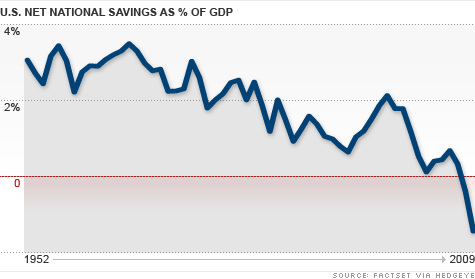
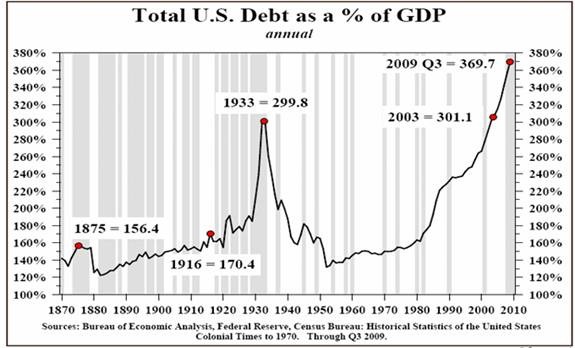
On the economy.


Source: CNN Money
Source: The Economic Collapse Blog (total debt = government, business and consumer debt combined_
Source: Fred the Oyster at commons.wikipedia.org
There is an opinion piece in The Washington Post by Michael Gerson giving his opinion of the causes of the Great Recession. Here is mine.

I think the three trends shown in the graphs above are related. After World War II there was a long term trend in reduced savings in the United States and a long term trend of increasing debt. After 1980 the top one percent took an increasing share of earnings. We got greedy! We were unwilling to invest for the long run, and wanted a lot and we wanted it now. (Note that rich people could get richer and richer by leaving their profits in the companies that made them, seeing their shares increase in value untaxed; the rich get lots of income when they take profits in the form of income rather than let them accumulate as capital.)

Against this background, a poorly regulated financial industry created more and more complex derivative instruments. People were led to buy these (often for institutions) not recognizing the risk involved. Banks were able to make profits by making sub-prime mortgage loans, encouraging people to buy houses at prices that they could not afford, and to shift the risk in those mortgages to unwary investors in those derivatives. There followed a housing bubble as the resulting increased demand for houses drove up their prices. The construction industry responded by building more and more housing.

Then came the crash. The housing bubble burst, the construction industry crumbled, banks failed, the derivatives plummeted in value, investment banks went bust, loan money dried up, businesses stopped investing in new products and expansion, jobs were lost, people (who had little or no savings) got cautious and stopped buying, and the Great Recession ensued.

European nations responded with government budget cuts and are now in recession again and a new financial crisis. The U.S. responded with fiscal and monetary policy stimulus, and the economy seems to be in (a fragile) recovery.

The underlying problems remain. In order to grow the economy of the United States over the long run, we will have to invest in innovation and capital development. I think we will have to reduce rent seeking by the richest and increase economic mobility for the poor and the middle class. Government policy should encourage innovation, providing tax incentives and indeed investing in new technologies. Regulations should not only keep businesses honest, assure that investors understand the risks inherent in their investments, but also provide incentives as mileage standards for autos do. We should invest in education, and do so in a way that educates all of our kids (Blacks, Hispanics and Whites as well as Asians) to excel in school. We should invest in infrastructure that makes our economy internationally competitive (not that provides inappropriate advantages to aging industries).

Part of the explanation of instability in the Caribbean and Central America


“I spent 33 years and four months in active military service and during that period I spent most of my time as a high class muscle man for Big Business, for Wall Street & the Bankers. In short, I was a Racketeer, a Gangster for Capitalism. I helped make Mexico and especially Tampico safe for American Oil Interests in 1914. I helped make Haiti & Cuba a decent place for the National City Bank Boys to collect revenues in. I helped in the Raping of half a dozen Central American Republics for the Benefit of Wall Street. I helped Purify Nicaragua for the International Banking House of Brown Brothers in 1902-1912. I brought light to the Dominican Republic for the American Sugar Interests in 1916. I helped make Honduras right for the American Fruit Companies in 1903. In China in 1927 I helped see to it that Standard Oil went on its way unmolested. Looking back on it, I might have given Al Capone a few hints. The best he could do was to operate his Racket in three Districts. I operated on three Continents.”
Major General Smedley Darlington Butler
During his 34-year career as a Marine in the early 20th century, Butler participated in military actions in the Philippines, China, in Central America & the Caribbean during the Banana Wars, & France in WWI. By the end of his career, he had received 16 Medals, 5 for Heroism. He is one of 19 men to twice receive the Medal of Honor, one of three to be awarded both the Marine Corps Brevet Medal & the Medal of Honor, & the only man to be awarded the Brevet Medal & 2 Medals of Honor, all for separate actions.

Butler was the author of War is a Racket.

Quotation -- Dangers to human virtue