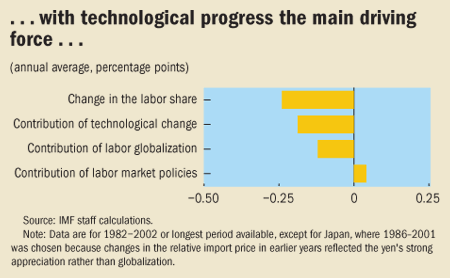
"Rapid technological change has had the biggest negative impact on labor's income share, followed by labor globalization. Countries adopting reforms to lower the cost of labor to business (by lowering the tax wedge—the difference between the payroll cost to a firm and the net take-home pay of workers) and improve labor market flexibility have generally had a smaller decline in labor share."
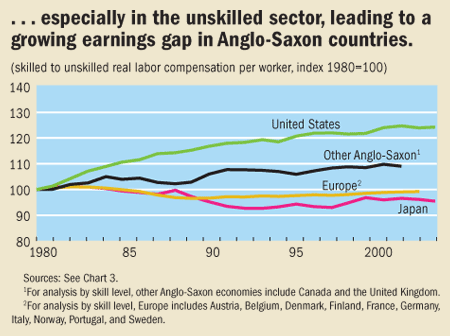
Technological change has especially depressed the share of income going to unskilled labor, and growth in total real labor compensation in unskilled sectors has hence been sluggish. In the United States, the United Kingdom, and Canada, this was reflected in very small increases in real labor compensation per worker and a growing earnings gap between skilled and unskilled sectors while unskilled employment held steady. In Europe (excluding the United Kingdom), in contrast, real compensation per worker in unskilled and skilled sectors has grown broadly in line with each other, but employment in unskilled sectors has contracted.


1 comment:
The article also notes:
"The bigger labor pool is being accessed by advanced countries through imports of final products, offshoring of the production of intermediates, and immigration. Although offshore outsourcing has received much attention, it is still small in relation to the overall economy. For example, offshored inputs make up only about 5 percent of gross output in advanced countries."
Post a Comment