Saturday, October 09, 2010

The Company

The Company: A Short History of a Revolutionary Idea (Modern Library Chronicles)
I have just started reading The Company: A Short History of a Revolutionary Idea by John Bicklethwait and Adrian Wooldridge, two people in senior positions with The Economist magazine. Given the orientation of the magazine, I expect the book to be strongly in favor of liberal economic practice, and the role of the corporation in modern economies.


The authors stress the role of the Companies Act of 1862 which brought together three key elements of the corporation:

  • the corporation as an "artificial person" that could act in ways comparative to the ways in which a real person could act in the economy
  • the corporation could issue tradable shares to any number of investors and
  • the investors would have liability limited to their investment in the firm.
They also stress that the British corporation created in the 19th century was not limited to a single purpose, and thus a railroad corporation could build any number of different lines; today we see corporations such as 3M in businesses very different than their original focus.

The business enterprise involving a number of people in a common business has a history going back thousands of years, as the authors show. Yet the modern corporation, in its larger forms and especially in its multinational reach was perhaps the central institution of the 20th century. We will have to see whether the Internet and the evolving global information infrastructure will see the market or some other institution come to dominate thought in the 21st century.

I can already tell that the authors, as one would expect from long term journalists, tell a good story in clear prose, This short book covers material that is hard to find in other histories.

Wednesday, October 06, 2010

A thought on Culture and Ethics

There was an interesting episode of the Kojo Nnamdi show on public radio in which he interviewed Kwame Anthony Appiah on his book The Honor Code: How Moral Revolutions Happen. Briefly (probably doing damage to his thesis) Appiah holds the once people in a culture have begun to doubt the morality of a practice (such as dueling, slavery or foot binding) then if others bring shame on the people of the culture for that practice or ridicule them for the practice the culture will come to perceive the practice as immoral. The question is important -- how does a culture improve its ethics?

Ridicule and shame are of course different. I am not sure how one would go about ridiculing suicide bombers, even when their act is clearly ineffective and in a bad cause, but to do so might be more effective than shaming them. Appiah points out that seeking to shame someone for something which they will not be ashamed of may well be counterproductive.

I was wondering how a culture would come to honor some behavior as especially moral or ethically meritorious. Millions of dogs and cats are euthanized each year in the United States. This seems clearly something that we should be ashamed of. How might we change our culture so that one's honor would not permit one to contribute to to this carnage. Might it be better to honor those who take effective steps to stop the carnage rather than to shame those who contribute to it?

Monday, October 04, 2010

The First World War is Over

According to Yahoo News the First World War officially ended on Sunday when Germany payed off the last of the enormous debt which was set by the Allies 92 years ago.
The final £60 million instalment is part of a £22 billion debt imposed for starting one of the bloodiest conflicts in history will be cleared on what will also be the 20th anniversary of German reunification.

The Allied victors - primarily Britain, France and America set the reparations in 1919's Treaty of Versailles - a peace agreement - as both compensation and punishment for waging the four year war, which left 10 million soldiers dead, and European towns and cities devastated.

Saturday, October 02, 2010

John Cutler and the Guatemala Syphilis Research Program

There is considerable publicity today about a research project conducted in Guatemala in 1946-1948. The research studied the process of infection by syphilis (with the intent of eventually finding better ways to prevent infection) and two other sexually transmitted diseases (STDs). It also studied the accuracy of blood tests for syphilis infection. The project was collaborative, supported by the U.S. Public Health Service and National Institutes for Health and various agencies of the government of Guatemala. Hundreds of human subjects were subjected to experimental procedures during the research, drawn from people in jail, in asylums, and in the military. While consent was obtained from institutional officials, even during the research there was concern that informed consent may not have been obtained from all of the subjects. The U.S. Secretaries of State and Health and Human Services have publicly apologized for the the U.S. role in the research.

Here are links to articles in:
I think both articles are inaccurate in some respects. Both are based primarily on a report by Susan M. Reverby, a historian. Here are the source materials:
I find Reverby's paper to inject adjectives giving the author's emotional response to the material covered, rather than a more straight-forward account of the events.

There is a brief report from the U.S. Centers for Disease Control on the archival materials relating to the study *used as the basis for the Reverby report). The CDC report concludes on the ethics of the study:
The design and conduct of the studies was unethical in many respects, including deliberate exposure of subjects to known serious health threats, lack of knowledge of and consent for experimental procedures by study subjects, and the use of highly vulnerable populations.
I concur that the study would not have been approved under current standards for ethical review. On the other hand, the project was approved by the relevant authorities of the time in both the United States and Guatemala. Ethics change with time, and scientists believed they were acting ethically in the 1940s doing things which we now see as unethical.

John C. Cutler

The main protagonist in the Reverby paper and newspaper articles in John Cutler. His papers are archived at the University of Pittsburgh and were the basis of the Reverby article. I knew John Cutler, having worked with him for some months in 1977 when he volunteered to help with a policy study on which I was employed. I found him to be a devoted public health professional, strongly concerned with improving world health. His career included service as Deputy Director of the Pan American Sanitary Bureau/Pan American Health Organization (the Western Hemisphere branch of the World Health Organization) and Assistant Surgeon General of the U.S. Public Health Service, as well as professor of public health at the University of Pittsburgh and chair of its Department of Health Administration. Here are:
Some Comments on Syphilis

Syphilis remains a significant public health problem. According to the CDC, more than 36,000 cases were reported in the United States during the most recent year for which data have been compiled. Since under-reporting is often a problem for STDs, there were probably more cases; there are many more cases in other parts of the world.

The primary stage of the disease is usually marked by the appearance of a single sore. Skin rash and mucous membrane lesions characterize the secondary stage. Many people infected with syphilis do not have any symptoms for years, yet remain at risk for late complications if they are not treated. 

The latent (hidden) stage of syphilis begins when primary and secondary symptoms disappear. Without treatment, the infected person will continue to have syphilis even though there are no signs or symptoms; infection remains in the body. This latent stage can last for years. The late stages of syphilis can develop in about 15% of people who have not been treated for syphilis, and can appear 10–20 years after infection was first acquired. In the late stages of syphilis, the disease may subsequently damage the internal organs, including the brain, nerves, eyes, heart, blood vessels, liver, bones, and joints. Signs and symptoms of the late stage of syphilis include difficulty coordinating muscle movements, paralysis, numbness, gradual blindness, and dementia. This damage may be serious enough to cause death.
and:
Syphilis is easy to cure in its early stages. A single intramuscular injection of penicillin, an antibiotic, will cure a person who has had syphilis for less than a year. Additional doses are needed to treat someone who has had syphilis for longer than a year.
Comments on the Controversy

The world would be a better place if researchers in the past had in fact discovered better ways to prevent syphilis transmission, and it seems to me that it might have been possible to do so even with the tools available in the 1940s and 1950, had research been prosecuted with more vigor. 

In spite of the fearsome reputation of syphilis, the risks to people experimentally infected with the agent of the disease might be deemed acceptable if those people who in fact were infected were promptly diagnosed and treated.

There is a major difference between the Tuskegee study which observed untreated people with syphilis for some 40 years and the Guatemala study which was designed to promptly treat any subject who was in fact infected. In the former case, the subjects might well have had complications of the disease which could have been prevented, while promptly treated early infection is not nearly as dangerous. (Unfortunately, for reasons not given in the discussions I read, many infected subjects were not treated with penicillin; a very large portion of the subjects in the research appear to have died!)

The Reverby paper and the derivative newspaper articles seem to assume that since the project received funding from the United States government and since Cutler was in residence in Guatemala during the research period, the United States dominated the project. I wonder about that assumption.

The primary Guatemalan collaborator in the project was Dr. Juan Funes, chief of the VD control division of the Guatemalan Sanidad Publica. Funes was the author of the major report on the research, published in the Bulletin of the Pan American Sanitary Bureau. (This Bulletin is now a respected international journal, and publication of the results of research conducted under sponsorship of the Pan American Sanitary Bureau in Spanish in its scientific journal seems quite appropriate.)

Dr. Cutler was a young scientist; he graduated from medical school in 1941 and joined the Public Health Service in 1942, four years before the beginning of this research project. Dr. Funes was not only a division chief in the Guatemalan Ministry of Public Health, but had received training from the U.S. Public Health Service. My experience in Latin American public health research and my experience collaborating with John Cutler leads me to assume that the collaboration on the syphilis project may well have been between equals.

Friday, October 01, 2010

The Election is Coming

I spend several days a year thanking people leaving my polling place for voting. I don't ask their party affiliation, but simply thank them for showing up. A couple of weeks ago, in the primary which had several hard fought races, about 16 percent of the registered voters showed up at our polling place; there was early voting, so my precinct probably beat the 18 percent turnout for the county,

The November election is important. The Obama administration was able to pass only a limited number of bills, albeit some very important ones. The Democrats controlled both chambers of the Congress as well as the White House, yet only passed a portion of their legislative wish list. Decreasing the Democratic majority or electing a Republican majority to one or both chambers is not going to empower the government to do more to solve the problems facing this country.

One thing that concerns me is that income distribution in the United States has become less and less even over the last few decades. This trend is generally correlated with Republican control of government, while Democratic control is correlated with more even distribution of income and wealth. The inequality is now at a level not seem since the eve of the Great Depression. That inequality raises the probability of internal conflict as the poor feel the society is more and more unfair. In a period of high unemployment and recovery from economic crisis, social unrest is especially unwanted.


Come out and vote!

It is good to see that the stem cell research decision has been reversed

I quote from the report in U.S. News & World Report:
Federal funding for embryonic stem cell research can continue while the government appeals an injunction that would block such financing, a federal court ruled Tuesday. The decision counts as a victory for the Obama administration, which argued that stopping the research while the case proceeded would harm experiments that could yield life-saving medical treatments. In August, U.S. District Judge Royce Lamberth froze federal funding for embryonic stem cell research, based on a 1996 Congressional law that prohibits federal money from being used for scientific research that destroys human embryos. The latest ruling allows funding to continue until the appeals court reaches a final decision. Exactly when that will happen is unclear—it could be several weeks or months until a final ruling is issued

Thursday, September 30, 2010

A Thought About the Preservation of Cultural Diversity

In the 1970's I worked as a health planner specializing in developing countries. I sometimes worked in places where on the average, of every four children born one would die before his/her fifth birthday. There are still such places today. It was then, as it is now, possible to cut that death rate by an order of magnitude. Rather than one in four children dying, one in 40 would die. Would anyone suggest that it were not desirable to achieve that reduction in infant and child mortality?

Of course, that is itself a change in the culture. Moreover, the ways we know to reduce child mortality involve teaching mothers to improve the nutrition and hygiene and providing basic public health and medical services. Of course, each such intervention changes the culture, and in fact tends to do so to move the original culture toward the culture of societies in which low infant and child mortality is the norm.

Indeed, breaking the cultural links as to where families seek nutritional and medical advice substituting linkages to new institutions would seem likely per se (if it works in ways that the families can see) will tend to promote more cultural change and less cultural diversity. If getting advice from the government health system works to improve your children's health, maybe getting advice from the government agricultural extension system will work to improve your farm's yield.

I would suggest that the impact of the improved health of children could also be seen as cultural change. We know that improving the survival probability of children leads rather directly to lowered numbers of pregnancies per woman. It has also been suggested that families invest more in children who are more likely to survive, and even invest more emotional attachment to such children. These would seem quite profound cultural changes.

Think also of the effect of a cohort of children growing up better fed, healthier, and receiving more investment of wealth and affection from their parents than did the previous generation. I suggest that there would be an important generation gap, leading to significant cultural change from generation to generation.

So the decision to reduce child mortality by an order of magnitude in a culture of poverty, while seemingly an obviously justified change in that culture, is likely to have repercussions that would lead to rather profound convergence of that society towards aspects of culture typical of societies with low infant and child mortality -- a significant reduction in cultural diversity.

Wednesday, September 29, 2010

Forests under siege: two maps tell the tale

The World's Forests

BOSTID and Other NAS Reports on S&T for Development


For many years I was the project officer in USAID for the grant to the National Academies that supported the work of its Board on Science and Technology for International Development (BOSTID). A long series of reports was published under that project. Most are out of date, but many still contain information that would be at least a start in developing an approach to innovation of technologies of potential economic importance to developing countries. The NAS has also published reports using other funding with similar value, including reports published after the demise of BOSTID. Many of these reports have now been made available online.

Tuesday, September 28, 2010

Rising Above the Gathering Storm, Revisited: Rapidly Approaching Category 5

This is an update of the 2005 report which was instrumental in generating new science policy legislation. Here is the NAP description:
"In the face of so many daunting near-term challenges, U.S. government and industry are letting the crucial strategic issues of U.S. competitiveness slip below the surface. Five years ago, the National Academies prepared Rising Above the Gathering Storm, a book that cautioned: "Without a renewed effort to bolster the foundations of our competitiveness, we can expect to lose our privileged position." Since that time we find ourselves in a country where much has changed--and a great deal has not changed.

"So where does America stand relative to its position of five years ago when the Gathering Storm book was prepared? The unanimous view of the authors is that our nation's outlook has worsened. The present volume, Rising Above the Gathering Storm, Revisited, explores the tipping point America now faces. Addressing America's competitiveness challenge will require many years if not decades; however, the requisite federal funding of much of that effort is about to terminate.

"Rising Above the Gathering Storm, Revisited provides a snapshot of the work of the government and the private sector in the past five years, analyzing how the original recommendations have or have not been acted upon, what consequences this may have on future competitiveness, and priorities going forward. In addition, readers will find a series of thought- and discussion-provoking factoids--many of them alarming--about the state of science and innovation in America.

"Rising Above the Gathering Storm, Revisited is a wake-up call. To reverse the foreboding outlook will require a sustained commitment by both individual citizens and government officials--at all levels. This book, together with the original Gathering Storm volume, provides the roadmap to meet that goal. While this book is essential for policy makers, anyone concerned with the future of innovation, competitiveness, and the standard of living in the United States will find this book an ideal tool for engaging their government representatives, peers, and community about this momentous issue."

U.S. National Academies Press, 2010.

A new paradigm for technology improvement in poor countries

In his book Induced Innovation: Technology, Institutions, and Development Hans Binswanger pointed out that technological innovation may not always be exogenous to economic systems, but may be induced by the economic system. (See also Technology, Growth, and Development: An Induced Innovation Perspective by Vern Ruttan.)

It seems to me that sometimes it is better to see invention as not induced by economic conditions, but rather something that results from opportunities provided by scientific advances or complementary technological advances. Years ago, in Microcomputers in Public Policy: Applications for Developing Countries I published a chapter describing the development of modern surgery, which required both the development of anesthesia techniques and antiseptic techniques as well as an understanding of anatomy and pathology as well as development of diagnostic techniques. When surgery became less lethal, society could begin to develop the suite of surgical technology as well as the cadre of surgeons and supporting personnel able to perform the variety of surgical techniques that the economy could call forth. However, it is seems to me less than useful to try to analyze the development of the preconditions for modern surgery as induced by the financial opportunities that would eventually develop to perform reimbursed surgery.

Indeed, many of the technologies that led to revolutionary social changes -- including the printing press, the steam engine, the railroad, the telephone, the computer -- were marked by radical underestimation of their eventual economic value.

It is increasingly recognized that technological innovation is a key to economic development. There is a circular causality. The introduction of new technologies, by increasing the efficiency of resource utilization, can drive increases in production. Simultaneously, the changes in resource values resulting from economic development often results in opportunities to increase productivity by shifting to alternative technologies better suited to the new factor prices. (Thus as pay for labor increases and/or capital becomes more available and thus the costs of capital decrease, firms will seek to substitute labor saving but more capital intensive technologies for labor intensive but capital saving technologies.)

Brian Arthur in his book, The Nature of Technology: What It Is and How It Evolves, makes the case that technology is cumulative, in the sense that a society can only successfully adopt a new technology if it already has certain technologies on which that new technology depends. In my commentary on Arthur's book, I sought to make the case that technology can be regarded as knowledge that is embodied in people, machinery, plant, and even supplies (such as intermediate goods). In that context, it is clear that a society can successfully incorporate a new technology only if it can successfully obtain the machines needed for its use/operation and also successfully develop or obtain the people, plant and supplies with the embodied knowledge necessary to operate that machinery.

Thus the readiness to adopt new technologies depends on the technologies that a society has already adopted. This in turn is closely correlated with the level of economic development of the society. Poor countries generally do not have the ability to adopt complex technologies that are a radical departure from their existing technological pattern. Economic development involves developing increasing technological capacity in a step by step process. On the other hand, the so called "tigers" have shown that that process can be accomplished in decades, under the right circumstances, rather than in the centuries it has take for the richest countries to achieve their current status.

I have spent quite a bit of time trying to understand how donor agencies could help developing countries on the path to rapid scientifically and technologically fueled development. The poorest countries not only have much smaller GDPs per capita, but tend to devote a much smaller portion of their GDPs to science and technology than do rich countries. Indeed, there is a strong correlation between the portion of GDP devoted to research and development (and thus to science and technology) and the per capita GDP.

I suspect that this correlation is in part an artifact of the way in which we define "science and technology" (as well as "research and development"). The definitions tend to focus on kinds of knowledge development activities that have evolved in rich societies, and to ignore the kinds that are more common in and appropriate to poor societies. The efforts to improve the technologies used in agriculture and crafts by poor people in poor countries might often not be termed either "science and technology" nor "research and development".

Donor agencies must, of course, help all developing nations to increase their capacity in modern science and technology, both because some aspects of modern S&T will be immediately useful in their development, and because that capacity will increasingly be needed as countries become richer and more technologically sophisticated.

However, we need a new paradigm for improvement of the technology of poor countries, including improving the general knowledge needed to apply their current technologies and new technologies appropriate to their development.  How do craftspeople producing goods in small workshops improve their productive techniques and how do we find ways to stimulate those improvements? How do the primary producers -- especially farmers, fishermen, and woodcutters as well as home-makers -- improve their productive technology and how do we find ways to stimulate such improvements.

Sunday, September 26, 2010

Quotation

"This spirit, however, without knowledge, would be little better than a brutal rage. Let us tenderly and kindly cherish, therefore, the means of knowledge. Let us dare to read, think, speak, and write. Let every order and degree among the people rouse their attention and animate their resolution. Let them all become attentive to the grounds and principles of government, ecclesiastical and civil. Let us study the law of nature; search into the spirit of the British constitution; read the histories of ancient ages; contemplate the great examples of Greece and Rome; set before us the conduct of our own British ancestors, who have defended for us the inherent rights of mankind against foreign and domestic tyrants and usurpers, against arbitrary kings and cruel priests, in short, against the gates of earth and hell."
-- John Adams from "A Dissertation on the Canon and Feudal Law" - 1765

Wednesday, September 15, 2010

How did FDR make decisions?

Frances Perkins, in her book The Roosevelt I Knew, discusses the way in which Franklin Delano Roosevelt made decisions. Perkins, the first woman to be appointed to head a U.S. Government Department, was both on FDR's cabinet when he was governor of New York and for the entire time he was President. Indeed, she knew him for some 35 years.
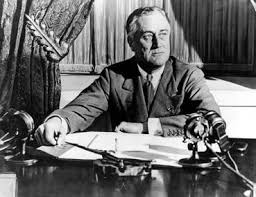
Roosevelt had a very good memory for points that had been deeply impressed upon him. Perkins made sure to give him a detailed outline of her presentations in order that he would recall the most important points. He also recalled the human details of people he had met and things he had seen; so too he recalled things told to him by his wife from her work as his eyes and ears. These inputs were perhaps more important than his formal education, the books he was reading, or formal memos coming to him from subordinates.

While he recognized that the majority could be wrong, he tended to want to go with a majority where it existed. He was concerned with the politics of decisions, not merely with the public impact that a program under consideration might have.

She describes him as starting a decision from some specific point, going on to develop other aspects from that point until he had completed an overall program design. This would be contrasted to starting from an overall plan and then filling in the details.

She describes him as depending more on the analysis and views of trusted people than on detailed understanding of the issues himself. Perhaps the extreme aspect of this approach was in the atomic bomb decision. The possibility of the bomb was explained to him by Albert Einstein and Roosevelt's science advisor, and he approved the Manhattan Project based on his trust of their judgement more than on his own understanding achieved through that briefing.

FDR had discussions in his cabinet meetings, wanting to hear different opinions and to see points of view discussed. On the other hand, when cabinet members came to him for permission to go public with new programs or legislation he would often give that permission with a warning that he would not necessarily back the cabinet member if the suggestion became controversial.

While very intelligent, and able to use logical analysis, he also depended on instinct and intuitive judgment. He drew on his memory. He exercised his imagination. He had strong concern for the welfare of the common man. He made decisions exercising all of these faculties.


He also avoided the feeling that decisions were final. He worked on the basis that if a decision was wrong, it could be retrieved and corrected by later decisions and actions.

Perkins also describes FDR as growing through his experience. One gets the impression that when he was a legislator in New York, he thought in terms of New York affairs. His humanity was deepened by his experience with polio and by his recuperation. As Assistant Secretary of the Navy he became more aware of international issues, and living in Georgia and as a Vice Presidential candidate he became more interested in national issues. Of course, in the presidency his knowledge and understanding of national and international issues grew further.

The description seems to suggest a very good approach to decision making, but one that is not discussed in the average guidebook on decision making.

U.S. Development Assistance, Philanthropy and Remittances

Source: Index of Global Philanthropy and Remittances 2010

The United States is still providing a smaller portion of GDP as Official Development Assistance than any other nation. When you add philanthropy, it does better, and when you add remittances it does better still.

It occurs to me that remittances are actually probably largely private philanthropy. At least my parents, both immigrants to the United States, sent money home to their families to help them out for their entire lives in the United States.

The Local Primary Election Was Held Yesterday

I was a poll watcher, and I was most impressed by the turn out of campaign workers. The turn out was 18.6 percent for the county, which is not bad for a primary. My precinct, which usually has better turn out than average, had almost 15 percent of registered voters appear yesterday, and probably many more who voted in the four days of early voting. The incumbents serving me in state and federal offices all won easily as expected -- congratulations to Donna Edwards my Representative in the House and Barbara Mikulski, my Senator. The Democratic races for local offices were apparently strongly contested, which explains the campaign workers and the 120 or so campaign signs at our polling place. Again, congratulations to all winners, condolences to those who fought and did not win. Special congratulatiosn to Roger Manno, who won a close race for nomination to the State Senate, and Darren Popkin, who was nominated for Sheriff.

Monday, September 13, 2010

A detailed briefing on the Floods in Pakistan and the Needed Relief Effort

My friend Nadia Afrin of the Development Gateway Foundation has conducted this two part interview with the Ambassador of Pakistan to the United States.

Ambassador Hussain Haqqani on Pakistan Flood (Part 1)


Ambassador Hussain Haqqani on Pakistan Flood: Part II


There are an estimated 20 million people in Pakistan who are displaced by the floods. Most of them will not be able to return to their homes quickly, a large number will not have homes to return to at all. It has been estimated that 1500 people died immediately during the flooding. Tragically, a lot of people will die in the next few weeks and months from diseases related to the flooding and to the problems of maintaining good hygiene in refugee camps and damaged villages and neighborhoods. More will probably die as a result of hunger and malnutrition in a country that has lost a major part of its crops and the communication and transportation infrastructure to more food from the ports to those who will need it. Indeed, others will die due to the damage to the health service infrastructure, which was weak enough already. Still more will die over the long run due to poverty, a poverty that will be worse due to the destruction caused by the flooding. Death and disease are only the most extreme forms of the damage that will accrue to people who have lost their property and their chances for a better life.

The Ambassador states in these interviews that those who don't want to donate to the Pakistani government can help by donating to UN agencies and/or non-governmental organizations. That seems a wise piece of advice.

Sunday, September 12, 2010

Maybe this helps explain the last posting


"In the 1970s and 1980s employment in quintessentially middle-skilled, middle-income occupations—salespeople, bank clerks, secretaries, machine operators and factory supervisors—grew faster than that in lower-skilled jobs. But around the early 1990s, something changed. Labour markets across the rich countries shifted from a world where people’s job and wage prospects were directly related to their skill levels. Instead, with only a few exceptions, employment in middle-class jobs began to decline as a share of the total while the share of both low- and high-skilled jobs rose (see chart)."

The routine middle class jobs that might have taken a lot of college graduates are being automated and the size of that workforce is decreasing.

Those countries that see education primarily as an investment, take note!


"The 'education is good' mantra does not work everywhere (see chart). In some countries many students have to be content with the intellectual rewards of study."

Of course, this graph does not take into account what students studied in college. The proverbial major in Latin literature may not expect the salary of the go-getter engineering major. The U.S. graduates seem to be making a lot, even with a high percentage in jobs that don't require university training. But the underlying message might be that a country may not be able to provide intellectually challenging and financially remunerative jobs for all the kids it educates through college, and it not may see a lot of them leave to seek opportunities abroad.

Higher Education Pays Off, at least in rich countries


"Tertiary education pays off, both for the individual and the wider economy. In countries where most of the workforce has an upper secondary education (ie, most industrialised countries), a college or university qualification gives recipients extra earning power and generates tax revenues for the country in which they work. On average across those rich countries that are members of the OECD, a think-tank, the total extra return for male graduates is greater than $230,000, more than half of which accrues to the individual. The net public return is almost three times the initial investment, according to OECD figures. The private return is reduced by the earnings forgone while the student was in education."