Wednesday, January 11, 2012

Wondering about the aftermath of the fall of Communism


The fall of Communism two decades ago resulted in a sudden destruction of the economic institutions of the former USSR and the former Warsaw Pact nations. It occurs to me that a comparable destruction of economic institutions occurred in the former Confederate states when the Confederacy lost the American Civil War and slavery was abolished. In the case of the fall of Communism, the command structure was destroyed and the trade patterns among the enterprises in the formerly affiliated countries were broken requiring new patterns to be institutionalized. In the case of the fall of the Confederacy, the capital embodied in slaves was destroyed by the emancipation proclamation and new patterns linking labor to productive activities had to be institutionalized. In both cases the transition was measured in terms of many years.

It seems to me that East Germany, the Baltic states and the Central European states made the transition to capitalism much more rapidly and completely than has Russia. In the case of East Germany, West Germany provided massive economic assistance and it may be that a lot of the East German people made the transition by moving west to areas where capitalist institutions already existed. In the case of the other former Communist countries, perhaps those that were integrated into the European Union were much more successful in adapting to the capitalist institutions on their borders than was the Russian Federation.

Monday, January 09, 2012

Good news on the flu front!


I quote from the IAVI Report:
The impetus for this surge in vaccine development is two-fold: to reduce the global impact of seasonal influenza, which results in an estimated three to five million severe illnesses and 25,000-50,000 deaths annually, and to dramatically improve emergency preparedness for the unpredictable nature and sometimes tsunami-like strength of pandemic influenza strains...... 
Eighty-five candidates are in various stages of preclinical or clinical development (see Figure 1, below). Ten of the vaccine candidates are considered universal vaccine candidates and are designed to protect more people against a broader range of influenza viruses for a longer period of time. More than half of those in all stages of development employ innovative strategies not yet available in any licensed seasonal or pandemic influenza vaccine. And at least 60 of the 85 candidates are in various stages of clinical development—about double the number of AIDS vaccine candidates in clinical testing. 
Most of the candidates (72%) are in early stages of clinical development, so odds are many will fail. Still, vaccine manufacturers find the upsurge in research exciting.
Figure I. The Flu Vaccine Pipeline 

This is very good news. The worst flu pandemic on record is estimated to have killed at least 50 million people and pandemics occur every decade or so when a new variety evolves which both is easily communicable and causes serious illness. Even the regular annual flu causes something on the order of 350,000 deaths per decade, decade after decade.

A thought about presidential decision making.


Often we focus on political decision making at moments of great crisis, such as the Cuban Missile Crisis, the creation of the Berlin Wall, the meltdown of the financial system in 2008, or the recognition of a new, potentially pandemic disease. Decisions at such times are indeed important, but many more decisions are made in the White House or the Kremlin that are considered as routine. The processes leading to "routine" decisions are I think different than those in "crisis", but their cumulative impact may be very great. How many "routine" decisions led to the lack of regulation and oversight of the financial industry, which in turn led to the financial crisis? How many "routine" decisions led to crises that held the risk of nuclear war on a global scale?

The studies I am familiar with on decision making in the White House seem to focus on the President and a relatively small group of people who met with him to discuss the specific decision. I suspect that each of the people involved in discussions with the President has in turn a system which feeds him/her information, analysis and opinion. In the case of office holders such as the Secretary of State, the Director of National Intelligence, the Secretary of Defense or the Secretary of the Treasury, as heads of huge bureaucratic agencies, the individual benefits from direct conversations with subordinates (including from well down in the bureaucracy if necessary), Congressional colleagues and experts, but also from staffed out documents. Of course, these contacts of contacts draw upon their own institutional resources for those conversations. Thus the extended trees of social networking involved in presidential decision making seem to be underrepresented in the studies on crisis decisions.

One of the consequences of this is that there may be a bias in analysis of international negotiations. When the President of the United States negotiated with the Premier of the USSR, the trees of social networks involved in the decision making on each side may have been very different. Moreover, Stalin had much more autonomy negotiating for the USSR than did Khrushchev; Stalin had consolidated dictatorial power establishing a cult of personality while Khrushchev was deposed by the Politburo. Moreover, even in a negotiation of the leaders of two superpowers, the leaders of other nations had to be considered, each of whom had his own social network tree, and there would have been links among those trees.

In the case of routine decision making, it seems to me likely that much of the decision making is in fact delegated. I worked on a few decision memorandums for the president and in each case there was extensive work done by teams of career analysts, drawing upon information from their bureaus, to formulate several serious alternatives; this was followed by interdepartmental meetings at the deputy secretary or assistant secretary level to review and modify the decision document before the memo was presented to the president. This framing of the decision to be made by the president greatly reduced the choices available and influenced the final choice.

Obviously the several million people in the U.S. government have a lot more knowledge and understanding than the president alone could ever hope to have. What do we want of a president as decision maker? I think we want someone with a clear philosophy of government (hopefully a realistic and appropriate philosophy) so that his subordinates can present alternatives in line with that philosophy. Ideally we would want someone with a broad understanding of economics, foreign affairs, finance and administration. One would want someone able to draw effectively on the resources available to a president for decision making, and indeed to choose a staff  to help organize those resources effectively. And one would wish someone able to defend the choices made to the public, the bureaucracy, the other branches of government, and to fellow world leaders. Ideally one would want a good balance among these skills. A president who fails to delegate analytic tasks adequately will not have the time to communicate adequately; a president who is all front and little substance will also be likely to achieve little.


Sunday, January 08, 2012

Lets raise taxes on the rich!


From a fact checker with The New York Times:
Mr. Romney stated that government consumes 37 percent of the economy’s output, but that figure should be put in perspective considering that he is running to head the federal government. That 37 percent reflects the combined size of the federal, state and local governments. 
The Congressional Budget Office has reported that federal government spending alone in 2010 was equivalent to 23.8 percent of the gross domestic product, and it forecast that the percentage would be the same when final figures are in for 2011. 
Revenues coming in to the federal government are much lower — they are equal to just under 15 percent of the gross domestic product for 2010, according to the budget office, and just over 15 percent in 2011, it forecast.
No wonder that we are running a deficit!  

Benefits of Size versus Benefits of Local Rule


Anthony questioned my idea, expressed in a recent post, that the changing balance between imperialism and nationalism was one of the trends that led to the fall of the USSR and the end of the Cold War. I think he is right that my argument was flawed. Clearly the great political empires were broken up in the 20th century. Think of the breakup of the Austro-Hungarian Empire and the Ottoman Empire after World War I, and of the English, French, Portuguese and Japanese empires after World War II (not to mention the end of Dutch imperial rule of Indonesia by the Japanese invasion of Indonesia in World War II); think also of the end of the Russian Empire at the dismemberment of the USSR and Warsaw Pact. Surely the people in the newly formed nations wanted home rule, but the imperial powers tended to see empire as an expression of their own nationalism. The key trend was perhaps a reduction in the power of the imperial centers to impose power relative to the power of the imperial peripheries to demand self rule.

Incidentally, the United States might be seen as an economic imperial power, especially after World War II when U.S. GDP was estimated to be half of the global total. If that is true, now that the U.S. GDP is about one-fifth of the global total, comparable to that of China and less than that of Europe, one might conclude that economic imperialism also diminished in the second half of the 20th century.

Larger political entities are likely to be more powerful militarily; they can provide economic advantages by providing larger markets. On the other hand, smaller political entities can be more responsive to local preferences. Voluntary federations such as the European Union and the British Commonwealth as well as various common markets represent efforts to strike appropriate balances between aggregation and local rule during the 20th century. Perhaps another way to look at the trend is as a trend away from forced union toward voluntary partial union.

From the point of view of the United States, the complexity is obvious in working out a political system that allows
  • for local school boards and for federal efforts to assure a national, globally competitive workforce, 
  • for local control of family law and for federal efforts to assure that citizens can move freely from state to state, or 
  • for local areas to secure the economic benefits of government installations and for federal efforts to aggregate facilities to achieve economic efficiencies.
While once the means of doing so was for a country with better weapons, better transportation and better communications to conquer less well equipped people and impose unification by force. Perhaps the key transformation has been in the invention and dissemination of better institutional mechanisms to achieve benefits of size without losing many benefits of self determination on the local level. Certainly the evolution of these institutions is still going on, as the current efforts to provide a common economic policy to secure the Euro in Europe shows.

In terms of Gaddis' book, The Cold War: A New History, the end of the Cold War was marked by dissolution of the USSR and Yugoslavia, and of the Communist block; those are perhaps the most available memories relevant to the topic of this post for many of us. These were examples in which the ability of confederation was incapable of holding together nations which sought self rule.

However, the end of the Cold War was also marked by the reunification of Germany, and led to the affiliation of many central and eastern European countries with the European Union. In these cases the (mostly economic) benefits of larger political entities led to aggregation of states into larger entities.

Earlier in the Cold War we saw the Korean War and the Viet Nam War fought between those who would reunify countries divided at the end of World War II and those who would keep the nations divided. Of course, these conflicts were also between Communist and anti-Communist governments, but also between governing elites in the north who wanted to extend their domains and those in the south who wanted to keep their domains. The Chinese invasion of Tibet might be seen as still another Cold War example in which a Communist government sought to extend its rule over another people who wished for an independent state and who were anti-Communist.

Saturday, January 07, 2012

Thinking about the end of the Cold War


I have been reading The Cold War: A New History by John Lewis Gaddis. It occurs to me that there are great historic trends that underlie the Cold War and may have largely determined its outcome.

Capitalist Market Economies versus Communist Command Economies: As Gaddis points out, the American foreign policy after World War II and during the Cold War had the support of economic development in allied or potentially allied nations as a key element. Not only were the United States and its allies very successful in their economic development individually, but the tide of globalization of trade among them stimulated all their growth. The USSR on the other hand not only did not seek to provide financial aid to its satellite states but demanded reparations from conquered Germany and the Community command economies were isolated from the West and fell far behind.

Imperialism versus Nationalism: I would suggest that the fall of imperialism before nationalism was an even greater trend than the fall of communism before capitalism in the second half of the 20th century. The creation of nations out of the former colonies of Britain, France, Portugal, and Russia were all accomplished in a relatively brief period of the century. The nationalism of Germany, Poland, Hungary and Czechoslovakia were all instrumental in the fall of the Communism, as the nationalism of states held within the USSR under Russian control led to the fall of the USSR.

Schooling and Information Systems: The second half of the 20th century saw an unprecedented increase in education. 6.7 percent of the population of the world now hold college degrees. Rates of literacy, primary school completion and secondary school completion have also increased worldwide. Technological advances have hugely increased the flows of information worldwide, while the economic value of knowledge became more apparent.

Human Rights: While the Declaration of the Rights of Man and Citizens in France and the Bill of Rights in the United States date from the 18th century, an international concern for human rights got a huge boost with the Universal Declaration of Human Rights by the UN General Assembly in 1948 and the Human Rights portion of the Helsinki Accords in 1989. In the United States the Civil Rights movement lessened the reality behind charges that America failed to guarantee human rights and people in the Communist countries came to believe that their rights were being infringed upon by their governments.

Participatory Government versus Authoritarian Government: According to the State Department (as of 2008), "(i)n 1974, about 30 countries were considered democratic. Today, more than 115 countries are democracies." The fall of the USSR and Communism were significantly due to a demand for more participatory and less authoritarian government.

I suppose that these trends were interrelated. More schooled people with more information could demand economic opportunities comparable to those in other countries and governments more responsive to their needs comparable to those in other countries. As they became more affluent, they could focus attention more fully on assuring their human rights.

Gaddis focuses on individuals who rose to lead the world out of the status quo of the Cold War: Pope John Paul II, Ronald Reagan, Margaret Thatcher, Vaclav Havel, Lech Walesa, Deng Xiaoping and Mikhail Gorbachev. It occurs to me that when the underlying conditions are right, leaders willing to challenge the status quo  are more likely to be put forth and chosen to lead; their leadership more likely to be successful.

Are there Palestinians?


I quote from Wikipedia:
Arab, in its common modern definition, is...a widely employed example of panethnicity or pan-nationalism. Arabs are a grouping of people (some would say "peoples") of various ancestral origins, religious backgrounds and historic identities (much in the same way peoples merged though assimilation in other parts of the world, as in the case of, say, Anglo-Saxons, Danes, and others merging with indigenous British people to create an English ethnicity), whose members identify as such on one or more of the grounds of language, culture, or genealogy...... 
Those self-identifying as Arab, however, rarely deny the diversity of the Arabs. There are always multiple identities, with a more localized prioritized ethnic orientation, such as Egyptian, Lebanese, or Palestinian — in addition to further tribal, village,and/or religious identities.
Certainly I have met and talked with people who called themselves Palestinians. As the child of immigrants to the United States who has lived in two other countries and visited more than 50, I find it quite reasonable to think of people having various self identities -- religious, linguistic, national, ethnic, professional, local -- according to the context of the discussion. I also know that my parents, naturalized American citizens, regarded themselves as Americans, and I see no reason not to believe that many people see themselves as ethnic Palestinians and indeed as citizens of Palestine.

I would hope that Newt Gingrich would not consider Austrians or citizens of the German speaking Cantons of Switzerland to be Germans because they share Germanic ethnicity.

Institutions and Paradigms


Thomas Kuhn, in his book The Structure of Scientific Revolutions, famously recognized a scientific revolution as requiring a paradigm shift. He recognized that shift as involving not only theory and research priorities, but also people, noting that an older generation of scientists would continue to hold to the older paradigm and it was a new generation that would internalize and implement the new paradigm.

I wonder whether Kuhn adequately recognized the institutional shifts involved in a paradigm shift. For example, scientific journals which depend on peer review have to accept the new scientific paradigm or be replaced by new journals, and the journals have to find an audience to pay their costs. Research intensive universities that train the new generations of scientists have not only to train the first generation accepting the new paradigm, but they have to create curricula to do so, recruit faculty to do so, and develop the texts and other teaching aids to do so. The agencies that fund research, most of which depend on peer review, must develop new cadres of reviewers who accept the new paradigm, if necessary create new areas of research support, and convince their senior authorities that the new area merits support and that the resources must be obtained -- perhaps withdrawn from other areas -- to provide that support. Indeed, the informal networks of communications among the scientists in the new paradigm must be institutionalized.

I suppose one might extend Kuhn's use of the concept of change of paradigm to broader phenomena such as the fall of Communism or the changes that appear to be taking place in the Arab world.  The complexity of changing an economic system, such as took place with the emancipation of slaves in the United States at the time of the Civil War or the introduction of Capitalism to replace Communism in the last couple of decades required decades of institutional change (destruction and reconstruction).

Why Obama is emphasizing the Pacific


                        GDP by Continent (US$)

Continent GDP
Africa 2,092,300,800,000
Asia 21,504,497,000,000
Europe 14,244,444,000,000
North America 12,776,478,300,000
Oceana 737,226,300,000
South America and Caribbean 4,299,879,000,000
Source: GeoHive http://www.geohive.com/charts/ec_gdp4.aspx

Data from the CIA World Factbook 2005

Eurocentric policy focuses on an area that has a Gross Domestic Product 2/3rds of that of Asia, and a product which is growing more slowly than that of Asia. The GDP of the rest of the world is about half that of Europe. These data are somewhat our of date, and the Asian GDP is relatively larger now.

The GDP of the United States was on the order of half of the global total in 1946. Since that time, the European GDP has again climbed to be greater than that of North America. However, that of Asia was already in 2005 almost twice that of North America.

It seems clear that the economic foreign policy of the United States must be more oriented towards Asia than it was a couple of generations ago. It may have taken a President who grew up in Hawaii and lived in Indonesia as a kid to recognize this simple fact. Of course, Europe, Latin America, Africa and Oceana must not be ignored.

I suspect that this fact also underlies the changes in our security foreign policy. The greater the comparative economic power, then the greater the military power is likely to be. The rapid economic growth of Asian countries implies their greater military power as well as their greater economic importance in a global economy.

Does this realization influence our restructuring of the U.S. military as the U.S. military presence in Iraq and Afghanistan are coming down? I suspect a part of the change is due to the change from soldiers providing support for frontline soldiers to private sector contractors providing that support. Is another factor the recognition that the United States with 1/20th of the world's population should not get involved in a land war in Asia which has 4/7th of global population.

Friday, January 06, 2012

What would you call the people who lived in Palestine?A


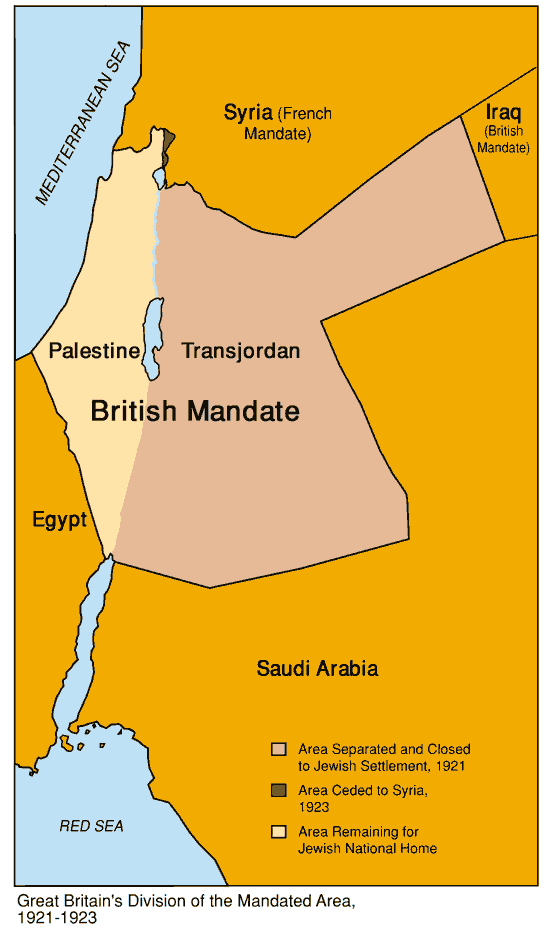
Map of the British Mandate
Source: Jewish Virtual Library
After World War I, the Ottoman Empire was broken up and the League of Nations assigned the British with a mandate over "Palestine" which came into effect in 1923 and remained until in effect until 1946. According to Wikipedia:
With the League of Nations' consent on 16 September 1922, the UK divided the Mandate territory into two administrative areas, Palestine, under direct British rule, and autonomous Transjordan, under the rule of the Hashemite family from the Kingdom of Hejaz in present-day Saudi Arabia
According to the Online Etymological Dictionary the origin of the word "Palestine" is:
from L. Palestina (name of a Roman province), from Gk. Palaistine (Herodotus), from Heb. Pelesheth "Philistia, land of the Philistines." Revived as an official political territorial name 1920 with the British mandate.
It as Newt Gingrich seems to believe, the Palestinians are an "invented people", the invention is an old one with considerable justification in historical nomenclature. They may be Arabs in the sense that they speak Arabic, as people in many nations share a bond of speaking English, but the other nations that speak Arabic have generally not granted Palestinians citizenship.

Visualizing Income Inequality


Gini Coefficient Map
Map Source

The Gini Coefficient is a measure of income inequality. The greater the coefficient, the greater the inequality. The values lie between zero and one, but generally a very egalitarian country will have values under 0.3 while the countries accepting the greatest inequality have values above 0.5.

The map shows that the United States is grouped with China, Mexico, Argentina, Venezuela, Uruguay and Ecuador as having grave levels of inequality. The Scandinavian countries, western European countries, Canada and Australia all have far more equal distribution of income.

Shares of Pre-Tax Household Income
Source of Graph

The divergence of incomes (and the even greater divergence of wealth) has occurred in the past three decades. The current levels are approaching those in 1929 just before the stock market crash, and are far higher than during the long period of rapid economic growth after World War II.

This level of income inequality seems likely to be very disruptive to the social and political fabric of the country. I find it hard to believe that the United States should not tax millionaires more. Indeed, I feel that the Congress is far to beholding to the rich, and that government policies have promoted inequality rather than equality, to the cost of the entire economy.

Thursday, January 05, 2012

Quotation


Seek truth from facts.
Deng Xiaoping

Wednesday, January 04, 2012

Thinking about money, inflation and American experience


When the money supply goes up faster than the total production of goods and services, the result is inflation of prices. When the money supply goes up slower than the GDP, the result is that prices go down. How am I to understand this?

I have lived through a lot of inflation. When I first started to work in 1950 I was paid 50 cents an hour. That was pretty good money for a kid. Today the minimum wage in Maryland is $7.25 per hour. The difference is primarily one of inflation. I lived for several years in Chile when the annual inflation was more than 20 percent, giving me a visceral feeling that the value of money was ephemeral.

Gold and silver came to be money by cultural evolution over a long historical period rather than be planning. They are stable materials, suitable for coining, that are difficult and costly to find, mine, refine and manufacture into coins. They serve as a marker for value due to those properties. There have been, however, many other forms of money.

It is only recently in historical terms that governments have come to understand money as symbol, to recognize the role of the money supply in affecting prices. and to have the basis in economic theory to seek to define monetary policy to plan and manage the supply of money.

It costs the tax payer about three cents to produce piece of paper money, whether that bill is worth $1, $5, $10. $20, $50, $100 or more. What makes the bill worth its face value is the legislation that declares it to be "legal tender". The law requires that people in the United States accept legal tender in payment for debts and purchases (while checks and other forms of payment need not be accepted under law).


The U.S. Constitution granted the federal government the right to coin money. In the 19th century the United States minted both silver and gold coins, raising the problem of the ratio of the actual market value of the two metals. When the silver in coins was worth more than the face value of the coins (which could be obtained with gold coins), people melted down the silver coins leading to money shortages.

During the Civil War, the Union started printing "greenbacks" using paper currency to finance the war. In the post Civil War years the nature of money was in considerable debate. In 1870 the Supreme Court found that it was unconstitutional for the government to issue paper money, a decision that was reversed in subsequent decisions in the following decade. Congress in the 1970s addressed the issue of backing payment of the U.S. debt with gold or silver, vacillating as to whether to allow silver to be used.

Production is based on people, natural resources, investment, and technology. In the latter part of the 19th century, with very high levels of immigration, expanding rapidly into the west and discovering new natural resources, drawing investment from all over the world as well as sustaining high levels of domestic savings, and experiencing rapid technological innovation and dissemination, the rate of growth of the U.S. GDP was very high. The growth of the gold supply could not keep pace, and for much of the time silver was not freely minted into coins. As a result, money grew scarce and there was deflation. The prices of goods and services went down. However, debts incurred when the value of money was high had to be paid with money that was now worth more. Farmers especially were hit, since there was a global deflation in agricultural prices as well as a domestic one, and their income went down while their debts did not.

As Hofstadter points out in The Age of Reform, this situation was a key causation of the unrest in the farm states that led to the Populist movement. The silver miners in the mountain states joined in the movement realizing that increasing the role of silver in the money supply would create more income for them. This led to William Jennings Bryan's Cross of Gold speech at the 1896 Democratic National Convention calling for the free coinage of silver. This has been called the greatest political speech in American history and propelled the young Congressman Bryan to the presidential nomination of his party and to national prominence that lasted for decades.

Today life is more complicated. We pay our bills with checks and credit cards. Banks and other financial institutions essentially create money. lending and re-lending money as the currency circulates in the economy. Fortunately, countries have created central banking establishments and systems of economic accounts that help the government keep track of the money supply; when the governmental institutions do a good job, the money supply grows in step with the GDP, meeting targets for inflation. It is only on relatively rare occasions, such as the end of the last decade, in which unexpected financial crisis hits and the money supply contracts in unforeseen ways.

Tuesday, January 03, 2012

Against any war with Iran


William Luers and Thomas Pickering, both former senior U.S. diplomats, cite the UNESCO charter (“Since wars begin in the minds of men, it is in the minds of men that the defenses of peace must be constructed.”) in an opinion piece in The Washington Post titled "Military action isn’t the only solution to Iran."
Have we forgotten what Iraq and the United States have been through since 2002? Were it not for that ill-begotten war, thousands of Americans (and Iraqis) might still be living. America would be a trillion dollars richer and still be the proud, respected and economically healthy nation the world had known.
Perhaps UNESCO has had some effect in its nearly seven decades of action. Too bad that the Congress has seen fit to halt U.S. funding of that organization!

A thought about American policy


John Lewis Gaddis in his book, The Cold War: A New History, describes the history of the United States chartering the CIA to conduct espionage and sabotage against countries with which the United States was not at war, to overthrow foreign regimes that the administration did not agree, and even to commit assassinations. Not only did presidents lie to the world, but they lied to cover up acts that were shameful. He sees this as a departure from previous policy towards a more Machiavellian one.

The American Experience television program, The Bombing of Germany, chronicles a change in American policy during World War II. At the beginning of the war, President Roosevelt set a policy that the United States would not attack civilians and air force leaders accepted significant losses of planes and airmen in daylight bombing that focused on strategic targets and sought to avoid collateral damage to civilians. However, later in the war the policy changed, and American forces deliberately bombed civilian areas of Berlin, fire bombed Dresden and Tokyo, and used atomic bombs on two cities in Japan. The program sees this progression as a new departure in American policy.

150 years ago, the first battles of the Civil War began a process in which both sides learned that set battles would not destroy the losing army. Eventually the war was won by the Union embarking on "hard war". Grant besieged cities and beat them into surrender and surrender of their defending forces and accepted huge losses in the Wilderness campaign to inflict final destruction to the Confederate Army of Virginia. Sherman on his march to the sea sought explicitly to bring the war to the people of Georgia and South Carolina, not just to the Confederate armies.

Someone who understood the brutality of American slavery and of the American Indian policies should not have been surprised by American willingness to war against civilians and to be duplicitous about its propensity for violence. Indeed, Americans seem to have been more successful about fooling themselves about its policies than in fooling others.

Monday, January 02, 2012

Free Will as a good threory in some situations


Lisa Randall, a physicist at Harvard University, points out that even when a scientific theory is superceded by a new theory (and a new paradigm), it often remains useful and indeed more useful in some domains. Thus Einstein's theory of relativity has supplanted Newton's theory of gravity as the most general and accurate in describing motion, as judged by the profession of professional physicists. However, Newtonian equations are used in lots of applications such as the the analysis of trajectories of projectiles, Newton is as accurate for all practical purposes in these applications and a lot easier to use.

Indeed, while there has been some popular interest in "a theory of everything", science advances by developing theories for application in specific domains. Physicists have good theories that atoms are composed of protons, neutrons and electrons, and that these are themselves composed of smaller units, quarks. No one would think of trying to analyze the behavior of the planets starting from the quarks of which they are ultimately composed. So too, psychologists do not start their analysis from neurobiology, nor do macro economists from consumer psychology nor even micro economic models.

I recently posted including the thought that "free will" might be regarded as a theory that is very useful for some purposes, but not necessarily for others. The idea was very much in the spirit of Dr. Randall's comment, and perhaps triggered by it.

I would suggest that when one is faced by a decision, it is best to regard oneself as having free will. Far too many bad decisions (or decisions to be bad) can be justified or rationalized as the result beyond the control of the decision maker. The most admirable decisions are often those which are unlikely -- someone from a poor neighborhood filled with people choosing crime or ignorance to dedicate herself to learning and service, or someone in a jingoistic community en route to war standing for peace against all probability.

On the other hand, there are situations in which I would say free will is not the right theory. Most people would agree that we should not treat poor behavior by people with limited rationality (small children, the insane, seriously mentally retarded) as culpable as we would the same act by a fully rational adult; in some sense those with limited rationality are not as free to choose the right course as their more rational neighbors. Can we feel that the citizens of North Korea, exposed constantly and only to propaganda, are best considered as having free will. Do we assume that the unwanted and uneducated member of an underclass, abusing substances commonly abused in his community, has the same free will as his contemporary different in all these respects? I think not.

In many cases, the model of people's actions as statistically dependent on a number of partial determinants is more illuminating and useful than one of people acting of their own free will.

More generally, is is not only useful to command many theories as one goes through life analyzing and making decisions, but it is important to know which theory to use in which circumstances.

Did you know


The first two soldiers to die in the U.S. Civil War were Irish. They were killed by the accidental misfiring of a cannon as the defeated garrison of Fort Sumter was firing a 100 gun salute to the United States.

Source of the image

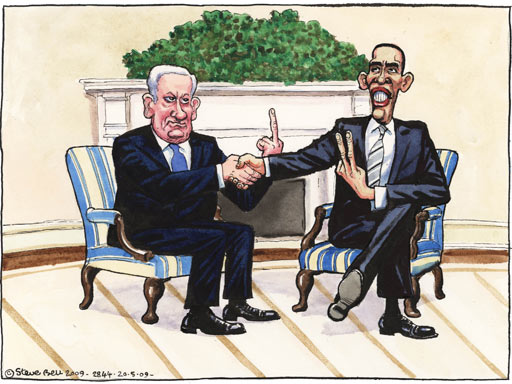
A Thought on the Prime Minister of Israel and the United States


I think the majority of the people of the United States wish all Arabs well and wish all Israelis well. On the other hand, wishing a people well does not require that one supports the government over that people in all that it does. As the Arab Spring has shown, many of the Arab people were governed by Gaddafis and Mubaraks that their own people did not support. Fortunately, the Obama administration withdrew its support from those rulers.

So too, the U.S. well wishing for the people of Israel, and indeed its historical support for the state of Israel, does not mean that the U.S. Government must support Netanyahu in all that he does nor all that he says. Obama has suggested that he personally is getting fed up with the Israeli Prime Minister.

I hope that the U.S. Congress recognizes that it will be the duty of the U.S. President to act in the overall U.S. interest when and if that interest runs contrary to the positions of the Prime Minister of Israel.


Copyright © Steve Bell 2008

Solving the Debt Crisis for the United States


The crisis of the debt is due to the fact that the federal debt continues to increase and that it is so large compared with our GDP.

As the saying goes, the first step in getting out of a hole is to stop digging. Thus the government must move to bring revenues more nearly in line with expenditures. That can be done by cutting expenditures or by increasing revenues.

Obama has probably made a good start on cutting expenditures by withdrawing troops from Iraq and planning for withdrawing troops from Afghanistan. Unfortunately his administration was only partially successful in its efforts to stop inflation in health care entitlements, and it may be that entitlements will have to be cut as part of the savings. It would seem that discretionary funding will also have to be cut.

As has been so clearly obvious in the negotiations of last year, revenues can be increased by raising taxes and/or by closing loopholes (or as others may view it, by cutting aspects of tax expenditures). I would suppose that making taxes somewhat more progressive would be appropriate.

If the GDP increases faster than the debt, obviously the ratio of the debt to GDP decreases. There are things that the government can do to stimulate the economy over the long run, such as supporting investment in education, encouraging technological innovation, creating a strong infrastructure, and providing appropriate government services. In cutting federal expenditures care should be taken not to do so in ways that would cut growth of the economy and thus be counterproductive.

How about giving a tax break to encourage repatriation of profits that corporations have earned abroad and are holding there. Apparently there is a trillion dollars of those funds. If they were to be invested, they would stimulate economic growth. If they were spent on consumption, they would stimulate demand and help return the economy to full production.

The government can also print money, and do so in such a way as to increase inflation. A modest rate of inflation would seem to be compatible with economic growth and would not lead to excessive interest rates.

In the early years of the United States, governments sold land. It still owns 650 million acres of land. Perhaps the government should go back to selling land, or perhaps to selling long term leases on land.

There are other things that the government can sell. For example, it could sell facilities or equipment that it now in excess or that becomes unneeded as there are cuts in federal expenditures.

How about selling citizenship? If it sold the rights to immigrate to the United States to a million people at $250,000 per person, it would raise $250 billion. Admitting wealthy people might encourage them to invest in this country, promoting growth. It might also generate more tax income for the government.

Source: Federal Lands in the U.S.

Sunday, January 01, 2012

The New Year is the Time to Ratify the Convention on the Rights of the Child


The Universal Declaration of Human Rights was ratified by the United Nations in 1948 under the leadership of Eleanor Roosevelt. It was a great achievement of a war weary world, but it was simply a declaration. It has been given force by a number of international conventions which have the force of treaties. In the United States, once ratified, an international convention has the force of law.

One of the key conventions giving life to the Universal Declaration is the Convention on the Rights of the Child. There are now 193 parties to this Convention, making it the most widely ratified international treaty in history.

The United States has not ratified the treaty. The principle reservation appears to be that were we to ratify it, we would no longer be able to recruit children under the age of 18 into the military. The Department of Defense, with an all volunteer policy, claims that it would be seriously handicapped in recruitment were in not able to recruit new school leavers, many of whom are under the age of 18.

In recent years we have learned more about the trauma of war. Not only do our soldiers suffer physical wounds and even death, but a significant portion of those returning from Iraq and Afghanistan suffer from psychological problems such as Post Traumatic Stress Disorder; many wind up victims of substance abuse.

Do we really want to live in a society that subjects 17 year olds to those conditions. I do not! If we can not recruit enough adults to fight the wars that our leaders choose to fight, then let us tell those leaders to choose fewer wars.

The United States is coming to be viewed as a pariah state in refusing to ratify the Convention on the Rights of the Child. Let us at this new year resolve as a nation to do the right thing in this obvious case and as individuals to campaign for ratification.

Go the website of the Campaign for Ratification of the Convention on the Rights of the Child and sign its petition to President Obama!